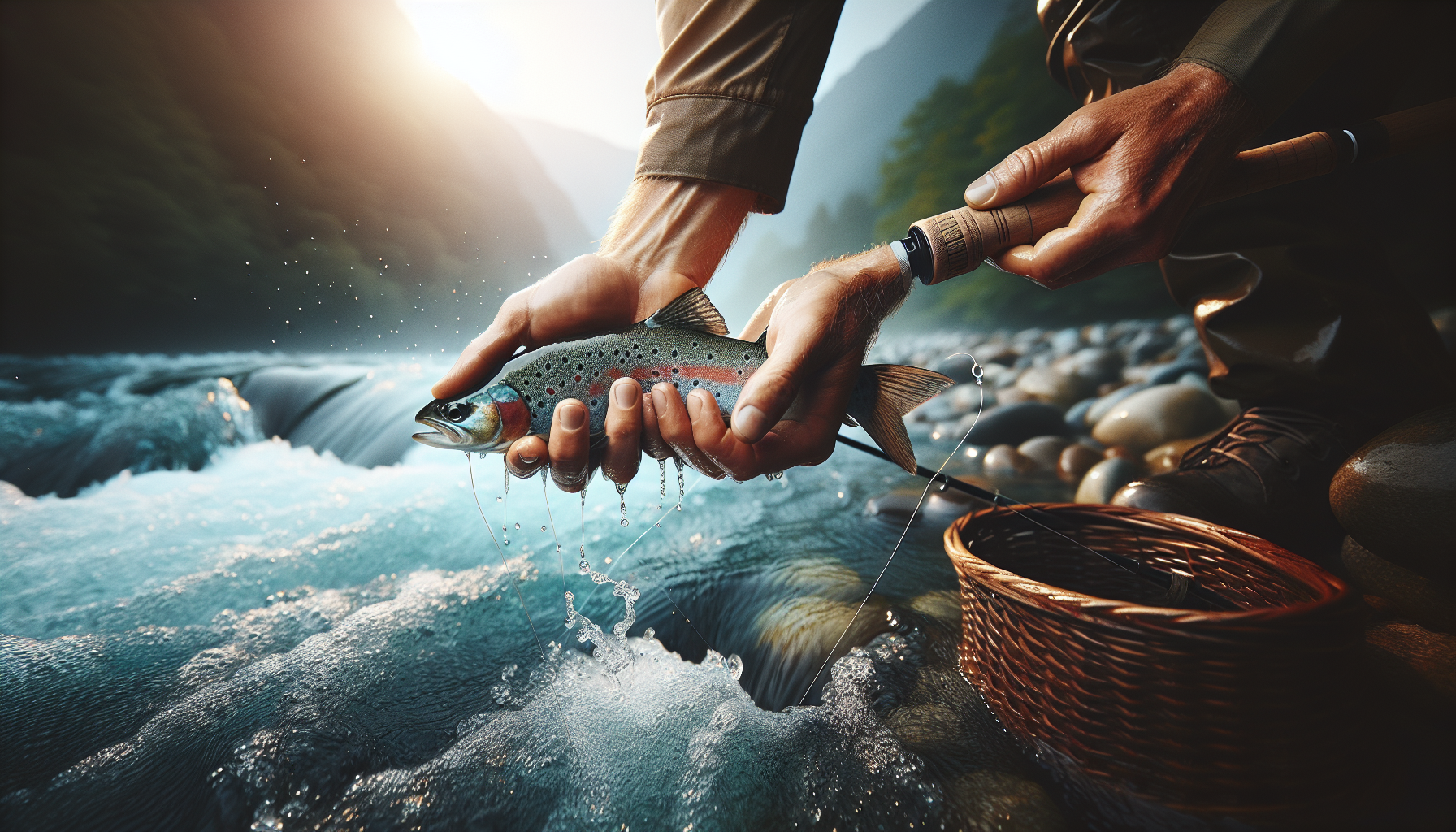
Microplastic pollution in fly fishing waters is no longer a distant ocean problem; it is a freshwater conservation challenge that directly affects trout streams, spring creeks, tailwaters, lakes, and the anglers who depend on them. Microplastics are typically defined as plastic particles smaller than five millimeters, while nanoplastics are even smaller fragments that can cross biological membranes more easily. In rivers and lakes, these particles come from degraded litter, synthetic textiles, tire wear, paint, packaging, lost fishing gear, and wastewater effluent. I have seen this issue move from academic discussion to practical streamside concern, especially on heavily used waters where urban runoff, bank erosion, and recreational pressure converge.
For fly anglers, the issue matters for three reasons. First, fish and aquatic insects can ingest microplastics directly or indirectly through the food web. Second, the same waters often supply drinking water, irrigation, and habitat for birds, amphibians, and mammals. Third, microplastics are not an isolated threat; they interact with sedimentation, warming water, nutrient loading, dams, and declining riparian cover. That is why this article serves as a hub for conservation challenges within fly fishing ethics. If you want to protect fisheries, improving catch-and-release technique is useful, but it is not enough when the watershed itself is carrying persistent synthetic debris.
Tackling microplastic pollution begins with understanding sources, pathways, ecological effects, and realistic interventions at multiple scales. No single cleanup day will solve it. The effective approach combines angler behavior, tackle choices, wastewater improvements, stormwater controls, better textile and tire policies, and habitat restoration that slows and filters runoff. The good news is that practical actions exist today. Some are immediate and inexpensive, such as eliminating unnecessary single-use plastics from your kit. Others require clubs, guides, municipalities, and watershed groups to coordinate around monitoring and prevention. The goal is not perfection. The goal is measurable reduction in plastic entering and remaining in fly fishing waters.
Because this page is a hub for conservation challenges, it covers the full picture in plain terms: where microplastics come from, how they affect fish and insect life, how to identify high-risk waters, what anglers can change now, and which policy and restoration strategies produce durable results. If you manage a club beat, guide clients, volunteer with a trout chapter, or simply fish your home river every week, this overview will help you prioritize actions that matter.
Where Microplastics in Fly Fishing Waters Come From
Most anglers assume litter is the main source, but in freshwater systems the biggest inputs are often diffuse and nearly invisible. Wastewater treatment plants capture a substantial portion of larger debris, yet many fibers and fragments still pass through, especially during heavy flow events and combined sewer overflows. Synthetic clothing sheds microfibers during washing, and those fibers are now commonly found in river sediments and biota. Tire wear particles are another major source. Roads near rivers, bridges over tributaries, and parking areas at access points contribute runoff loaded with fine synthetic particles during rainstorms.
On the water, fly fishing itself can add small but preventable amounts of plastic. Split shot containers, tippet spools, soft lure packaging used by mixed-use anglers, foam strike indicators, nylon monofilament, and degraded landing net components all shed material over time. Boats, rafts, and waders can also contribute through abrasion and aging. None of these sources alone explains watershed-scale contamination, but together they reinforce the principle that anglers should address what they can control while advocating for upstream reforms. In my experience working with river cleanup crews, the most productive framing is not blame. It is source reduction paired with evidence-based stewardship.
How Microplastics Move Through Rivers, Lakes, and Food Webs
Microplastics behave differently depending on size, shape, density, and biofouling. Some float near the surface, some remain suspended in the water column, and others settle into sediment where nymphs, worms, mollusks, and bottom-feeding fish encounter them. High flows can remobilize settled particles, carrying them downstream into backwaters, floodplains, reservoirs, and estuaries. In tailwaters below dams, flow regulation can create depositional zones where fine particles accumulate. In lakes, wave action and stratification influence where fragments concentrate. This means there is no single sampling point that tells the whole story.
Aquatic insects can ingest microplastics while feeding on detritus, periphyton, or suspended particles. Small fish then consume those insects, and larger trout, char, bass, and panfish feed higher in the chain. The concern is not only blockage or abrasion. Plastics can sorb and release chemicals, and they can concentrate alongside other pollutants in sediment-rich habitats. Laboratory findings do not always translate neatly into wild-fish mortality, but field evidence increasingly shows exposure across freshwater ecosystems. For anglers, the key takeaway is simple: healthy-looking water can still carry a chronic synthetic load that alters food-web function over time.
What Microplastic Pollution Does to Fish, Insects, and Habitat
The effects of microplastic pollution are often sublethal, which makes them easy to underestimate. Fish may show reduced feeding efficiency, inflammation, oxidative stress, altered energy allocation, or impaired growth when exposure is high enough. Aquatic insects may experience lower feeding performance or changed emergence timing in contaminated environments. Even small disruptions matter in fly fishing waters because hatches, juvenile survival, and prey availability drive fish condition and angling quality. A stream does not need a dramatic fish kill to be losing ecological resilience.
Habitat effects are equally important. Fine plastic particles can mix with organic matter and sediment in spawning gravels, side channels, and slow margins. That is not the same as traditional siltation, but it adds another persistent material into places where eggs, larvae, and benthic invertebrates develop. When plastic pollution combines with warm summer water, low flows, nutrient enrichment, or bank instability, cumulative stress increases. This is why conservation planning should treat microplastics as part of a broader watershed pressure profile rather than a standalone headline issue.
How to Identify High-Risk Fly Fishing Waters
Not every fishery faces the same exposure. High-risk waters usually share several traits: dense upstream population, major roads, wastewater discharges, industrial land use, heavy recreation, stormwater outfalls, and limited riparian buffering. Urban trout streams are obvious candidates, but popular tailwaters and warmwater rivers near suburban growth corridors can be just as vulnerable. Reservoir-influenced systems often receive and store particles delivered from broad catchments, then redistribute them downstream.
If you want a practical screening method, start with a watershed map and ask direct questions. Is there a treatment plant upstream? Are there combined sewer overflow points? How close are highways and parking lots to tributaries? Do storm drains empty near access areas? Is the riverbank armored, eroding, or lacking vegetation? Have volunteer groups documented litter, foam, or filament accumulation after rain? When I assess a beat informally, I also look for depositional seams, slack water near bridge pilings, and flood wrack lines where fine debris gathers. Those spots often reveal what the main current hides.
| Risk factor | Why it matters | What anglers can do |
|---|---|---|
| Wastewater discharge upstream | Can release microfibers and fragments, especially during peak flow events | Support treatment upgrades and track overflow reports |
| Road runoff near access points | Tire wear particles wash into tributaries during storms | Advocate for bioswales, permeable surfaces, and drain maintenance |
| Heavy recreation pressure | More packaging waste, monofilament loss, and bank disturbance | Install line bins, signage, and pack-in pack-out standards |
| Poor riparian vegetation | Less filtration, more erosion, faster runoff delivery | Plant native buffers and protect streambanks |
| Depositional habitat | Fine particles settle where insects and juvenile fish feed | Include these zones in cleanups and monitoring |
What Anglers and Guides Can Change Immediately
The fastest progress comes from eliminating avoidable plastic at the individual level. Replace disposable water bottles, snack bags, and soft-plastic storage with durable containers. Buy tippet and leader materials in bulk or from brands offering spool recycling when possible. Use non-foam indicators or reusable systems that create less fragmenting waste. Inspect nets, packs, and wader gravel guards for cracking polymers that shed over time. Retire damaged line responsibly; monofilament recycling tubes are common at marinas and should be standard at trout access sites too.
Guides and clubs can push these habits further. I recommend setting up a simple trip protocol: one trash bag, one line-recovery tube, one gear check at the boat ramp, and one post-trip scan for clipped tags, strike indicator tabs, and packaging scraps. On club waters, install clear signage explaining why tiny debris matters. Most anglers will respond when the message is concrete. “Please pack out line” is good; “small fibers and fragments are eaten by aquatic insects and fish” is better. The more specific the explanation, the stronger the compliance.
Better Tackle, Better Materials, Better Maintenance
There is no fully plastic-free modern fly fishing setup, but material choices still matter. High-quality gear that lasts longer generally sheds and breaks less than cheap, brittle alternatives. Silicone or yarn-based strike indicators can reduce dependence on crumbly foam. Aluminum, steel, wood, and natural rubber components can sometimes replace disposable plastic accessories, though each comes with tradeoffs in cost, buoyancy, corrosion, or weight. The best standard is durability first, then repairability, then recyclability.
Maintenance is overlooked as a pollution strategy. UV exposure, abrasion, and repeated flexing make polymers more likely to fragment. Store lines, leaders, rafts, and packs out of direct sun when possible. Rinse gritty gear before storage. Replace damaged zippers, buckles, and net bags before they fail on the water. Guides who run many trips each season should log gear retirement and disposal the way they track hook sharpening or PFD inspection. That level of discipline reduces losses and saves money over time.
Watershed Solutions That Actually Reduce Microplastic Inputs
The most effective interventions happen upstream of the river channel. Wastewater treatment upgrades, including advanced filtration and better solids capture, can reduce microfiber release. Stormwater infrastructure such as bioswales, retention basins, hydrodynamic separators, and constructed wetlands can intercept particles before they reach streams. Street sweeping in high-traffic corridors lowers the amount of tire and road debris available for wash-off during rain. These are not glamorous measures, but they are proven parts of urban watershed management.
Riparian restoration also matters. Native vegetation slows overland flow, stabilizes banks, traps sediment, and improves infiltration. Floodplain reconnection gives rivers room to spread and deposit material outside the main channel, though contaminated floodplain sediments must be assessed carefully. On agricultural land, buffer strips and controlled drainage can reduce transport from farm roads, plastic mulch residues, and mixed-use yard waste. In practice, the strongest projects combine habitat goals with pollution prevention rather than treating them as separate funding silos.
Monitoring, Policy, and Community Action
If a group cannot measure the problem, it usually struggles to fund solutions. Monitoring should include water, sediment, and where possible, biota sampling, using standardized methods so trends are comparable over time. Universities, state agencies, and watershed councils increasingly partner on this work. Even when volunteer programs cannot analyze microplastics directly, they can collect useful proxy data: litter density, storm drain mapping, outfall observations, and line-waste audits at access points. Those records strengthen grant applications and help identify intervention hotspots.
Policy is essential because many major sources sit beyond individual control. Support textile standards that reduce microfiber shedding, washing machine filter requirements where feasible, stronger stormwater permits, better roadway runoff design, and modernization of wastewater infrastructure. Encourage tackle shops, guide services, and fishing clubs to adopt producer take-back programs for line spools, packaging, and damaged synthetic gear. Community action works best when it ties stream ethics to municipal systems. Anglers bring local knowledge, but long-term gains come when cities, utilities, and conservation groups work from the same watershed map.
Microplastic pollution in fly fishing waters can feel overwhelming because the particles are tiny, persistent, and tied to everyday materials. Yet the path forward is clear when the problem is broken into sources, transport pathways, ecological effects, and interventions. For anglers, the first lesson is that freshwater fisheries are not separate from the built environment around them. Laundry, roads, storm drains, wastewater plants, boat ramps, and tackle choices all connect to the river. The second lesson is that prevention beats cleanup. Once microplastics disperse through sediment, floodplains, and food webs, removal is difficult and expensive. Keeping them out in the first place is the practical strategy.
As a hub for conservation challenges, this topic belongs beside discussions about water temperature, habitat fragmentation, invasive species, and ethical angling pressure. Healthy fisheries depend on all of them together. Start with the actions closest to home: cut disposable plastics from your kit, recover line meticulously, choose durable gear, and support access sites with better waste infrastructure. Then scale up by backing riparian restoration, stormwater upgrades, and stronger wastewater controls in your watershed. If you fish these waters, you are already part of their management story. Use that position well: audit your habits, join a local river group, and help turn concern about microplastic pollution into measurable protection for the waters you love.
Frequently Asked Questions
What are microplastics, and why are they a serious problem in fly fishing waters?
Microplastics are plastic particles smaller than five millimeters, and nanoplastics are even smaller fragments that can move through aquatic systems and biological tissues more easily. In fly fishing waters, these particles are not just an abstract pollution issue; they are a direct threat to the health of trout streams, spring creeks, tailwaters, lakes, and the entire food web that supports game fish. They can enter freshwater through degraded litter, stormwater runoff, wastewater discharges, tire wear, synthetic clothing fibers, lost fishing gear, and the gradual breakdown of larger plastic items already present in the environment.
What makes microplastics especially concerning is their persistence and scale. Unlike a visible piece of trash that can be picked up, microplastics are difficult to detect and remove once they are in the water, sediment, or aquatic vegetation. They can be consumed by aquatic insects, zooplankton, baitfish, and larger fish, potentially affecting feeding behavior, energy use, growth, and reproduction. Because fly fishing depends on healthy aquatic insect populations and balanced freshwater ecosystems, any disruption to those lower levels of the food chain can ripple upward and influence fish condition, fish behavior, and long-term fishery quality.
Microplastics can also act as carriers for other contaminants. Their surfaces may attract and concentrate chemicals from the surrounding environment, which means the problem is not only the particles themselves but also what they may transport through the ecosystem. For anglers and conservation-minded communities, this makes microplastic pollution a practical freshwater management issue rather than a distant marine problem. Protecting fly fishing waters now means looking beyond obvious habitat damage and addressing the less visible forms of pollution that accumulate over time.
Where do microplastics in rivers, streams, and lakes usually come from?
Microplastics in freshwater often come from a combination of everyday human activities rather than one single source. A major contributor is the breakdown of larger plastic debris such as bottles, packaging, food wrappers, and other litter that enters waterways from roadsides, parks, boat launches, campsites, and urban runoff. Sunlight, abrasion, and weathering gradually fracture these materials into smaller and smaller pieces until they become nearly invisible particles distributed through the water column and streambed.
Another important source is synthetic textile shedding. Clothing made from polyester, nylon, acrylic, and similar materials releases microscopic fibers during washing. Even when wastewater treatment plants capture some of this material, a significant amount can still escape into rivers and lakes, especially during high-flow events or where treatment infrastructure is outdated or overwhelmed. These fibers are now widely detected in freshwater habitats and are especially relevant in populated watersheds where residential and commercial laundry volumes are high.
Tire wear particles, road runoff, artificial turf, industrial abrasives, cosmetic residues, and construction materials also contribute. In the context of angling, lost or degraded fishing line, old nets, lure packaging, soft plastics, foam indicators, and other tackle-related materials can add to the problem. Waters near roads, urban areas, marinas, access sites, or intensive recreation corridors are often exposed to multiple sources at once. That is why tackling microplastic pollution requires both watershed-scale policy improvements and practical behavior changes from individuals who use and care for these fisheries.
How can microplastic pollution affect trout, aquatic insects, and overall fishery health?
Microplastic pollution can influence freshwater ecosystems at several levels, and that matters deeply in fly fishing waters where fish health depends on clean water and abundant invertebrate life. Aquatic insects and other small organisms may ingest microplastics because the particles resemble food in size, shape, or movement. Once consumed, these particles can interfere with feeding efficiency, reduce nutritional intake, or alter how organisms grow and develop. Since mayflies, caddisflies, stoneflies, midges, and other aquatic insects form the nutritional base for many trout fisheries, any stress placed on these populations can affect the larger ecosystem anglers rely on.
Fish may be exposed directly by ingesting particles in the water or indirectly by eating prey that has already accumulated them. Researchers continue to study the full biological consequences, but concerns include inflammation, stress responses, reduced condition, altered metabolism, and disruption tied to chemicals associated with plastics. Even when microplastics do not cause immediate visible harm, chronic low-level exposure may create subtle effects that weaken resilience over time, especially in waterways already dealing with warming temperatures, sedimentation, nutrient loading, or altered streamflows.
From a fishery management perspective, microplastics are troubling because they add a cumulative pressure to systems that may already be compromised. A stream can look beautiful on the surface and still carry a pollution burden that affects the food web below. Healthy trout water is not defined only by clarity and scenery; it is defined by ecological function. If insect communities shift, juvenile fish survival declines, or contamination accumulates in habitats used for spawning and feeding, angling quality can suffer even when the cause is not immediately obvious. That is why proactive prevention is far more realistic than trying to remove these particles after they are established in the ecosystem.
What can anglers do personally to reduce microplastic pollution in fly fishing waters?
Anglers can make a meaningful difference by treating microplastic prevention as part of routine river ethics. Start with gear discipline: never leave behind tippet clippings, broken leaders, packaging, foam strike indicators, zip ties, tape, or any damaged plastic accessories. Carry a small waste pouch or resealable bag specifically for used line and tackle fragments, and make it a habit to pack out every piece, no matter how small. Monofilament and synthetic materials break down slowly, and even tiny scraps can contribute to the long-term pollution load in heavily fished areas.
It also helps to be more selective about the products you bring to the water. Choose durable, repairable gear over disposable items when possible, avoid excessive single-use packaging, and support brands that reduce plastic use in shipping and product design. Consider washing synthetic waders, layers, and technical apparel less frequently and more carefully to reduce fiber shedding, and use laundry filtration solutions if available. While one angler cannot eliminate the broader textile problem alone, thoughtful purchasing and maintenance decisions do reduce personal contribution.
Beyond individual gear choices, anglers can be highly effective as conservation advocates. Participate in river cleanups, report illegal dumping, support local watershed groups, and encourage fly shops, guides, clubs, and lodges to adopt low-waste practices. If you fish from a boat or frequent access points, help remove litter before it fragments into smaller pieces. Most importantly, talk about the issue in practical terms. When anglers connect microplastic pollution to insect hatches, fish health, and long-term access to quality fisheries, the subject becomes immediate and actionable rather than abstract. Stewardship at the water’s edge remains one of the most powerful tools in freshwater conservation.
What larger solutions are needed to truly tackle microplastic pollution in freshwater fisheries?
Lasting progress requires action beyond individual cleanup efforts. At the watershed level, stronger stormwater management, improved wastewater treatment, better road runoff controls, and more effective litter prevention programs are all essential. Microplastics move through entire drainage networks, so the problem must be addressed upstream as well as at the fishing access point. Communities that invest in filtration upgrades, green infrastructure, sediment capture, street sweeping, and source reduction policies can reduce the amount of plastic entering rivers and lakes before it disperses into habitat that is difficult to restore.
Policy and industry changes are also critical. Reducing unnecessary single-use plastics, improving product labeling, designing textiles and consumer goods that shed fewer particles, and expanding producer responsibility can all lower the amount of plastic entering freshwater systems. Scientific monitoring matters too. Fisheries managers, universities, and conservation organizations need better data on where microplastics are accumulating, which species are most affected, and how these pollutants interact with temperature stress, nutrient pollution, invasive species, and changing hydrology. Good policy depends on strong freshwater-specific research rather than assumptions borrowed only from marine studies.
For the fly fishing community, the most effective long-term strategy is to treat microplastic pollution as a mainstream habitat issue alongside water temperature, flow protection, riparian restoration, and sediment control. That means supporting legislation, funding science, engaging local governments, and partnering with watershed organizations that understand both conservation and public infrastructure. The goal is not simply cleaner-looking water; it is a healthier, more resilient ecosystem where aquatic insects thrive, trout can feed and reproduce effectively, and future anglers inherit fisheries that are biologically strong rather than silently degraded by persistent synthetic pollution.