Fly fishing conservation is entering a decisive era, shaped by warmer rivers, shrinking coldwater habitat, invasive species pressure, and growing demand for healthy fisheries. In practical terms, conservation efforts are the coordinated actions used to protect fish populations, restore aquatic ecosystems, improve water quality, and ensure anglers can participate without degrading the resource. For fly fishers, this topic matters because the sport depends on intact watersheds, resilient insect life, connected spawning habitat, and ethical behavior on the water. I have seen streams recover after culvert replacement and riparian planting, and I have also watched once-reliable trout reaches become marginal during late-summer heat. Those experiences make one point clear: the future of fly fishing conservation will be determined less by slogans than by habitat science, policy, funding, and everyday decisions made by anglers, guides, landowners, and agencies working together.
Conservation efforts in fly fishing now extend far beyond catch-and-release. They include stream restoration, dam removal, barrier modification, flow management, hatchery reform, science-based harvest rules, native fish recovery, public access planning, and climate adaptation. They also include monitoring tools such as temperature loggers, redd counts, electrofishing surveys, macroinvertebrate sampling, and genetic analysis used to identify distinct populations. This hub article explains those core areas in plain terms and connects them into a bigger picture. If you want to understand where fly fishing conservation is headed, start with a simple truth: fish survive because watersheds function. When sediment, temperature, flow, connectivity, and food webs stay within healthy ranges, fisheries persist. When those systems break down, no amount of gear innovation or angler enthusiasm can compensate.
Why habitat protection remains the foundation
The most important conservation efforts still begin with habitat. Trout, salmon, char, grayling, and many warmwater species need more than clean water in a general sense; they require seasonally suitable temperature, dissolved oxygen, instream cover, spawning gravel, side channels, floodplain connection, and migration corridors. A river can look fishy to an angler yet function poorly biologically if fine sediment smothers redds, peak flows scour juvenile habitat, or summer baseflows drop below survival thresholds. That is why habitat protection usually delivers the strongest long-term return on investment. Protecting intact watersheds is cheaper and more effective than trying to rebuild them after damage.
Across North America and Europe, successful projects increasingly focus on process-based restoration rather than cosmetic fixes. Instead of simply dropping logs into a channel, practitioners reestablish natural stream function by reconnecting floodplains, restoring beaver activity, replacing undersized culverts, and stabilizing riparian vegetation. In my work reviewing restoration plans, the projects that perform best are usually the ones that address the cause of degradation, not just the visible symptom. If a stream is overheating because shade is gone and groundwater exchange has been reduced, adding structure alone will not solve the problem. Riparian recovery, channel reconnection, and flow protection must happen together.
Protection also depends on land use decisions outside the river corridor. Forestry road density, agricultural runoff, urban stormwater, and mining legacy impacts all influence fisheries. Buffer zones, erosion control, nutrient management, and wetland preservation are therefore part of fly fishing conservation even when they are not marketed to anglers. The future of conservation efforts will increasingly be watershed-scale, collaborative, and data driven because fish respond to whole systems, not isolated river miles.
Climate change is redefining fisheries management
Climate change is no longer a future risk for fly fishing conservation; it is an active management reality. Rising air temperatures elevate stream temperatures, alter snowpack timing, reduce summer flows, and increase wildfire, drought, and flood severity. Coldwater fish such as trout and salmon are especially vulnerable because small thermal shifts can change feeding, growth, migration timing, and mortality. Many agencies now use temperature thresholds to trigger hoot-owl restrictions, limiting fishing during the warmest hours to reduce stress on fish. These policies can be unpopular, but they are grounded in physiology: fish fought and released in warm water accumulate metabolic stress and recover poorly.
Adaptive conservation efforts are expanding in response. Managers are identifying coldwater refugia, protecting spring creeks, mapping groundwater-fed reaches, and prioritizing high-elevation or north-facing watersheds likely to remain suitable longest. Resilience planning also includes restoring riparian shade, reducing water withdrawals during critical periods, and improving fish passage so species can reach thermal refuges. On larger systems, environmental flow management is becoming essential. Water allocation decisions for irrigation, municipalities, and hydropower now directly shape fish survival. The most credible conservation strategies acknowledge that climate adaptation and water policy are inseparable.
Anglers have a role here too. Responsible trip timing, carrying stream thermometers, shortening fight times, and choosing not to target stressed fish are practical conservation efforts, not symbolic gestures. In many places, warmwater species offer a better summer option than forcing coldwater fishing during dangerous conditions. The future of fly fishing conservation will favor anglers who understand seasonal biological limits and adapt accordingly.
Native fish recovery and biodiversity matter more than trophy management
One of the clearest shifts in modern conservation efforts is the move from maximizing catch rates toward restoring native biodiversity. For decades, many fisheries were managed primarily through stocking and put-and-take expectations. That approach can produce short-term angling opportunity, but it often obscures habitat decline and can undermine native populations through competition, predation, disease risk, or genetic introgression. The recovery of wild and native fish is now a central benchmark of serious conservation.
Examples are everywhere. Apache trout recovery in Arizona, Yellowstone cutthroat conservation across the Greater Yellowstone ecosystem, bull trout protection in the Pacific Northwest, and Atlantic salmon restoration efforts in parts of eastern North America and Europe all show the same lesson: local adaptation matters. Native fish are not interchangeable with hatchery substitutes. Distinct populations evolve in response to temperature, flow timing, prey base, and migration demands. Losing them means losing irreplaceable ecological and genetic diversity.
That does not mean every hatchery is harmful or every stocking program should end. Some hatcheries support conservation broodstocks, supplement imperiled runs under strict genetic protocols, or provide opportunity in heavily modified waters where self-sustaining fisheries are unrealistic. The key is clear purpose and transparent evaluation. If stocking masks habitat failure, depresses wild recruitment, or creates unrealistic public expectations, it is working against long-term conservation. If it is tightly managed, scientifically justified, and paired with habitat recovery, it can serve a limited role. The future belongs to management that distinguishes between wild fish production and artificial replacement.
| Conservation approach | Primary benefit | Main limitation | Best use case |
|---|---|---|---|
| Riparian restoration | Lowers temperature, improves bank stability, boosts insect input | Often takes years to mature | Overheated, simplified streams |
| Culvert replacement | Restores fish passage and access to spawning habitat | High upfront cost | Fragmented tributaries |
| Dam removal | Reconnects rivers, improves sediment transport, reopens migration routes | Complex permitting and community conflict | Obsolete barriers |
| Flow protection | Preserves summer habitat and spawning success | Requires political and legal negotiation | Water-stressed basins |
| Conservation hatchery | Supports recovery when populations are critically low | Genetic and ecological risk if mismanaged | Imperiled native fish with strict oversight |
Water quality, aquatic insects, and watershed health
Fly fishers often notice insect declines before they see formal reports, because hatches are immediate, memorable indicators of ecosystem change. Conservation efforts increasingly recognize aquatic insects as a fisheries issue, not a niche entomology concern. Mayflies, caddisflies, stoneflies, midges, and other invertebrates are core prey for fish and sensitive indicators of pollution, temperature stress, sedimentation, and altered flow. When macroinvertebrate communities simplify, fish growth and carrying capacity often decline soon after.
Water quality threats vary by region. In agricultural basins, excess nutrients can trigger algal growth and lower oxygen. In urban watersheds, stormwater carries metals, hydrocarbons, and heat from paved surfaces. In legacy mining areas, acid mine drainage and heavy metals can suppress insect communities for decades. Fine sediment from roads and land disturbance can bury spawning gravel and reduce invertebrate habitat between cobbles. Effective conservation efforts therefore combine chemistry, hydrology, and habitat work rather than treating pollution as a separate problem from angling opportunity.
Monitoring matters because good intentions are not enough. State agencies, universities, Trout Unlimited chapters, river trusts, and watershed councils often use benthic sampling, continuous temperature monitoring, turbidity data, and photo points to evaluate change over time. The future of fly fishing conservation will rely more heavily on shared datasets and repeatable methods, allowing managers to compare restoration outcomes and prioritize the projects that measurably improve fish and insect production.
Access, ethics, and angler behavior as conservation tools
Conservation efforts succeed or fail partly through human behavior. Public access can reduce pressure on a few famous reaches by spreading anglers more evenly, but poorly designed access can damage banks, compact riparian soils, and disturb spawning fish. The best access planning includes hardened entry points, seasonal closures, signage around redds, parking design, and cooperation with private landowners. Access is not separate from conservation; it is one of the ways conservation is made durable and socially legitimate.
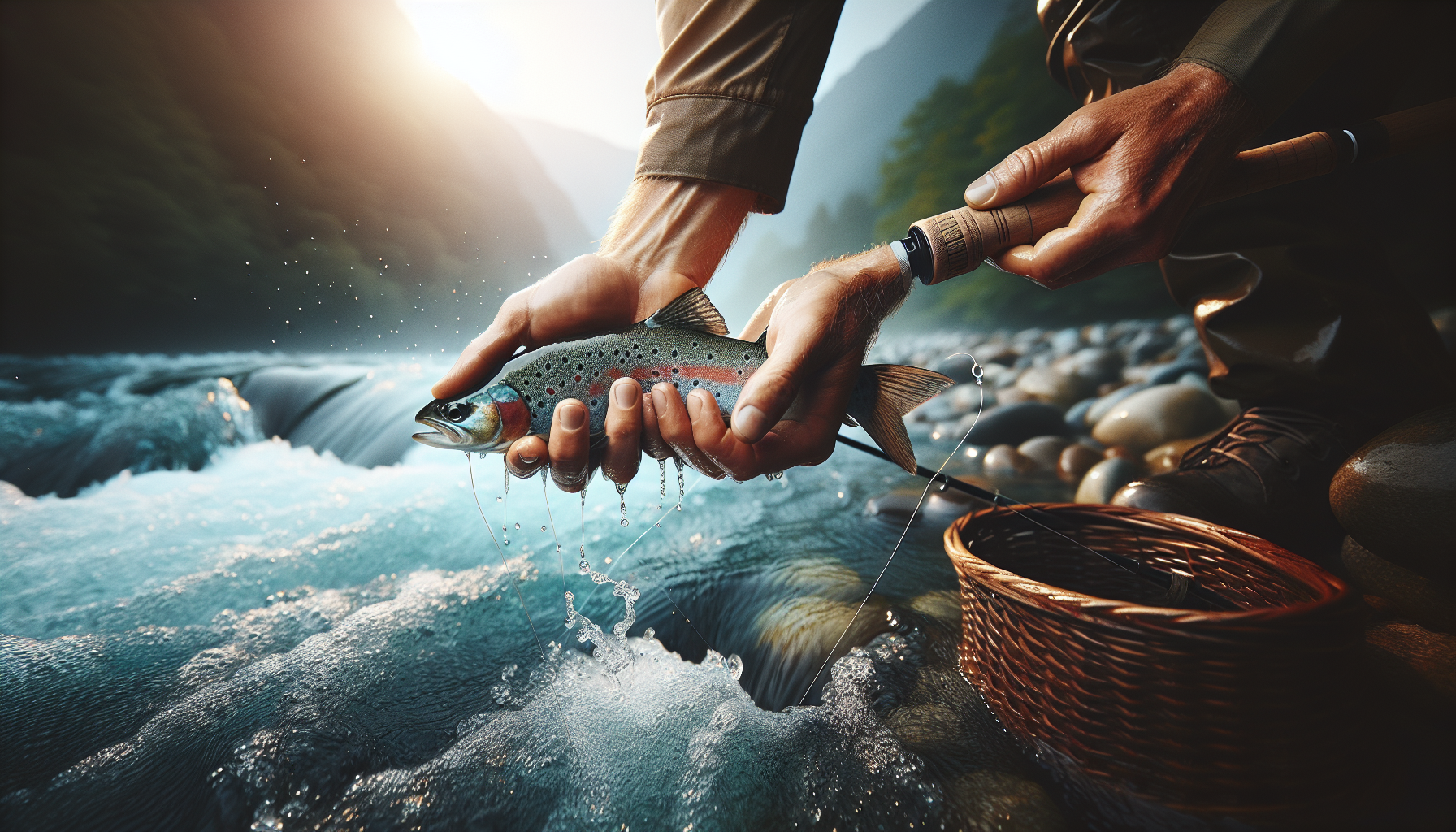
Ethics also have practical consequences. Proper fish handling, barbless hooks where appropriate, avoiding repeated targeting of nesting fish, and respecting closure boundaries reduce mortality and protect recruitment. I have seen heavily pressured fisheries where nominal catch-and-release still produced obvious stress because fish were played too long, held out of water for photographs, and repeatedly caught in thermal bottlenecks. Conservation is not only about regulations on paper. It is about whether anglers understand the biological reason behind the rule and act accordingly even when no one is watching.
Education is therefore becoming a central part of conservation efforts. Guides, shops, clubs, and media outlets shape norms faster than regulation alone. When respected anglers explain why fishing should stop at 68 degrees Fahrenheit in a trout stream, or why boot cleaning prevents whirling disease and didymo spread, they convert science into behavior. That translation role will be increasingly important as fisheries become more crowded and environmental stress intensifies.
Policy, funding, and the partnerships that will determine outcomes
The future of fly fishing conservation will ultimately depend on governance and money. Habitat projects require permits, engineering, biological review, landowner agreements, and long-term maintenance. Watershed protection often hinges on water rights law, land acquisition, conservation easements, infrastructure grants, and political support. Anglers sometimes underestimate this because the visible part of conservation is a volunteer tree planting day, while the decisive work may happen months earlier in agency meetings and funding negotiations.
Durable progress usually comes from partnerships. Federal and state fish and wildlife agencies provide regulatory authority and technical staff. Nongovernmental organizations bring fundraising capacity, volunteer networks, and local credibility. Tribes and First Nations contribute stewardship leadership, treaty rights perspective, and place-based ecological knowledge that many restoration programs are only beginning to value appropriately. Universities contribute monitoring and experimental design. Landowners determine whether many projects happen at all.
Funding sources are diversifying. Excise taxes from tackle and boating programs, conservation license plates, mitigation funds, private philanthropy, natural resource damage settlements, and federal infrastructure programs all play a role. The strongest projects build maintenance into the budget from the beginning, because neglected fencing, failed plantings, or clogged side channels can erase gains. For readers exploring related conservation and ethics topics, this hub should point you toward deeper coverage of habitat restoration, fish handling standards, invasive species control, public lands policy, and climate resilience planning. Together, those subjects explain how conservation efforts move from intention to measurable recovery.
Fly fishing conservation is headed toward a more rigorous, less romantic future, and that is good news for fish. The winning approach will not be a single tactic but a portfolio: protect intact watersheds, restore degraded habitat, reconnect fragmented rivers, defend water quality, recover native fish, adapt to climate stress, and build ethical angling cultures that match biological reality. Conservation efforts work best when they are specific, monitored, and honest about tradeoffs. Stocking has limits. Access needs design. Catch-and-release is not a cure-all. Habitat remains the foundation.
The main benefit of this shift is durability. Healthy fisheries created by functioning ecosystems are more resilient than fisheries propped up by short-term fixes. They support better angling, stronger local economies, richer biodiversity, and more public support for rivers worth defending. If you care about the future of fly fishing, start locally: learn your watershed, support science-based projects, follow seasonal restrictions, and contribute time or funding to credible conservation efforts. The future of fly fishing conservation will be built one restored reach, one informed decision, and one protected watershed at a time.
Frequently Asked Questions
What does conservation mean in the future of fly fishing?
In the future of fly fishing conservation, the term goes far beyond simply protecting a few popular rivers or setting fishing regulations. It refers to a broad, science-based effort to keep entire aquatic systems healthy enough to support wild fish over the long term. That includes restoring stream habitat, protecting coldwater refuges, improving water quality, reconnecting fragmented rivers, reducing erosion and sedimentation, and managing fishing pressure in ways that do not overwhelm stressed fisheries. For fly fishers, conservation is not separate from the sport. It is the foundation that makes the sport possible.
As climate pressure increases, conservation is becoming more proactive and more strategic. Instead of reacting only after fish populations decline, agencies, nonprofits, landowners, and anglers are increasingly focused on preserving resilience before systems fail. That means identifying the streams most likely to remain cold, productive, and biologically diverse in warmer conditions, then investing in those places early. It also means improving degraded habitats so fish have better odds of surviving heat, drought, floods, and shifting insect cycles. In practical terms, the future of fly fishing conservation will depend on watershed-scale thinking, not isolated fixes.
For anglers, this broader definition matters because healthy fisheries are tied to healthy landscapes. A trout stream is only as strong as the forests, tributaries, wetlands, groundwater inputs, and spawning habitat connected to it. If any one of those pieces breaks down, fish populations usually feel the effects. The future of conservation in fly fishing will therefore be measured not just by how many fish are caught, but by whether rivers remain ecologically intact, self-sustaining, and capable of supporting both wildlife and responsible recreation.
How is climate change affecting fly fishing conservation efforts?
Climate change is one of the central forces reshaping fly fishing conservation. Many prized fisheries, especially trout and salmon waters, depend on cold, clean, well-oxygenated water. As air temperatures rise, rivers and streams often warm as well, reducing suitable habitat for coldwater species. Fish become more stressed, less able to recover from handling, more vulnerable to disease, and in some cases unable to survive in stretches they once occupied. Snowpack changes, earlier runoff, longer summer droughts, and more extreme flood events are also altering the timing and stability of river systems in ways that directly affect fish, aquatic insects, and spawning success.
For conservationists, this means old assumptions no longer hold. A river that historically supported strong summer fishing may now face seasonal closures, temperature restrictions, or significantly reduced fish survival during heat waves. Conservation plans increasingly include riparian planting to increase shade, floodplain restoration to improve water storage, barrier removal to give fish access to cooler upstream habitat, and flow protection measures to maintain adequate water during dry periods. Scientists are also mapping thermal refuges, groundwater-fed sections, and climate-resilient watersheds so efforts can be prioritized where they will have the greatest long-term impact.
From an angler’s perspective, climate change is also changing what ethical participation looks like. Fishing at dawn instead of midday, carrying a thermometer, avoiding trout water during extreme heat, and practicing low-stress catch-and-release are becoming normal parts of responsible fly fishing. The future of conservation will likely involve more adaptive management, where regulations, access, and restoration strategies are adjusted quickly based on real conditions rather than fixed expectations. In short, climate change is not just another challenge on the list; it is the factor redefining how fly fishing conservation must operate in the decades ahead.
Why are invasive species such a major concern for the future of fisheries?
Invasive species are a major concern because they can fundamentally alter aquatic ecosystems, often faster than native fish populations and managers can respond. In fly fishing waters, invasive plants, invertebrates, and fish can disrupt food webs, compete with native species for habitat, prey on eggs and juvenile fish, spread disease, and change the physical structure of streams and lakes. Once established, they are often expensive or nearly impossible to eliminate completely. That makes prevention and early detection essential parts of modern fly fishing conservation.
The future challenge is that environmental stress can make fisheries even more vulnerable to invasives. Warmer water, altered flows, and disturbed habitats often create openings for non-native species to expand. Some invasive fish are more tolerant of heat and degraded conditions than native trout or salmon, which means climate change can indirectly increase invasion pressure. Aquatic hitchhikers such as zebra mussels, New Zealand mudsnails, didymo, and other harmful organisms can also spread through gear, boats, wading equipment, and water transfers between watersheds. In a highly mobile recreation culture, the risk of unintentional transport remains significant.
For fly fishers, this is one area where individual behavior truly matters. Cleaning, draining, and drying equipment; following local decontamination rules; avoiding bait or fish movement; and respecting access restrictions can directly reduce risk. On the management side, the future of conservation will likely involve more monitoring, stronger rapid-response systems, improved public education, and tighter coordination between states, provinces, tribes, and federal agencies. Healthy fisheries are not maintained just by protecting native fish from harvest; they also depend on preventing ecological takeovers that can permanently reduce biodiversity and compromise the angling experience.
What role do anglers play in protecting fish populations and aquatic ecosystems?
Anglers play a much larger role in conservation than many people realize. Regulations and restoration projects matter, but on-the-water behavior from thousands of individual fishers often determines whether those efforts succeed. Fly fishers influence fish survival through how they handle fish, when they choose to fish, what gear they use, how they move between waterways, and whether they support habitat protection beyond their own day on the river. In the future, conservation-minded angling will be less about claiming to care and more about consistently making choices that reduce cumulative stress on fisheries.
That starts with practical ethics. Using appropriate tackle to land fish quickly, keeping fish in the water during release, minimizing air exposure, pinching barbs where appropriate, avoiding repeated targeting of visibly stressed fish, and respecting spawning areas are all meaningful actions. So is recognizing when not to fish. During warm-water events, low-flow periods, or post-disturbance recovery, staying off the river can be one of the most important conservation decisions an angler makes. Responsible participation also includes cleaning gear to prevent invasive spread, staying on durable access routes to protect banks and riparian vegetation, and following seasonal closures designed to protect vulnerable fish.
Beyond personal conduct, anglers are often the strongest advocates for healthy watersheds. They volunteer for stream restoration, support land and water protections, report poaching or habitat damage, contribute to conservation groups, participate in public comment periods, and help fund management through licenses, stamps, and excise taxes. In many places, anglers are also critical observers who notice temperature changes, insect declines, fish kills, and access issues before anyone else. The future of fly fishing conservation will depend heavily on this informed, active role. Anglers are not just users of the resource; they are part of the stewardship network that determines whether wild fisheries remain viable.
What will successful fly fishing conservation look like in the coming decades?
Successful fly fishing conservation in the coming decades will likely look more integrated, more adaptive, and more rooted in long-term resilience than in short-term fixes. Rather than focusing only on boosting fish numbers in a single reach of river, successful conservation will protect whole watersheds, maintain coldwater connectivity, restore floodplains and side channels, improve spawning and rearing habitat, and secure streamflows needed for fish survival. It will also rely heavily on data, including temperature monitoring, population trends, habitat mapping, and insect community assessments, so decisions can be adjusted as conditions change.
Another sign of success will be stronger collaboration. The most effective future conservation efforts will bring together fisheries biologists, Indigenous communities, private landowners, water managers, nonprofits, local businesses, and anglers. Fish do not recognize property lines or agency boundaries, so fragmented management rarely works for long. Where conservation succeeds, it will be because people coordinate across jurisdictional lines to solve shared problems such as water withdrawals, culvert barriers, degraded riparian zones, wildfire impacts, and invasive species threats. Public support will matter as much as technical expertise.
Importantly, success will not always mean preserving every fishery exactly as it existed in the past. In some places, the realistic goal may be to protect strongholds, reconnect habitat, and help native fish persist under new environmental conditions rather than trying to force a river back to a historical baseline that no longer fits the climate reality. For anglers, that can require a shift in mindset. The future of fly fishing conservation is not just about keeping good fishing available next season; it is about ensuring rivers remain ecologically functional and fish populations remain self-sustaining for generations. When conservation is working, fisheries are healthier, habitat is more connected, water is cleaner, and anglers understand that their opportunity exists because stewardship came first.