Choosing the best wading boots for fly fishing can determine whether a day on the river feels controlled and efficient or slippery, cold, and exhausting. Wading boots are specialized footwear designed to provide traction, ankle support, drainage, and durability while walking through rivers, scrambling over banks, and standing for hours on uneven bottoms. In fly fishing, they matter because your boots are the foundation of every cast, every step into current, and every safe return to shore. I have tested wading boots on freestone streams, slick limestone creeks, and broad tailwaters, and the pattern is always the same: anglers notice rods and reels first, but skilled anglers learn quickly that poor boots end trips early. This guide covers gear reviews at the hub level, explaining what separates strong boots from weak ones, which features deserve your money, and how to compare models for your fishing style. If you are researching the best wading boots for fly fishing, start by understanding the categories, materials, sole options, fit issues, and maintenance demands that shape real-world performance on the water.
What Makes a Great Wading Boot
The best wading boots for fly fishing combine four traits: reliable traction, secure support, fast drainage, and long-term durability. Traction matters because stream bottoms vary wildly. Rounded cobble, algae-covered bedrock, submerged wood, and muddy banks all demand different grip characteristics. Support matters because wading puts your ankles in awkward positions while current pushes against your legs. Drainage matters because boots that hold water become heavy, cold, and abrasive. Durability matters because stitching, toe caps, and sole attachment points take constant abuse from gravel, sand, and repeated flexing.
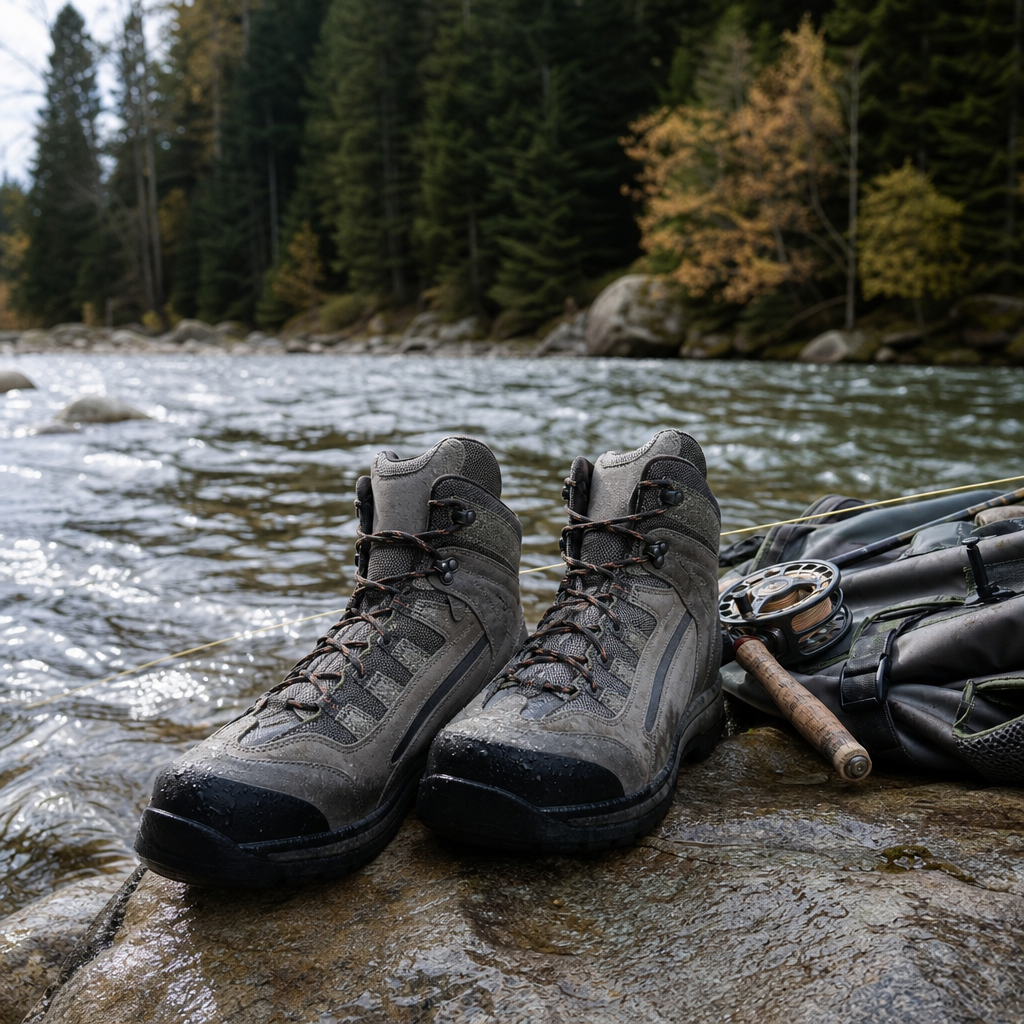
A strong boot uses synthetic uppers more often than full leather because modern synthetics dry faster, weigh less, and resist breakdown better after repeated immersion. Reinforced toe rands reduce abrasion when kneeling or kicking against rocks. Closed-cell padding limits water absorption. Corrosion-resistant hardware, usually brass alternatives or coated metal lace hooks, holds up better in wet conditions. Good boots also lock the heel in place. Heel lift seems minor in the store, but on the river it causes blisters, unstable footing, and fatigue by midday.
Weight is another factor anglers routinely misjudge. Heavier boots can feel secure, but excess mass increases energy use over a long day, especially when hiking into remote water. The best models balance structure with mobility. Premium examples from Simms, Patagonia, Orvis, Korkers, and Grundens often hit that balance through molded midsoles, strategic ankle padding, and outsole systems tuned for angling rather than general hiking.
Felt, Rubber, and Studded Soles Explained
Sole choice is the biggest decision in any wading boot review because traction changes dramatically with the bottom composition and local regulations. Felt soles remain exceptionally effective on slimy rocks because the dense fibers conform to irregular surfaces and create grip where hard rubber can skate. On many trout streams, felt still delivers the most confidence when you are side-stepping across polished rock ledges or standing in moderate current. The main drawback is poor performance on mud, snow, grassy banks, and long hikes. Felt also dries slowly and has been restricted in some regions due to concerns about transporting invasive organisms.
Rubber soles have improved significantly. Sticky compounds paired with aggressive lug patterns now handle mixed terrain better than older flat rubber designs. If you hike, fish multiple watersheds, or want one boot for drift boat days and walk-and-wade trips, rubber is often the practical choice. Add carbide or aluminum studs and traction improves substantially on slick rock. Studded rubber excels in many western rivers and on steep entries where felt alone can slide on loose dirt.
Studs are not universally better. They can be noisy on drift boats, hard on inflatable rafts, and uncomfortable on long approaches over hard ground. Aluminum bars and large cleats can grab smooth rock exceptionally well, but they wear differently than carbide points and may feel awkward to anglers unused to them. The best answer is to match sole system to your fishery, not to internet myths. If local regulations allow felt and you primarily fish mossy freestones, felt remains highly relevant. If you move between rivers, hike often, or fish in regions that ban felt, studded rubber usually offers the broadest versatility.
How Fit, Support, and Drainage Affect Performance
Fit is where many anglers make expensive mistakes. Wading boots must fit over neoprene stockingfoot waders, so your normal shoe size is only a starting point. In most brands, anglers size up by one full size, though some boots run true and others are built around roomier lasts. The correct fit feels snug through the heel and midfoot, with enough toe room to prevent pressure on descents. When I assess a boot, I focus on heel retention first. If the heel lifts during a controlled lunge, the boot will likely cause trouble in current.
Ankle support should stabilize without creating a rigid, ski-boot feel. Boots with medium-height cuffs and dense foam around the collar usually offer the best compromise. Very soft boots may feel comfortable in a shop but fold when edging on side slopes. Very stiff boots can reduce stream feel and become tiring during long walks. Midsole design also matters. EVA provides cushioning and low weight, while TPU plates or shanks improve torsional stability under load.
Drainage ports should release water quickly and resist clogging with sand. Better boots place drainage openings low on the sidewalls and pair them with hydrophobic materials that do not sponge up water. This reduces carry weight every time you step out of the river. Interior seams should be smooth, because grit trapped inside wet boots acts like sandpaper against stockingfeet over time.
Best Wading Boot Categories for Different Anglers
No single model is best for everyone, which is why a hub article on gear reviews should organize boots by use case. Beginners often need value and forgiveness. A good entry-level boot emphasizes dependable construction, moderate support, and a straightforward rubber outsole that works in varied conditions. Mid-priced boots from Orvis, Redington, and Frogg Toggs often serve this group well.
Frequent trout anglers benefit from premium support and better outsole engineering. In this category, Simms Freestone, Simms G3 Guide, Orvis Pro, and Patagonia Forra stand out in many review conversations because they balance comfort, drainage, and proven stream traction. Guides and heavy users should prioritize rebuild quality, sole longevity, and upper abrasion resistance over initial price. Paying more usually makes sense if you fish fifty or more days a year.
Travel anglers need lighter boots that pack efficiently and dry quickly between destinations. Saltwater flats anglers have different needs again: less emphasis on deep-river traction, more emphasis on corrosion resistance, quick drying, and comfort in warm climates. Women’s-specific and youth-specific fits also deserve attention. Brands that shape heel pockets and forefoot width more precisely often outperform unisex designs in control and comfort.
| Angler Type | Best Boot Traits | Typical Sole Choice | Common Example Brands |
|---|---|---|---|
| Beginner | Value, easy fit, moderate support | Rubber or studded rubber | Orvis, Redington, Frogg Toggs |
| Dedicated trout angler | Strong traction, drainage, durability | Felt or studded rubber | Simms, Patagonia, Korkers |
| Guide or heavy user | Maximum longevity, rebuild quality, support | Studded rubber or felt | Simms, Orvis, Grundens |
| Travel angler | Low weight, quick drying, packability | Rubber | Korkers, Patagonia, Redington |
| Mixed-terrain angler | Versatility across rivers and trails | Interchangeable or studded rubber | Korkers, Simms |
Leading Brands and Standout Models
Simms remains the benchmark brand in many fly shops because its boot line consistently addresses support, construction quality, and angling-specific traction. The Freestone is a widely trusted mid-tier option, while the G3 Guide is built for anglers who spend serious time on the water. Orvis has improved its boot category with models that feel stable underfoot and well finished, especially for anglers who want premium features without the heaviest designs. Patagonia approaches boots with a clear emphasis on materials and hiking comfort, making its better models appealing to anglers who walk long distances.
Korkers occupies a unique niche with interchangeable sole systems. For anglers fishing across changing conditions or jurisdictions, swap soles can be genuinely useful, not just a marketing idea. The tradeoff is added mechanical complexity and the need to stay organized with extra sole sets. Grundens has also earned attention by building rugged, supportive options that fit anglers wanting durable boots at competitive prices.
Budget brands can still work, especially for occasional anglers, but compromises usually appear in outsole grip, upper longevity, or hardware quality. Eyelets may rust sooner, midsoles may pack out faster, and toe reinforcement may separate after a season of hard use. Good reviews should state this plainly: inexpensive wading boots can be acceptable for light duty, but they rarely deliver the confidence of stronger boots in difficult water.
How to Review Wading Boots Like an Experienced Angler
A useful gear review does not stop at comfort out of the box. It tests traction on multiple substrates, evaluates support under current pressure, and tracks wear over time. When I review boots, I wade smooth bowling-ball rocks, sharp gravel runs, muddy edges, and steep exits. I note whether the laces stay secure when wet, how much debris enters the collar, and whether the outsole still grips after several trips.
Look for reviews that mention objective details: boot weight, outsole type, stud compatibility, drainage layout, rand coverage, and break-in time. Vague claims such as “great grip” or “super durable” are not enough. Better reviewers explain where the boot worked and where it did not. For example, a felt boot may be excellent on algae-coated bedrock yet frustrating on snowy trails to the river. A lightweight rubber model may hike beautifully but feel less planted in heavy current than a more structured guide boot.
Also consider repairability and warranty support. Premium brands usually provide better customer service, clearer sizing guidance, and more consistent updates when a model changes. That matters because even excellent boots wear out. Adhesives age, uppers abrade, and studs disappear. A trusted manufacturer with dependable quality control reduces the chance of surprise failure midseason.
Care, Maintenance, and When to Replace Your Boots
The best wading boots for fly fishing last longer when they are cleaned and dried correctly. After each trip, rinse off mud, sand, and plant material. Remove gravel trapped in seams and lace channels. Dry boots in a ventilated space away from direct high heat, which can damage adhesives and warp materials. If you fish multiple watersheds, disinfection protocols matter. Many agencies recommend complete drying and, in some cases, approved decontamination methods to reduce the spread of invasive species and pathogens.
Inspect soles regularly. Replace missing studs promptly and watch for edge separation, especially around the toe and heel. Check the interior for seam wear that could abrade your stockingfoot waders. Laces deserve attention too; carry a spare pair in your pack because a broken lace at the trailhead can ruin a day.
Replace your boots when support collapses, traction drops noticeably, or structural damage affects safety. Compressed midsoles, detached rands, and unstable heel counters are not cosmetic issues. They change how you move in current. Anglers often try to squeeze one more season from dead boots, but slipping once on fast water can cost far more than a replacement pair.
The best wading boots for fly fishing are the ones that match your rivers, walking distance, and fishing frequency while keeping you stable and comfortable in moving water. A quality boot should grip the bottom you actually fish, fit securely over your waders, drain quickly, and survive repeated abuse from rock, gravel, and current. For most anglers, the core decision is sole type first, then fit, then support and durability. Felt still shines on slick rock where regulations allow it. Rubber, especially with studs, offers broader versatility for mixed terrain and travel. Premium boots from Simms, Orvis, Patagonia, Korkers, and Grundens usually justify their reputation because they solve practical problems that cheaper boots often leave exposed.
As the hub for gear reviews in product reviews and recommendations, this page should help you narrow the field before diving into model-specific comparisons. Use it as a decision framework: identify your primary water type, decide whether hiking or in-river traction matters more, and prioritize fit above marketing claims. If you fish only a few days each season, a solid mid-range boot may be enough. If you fish hard, guide, or wade technical rivers, spending more on support and outsole performance is usually the smarter long-term buy. Compare the leading models, read detailed reviews with real testing notes, and choose a pair built for your water.
Frequently Asked Questions
What should I look for when choosing the best wading boots for fly fishing?
The best wading boots for fly fishing should match the type of water you fish, the terrain you cover, and the level of support you need for long days on the river. Start with traction, because your outsole has the biggest effect on safety and confidence in current. Felt soles are well known for gripping slick rocks, while rubber soles are more versatile for hiking, mud, gravel bars, and mixed terrain. Some boots also allow studs or cleats, which can add extra bite on algae-covered stones and steep banks. If you often move between rivers, trails, and boat ramps, a quality rubber sole with metal traction may be the most practical setup.
Support is the next major factor. Good wading boots should stabilize your ankles when crossing uneven bottoms, stepping between boulders, or climbing in and out of the river. Higher-cut boots with a secure lacing system generally provide better structure, which matters if you carry a pack or fish fast current. Fit is equally important. Wading boots are designed to be worn over neoprene stockingfoot waders, so you typically need more room than in standard hiking footwear. A boot that is too tight can reduce circulation and become uncomfortable in cold water, while a boot that is too loose can lead to instability and blisters.
Also pay attention to drainage, weight, and durability. Wading boots should shed water quickly rather than stay heavy and saturated after every crossing. Materials such as synthetic uppers, reinforced stitching, and abrasion-resistant panels help boots stand up to rocks, gravel, and repeated soaking. Lacing hardware should be corrosion-resistant and easy to use with cold or wet hands. In short, the best choice is not just the boot with the most features, but the one that balances grip, comfort, support, and long-term reliability for the way you actually fish.
Are felt sole or rubber sole wading boots better for fly fishing?
Neither option is universally better; the right choice depends on where and how you fish. Felt sole wading boots have long been favored by many fly anglers because they provide excellent grip on wet, polished rocks, especially in rivers with slick, algae-coated bottoms. When you are making careful moves through technical water, that extra friction can feel noticeably more secure. This is why felt remains popular among anglers who spend most of their time in freestone streams, tailwaters, or rocky rivers where in-stream traction is the top priority.
Rubber sole wading boots, however, are often more versatile overall. They perform better than felt on trails, muddy banks, boat ramps, snow, and dry rock, making them a strong choice if your day includes a lot of hiking or varied terrain. Modern sticky-rubber compounds have improved substantially, and many rubber-soled boots can be paired with studs to increase traction in the river. For anglers who want one do-it-all setup, rubber often makes more sense because it transitions more naturally between wading and walking.
There is also a practical issue to consider: regulations. In some areas, felt soles are restricted or banned because they can retain moisture and organic material that may contribute to the spread of invasive species. If you fish in multiple states or provinces, it is worth checking local rules before investing in felt. For many anglers, the most sensible decision comes down to this: choose felt if your primary need is maximum grip on slick river rock and it is legal where you fish; choose rubber if you want all-around versatility, easier travel between access points, and broader compatibility with different fishing environments.
How should wading boots fit with stockingfoot waders?
Wading boots should fit securely over your stockingfoot waders without compressing your feet or allowing excessive movement inside the boot. This is one of the most important parts of choosing the right pair, because even a high-end boot will perform poorly if the sizing is off. Since neoprene booties add volume, most anglers do not wear the exact same size in wading boots that they wear in regular street shoes. Many manufacturers provide specific sizing guidance, and in many cases anglers size up to accommodate the wader foot. The goal is enough room for comfort and circulation, but not so much room that your heel lifts or your foot slides around on uneven bottom.
A proper fit should feel snug through the heel and midfoot, with enough toe room to avoid pressure during long walks or cold-water fishing. Your toes should not be jammed against the front, especially when stepping downhill or bracing against current. Tight boots can make your feet colder by limiting circulation and can create fatigue faster than most anglers expect. Loose boots create different problems, including instability, blistering, and a disconnected feel when placing your feet carefully on submerged rocks.
It is also worth considering sock thickness and seasonal use. If you fish in colder months with heavier layering inside your waders, that can affect fit. Try to size your boots around the full system you plan to wear on the water, not just bare neoprene booties. Once laced, your boots should hold your foot firmly without pinching. If you can walk, crouch, and flex naturally while still feeling locked in at the ankle and heel, you are likely in the right size range. Good fit directly affects warmth, balance, comfort, and safety, so it deserves as much attention as sole type or brand.
Do I need studs or cleats on my wading boots?
Studs or cleats are not mandatory for every angler, but they can make a major difference in certain conditions. If you regularly fish rivers with slick rock, strong current, steep entries, or algae-covered bottoms, metal traction can add a level of security that plain soles may not provide on their own. This is especially true in places where every step has to be deliberate and the consequences of a slip include a hard fall, soaked gear, or a dangerous downstream tumble. For many anglers, studs are one of the most effective upgrades they can make for confidence in challenging water.
That said, there are trade-offs. Studded boots can be noisier on rock, less comfortable on hard surfaces like pavement or boat decks, and sometimes too aggressive for certain uses. They can also reduce grip on smooth dry surfaces where rubber alone might perform better. In drift boats or rafts, some guides and outfitters prefer non-studded footwear to protect flooring. It is also possible to feel a bit more “high-point” contact underfoot with studs, depending on the boot design and how many are installed.
The best approach is to match your traction setup to your fishing conditions. If you fish technical rivers often, studs are usually worth serious consideration. If most of your fishing happens on gentle gravel-bottom streams, lakes, or access points with limited wading difficulty, you may not need them. Some anglers prefer rubber soles without studs for mobility and simplicity, while others would never step into fast water without metal traction. The deciding question is whether your normal fishing conditions demand extra bite. If the answer is yes, studs can improve both safety and endurance by reducing the physical strain of constantly bracing against slips.
How long do wading boots last, and how can I make them last longer?
The lifespan of wading boots depends on how often you fish, the type of terrain you cover, and the quality of construction. For anglers who fish occasionally and take good care of their gear, a solid pair of boots can last several seasons. For anglers who are on the water weekly, hike rough banks, scramble over sharp rock, and fish in all weather, wear will happen much faster. The first areas to show damage are often the soles, toe caps, laces, stitching, and drainage zones. High-end boots usually use better materials and reinforcements, but even premium models are working in a harsh environment and should be treated like performance equipment, not indestructible gear.
To extend their life, the biggest habit is proper drying and cleaning. After each trip, rinse off mud, sand, and gravel, especially around seams and eyelets. Let the boots dry thoroughly in a well-ventilated area rather than leaving them packed in a wet gear bag or hot vehicle. Constant dampness can break down adhesives, encourage odor, and accelerate material fatigue. If your boots have removable insoles, taking them out can help the interior dry faster. You should also inspect laces, lace hooks, and soles regularly so small problems can be fixed before they turn into a failed boot on the river.
Use matters too. Wading boots are built for river travel, but repeated long-distance hiking on abrasive trails or unnecessary use on hard surfaces can shorten their life. If your model accepts replaceable studs or cleats, monitor their wear and replace them as needed. When sole traction is worn smooth or upper support begins to collapse, performance and safety decline even if the boot is technically still usable. A well-maintained boot not only lasts longer but also continues to provide the grip, drainage, and ankle support that make fly fishing safer and more comfortable. In practical terms, the best way to protect your investment is simple: rinse them, dry them, inspect them, and avoid storing them wet.