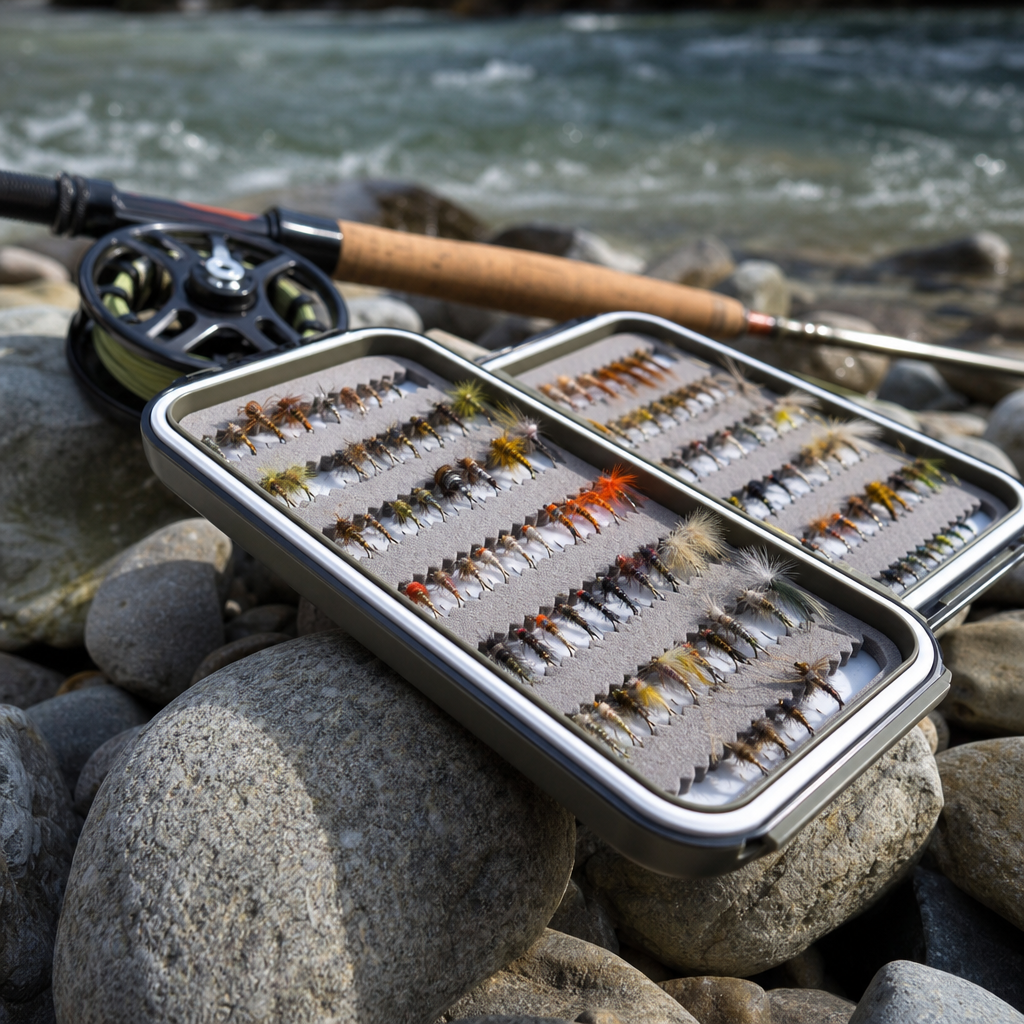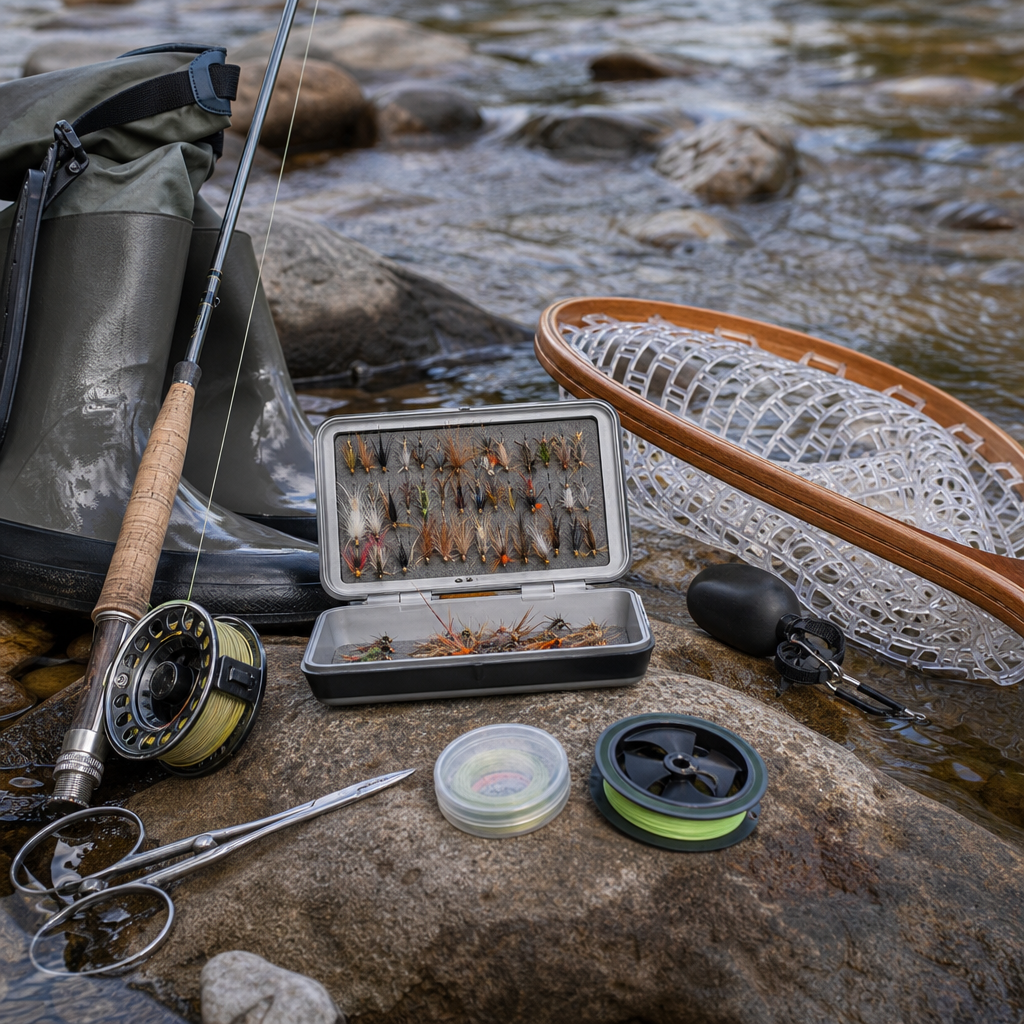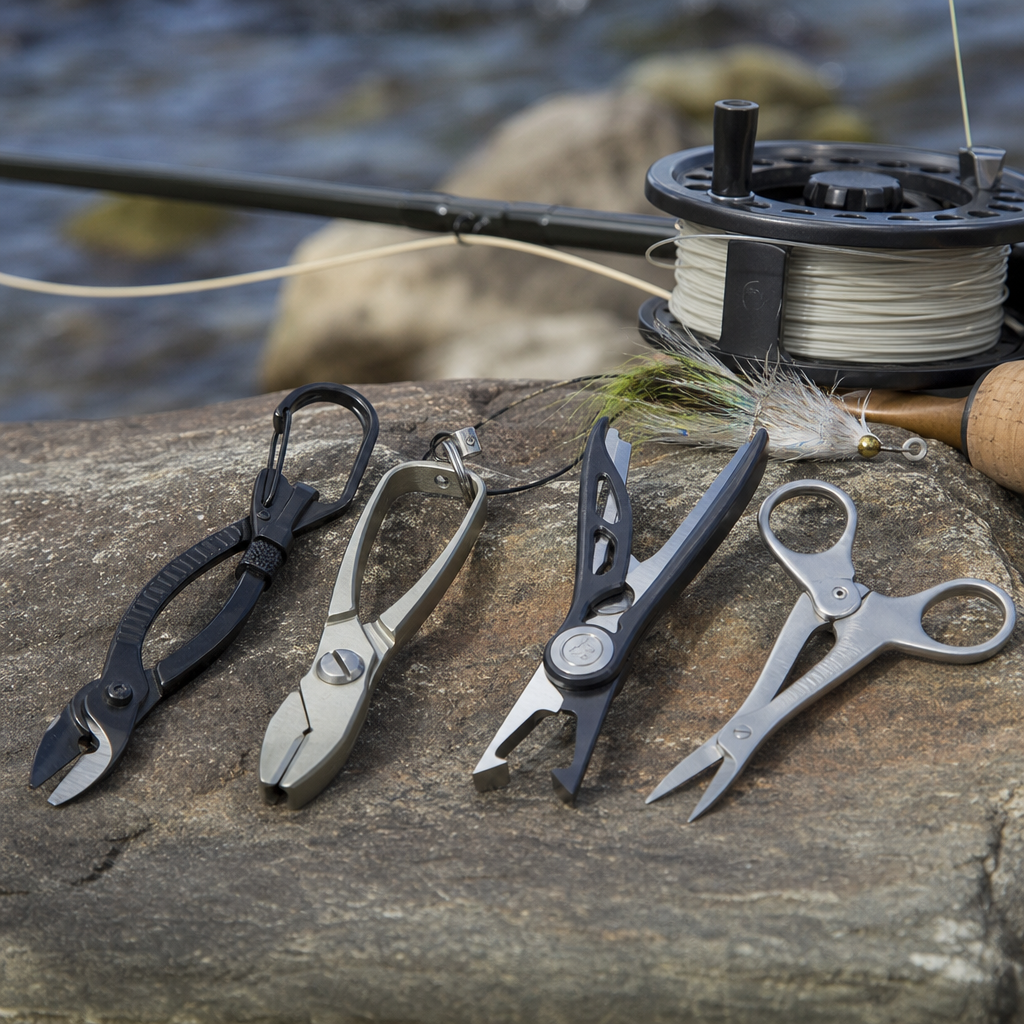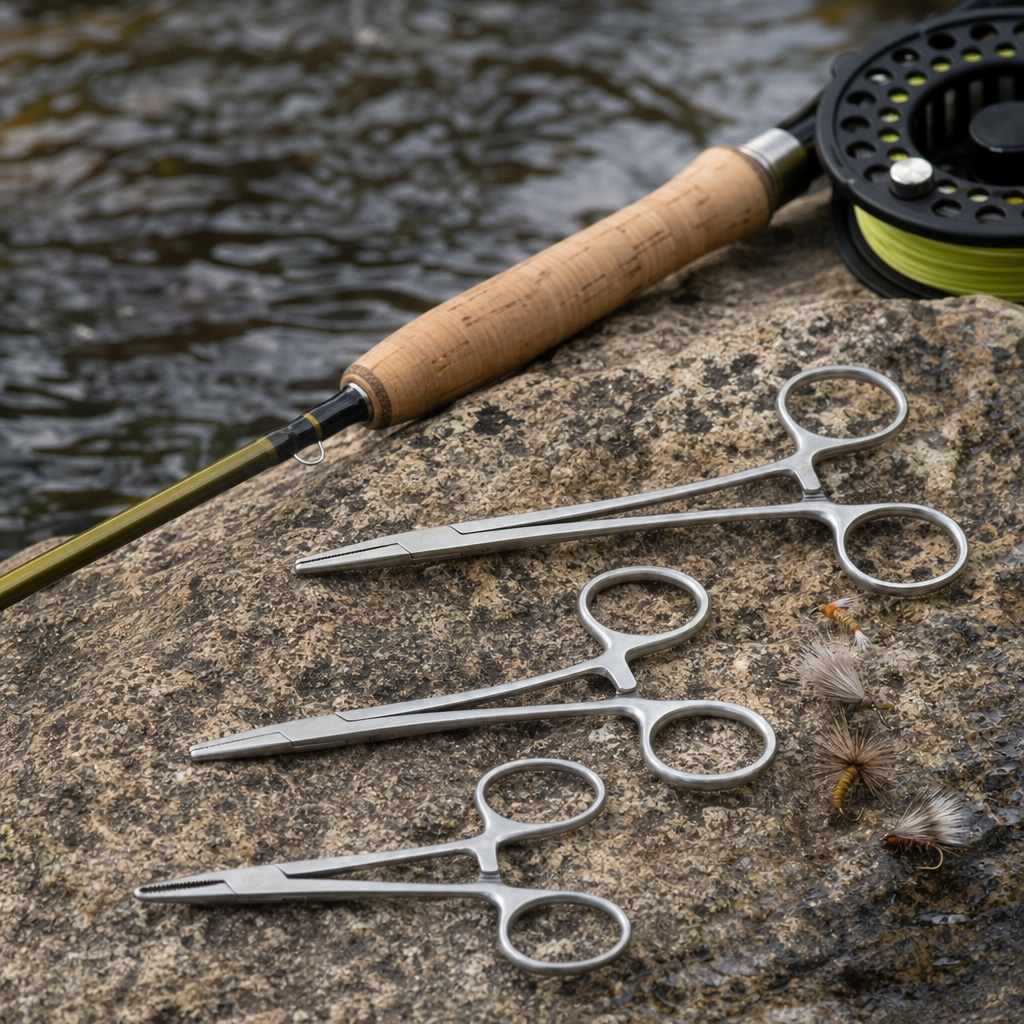
Fly fishing demands attention to current seams, insect activity, rod load, and fish behavior, yet many anglers now add another layer: documenting the day without compromising the experience. The best fly fishing cameras for 2025 are not simply the highest resolution models on a spec sheet. They are tools that survive spray, cold hands, accidental drops on river rock, and long hikes to remote water while producing clear photos and stable video. A useful fly fishing camera balances image quality, waterproofing, battery life, mounting flexibility, low-light performance, and ease of use when your hands are wet or gloved. That balance matters because a camera that is brilliant in a studio can fail completely on a drift boat, in a sling pack, or waist deep in a freestone river.
In practical terms, fly fishing cameras fall into four broad categories: action cameras, waterproof compacts, mirrorless cameras, and smartphones in protective systems. Action cameras prioritize ruggedness and point-of-view footage. Waterproof compacts offer better zoom and easier still photography in bad weather. Mirrorless bodies deliver the strongest image quality and lens flexibility but demand more protection and discipline. Smartphones are convenient and increasingly capable, though they remain vulnerable around water unless paired with a truly reliable case or dry pouch. I have used all four approaches on trout streams, salt flats, and float trips, and the pattern is consistent: the right choice depends less on headline megapixels and more on how quickly you can capture a moment before the fish is released.
This hub article covers the full technology review landscape for anglers choosing a camera in 2025. It explains which camera types fit different fishing styles, what specifications matter most, which models lead the category, and how to build a camera setup that works from the first cast to the final takeout. If you are comparing chest-mounted video for instructional clips, compact cameras for fish portraits, or weather-resistant systems for travel, this guide gives you the framework and product recommendations to make a smart purchase.
What Makes a Camera Good for Fly Fishing
A fly fishing camera must do three things exceptionally well: survive the environment, capture the moment fast, and produce files worth keeping. Durability starts with ingress protection, sealing, and impact resistance. For action cameras and waterproof compacts, an IP68-equivalent design or manufacturer-rated waterproof depth is far more important than a marginal gain in frame rate. A river angler is far more likely to fumble a camera into shallow current than to need 8K delivery. Mirrorless systems can absolutely work on the water, but they need weather sealing, a dry bag, silica packs, and careful lens changes. If you fish in freezing weather, battery chemistry also matters; lithium-ion cells lose performance in cold conditions, so spares carried close to the body are essential.
Speed matters just as much as ruggedness. The best fish photo often lasts a few seconds. Cameras need responsive startup, physical buttons large enough to use with wet fingers, and autofocus that locks quickly on a fish held at arm’s length. For video, stabilization is critical because chest, hat, and net mounts amplify every step and strip set. Modern digital stabilization systems such as HyperSmooth, RockSteady, and ActiveSteady have made action footage dramatically more watchable, especially when walking banks or fighting fish one-handed. Audio quality is secondary for many anglers, but if you record instruction or narration, wind reduction and support for external microphones become meaningful differentiators.
Image quality still matters. Fish portraits often happen in high-contrast conditions: bright sky, reflective water, dark tree cover, and a subject that moves. Larger sensors generally preserve more dynamic range and cleaner shadows, while RAW capture allows better recovery in editing. However, a technically superior file is useless if the camera stayed in the pack because it was too cumbersome. The best fly fishing camera is the one that is accessible enough to use repeatedly without distracting from fish handling, safety, and time on the water.
Best Fly Fishing Cameras for 2025 by Category
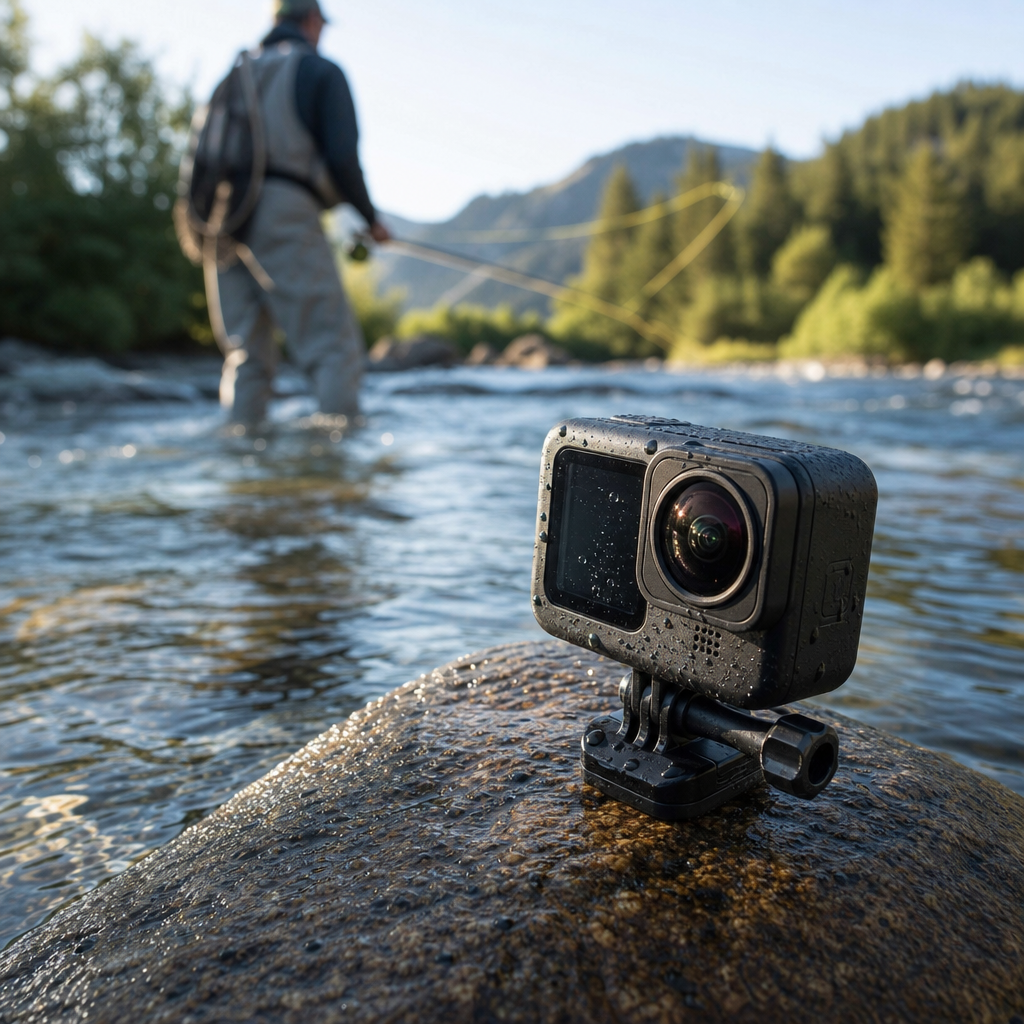
For most anglers, the top all-around action camera in 2025 is the GoPro HERO13 Black. It remains the benchmark because it combines excellent stabilization, reliable waterproofing without an extra housing, broad mount support, and a mature accessory ecosystem. On the river, that ecosystem matters. Chest harnesses, magnetic clips, bite mounts, and boat mounts make the camera adaptable to wading, rowing, and backcountry travel. GoPro’s color science is familiar to editors, battery options are widely available, and replacement parts are easy to source before a trip. If your goal is point-of-view video, fish releases, and quick still grabs from footage, it is the safest recommendation.
The strongest alternative action camera is the DJI Osmo Action 5 Pro. DJI has become a serious competitor by emphasizing image quality, battery endurance, and straightforward usability. In low light under tree cover or at dawn, the larger sensor behavior and processing can produce more natural footage than many anglers expect from an action form factor. The front touchscreen is useful for solo creators recording gear reviews or instructional segments, and DJI’s magnetic mounting system is genuinely convenient when switching from chest to tripod to boat frame. For anglers who create mixed content rather than only POV footage, DJI is a compelling choice.
If still photography matters more than POV video, the OM System Tough TG-7 remains one of the most practical fly fishing cameras available in 2025. Its appeal is simple: true field convenience. It is waterproof, shock resistant, glove friendly, and strong at close focusing, which is excellent for fly patterns, macro insect shots, and hero images of trout in the net. The TG series has earned long-term trust among guides because it handles rain, dunkings, and rough transport better than delicate interchangeable-lens systems. It will not match an APS-C or full-frame camera in dynamic range, but it wins because anglers actually carry it.
For anglers who want the best image quality and are willing to protect their gear, a compact mirrorless setup built around the Fujifilm X-T5, OM System OM-1 Mark II, or Sony a6700 makes sense. The Fujifilm option excels for stills, color rendering, and tactile controls. The OM-1 Mark II is especially appealing for outdoor use because of its class-leading stabilization, computational features, and serious weather sealing. The Sony a6700 offers excellent autofocus and strong hybrid video performance. These cameras are ideal for destination travel, editorial storytelling, and creators producing high-end content, but they are not the easiest tools for quick fish handling shots in moving water.
| Camera | Best For | Main Strength | Main Limitation |
|---|---|---|---|
| GoPro HERO13 Black | POV video and all-around river use | Stabilization, mounts, rugged ecosystem | Small sensor limits still quality in difficult light |
| DJI Osmo Action 5 Pro | Hybrid creators and low-light action use | Strong battery life and image processing | Accessory ecosystem is smaller than GoPro’s |
| OM System Tough TG-7 | Fish photos, macro, harsh weather | Waterproof compact convenience | Smaller sensor reduces dynamic range |
| OM System OM-1 Mark II | Premium stills and wildlife-focused storytelling | Weather sealing and stabilization | Higher cost and more complex carry system |
| iPhone 16 Pro or flagship Android in waterproof case | Casual documentation and instant sharing | Convenience and computational photography | Risk management around water remains critical |
How to Choose the Right Camera for Your Fishing Style
The easiest way to choose is to match the camera to how you fish, not how reviewers shoot in controlled tests. If you wade small streams and mostly want release clips and occasional fish photos, an action camera is usually the best answer. It keeps both hands free, records continuously or on quick command, and tolerates immersion. Anglers who fish from drift boats often benefit from a two-camera setup: an action camera mounted to the chest or frame for continuous video, plus a compact or phone for stills when the boat is stable. Saltwater fly anglers face harsher corrosion risk and intense glare, so sealed bodies, hydrophobic lens covers, and diligent rinsing become more important than absolute resolution.
Backcountry anglers should prioritize weight, battery efficiency, and charging flexibility. A camera that uses USB-C charging, accepts power banks, and fits into a small chest pocket is easier to live with on multi-day trips. In Alaska, Patagonia, or the Rockies, I have found that spare batteries matter more than extra lenses because cold temperatures and repeated clip review drain power quickly. If you travel by air with rods, reels, waders, and rain gear already competing for weight, every accessory must justify itself. That reality pushes many anglers toward a compact action camera plus a phone, not a full mirrorless kit.
Content creators, guides, and instructors need to think beyond capture. Workflow matters. GoPro and DJI both integrate well with mobile editing, cloud backup, and quick social delivery, while mirrorless systems often require more card management and post-production. If your goal is client memories delivered the same day, a rugged compact or smartphone workflow may outperform a technically superior camera that needs desktop editing. The best buying decision starts with one question: what are you trying to bring home, cinematic film, reliable fish photos, or fast proof of a great day?
Key Features, Accessories, and Common Buying Mistakes
Several specifications consistently affect results on the water. First, lens field of view matters. Ultra-wide action footage can make fish look distant and rods appear distorted, which is exciting for runs and boat shots but less flattering for fish portraits. Cameras that allow a linear mode or narrower digital crop produce more natural perspective. Second, stabilization should be tested in the exact mounting position you plan to use. A chest mount usually gives smoother, more useful footage than a hat mount because it reduces rapid head movement. Third, color and white balance handling around reflective water can vary significantly. Cameras with good automatic exposure compensation and strong HDR behavior produce more consistent footage on bright rivers.
Accessories often decide whether a setup succeeds. A quality chest harness is the single most useful action camera accessory for fly fishing. It captures a natural view of the cast, hook set, and release while keeping the camera secure. A floating hand grip is excellent from boats and stillwater craft. Polarizing filters can help manage glare, though they may complicate exposure in changing light. For compact and mirrorless cameras, a quick-access chest pack insert or sling divider prevents missed shots. Microfiber cloths, anti-fog inserts, and a waterproof hard case are small additions that solve common field problems. If you are serious about still photography, a rubberized landing net with a flat basket also improves photo efficiency because it holds fish safely while you prepare the camera.
The biggest buying mistakes are predictable. Anglers overspend on resolution they do not need, underestimate storage and battery requirements, and overestimate how often they will carry a large camera. Another mistake is ignoring ergonomics. Tiny touchscreens become frustrating with wet fingers, while deeply nested menus waste critical seconds during a release. Finally, many buyers fail to plan for maintenance. Salt residue, sunscreen smears, condensation, and sand damage cameras far more often than catastrophic dunkings. Rinse saltwater gear with fresh water, dry seals before opening battery doors, and inspect gaskets regularly. If you treat the camera as river equipment rather than consumer electronics, it will last longer and perform better.
Where These Cameras Fit Within a Broader Technology Review Strategy
As a hub page under Product Reviews and Recommendations, fly fishing cameras connect naturally to a wider technology review ecosystem. Buyers comparing the best fly fishing cameras for 2025 are usually also evaluating power banks, waterproof phone cases, action camera mounts, memory cards, polarized sunglasses for filming, and editing software. The camera choice influences all of those downstream purchases. A GoPro-centric setup points toward magnetic mounts, Enduro-style cold-weather batteries, and mobile-first editing. A Tough TG-7 buyer may next want floating straps and compact pouches. A mirrorless user will care about dry storage systems, weather-sealed lenses, and backup workflows in Lightroom, Capture One, or DaVinci Resolve.
That is why this topic works best as a comprehensive technology review hub rather than a single listicle. Readers need a decision framework, not just rankings. They need to understand why a guide on a Montana river may choose a rugged compact, why a YouTube creator filming instruction may choose DJI or GoPro, and why a destination travel angler might pack a mirrorless body despite the burden. In my experience testing gear on trout water, the winning setup is usually the one that reduces friction. Less friction means more documentation, safer fish handling, and fewer missed moments. Use this guide to shortlist the camera type that fits your fishing, then compare the specific models, accessories, and workflow tools that complete the system.
The best fly fishing cameras for 2025 are the cameras that make reliable capture possible in real fishing conditions. For most anglers, that means an action camera like the GoPro HERO13 Black or DJI Osmo Action 5 Pro because they are rugged, stable, and easy to mount. For fish portraits and macro detail, the OM System Tough TG-7 remains one of the smartest purchases on the market. For premium storytelling and destination work, weather-sealed mirrorless bodies such as the OM-1 Mark II, Fujifilm X-T5, or Sony a6700 deliver superior files if you can manage the added complexity. Smartphones still have a place, especially for convenience and instant sharing, but they need serious protection around water.
The central takeaway is simple: buy for your fishing style, not for abstract specifications. Prioritize waterproofing, stabilization, battery life, access speed, and carrying comfort before chasing extreme resolution. Build the system around how you wade, float, travel, and release fish. A modest camera used consistently will create better memories and better content than an expensive setup left in the pack. Start with the category that matches your needs, add the right mount or case, and you will be ready to document your 2025 season with confidence.
Frequently Asked Questions
What features matter most when choosing the best fly fishing camera in 2025?
The most important features are not always the headline specs like maximum resolution or the highest frame rate. For fly fishing, the best camera is the one you can actually use confidently on the water. That starts with weather resistance or full waterproofing, because cameras used around rivers, drift boats, and wet wading conditions need to handle spray, rain, and occasional drops into shallow water. Durability also matters. A camera that can survive a bump against gunwales, river rocks, or a pack frame is far more practical than a delicate model that produces great images but demands constant protection.
Image stabilization is another top priority. Fly fishing often involves filming one-handed, walking uneven banks, or shooting from a boat, so steady video makes a major difference in watchable footage. Fast autofocus is equally valuable, especially when capturing quick releases, jumping fish, or changing light during a hatch. Battery life deserves serious attention as well. Long walks into remote water and full days away from power mean a camera needs enough runtime or easy battery swapping to avoid missing key moments.
Size and carry convenience are often overlooked, but they are critical. A compact camera, action camera, or lightweight mirrorless model is much easier to keep accessible on a chest pack, sling, or wader strap. If a camera is buried deep in a pack, it usually stays there. Finally, consider glove-friendly controls, simple menus, and dependable connectivity for transferring files to a phone. In 2025, the best fly fishing cameras strike a balance between image quality, ruggedness, portability, and ease of use, rather than chasing pure technical specs that may not translate well to real fishing conditions.
Are action cameras better than mirrorless or compact cameras for fly fishing?
Action cameras can be excellent for fly fishing, but they are not automatically better for every angler. Their biggest strengths are durability, waterproof design, compact size, and easy mounting options. If you want hands-free video from a chest mount, hat clip, net, raft frame, or boat console, an action camera is often the most practical choice. They are especially useful for recording hook sets, drifts, wading footage, and fish releases without interrupting the rhythm of fishing. In rough weather or on technical hikes, an action camera is also easier to carry and much less stressful to expose to the elements.
That said, mirrorless and premium compact cameras still have advantages. They generally offer better image quality, stronger low-light performance, more natural background separation, and greater flexibility for still photography. If your goal is to capture hero shots, scenic river landscapes, wildlife, or editorial-quality images for print or social media, a larger-sensor compact or mirrorless camera may produce better results than an action camera. They also tend to give you more control over shutter speed, aperture, and color settings, which matters if you want a more polished final product.
The right choice depends on how you fish and what you want to document. Anglers focused on simplicity, durability, and point-of-view footage often prefer action cameras. Anglers who care more about photography quality and creative control may lean toward compact or mirrorless models. Many serious fishing content creators now carry both: an action camera for continuous on-water video and a compact or mirrorless camera for stills and more intentional shots. In 2025, the best setup is less about camera category and more about matching the tool to your fishing style, your tolerance for gear management, and the type of memories or content you want to bring home.
How important is waterproofing for a fly fishing camera?
Waterproofing is extremely important, and in many cases it should be treated as a core buying factor rather than a bonus feature. Fly fishing puts cameras in close contact with water constantly, even when you are being careful. Splash from landing fish, sudden rain, wet hands, boat spray, river crossings, and accidental slips on slick rocks all create realistic chances of water exposure. A camera that is fully waterproof or at least highly weather sealed gives you more freedom to keep shooting instead of worrying about every drop.
For anglers who fish from kayaks, rafts, drift boats, or saltwater flats, waterproofing becomes even more valuable. In those settings, gear gets wet whether you plan for it or not. A true waterproof action camera is often the safest and most convenient option because it can be mounted externally and used without protective babying. Compact or mirrorless cameras that rely on weather sealing can still work very well, but they usually need more careful handling and often benefit from a dry bag, waterproof case, or sheltered storage between shots.
It is also worth understanding the difference between waterproof and weather resistant. Waterproof means the camera is designed to survive direct water exposure to a specified depth or duration. Weather resistant means it can tolerate moisture, drizzle, and some spray, but not full submersion. For fly fishing, either can work, but the more technical or remote your trips become, the more valuable true waterproofing is. In practical terms, waterproofing improves confidence, speed, and usability on the water. That confidence often leads to better documentation because you are more willing to capture the moment instead of hesitating to protect your gear first.
What is the best way to carry and protect a camera while fly fishing?
The best carry method is one that keeps the camera secure, dry enough for the conditions, and immediately accessible. Accessibility matters because fishing moments happen fast. If your camera takes too long to reach, you will miss the rise, the eat, the release, or the changing light over the river. For action cameras, body-mounted systems are often the easiest option. Chest mounts, shoulder-strap clips, pack mounts, and boat mounts let you film hands-free while keeping the camera out of your casting lane. These setups are especially effective for video-first anglers who want a continuous record of the day.
For compact or mirrorless cameras, many anglers do best with a chest pack, waterproof sling, or padded hip pack that keeps the camera high and close to the body. A protective insert or padded divider helps prevent damage from forceps, fly boxes, and other hard gear. If you wade deep or fish in bad weather, a dry bag inside your pack adds another layer of security. Neck straps can work, but they tend to swing, interfere with casting, and increase the chance of impact against rocks or boat hardware. Wrist straps are often a better choice for quick, controlled shooting near the water.
Protection also comes down to small habits. Use lens caps when practical, carry a microfiber cloth for spray and fingerprints, and keep spare batteries and memory cards in waterproof pouches. If your camera supports a protective housing or cage, it may be worth using in drift boats or rocky environments. The ideal setup should let you move naturally, cast cleanly, and land fish safely without worrying that your camera is one slip away from being ruined. In 2025, the best camera setup for fly fishing is not just about the camera itself, but how efficiently it integrates into the way you fish.
How much image quality do you really need for fly fishing photos and video?
Most anglers need less raw image quality than they think and more practical usability than they expect. For fly fishing, clear, sharp, well-exposed images and stable video usually matter more than chasing the highest possible resolution. A camera that reliably captures skin tones, fish coloration, river detail, and smooth motion in changing light will outperform a technically superior model that is awkward to use or too fragile to bring into real fishing conditions. In other words, usable quality beats theoretical quality almost every time.
For social media, trip archives, YouTube videos, and personal storytelling, modern action cameras, premium compacts, and mirrorless cameras all provide more than enough resolution. What separates good footage from disappointing footage is often stabilization, autofocus consistency, lens quality, dynamic range, and audio handling rather than megapixel count alone. Early morning launches, overcast canyons, and evening spinner falls can expose weaknesses in low-light performance, so anglers who frequently fish at dawn or dusk may benefit from a larger sensor. But for bright daytime river use, many rugged cameras already deliver excellent results.
The real question is how you plan to use the content. If you want simple, vivid footage of drifts, takes, and releases, a smaller camera can be ideal. If you want magazine-worthy stills, cinematic edits, or high-end landscape images, stepping up to a better sensor and lens system makes sense. For most anglers shopping for the best fly fishing cameras in 2025, the sweet spot is a camera that delivers strong image quality without adding so much bulk, complexity, or fragility that it gets left behind. The best camera is the one that helps you preserve the experience while still letting you stay present on the water.