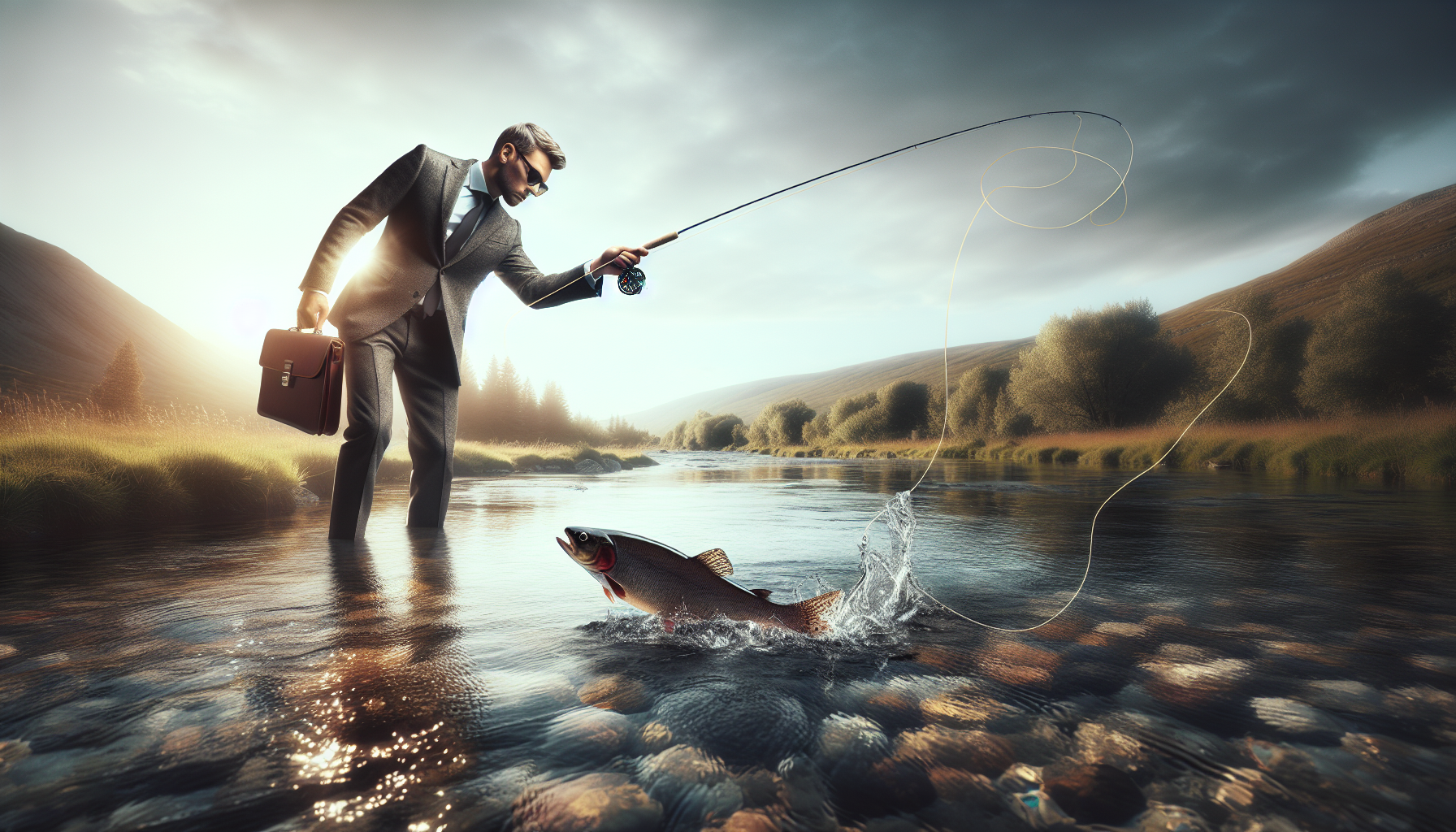
Teaching ethical fly fishing practices starts long before a new angler makes a first cast, because ethics in this sport are not an optional add-on; they shape how fish are handled, how rivers are shared, and how future seasons will look for everyone. Ethical fly fishing means making decisions that protect fish, habitat, and access while still allowing people to enjoy the water. It includes legal compliance, but it goes further into judgment, restraint, and respect. In practical terms, that means understanding catch-and-release best practices, choosing tackle that reduces harm, avoiding unnecessary pressure on fragile fisheries, respecting landowners and other anglers, and recognizing when conditions make fishing irresponsible even if regulations technically allow it.
For beginners, ethical fishing practices can feel abstract until someone explains the direct consequences. I have watched new anglers unintentionally beach trout on rocks for photos, crowd redds during spawning season, and play fish too long on light tackle because no one had ever taught them a better standard. Most of these mistakes come from ignorance, not malice. Education matters because fly fishing sits at the intersection of recreation and conservation. Coldwater species such as trout and salmon are especially vulnerable to warm water, low dissolved oxygen, and excessive handling. Native fish in small streams can be harmed by even modest pressure. A crowded run can lose its value quickly when anglers ignore etiquette. The goal is not to shame beginners. It is to give them a clear framework for making good decisions on every outing.
This hub article covers the core principles every new angler should learn under ethical fishing practices. It explains what ethical fly fishing looks like on the water, why fish welfare and habitat protection matter, how to teach river etiquette, and where judgment is more important than strict rules. If you are building a conservation-minded approach to fly fishing, these are the baseline lessons that support every other topic in responsible angling.
Start with the difference between legal and ethical behavior
The first lesson for new anglers is simple: legal does not always mean ethical. Fishing regulations are minimum standards set by agencies such as state fish and wildlife departments, provincial ministries, and, in some waters, the National Park Service or U.S. Forest Service. They establish seasons, bag limits, gear restrictions, and protected species rules. Ethical fly fishing builds on those rules by asking a harder question: what action causes the least harm while preserving fair opportunity for others?
A good example is fishing during extreme summer heat. A stream may remain open, but if water temperatures climb above about 68 degrees Fahrenheit for trout, post-release mortality can rise sharply, especially when dissolved oxygen is low. Many experienced anglers carry a thermometer and stop fishing warm water even before emergency closures are announced. Another example is targeting visibly spawning fish. In some places it may not be explicitly prohibited, yet repeatedly casting to fish on redds disrupts reproduction and can damage future year classes. Teaching beginners to look beyond the regulation booklet creates anglers who can adapt responsibly when conditions change faster than rules can.
It also helps to explain why this distinction protects access. Landowners, guides, and local communities tend to support fisheries when anglers behave well. Repeated trespass, litter, fish abuse, or combat-style crowding can turn public opinion against anglers quickly. Ethical education is therefore not only about fish conservation; it is also about preserving the social license that keeps fishing opportunities open.
Teach fish handling before casting technique
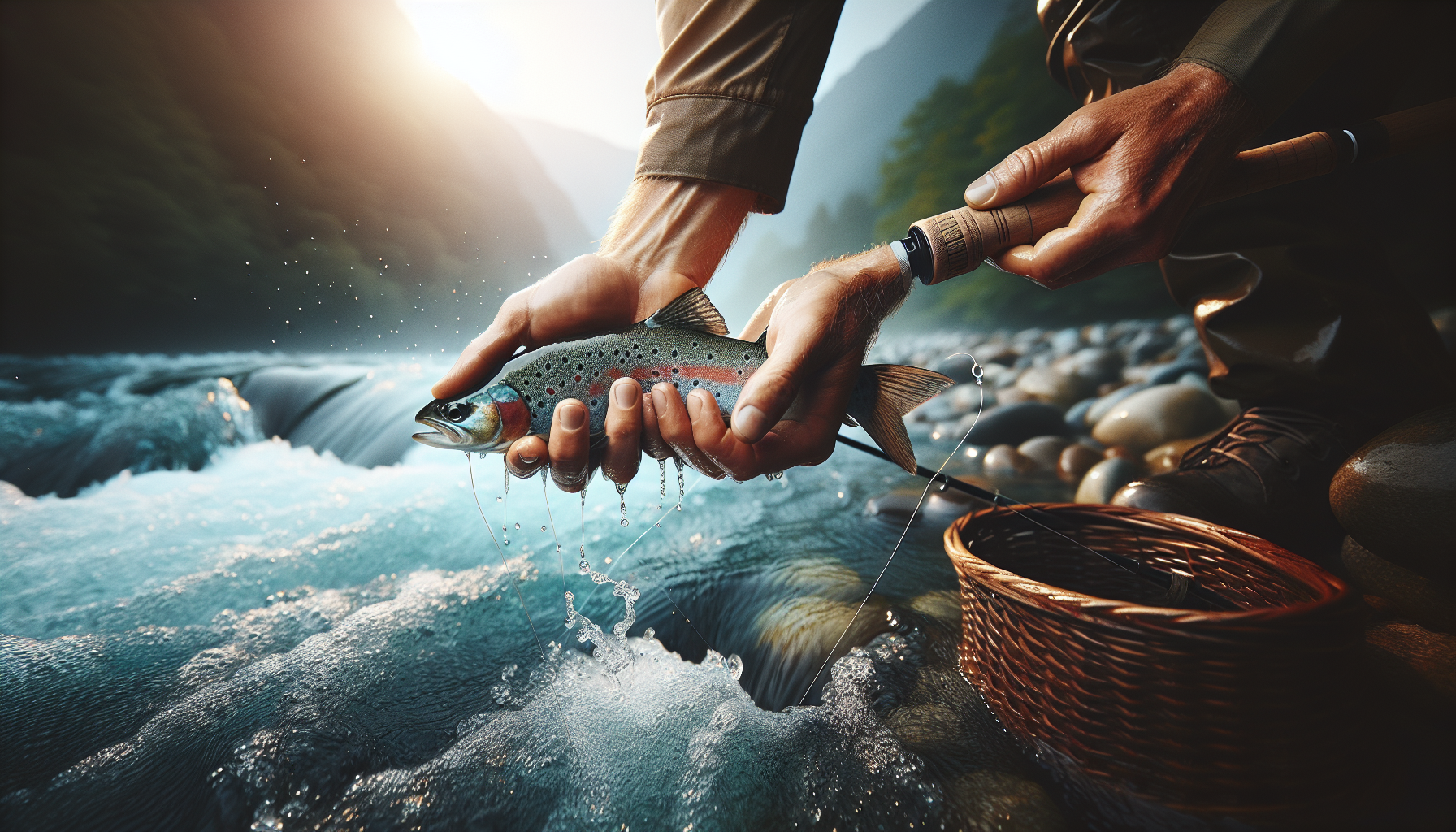
New anglers usually want to learn knots, casting loops, and fly selection first, but fish handling should come earlier. In my experience, a beginner who can release a fish properly does less damage than a skilled caster who treats fish care as an afterthought. The standard sequence is straightforward: fight fish efficiently, keep them in the water, wet your hands before contact, avoid squeezing the body, support the fish horizontally, and release it as quickly as possible.
Barbless hooks are one of the easiest teaching tools because they simplify release and reduce tissue damage. They also make on-stream coaching safer when a novice hooks clothing, skin, or a landing net. Rubber or silicone-coated nets are preferable to knotted nylon because they reduce scale loss and fin abrasion. If a fish is deeply hooked, cutting the tippet close to the hook is often better than attempting forceful extraction. Photos should be prepared in advance, not improvised while the fish is exposed to air. A useful benchmark for beginners is “keep the fish wet,” with air exposure limited to only a few seconds if at all.
Fight time matters more than many novices realize. Undersized tippet, overly soft rods for the species, or a reluctance to pressure fish can leave trout exhausted and vulnerable after release. Ethical fly fishing does not mean babying a fish for ten minutes. It means using balanced tackle and enough side pressure to land it quickly. The Fisheries Management and Ecology literature consistently shows that handling stress, temperature, and exhaustive exercise all affect survival. Those facts should be part of beginner instruction, because they give a biological reason behind every recommendation.
Explain tackle choices that reduce unnecessary harm
Ethical gear selection is not about buying the most expensive equipment. It is about matching tackle to conditions and target species so avoidable injuries do not happen. For trout and panfish, that may mean single hooks instead of trebles, especially where bait or lure methods cross over with fly fishing. For pike, bass, or saltwater species with abrasive mouths, it means using leaders strong enough to shorten the fight. For carp and steelhead, it means rods with enough backbone to control fish away from hazards without dragging out the battle.
Beginners should also learn the conservation logic behind common fly-fishing norms. Split shot, indicators, and weighted flies are effective, but they must be used without creating snag-and-rip presentations that foul-hook fish. Wading staffs, felt alternatives, and boot cleaning matter because invasive species such as didymo, New Zealand mudsnails, and whirling disease organisms can move between waters on gear. Cleaning and drying waders, nets, and boots is an ethical practice with ecosystem-level consequences.
| Practice | Lower-impact choice | Why it matters |
|---|---|---|
| Hook style | Single barbless hook | Speeds release and reduces mouth damage |
| Landing net | Rubber-coated net | Protects slime coat, scales, and fins |
| Tippet strength | Use the heaviest practical size | Shortens fight time and lowers exhaustion |
| Wading gear hygiene | Clean, drain, dry between waters | Helps prevent invasive species spread |
None of these choices guarantee perfect outcomes, and that nuance is worth teaching. Barbless hooks can still injure fish. Heavy tippet can break fish off if anglers use poor knots. Rubber nets still require gentle handling. Ethics is about stacking small decisions in favor of better outcomes, not claiming zero impact.
Protect habitat, not just individual fish
Many beginners understand that fish are living animals, yet they often overlook the fragility of the places fish depend on. Ethical fishing practices include habitat awareness at every step. Wading through spawning gravel can crush eggs. Walking up undercut banks can collapse them. Entering streams carelessly can muddy water, dislodge aquatic insects, and disrupt holding fish long before the first cast. Boats dragged over shallow redds can do similar damage. A new angler should learn to read the river not only for where fish hold, but also for where not to step.
Catch-and-release alone is not enough if habitat quality is declining. Aquatic insects, riparian vegetation, woody structure, floodplain connectivity, and cold clean water all matter. In many trout streams, streamside vegetation shades water, stabilizes banks, and feeds the insect life that supports the food web. Ethical anglers stay on durable paths when possible, pack out tippet and leaders, avoid trampling vegetation, and participate in cleanups or restoration days. Those actions create a visible conservation ethic that others notice.
This is also where education should include watershed thinking. Pollution upstream, irrigation withdrawals, poorly designed culverts, and sediment from development all affect fishing downstream. Beginners who understand watersheds are more likely to support conservation groups such as Trout Unlimited, Backcountry Hunters & Anglers, local riverkeepers, and native fish societies. Ethical fly fishing is strongest when it moves from personal behavior to stewardship of the entire system.
Teach anglers when not to fish
One of the clearest signs of an ethical angler is the willingness to walk away. New anglers rarely hear this message because most instruction focuses on how to catch fish, not when to leave them alone. Yet timing is central to ethical fishing practices. High water after storms can make fish vulnerable and increase stress during landing. Low, clear water can concentrate fish into small refuges and make repeated targeting harmful. During heat waves, warm afternoon water can push trout beyond safe handling thresholds. During spawning periods, fish may be easy to see and easy to catch, which is precisely why restraint matters.
Give beginners practical triggers they can remember. Carry a thermometer. Know seasonal closures and voluntary hoot-owl restrictions. Learn to identify redds, typically light-colored cleaned gravel patches in suitable current. If fish are gulping at the surface in very warm water, if multiple fish roll listlessly after release, or if a run is packed shoulder to shoulder, conditions may already be telling you to stop. Ethical decisions become easier when they are tied to observable signs rather than vague ideals.
This lesson extends to personal capability. If a new angler cannot wade safely, land fish quickly, or identify protected species with confidence, the ethical move may be to fish easier water, use simpler methods, or seek supervision. Restraint is a skill, and it should be taught as deliberately as casting accuracy.
Cover etiquette, access, and community responsibility
Fly fishing ethics are social as well as ecological. Rivers are shared spaces, and poor etiquette can degrade the experience even when no fish are harmed directly. New anglers need explicit guidance on spacing, rotation, noise, and communication. On crowded trout water, stepping in below another angler without asking is a common mistake. On steelhead or salmon runs, many fisheries rely on informal rotation systems; breaking that rhythm creates conflict immediately. Good practice is to ask where someone is working, give generous room, and avoid casting over occupied water.
Access ethics matter just as much. Respect property lines, use legal easements, close gates, avoid blocking roads, and leave no litter. If a fence or sign creates uncertainty, verify access before proceeding. In my work around public-private boundary waters, the fastest way to lose goodwill is casual trespass justified as ignorance. Teach beginners to research maps, read local regulations carefully, and err on the side of caution. Digital tools such as onX, TroutRoutes, and agency access maps can help, but they do not replace local rules or common courtesy.
Information sharing deserves attention too. Social media has changed pressure patterns dramatically. Geotagging sensitive waters, posting hero shots from small native fish streams, or broadcasting fragile locations can overwhelm places that cannot absorb attention. Ethical anglers can still celebrate trips without exposing vulnerable fisheries. Teach newcomers to share patterns, techniques, and general regions more often than exact access points. Protecting a place sometimes means keeping it slightly harder to find.
Build ethics into every beginner lesson
The best way to educate new anglers is to make ethical fishing practices inseparable from basic instruction. Do not save conservation for the end of the day. When teaching knots, explain why stronger connections shorten fights. When teaching fish spotting, explain how to avoid redds and nursery water. When discussing hatches, connect insect life to water quality and streamside habitat. When netting a fish, narrate each movement so the beginner understands the reason behind it. Repetition matters because ethics become habit through routine, not slogans.
Mentorship is especially powerful. Beginners copy what experienced anglers do far more than what they say. If an instructor pinches barbs, checks water temperature, picks up discarded mono, asks before stepping into a run, and declines to fish stressed water, those choices become normal. Clubs, guides, retailers, and conservation organizations can reinforce the same standards through clinics, signage, and trip policies. Written checklists help, but live demonstration is what changes behavior.
Ethical fly fishing is ultimately a practice of informed restraint. It asks anglers to value the fishery more than any single fish and the long-term health of a river more than one productive afternoon. For new anglers, that mindset provides clarity rather than limitation. They learn how to catch fish responsibly, when to stop, how to treat access with respect, and why habitat protection belongs at the center of the sport. As the hub for ethical fishing practices, this foundation supports every deeper topic in conservation and ethics. Use it to shape beginner lessons, club standards, guide conversations, and your own time on the water. Teach the why, model the how, and help the next generation fish in ways that keep rivers resilient.
Frequently Asked Questions
What does ethical fly fishing actually mean for a beginner?
Ethical fly fishing means more than simply following regulations, although legal compliance is the starting point. For a beginner, it means learning to make choices that protect fish, preserve habitat, and respect other people who use the water. Ethical anglers understand that every decision on the river has an impact, from where they step in the stream to how long they fight a fish to whether they continue fishing during stressful conditions such as very warm water or low flows. The goal is not just to catch fish, but to do so in a way that minimizes harm and helps ensure healthy fisheries in the future.
In practical terms, ethical behavior includes using appropriate tackle so fish can be landed quickly, handling fish with wet hands, keeping them in the water as much as possible, and releasing them carefully when catch-and-release is intended. It also means avoiding damage to streambanks, not trampling spawning beds, packing out trash and discarded tippet, and being considerate when sharing runs, access points, and parking areas. For new anglers, one of the best ways to understand ethics is to view fly fishing as stewardship rather than simple recreation. When that mindset is taught early, good habits become part of the angler’s identity instead of an afterthought.
How can you teach new anglers proper fish handling and catch-and-release practices?
Teaching proper fish handling starts with preparation before a fish is ever hooked. New anglers should understand that reducing stress on fish begins with choosing the right gear, including tackle strong enough to bring fish in efficiently and hooks that can be removed quickly. Barbless hooks or pinched barbs are often recommended because they make releases faster and reduce injury. Beginners should also be shown how to use a rubber or knotless landing net, which is gentler on a fish’s protective slime layer than rougher materials. These details matter because many post-release fish losses happen not from the hook itself, but from excessive exhaustion, poor handling, or unnecessary air exposure.
Once a fish is landed, the key lessons are simple but important: keep the fish in the water whenever possible, wet your hands before touching it, avoid squeezing its body, and never hold it by the gills. If a photo is taken, it should be quick and deliberate, with the fish lifted only briefly and supported carefully. New anglers should also be taught to recognize when release is not likely to be successful, such as when a fish is deeply hooked or severely stressed, and to know the local regulations that apply in those situations. Ethical instruction works best when beginners see that careful handling is not about being overly cautious; it is a direct way to protect the resource and improve survival after release.
Why is river etiquette such an important part of ethical fly fishing?
River etiquette is essential because ethical fly fishing is not only about how anglers treat fish; it is also about how they treat people and places. Rivers and streams are shared spaces, and poor etiquette can damage access, create conflict, and reduce the experience for everyone. New anglers should be taught not to crowd another person who is already fishing a run, not to wade through water someone is actively covering, and to communicate politely before entering an area. A respectful question such as asking where someone is working or whether there is room downstream can prevent misunderstandings and show professionalism even from a beginner.
Good etiquette also extends beyond the water. Respecting private property, using established access points, closing gates, parking responsibly, and leaving no trash behind all influence whether anglers continue to have access in the future. Beginners should understand that one careless act can affect landowner relationships and public perception of the sport. Teaching etiquette early helps new anglers see that fly fishing culture is built on patience, courtesy, and awareness. In many cases, being ethical means choosing not to make a cast, not to push into crowded water, or not to insist on a spot just because it is technically available. That kind of restraint is one of the clearest signs of a mature angler.
How do you explain habitat protection to someone who is just learning to fly fish?
Habitat protection can feel abstract to beginners until it is connected to specific actions on the river. The most effective way to teach it is to show that fish depend on healthy water, stable banks, clean spawning areas, and intact insect life. Every streamside shortcut, every trampled bank, and every piece of discarded monofilament has consequences. New anglers should be taught to stay on established trails when possible, avoid crushing vegetation, and enter or exit the water at durable access points rather than creating new paths. Even small decisions, repeated by many anglers over time, can either protect or degrade a fishery.
It is also important to explain sensitive areas such as redds, which are fish spawning beds often visible as lighter, cleaned patches of gravel. Beginners should learn never to wade through them and to avoid targeting actively spawning fish. Ethical habitat protection includes being aware of seasonal conditions, too. Fishing during extreme heat, drought, or very low water can place additional pressure on fish that are already stressed. Teaching new anglers to notice water temperature, flow, and overall fish behavior helps them understand that ethical fishing sometimes means walking away. That lesson is powerful because it shows that conservation is not passive; it is the result of informed decisions made in real time.
What is the best way to help new anglers build long-term ethical habits instead of just memorizing rules?
The best approach is to combine clear instruction with example, explanation, and repetition. Beginners are far more likely to internalize ethical practices when they understand why those practices matter. Instead of simply saying “don’t do this,” effective teaching connects behavior to outcomes: fish survive better when handled properly, spawning success improves when redds are protected, and public access remains stronger when anglers respect landowners and leave places cleaner than they found them. When new anglers see the direct relationship between their actions and the health of the fishery, ethics become meaningful rather than procedural.
Mentorship is especially important. New anglers learn a great deal by watching experienced fly fishers model patience, restraint, honesty, and respect. Instructors and seasoned anglers should narrate their decisions on the water, such as why they stop fishing during warm afternoon temperatures, why they skip a stressed pool, or why they give another angler more space than required. Those visible choices teach judgment, which is at the heart of ethical fishing. It also helps to encourage reflection after each outing by asking what went well, what could have been handled better, and what impact the day’s choices may have had on fish and habitat. Over time, this builds a conservation mindset that lasts much longer than a list of rules and creates anglers who contribute positively to the sport and the waters they enjoy.