Understanding insect life cycles for fly fishing is one of the fastest ways to stop guessing on the water and start making deliberate, high-percentage decisions. Seasonal hatches drive trout, grayling, panfish, and even bass into predictable feeding windows, and anglers who recognize those windows fish with more confidence and better results. In practical terms, a hatch is the synchronized emergence of aquatic or shoreline insects at a certain life stage, often triggered by water temperature, light, flow, and season. When fish key on one stage, such as nymphs drifting just below the film or duns riding high after emergence, matching that stage matters more than simply choosing a fly that looks generally buggy.
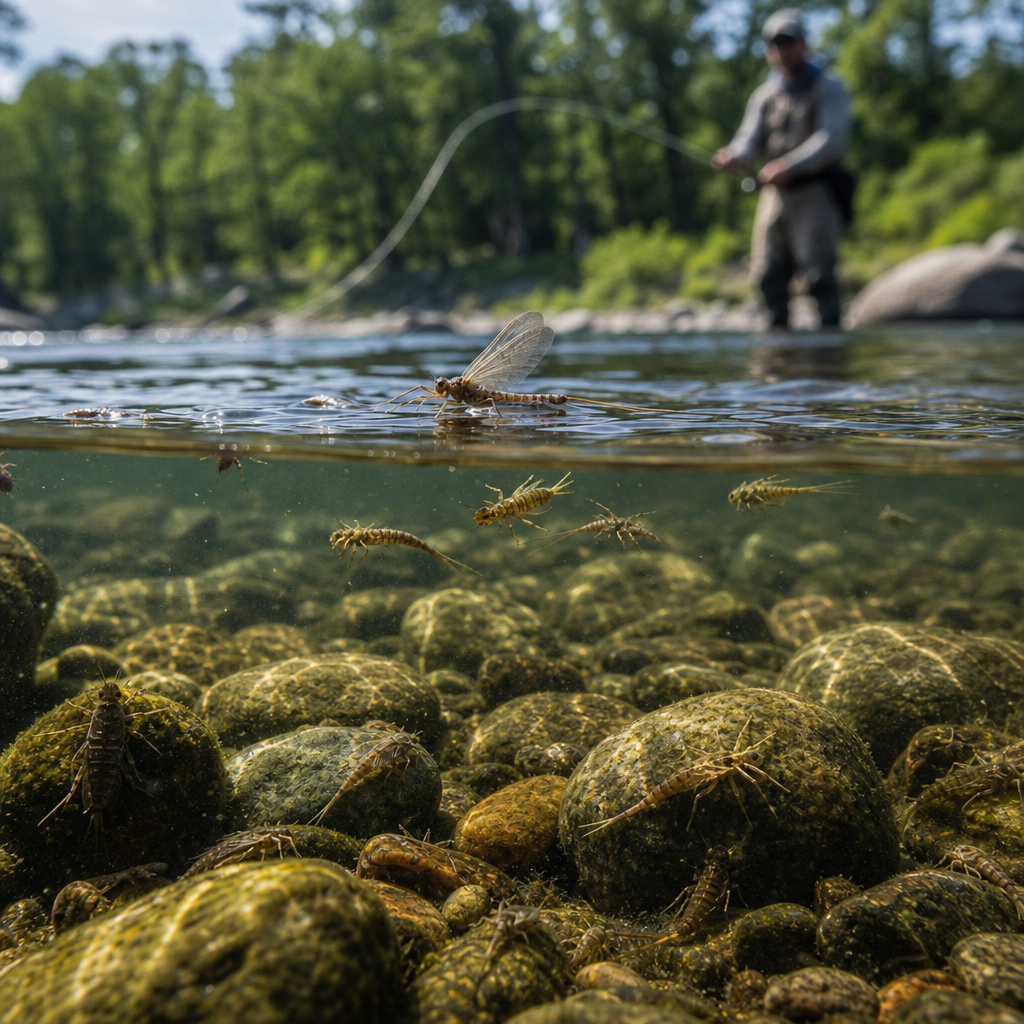
In years of guiding and scouting rivers before clients arrived, I learned that the most productive anglers are not always the best casters. They are usually the anglers who can answer three questions quickly: what insects are present, what stage are they in, and where in the water column are fish feeding? Those questions sit at the center of seasonal hatches. Aquatic insects pass through distinct transformations, and each transformation changes how available they are to fish. A mayfly nymph clinging to cobble, a caddis pupa rocketing toward the surface, and a spent spinner lying flush in the film all demand different presentations.
This article is the hub for seasonal hatches within the broader seasons and conditions topic. It explains the major insect groups, how their life cycles shape feeding behavior, how hatch timing changes from spring through winter, and how to use direct observation to make better fly choices. If you understand insect life cycles for fly fishing, you can connect weather, water conditions, and trout behavior into one practical system. That system turns a confusing hatch chart into something usable at river level, on the day you are fishing, with the flies in your box.
Why insect life cycles matter on the water
Fish do not feed randomly during hatches. They conserve energy and focus on the most vulnerable food source available. Insect life cycles create those vulnerable moments. Most aquatic insects spend the majority of their lives underwater as nymphs, larvae, or pupae, where they are available during drift, dislodgement, migration, or emergence. The final move into adulthood often creates intense but short feeding events because insects become concentrated in predictable lanes near seams, riffle tails, banks, or slicks.
For fly fishing, understanding life cycles does two things at once. First, it improves fly selection. You stop picking a fly by common name alone and start matching size, silhouette, color, and stage. Second, it improves presentation. A dead-drift pheasant tail, a lifted soft hackle, and a skated sedge can all imitate different points in an insect’s development. Many refusals that look like “fly choice problems” are really stage or presentation mistakes.
This is also why hatch timing should be viewed as a range, not a date on a calendar. A Blue-Winged Olive hatch may start earlier on a tailwater with stable temperatures than on a freestone stream running cold from snowmelt. The same river can hatch differently in a warm back eddy than in a shaded canyon run. Water temperature is usually the strongest driver, but photoperiod, dissolved oxygen, flow stability, and nutrient levels also influence abundance and timing. Successful anglers use regional hatch charts as a starting point, then verify conditions streamside.
The core insect groups every fly angler should know
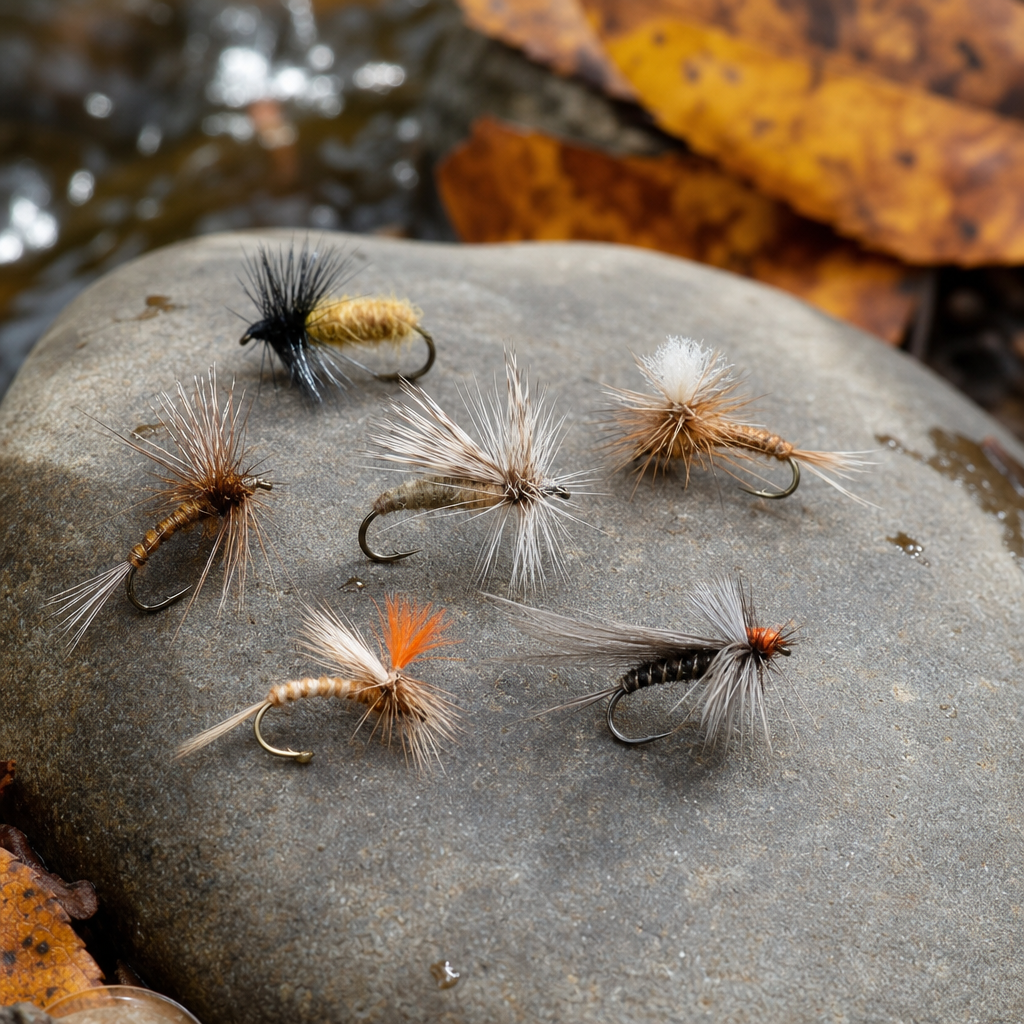
The most important freshwater insect groups for seasonal hatches are mayflies, caddisflies, stoneflies, and midges, with terrestrials and other food forms becoming critical in warm months. Each group has a distinct life cycle and a distinct fishing implication. Mayflies develop as nymphs, emerge into duns, then molt again into spinners. That second molt is unique among common aquatic insects and explains why spinner falls can be as important as the hatch itself. Classic imitations include Pheasant Tail nymphs, Comparaduns, Sparkle Duns, and Rusty Spinners.
Caddisflies begin as larvae, then pupate before emerging as adults. Their ascent is active, which is why swings, lifts, and soft hackles often outfish perfect dead drifts during caddis events. Elk Hair Caddis patterns remain standards, but pupa patterns like the LaFontaine Sparkle Pupa consistently account for fish during the critical transition. Stoneflies have incomplete metamorphosis, moving from nymph to adult without a pupal stage. Many species crawl to shore or onto rocks before emerging, which means adults often become important near banks, pocket water, and structure rather than midstream slicks.
Midges are present year-round and matter far more than many anglers admit. In winter and on heavily pressured tailwaters, tiny chironomid-style larvae, pupae, and adults may be the dominant food source. Terrestrials are not aquatic hatches, but they belong in any hub on seasonal hatches because summer fish often shift heavily to ants, beetles, hoppers, and inchworms when aquatic emergence slows midday. Real fishing decisions happen where categories overlap. A trout can eat caddis pupae in the morning, PMD duns at noon, and flying ants in the afternoon on the same August day.
How seasonal hatches unfold through the year
Seasonal hatches follow a broad annual pattern, but local conditions always refine the schedule. Early spring often brings midges, small Blue-Winged Olives, and the first meaningful stoneflies. As water temperatures rise into the upper 40s and 50s Fahrenheit, larger mayfly activity increases, caddis become more consistent, and pre-runoff windows can be excellent. Late spring and early summer usually produce the most diverse hatch activity on many trout rivers, including Pale Morning Duns, Green Drakes in select systems, multiple caddis species, Sallies, and residual Blue-Winged Olive activity during cool or overcast spells.
Summer can look paradoxical. Aquatic diversity remains high, but hatch windows may compress into early morning and evening as bright light and warm water reduce daytime surface feeding. This is when spinner falls, trico activity, and terrestrial fishing often dominate. In late summer, low clear water makes fish selective, so size and stage become especially important. Fall typically brings strong Blue-Winged Olive fishing, Mahogany Duns in some regions, October caddis in the West, and dependable midge activity. These hatches matter because cooling water raises trout metabolism while reduced angling pressure can make fish less wary.
Winter narrows the menu but does not eliminate opportunity. Midges and winter stoneflies often define the season, especially on tailwaters and spring creeks. On many rivers, the best winter feeding occurs during the warmest part of the afternoon when water temperature ticks up a degree or two. That tiny change can trigger visible surface activity. Anglers who understand insect life cycles for fly fishing do not view winter as “no hatch season.” They view it as a simplified puzzle with fewer food items, smaller flies, and shorter but very real feeding windows.
| Season | Common hatch focus | Typical fish behavior | Effective fly approach |
|---|---|---|---|
| Early spring | Midges, small olives, early stones | Fish feed in slower seams and afternoon warmth | Small nymphs, midge pupae, subtle dries |
| Late spring | Mayflies, caddis, larger stoneflies | More frequent emergence and stronger surface takes | Nymph-dropper rigs, emerger patterns, soft hackles |
| Summer | PMDs, tricos, caddis, terrestrials | Selective rises in low clear water; dawn and dusk peaks | Accurate drifts, spent patterns, ant and hopper rigs |
| Fall | Olives, mahoganies, October caddis, midges | Consistent feeding in cool stable conditions | Emergers, cripple patterns, larger caddis near banks |
| Winter | Midges, winter stones | Short feeding windows, often midday | Tiny larvae and pupae, fine tippet, patient presentations |
Reading the life stage: nymph, emerger, adult, and spinner
Matching the hatch starts with identifying not just the species but the life stage fish are targeting. Nymphs and larvae are the baseline food source because they are present every day. If you turn over rocks and find pale mayfly nymphs, cased caddis, or free-living larvae, you already know what belongs in your subsurface box. Emergers become critical when fish feed just under the film, showing bulges, head-and-tail rises, or splashy intercepts. In my experience, many “tough dry-fly days” become much easier as soon as an angler switches from a high-floating adult to an emerger that hangs in the meniscus.
Adults matter when insects are drifting long enough for fish to inspect them. This is common with mayfly duns on smooth glides and with spent spinners after mating flights. Spinner falls often produce the most technical fishing of the day because trout settle into steady feeding lanes and reject anything with the wrong footprint. Cripples are another overlooked stage. An insect trapped half-emerged is easier to catch than a healthy adult, so patterns with trailing shucks, low profiles, or partially emerged silhouettes routinely outfish pristine adult imitations.
Good observation beats memorization. Watch rise forms, inspect the film, seine the drift, and check streamside rocks or grass. A small aquarium net or fine mesh seine can reveal whether caddis pupae are ascending or whether mayfly nymphs are darkening before emergence. If fish are porpoising without obvious splash, think emergers. If rises are rhythmic and delicate in flat water during evening light, inspect for spinners. Life stage selection is the bridge between entomology and actual fish caught.
Matching seasonal hatches by water type and conditions
Not all rivers hatch the same way. Tailwaters below dams usually have moderated temperatures, stable flows, and prolonged midge, BWO, or caddis activity. Freestone rivers respond more dramatically to weather, runoff, and daily temperature swings. Spring creeks support dense insect populations and highly selective fish because stable fertility produces dependable food. Lakes and stillwaters add another layer, with chironomids, damselflies, callibaetis mayflies, and leeches often dominating instead of classic river-style riffle hatches.
Flow changes can either stimulate or disrupt feeding. Moderate increases may dislodge nymphs and improve subsurface action, while sudden spikes can muddy the river and pause visible emergence. Water temperature is a more reliable cue. Many mayflies become active within specific temperature bands, while caddis often respond strongly to evening light and warming trends. Cloud cover can extend olive hatches, wind can knock terrestrials into the water, and low barometric shifts sometimes coincide with better emergence activity. These are not fishing myths; they are recurring patterns tied to insect behavior.
Sub-pillar planning works best when each linked article drills into one hatch family, one season, or one water type. From this hub, anglers should branch into detailed pages on spring mayflies, summer terrestrials, fall olives, winter midge fishing, tailwater hatches, and runoff timing. That structure mirrors real decision-making on the water. You first identify the season and conditions, then narrow to the insect group, then to the life stage, and finally to the exact fly and presentation.
A practical system for scouting and choosing flies
The most reliable hatch strategy is a repeatable streamside process. Start before tying on a fly. Check the air temperature, water clarity, flow trend, and actual water temperature with a thermometer. Look for shucks on rocks, adults in streamside vegetation, and rise forms in soft edges or foam lanes. Seine a riffle if legal in your area. Then make one clear decision: are fish feeding below the surface, in the film, or on top?
Build your fly box around stages rather than only names. For mayflies, carry nymphs, emergers, duns, cripples, and spinners in the core sizes for your region. For caddis, include larvae, pupae, and adults in olive, tan, black, and amber tones. For stoneflies, stock both large attractor nymphs and smaller species-specific patterns, plus adult imitations for bank fishing. For midges, focus on larva and pupa patterns first because that is where much of the feeding happens. Tools matter too. A stream thermometer, hand lens, floatant, desiccant, split shot assortment, and tippet from 7X to stout hopper material solve real problems during hatch fishing.
Finally, keep notes. After each trip, record month, river section, water temperature, weather, insects observed, and what stage produced fish. Over one season, patterns emerge that no generic hatch chart can provide. You learn that a certain riffle turns on when water hits 52 degrees, or that a spinner fall starts fifteen minutes before sunset on calm July evenings. That is how knowledge of insect life cycles becomes a durable advantage rather than trivia.
Conclusion
Seasonal hatches are the operating calendar of fly fishing, and insect life cycles are the key to reading that calendar correctly. When you understand how mayflies, caddisflies, stoneflies, midges, and terrestrials appear through the year, you can predict where fish will feed, what stage they will prefer, and how your presentation should change. The payoff is practical: fewer random fly changes, more confidence in changing conditions, and a much clearer connection between what you see on the water and what you tie to your leader.
The central lesson is simple. Do not think only in terms of insect names; think in terms of season, water type, life stage, and vulnerability. A hatch chart tells you what might happen, but direct observation tells you what is happening now. That distinction separates casual pattern collecting from skilled fly selection. Whether you are fishing a cold tailwater in January, a freestone during runoff drop, or a low clear meadow stream in late summer, the same logic applies: identify the available insects, match the stage, and present the fly where fish can feed efficiently.
Use this hub as your starting point for the entire seasonal hatches topic, then explore the deeper guides linked from it by season, insect group, and water condition. The next time you approach a river, spend five minutes observing before you cast. That small habit will teach you more about insect life cycles for fly fishing than any fly bin ever could.
Frequently Asked Questions
Why does understanding insect life cycles matter so much in fly fishing?
Understanding insect life cycles matters because fish rarely feed at random. Trout, grayling, panfish, and bass often key in on a very specific food source at a very specific stage of development, and that feeding focus can change quickly as conditions shift. When you know whether insects are hatching, drifting, emerging, mating, or dying on the surface, you stop choosing flies based on guesswork and start matching what fish are actually expecting to see. That translates into better fly selection, more effective presentation, and far more confidence on the water.
In practical terms, insect life cycles explain why fish may ignore a perfectly good dry fly one hour and crush it the next. A mayfly nymph drifting near the bottom, a caddis pupa ascending through the water column, and a spent spinner lying flat on the surface are all different food forms, even though they come from related insects. Fish respond differently to each stage. Anglers who understand that can adjust depth, retrieve, leader setup, and pattern style instead of blaming slow action on bad luck. It is one of the most useful frameworks in fly fishing because it helps you interpret what is happening around you and make deliberate, high-percentage decisions.
What are the main insect stages fly anglers should learn first?
The best place to start is with the major aquatic insects and the life stages fish see most often: nymph, larva, pupa, emerger, dun or adult, and spinner or egg-laying adult, depending on the insect family. Mayflies generally begin as nymphs underwater, emerge into duns on or near the surface, then molt into spinners that return to mate and die on the water. Caddisflies usually progress from larva to pupa and then emerge quickly into adults, often creating active, splashy feeding. Midges develop from larva to pupa to adult and can be important year-round, especially on tailwaters and stillwaters. Stoneflies spend much of their lives as nymphs, then crawl to shore to hatch, which makes their nymphal stage especially important for anglers.
Learning these stages helps you connect fish behavior to fly choice. If fish are feeding below the surface with occasional flashes but few visible rises, they may be taking nymphs, larvae, or pupae rather than adults. If you see noses breaking the surface softly and regularly, emergers or crippled adults may be the key. If insects are dancing in the air and dead or spent bugs are collecting in seams, spinner patterns may outperform high-floating dries. You do not need to memorize every entomology chart at first. Start by recognizing whether the insects you are seeing are underwater forms, emerging forms, freshly hatched adults, or spent adults. That alone will make you a much more effective angler.
How do seasonal hatches influence fish feeding behavior?
Seasonal hatches create predictable feeding windows by concentrating food in time and space. As water temperatures, daylight, and weather patterns line up, certain insect species begin emerging in large numbers. Fish quickly notice this abundance and often become highly selective because they can afford to ignore less familiar or less vulnerable prey. During a strong hatch, trout may slide into softer seams, riffle edges, or tailouts where drifting insects collect. Panfish may suspend just below the surface to intercept emergers. Bass may cruise shorelines or current edges where terrestrial and aquatic insects are most available. In every case, the hatch narrows the menu and shapes where fish position themselves.
This is why anglers often experience dramatic changes over the course of a single day. Morning may call for subsurface patterns because the insects have not started emerging yet. Midday warming might trigger a wave of caddis or mayflies, bringing fish up in steady rhythm. Later, a spinner fall or egg-laying event can create a second feeding period with entirely different surface behavior. By understanding seasonal timing and daily progression, you can anticipate what fish are likely to do before they do it. Instead of reacting late, you can be ready with the right flies and the right approach when the window opens.
How can I identify what stage of the hatch fish are feeding on while I am on the water?
The most reliable way is to combine direct observation with fish behavior. Start by looking closely at the water, rocks, shoreline vegetation, and the air above the river or lake. Turn over a few stones and check for nymphs or larvae. Watch for shucks on rocks or floating in seams, which signal recent emergence. Look for adults fluttering above the water, spent insects lying flat in eddies, or egg-laying behavior near riffles. If you carry a small seine or aquarium net, a quick sample in the current can reveal whether pupae or emergers are drifting. These small clues tell you much more than fly box intuition alone.
Then watch how fish are feeding. Splashy rises often suggest caddis or more active surface takes, while subtle sips may indicate mayflies, midges, or spent adults. Bulging just below the surface usually points to emergers. Fish rolling or flashing underwater often means they are intercepting insects in the film or just beneath it. If you are getting refusals on a dry fly, the fish may be taking cripples, emergers, or drowned insects instead of fully formed adults. The goal is to read the entire system: what insects are present, where they are in the water column, and how fish are responding. Once you match those three pieces, your odds improve dramatically.
What is the best way to use insect life cycle knowledge to choose flies and presentations?
Use life cycle knowledge to narrow your options by asking three practical questions: what insect is most available, what stage is most vulnerable, and where in the water column is that stage located? If mayfly nymphs are active before a hatch, fish a nymph near the bottom or in the drift. If caddis pupae are ascending, use an emerger or pupa pattern and let it rise at the end of the swing. If freshly hatched adults are riding the surface, switch to a dry fly. If fish refuse standard dries during a heavy hatch, try a cripple, emerger, or spent pattern because those insects are easier for fish to capture and often become the preferred target.
Presentation should match the behavior of the natural insect, not just its appearance. Dead drift is essential when imitating drifting nymphs, mayfly duns, or spent spinners. A slight lift or swing can be deadly when imitating caddis pupae rising to hatch. Skating or twitching may help when adults are active and moving, particularly with caddis or terrestrials. Depth matters just as much as pattern choice, which is why split shot, leader length, indicator placement, and line control are all part of matching the hatch. The anglers who consistently fish well are usually not carrying magical flies. They are simply choosing patterns and presentations that reflect the insect stage fish are feeding on at that moment.