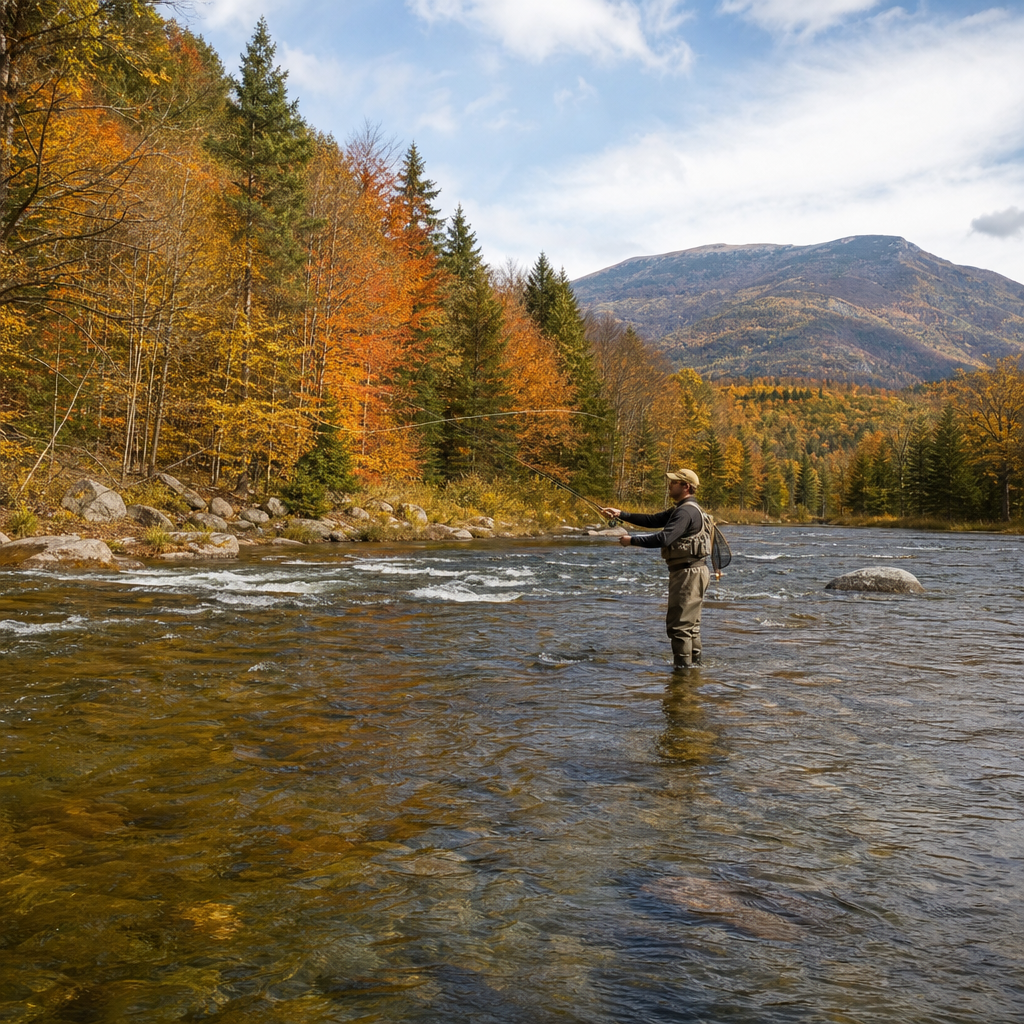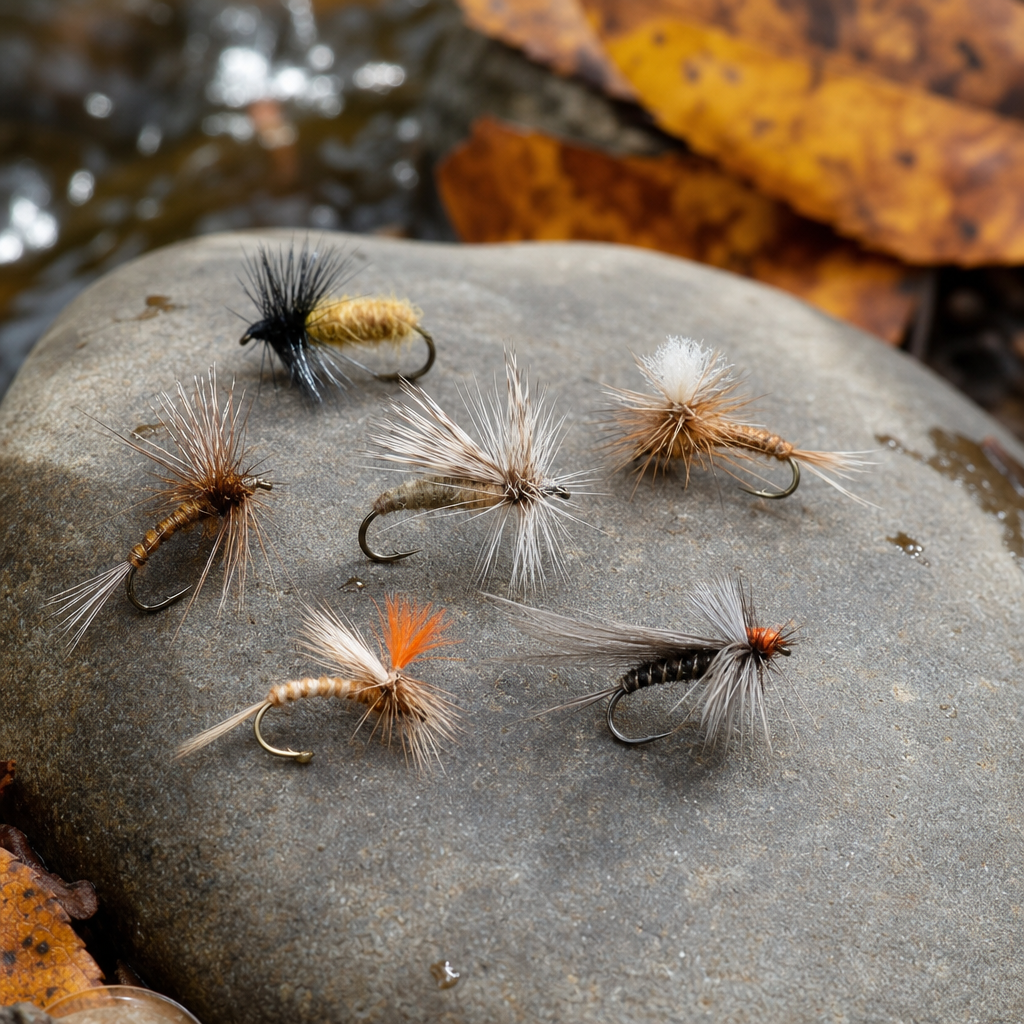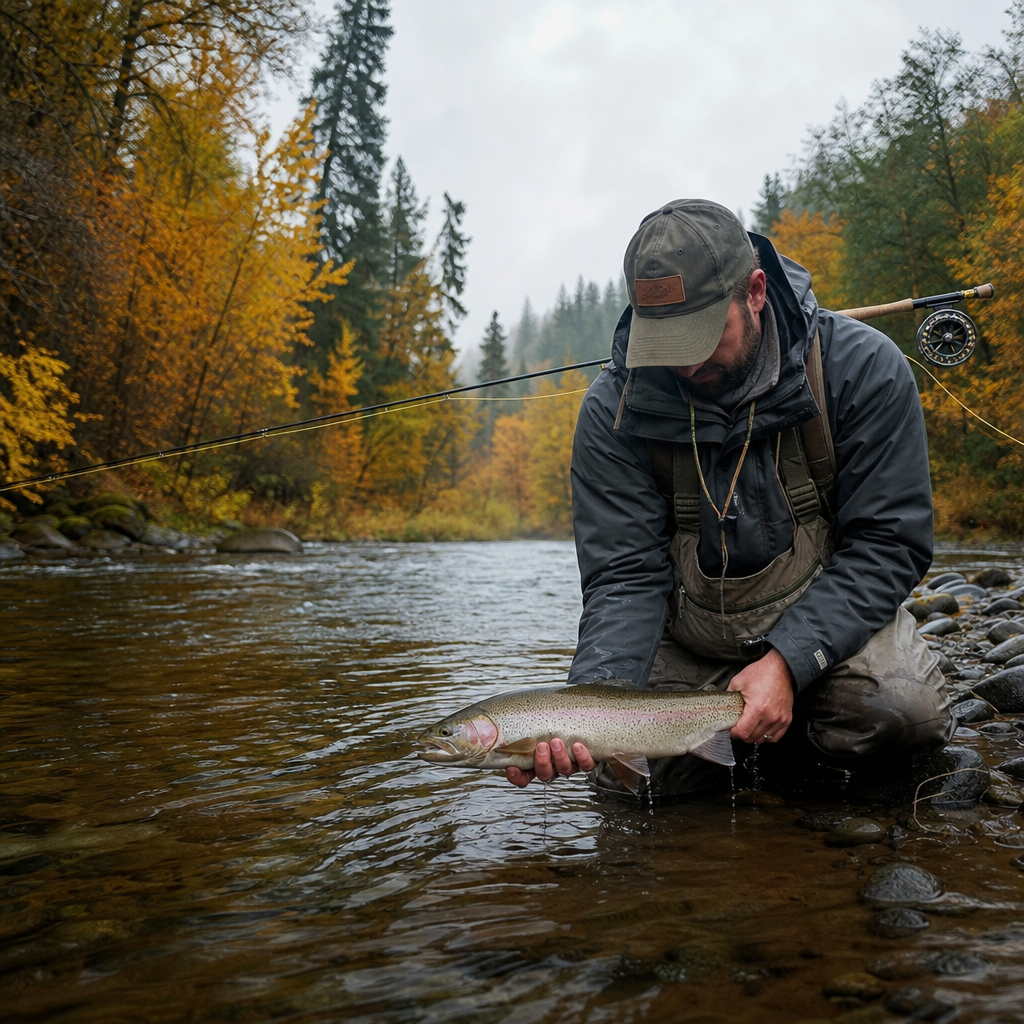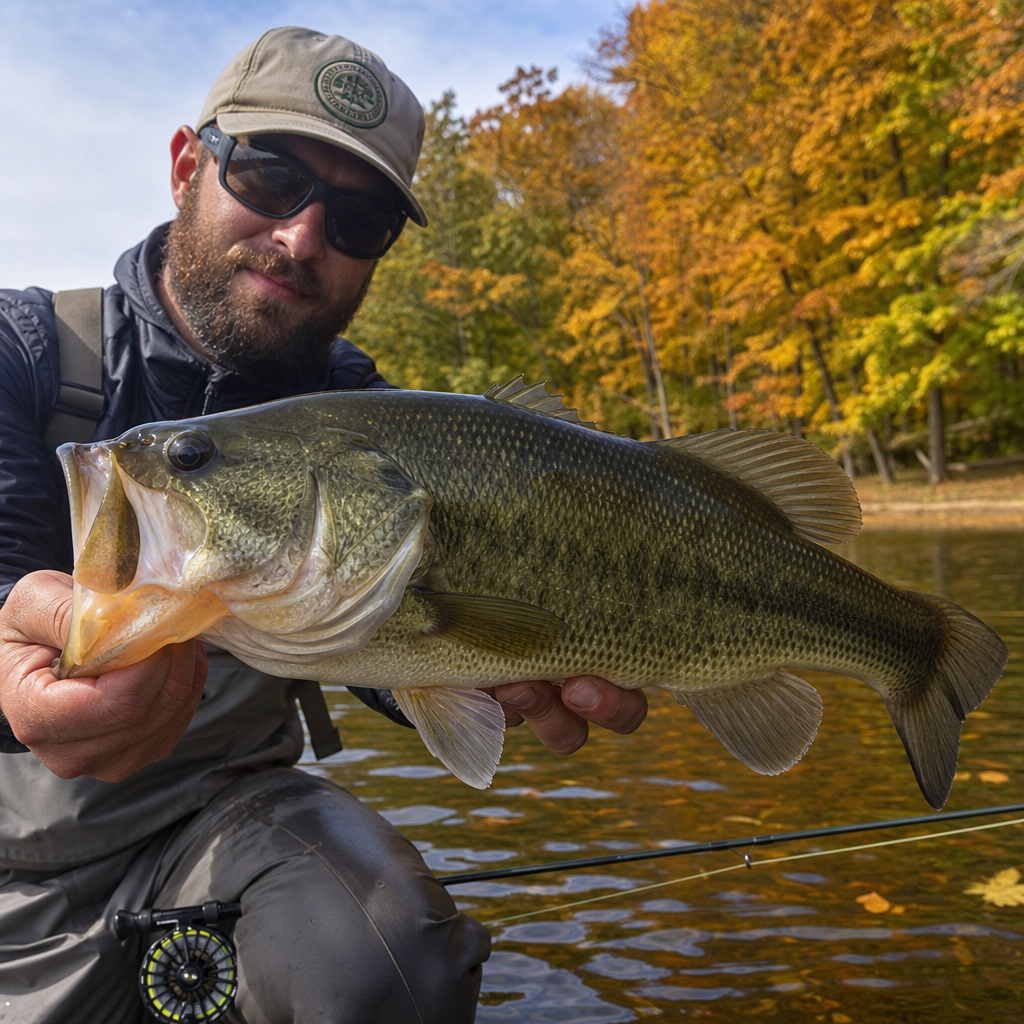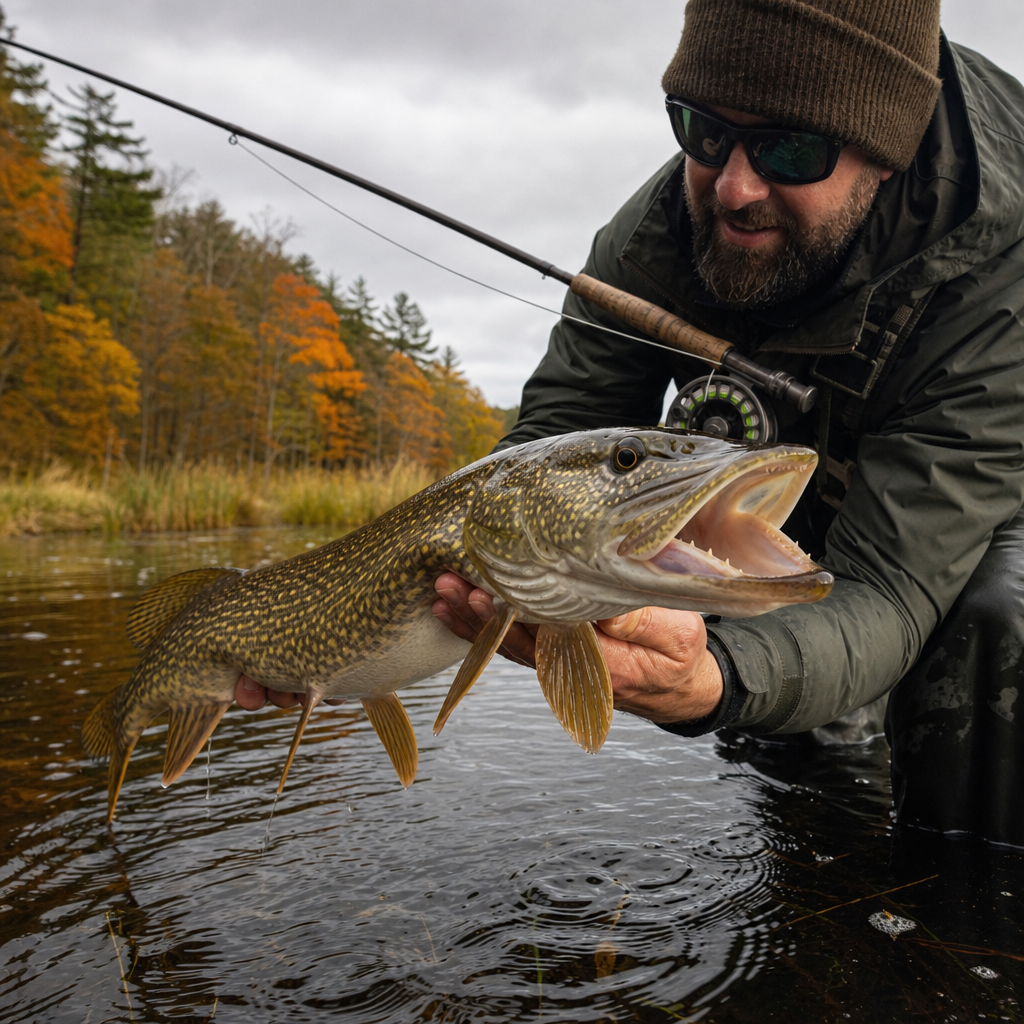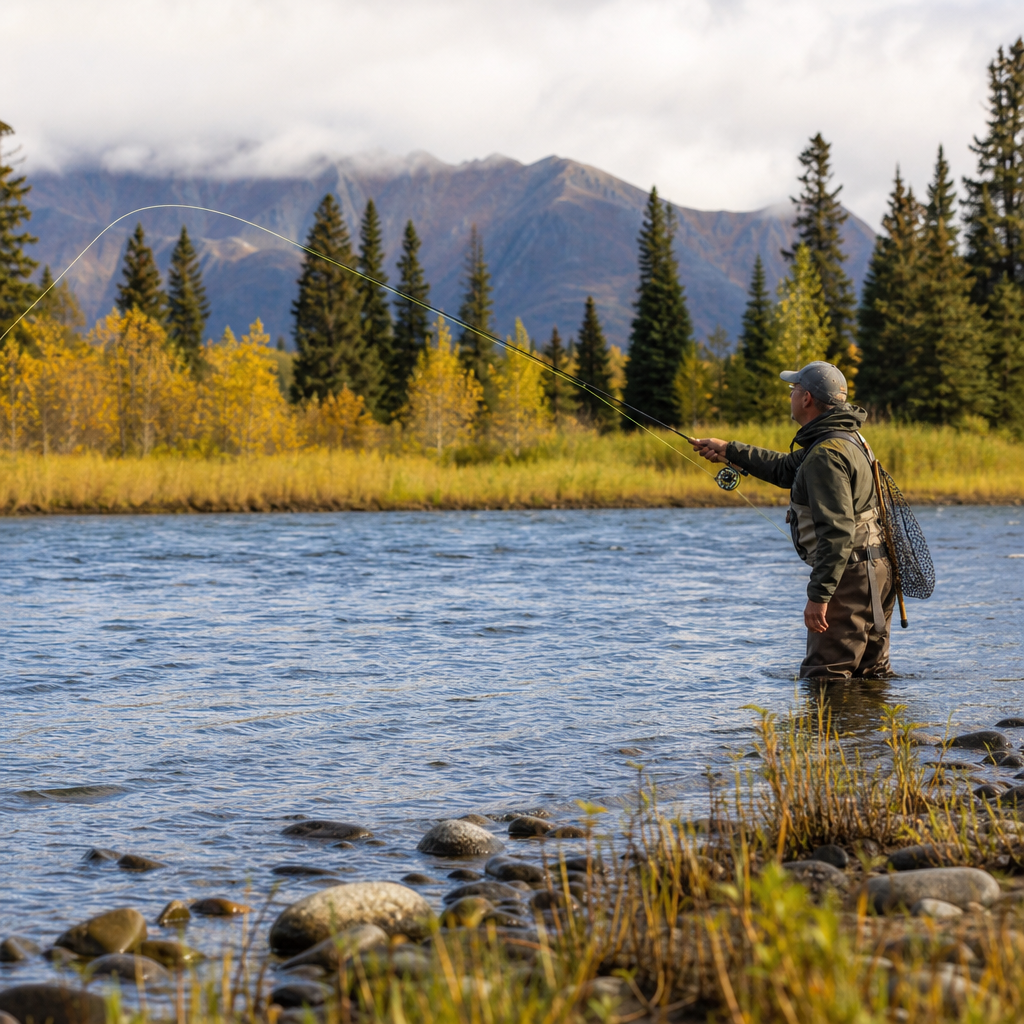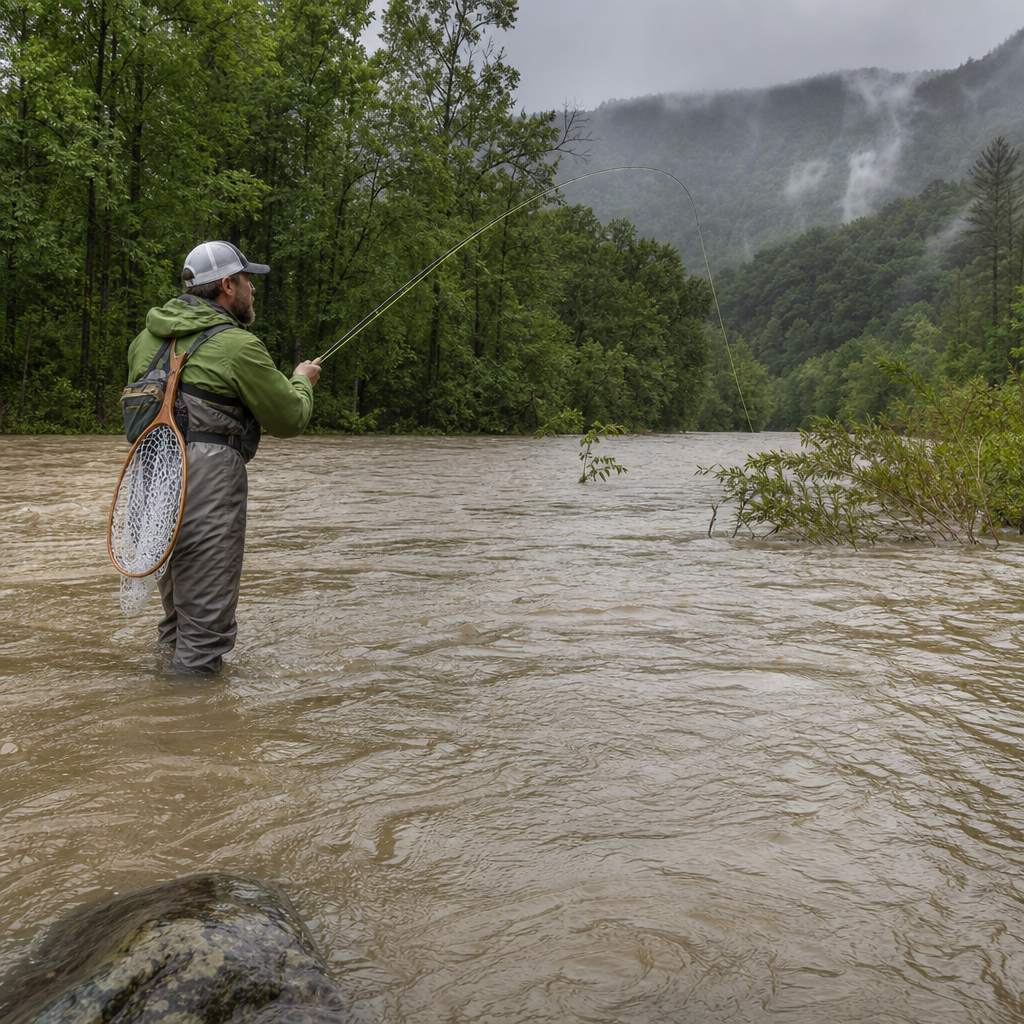
Fly fishing in flooded conditions demands a different playbook than normal flows, but it can produce outstanding catches when anglers understand how fish reposition, how currents change, and how presentation must adapt. Flooded conditions generally mean rivers, creeks, and tailwaters running above seasonal norms, often with extra color, stronger current, and submerged bankside structure. Special conditions within this category include snowmelt surges, dam releases, rain-driven spates, flooded backwaters, and off-color tributaries entering otherwise clear systems. I have spent many high-water days guiding and scouting rivers that looked unfishable at first glance, only to find trout, bass, and panfish packed into narrow soft seams a few feet from safety. This matters because flood events are common, they can last for days, and many anglers either stay home unnecessarily or fish the wrong water entirely. The angler who understands safety limits, water-reading skills, fly selection, and access decisions can turn a blown-out forecast into a productive day. This article serves as a hub for special-condition fly fishing by explaining the core strategy that connects every related situation: find reduced current, improved visibility, and a feeding lane fish can hold in without burning energy. Once you grasp that principle, flooded rivers stop being chaotic and start becoming readable, systematic, and surprisingly efficient to fish.
How fish behave when water rises
The first question most anglers ask is simple: where do fish go in high water? In my experience, they rarely disappear; they relocate. As discharge climbs, trout and many warmwater species abandon midriver lies that were comfortable at normal levels because current velocity becomes too expensive in energy terms. They slide to inside bends, flooded grass edges, side channels, behind root wads, below submerged bushes, and along bank indentations where water speed drops sharply. Large fish often move less distance than anglers assume, but they shift a few feet into softer cushions that become newly available as water inundates structure. In rain events, fish also track visibility. If the main stem is chocolate brown and a tributary enters with slightly better clarity, the mixing seam can become a magnet. Conversely, if a small creek is dumping mud into a clearer river, fish usually hold above the mud line or along the edge where they can still see food.
Flooded conditions also change what fish are willing to eat. Heavy flow dislodges worms, cranefly larvae, cased caddis, sculpins, crayfish, and terrestrial insects from banks and flooded vegetation. That is why natural-looking streamers, worm patterns, eggs, and larger nymphs often outperform delicate dry-fly approaches during rising water. Fish become opportunistic, but not reckless. They still prefer to hold where the current delivers food predictably. If you imagine every fish asking, “Can I sit here safely and let calories come to me?” you will read high water better. Holding water in floods is almost always adjacent to fast water, not isolated from it. The sweet spot is soft enough to conserve energy yet close enough to the conveyor belt that a fish can move inches, not yards, to feed.
Safety limits and go or no-go decisions
Before tactics, decide whether the river is fishable and safe. High water is not automatically dangerous, but flooded conditions amplify mistakes. I rely on three checks every trip: gauge trend, water clarity, and access stability. Gauge height by itself is less useful than trend. A river at 4,000 cubic feet per second and dropping may fish well; the same river at 4,000 and rising fast can become debris-filled and unpredictable within hours. U.S. Geological Survey gauges, dam release schedules, and weather radar are essential tools because they show whether water is stabilizing or still building. Clarity matters because fish need some visibility. As a rule, if I can see my boot tops in knee-deep edge water, I usually have enough clarity to fish subsurface confidently. If I cannot see the fly line near the bank, I start looking for another reach, a tributary, or stillwater instead.
Access is the most overlooked factor. Flooded banks collapse, trails flood, and familiar crossings become dangerous traps. I do not wade aggressively in high water unless I know the bottom, the gradient, and the exit points. A wading staff, a snug belt, sticky rubber soles with studs where legal, and a conservative mindset are standard, not optional. Fish from the bank whenever the bank provides angle and reach. Some of my best flood days came from standing on grass or gravel and making short casts into edge seams. If floating, remember that flooded wood and changed channels can make routine drifts hazardous. No fish is worth a sweep into a strainer or an improvised takeout in private or flooded property. The best high-water anglers are not fearless; they are disciplined.
Reading floodwater: where to cast first
Successful fly fishing in flooded conditions starts with triage. Do not cover the whole river mentally. Break it into soft-water targets and fish them in order. My first casts usually go to inside seams along the near bank, especially where current tongues push against flooded grass and then peel away. Next come eddies behind wood, submerged rocks that create visible cushions, side channels with reduced speed, and current breaks below islands. Bridge abutments, marinas, backwater mouths, and culverts can also concentrate fish if local regulations allow access and casting is safe. In tailwaters, flooded ledges and recirculating pockets below release structures often hold fish because oxygen stays high and food washes steadily past.
One common mistake is casting too far. In floodwater, fish are often under the rod tip or a single rod length from shore. I have watched anglers bomb sixty-foot casts into the hardest current while trout rolled ten feet from their boots. Another mistake is ignoring vertical structure. When banks flood, overhanging bushes, willow roots, and grass mats create immediate shelter. Fish pin themselves to that cover. Presenting parallel to the bank, rather than straight across the river, often keeps the fly in the feeding lane longer. If the river has visible color lanes, fish the clean side of the seam first, then strip or dead-drift the fly across the transition. Predators especially use that edge as an ambush line because bait becomes disoriented where clear and dirty water mix.
Tackle, flies, and rigging adjustments
Flood conditions reward practical tackle choices. For trout, I commonly move from a standard 5-weight to a 6-weight if I expect weighted streamers, split shot, or heavy indicators. For bass and larger warmwater fish, a 7- or 8-weight gives better line control and turning power around submerged wood. Floating lines still do most of the work because fish often slide shallow, but sink tips become valuable for streamer swings in softer channels and deep eddies. Leaders should shorten as conditions worsen. Instead of a long technical taper, I often fish 7.5 feet or less, with stronger tippet, because turnover matters more than finesse in stained water.
Fly choice should match visibility and food displacement. In off-color water, black, olive, brown, and white streamers all produce, but profile and contrast generally matter more than exact shade. Worm patterns shine after rain because actual annelids wash in from banks. Egg flies can be excellent below spawning zones or in tailwaters where disturbance knocks loose protein-rich food. Large nymphs such as stoneflies, pats rubber legs, and jigged attractors work when drifted near bottom through soft lanes. If fish are tucked inches from shore, an unweighted or lightly weighted streamer often outperforms a heavy setup by staying in the strike zone instead of plowing under it.
| Flooded condition | Best starting flies | Presentation priority | Typical holding water |
|---|---|---|---|
| Rain-swollen muddy river | Worms, black streamers, bulky nymphs | Short drifts tight to bank | Grass edges, eddies, side pockets |
| Snowmelt high but green water | Stoneflies, sculpins, eggs | Deep controlled dead-drift | Inside bends, slow shelves, tailouts |
| Tailwater release spike | Eggs, jig nymphs, white streamers | Seam fishing below current breaks | Ledges, bank cushions, recirculating pockets |
| Clear main stem with dirty tributary | Baitfish streamers, attractor nymphs | Work the clarity seam | Mixing lines, mouths, downstream edges |
Presentation strategies that convert looks into eats
Presentation in flooded conditions comes down to speed control and proximity. Fish have less time to inspect, but they also have less willingness to chase. For nymphing, I use larger indicators or tight-line contact methods that let me guide the drift through a seam at the same speed as the soft current, not the adjacent main flow. Extra split shot is often necessary, but too much weight kills natural movement in shallow edge water, so adjust in small increments. I tell clients to think in three dimensions: cast upstream enough to sink, mend to slow, and finish with the fly directly in the soft lane, not racing along its border.
Streamer fishing in floodwater is especially effective when strips are shorter and pauses longer. A broadside mend can let a streamer swing into a slack pocket and hover there, which often triggers fish that will not move far. In stained water, a fly that tracks steadily and pushes water is easier for fish to locate than one ripped erratically. If you see follows but no eats, change angle before changing fly. Casting quartering downstream along the bank, then stripping back through the seam, often keeps the fly visible longer than stripping directly across heavy current. Dry flies are usually a secondary option, but during summer floods, beetles, hoppers, and large foam attractors can be excellent along flooded grass if fish are taking terrestrials washed from shore.
Special conditions across seasons and water types
Not all floods fish the same. Spring snowmelt usually brings cold, sustained volume with a green or gray tint. Fish feed, but windows can be shorter until water temperatures rise into a comfortable range. Midday often outperforms dawn because a degree or two of warming matters. Summer thunderstorms create flashier events with warmer water, dramatic color changes, and sudden spikes that can turn on worm and streamer fishing near banks. Fall floods frequently coincide with trout aggression, especially where baitfish and eggs become available. Winter floods can be surprisingly good in tailwaters because discharge increases food movement while stable temperatures keep fish active, though access and hypothermia risk rise sharply.
Water type matters too. Freestone rivers tend to spread fish broadly into floodplain edges and secondary channels. Tailwaters often remain more structurally defined, making seam fishing and ledge reading crucial. Small streams may become truly unfishable in the main channel but offer excellent pockets where floodwater spills into meadows, wood-lined bends, or culvert pools. Lakes and ponds connected to flooded inflows create another opportunity: fish often station where current enters slack water and intercept washed-in prey. As the hub for special conditions, this page points to the broader lesson every scenario shares: identify the safest water available, then locate the nearest adjacent feeding conveyor.
Common mistakes and a practical game plan
The biggest floodwater mistakes are predictable. Anglers wade too much, fish too far, use leaders that are too long, and abandon a river before checking edge habitat. They also move too quickly. In normal conditions, covering water can be smart. In flooded conditions, one good seam can hold multiple fish, so methodical repetition matters. Another frequent error is insisting on one technique. If a nymph rig keeps snagging flooded grass, switch to an unweighted streamer. If streamers draw follows but no commitment, drift a worm or egg through the same lane. High water rewards adaptation more than loyalty to style.
A practical game plan is straightforward. Start with the nearest soft bank seam and make short casts. Probe from shallow to slightly deeper water. If there is color change, fish the cleaner edge first. Move only after covering obvious current breaks from several angles. Monitor the river for trend during the day; falling and clearing water often improves the bite, while rapidly rising dirty water usually compresses the window. Keep notes on gauge levels, clarity, and productive lies because “high water” on one river may mean 1,200 cfs and on another 12,000 cfs. Pattern memory is what separates lucky days from repeatable success.
Fly fishing in flooded conditions becomes productive when you stop treating high water as a single problem and start reading it as a collection of fishable micro-habitats. Rising flows push fish toward softer structure, improved visibility, and short feeding lanes close to safety. The most effective anglers make conservative safety decisions, trust gauge trends, shorten casts, strengthen tackle, and match flies to displaced food sources such as worms, baitfish, eggs, and large nymphs. They know that flooded banks, side channels, and clarity seams frequently hold more fish than the obvious middle current. They also accept the tradeoffs: some rivers truly are too dangerous or too muddy, and success depends on recognizing those limits early.
As a hub within the broader seasons and conditions framework, this guide provides the foundation for every special-condition scenario you will encounter, from snowmelt and dam releases to flash floods and tributary mud lines. The central benefit is confidence. Instead of guessing, you can evaluate safety, identify prime holding water, rig efficiently, and present flies where fish can realistically eat. Use these strategies on your next high-water day, then build a personal log of gauge levels, fly patterns, and productive structure. That simple habit will make flooded conditions one of the most reliable opportunities in your fly-fishing calendar.
Frequently Asked Questions
How do fish typically reposition during flooded conditions?
When flows rise, fish rarely stay in the same holding water they use during normal river levels. In flooded conditions, stronger current pushes trout and other game fish out of the main flow and into softer, more manageable water where they can conserve energy while still intercepting food. That often means inside bends, flooded bank edges, current seams, back eddies, side channels, sloughs, protected pockets behind boulders, and softer water around submerged grass, wood, or root systems. Instead of thinking about where fish were yesterday, think about where they can comfortably live today.
One of the biggest mistakes anglers make during high water is continuing to target the middle of the river simply because that is where the classic runs and riffles are located. In flood conditions, those areas may become too fast, too deep, or too turbulent to hold fish efficiently. Productive water often shifts to places that seem almost too close to shore. Fish may hold within a rod length of the bank, especially where flooded vegetation slows the current and drifting insects, worms, baitfish, and other food items get funneled past them. This is especially true during rain-driven spates and dam releases, when fish actively look for shelter from increased current velocity.
Snowmelt surges can create a slightly different version of the same pattern. Water may be high and cold, which usually reduces fish movement and feeding range. In those situations, the best holding water is not just slower water, but slower water adjacent to depth or structure. Fish want protection, but they also want a stable lane where food can come to them without requiring much effort. During any flood event, the key is to stop reading the river by its normal shape and start reading it by current speed, refuge zones, and food delivery routes.
What are the best areas to target when rivers and creeks are high and off-color?
The most reliable areas in high, stained water are places where current slows enough for fish to hold comfortably while still delivering food. Start with soft edges along flooded banks, especially where grass, bushes, tree roots, and undercut sections create a break from the main force of the river. These zones often collect drifting insects, dislodged worms, drowned terrestrials, and small baitfish, making them prime feeding lanes. Many anglers walk past this water because it looks shallow or messy, but in floods it can be exactly where the fish move.
Current seams are another top target. A seam forms where fast water meets slow water, giving fish a perfect compromise between safety and feeding opportunity. Fish can sit in the softer side of the seam and slide only inches into the faster lane to eat. Eddies, side channels, tailouts protected by structure, and soft pockets behind large rocks also deserve close attention. On tailwaters affected by dam releases, look for softer margins, channel edges, and any secondary current lines created by uneven bottom contours or submerged structure.
Tributary mouths and areas where slightly clearer water enters a muddy main river can also be excellent, provided conditions are safe and legal to fish. Clearer inflows can improve visibility, stabilize temperature, and concentrate food. In flooded backwaters or side channels, fish may spread out, so make repeated, careful drifts through every likely slot rather than assuming one cast will cover the area. The best flooded-water anglers fish methodically, covering every piece of refuge water from the bank out, because fish are often more concentrated in small, overlooked holding zones than they are during normal flows.
Which fly patterns and rig setups work best in flooded conditions?
In high, colored water, flies usually need to do one or more of three things very well: get down quickly, create a strong profile, and remain visible. That is why weighted nymphs, streamers, and larger attractor patterns are often the most productive options. Stonefly nymphs, pats rubber legs-style patterns, worms, eggs, hare’s ear variants, and heavily weighted jig flies are all proven choices because flood conditions frequently dislodge larger food items from the streambed and banks. In murky water, black, olive, brown, wine, and chartreuse accents can all be effective depending on local forage and water color.
Streamer fishing can be especially strong when rising flows knock baitfish and sculpins out of their normal cover. Patterns with bulk, movement, and contrast tend to stand out best. You do not necessarily need giant flies, but you do need enough presence for fish to locate them in reduced visibility. A leech, sculpin, or articulated baitfish pattern swung or stripped slowly through soft holding water can trigger aggressive takes from fish tucked near cover. In very dirty water, adding a bit of flash or choosing darker silhouettes can make a real difference.
For rigging, many anglers do best with short, practical setups that maintain control in fast, turbulent conditions. A tight-line or indicator nymph rig with enough weight to reach fish quickly is often far more effective than a delicate standard presentation. Split shot, tungsten beads, and compact leaders help keep flies in the strike zone instead of washing high over holding fish. If fish are tight to the bank, a short leader and accurate tuck cast may outperform a longer, more technical drift setup. In floodwater, elegance matters less than depth, placement, and sustained contact with the fly.
How should presentation and drift change when fishing in flood-stage water?
Presentation in flooded conditions needs to become more precise, more compact, and more intentional. Because fish commonly hold in narrow bands of softer water, you are often targeting small windows rather than broad runs. Short casts are frequently better than long ones because they allow better line control, faster sink rates, and more accurate drifts along current seams, bank edges, and structure. The goal is to put the fly where fish can eat it without moving far, then keep it there as naturally as possible.
Depth is usually critical. In high water, many good drifts fail simply because the fly never reaches the fish. Stronger current lifts flies quickly, so anglers often need more weight than they expect. Add weight incrementally until you are consistently ticking bottom or passing very close to it in the softer holding lanes. If you are fishing streamers, slow down. Fish in flood conditions may be opportunistic, but they are also trying to conserve energy. A streamer ripped quickly through fast, murky water often passes unnoticed or looks unnatural. Broadside swings, short strips, pauses, and controlled drifts near cover are usually more effective.
Mending and line control also become more important as multiple current speeds interact across the water. Even in short drifts, a poor mend can pull the fly unnaturally or sweep it out of the strike zone too fast. Focus on achieving a controlled entry, quick sink, and drag-free or near-drag-free travel through the soft lane. When fishing near flooded banks, make repeated drifts from slightly different angles before moving on. Fish may need several passes to commit, especially in cold snowmelt or fluctuating release conditions. In floodwater, small improvements in presentation often produce a major increase in eats.
What safety and strategic considerations matter most when fly fishing during floods?
Safety has to come first because flooded rivers are far more dangerous than they often appear from shore. Higher flows increase current power dramatically, reduce footing stability, hide drop-offs, and push debris downstream at surprising speed. Water that looks only slightly above normal may be completely unsafe to wade. In many cases, the smartest strategy is to stay out of the river entirely and fish from the bank, gravel bars, or stable access points. A wading staff, felt-free but high-traction soles suited to local regulations, and a conservative approach to crossings are essential. If there is any doubt, do not step in.
It also helps to understand what type of flood condition you are dealing with. Rain-driven spates can cause rapid rises, falling visibility, and floating debris. Dam releases may produce sudden level changes and powerful surges, sometimes according to schedules that anglers should check before leaving home. Snowmelt-driven high water can remain cold for extended periods, slowing fish metabolism and making slower, deeper presentations more important. Tailwaters, freestones, small creeks, and flooded backwaters all behave differently, so matching your strategy to the water source matters as much as matching your fly choice.
From a tactical standpoint, success often comes from simplifying the day. Fish closer to access, target obvious refuge water, use flies you can control confidently, and avoid wasting time on water that is too fast to hold fish. Watch for subtle clues such as foam lines, softened edges, clearer side channels, and spots where debris accumulates outside the main current. Those visual signs often reveal the exact places fish are using. Flooded conditions can absolutely produce outstanding fishing, but the best results come when anglers combine river awareness, disciplined presentation, and a firm respect for the risks that high water creates.