Fly fishing shirts for sun protection are not just another layer in a gear bag; they are a primary piece of safety equipment for long days on rivers, lakes, flats, and alpine streams. In clothing reviews, anglers often focus on rods, packs, and waders first, yet the shirt sitting against your skin determines how well you handle ultraviolet exposure, heat buildup, sweat, wind, and repetitive casting. A good sun shirt must do more than claim UPF coverage. It needs to protect the neck, shoulders, chest, and forearms where exposure is highest, dry quickly after wading or boat spray, resist odor over multiday trips, and move cleanly through thousands of casts without chafing. After testing fishing apparel across humid tailwaters, windy freestone rivers, and saltwater skiffs, I have found that the best fly fishing shirts balance fabric science with on-water practicality.
Sun protection matters because anglers routinely spend four to ten hours outside with light reflecting off water, sand, rocks, or boat decks. Dermatologists and public health agencies consistently warn that cumulative UV exposure raises the risk of skin cancer, premature skin aging, and eye damage. UPF, or Ultraviolet Protection Factor, measures how much ultraviolet radiation a fabric blocks. A UPF 50 shirt allows only one fiftieth of UV radiation to pass through under test conditions, which is why serious anglers treat UPF 30 to 50+ garments as a baseline rather than a luxury. The key terms that matter in shirt reviews are UPF rating, moisture management, mechanical stretch versus elastane stretch, venting, collar structure, sleeve coverage, cuff design, and fit. Understanding those terms helps buyers choose clothing that performs in real fishing situations, not just on a product page.
This hub article covers the top fly fishing shirts for sun protection by explaining what makes them effective, which designs suit different fishing styles, and how to compare technical tradeoffs before buying. It also serves as the central guide within clothing reviews, helping readers navigate related topics such as layering, rain shells, base layers, warm-weather pants, gloves, buffs, and wading jackets. If you fish trout creeks under tree cover, you may want a lighter knit hoody with excellent breathability. If you pole skiffs on tropical flats, you may need maximum UPF, a high collar, thumb loops, and integrated face coverage. If you guide or fish multiday trips, odor control and durability may outrank absolute softness. The best shirt is the one that matches your climate, casting style, and exposure profile while staying comfortable enough to wear all day without constant adjustment.
What makes a fly fishing shirt effective for sun protection
The best fly fishing shirts for sun protection combine certified UV blocking with features that work under movement and heat stress. Fabric density and fiber type matter more than marketing language. Polyester and nylon generally outperform cotton for UV protection, drying speed, and abrasion resistance, while tightly knit constructions block more light than open weaves. Many anglers assume any long-sleeve shirt is protective, but thin casual knits can lose effectiveness when stretched or saturated. Purpose-built fishing shirts are designed to maintain coverage while you cast, row, hike, or strip line. In practice, that means a high UPF rating, shoulder seams placed to reduce pack rub, articulated sleeves, and collars that protect the back of the neck without feeling bulky.
Breathability is the second requirement. A shirt that blocks sun but traps heat will be left unbuttoned, sleeves rolled up, or abandoned at noon, defeating the purpose. The strongest designs vent heat through mesh-lined back panels, textured fabrics that hold cloth off the skin, or lightweight knits that increase airflow while still maintaining a tested UPF level. On western rivers in midsummer, I consistently prefer shirts that feel slightly structured rather than clingy because they move perspiration better and avoid the sticky sensation that causes fatigue. In humid climates, rapid drying is especially important. A shirt soaked from sweat, rain, or spray should shed moisture fast enough to prevent chafing under a pack or PFD.
Coverage details separate average shirts from truly protective ones. A collar that stands up and stays up protects an area anglers often miss with sunscreen. Longer sleeves, shaped cuffs, thumb loops, and hooded options extend coverage onto the hands and neck, areas that burn quickly when line handling and rowing. Fit also matters. Too loose and fabric catches wind during casting or boat runs; too tight and the material stretches, reducing comfort and sometimes reducing effective UV blocking. The best cut allows a full double haul, high backcast, and rowing stroke without pulling at the shoulders. When reading clothing reviews, look for specificity on these points rather than generic claims about comfort.
Top shirt categories and who they suit best
Fly fishing shirts fall into three main categories: woven button-ups, knit performance crews or quarter-zips, and hooded sun shirts. Woven button-ups remain the classic guide shirt. They typically use nylon or polyester ripstop, include chest pockets, and often feature cape-style vents across the back. These shirts excel in hot, dry climates where airflow is critical and where a collar provides extra neck protection. They also look versatile enough for travel and lodge use. The tradeoff is that some woven models feel stiffer on long casting days, especially if shoulder patterning is basic rather than articulated.
Knit performance shirts are the easiest transition for anglers who want athletic comfort. They usually feel softer, stretch more naturally, and layer well under rain shells or fleece. I recommend them for active walk-and-wade trout anglers who cover miles and alternate between hiking and fishing. A quarter-zip collar can dump heat during uphill sections, then zip up for neck protection on exposed banks. The downside is that some lighter knits snag more easily on brush or hook points, and odor control varies widely depending on fabric treatment.
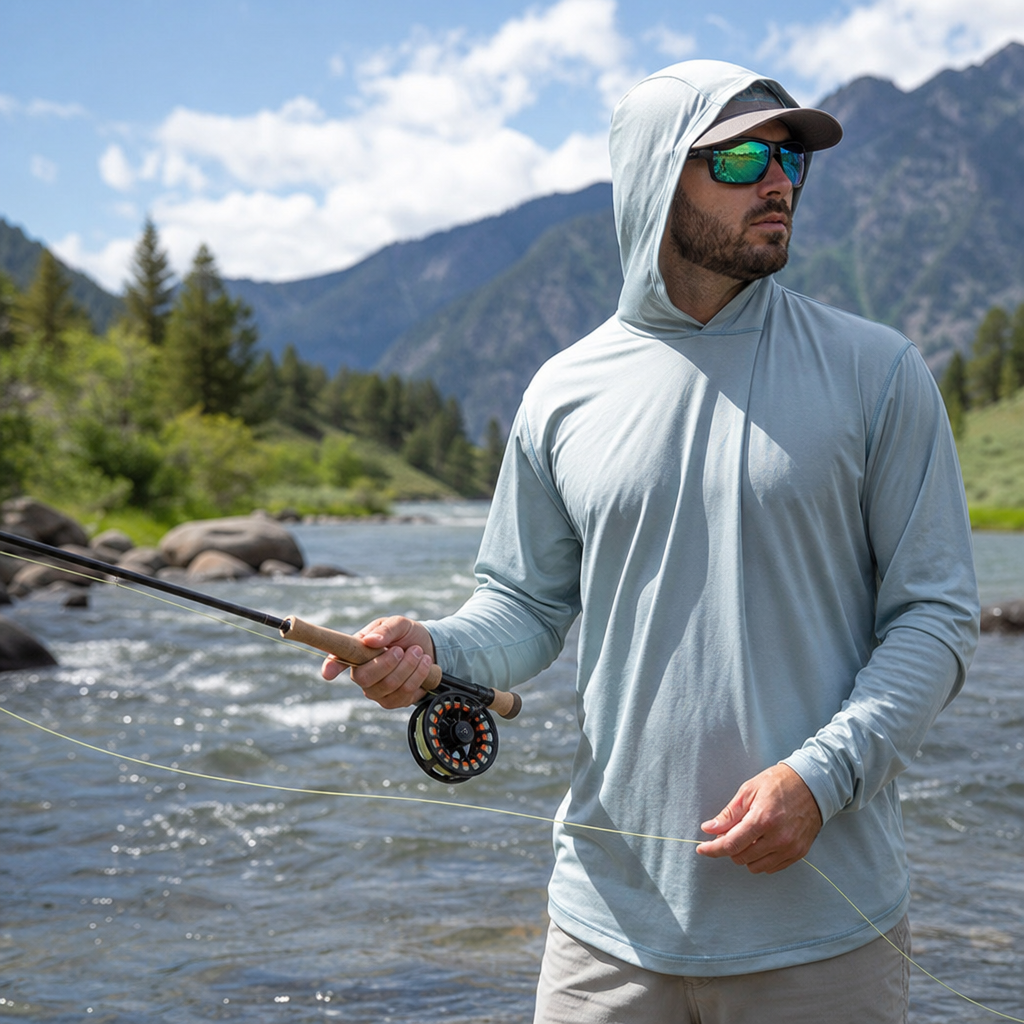
Hooded sun shirts have become the standout option for maximum coverage. On saltwater flats and open lakes, they are often the best answer because they protect the ears, neck, and sides of the face when paired with a cap and buff. The best designs use low-profile hoods that turn with the head and do not obstruct peripheral vision during casting. Some anglers dislike hoods in windy drift-boat conditions, but modern patterning has improved dramatically. For many serious warm-weather anglers, a lightweight UPF hoody is now the default shirt, not a niche item.
| Shirt type | Best use | Strengths | Limitations |
|---|---|---|---|
| Woven button-up | Guiding, hot dry climates, travel | Excellent venting, collar protection, durable fabric | Can feel stiff, less streamlined under layers |
| Knit crew or quarter-zip | Walk-and-wade trout fishing, active days | Soft feel, stretch, easy layering | Some fabrics hold odor or snag easily |
| Hooded sun shirt | Saltwater flats, lakes, high exposure days | Maximum coverage, strong neck and ear protection | Not everyone likes hood management in wind |
Top fly fishing shirt brands and standout models
Several brands consistently produce the top fly fishing shirts for sun protection, and each has a distinct strength. Simms remains one of the most reliable names because its SolarFlex series has long balanced casting mobility, high UPF ratings, and guide-friendly durability. The SolarFlex Hoody is a strong benchmark for anglers who want broad coverage without heavy fabric. Simms also tends to design shirts with practical fishing details rather than generic outdoor styling, which matters when you wear them hard across full seasons.
Patagonia is equally important in clothing reviews because the brand combines proven fishing patterning with clear fabric stories and strong warm-weather options. The Capilene Cool Daily Hoody is widely used beyond fishing, but anglers appreciate its breathability and soft next-to-skin feel. For those wanting a more traditional technical fishing shirt, Patagonia’s long-sleeve woven options often deliver clean venting and durable builds. The company’s attention to recycled materials appeals to anglers who care about environmental impact, though softness and longevity still vary by fabric blend.
Columbia’s PFG line remains popular because it reaches a broad price range without ignoring essentials. The Bahama and Tamiami shirts are common sights from bass boats to trout lodges, and for good reason: they provide dependable venting, practical collars, and accessible sizing. They may not always have the refined fit or stretch of premium technical models, but for many anglers they represent strong value. Orvis also deserves mention for versatile warm-weather shirts that bridge travel, guiding, and river use, while AFTCO and Huk have become serious contenders for hot-climate anglers seeking aggressive sun coverage and lightweight performance. For buyers comparing models, brand reputation should matter less than the exact fabric weight, cut, and coverage features of the specific shirt.
How to choose the right shirt for climate, fit, and fishing style
The right shirt starts with where and how you fish. For hot, arid western rivers, prioritize airflow and collar protection. A woven vented shirt or lightweight hoody works well because sweat evaporates quickly and direct overhead sun is the main problem. For humid eastern summers or tropical destinations, prioritize moisture transfer and quick drying because saturated fabric becomes uncomfortable fast. Here, knit hoodies with high breathability often outperform heavy woven shirts. On cool but bright alpine water, a midweight sun shirt can be ideal because UV exposure remains high even when the air feels mild.
Fit should be tested through movement, not just mirror checks. Raise both arms overhead, simulate a hard double haul, and reach across your body as if stripping line. If cuffs slide halfway up your forearms or the shoulders bind, the shirt will become distracting on the water. I prefer a trim athletic fit in knit shirts and a slightly roomier fit in woven shirts, especially if I may layer over a base layer or under a shell. Tall anglers should pay special attention to sleeve length and torso drop, since many otherwise strong shirts expose wrists or lower back when casting from elevated banks or leaning forward to land fish.
Color is another overlooked factor. Lighter shades generally feel cooler in direct sun, but the bigger issue is whether the fabric itself is tested to maintain UPF performance. Darker colors can mask stains and often photograph better in product listings, yet modern light-colored technical fabrics perform extremely well if the weave and treatment are sound. Finally, think about maintenance. If you fish often, choose shirts that wash clean, resist salt buildup, and retain structure after repeated laundering. A shirt that loses shape or odor control after one season is not a bargain.
Care, durability, and common buying mistakes
Even the top fly fishing shirts for sun protection need proper care to keep performing. Salt, sunscreen residue, insect repellent, and body oils all reduce fabric comfort over time. Rinse shirts promptly after saltwater use, wash with mild detergent, and avoid heavy fabric softeners that can interfere with moisture-wicking finishes. High heat in dryers can shorten the life of elastane fibers and distort collar structure, so air drying or low heat is the safer routine. In my experience, shirts that are washed correctly maintain fit, odor control, and smooth hand feel much longer than identical garments treated carelessly.
The most common buying mistake is choosing by label alone. A shirt marketed for fishing is not automatically ideal for fly fishing. Pocket placement may interfere with sling packs, cuffs may snag fly line, and loose sleeves may slap in the wind during casting. Another mistake is relying on sunscreen instead of fabric coverage. Sunscreen remains important on the face, hands, and any exposed areas, but a UPF shirt provides consistent protection that does not sweat off or require perfect reapplication timing. Anglers also underestimate the importance of neck coverage, especially when hours on reflective water intensify exposure from below.
Price deserves context. Premium shirts often justify higher cost through better patterning, longer-lasting fabrics, stronger seam construction, and more reliable UPF testing. However, expensive does not always mean best for every angler. A dependable midrange shirt that fits perfectly and matches your climate may outperform a premium option with the wrong cut or fabric weight. Build a rotation of two or three shirts for your main season, then replace based on loss of elasticity, abrasion damage, persistent odor, or visible thinning. That practical approach gives better long-term value than chasing every new release.
The top fly fishing shirts for sun protection succeed because they solve a real on-water problem: prolonged UV exposure combined with heat, sweat, and constant movement. For most anglers, the winning formula is straightforward. Start with UPF 30 to 50+ fabric from a reputable brand, then choose the shirt style that fits your water and weather. Woven button-ups are excellent for structure, venting, and classic guide utility. Knit crews and quarter-zips shine for comfort and active hiking days. Hooded sun shirts provide the most complete coverage for open water, salt, and all-day exposure. Details such as collar height, sleeve length, cuff design, drying speed, and odor control matter just as much as the logo on the chest.
As the hub page for clothing reviews within product reviews and recommendations, this guide should help you narrow the field before diving into model-specific comparisons, layering guides, and seasonal gear lists. The main benefit of investing in a quality sun-protective fishing shirt is simple: you stay safer and more comfortable, which means you fish better and longer. Choose one shirt for your primary climate, test it on a full day outdoors, and build the rest of your warm-weather clothing system from there.
Frequently Asked Questions
What should anglers look for in a fly fishing shirt for real sun protection?
The best fly fishing shirts for sun protection start with reliable fabric performance, not just marketing language on a tag. A quality shirt should offer a high UPF rating, ideally UPF 30 or UPF 50+, to help block harmful ultraviolet rays during long hours on exposed water. That said, fabric coverage is only one part of the equation. The most effective shirts also protect the areas anglers expose most often while casting and rowing: the neck, shoulders, upper back, forearms, and chest. Features like a high collar, extended sleeve length, thumb loops, or a hood can make a major difference when the sun is reflecting off rivers, lakes, and saltwater flats.
Fit and construction matter just as much as the listed protection level. A fly fishing shirt should allow a full casting range of motion without pulling across the shoulders or riding up at the wrists. Lightweight, tightly woven synthetic fabrics tend to perform well because they resist saturation, dry quickly, and maintain protection better than heavy cotton. Ventilation panels, mesh-lined back capes, and moisture-wicking materials also help control heat buildup, which is critical when an angler is hiking to remote water or fishing all day in midsummer conditions. In practical terms, the right shirt is one that keeps you covered without making you feel trapped, overheated, or restricted every time you make a cast.
Are hooded sun shirts better than traditional collared fishing shirts?
Neither style is automatically better for every angler, but hooded sun shirts have become extremely popular because they provide excellent coverage with minimal effort. A well-designed hood protects the back and sides of the neck, ears, and parts of the face when paired with a hat or neck gaiter. On bright, open water where sunlight reflects upward as well as downward, that extra coverage can be a real advantage. Hooded shirts are often made from soft, lightweight knit fabrics that feel more like performance athletic wear, which many anglers prefer in hot weather or when they are constantly moving between casting positions, poling skiffs, or walking banks.
Traditional collared fishing shirts still have clear strengths, especially for anglers who want structure, airflow, and all-day versatility. Button-up models often include chest pockets, vented backs, roll-up sleeves, and a looser fit that promotes air circulation. A firm collar can also be useful for shielding the neck when flipped up in direct sun. For trout anglers, guides, and anglers who spend time both on and off the water, a collared shirt may feel more adaptable and less casual. In the end, the better option depends on fishing style, climate, and personal comfort. If maximum neck and ear coverage is the top priority, a hooded shirt often wins. If airflow, storage, and a more traditional fit matter more, a collared fishing shirt may be the better choice.
How important is breathability in a sun-protective fly fishing shirt?
Breathability is absolutely critical because sun protection only works well if you can comfortably keep the shirt on all day. Many anglers underestimate how quickly heat stress can become a problem, especially when fishing under direct summer sun, standing on reflective water, or hiking into alpine streams with a pack. A shirt may have an impressive UPF rating, but if it traps heat, holds sweat, or becomes clammy after an hour of casting, it will not perform well in real-world conditions. The best fly fishing shirts balance protective coverage with airflow, moisture management, and quick drying so your body can regulate temperature more effectively.
Look for technical fabrics designed to move sweat away from the skin and dry fast after heavy exertion, splash exposure, or sudden weather changes. Venting features under the arms, across the back, or along the chest can significantly improve comfort, especially in humid climates. Breathability also affects chafing and fatigue. When a shirt stays damp too long, friction increases around the shoulders, underarms, and pack contact points. Over a full day of repetitive casting, rowing, and wading, that discomfort adds up. In short, a breathable shirt helps you stay cooler, drier, and more focused, which makes it an essential performance factor rather than a secondary convenience.
Do lighter-colored fly fishing shirts provide better sun and heat performance?
In many cases, yes, lighter-colored shirts can improve comfort in bright conditions because they tend to absorb less visible heat than darker colors. Shades like light gray, pale blue, tan, and off-white are popular in warm-weather fly fishing for that reason. They can feel cooler under direct sunlight, especially during long days on open water with little shade. However, color alone does not determine sun protection. A light-colored shirt with a strong UPF-rated fabric can perform extremely well, while a dark shirt without the right material construction may still leave an angler overly hot and underprotected.
It is also worth considering visibility, stain resistance, and fishing environment. Some anglers prefer muted earth tones on small trout streams, while others want brighter shades for visibility in boats or guide settings. Salt, fish slime, mud, sunscreen, and sweat all show differently depending on color. Ultimately, fabric technology, weave density, ventilation, and fit have a bigger effect on overall performance than color alone. If you want the coolest-feeling option for summer fishing, lighter colors are often a smart choice, but they should be paired with proven UV protection and strong moisture management to deliver the best full-day result.
How should a fly fishing sun shirt fit for comfort, coverage, and casting performance?
A proper fit should be relaxed enough to allow free movement but not so loose that the shirt snags, flaps excessively in the wind, or bunches under pack straps and waders. Fly fishing involves constant shoulder rotation, elbow extension, and torso movement, so a good shirt needs to move naturally through repeated casting motions. If the fit is too tight across the upper back or chest, you will notice restriction quickly, especially when making longer casts or rowing. If it is too baggy, sleeves can creep, cuffs can interfere with line handling, and extra fabric can become uncomfortable when wet.
Coverage should remain consistent in motion. The sleeves should stay long enough to protect the wrists and forearms when your arms are extended, and the collar or hood should sit comfortably without rubbing or collapsing. A slightly longer hem can help when bending, wading, or reaching into a pack so the lower back stays covered. Many high-performing shirts use articulated sleeves, stretch panels, or gusseted underarms to improve mobility without sacrificing protection. The ideal fit feels almost unnoticeable while still keeping vulnerable skin covered from first light to the last cast. That balance of comfort, mobility, and dependable coverage is what separates a good sun shirt from one that ends up stuffed back into the gear bag.