Education shapes the future of fly fishing conservation because anglers protect what they understand, value, and can explain to others. In practical terms, education in this field means far more than teaching someone to cast or choose a fly. It includes stream ecology, fish handling, habitat restoration, public-land policy, invasive-species prevention, water law, and the ethics that guide decisions on crowded rivers. When I have worked with clubs, guides, and watershed groups, the biggest difference between passive recreation and active stewardship has always been education. Skilled anglers may know how to catch trout, but informed anglers know why cold water matters, how sediment affects spawning beds, and when their own behavior should change to reduce stress on fish.
Fly fishing conservation is the long-term protection of fish populations, aquatic habitat, and access systems that keep rivers healthy and angling sustainable. Community and advocacy are central to that work. Community refers to the network of anglers, guides, outfitters, schools, nonprofits, tribes, agencies, and local businesses that influence a fishery. Advocacy is the organized effort to shape behavior, funding, and public policy in favor of healthy waters and ethical angling. A hub article on community and advocacy must connect these pieces because conservation does not happen through biology alone. It happens when people learn enough to act together, speak credibly, and support rules and restoration that endure beyond a single season.
This matters now because many fisheries face overlapping pressure. Rising water temperatures, altered flows, development near streams, shoreline erosion, nonnative species, felt-soled gear concerns in some regions, and increased participation all put stress on waters that may already be fragile. Education helps anglers recognize these pressures early and respond appropriately. It teaches why voluntary afternoon closures matter during heat waves, why barbless hooks can reduce handling time, why riparian vegetation protects water quality, and why catch-and-release is not a cure-all if fish are fought too long in warm water. Strong education turns ethics from slogans into repeatable habits.
It also matters because conservation depends on social legitimacy. Agencies can publish regulations, but lasting compliance comes when anglers understand the science and trust the source. Clubs can organize a cleanup, but lasting results come when members know how trash, bank trampling, and monofilament disposal affect habitat. Lawmakers may hear testimony on dam relicensing or instream flow protections, yet persuasive advocacy usually comes from constituents who can translate technical issues into plain language. Education creates that translation layer. It equips communities to support habitat projects, improve angler behavior, mentor newcomers, and defend rivers in public forums with accuracy rather than emotion alone.
Why education is the foundation of community-led conservation
Community-led conservation works when education builds a shared baseline of knowledge and responsibility. In fly fishing, that baseline includes fish biology, watershed function, seasonal stress, and the practical ethics of being on the water. Without it, even well-meaning anglers can cause harm. I have seen novice groups crowd spawning redds simply because nobody explained what clean gravel depressions look like or why stepping on them can crush eggs. Once shown the signs, most anglers change immediately. That is the power of direct, relevant instruction: it turns unseen impacts into visible choices.
Education also creates a common language that helps diverse stakeholders cooperate. A guide, a biologist, a high school teacher, and a shop owner may come to conservation from different angles, but terms like dissolved oxygen, thermal refuge, riparian buffer, macroinvertebrates, and watershed connectivity give them shared reference points. This is especially important in hub-level community work. People need to understand not only their own role, but how it connects to restoration crews, local ordinances, state agencies, and nonprofit campaigns. Once that connection is clear, volunteers become advocates instead of occasional participants.
Good education is specific, local, and tied to action. A generic message to “protect trout streams” is weak. A stronger message explains that a particular tailwater experiences elevated afternoon temperatures in August, so anglers should fish early, carry a thermometer, minimize fight times, and support riparian planting upstream. This kind of instruction respects the audience and produces measurable behavior change. It also builds trust because people can test what they learn against real conditions on their home water.
What anglers need to learn beyond casting and entomology
Many fly fishing programs focus first on gear, knots, presentation, and insect identification. Those are useful skills, but conservation education must go further. Anglers need a working understanding of habitat structure, including undercut banks, woody debris, floodplains, side channels, and spawning gravel. They should know how sediment enters streams, why bank erosion can be natural in some reaches and damaging in others, and how streamside vegetation shades water, stabilizes soil, and supports insect life. They also need to understand how dams, culverts, and diversions interrupt fish movement and alter flow patterns.
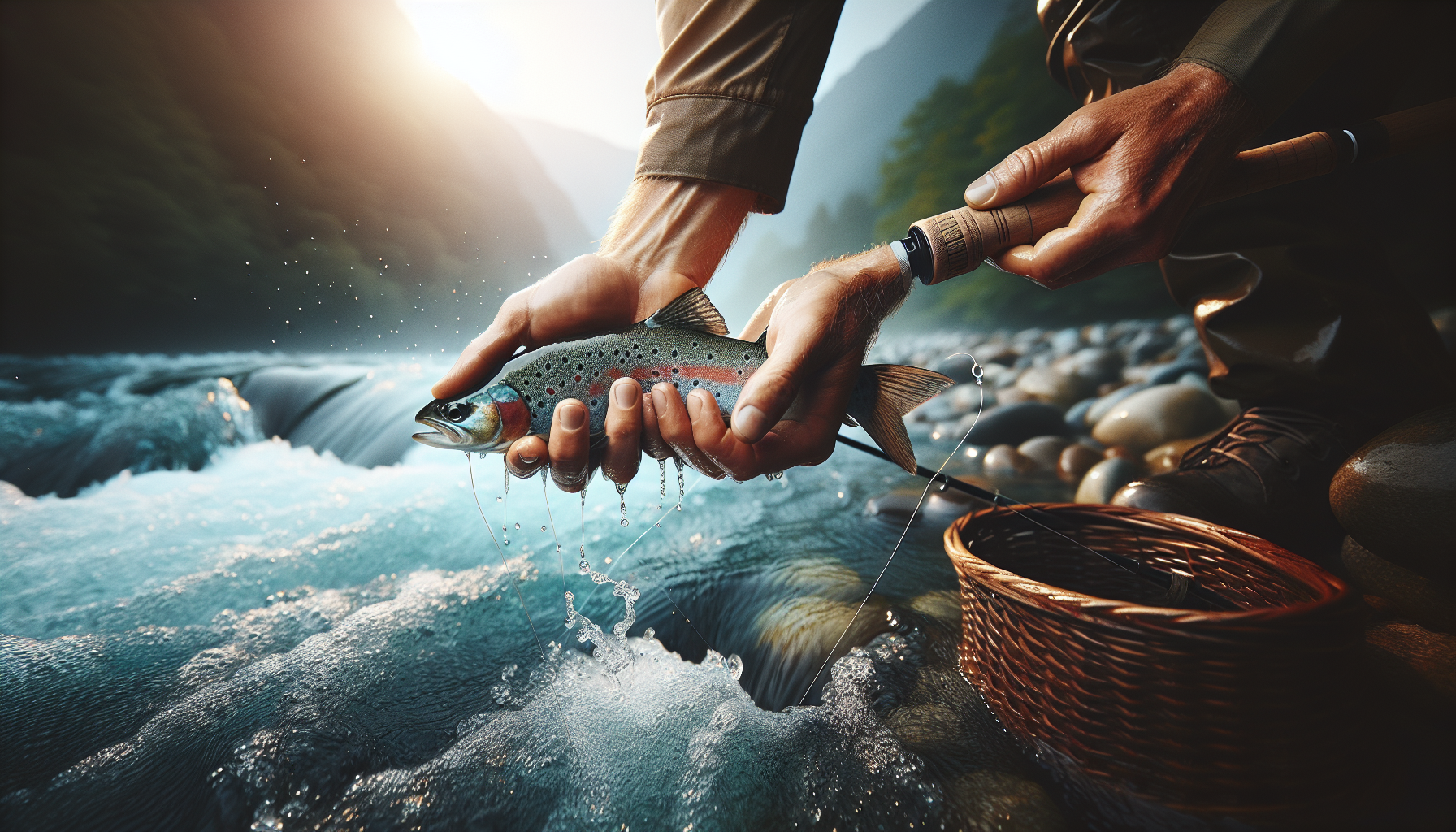
Fish welfare is another essential topic. Ethical fish handling is not intuitive for every beginner. Education should cover rubber nets, wet hands, short air exposure, fast releases, and the relationship between water temperature and survival. Research summarized by fisheries agencies consistently shows that warmer water increases post-release stress, particularly for trout and salmonids. That is why many responsible guides use stream thermometers and stop targeting trout when temperatures approach local threshold guidance. Teaching this early prevents the mistaken belief that legal always means harmless.
Anglers should also learn aquatic invasive species prevention. “Clean, drain, dry” is a simple rule, but it needs context. New Zealand mudsnails, didymo, whirling disease vectors, and invasive plant fragments can move between waters on boots, nets, boats, and waders. Regions differ in their protocols, so local education matters. Finally, public process literacy belongs in every strong curriculum. Knowing how to comment on management plans, attend commission meetings, report poaching, or support a watershed council turns private concern into public action.
How clubs, guides, shops, and nonprofits build conservation culture
Community institutions are the delivery system for education. Fly shops shape norms every day through conversation at the counter, river reports, trip briefings, and what they choose to emphasize alongside product sales. The best shops do not just recommend flies; they explain low-water etiquette, current closures, proper fish handling, and invasive-species precautions. Guides extend that influence on the water. A guide who demonstrates quick releases, avoids overplaying fish, and explains why a side channel is closed is teaching conservation in the most persuasive setting possible: the moment of decision.
Clubs and nonprofits broaden that reach. Trout Unlimited chapters, local watershed alliances, backcountry angling groups, and riverkeeper organizations often combine education with direct service. Their most effective programs pair instruction with participation, such as riparian planting days, water-quality monitoring, culvert surveys, youth clinics, and advocacy workshops. People retain more when they connect concepts to physical work. A volunteer who plants willows along a degraded bank understands erosion and shade differently afterward, and that experience often becomes the entry point to long-term membership and advocacy.
Schools and youth programs are especially important because conservation habits are easier to build than to repair. When students learn watershed basics, tie flies that imitate local insects, and test stream temperature or pH, they begin to see a river as a living system rather than a backdrop. Communities that invest in youth education tend to produce future board members, guides, biologists, and voters who already understand why fisheries deserve protection.
| Community actor | Educational role | Conservation outcome |
|---|---|---|
| Fly shops | River reports, gear guidance, ethics messaging | Better daily angler decisions and compliance |
| Guides | On-water instruction and modeling | Improved fish handling and habitat awareness |
| Clubs | Mentorship, events, volunteer coordination | Stronger local stewardship networks |
| Nonprofits | Science communication and advocacy training | Policy support and restoration funding |
| Schools | Youth outreach and field learning | Long-term conservation culture |
Advocacy turns informed anglers into effective public voices
Advocacy in fly fishing conservation is often misunderstood as politics alone, but at its best it is evidence-based civic participation. Education makes that possible by teaching anglers how decisions are actually made. Stream protection may involve city planning boards, state fish and wildlife commissions, federal land agencies, dam operators, irrigation districts, or legislative committees. Without some education in process, people do not know where to direct energy. They sign a petition when a formal comment would matter more, or they complain online instead of attending the meeting where access rules are being set.
Effective advocacy training answers practical questions. What data supports this position? Which agency has authority? What is the deadline for comments? How should testimony be framed so that it addresses habitat, economics, and public benefit? I have seen ordinary anglers become highly credible advocates once they understood these mechanics. One local business owner who started by hosting cleanup days later testified on stormwater impacts because she had learned how runoff affects insect life and juvenile fish habitat. Education gave her confidence and precision.
Strong advocacy also depends on coalition building. Fishery issues rarely stand alone. Instream flow can intersect with agriculture, municipal growth, hydropower, recreation, and tribal rights. Educated advocates can acknowledge tradeoffs while still defending nonnegotiable ecological needs. That balance matters. Overstated claims weaken credibility; accurate, well-scoped arguments strengthen it. The most persuasive fly fishing advocates are usually the ones who can explain both the science and the human context without reducing either.
Best practices for creating education programs that change behavior
Not all education changes behavior. Effective programs are repeated, place-based, and measurable. They focus on the exact decisions anglers face: whether to fish during heat stress, how to approach a redd, where to stand to avoid bank damage, how to disinfect gear, and when to support a policy campaign. Briefings should be simple enough to remember and specific enough to act on. “Fish early, quit at 68 degrees, keep fish wet, and avoid side channels with spawning activity” works better than a broad appeal to respect the resource.
Delivery matters too. People learn differently in shops, online, at boat ramps, in guide boats, and through peer mentors. The strongest communities use all of these channels. A printed map can mark seasonal closures; a shop newsletter can explain why they exist; a guide can reinforce them on the river; a club meeting can connect them to broader habitat concerns. Consistency across channels prevents mixed messages and reinforces norms.
Programs should also evaluate outcomes. Useful metrics include volunteer retention, event participation, reported compliance, thermometer use, invasive-species prevention habits, funds raised for restoration, and public comments submitted on management issues. Education that cannot be evaluated is hard to improve. Communities do not need expensive systems to start. Even simple post-event surveys and follow-up interviews can show whether people changed behavior, joined projects, or took advocacy steps they would not have taken before.
The future of fly fishing conservation depends on informed communities
The role of education in fly fishing conservation is straightforward: it turns anglers into stewards, communities into networks, and concern into advocacy. When people understand fish biology, habitat function, seasonal stress, and public process, they make better decisions on the water and stronger arguments off it. That combination protects fisheries more effectively than rules, restoration, or outreach alone. Community and advocacy succeed when education supplies the facts, habits, and confidence behind them.
For a subtopic hub, the key lesson is that every branch of community and advocacy connects back to teaching. Volunteerism becomes more useful when volunteers know what healthy habitat looks like. Mentorship becomes more ethical when experienced anglers explain fish handling and river etiquette clearly. Public engagement becomes more persuasive when advocates understand flows, temperature, access, and restoration priorities in practical terms. Education is the thread that ties these efforts together.
If you want to strengthen fly fishing conservation in your area, start locally and start specifically. Join a watershed group, attend a club meeting, ask your fly shop about current conservation priorities, support guide services that model ethical practices, and learn how local agencies manage your home water. Then pass that knowledge on. Healthy fisheries depend on informed communities, and informed communities are built one conversation, one outing, and one well-taught angler at a time.
Frequently Asked Questions
Why is education so important in fly fishing conservation?
Education matters in fly fishing conservation because people are far more likely to protect rivers, trout, and public access when they understand how those systems actually work. A new angler may begin by learning casting, knots, and fly selection, but conservation depends on a much broader foundation of knowledge. That foundation includes stream ecology, insect life cycles, spawning behavior, water temperature, habitat needs, and the cumulative effects of fishing pressure. Once anglers see how fish relate to oxygen levels, streamside vegetation, current seams, and seasonal flows, conservation stops being an abstract ideal and becomes a practical responsibility.
Just as important, education turns passive recreation into active stewardship. Anglers who understand why fish are vulnerable during warm summer conditions are more likely to stop fishing when water temperatures rise. Those who learn proper fish handling, barbless techniques, and the effects of prolonged fights can reduce mortality even when practicing catch and release. Education also helps people connect individual behavior to larger outcomes. A single pair of muddy boots can transport invasive species. A single social media post can intensify pressure on a fragile fishery. A single uninformed decision near spawning fish can disrupt an entire stretch of river. When anglers understand these connections, their habits change in ways that directly support conservation.
In many communities, education also creates advocates who can explain conservation issues to others in clear, credible language. That may mean talking with a beginner on the river about redds, joining a watershed meeting, or supporting science-based regulations. The biggest difference between someone who enjoys fly fishing and someone who helps sustain it for the next generation is often not passion alone, but understanding. Education builds that understanding, and from that point forward, good stewardship becomes much more consistent and meaningful.
What topics should fly fishing education cover beyond basic casting and gear?
Effective fly fishing education should reach well beyond technique because conservation challenges are rarely caused by poor casting. They are caused by gaps in ecological knowledge, ethics, and awareness of how rivers are managed. A strong educational approach starts with stream ecology: food webs, aquatic insects, riparian habitat, water temperature, dissolved oxygen, seasonal flows, and the way fish use different parts of a watershed throughout the year. Anglers should understand not only where fish hold, but why they hold there, what stresses them, and what habitat conditions they require to survive and reproduce.
Fish handling is another essential topic. Many anglers assume catch and release automatically protects fisheries, but the reality is more nuanced. Education should address landing fish quickly, minimizing air exposure, keeping fish in the water, using appropriate tackle, handling fish with wet hands, and avoiding unnecessary photos during periods of environmental stress. It should also cover when not to fish at all, especially during high water temperatures, low flows, or spawning periods. These practical decisions often have more immediate conservation impact than any slogan or campaign.
Habitat restoration and watershed function should also be central. Anglers benefit from understanding bank erosion, sedimentation, culvert barriers, floodplain connectivity, woody structure, native vegetation, and the role of headwaters. Public-land policy, water law, and access issues are equally important because conservation is shaped by management decisions as much as by river etiquette. In many places, fish populations depend on how water is allocated, how land is developed, and how agencies balance recreation with habitat protection. Anglers who know how those systems work are better prepared to support effective policy rather than reacting only when a local fishery declines.
Finally, fly fishing education should include ethics and communication. Crowded rivers, social media exposure, secret-spot culture, invasive-species prevention, and respect for landowners all influence conservation outcomes. Teaching anglers how to think through these issues is critical. The goal is not simply to produce skilled fishermen, but informed participants who understand that every decision on the water affects fish, habitat, and other people.
How does education help anglers make better conservation decisions on the water?
Education improves on-the-water decision-making by giving anglers a framework for reading conditions, anticipating consequences, and choosing actions that reduce harm. Without that framework, many people rely on habit, hearsay, or assumptions. They may keep fishing through dangerously warm afternoons, wade through spawning areas without recognizing redds, or overplay fish on light tackle because they do not understand post-release stress. Education replaces guesswork with informed judgment.
For example, an educated angler knows that water temperature is not just a comfort metric but a biological threshold. As temperatures climb, dissolved oxygen drops and fish become less capable of recovering from exercise. That knowledge changes behavior. Instead of pushing through a full day because the hatch looks good, a conservation-minded angler may fish early, carry a thermometer, target different water, or skip the outing entirely. The same applies to seasonal awareness. Understanding pre-spawn, spawn, and post-spawn patterns helps anglers avoid vulnerable fish and sensitive habitat. Knowing how runoff, low flows, or sudden weather shifts affect fish stress can lead to more cautious, responsible choices.
Education also influences how anglers interact with each other and with the resource in crowded conditions. People who understand the long-term effects of overexposure are usually more careful about naming small fisheries online, posting grip-and-grin photos from fragile waters, or pressuring already stressed fish with repeated catches. They are more likely to step away from fish that are visibly spawning, to give others space, and to set an example for beginners. These decisions may seem small in isolation, but collectively they shape the health of a fishery and the culture around it.
Perhaps most importantly, education teaches anglers to see conservation as a series of everyday decisions rather than a separate activity reserved for clean-up days or fundraising events. It is in the choice to clean waders and boots to prevent invasive species. It is in the decision to pinch barbs, shorten photo sessions, respect closures, and report illegal activity. The more anglers understand the science and ethics behind those choices, the more likely they are to make them consistently.
Can fly fishing education influence habitat restoration and policy advocacy?
Yes, and in many cases it is one of the strongest drivers of meaningful habitat restoration and policy support. Education gives anglers the vocabulary and context needed to move from concern to action. Many people recognize when a river “doesn’t seem as healthy as it used to,” but without understanding watershed processes, water use, fish biology, and regulatory systems, it is difficult to respond effectively. Education helps anglers identify what is actually happening and where their effort can make a difference.
In habitat restoration, that means understanding problems such as streambank degradation, temperature spikes, reduced flow, sediment loading, migration barriers, loss of riparian cover, and channel simplification. Once anglers learn how these issues affect fish populations, they are better prepared to support restoration projects that address root causes rather than surface symptoms. They can volunteer more effectively, contribute informed feedback, and recognize why some projects focus on fencing cattle out of riparian zones, replanting native vegetation, reconnecting side channels, or removing barriers instead of simply stocking more fish.
Education is equally important in public policy. Fly fishing conservation is deeply tied to decisions about land use, water withdrawals, dam operations, public access, hatchery management, invasive-species protocols, and seasonal restrictions. Anglers who understand these topics are far more capable of engaging with agencies, conservation groups, and local governments in productive ways. They can write stronger comments, attend meetings with real substance, support science-based regulations, and communicate with other anglers in a way that builds consensus rather than confusion. That kind of informed participation is essential because many threats to fisheries are political and structural, not just personal.
Well-educated anglers often become translators between technical experts and the broader fishing community. They can explain why a temporary closure protects long-term fish health, why a restoration project may look messy before it improves habitat, or why stricter decontamination rules matter for invasive-species prevention. That role is valuable because conservation succeeds when good science is understood and accepted by the people closest to the resource. Education makes that possible.
What are the best ways to teach conservation in the fly fishing community?
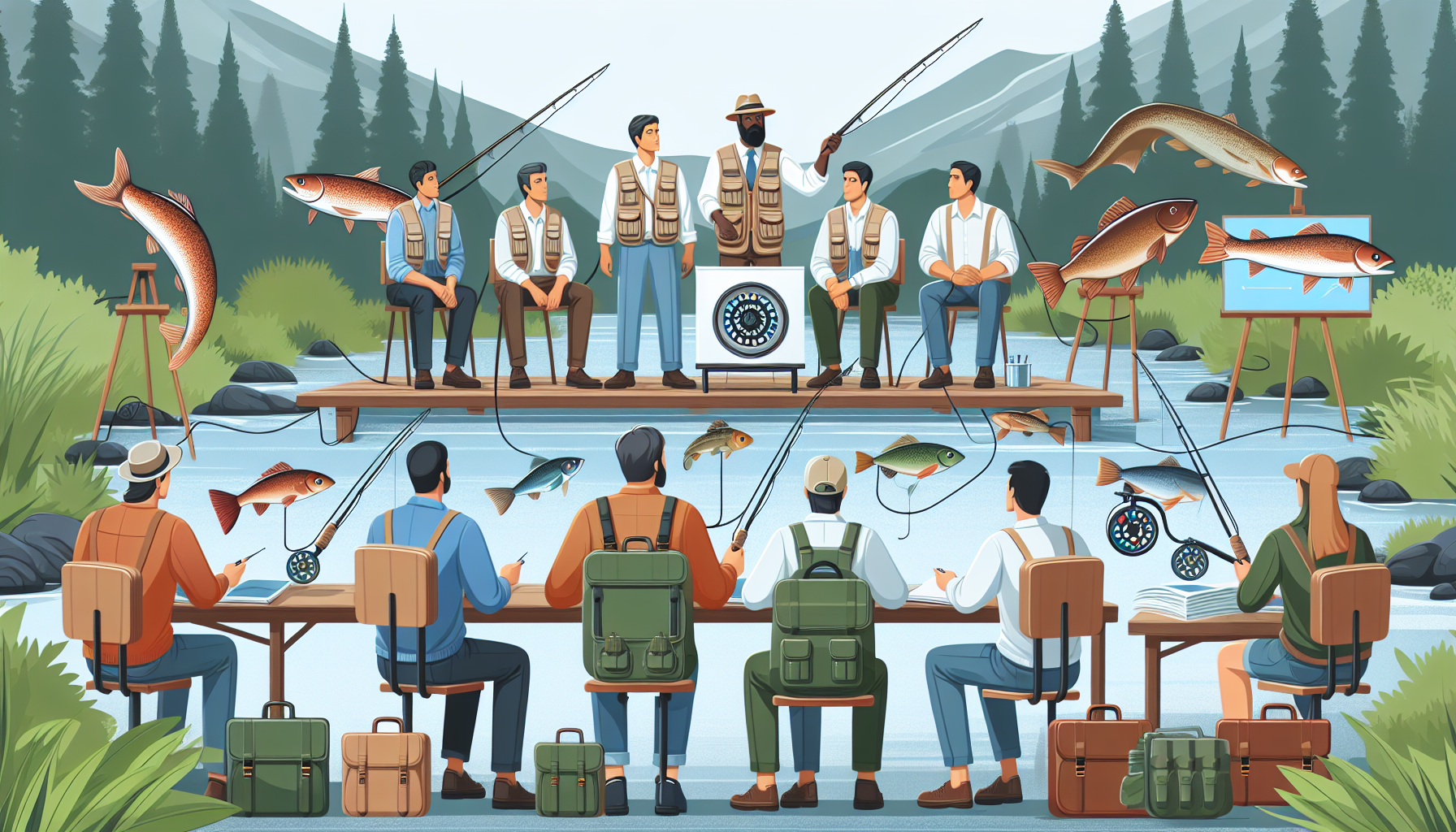
The best conservation education in fly fishing is practical, local, and ongoing. People learn most effectively when they can connect information directly to the rivers they fish and the choices they make. That means classroom-style presentations have value, but they are strongest when paired with field experiences: river walks, bug seine demonstrations, temperature monitoring, habitat tours, fish handling clinics, restoration volunteer days, and guided conversations on ethics. Seeing a spawning redd in person, measuring water temperature during a hot afternoon, or watching how streamside vegetation stabilizes banks tends to leave a much deeper impression than abstract instruction alone.
Mentorship is especially powerful. Clubs, guides, outfitters, schools, and watershed groups all play important roles because conservation values are often transmitted through relationships. A knowledgeable guide who explains why they stop fishing at a certain temperature, avoid a spawning run, or decline to spotlight a fragile stream is teaching far more than technique. Experienced anglers can model the idea that stewardship is simply part of being competent. When conservation is taught as normal behavior rather than optional activism, it becomes embedded in the culture of the sport.
Good education should also be accessible to anglers at every level. Beginners need foundational lessons on fish handling, etiquette, invasive-species prevention, and basic ecology