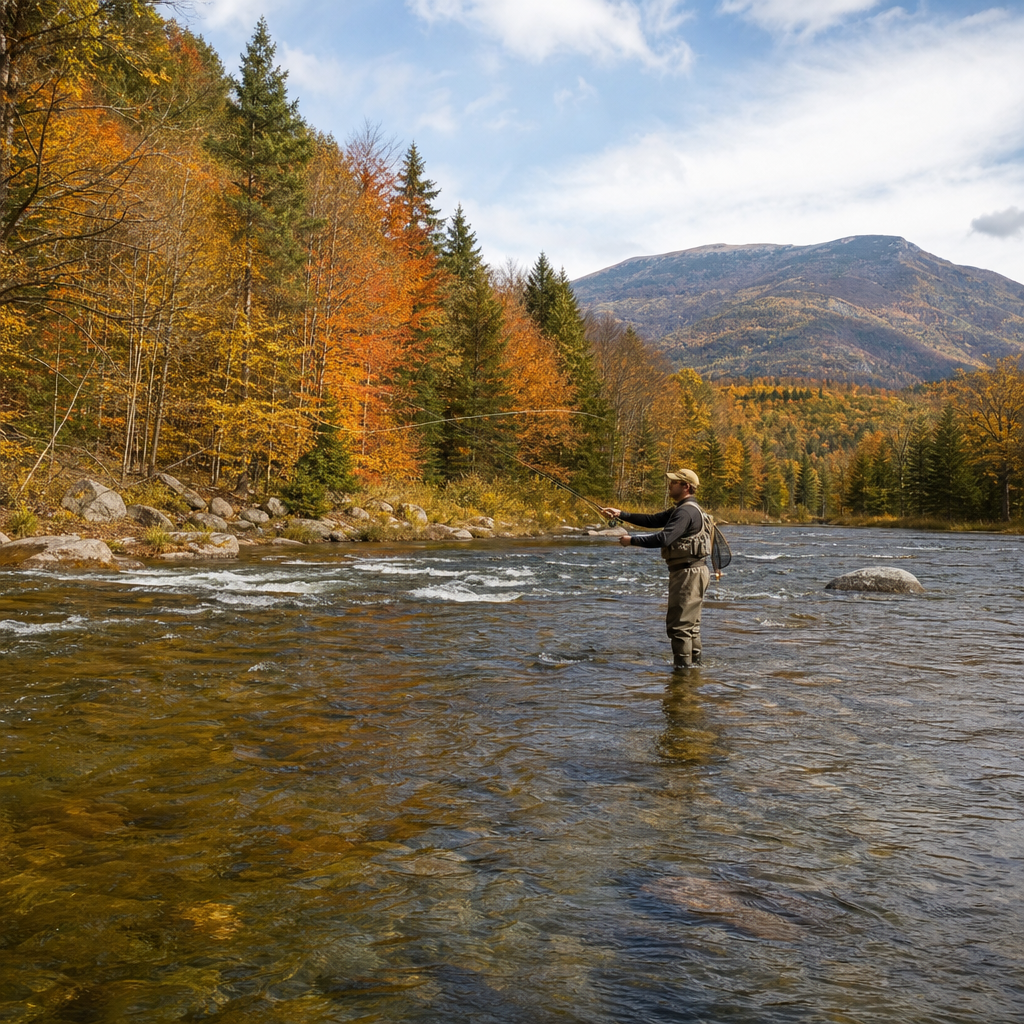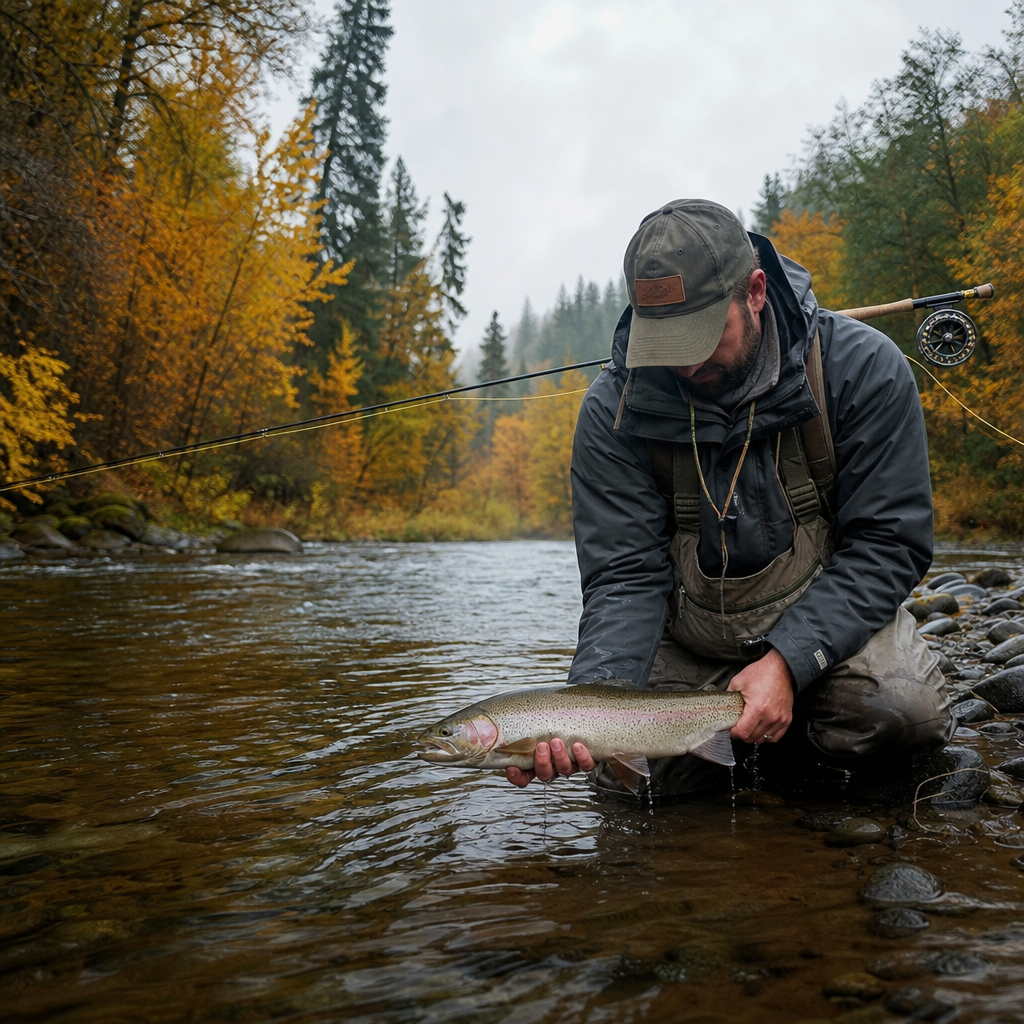
Summer fly fishing for steelhead is one of the most technical and rewarding forms of anadromous angling, blending low, clear water conditions with aggressive fish behavior, long daylight hours, and the need for precise presentation. In this context, summer steelhead are ocean-run rainbow trout that enter rivers months before spawning, usually from late spring through early fall, and hold in freshwater while remaining strong, migratory, and responsive to a swung or skated fly. Summer fly fishing refers to the seasonal tactics, tackle, and river-reading skills used when water temperatures rise, flows drop, and fish shift into specific lies that differ sharply from winter holding water.
I have spent enough dawns wading tailouts and enough evenings skating dries over boulder seams to know that summer steelhead demand discipline more than luck. They rarely forgive poor angle control, heavy splashdowns, or lazy line management. At the same time, they can reward a thoughtful angler with the most visual and electrifying takes in freshwater. That combination is why summer fly fishing matters so much within the broader seasons and conditions conversation: it teaches water reading, gear balance, fish handling, and seasonal adaptation better than almost any other steelhead pursuit.
The practical challenge is that summer conditions compress the margin for error. Clear water makes fish wary. Warm afternoons can push temperatures toward ethical limits. Lower flows expose structure but also concentrate angling pressure. A productive summer steelhead angler must understand river temperature windows, fly size, sink rate, leader length, and how fish position in runs according to current speed and oxygen availability. This article serves as a hub for summer fly fishing by covering the foundational methods, the best categories of water, regional location patterns, and the planning decisions that consistently lead to success.
Understand summer steelhead behavior before choosing tactics
Summer steelhead behavior explains nearly every productive tactic. Unlike winter fish that often move during high flows and settle into slower, deeper holding water, summer fish usually travel and hold in moderate current with strong oxygen exchange. In most Pacific Northwest and Great Lakes systems, they favor riffle corners, heads of runs, walking-speed glides, shaded seams, and tailouts where current, depth, and cover intersect. Because visibility is high, they may slide toward broken surface water or structure during bright periods, then become more willing to move for a fly in low light.
Water temperature governs daily timing. Many experienced anglers treat roughly 58 to 64 degrees Fahrenheit as prime fishing water, while caution increases above 66 and ethical concerns become serious around 68 and higher, especially during prolonged warm spells. Fish are often most active from first light through midmorning and again in the last two hours before dark. Midday can still produce in glacier-fed systems or shaded canyon rivers, but success usually depends on depth control and subtle presentation. Understanding these windows helps anglers fish hard when conditions align instead of blindly covering water all day.
Traveling fish and holding fish also behave differently. Fresh arrivals in tide-influenced reaches or lower river pools may react aggressively to smaller flies swung broadside at moderate speed. Long-term holders farther upstream can become selective about angle, swing pace, and fly silhouette. I have seen fish ignore a large profile on a Type 6 tip, then eat a sparse traditional pattern on a light poly leader after only a slight change in casting angle. Summer steelhead are not impossible; they are simply honest about presentation flaws.
Choose tackle that matches low flows, clear water, and varied presentations
The best summer fly fishing tackle for steelhead balances delicacy with enough authority to control line, mend effectively, and land fish quickly. A common single-hand setup is a 6- or 7-weight around 9 to 10 feet for smaller rivers where short to medium swings dominate. On larger rivers, switch rods from 10 feet 6 inches to 11 feet 6 inches in 6- or 7-weight classes are versatile for dry line work, light sink tips, and improved mending. Two-hand rods in the 12- to 13-foot range, usually 6- or 7-weight, shine on broad runs where sustained anchor casts and long controlled swings are practical.
Line systems should support flexibility rather than maximum depth. In true summer conditions, floating lines, Scandi heads, and light integrated shooting heads cover most situations. Add polyleaders, intermediate tips, or short light sink tips when fish hold slightly deeper or when afternoon glare reduces willingness to rise. Leaders are typically longer than winter setups, often 9 to 15 feet total depending on water clarity and fly style. Tippet strength commonly falls between 8- and 15-pound test, with stronger material reserved for larger fish, heavy current, or warm-water conditions where fast landing is essential.
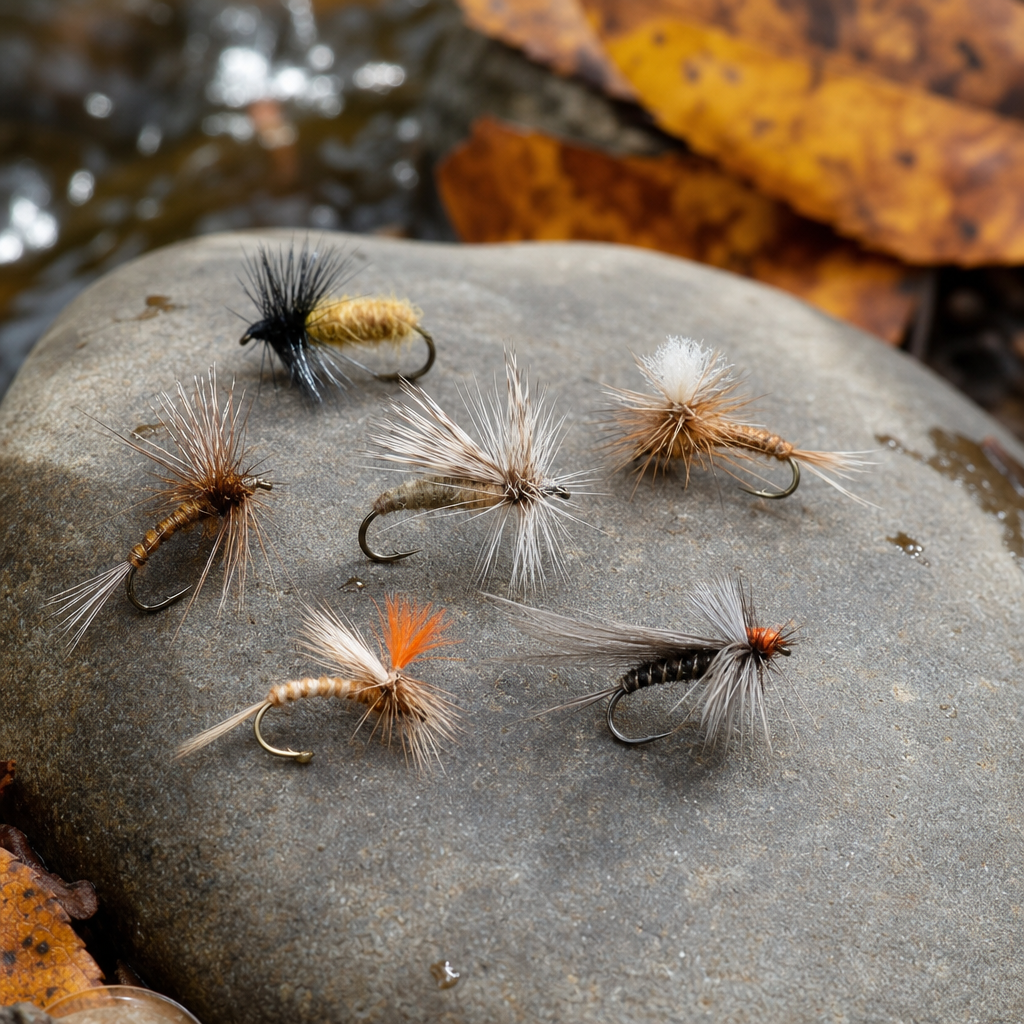
Fly selection is more about profile, contrast, and movement than sheer variety. Productive summer steelhead flies include traditional low-water patterns, sparse hairwings, muddlers, small intruders, skaters, and waking flies. Black, purple, blue, and natural tones remain consistent producers, while brighter accents such as pink, orange, or chartreuse can trigger responses in colored glacial water or under heavy cloud cover. Hook sharpness matters enormously. In low clear water, a fish may only slash or pin the fly briefly, and a perfect point often determines whether that moment becomes a landed steelhead.
Read classic summer water and fish it with purpose
Summer steelhead water is rarely mysterious once you know what to look for. Start with the head of a run where current drops from choppy riffle into a smoother tongue. These transitions deliver oxygen and a steady lane for moving fish. Next, examine mid-run seams created by boulders, ledges, or uneven gravel bars. Finally, never rush past tailouts. In summer, tailouts can be premium lies because they combine softer speed, consistent depth, and a narrow migration path. Some of the most memorable fish I have hooked came from ankle-to-knee-deep tailout buckets that many anglers would consider too shallow.
Shade and overhead security become increasingly important as sunlight intensifies. Look for canyon walls, timbered banks, bridge shadows, and foam lines that break visual exposure. On freestone rivers, fish may hold near submerged rock gardens where conflicting currents soften the swing and create pockets of rest. On tailwaters with stable summer flow, steelhead often stack in predictable walking-speed slots and can be covered methodically from top to bottom. The key is efficiency: take one or two controlled steps between casts, maintain a consistent casting angle, and change depth only after covering the lie with the cleanest possible presentation.
| Water type | What it looks like | Why steelhead hold there | Best presentation |
|---|---|---|---|
| Run head | Broken riffle entering smooth glide | High oxygen and travel lane | Floating line or light tip swung at medium speed |
| Mid-run seam | Defined current edge beside boulder or shelf | Energy-efficient holding position | Quartering cast with controlled mend |
| Tailout | Shallow taper before next riffle | Compressed migration route and soft water | Small sparse fly on long leader |
| Shaded slot | Bank shadow or structure-darkened lane | Reduced light stress and cover | Tight swing near bank with precise angle |
Use presentation styles that fit the fish’s mood
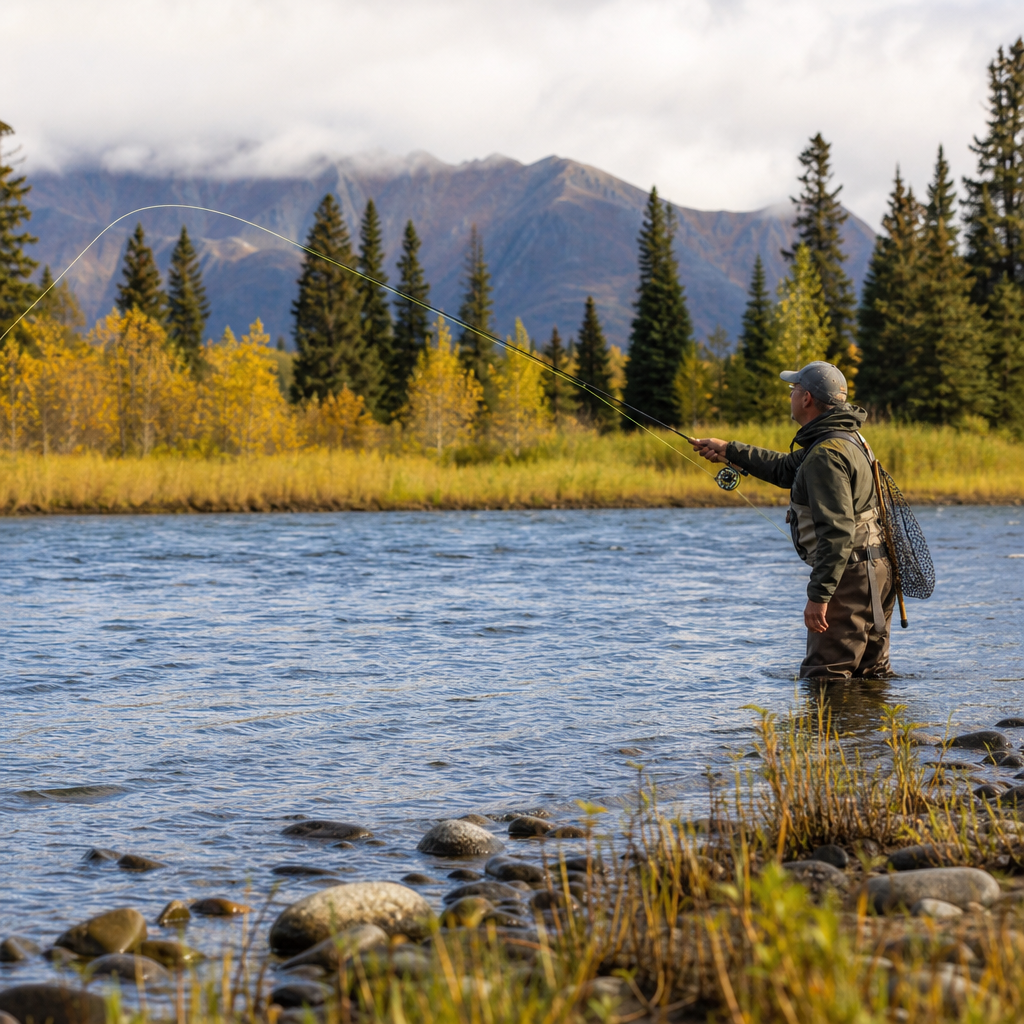
The classic summer steelhead presentation is the quartering downstream swing. Cast across and slightly down, set the line with an upstream mend if needed, then let the fly swim broadside under tension. This method is effective because it keeps the fly in the fish’s window for a long time without unnatural drag. Swing speed should match water speed and fish attitude. If the fly races, add a mend or lighter line angle. If it stalls lifelessly, reduce mending or step slightly farther down to increase tension and movement.
Dry line tactics dominate much of summer fly fishing because they preserve subtlety and let sparse flies swim naturally. Start near the surface whenever water temperature is favorable and visibility is good. If fish follow, boil, or nip without committing, adjust one variable at a time: smaller fly, longer leader, different angle, slower swing, or a lightly sunk presentation. Skating and waking flies are especially effective in the morning and evening. A muddler, bomber, or waking steelhead pattern pulled across a tailout can provoke fish that refuse subsurface offerings, and the visual take is unmatched.
When fish hold deeper, use a short sink tip or polyleader rather than jumping immediately to heavy tungsten systems. Summer water usually rewards finesse. A tip that sinks 1.5 to 3 inches per second often reaches the right zone while keeping the swing lively. Strip retrieves can also work in select situations, especially for fresh fish in lower river frog water, but the swung fly remains the standard because it covers water efficiently and presents with consistency. Regardless of style, do not trout-set. Let the fish turn under tension, then raise the rod smoothly once the line comes tight.
Target productive summer steelhead locations across major regions
The best summer steelhead locations share a few common traits: dependable summer flows, enough cold water influence to protect temperature, migratory access, and run timing that places fish in the river during stable conditions. In the Pacific Northwest, Oregon’s Deschutes River is a benchmark summer steelhead destination because it offers classic swung-fly water, strong dry line tradition, and fish that hold predictably in riffle-run structure. The North Umpqua is equally iconic, known for surface techniques, historic fly water, and highly educated fish that force anglers to refine presentation. Washington’s Klickitat can fish well with slightly more color, while systems like the Grande Ronde and Clearwater provide broader runs suited to two-hand tactics.
British Columbia adds famous opportunities on the Dean, Skeena tributaries, and other coastal systems, though access, regulations, and guiding structures vary widely. In these rivers, cold water and powerful fish often support aggressive takes, but timing is critical because freshets, glacial color, and long travel logistics can make or break a trip. On the Olympic Peninsula, summer-run opportunities exist in selected systems, yet anglers must pay close attention to conservation rules, tribal regulations, and temperature-related closures or advisories. Summer steelhead are too valuable to pursue carelessly when conditions deteriorate.
Great Lakes tributaries deserve mention because they expand the meaning of summer fly fishing beyond the West Coast. While most Great Lakes steelhead attention centers on fall, winter, and spring, certain tailwaters and cool tributary sections can provide summer opportunities for resident rainbows or holdover migratory fish under highly specific conditions. As a planning rule, choose rivers with gauge history, thermal refuge, and public access maps you can verify before traveling. Named tools such as USGS stream gauges, state fish and wildlife regulation pages, satellite mapping, and local fly shop reports are not optional research aids; they are core trip-planning resources.
Plan around conditions, ethics, and season-long learning
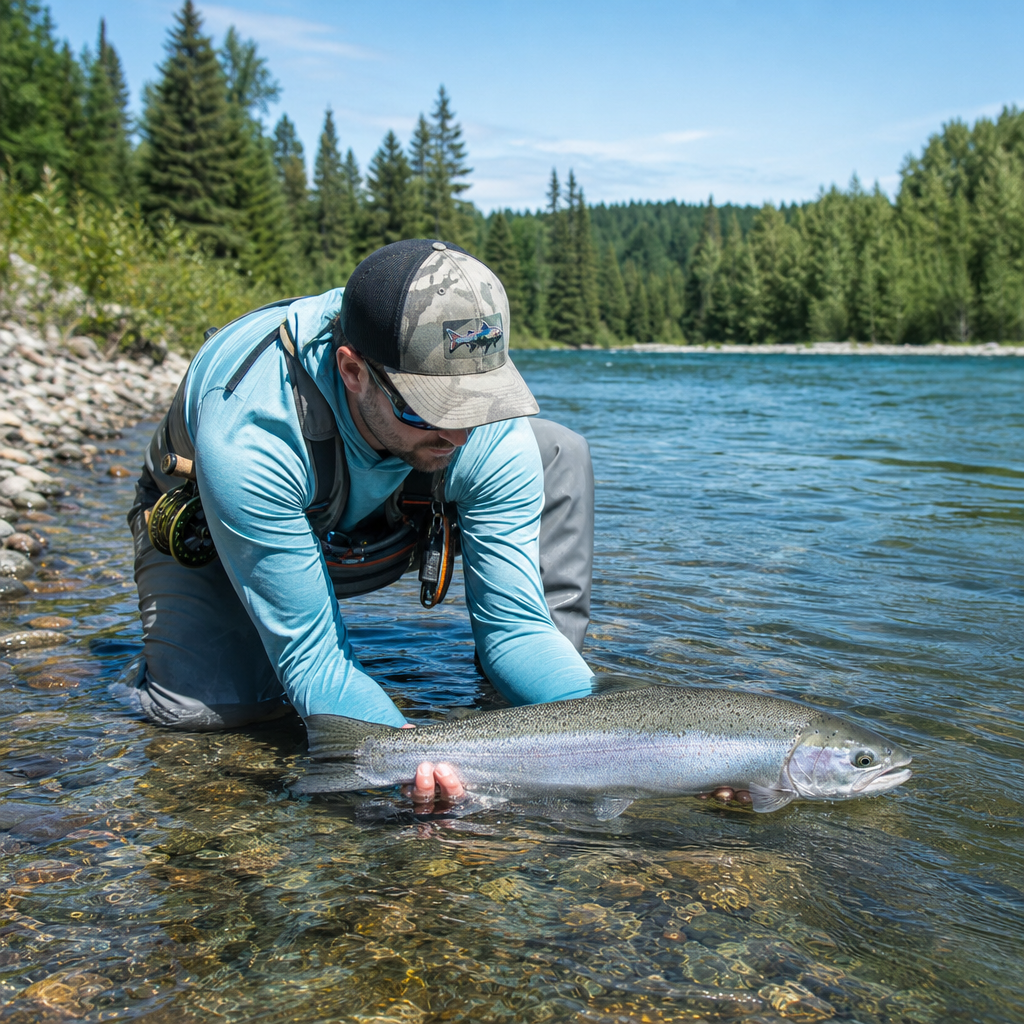
Successful summer fly fishing for steelhead depends as much on restraint as on skill. Check water temperature before fishing and carry a thermometer instead of guessing. If temperatures climb into the upper sixties, fish at dawn, target colder reaches, or stand down entirely. Fight fish hard from the reel, keep them in the water, and avoid long photo sessions. Barbless hooks, strong tippet, and a clear landing plan reduce stress dramatically. In many rivers, wild steelhead retention is prohibited, and even where legal harvest exists for hatchery fish, identification must be exact. Read emergency regulations because summer closures can change quickly.
Pressure management is another overlooked advantage. Popular runs often get pounded at daybreak, yet a long walk, a midday rest followed by an evening session, or simply fishing overlooked water can produce more than joining the obvious lineup. Keep notes on river level, temperature, cloud cover, and where fish responded. Over several seasons, patterns emerge: perhaps fish rise better on overcast mornings at 1,800 cfs, or maybe a favorite tailout only fishes when the gauge drops below a certain mark. Those observations become your real edge, far more valuable than copying a fly list.
Summer fly fishing is a lifelong curriculum in observation. Learn the standard swing first, then branch into skaters, soft-hackle greased-line approaches, hitch tubes where legal, and selective use of light sink tips. Study insect activity not because steelhead feed like trout in freshwater, but because surface texture, light angle, and river life sharpen your reading of the entire system. The anglers who consistently hook summer steelhead are not usually the most forceful casters. They are the most attentive. Build your approach around conditions, refine one variable at a time, and use this hub as your starting point for deeper articles on summer flies, river levels, presentation, and seasonal location strategy.
Summer fly fishing for steelhead rewards anglers who combine preparation, restraint, and precise execution. The essential lessons are consistent across rivers: understand how summer steelhead hold in oxygen-rich walking-speed water, fish during favorable temperature windows, match tackle to low clear flows, and prioritize presentation over constant fly changes. Productive water usually includes run heads, defined seams, shaded slots, and especially tailouts. The most effective methods usually begin with a floating line, a controlled quartering swing, and small to medium sparse flies, then adjust depth only as conditions demand. When you add reliable planning tools such as stream gauges, regulation updates, and access research, your odds improve dramatically.
Just as important, summer steelhead fishing carries responsibility. Warm water, concentrated pressure, and vulnerable wild fish make ethical judgment part of the skill set. Use a thermometer, land fish quickly, keep them wet, and be willing to stop when conditions cross safe limits. That discipline protects the fisheries that make summer fly fishing special. It also improves your results, because anglers who watch temperature, light, and flow carefully are the same anglers who consistently intercept fish.
If you want to build a stronger seasonal game plan, use this page as your hub for summer fly fishing and keep expanding from the fundamentals covered here. Focus on one river, one presentation, and one set of conditions at a time. Track what happens, refine your approach, and return with intent. Steelhead do not require magic. They require attention, respect, and repetition.
Frequently Asked Questions
What makes summer fly fishing for steelhead different from fishing for winter steelhead?
Summer steelhead behave very differently from winter fish, and that changes how you approach them with a fly rod. These are ocean-run rainbow trout that typically enter rivers in late spring through early fall, often months before spawning. Because they arrive in relatively low, clear, and warmer water, they tend to hold in classic current seams, tailouts, riffle edges, heads of runs, and shaded slots where they can rest while still feeling secure. Unlike many winter fish that are often targeted in colder, higher water with larger flies and sink tips, summer steelhead are commonly fished with a more refined presentation. Anglers frequently use lighter rods, longer leaders, smaller flies, and floating or intermediate presentations to match the conditions.
Another major difference is fish attitude. Summer steelhead are often aggressive, athletic, and surprisingly willing to move to a well-presented fly, especially early and late in the day. Because visibility is high, presentation matters more. A poor cast, heavy splashdown, or overly intrusive line angle can put fish down quickly. At the same time, these fish can respond explosively to traditional swung patterns, waking flies, and even skated dry flies, which is one of the great thrills of summer steelheading. In short, summer steelhead fishing is usually more technical, more visual, and more dependent on reading water, controlling swing speed, and making precise, elegant presentations than the heavier, deeper approach often associated with winter fishing.
What flies, lines, and tackle work best for summer steelhead?
A well-balanced summer steelhead setup usually prioritizes presentation over brute force. Many anglers prefer single-hand rods in the 6- to 8-weight range or two-hand rods in lighter summer configurations, such as 11- to 13-foot switch or Spey rods matched to appropriate grain windows. The goal is to cast efficiently while still protecting lighter tippets and allowing subtle control over the fly. Floating lines are a foundation of summer steelheading, particularly when fishing classic swing water. Depending on river depth and speed, anglers may add polyleaders, versileaders, light sink tips, or intermediate tips rather than immediately reaching for heavy sinking systems. In low, clear water, less can be more.
Fly selection should reflect both water conditions and steelhead mood. Traditional summer patterns remain effective because they present a clear silhouette without overwhelming fish in bright water. Small to medium wet flies, sparse hairwing patterns, soft hackles, lightly dressed intruders, and muddlers all have a place. In very clear conditions, understated flies in black, purple, blue, green butt variations, natural tones, or simple combinations of dark body and bright trigger points often produce. In slightly glacial or broken water, brighter accents can help fish locate the fly. Dry-line techniques also shine in summer, and waking or skating patterns can be deadly when fish are holding near the surface in softer current. Leader length often ranges longer than in winter steelheading, particularly when fishing floating lines, because a longer leader helps separate the fly from the line and creates a more natural swing. The key is to build a system that lands softly, fishes at the correct depth, and lets you control speed and angle through the swing.
Where should I look for summer steelhead in a river?
Summer steelhead typically favor holding water that offers security, oxygen, and an easy travel lane, especially in low and clear summer flows. This means the best water is often classic and subtle rather than deep and obvious. Focus on riffle-run transitions, tailouts that taper into walking-speed current, seams alongside boulders, shaded ledges, inside slots, and the softer edges of stronger currents. The head of a run can be excellent when fish are pushing upstream and pausing in oxygen-rich flow. Long tailouts are especially important in summer because steelhead often settle there in water that many anglers pass over too quickly. If the water has a smooth, even walking-speed current and enough depth to cover a fish, it deserves attention.
Time of day and light conditions also influence location. During bright afternoons, summer steelhead may slide into shaded banks, slightly deeper buckets, slots under broken surface chop, or areas with structure that reduces light penetration. Early morning, evening, and overcast conditions often bring fish into more open lies where they are easier to reach with a swung fly. On larger systems, fish may hold in travel corridors below rapids, near tributary mouths, or in pools with cool, well-oxygenated inflow. On smaller rivers, any run with current complexity and cover can hold fish. Productive summer steelhead water often looks lively rather than still: enough current to keep fish comfortable, enough depth to hide them, and enough structure or broken surface to give them confidence. Learning to recognize that “soft within strong” kind of water is one of the most important skills in summer fly fishing for steelhead.
When is the best time of day and season to catch summer steelhead on the fly?
The broader summer steelhead season usually begins in late spring or early summer, depending on the watershed, and can extend well into early fall. Exact timing varies by region and run composition, but in general, the earliest fish often enter on fresher flows and can be highly aggressive. As the season develops, more fish spread through the system, and opportunities expand across a wider range of runs and holding water. Many anglers consider mid-summer through early fall prime because fish are present, river levels are often stable, and classic dry-line conditions are common. That said, local timing matters enormously, so understanding your specific river’s run calendar is essential.
Within each day, low-light windows are usually best. Early morning and late evening often produce the most confident takes because water temperatures are cooler and fish feel safer moving in softer, shallower lies. Cloud cover, light rain, and a chop on the water can improve conditions dramatically. Bright, hot afternoons can be tougher, especially on heavily pressured rivers, but they are not always unproductive. Fish may still respond if you target shaded water, slow your swing, downsize your fly, or fish a little deeper. Water temperature is a major factor as well. Summer steelhead are migratory fish holding in freshwater for extended periods, and they are most responsive when temperatures remain within a healthy range. If conditions become too warm, fishing success often drops and ethical concerns increase. In practical terms, the best strategy is to fish early, fish thoughtfully, monitor river temperatures, and adjust your tactics to changing light, flow, and fish behavior rather than relying on the clock alone.
What are the most important tips for presenting a fly effectively to summer steelhead?
Presentation is everything in summer steelhead fishing. In low, clear water, fish often have plenty of time to inspect a fly, so success comes from angle, speed, depth, and control more than simply changing patterns. A classic approach is the swung fly, where you cast across or slightly downstream, mend as needed, and let the fly travel broadside through likely holding water. The ideal swing usually keeps the fly moving naturally at the fish’s level without racing unnaturally or hanging lifelessly. Often, subtle adjustments make a huge difference. A small upstream mend can help the fly sink and slow down. Less mending may keep the presentation more direct and animated. Taking one or two steps between casts ensures even coverage, which is critical because summer steelhead may hold in very specific lanes.
Depth control is equally important. Many anglers fish too deep or too heavy in summer conditions. Start with the lightest presentation that still puts the fly in front of the fish, then adjust only if needed. In classic dry-line water, a floating line and lightly dressed fly may be all you need. If fish are holding slightly lower, an intermediate polyleader or light tip can be enough to change the game. Stealth also matters: wade carefully, avoid casting shadows over prime lies, and make your first cast count. Summer steelhead can be alert, and the best opportunity often comes before the run is disturbed. Finally, stay disciplined when a fish grabs. Rather than striking like you would for trout, let the steelhead turn on the fly and come tight before lifting the rod. That patience, combined with precise coverage and thoughtful control of the swing, is what consistently converts interest into solid hookups.