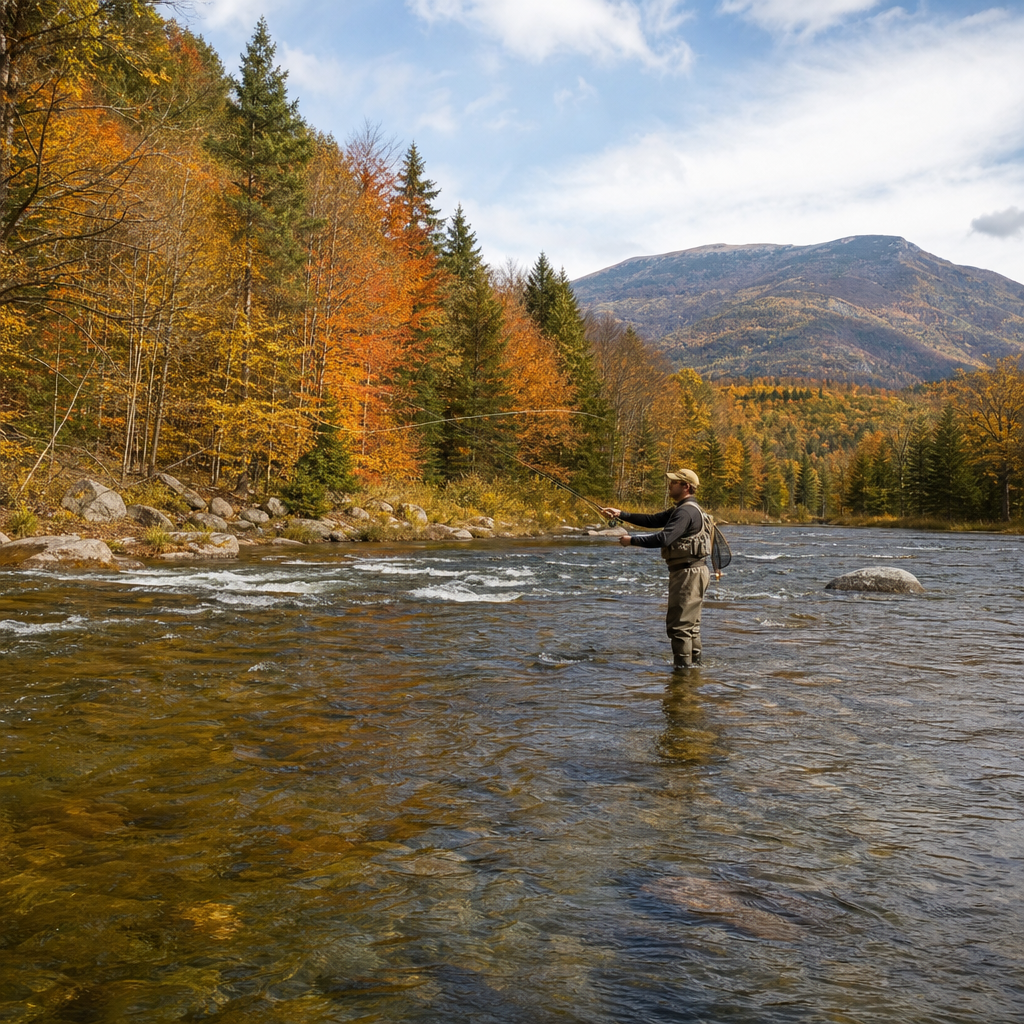
Fly fishing for trout in summer demands a different playbook than spring runoff or fall streamer season. Water temperatures rise, dissolved oxygen falls, insect timing shifts, and trout become selective about where and when they feed. Summer fly fishing, in practical terms, means adapting tactics to warm water, bright light, fluctuating flows, and fish that often concentrate in small zones of comfort. As an angler who has spent many July and August mornings checking stream thermometers before tying on a fly, I can say the biggest summer mistake is assuming trout behave the same way they did in May.
For a hub article on fly fishing for trout in summer, the most useful starting point is definition and scope. Trout are coldwater fish. Brown trout generally tolerate warmer water than brook trout, and rainbow trout often remain active across a slightly wider range than many anglers expect, but all trout face stress when water temperatures climb. Once temperatures move into the upper sixties Fahrenheit, catch-and-release risk rises. At 68 degrees, caution is warranted; at 70 degrees and above, many responsible anglers stop targeting trout altogether. Those thresholds matter because productive summer fly fishing is not just about catching more fish. It is about finding cold, oxygenated water and fishing in ways that reduce stress.
Summer also matters because it compresses opportunity into predictable windows. Early morning, last light, cloudy afternoons, and periods of terrestrial activity can be exceptional. Midday can still produce fish, but usually where groundwater enters, riffles churn oxygen, or tailwaters release cold water from below a dam. Understanding these patterns turns a difficult season into one of the most technical and rewarding parts of the trout calendar. This article serves as a hub for summer fly fishing by covering where trout hold, what they eat, how to read temperature and flow, and which tactics consistently produce while keeping fish safe.
Most anglers searching summer trout advice want direct answers to practical questions: What water should I target? Which flies work in hot weather? When should I quit? How do I fish low, clear water without spooking everything? The short answer is this: fish cold water early, prioritize oxygen and shade, use longer leaders and finer tippet in clear conditions, and let the hatch chart expand beyond mayflies to include caddis, hoppers, ants, beetles, and craneflies. Dry-dropper rigs, nymphs under small indicators, and carefully presented terrestrials all have a place. But success depends less on fly fashion than on locating suitable habitat and making the first cast count.
How Summer Changes Trout Behavior
Trout behavior in summer is governed by three forces: temperature, oxygen, and energy efficiency. As water warms, a trout’s metabolism increases, but the water carries less oxygen. That creates a narrow band where feeding is worthwhile and stress remains manageable. In freestone streams, I usually see trout slide out of broad, sunny runs and reposition into pocket water, heads of pools, shaded undercut banks, plunge pools, and seams near faster current. In still water, trout often drop deeper during the day, cruise shoals early and late, or suspend around spring seeps and inflows where temperatures remain stable.
Light penetration matters more than many anglers realize. High summer sun makes trout wary, especially in low, clear flows. Fish that would rise freely in June can refuse a good drift in August if the leader lands heavily or the angler approaches from the wrong angle. On pressured rivers, bigger trout often become crepuscular, feeding most actively at dawn, dusk, and after dark. Brown trout in particular take advantage of low light and bank-side structure, which is why mouse patterns and large terrestrials can outperform delicate dries during evening sessions on some waters.
Food availability shifts, too. Summer can still bring strong aquatic hatches, but menu diversity expands. Caddis, pale morning duns, tricos, yellow sallies, and midges may all be relevant depending on region, yet land-based insects become increasingly important. Hoppers, flying ants, beetles, inchworms, and cicadas are not side dishes; on many trout streams they are major calorie sources. Trout learn that a struggling terrestrial along a grassy bank is worth moving for. That is one reason summer rewards anglers who think like habitat readers rather than hatch purists.
Reading Water, Temperature, and Flow
The best summer trout water is cold, oxygenated, and close to cover. If you need one rule, fish the fastest water trout can hold in comfortably. Riffles, pocket water, boulder gardens, and the choppy heads of pools often fish better than slow slicks because they combine broken surface light, drifting food, and dissolved oxygen. Tributary mouths, spring creeks entering larger rivers, and tailwaters below bottom-release dams can create temperature refuges that hold surprising numbers of fish. On broad rivers, shady banks, deep cutbanks, bridge shadows, and side channels with moving water can remain productive long after exposed flats fade.
Carrying a stream thermometer is one of the most valuable summer habits. I check temperatures at the start, again late morning, and any time the river changes character or I move upstream into a tributary. A reading of 58 to 64 degrees usually signals excellent conditions. Between 65 and 67 degrees, I fish quickly and carefully, favoring water where trout can be landed fast. At 68 degrees, I reassess whether catch-and-release is ethical, especially for smaller streams. Above 70 degrees, warmwater species become the smarter target. State agencies in places like Montana and Colorado sometimes issue voluntary or mandatory afternoon closures when heat stresses trout populations, and those restrictions deserve strict attention.
| Summer condition | What it means for trout | Best response |
|---|---|---|
| Water below 65°F | Good oxygen and active feeding | Fish mornings, riffles, dries, nymphs, dry-dropper rigs |
| Water 65–67°F | Moderate stress, narrower feeding windows | Target fastest water, land fish quickly, shorten sessions |
| Water 68–70°F | High stress risk | Consider stopping, avoid long fights, seek colder tributaries |
| Water above 70°F | Poor trout safety | Do not target trout; switch species or fish tailwaters |
Flow also shapes the summer equation. In drought conditions, trout lose cover, migration corridors shrink, and fish bunch into remaining depth and current. That concentration can make fish easier to locate, but not necessarily easier to fool. Low water amplifies drag, leader flash, false casts, and boot noise. On tailwaters, by contrast, dam releases may create cold, fishable conditions all summer, though generation schedules can change wading safety in minutes. USGS gauges, dam release apps, and local fly shop reports are not optional research tools; they are part of informed summer decision-making.
Summer Flies and Seasonal Presentations
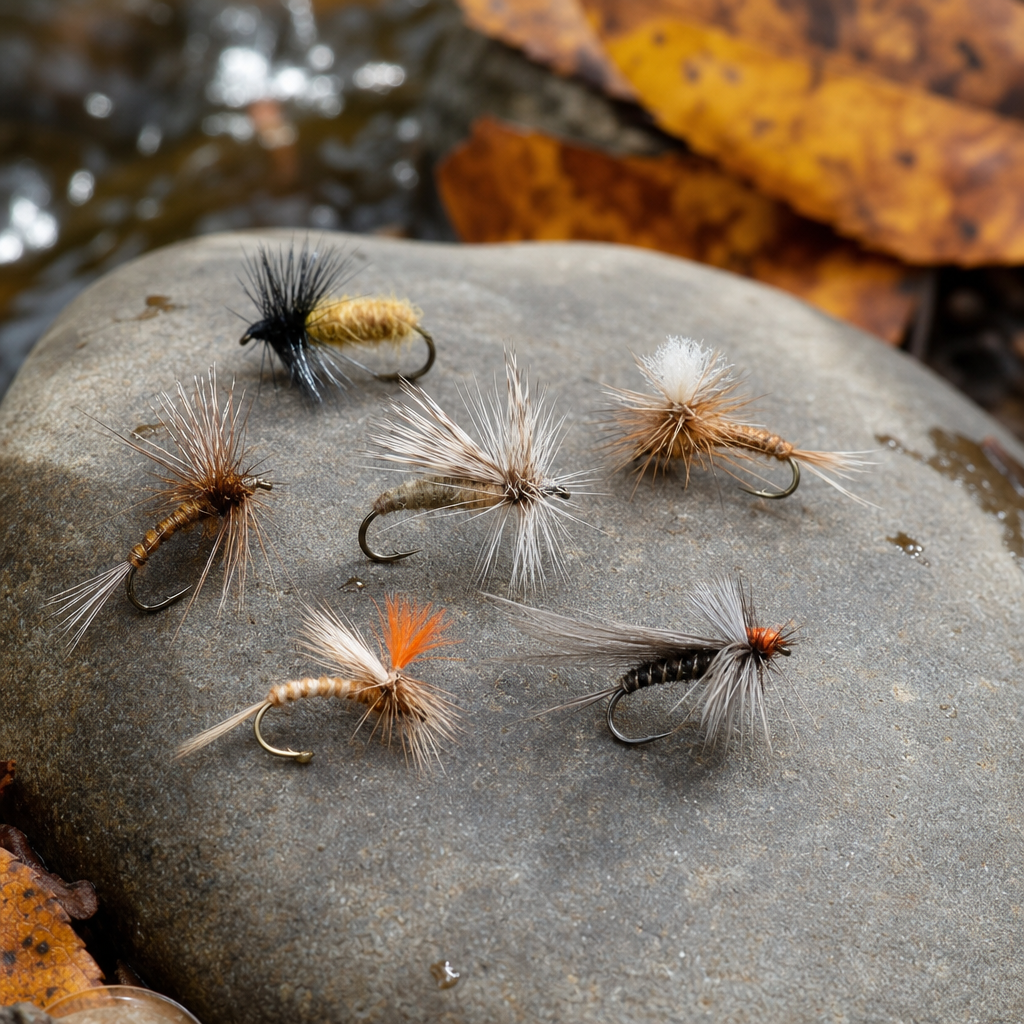
If you want a concise summer fly box for trout, build it around five categories: caddis, mayflies, terrestrials, attractor dries, and small nymphs. Elk Hair Caddis, X-Caddis, and CDC caddis patterns cover a remarkable amount of water because caddis are widespread and active in warm months. For mayflies, region-specific choices matter, but Pale Morning Dun imitations, tricos, and spinner patterns are reliable standards on many rivers. Add Parachute Adams in several sizes because it remains the best all-purpose searching dry for mixed hatch situations.
Terrestrials deserve special emphasis in any summer fly fishing hub. Foam hoppers, beetles, ants, and small cicada patterns catch trout from June through early fall on streams with grass, brush, and overhanging banks. I fish them tight to structure, often within inches of the bank, because that is where naturals fall. Ant patterns become especially important after windy periods or mating flights. A simple black foam ant or cinnamon flying ant can save a difficult afternoon when no obvious hatch is happening. Beetles excel under overhanging limbs, where their plop often triggers opportunistic takes from fish that ignore delicate mayfly presentations.
Nymphing remains highly effective even when surface activity slows. Summer trout commonly feed subsurface in riffles, pocket water, and the transition zones at pool heads. Pheasant Tails, Hare’s Ears, Perdigons, Zebra Midges, and small caddis larvae or pupae account for a large share of fish. In freestones, I often use a dry-dropper with a buoyant attractor dry such as a Chubby Chernobyl or stimulator and a lightly weighted nymph beneath it. That setup covers both terrestrial and subsurface feeding while allowing quick drifts through broken water. On technical tailwaters or spring creeks, a dedicated nymph rig with micro indicators and long fluorocarbon tippet may be the better choice.
Streamer fishing is not dead in summer, but it becomes more situational. Early and late in the day, or during overcast weather, smaller streamers stripped through shade lines, banks, and depth transitions can move larger trout. In clear low water, however, oversized articulated flies often push fish away unless presented with restraint. Think sparse baitfish, small sculpins, and soft-hackled leeches rather than giant profiles. Summer rewards moderation and precision more than brute-force movement.
Tactics for Low, Clear Water and Pressured Fish
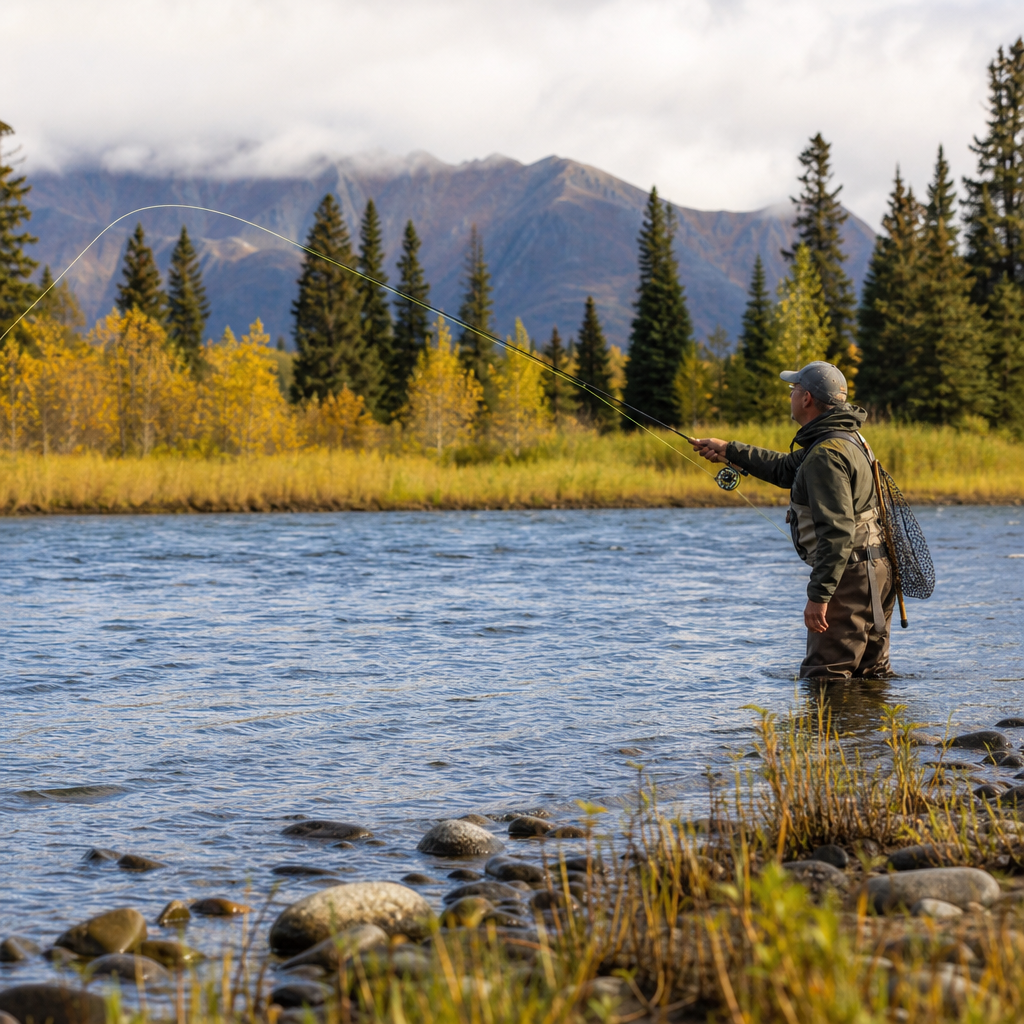
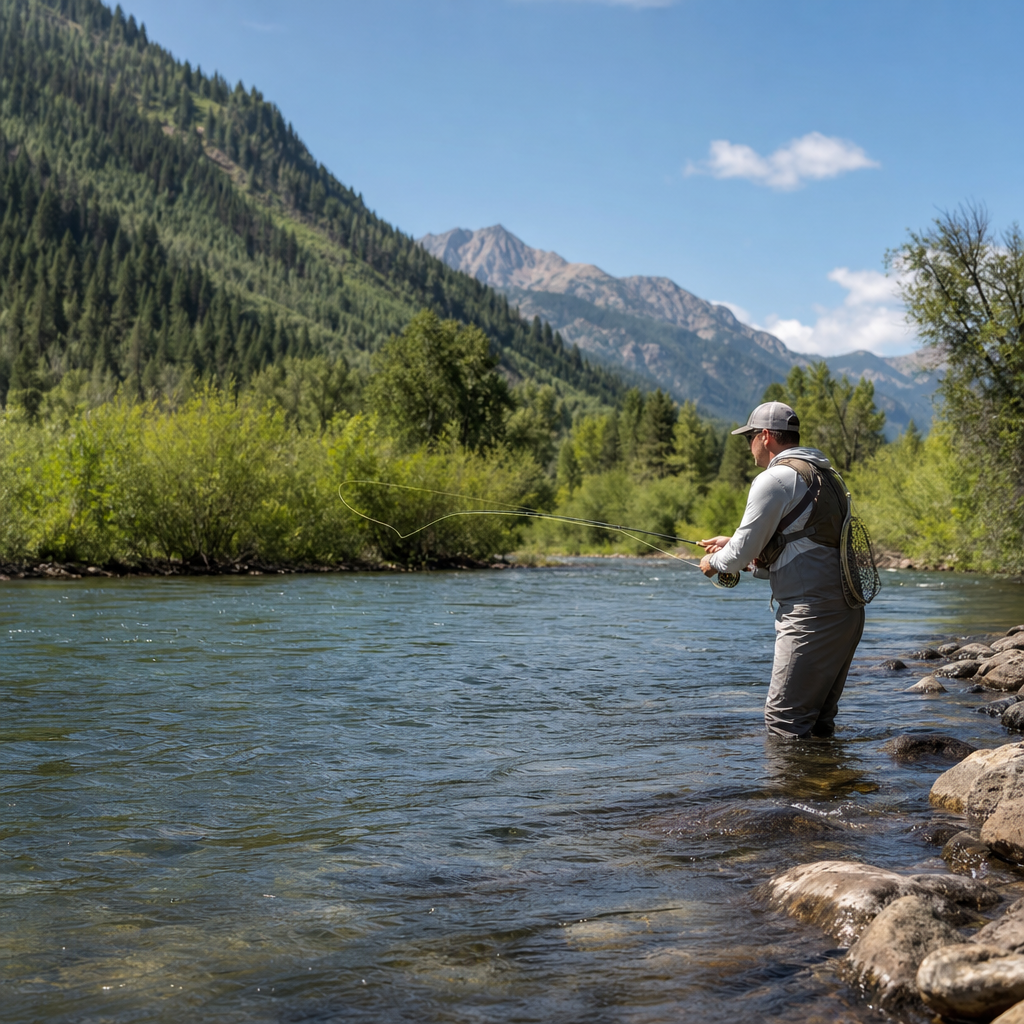
Low, clear water is where many summer days are won or lost. Trout have time to inspect, refuse, and spook, so stealth matters as much as fly choice. Approach from downstream whenever possible, wear muted clothing, kneel or crouch on open banks, and cast from farther away than feels necessary. I routinely extend leaders to 10, 12, or even 15 feet in flat water, then use 5X or 6X tippet for small dries and emergers. In broken riffles, you can fish shorter and stronger, but in glassy tails even one careless step can shut down a pod.
Presentation should match the water type. In pocket water, short drifts and high-stick control reduce drag and put the fly in front of several fish quickly. In slicks and spring creek-style currents, slack-line casts, reach mends, and downstream presentations become critical. Anglers often overcast in summer. A single accurate delivery usually outfishes three false casts over a fish’s head. If trout are rising inconsistently, watch the feeding lane before changing flies. Many refusals are drag problems, not pattern problems.
Summer is also the season to fish edges with intent. Bank seams, grassy undercuts, logjams, plunge pockets, and the first two feet beside a boulder often hold the best trout in warm conditions because they offer shade and security. Terrestrials excel here, but so do unweighted or lightly weighted nymphs dropped into narrow slots. On meadow streams, I frequently dap beetles or ants beneath overhanging grass, letting the fly fall naturally with minimal line on the water. It is a simple tactic, but it consistently fools fish that have seen every standard dead-drift.
Responsible Summer Trout Fishing and Gear Choices
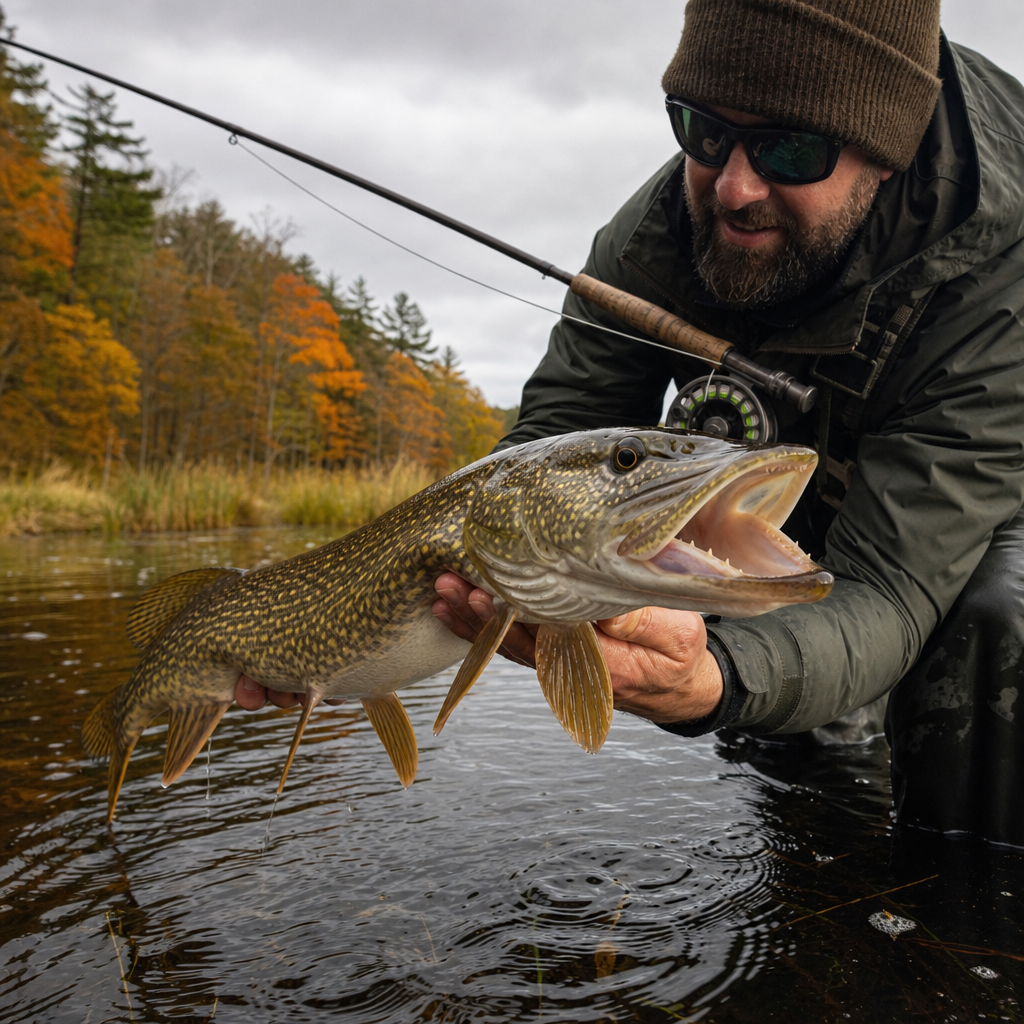
Productive summer fly fishing includes knowing when not to fish. Ethical warm-weather trout angling starts with temperature awareness, but it also includes fight time, handling, and hook choice. Use tackle strong enough to land fish quickly. A 4- or 5-weight rod covers most summer trout situations, but if you are fishing bigger rivers, heavier flows, or larger trout around structure, stepping up in tippet strength can reduce exhaustion without hurting presentation in riffled water. Barbless hooks shorten release time and reduce injury. Keep fish in the water, wet your hands before contact, and skip hero shots when temperatures are marginal.
Footwear and wading strategy matter more in summer than many anglers think. Warm-season algae growth makes rocks slick, and low flows expose unstable shelves and sudden drop-offs. Good rubber soles with studs where legal improve traction. Polarized glasses are essential not just for seeing fish but for reading bottom contours, identifying spring seeps, and spotting weed beds where food collects. A thermometer, nippers, floatant, desiccant, forceps, and a compact net should all be standard summer tools. If you fish tailwaters, carry a plan for changing releases and know the nearest exit points before stepping into a channel.
Finally, use this hub as a starting point for your broader summer fly fishing strategy. Build trip plans around water temperature, flow data, and hatch timing. Focus on mornings, shade, riffles, tributary influence, and terrestrial-rich banks. Match your rig to the water: dry-dropper for pocket water, finer dry-fly leaders for slicks, technical nymph setups for tailwaters, and selective streamer sessions in low light. Summer trout can be wonderfully predictable when you prioritize their needs over your assumptions. Check the gauge, carry the thermometer, and fish the coolest, fastest, most oxygenated water you can find. Do that consistently, and summer stops being the hardest trout season and becomes one of the most satisfying.
Frequently Asked Questions
1. What is the best time of day to fly fish for trout in summer?
The best time to fly fish for trout in summer is usually early morning, with the last couple of hours before dark also offering a strong window. In hot weather, trout are most active when water temperatures are coolest and dissolved oxygen levels are more comfortable. That often means being on the water at first light, especially on smaller rivers, meadow streams, and tailouts that warm quickly once the sun gets high. In many trout streams, the difference between fishing at 6:30 a.m. and 11:00 a.m. can be dramatic, both in trout behavior and in overall fish safety.
Early in the day, trout are more likely to feed in shallow riffles, seam edges, and transitional water because they feel secure under low light and are not yet stressed by rising temperatures. As the sun climbs, fish commonly slide into deeper runs, undercut banks, shaded pockets, and oxygen-rich riffles where they can hold without burning excess energy. Evening can also be productive, particularly when terrestrial activity increases or when spinner falls and caddis activity bring fish up late. However, on very hot days, some streams simply do not recover enough by evening to make fishing ethical.
A stream thermometer is one of the most useful tools you can carry in summer. Rather than fishing by the clock alone, check water temperatures as conditions change. Many anglers use the upper 60s Fahrenheit as a caution zone, and once water temperatures approach 68 to 70 degrees, it is wise to stop targeting trout or avoid fishing entirely depending on local guidance and fish handling conditions. The key point is that summer success is not just about catching trout; it is also about recognizing when they can feed safely and when they are already under enough environmental stress.
2. Where do trout hold during summer when water is warm and flows are low?
In summer, trout often compress into specific pieces of habitat that offer three things at once: cooler water, higher oxygen, and protection from bright light and predators. This is why fish that seemed evenly spread through a river in spring may feel concentrated into only a handful of productive spots by mid-summer. The best lies are usually not random. They are places where current, depth, shade, and structure combine to create comfort with minimal energy cost.
Start by focusing on riffles that feed into deeper runs, the heads of pools where oxygen is replenished, shaded banks, plunge pools, spring seeps, undercut grass edges, woody cover, boulder pockets, and any place where cooler tributary water enters the main flow. On freestone streams, broken water is especially important because it gives trout both oxygen and cover. On larger rivers, mid-river shelves with depth nearby, foam lines beside structure, and channels below islands can be excellent. On tailwaters, trout may hold in consistent feeding lanes but still shift subtly toward shade, depth, and softer current during the hottest part of the day.
Low, clear water changes how you should read a stream. Trout become less willing to occupy exposed lies, and they often feed in shorter windows. That means a spot may look perfect but still be empty if it lacks cover or if the sun is directly overhead. Pay close attention to micro-habitat. A single dark slot along a bank, the shaded side of a rock cluster, or a knee-deep riffle with steady chop can hold multiple fish when surrounding water looks lifeless. In summer, the angler who learns to identify these small comfort zones usually outperforms the angler who casts broadly and hopes trout are distributed everywhere.
3. What flies work best for summer trout fishing?
The best summer fly selection usually includes a mix of terrestrials, small dry flies, nymphs, and a few attractor or searching patterns that cover changing conditions. Summer is a season of shifting menus. In many waters, trout continue to eat aquatic insects, but they also key heavily on ants, beetles, hoppers, inchworms, and other land-based food that falls into the river. At the same time, low water and bright skies often make fish more selective, so size, profile, and presentation matter just as much as fly choice.
For dry-fly fishing, keep a range of small mayflies and caddis patterns, plus terrestrials that match the season. Parachute-style dries, CDC patterns, small stimulators, beetles, flying ants, and foam hoppers all deserve space in a summer box. If you are fishing meadow streams, grassy banks, or western rivers later in the summer, hopper-dropper setups can be especially effective because they combine a visible surface fly with a subsurface nymph. In wooded streams, ants and beetles are often more consistent than anglers expect, particularly during the middle of the day when classic hatches are sparse.
Under the surface, think smaller and more natural than you might in higher spring flows. Pheasant tails, hare’s ears, zebra midges, perdigons, soft hackles, caddis pupae, and small stonefly nymphs all produce in summer, depending on the river. In clear water, trout often reject flies that are too large, too flashy, or drifting unnaturally. Match the drift first, then fine-tune the pattern. If fish are feeding but refusing, downsize your tippet, shorten your indicator or leader to match depth more precisely, and switch to a slimmer profile. Summer trout can be selective, but they are rarely impossible once your fly and presentation fit the conditions.
4. How should I adjust my presentation and approach in clear summer water?
In clear summer water, stealth and precision become major factors. Trout can see exceptionally well in low flows, and they often have more time to inspect a fly before committing. That means your approach to the water matters almost as much as what you tie on. Move slowly, keep a low profile, avoid wading when you can, and think carefully about sunlight and your casting angle. Fish facing upstream in skinny water will often spook long before you reach what feels like a reasonable casting distance.
Longer leaders, finer tippets, and drag-free drifts are usually the foundation of success. With dry flies, the goal is often to land the fly softly and feed slack into the drift so it moves naturally. With nymphs, the biggest mistake many anglers make is fishing too much weight or too much indicator in shallow summer water. A lightly weighted nymph or unweighted dropper can look far more natural than a heavily rigged setup that plows through the run. If trout are holding in only one narrow feeding lane, make repeated accurate drifts through that lane rather than casting all over the run.
It also helps to break the day into tactical phases. Early and late, you can often fish more water and use dry flies or dry-dropper rigs aggressively. Midday, especially under bright sun, you may need to target only shaded banks, pocket water, deeper slots, or terrestrial opportunities tight to cover. Summer rewards anglers who slow down and make better decisions instead of more casts. If you treat each lie as if the trout has a full second to inspect your fly, your presentations will become quieter, cleaner, and much more effective.
5. How can I protect trout and still fish responsibly during summer heat?
Fishing responsibly for trout in summer starts with understanding that warm water can put fish under serious stress even before they are hooked. As temperatures rise, trout have less dissolved oxygen available, yet fighting a fish increases their oxygen demand. That mismatch is why a trout that swims away strongly can still suffer delayed mortality in hot conditions. Ethical summer fly fishing means knowing when to fish, when to stop, and how to minimize handling stress at every step.
First, monitor water temperature rather than assuming a stream is fine because it looks healthy. Carry a thermometer, check temperatures throughout the day, and respect local closure rules and warm-water advisories. If water is reaching the upper 60s Fahrenheit, many anglers treat that as a signal to fish only during the coolest hours or to stop entirely. If temperatures are near 70 degrees or above, especially on small or drought-affected streams, it is generally better to leave trout alone and target a different species or a cooler watershed.
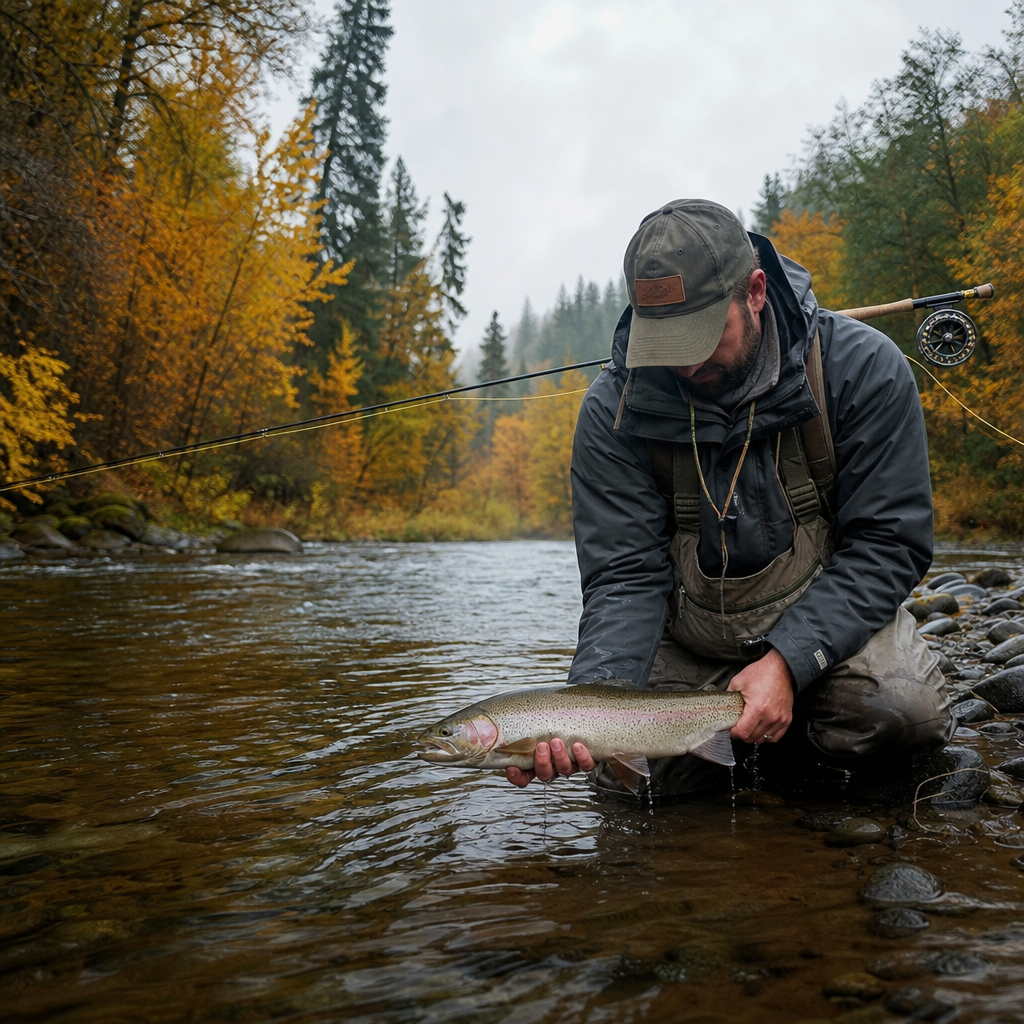
Second, shorten the fight and simplify release. Use tackle that allows you to land fish efficiently, keep the trout in the water while removing the fly, wet your hands before touching it, and avoid extended photo sessions. Barbless hooks can help speed release, and a rubberized net supports the fish better than rough mesh. If a trout appears sluggish after the fight, that is a warning sign that conditions may already be too stressful. In practical terms, being productive in summer is not just about finding trout in their comfort zones; it is about making sure your fishing does not turn those limited refuges into places of added strain. The most skilled summer anglers know that restraint is part of the strategy.