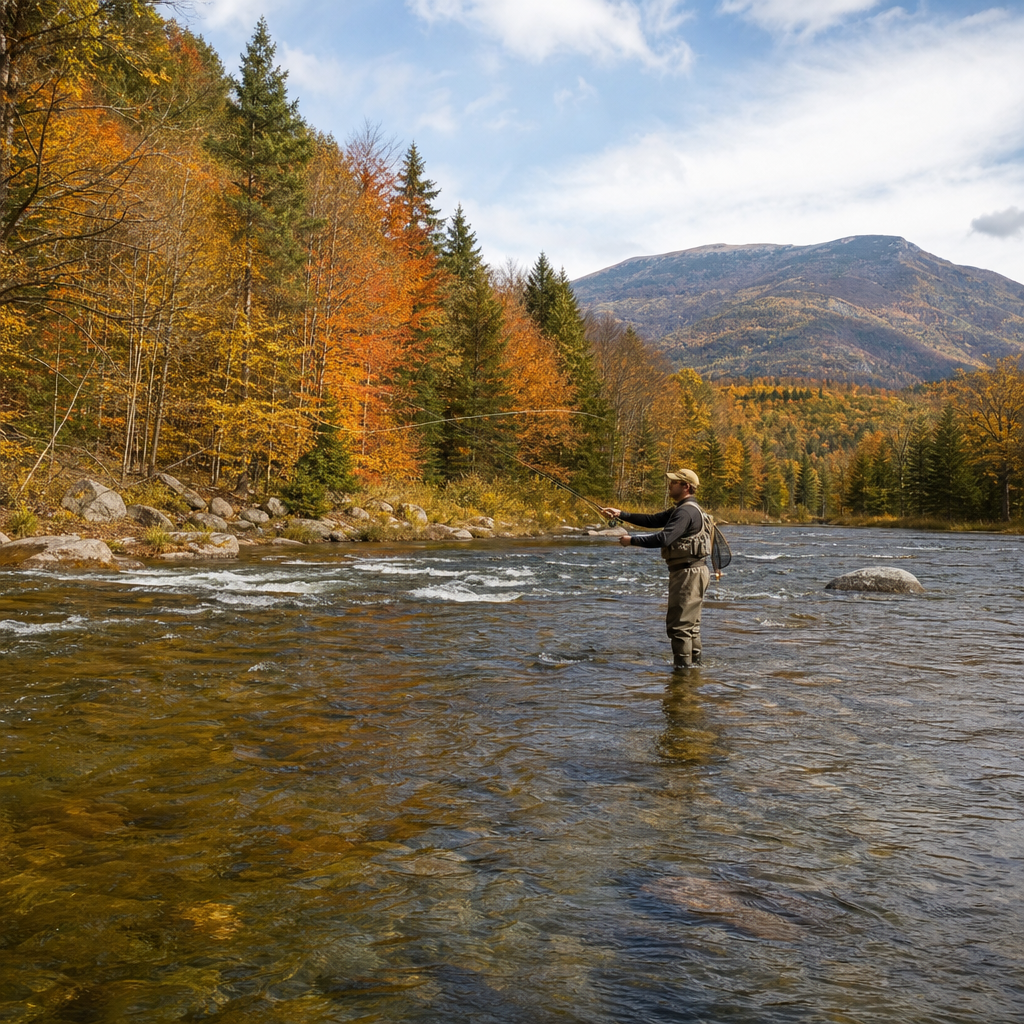
Spring fly fishing begins with understanding springtime hatches, the seasonal emergence of aquatic insects that turns cold, quiet water into the most consistent dry-fly and nymph fishing of the year. A hatch happens when immature insects such as mayflies, caddisflies, and midges leave the riverbed or drift into the surface film, transform, and become available to trout in large numbers. When anglers ask what to expect in spring, they are really asking three connected questions: which bugs appear first, how do trout react, and how should tactics change as water temperatures, flows, and weather shift week by week. Those questions matter because spring is both generous and unforgiving. Fish feed heavily after winter, but runoff, sudden cold snaps, and selective feeding can punish sloppy decisions. After many seasons planning trips around snowmelt charts, thermometer readings, and hatch logs, I have found that spring rewards anglers who combine entomology with observation. This article serves as a hub for spring fly fishing by explaining the key hatches, the conditions that drive them, and the practical methods that consistently convert rises into fish. If you understand the sequence of early season insects, the effect of runoff, and the difference between prospecting and matching the hatch, you can fish spring confidently on freestones, tailwaters, and spring creeks alike.
The spring hatch calendar: what usually appears first
Most spring fly fishing follows a predictable biological sequence, although exact timing varies by latitude, elevation, and river type. Midges are the foundation. They hatch year-round, but during late winter and early spring they often provide the first dependable surface action, especially on tailwaters and spring creeks where water temperatures stay relatively stable. Blue-winged olives, usually small baetis mayflies in sizes 16 to 22, are the classic next step. They thrive in overcast, damp weather and often hatch when air temperatures feel unpleasant to anglers but ideal to trout. In many regions, especially across the Rockies and Northeast, March Browns, Hendricksons, Skwalas, caddis, and Mother’s Day caddis follow as spring progresses.
The key expectation is overlap, not a neat handoff from one hatch to another. On a single April day you may see midge clusters in slow water, baetis duns in soft seams, and early caddis adults skittering along banks by afternoon. Trout do not stop feeding on one insect because another appears. They choose the most available and easiest food in the lane they occupy. That is why a spring hatch chart is useful only when combined with real observation. I carry a stream thermometer, a small seine, and a notepad because the best calendar is the one built on your own river. Water reaching roughly 38 to 42 degrees can wake winter fish up; 44 to 50 degrees often starts stronger mayfly and caddis activity; spikes beyond that can intensify feeding until runoff muddies the game.
How water temperature, weather, and flows control insect activity
If you want to predict springtime hatches, start with water temperature, then confirm with weather and discharge. Aquatic insects develop according to accumulated temperature and daylight. A cold river at 36 degrees can hold plenty of nymphs, but many will not emerge until temperatures rise several degrees and remain there for enough hours. I routinely check USGS river gauges and local weather trends before choosing where to fish. A warming trend of three sunny days can push a baetis hatch into a stronger window, while a snowmelt surge may stain the same river and move the best fishing to softer edges or to a nearby tailwater.
Cloud cover matters more than many beginners expect. Blue-winged olive hatches often strengthen under low light, drizzle, and stable barometric conditions because duns linger on the water longer and trout feel safer feeding near the surface. By contrast, early caddis activity can explode on bright afternoons when adults become mobile and egg-laying flights begin near riffles. Wind can both help and hurt: it knocks terrestrials and adults onto the water, but it also obscures rises and makes drag control difficult. Flow changes are equally important. Moderate spring flows often improve drift lanes and oxygenation, but rapid spikes from dam releases or runoff can reposition trout overnight. In those moments, matching the hatch still matters, yet presentation and location matter more.
The core spring insects every angler should know
Spring fly fishing becomes much simpler when you group hatches by behavior instead of memorizing endless Latin names. Midges hatch in calm water and often produce subtle sips. Baetis mayflies emerge in moderate currents and create classic head-and-tail rises. Larger mayflies such as Hendricksons or March Browns can bring fish out of deeper lies because the calorie return is greater. Caddis are versatile: larvae drift, pupae ascend quickly, adults skate or flutter, and egg-layers return in waves. Stoneflies, especially Skwalas in parts of the West, are important because adults crawl to shore and fall back into the water, making bankside targets especially productive.
Below is a practical spring hatch reference that reflects what I use when planning trips and fly boxes.
| Insect group | Typical spring timing | Common sizes | Best signals | Go-to patterns |
|---|---|---|---|---|
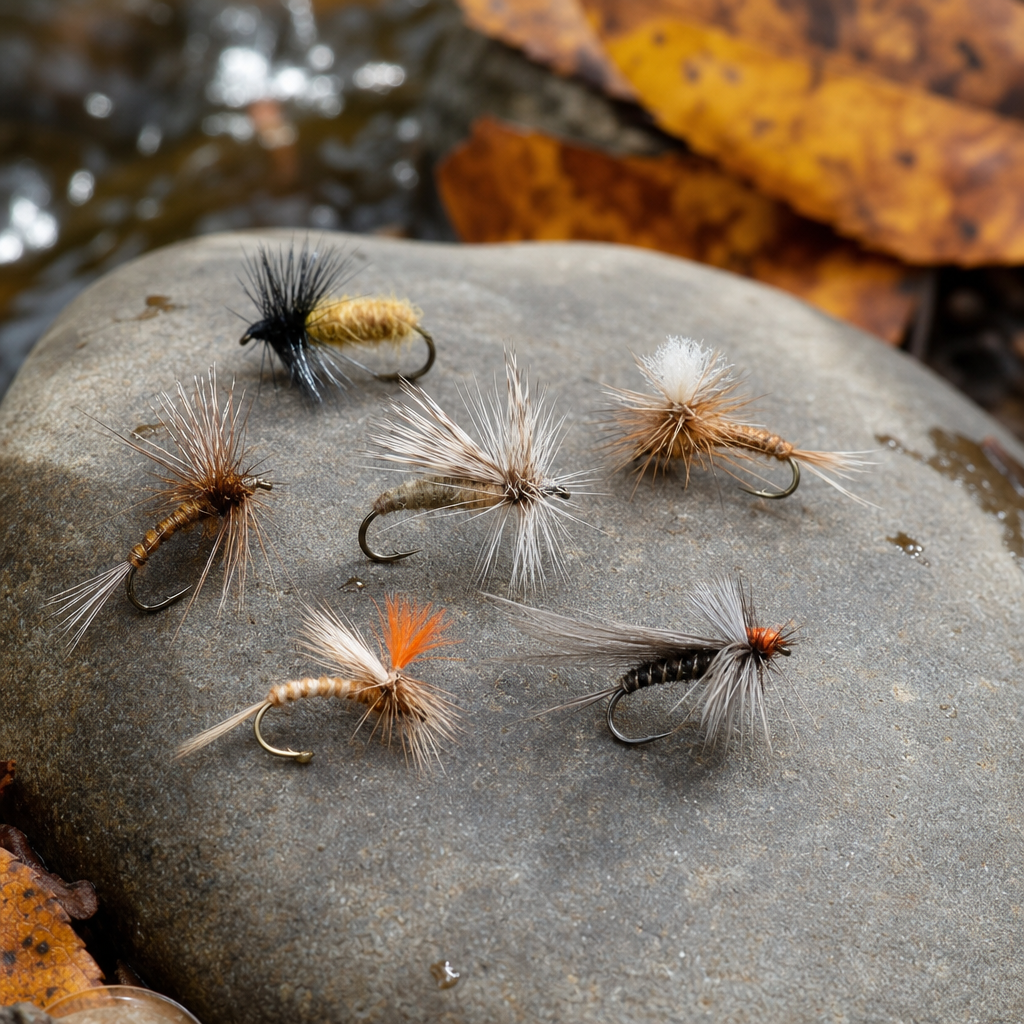
| Midges | Late winter through spring | 18-24 | Subtle sipping rises in slow water | Zebra Midge, Griffith’s Gnat, midge pupa |
| Blue-winged olives | Early to mid spring | 16-22 | Cloudy afternoons, steady emergences | Pheasant Tail, RS2, parachute BWO |
| Hendricksons/March Browns | Mid spring | 10-14 | More visible rises, larger duns | Hare’s Ear, Comparadun, soft hackle |
| Caddis | Mid to late spring | 12-18 | Pupae in drift, fluttering adults | LaFontaine Sparkle Pupa, Elk Hair Caddis |
| Skwala stoneflies | Early spring in select western rivers | 8-12 | Adults along grassy banks | Pat’s Rubber Legs, foam Skwala adult |
Reading trout behavior during a hatch
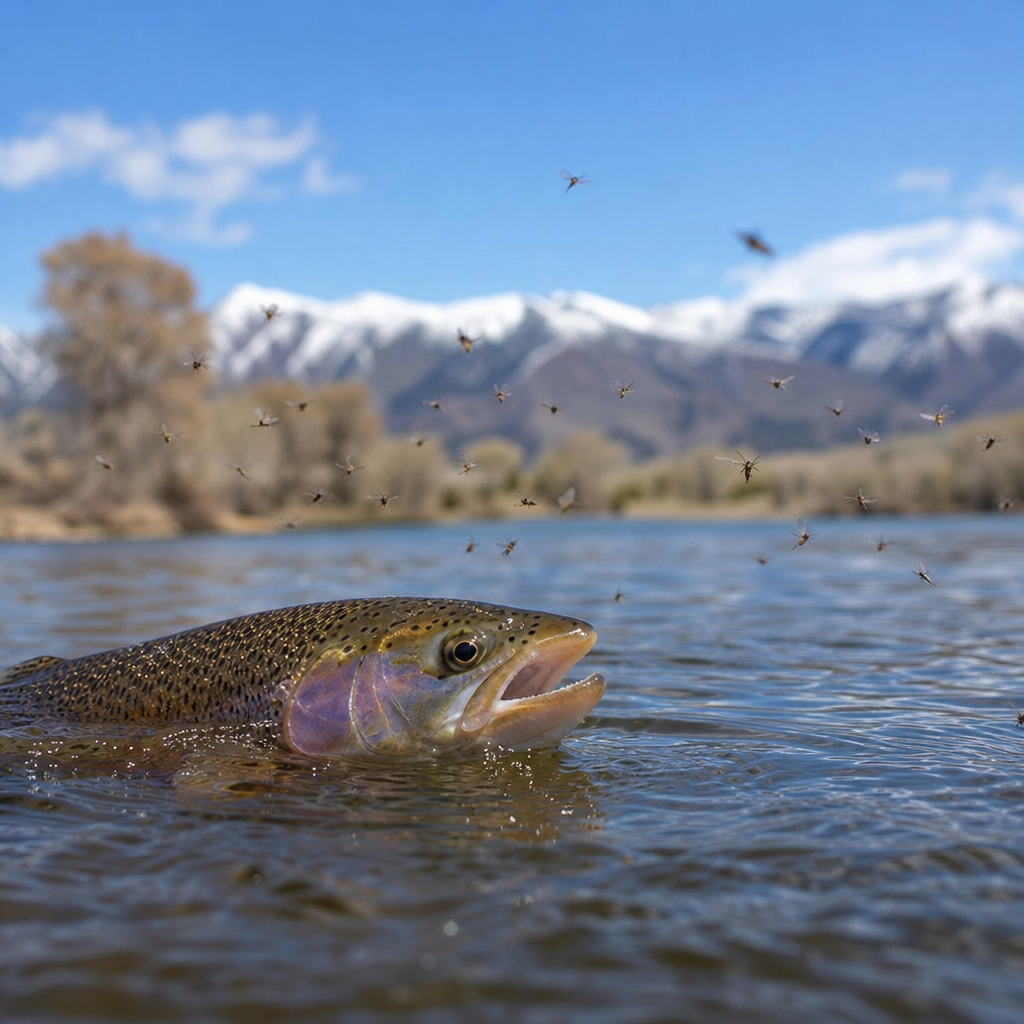
Spring hatches are easier to fish once you learn to decode rise forms and feeding lanes. Splashy rises often signal caddis adults or fish chasing emergers just below the film. Gentle dimples usually mean midges or tiny baetis. A dorsal fin and tail breaking the surface in a slow, rhythmic pattern is the image every angler wants because it often indicates trout locked onto emergers or duns in a narrow lane. The mistake I see most often is casting immediately to the first rise without studying cadence, direction, and drift path. Watch for thirty seconds first. Trout feeding selectively during spring often rise in the same twelve-inch corridor, and a fly six inches outside that path may be ignored completely.
Trout position changes with current speed, light level, and food type. During heavy nymphal drift, fish may hold near the bottom at the lip of riffles. As emergers collect in softer seams, those same fish slide upward or sideways into gentler water where they can intercept food with less effort. On rivers with fluctuating spring flows, banks, back eddies, and inside seams become prime holding water because insects concentrate there. If no fish are rising, do not assume no hatch is happening. Seine the current or inspect streamside rocks. Often the bugs are present, but trout are feeding subsurface on ascending pupae or drifting nymphs.
How to fish spring hatches with nymphs, emergers, and dry flies
The most reliable spring strategy is to fish the water column in sequence. Start subsurface with nymphs when temperatures are low or before visible activity begins. A slim mayfly nymph such as a Pheasant Tail, a Zebra Midge, or a caddis larva under an indicator or tight-line setup covers the pre-hatch period well. As soon as you see occasional rises or insects in the film, shift one fly to an emerger. Patterns like the RS2, soft hackles, or unweighted caddis pupae excel because trout often key on insects trapped during transformation, not fully emerged adults. Only after fish commit to the surface should the dry fly become the lead choice.
Presentation is the deciding factor. In spring’s mixed currents, dead drift is still the standard for mayflies and midges, but caddis and stoneflies justify controlled motion. I often grease only the leader butt and keep the tippet submerged for better drag-free drifts on slow spring creeks. On freestones, adding reach casts and stack mends buys critical extra seconds. For caddis, a rising swing at the end of the drift can trigger fish feeding on ascending pupae. For Skwala adults, quartering casts tight to undercut grassy banks consistently outfish blind casts to midriver structure. Match fly size first, profile second, and exact color third; that order solves more spring puzzles than endless pattern swapping.
River types: freestones, tailwaters, and spring creeks
Not all spring fly fishing behaves the same, and river type determines both hatch timing and tactical margin for error. Freestone rivers warm and cool quickly. They can fish beautifully during pre-runoff windows, especially from late morning through afternoon, then become high and off-color as snowmelt accelerates. On these rivers, mobile fishing is essential. Concentrate on slower edges, tributary mouths, and lower gradient reaches where trout avoid heavy current but still intercept drifting nymphs. Tailwaters are the opposite: consistent temperatures and controlled releases often produce dependable midge and baetis hatches even when nearby freestones are blown out. That stability makes tailwaters ideal for technical spring fishing with small flies and fine tippet.
Spring creeks demand precision. Their weed growth, clear water, and stable insect populations mean trout see everything and often refuse poorly presented flies. The reward is remarkable hatch consistency. On famous spring creek systems in places like Pennsylvania, Idaho, and Montana, baetis, midges, and caddis can create long feeding windows, but only if you manage drag and approach carefully. I fish longer leaders there, usually 12 to 15 feet, and reduce false casting because educated trout track overhead movement immediately. As a hub topic, this matters because your spring plan should start by identifying river type first, then expected hatch second.
Essential gear, fly selection, and common mistakes
A strong spring setup is simple but specific. For most trout rivers, a 4- to 6-weight rod covers nymphing and dry-fly work; a softer 3- or 4-weight shines on spring creeks. Floating lines handle nearly all hatch situations. Carry leaders from 9 to 12 feet, plus 5X to 7X tippet for tiny baetis and midges. Polarized glasses are not optional; they reveal both trout and insect activity. So are a thermometer and a small fly box organized by stage: nymph, emerger, adult. Productive spring patterns include Zebra Midges, Perdigons, Pheasant Tails, Hare’s Ears, RS2s, soft hackles, Sparkle Pupae, Elk Hair Caddis, parachute BWOs, Comparaduns, and a few larger stonefly nymphs for prospecting.
The biggest mistake in spring fly fishing is fishing too fast. Anglers often hop from run to run because visible surface activity is intermittent, yet the best window may last only forty minutes in one seam. The second mistake is refusing to fish subsurface during a hatch. Trout frequently take emergers inches below the film far more confidently than duns riding high. The third is ignoring runoff and safety. Cold, pushy water reduces wading margins dramatically, and felt confidence from summer can become dangerous in April or May. Finally, many anglers overvalue exact imitation and undervalue drift. A size 18 olive presented perfectly usually beats a perfect size 17 shade match with micro drag.
Springtime hatches give fly anglers a clear roadmap: follow temperature, monitor flows, identify the dominant insects, and let trout behavior tell you which stage they want. Midges start the season, baetis anchor many classic overcast afternoons, larger mayflies add high-visibility windows, and caddis or stoneflies often create the most aggressive takes. Across every river type, the pattern is consistent. Stable conditions improve predictability, warming trends strengthen feeding, and rising or dirty water shifts the best action toward softer holding lies or more stable tailwaters. Success rarely comes from one magic fly. It comes from observing first, then adjusting from nymph to emerger to dry as the hatch develops.
As the hub for spring fly fishing under seasons and conditions, this guide should help you make sense of the entire subtopic. When you know what to expect and how to fish each phase, spring stops feeling random and starts feeling readable. Build a simple hatch log, carry the right sizes, and choose rivers according to current conditions rather than calendar dates. That habit will improve your catch rates more than buying another dozen patterns. The reward is not only more trout, but also a sharper understanding of how rivers wake up after winter. Use this framework on your next trip, and let the hatch dictate your decisions.
Frequently Asked Questions
What are springtime hatches, and why do they matter so much to trout anglers?
Springtime hatches are the seasonal emergence of aquatic insects that have spent most of their lives underwater as larvae or nymphs. As water temperatures rise and daylight increases, insects such as mayflies, caddisflies, and midges become active, drift more freely, migrate toward the surface, or emerge into winged adults. For trout, this creates a concentrated and predictable food source. Instead of opportunistically picking off scattered prey, fish can feed efficiently on one insect type in one stage of life for a defined window of time. That is why spring often produces some of the most consistent dry-fly and nymph fishing of the year.
For anglers, hatches matter because they connect fish behavior, fly choice, and presentation. When a hatch is underway, trout frequently shift from random holding and casual feeding to more deliberate feeding lanes and repeat rises. Fish may key on drifting nymphs before the hatch, emergers in the surface film during the transition, or fully formed adults once insects are riding high on the water. Understanding that sequence helps you stop guessing and start fishing the most important part of the water column. In practical terms, reading spring hatches means knowing not just what bugs are present, but when they appear, where they collect, and which stage trout are actually eating.
Which insects should I expect during spring, and when do they usually appear?
The exact timing varies by region, elevation, and weather, but most spring hatch activity revolves around mayflies, caddisflies, and midges. Early in the season, midges are often the most reliable insects, especially on cold mornings or in tailwaters and spring creeks where water temperatures remain stable. Small and easy to overlook, midges can still create excellent fishing because trout feed on them steadily when little else is available. As spring progresses and water warms, mayflies become increasingly important. Depending on the watershed, this may include blue-winged olives, March browns, Hendricksons, pale morning duns, or other local species. These hatches often define classic spring fishing because trout respond strongly to both the nymphs and the adults.
Caddis also become more prominent as the season advances. Unlike many mayflies, caddis can create fast, exciting feeding as pupae ascend and adults skitter across the surface. In some rivers, caddis activity builds later in spring after the earliest mayfly windows, while in others it overlaps heavily with them. The key is to think less in terms of a fixed calendar date and more in terms of conditions. Warmer afternoons, stable flows, and improving weather usually increase hatch activity. Cold snaps, muddy runoff, or rapid water level changes can delay or disrupt emergence. If you want to predict what to expect, pay attention to local hatch charts, recent stream reports, and the actual bugs you see on rocks, in the air, or in your seine and net.
How can I tell what stage of the hatch trout are feeding on?
This is one of the most important skills in spring fly fishing because trout are often far more selective about insect stage than species alone. Before a hatch, fish commonly feed subsurface on nymphs drifting naturally in the current. During the hatch itself, trout may switch to emergers trapped or struggling in the surface film, which are often easier to catch than fully emerged adults. After the main emergence, fish may continue feeding on duns, spinners, or spent adults if enough insects remain on the surface. If your fly matches the bug but not the stage, you can still get refused repeatedly.
Start by watching rise forms and examining the water. Splashy, aggressive rises can suggest caddis or fast-moving surface feeding, while subtle sips often point to mayfly emergers or tiny midges. If you see noses breaking the film without obvious takes on top, trout may be eating just under the surface. If fish are bulging below the surface but not rising cleanly, emergers and ascending pupae are likely in play. Turn over rocks, use a small seine, or check the edges of slow water for shucks and adults. Then fish the sequence logically: begin with nymphs if there is little visible topwater activity, switch to emergers when fish start showing, and move to dry flies when trout are clearly taking adults from the surface. That disciplined progression is often the difference between seeing a hatch and actually catching fish during it.
What flies and presentations work best during spring hatches?
A strong spring fly selection should cover the major insect groups and, just as importantly, multiple life stages. For mayflies, carry slim nymphs, emerger patterns, and adult duns in sizes and colors that match your local water. For caddis, include larvae, pupae, and adult patterns, especially those that can imitate movement near the film. For midges, small larvae, pupae, and delicate adult imitations are essential, particularly on technical rivers. You do not need dozens of obscure patterns if you have a practical, confidence-building selection that matches size, profile, and behavior. In spring, a well-chosen fly that behaves naturally usually outperforms a perfect color match presented poorly.
Presentation should follow the stage trout are feeding on. Nymphs are most effective when drifted dead-drift through likely feeding lanes, often with enough weight to reach fish holding near the bottom in colder water. Emergers should ride just under or in the film, where a subtle drag-free drift is critical. Dry flies become most effective when insects are consistently visible on the surface and trout are feeding rhythmically. For caddis, a little motion can help because naturals often skate or flutter, but that should be deliberate rather than uncontrolled drag. Keep your leader and tippet appropriate to the size of the bugs and the clarity of the water, and make short, accurate casts whenever possible. Spring trout can feed confidently during a hatch, but they still punish sloppy drifts, especially in clear flows and softer seams.
How should I adjust my strategy when spring weather and water conditions keep changing?
Spring is famous for inconsistency, and successful anglers treat changing conditions as part of the hatch puzzle rather than a reason to give up. Water temperature is often the biggest driver. A few degrees of warming can trigger insect activity and improve trout metabolism dramatically, while a cold front can slow everything down. On many rivers, the best hatch windows occur from late morning through midafternoon, when the water has had time to warm. If a day begins quiet, that does not mean it will stay that way. Patience is often rewarded in spring, especially when you time your fishing around the warmest part of the day.
Flow and clarity matter just as much. Rising runoff, stained water, and sudden release changes can suppress visible hatch fishing, but trout still need to eat. In those conditions, focus more on subsurface tactics with nymphs, larger search patterns, or flies that are easier for fish to find. When water clears and stabilizes, expect more defined hatch behavior and better dry-fly opportunities. Wind, cloud cover, and light also influence insect emergence; some mayflies hatch best under overcast skies, while bright conditions can shift timing or reduce surface activity. The best overall strategy is to stay flexible: arrive prepared to nymph first, watch for developing insect activity, and be ready to switch quickly to emergers or dries. Spring rewards anglers who observe constantly, adapt without ego, and let the river tell them what stage of the hatch is really happening.