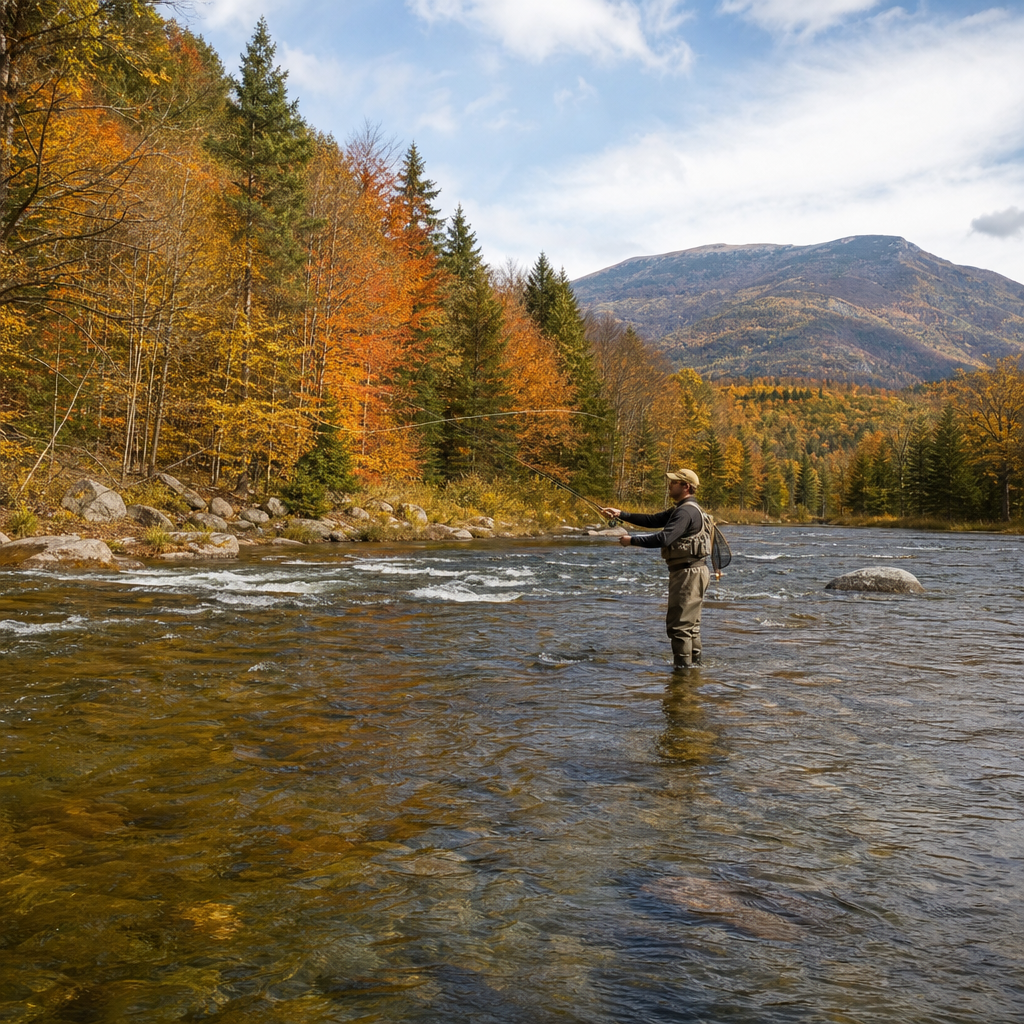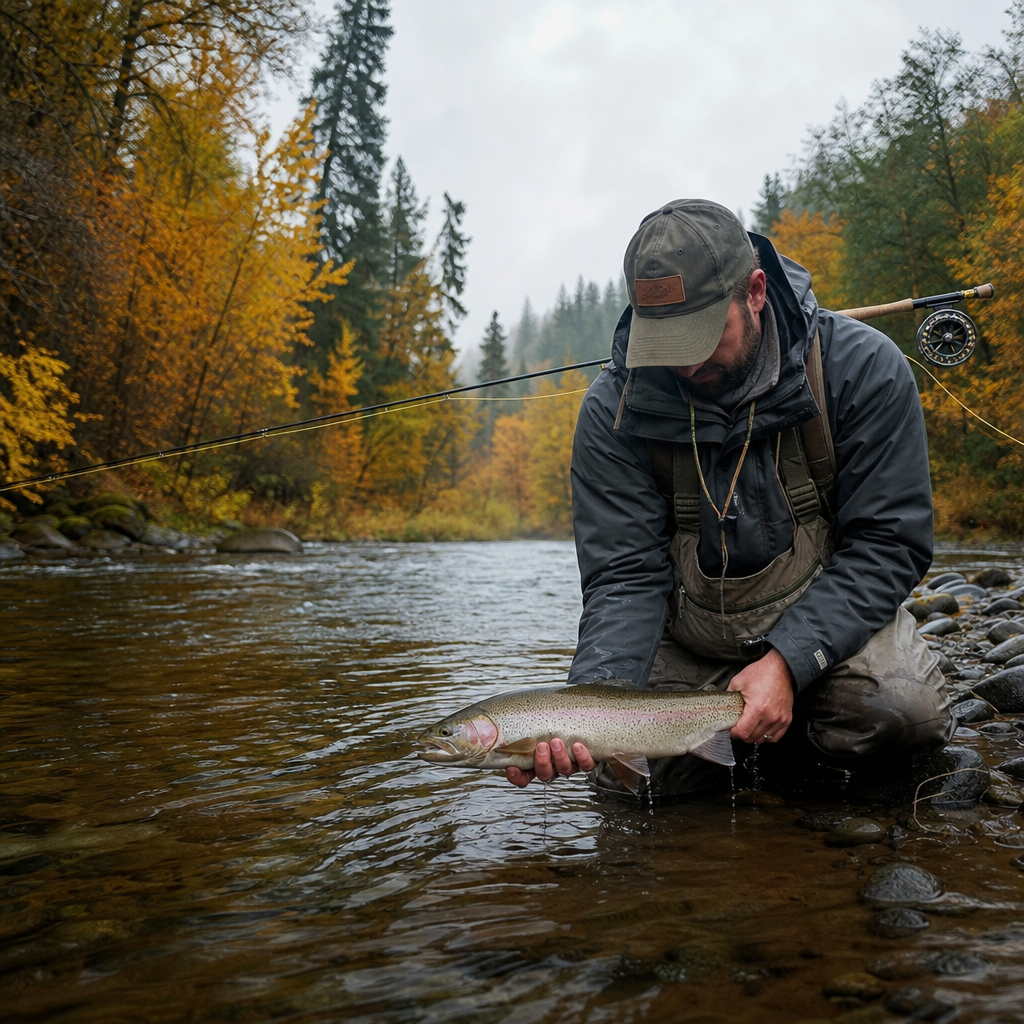
Mid-spring fly fishing is the point where winter restraint gives way to real opportunity, but success depends on understanding how warming water changes trout behavior, insect activity, and presentation choices. Spring fly fishing is not one pattern or one tactic. It is a progression shaped by river temperature, runoff timing, daylight, dissolved oxygen, and food availability. I treat mid-spring as the bridge between early spring’s slow subsurface game and late spring’s increasingly reliable hatch fishing. On most trout rivers, that means water temperatures climbing into roughly the upper 40s through upper 50s, with fish feeding longer, moving farther, and shifting between nymphs, emergers, dries, and streamers within the same day.
That transition matters because warming water changes everything at once. Metabolism rises, so trout must feed more often. Aquatic insects become more active, so food drifts in greater numbers and at more predictable times. Snowmelt or spring rain can stain flows, so visibility and current speed affect fly choice and weight. Anglers who keep fishing as if it were March often miss the best windows. Anglers who jump straight to summer tactics usually fish over trout holding deeper or tighter to current seams than expected. The advantage in mid-spring comes from reading conditions precisely and adapting fast.
As a hub for spring fly fishing, this article covers the core decisions that drive results across the season: how water temperature affects feeding, where trout reposition as flows rise or fall, which hatches define mid-spring, how to rig nymphs and dry-dropper setups, when streamers shine, and what wading, gear, and safety adjustments matter most. If you want a reliable framework for spring fly fishing rather than a list of random fly names, start here. The goal is simple: match your tactics to warming waters so every choice on the river has a reason behind it.
How warming water changes trout behavior
The central fact of spring fly fishing is that trout respond to temperature before they respond to the calendar. I watch the thermometer more closely in April and May than in almost any other period because a difference of three or four degrees can turn a quiet morning into a strong afternoon hatch. In very cold water, trout conserve energy and feed in short windows. As temperatures approach about 50 degrees Fahrenheit, most trout become noticeably more willing to move for food. Brown trout, rainbow trout, and many freestone fish begin occupying feeding lanes with more confidence, while tailwater trout often spread out from winter lies as insect activity builds.
That does not mean warmer is always better. Mid-spring rivers are often unstable. A sunny stretch can raise temperatures and improve bug activity, but a cold rain, overnight frost, or dam release can knock the system backward. I have seen fish feed aggressively on blue-winged olives at 1 p.m. and ignore nearly identical presentations after a temperature drop of two degrees. Warming water also interacts with flow. If runoff starts early, trout may slide to softer edges, inside bends, side channels, and seams behind midstream structure, where they can feed without burning energy.
The practical takeaway is direct: start by finding the warmest stable water available, then observe whether fish are feeding near the bottom, in the film, or on top. On sunny days, the best period is often late morning through midafternoon. On overcast days, especially with mayfly hatches, activity can extend longer. In spring fly fishing, location and timing are rarely random. They follow temperature trends.
Reading spring water: flows, clarity, and holding lies
Mid-spring trout are catchable in a wide range of conditions, but their holding water changes quickly. On moderate flows with clear water, fish often set up in classic feeding seams at the heads of pools, along gravel drop-offs, and beside current tongues entering softer buckets. As flows rise, those same trout frequently shift only a few feet, but that move matters. They slide toward slower cushions near banks, behind boulders, in softer shelves below riffles, and along flooded edges where drifting nymphs collect. Many anglers keep casting to winter-deep runs or obvious summer riffles and miss the transitional water connecting them.
Clarity changes presentation more than most anglers realize. In slightly stained water, trout still feed well, often better, because they feel secure. That is when larger nymphs, darker profiles, jig flies with tungsten beads, and streamers gain importance. In clear spring water, especially on heavily pressured rivers, drift quality matters more than pattern count. Long leaders, finer tippet, and precise depth control catch fish. I would rather fish one proven pheasant tail or hare’s ear at the correct depth than switch through ten flies while drifting too high.
Current speed also affects strike detection. Fast spring flows create drag, conflicting currents, and short feeding windows. High-stick nymphing, tight-line methods, and short-line indicator rigs let you control depth and keep flies in the zone longer. On broader western rivers, however, a buoyant indicator with split shot still covers water efficiently, especially when fish are spread across shelves and seams. The key in spring fly fishing is to map three things on every run: where the current slows, where food funnels, and where trout can hold without wasting energy.
Core hatches and food sources in mid-spring
Spring fly fishing becomes easier when you think in food categories instead of isolated fly names. The major menu in mid-spring usually includes mayflies, caddis, stoneflies, midges, scuds in fertile systems, and baitfish when flows rise. Blue-winged olives remain important on cloudy days, often in sizes 16 to 20, and they can hatch in surprisingly cold conditions. March Browns, Hendricksons, Quill Gordons, and other regional mayflies begin driving stronger surface feeding depending on latitude and elevation. Caddis activity ramps up as water warms, and when pupae start ascending, trout often feed just below the surface before adults appear.
Stoneflies matter in two different ways. Large nymphs are available well before visible adult activity, which is why a Pat’s Rubber Legs or similar heavy attractor stays relevant through spring. Then certain rivers offer headline events such as Skwala, salmonfly, or golden stone windows, each tied to geography and temperature. Even where those are absent, small dark stoneflies can bring fish tight to banks. Midges never disappear, especially on tailwaters, and they fill the gaps when larger hatches fail.
One of the biggest mistakes I see is matching the hatch too narrowly. Trout often key on stage, not species. During a caddis emergence, a pupa in the film can outfish an adult by a wide margin. During mayfly activity, an emerger with a sparse shuck may beat a fully dressed dun. Spring fly fishing rewards anglers who sample the drift, watch rise forms, and notice where in the water column feeding occurs. If fish slash just under the surface, tie on emergers. If noses break cleanly, fish duns or cripples. If nothing shows but bugs are present, go subsurface first.
Effective spring rigs, flies, and presentations
The most dependable spring system is a two-fly nymph rig adjusted constantly for depth and speed. I usually anchor with a heavier point fly such as a jigged stonefly, hare’s ear, or perdigon, then trail a smaller mayfly or caddis imitation 12 to 20 inches behind. In faster water, tungsten beads and split shot get flies down before the drift ends. In softer water, too much weight kills the presentation. Good spring nymphing is controlled contact: enough depth to tick bottom occasionally, not so much that the rig snags every cast.
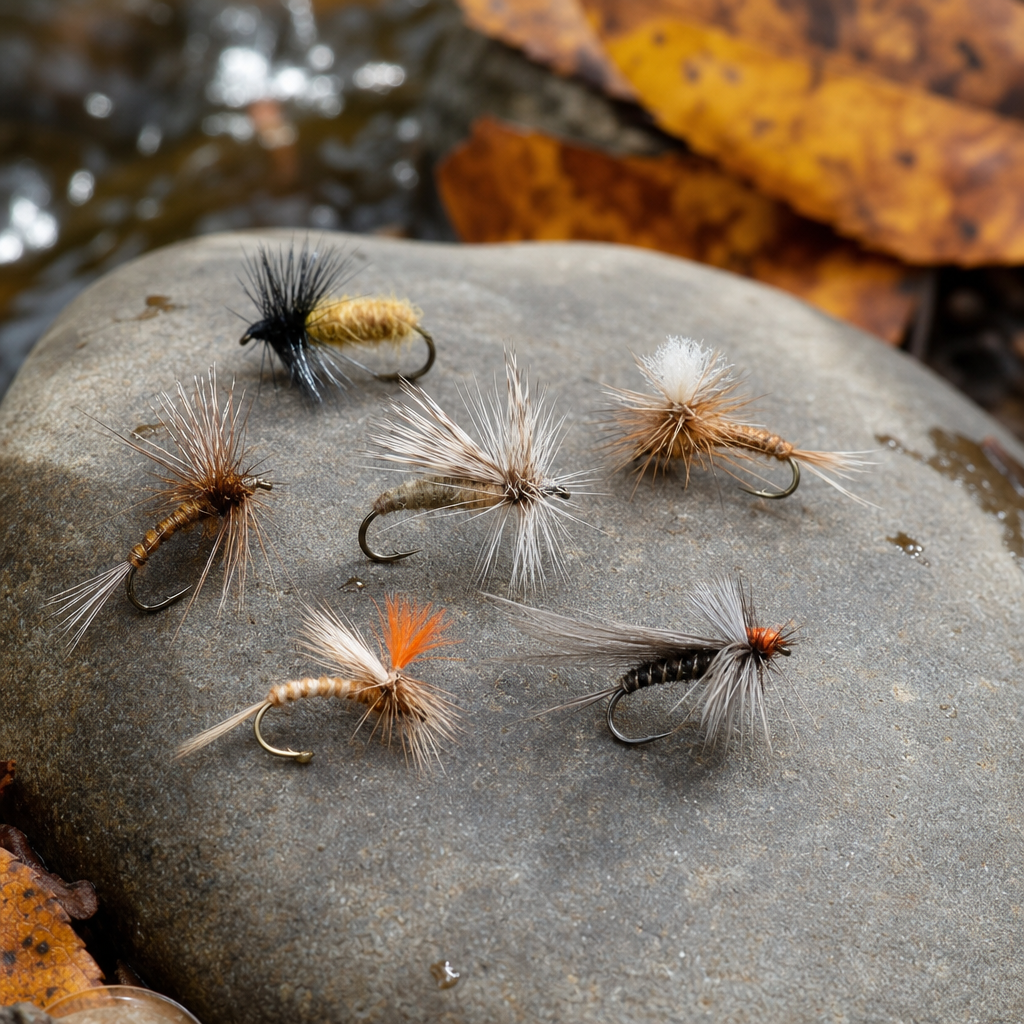
Dry-dropper fishing becomes more effective as surface activity increases. A buoyant adult caddis, Chubby Chernobyl, or high-floating parachute can support a small beadhead through pocket water, banks, and riffle edges. This shines when trout are opportunistic and hatches are intermittent. For dedicated dry-fly periods, carry comparaduns, parachutes, CDC emergers, soft hackles, and cripples in local hatch sizes. The soft hackle is especially underused in mid-spring. Swung across the tail of a run or greased lightly in the film, it suggests emerging insects with very little drag.
Streamers deserve more attention in warming water than they get. Trout coming out of winter often respond well to moderate-sized streamers stripped slowly across softer banks, under cut edges, and through tailouts with depth. You do not need oversized articulated flies every time. A size 6 to 10 sculpin, zonker, or woolly bugger often matches spring baitfish and leeches better, especially in clearer water.
| Condition | Best Approach | Useful Flies | Why It Works |
|---|---|---|---|
| 48–52°F, clear, moderate flow | Two-fly nymph rig | Pheasant tail, hare’s ear, perdigon | Fish feed longer but still hold near bottom |
| Cloud cover with visible mayflies | Emerger to dry progression | BWO emerger, comparadun, cripple | Trout often key on ascending insects first |
| Rising stained water | Short-line nymphing or streamers | Stonefly jig, worm, sculpin streamer | Reduced visibility favors larger profiles |
| Broken pocket water | Dry-dropper | Chubby, caddis adult, beadhead dropper | Covers surface and subsurface quickly |
Leader setup should match method, not habit. For indicator nymphing, a 9-foot 3X or 4X leader extended with tippet handles most spring trout work. For dry flies on technical water, 12-foot leaders ending in 5X or 6X improve drifts. For streamers, shorter stout leaders around 0X to 3X turn over heavier flies and protect against aggressive eats. In every case, fly changes matter less than angle, depth, and drag.
Timing, gear, and safety for changing spring conditions
Daily timing separates average outings from excellent ones. In early and mid-spring, I rarely rush to be on the water before dawn unless I am targeting migratory fish or a specific tailwater hatch. Trout generally feed best after the river has gained some warmth, so late morning through afternoon is often prime. Watch for sunlight on shallow shelves, midge clusters in back eddies, caddis skittering near banks, and the first consistent rises. If runoff muddies the main stem, tributary mouths can create temperature and clarity edges that concentrate fish. Tailwaters may stay more stable than freestones, but generation schedules can still reshape access and presentation.
Wading safety matters more in spring than in summer. Snowmelt raises flows, banks collapse, and cold water limits recovery if you fall. A wading staff is not optional on pushy rivers. Felt soles are restricted in some regions, so many anglers rely on rubber soles with studs for better traction on slime-coated rocks. Layering is practical, not cosmetic: synthetic or merino base layers, a warm midlayer, and a waterproof shell keep you fishing through changing weather. Polarized glasses are essential for spotting seams, structure, and safe crossings. Carry dry gloves or a spare pair because numb hands reduce knot strength and hook handling.
As the central resource for spring fly fishing, the lesson is consistency through adaptation. Warming waters improve trout activity, but they also expose sloppy assumptions. Measure temperature, study flow, identify the dominant food source, and match your rig to where fish are feeding in the column. Start with likely holding water, adjust depth before changing patterns, and let hatch activity guide when to switch from nymphs to emergers, dries, or streamers. Spring rewards anglers who stay observant more than anglers who chase fads.
If you want better results this season, build your next trip around conditions rather than tradition. Bring a thermometer, carry flies for every stage of the hatch, and treat each hour as a new puzzle. Do that, and mid-spring fly fishing becomes one of the most productive, technical, and satisfying parts of the trout year.
Frequently Asked Questions
1. How does warming water in mid-spring change trout behavior?
As water temperatures begin to climb out of winter’s cold, trout become noticeably more active, but not all at once and not in every part of the river. Mid-spring is a transition period, which means trout behavior is driven by daily temperature swings as much as by the calendar. In colder early-spring conditions, trout often hold in slower, softer water where they can conserve energy and feed selectively on subsurface food drifting close to them. As mid-spring warmth builds, trout start feeding longer, moving farther to intercept food, and shifting into more varied lies.
One of the biggest changes is location. Trout often slide from deep winter holding water into moderate seams, tailouts, riffle edges, and feeding lanes near current breaks. They still want efficiency, but warming water improves their metabolism, so they can afford to feed more aggressively. This is especially true during the warmest part of the day, when river temperatures may rise enough to trigger stronger nymph activity and the first meaningful hatch windows. Brown trout and rainbows both respond to these changes, though local river type, elevation, and flow conditions matter a great deal.
It is also important to understand that trout behavior in mid-spring is rarely static. A fish that feeds confidently in a riffle at 3 p.m. may be back in softer water after a cold night or snowmelt pulse. That is why successful anglers treat mid-spring as a progression rather than a fixed season. Instead of asking, “What are trout doing this month?” the better question is, “What are trout doing in this water temperature, under this flow, at this time of day?” That mindset leads to better decisions about where to fish, what depth to target, and whether fish are more likely to respond to nymphs, emergers, dries, or streamers.
2. What water temperatures are most important for mid-spring fly fishing?
Water temperature is one of the most useful indicators in mid-spring because it affects trout metabolism, insect development, dissolved oxygen dynamics, and feeding windows. While exact numbers vary by region and species, many trout streams begin to fish more consistently once temperatures move out of the upper 30s and low 40s and into the mid-40s to low 50s. That range often marks the point where trout become more willing to feed regularly rather than opportunistically. As temperatures continue to rise, insect activity becomes more dependable, and the chance of seeing fish shift from purely subsurface feeding to emergers and dry flies improves significantly.
The key is not just the absolute temperature, but the trend. A river that rises from 42 to 48 degrees over the course of a sunny day can fish dramatically better in the afternoon than it did in the morning. Conversely, a freestone stream that looks ideal but drops in temperature because of overnight cold or runoff can suppress feeding activity even if the date suggests “spring should be on.” That is why experienced anglers often carry a stream thermometer and pay attention to how fast the water is warming, where it is warming, and when it hits productive ranges.
Temperature also helps explain why different sections of the same river fish differently. Tailwaters, spring creeks, and freestones all respond in their own way. Tailwaters tend to be more stable, which can create predictable feeding periods. Freestones can warm quickly in the sun but cool just as quickly with weather changes or runoff. Spring creeks may remain comparatively steady, often supporting longer, more nuanced insect activity. If you understand these temperature patterns, you can better predict when trout will move, when hatches will start, and when it makes sense to switch from deep nymphing to more active presentations higher in the water column.
3. What flies and presentations work best during the mid-spring transition?
The best approach in mid-spring is usually a flexible one because the season sits between winter’s subsurface emphasis and late spring’s more reliable surface action. On many days, nymphs still do most of the work, but the style of nymphing often changes. Instead of dredging only the deepest, slowest winter water, anglers should start targeting medium-speed seams, riffle transitions, and feeding lanes where trout are positioning to intercept increased food. Pheasant tails, hare’s ears, perdigons, stonefly nymphs, caddis pupae, and midge or mayfly imitations are all useful, with size and weight adjusted to water type and insect activity.
As insect activity builds, emergers become increasingly important. Mid-spring trout often feed just below the surface before a hatch becomes obvious to the angler. If fish are flashing, bulging, or refusing fully formed dry flies, an emerger or soft hackle may outperform both a deep nymph and a high-floating adult imitation. Soft hackles swung through riffles, lightly weighted nymphs under an indicator, and dry-dropper setups can all be excellent bridging tactics during this stage. These methods match the reality of mid-spring well: fish are active, but they are not always fully committed to the top.
Dry flies become more relevant as hatch consistency improves, particularly during warmer afternoons and evenings. Depending on your river, this can mean blue-winged olives, March browns, caddis, or other local insects. Still, presentation matters more than blind optimism. A dry fly is not effective simply because it is spring; it works when trout are actually looking up. Streamers also deserve attention in mid-spring, especially during rising flows, cloudy weather, or periods when trout are aggressive but not visibly surface feeding. The larger lesson is that fly choice should follow river conditions and trout behavior. Mid-spring rewards anglers who rotate intelligently through nymphs, emergers, dries, and streamers instead of forcing a single tactic all day.
4. How should I adjust my strategy when runoff and changing flows affect the river?
Runoff is one of the defining variables of mid-spring, and it can either complicate fishing or create excellent opportunity, depending on timing and river type. As snowmelt begins or increases, flows often rise, water can become off-color, and trout may shift away from their clear-water lies. Many anglers see higher water and assume conditions are poor, but that is not always true. Trout still feed during changing flows, and in some cases rising water gives them security and access to food concentrated along edges, seams, and softer inside water.
The first adjustment is where you fish. During runoff or elevated flows, trout commonly slide closer to banks, behind structure, into side channels, and along softer current margins where they can hold without burning energy. Instead of targeting the middle of heavy current, focus on walking-speed water, eddies, inside bends, tailouts protected from the strongest push, and transition zones where fast and soft water meet. These areas often become prime feeding lanes because drifting food is funneled past fish that are holding in manageable current.
The second adjustment is presentation. Higher or stained water usually calls for getting flies down quickly and making them visible. That may mean more weight, a larger indicator, heavier tippet for turnover and control, or flies with stronger profiles such as stoneflies, worms, attractor nymphs, or streamers. In off-color water, subtlety becomes less important than depth, drift, and visibility. At the same time, do not overdo it. Even in runoff, trout often hold in surprisingly shallow soft water, so a shorter drift tight to the bank can be more productive than repeatedly casting into deep main current.
Finally, timing matters. On some rivers, mornings can be clearer before the day’s melt increases color and flow. On others, slightly stained afternoon water actually improves fishing by reducing trout wariness and moving food. Watching local hydrographs, weather trends, and snowpack patterns gives you a major advantage. Mid-spring success often comes from finding fishable windows rather than waiting for perfect stability. Anglers who adapt to changing flows with better location choices and practical rigging often discover that runoff is not the end of spring fishing, but part of how spring fishing works.
5. When should I fish subsurface, and when should I expect dry-fly opportunities in mid-spring?
In mid-spring, the answer is usually both, but not equally at all times of day. Subsurface fishing remains the baseline strategy because trout continue to feed heavily on nymphs, larvae, pupae, and emerging insects even as conditions improve. Early in the day, especially after cold nights, fish are often more willing to take deep or mid-column presentations than they are to rise. That is why nymphing is still the most reliable starting point. Focus on depth control, natural drift, and reading whether trout are holding near the bottom, suspended higher in the column, or shifting into feeding lanes that suggest increasing activity.
Dry-fly opportunities tend to improve when the river has had time to warm, insect activity increases, and fish begin feeding more confidently near the surface. In many mid-spring situations, this means late morning through afternoon, though local hatch timing can vary widely. The important thing is to watch for clues rather than deciding too early that “it’s dry-fly time.” Rising fish, duns on the water, fluttering caddis, subtle dimples, bulges