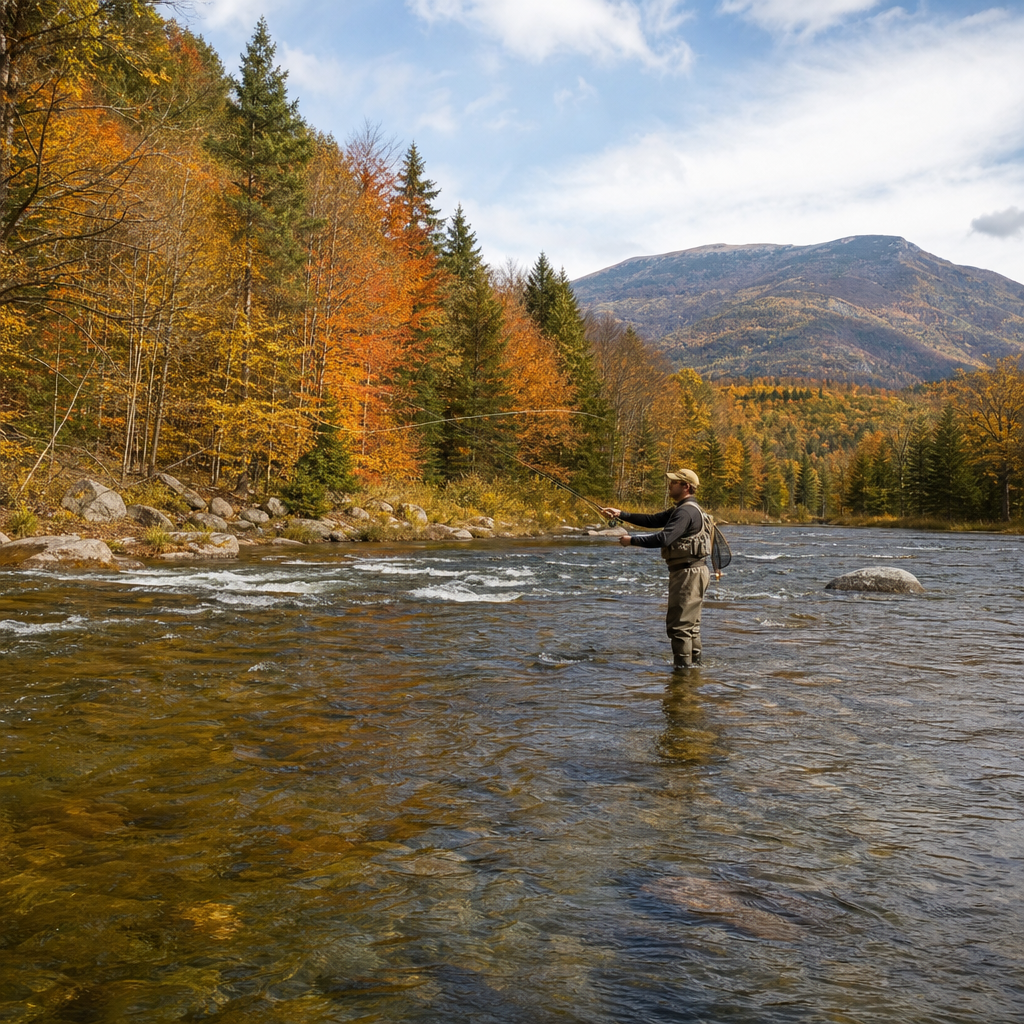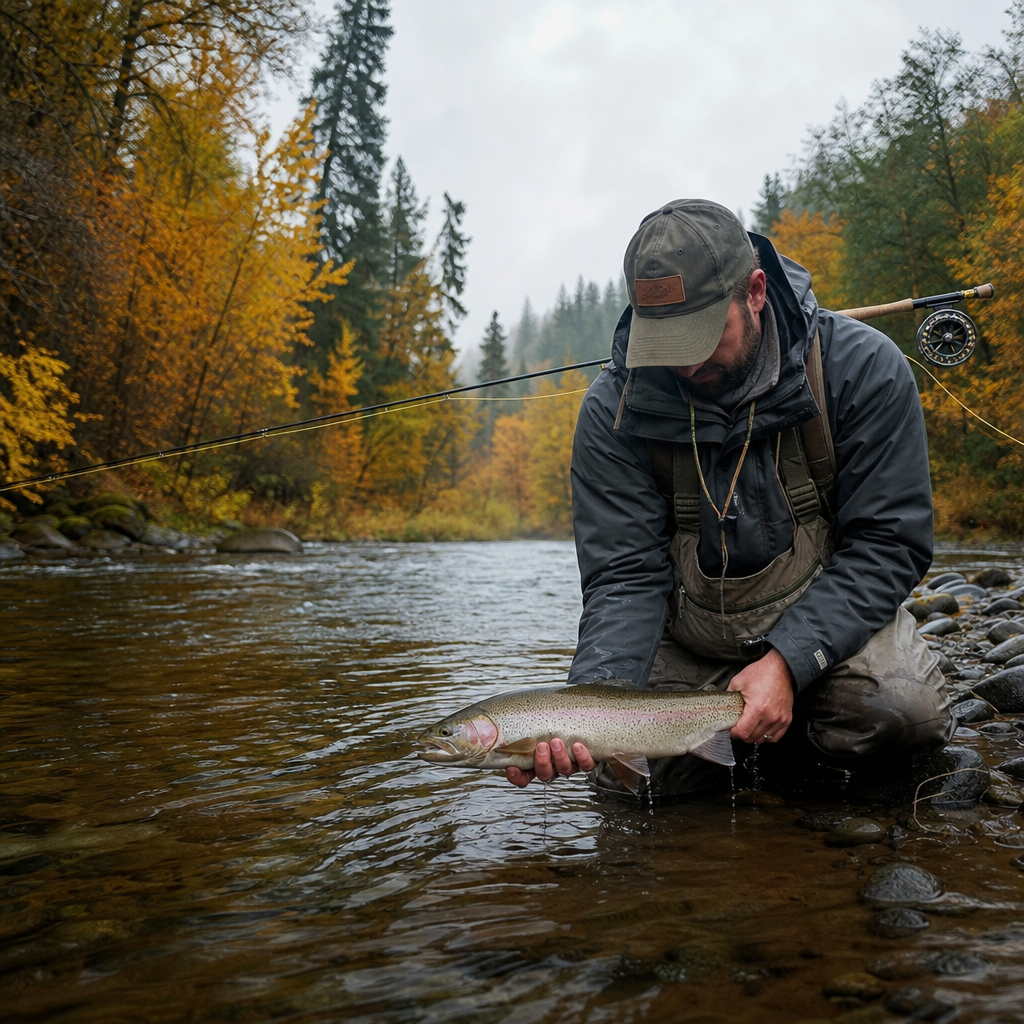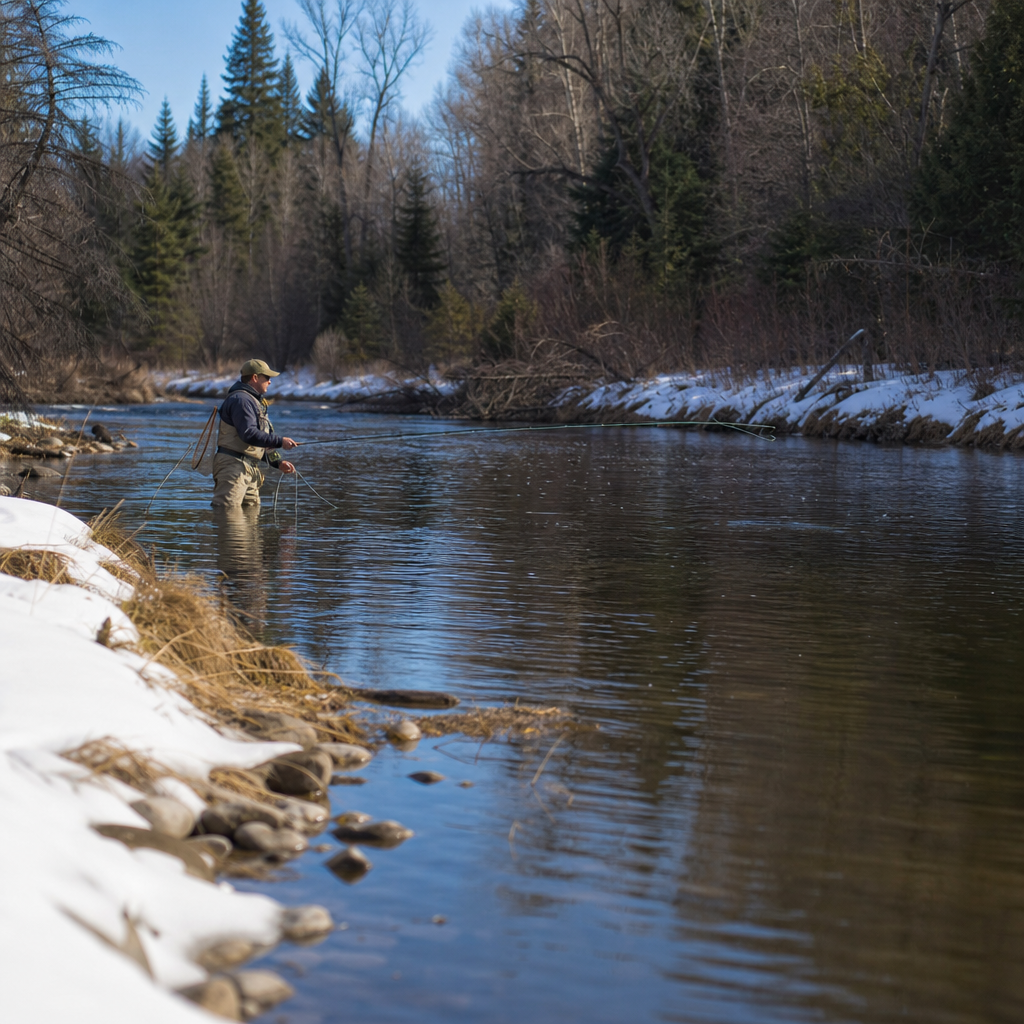
Early spring fly fishing rewards anglers who understand that cold water changes everything: trout metabolism slows, insect activity compresses into short windows, and productive presentations must become more precise. Spring fly fishing, especially from ice-out through the first stable warming trend, sits at the intersection of water temperature, flow conditions, dissolved oxygen, and aquatic entomology. It matters because many rivers produce some of their largest trout of the year before summer pressure arrives, yet those fish are selective about where they hold and how far they move to eat. In my experience guiding and fishing tailwaters, freestones, and spring creeks during March and April, success comes less from covering miles of water and more from reading subtle seasonal clues. This hub explains the core tactics for cold-water fly fishing, including where trout hold, which flies consistently produce, how to fish nymphs, streamers, and emergers effectively, and how spring conditions differ across river types. If you want a dependable framework for spring fly fishing, start with temperature, current speed, and the timing of daily insect activity.
Cold water generally means temperatures from the upper 30s to the upper 40s Fahrenheit, though exact fish behavior varies by species and watershed. Trout can feed actively in that range, but they conserve energy by holding near softer seams, inside bends, and depth transitions where food drifts close without requiring long chases. Early spring also brings unstable weather: snowmelt pulses, rain-driven color changes, and bright bluebird days after fronts. Those shifts make spring fly fishing both technical and highly rewarding. A good angler answers a series of practical questions. Where are trout positioned today? What food sources are actually available? Should the fly drift near bottom, swing through the film, or move with short strips? How much weight, how long a leader, and how fine a tippet can current speed tolerate? This article serves as the central guide for those questions. It covers the fundamentals you need before drilling deeper into midge tactics, blue-winged olive hatches, runoff strategies, euro nymphing, or stillwater spring approaches. Master these principles and the rest of spring fly fishing becomes easier to understand and far more consistent on the water.
How cold water changes trout behavior in spring
The most important principle in early spring fly fishing is simple: trout do not stop feeding in cold water, but they feed efficiently. Their strike zone shrinks because colder water reduces metabolic demand and limits the distance fish will move. On many rivers, that means the best lies are not the dramatic pocket water spots that shine in June. Instead, look for moderate depth, stable current, and direct food delivery. Classic holding water includes troughs beside faster runs, the slow edge below a riffle, tailouts with a defined seam, and buckets behind structure where current is softened but not dead. Brown trout often stay close to wintering water longer than anglers expect, while rainbows may slide toward spawning tributaries or shallow gravel areas, especially where regulations allow fishing around those zones. Ethical positioning matters: avoid targeting paired fish on redds and focus on adjacent feeding lanes downstream.
Daily timing also changes in spring. After very cold nights, the first two hours of daylight are often slower than late morning through midafternoon, when sunlight raises water temperature by even one or two degrees. I watch both the thermometer and the insect life before changing flies aggressively. A river at 39 degrees can fish flat until noon, then come alive with midges or blue-winged olives at 42. Tailwaters are the exception when dam releases keep temperatures stable, but even there, cloud cover, release schedules, and wind affect feeding depth. Clarity is another major variable. Slight stain can improve streamer fishing and make fish less wary; heavy runoff usually pushes trout to edges, soft shelves, and protected side channels. The key is to stop fishing where trout were in autumn and start fishing where spring hydraulics place food with minimal effort for the fish.
Best early spring fly fishing tactics: nymphs, emergers, and streamers
Nymphing is the most reliable cold-water tactic because subsurface food dominates before major hatch activity stabilizes. Midges, small mayfly nymphs, caddis larvae, scuds, sowbugs, and early stoneflies all matter, depending on the river. Productive patterns are usually compact and sparse, not oversized attractors. Zebra Midges, Perdigons, Pheasant Tails, Walt’s Worms, RS2s, Hare’s Ears, Scuds, and San Juan Worms all earn space in a spring box. Depth control matters more than exact imitation on most days. If your flies are not ticking bottom occasionally, they are often too high. Indicator rigs work well in mixed currents because they suspend split shot and allow longer dead drifts; tight-line methods excel in shorter seams and pocket transitions where contact improves strike detection. In both systems, adjust weight before changing patterns repeatedly. I commonly solve a slow morning by adding a single tungsten fly or one more small shot.
Emergers become critical whenever trout rise subtly without fully committing to duns. In early spring, many refusals happen because anglers fish only bottom-hugging nymphs while trout are intercepting insects in the upper third of the water column. A soft hackle, RS2, Barr’s Emerger, or unweighted pheasant tail swung at the end of a drift can transform a session, especially during blue-winged olive activity on overcast afternoons. Streamers are the third pillar and often the best route to larger fish. Cold water does not eliminate streamer eats; it changes the retrieve. Forget fast, flashy strips unless fish are unusually aggressive. Instead, fish smaller streamers, weighted sculpins, leeches, or articulated patterns on short lines, then use slow strips, long pauses, and broadside presentations through banks, ledges, and soft drop-offs. Many takes feel like added weight during the pause. If water has six to twelve inches of visibility after rain, black, olive, and white streamers all produce, but profile and depth still matter more than color.
Matching spring insects and choosing flies by river type
Spring fly fishing improves dramatically when you match patterns to the watershed instead of relying on a generic seasonal box. Freestone streams usually begin with midges and small mayflies, then add stoneflies, caddis, and worms during rain events. Spring creeks demand more precision because stable flows support dense populations of midges, scuds, sowbugs, and tiny baetis. Tailwaters often fish best with midge larvae, pupa, and baetis nymphs because cold, consistent releases compress forage into predictable menus. In lakes and reservoirs, chironomids, leeches, balanced minnows, and callibaetis later in spring become central. A common mistake is fishing large attractor nymphs on technical water where naturals are size 18 to 24. Another is ignoring annelids and scuds after flow changes dislodge them. On productive spring creeks in the Rockies and Midwest, a size 20 midge and a size 16 scud can outfish bigger offerings all day.
| Water type | Primary spring food | Best tactic | Typical patterns |
|---|---|---|---|
| Freestone river | Midges, baetis, worms, stonefly nymphs | Deep nymph drifts near softer seams | Zebra Midge, Pheasant Tail, Pat’s Rubber Legs, San Juan Worm |
| Tailwater | Midges, baetis, sowbugs, scuds | Precise depth control and long dead drifts | RS2, Mercury Midge, Scud, Miracle Nymph |
| Spring creek | Midges, scuds, tiny mayflies | Light tippet and exact imitation | Top Secret Midge, Scud, Black Beauty, BWO emerger |
| Stillwater | Chironomids, leeches, minnows | Suspension under indicator or slow retrieve | Balanced Leech, Chironomid pupa, Woolly Bugger |
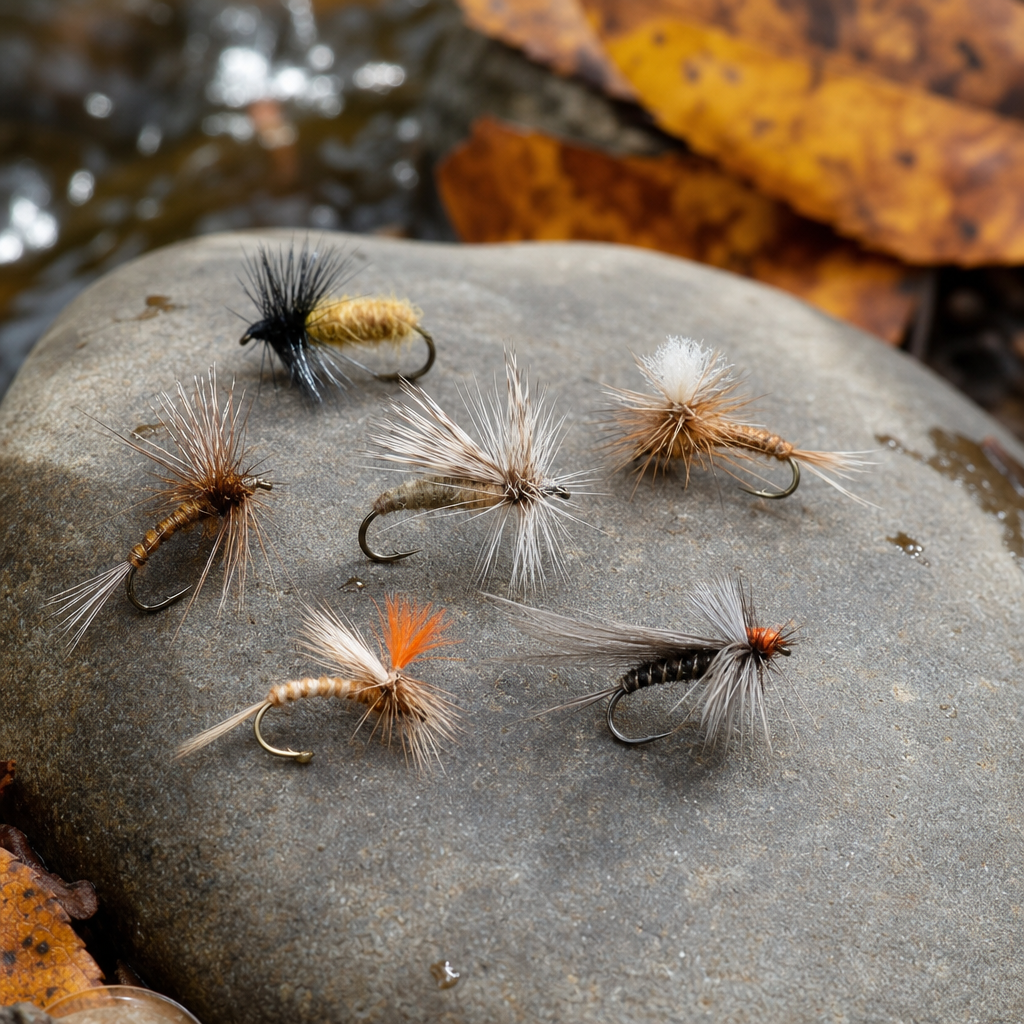
When in doubt, start smaller and more natural than your summer instincts suggest. Carry patterns in sizes 14 through 22, with tungsten options for fast adjustments. Color should reflect both insect type and water clarity: black, red, and olive for midges; olive and brown for mayfly nymphs; tan, gray, and pink for scuds and worms when flows rise. If trout inspect but refuse, first reduce fly size, then thin the tippet, then improve drift angle. Matching the hatch in spring often means matching the life stage and depth, not simply the species. A baetis hatch can require a nymph before it starts, an emerger when fish begin bulging, and a parachute dry only during the brief period adults are actually trapped on the surface.
Rigging, presentation, and wading strategy for cold-water success
Effective spring rigging is about control. For indicator nymphing, use enough leader length to achieve depth without dragging the flies unnaturally. On medium rivers, a 9-foot leader to 4X or 5X extended with tippet, then split shot placed above the first fly, is a reliable starting point. The distance from indicator to point fly should roughly equal water depth plus a little extra to account for drift angle, though faster currents may require more. For tight-line setups, a long, level tippet section with one heavy anchor fly and one lighter trailer helps maintain contact while still giving the smaller fly movement. Keep fly spacing practical: around 16 to 24 inches solves more problems than extreme distances. Too far apart and the rig becomes hard to cast, tangles more, and fishes two different depths poorly.
Presentation is where many good anglers lose fish. In cold water, drag-free drift is nonnegotiable for nymphs and emergers. Cast slightly upstream or up-and-across, mend early, and lead the flies with the rod tip without pulling them. Set on anything unusual: a pause, a twitch, a slight stall. Streamer presentation should be equally deliberate. Fish likely winter-to-spring transition water methodically instead of blind fan-casting every bank. Make repeated casts at different angles, allowing the fly to sink and sweep. Wading should also be more conservative than in summer. Trout often hold close, in side seams and shelves directly at your feet. Enter from below, move slowly, and fish the near water first. Safety matters too. Snowmelt water can incapacitate quickly after a slip, and felt or rubber soles with studs dramatically improve traction on cold, algae-slick rocks. If flows are rising or edges are undercut by runoff, shorten the day rather than force one more crossing.
Reading spring conditions, common mistakes, and building a seasonal plan
The anglers who consistently catch trout in early spring are usually the ones who build a plan before they string up a rod. Check water temperature, USGS flow graphs, local hatch reports, weather trends, and dam release schedules the night before. A 300-cubic-foot-per-second increase can move fish from midriver buckets to soft inside edges. Bright sun after a freeze may delay activity, while low cloud cover can extend a baetis hatch for hours. Wind can help on stillwaters by pushing food into banks, but it can hurt dry-fly visibility and boat control. With that context, you can choose a starting tactic instead of guessing. My standard progression is straightforward: deep nymphing during the coldest period, emergers when I see bulges or naturals lifting, and streamers if water colors up or I want to target larger fish along structure.
Several mistakes appear every spring. Anglers fish too fast, change flies before changing depth, wade into the best seam, or refuse to downsize. Others overplay the hatch and wait for surface action while trout feed subsurface all afternoon. Gear choices matter as well. A 9-foot 5-weight covers most river situations, but a 10-foot 3- or 4-weight improves line control for nymphing, while a 6-weight handles weighted streamers and spring wind more comfortably. Polarized glasses are essential for spotting seams and following indicator drift. Temperature awareness is equally important. Once rivers warm into the high 40s and low 50s, fish often spread into faster riffles and feed more aggressively, which is your cue to expand water types and techniques. Treat spring as a sequence, not a single season. Early cold periods demand patience and precision; later spring rewards mobility and hatch awareness. Keep notes on temperatures, successful flies, and productive time windows, then use those patterns to shorten the learning curve every year.
Early spring fly fishing becomes far less mysterious once you organize it around a few dependable truths. Cold water trout want maximum food for minimum effort, so the best anglers prioritize soft seams, depth, and controlled drifts over speed and distance. Nymphs remain the foundation because most feeding happens below the surface, but emergers and slow-presented streamers are essential tools when trout shift upward or larger fish begin hunting. River type matters, and a freestone, tailwater, spring creek, and stillwater each demand different fly menus and presentation details. Water temperature, clarity, and flow changes should guide every decision, from where you start wading to how much weight you add. If you remember only one principle, make it this: in spring, depth and drift usually beat pattern obsession.
As the season progresses, these same fundamentals help you connect the entire spring fly fishing calendar, from midge-heavy late winter days to baetis hatches, caddis emergence, and the onset of runoff. That is why this guide works as a hub for the broader topic. Every specialized spring tactic is built on the framework covered here: understand fish positioning, match available food, present flies at the right depth, and adapt to changing conditions hour by hour. Use this page as your starting point before exploring more focused spring subjects, then apply what you learn on your home water with a thermometer, a small selection of proven flies, and a disciplined approach to observation. Pick your next cold-water outing, fish the near seam first, and let the river confirm how effective precise spring tactics can be.
Frequently Asked Questions
What are the best fly fishing techniques for trout in early spring cold water?
In early spring, the most effective techniques are usually the ones that slow everything down and keep your fly in the trout’s feeding lane for as long as possible. Cold water reduces trout metabolism, which means fish generally will not move as far or chase as aggressively as they do in warmer months. That makes nymphing one of the most reliable approaches. Tight-line nymphing, indicator nymphing, and short-drift dead drifts with lightly weighted flies all work well because they present food naturally near the bottom, where trout often hold during cold conditions. Small adjustments in split shot, leader length, and drift angle can make a major difference because fish are often feeding in very specific seams, slow shelves, tailouts, and softer water beside faster current.
Streamer fishing can also be productive, especially for larger trout, but the retrieve usually needs to be more deliberate than in summer or fall. Instead of fast strips, think slower swings, short pauses, and subtle movement that imitates a struggling baitfish or leech. In clear, cold water, trout often respond better to a fly that appears vulnerable rather than one that darts too quickly through the run. Dry fly opportunities do happen in early spring, particularly during midge or Blue Winged Olive hatches, but those feeding windows are often brief and timing matters. When fish rise, accurate presentation and drag-free drifts become critical. Overall, the best early spring technique is the one that matches the water temperature, current speed, and available food while keeping your fly in front of fish longer and more naturally.
Where do trout typically hold in rivers and streams during early spring?
Trout in early spring usually prioritize energy conservation, protection from heavy current, and access to food, so they often shift into softer holding water compared with some other seasons. You will commonly find them along current seams, inside bends, slow buckets below riffles, gentle tailouts, protected eddies, and deeper runs where they can sit out of the strongest flow while still intercepting drifting nymphs and emergers. In freestone rivers, colder flows from snowmelt or recent runoff can push trout into slower edges and mid-depth transition zones. In tailwaters, where temperature is more stable, fish may still feed actively, but they often remain concentrated in consistent lies with dependable oxygen and food delivery.
One of the most overlooked concepts in early spring is that trout do not always need to be in the deepest water; they need to be in the most efficient water. A slot that is only moderately deep but has reduced current and nearby food can outproduce a dramatic plunge pool. As the day warms and insect activity increases, trout may slide from bottom-hugging lies into slightly shallower feeding lanes, especially if midges or mayflies begin to emerge. Sunny afternoons can be especially important because even a small temperature increase can improve feeding activity. Reading water carefully is essential this time of year, and anglers who focus on softer structure, depth transitions, and protected lanes usually find more consistent success than those who fish only obvious heavy runs.
Which flies work best for early spring fly fishing in cold water?
Early spring fly selection should reflect the reality that trout are often feeding on small, available food sources rather than expending energy to chase large meals. Midges are among the most important insects during cold-water periods, so midge larvae, pupae, and small adult patterns should always be part of your box. Blue Winged Olive nymphs and emergers are also key choices, particularly on overcast or damp days when those hatches are more likely. Other dependable early season patterns include small mayfly nymphs, caddis larvae in waters where caddis are present early, scuds and sowbugs in tailwaters and spring creeks, and egg patterns in systems where trout are still opportunistically feeding on leftover spawn-related food sources.
For subsurface presentations, natural colors such as olive, black, brown, cream, and dark red tend to be consistently effective, though a slight hotspot can help fish locate the fly in off-color water. Size is often just as important as pattern. Many early spring insects are small, and downsizing to flies in the size 18 to 24 range can dramatically improve results when fish are selective. Streamers still have a place, especially for bigger trout, and patterns that imitate sculpins, minnows, and leeches can move fish when fished slowly and close to structure. The best approach is usually to begin with confidence patterns that match the dominant food forms in the river, then adjust based on water clarity, hatch activity, and how fish respond. In cold water, confidence often comes from precision, not from constant fly changes.
What time of day is best for fly fishing in early spring?
Late morning through midafternoon is usually the most productive window in early spring because it often coincides with the day’s highest water temperatures and the greatest amount of insect activity. Trout in very cold water tend to feed more selectively and less aggressively early in the morning, especially after a hard overnight freeze. As sunlight reaches the water and temperatures rise even slightly, metabolism improves, insects begin to stir, and trout become more willing to shift from passive holding to active feeding. This does not always mean dramatic surface action, but it often translates into better nymphing and more predictable feeding behavior.
Cloud cover, river type, and weather patterns can shift the best window, so it helps to think in terms of trends rather than a fixed schedule. On tailwaters and spring creeks with stable temperatures, fish may feed consistently for longer stretches of the day. On freestone streams, a one- or two-degree increase can trigger the most meaningful activity of the day. Overcast conditions can extend Blue Winged Olive hatches, while bright sun may improve water temperature but reduce surface confidence in very clear rivers. The smart early spring angler watches the thermometer, pays attention to bug activity, and is willing to fish patiently until the river “turns on.” In many cases, the difference between a slow day and a memorable one is simply being on the water during that short warming window.
How should I adjust my presentation when fly fishing in cold spring water?
Your presentation in cold spring water should be slower, more exact, and more controlled than it would be during warmer periods. Since trout are less likely to move far to intercept a fly, the goal is to place it at the right depth, in the right lane, and at a natural speed. For nymphing, that usually means getting deep enough early in the drift and minimizing drag so the fly behaves like a natural food item. Adding or subtracting a small amount of weight, changing your indicator depth, or repositioning yourself for a better drift angle can matter more than changing patterns repeatedly. In many cases, trout take subtly, so strike detection also becomes more important. Watch for hesitation, a slight twitch, or a barely noticeable stop in the drift.
When fishing streamers, downsize both speed and expectation. Fish often respond best to a slow strip, a pause-heavy retrieve, or a broad swing that keeps the fly in the strike zone. Aggressive ripping retrieves may move fish in slightly warmer water, but in truly cold conditions they often pass through too quickly to trigger a committed eat. For dry flies, drag-free presentation is everything because trout inspecting sparse early-season hatches often have plenty of time to refuse unnatural movement. Long leaders, fine tippet, and careful positioning can help. More broadly, successful early spring presentation is about precision over coverage. Instead of rushing from spot to spot, work likely holding water thoroughly, make repeated quality drifts, and fish with the assumption that the trout is willing to eat only if your fly arrives exactly the way the river would deliver it naturally.