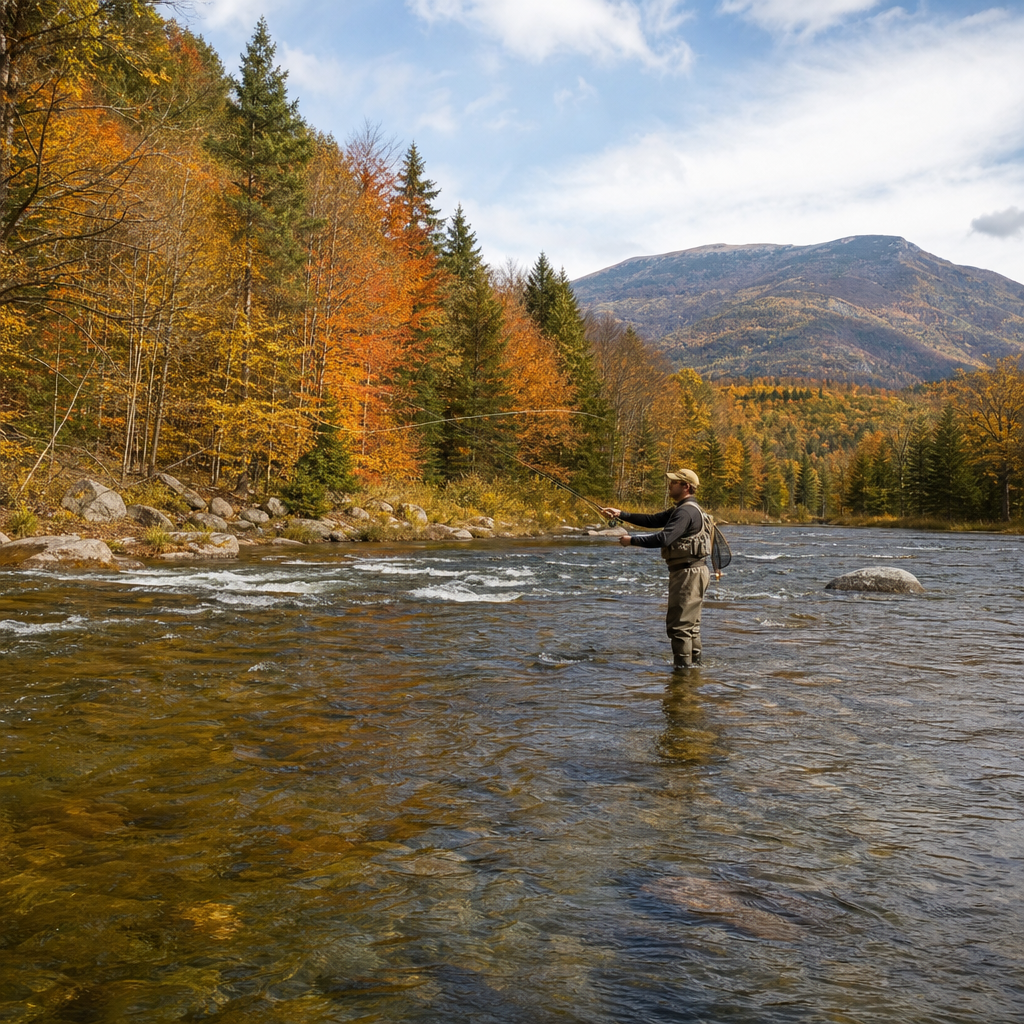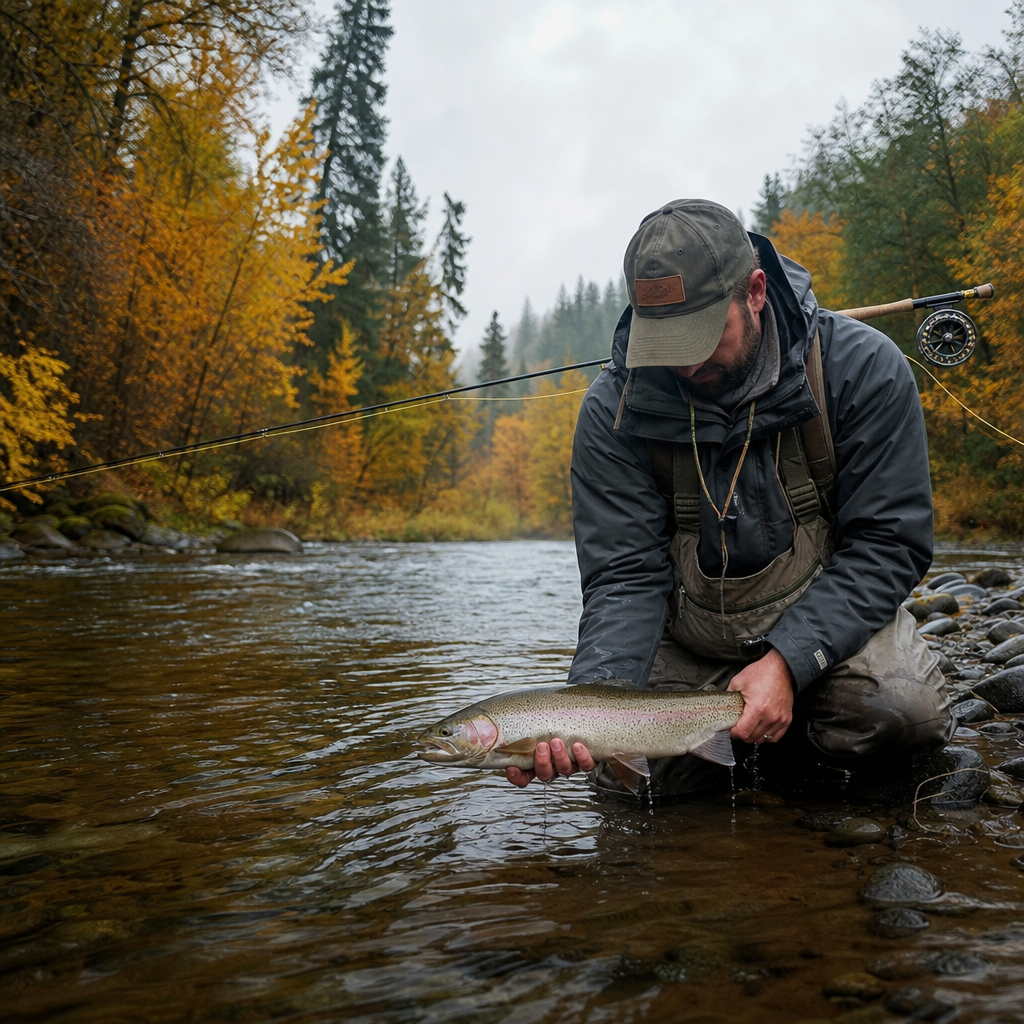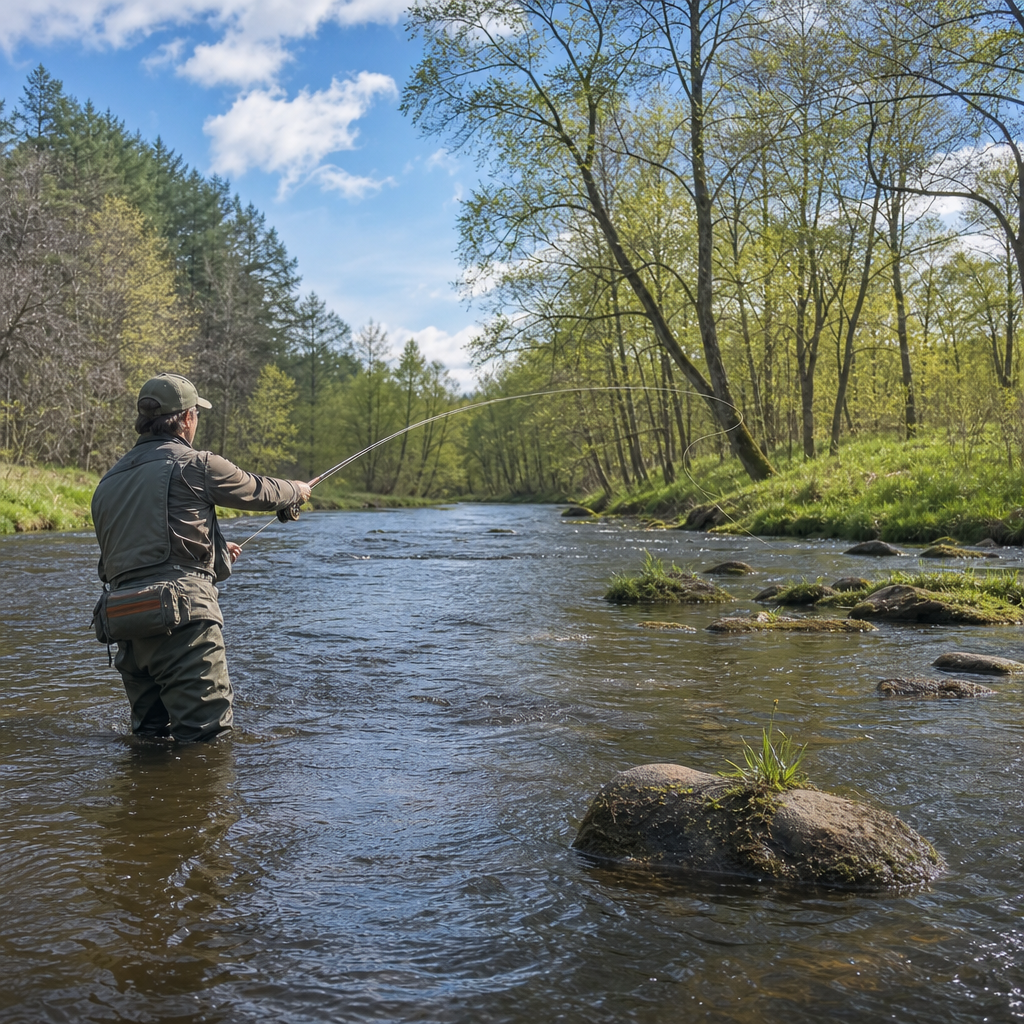
Spring fly fishing in lowland rivers demands a different playbook than summer dry-fly days or winter nymphing, because water temperature, flow, insect activity, and fish positioning all change quickly as days lengthen. In practical terms, spring usually means rising but unstable temperatures, periodic rain events, stained water, and trout, grayling, chub, or other river fish feeding in short windows that can be highly productive if you match tactics to conditions. Lowland rivers are the broad, lower-gradient systems that meander through valleys and farmland, carrying richer nutrient loads than upland streams and often supporting dense hatches of olives, caddis, midges, and early-season baitfish. That fertility makes them exciting, but it also means spring levels can fluctuate hard, bankside access can be muddy, and fish may shift from margins to seams to deeper glides in a single day.
As a hub topic, spring fly fishing includes three linked questions every angler asks: where are the fish, what are they eating, and which setup gives the cleanest presentation under changing flows. I have fished enough March-through-May sessions on chalk-influenced rivers, slow mixed coarse-and-trout waters, and rain-fed lowland systems to know that the best anglers are rarely the ones carrying the most flies. They are the ones reading temperature, clarity, current speed, and hatch timing with discipline. A successful spring approach blends observation with versatile gear: rods that protect fine tippet but control weighted flies, lines that mend well at range, leaders that turn over in wind, and patterns that cover nymphs, emergers, and streamers without wasted bulk. When those pieces are chosen deliberately, lowland rivers become one of the most rewarding spring fisheries of the year.
How spring conditions change fish behavior in lowland rivers
The first principle of spring fly fishing is that lowland river fish are ruled by temperature and oxygen before they are ruled by angler preference. In many systems, insect life wakes up meaningfully once water temperatures climb into the high single digits Celsius, and feeding intensity improves again as temperatures move through roughly 8 to 12 degrees, though exact thresholds vary by species and river type. After a cold night, fish often hold deep and conserve energy until late morning. After two or three mild days, they may slide into steadier walking-pace runs and soft seams where drifting nymphs are easier to intercept. On bright afternoons, fish may rise in glides for olives or midges, while after rain they may pin baitfish against crease lines and attack streamers. These are not random mood swings; they are predictable responses to current, visibility, and caloric opportunity.
River level matters just as much. In a classic spring spate, extra flow pushes fish out of the heaviest current and into softer edges, inside bends, side channels, bridge slacks, and the downstream cushions behind weed beds or fallen timber. In clearer, steadier conditions, they spread back through riffles and transitional runs. Many anglers fish the obvious main current and miss the best water by a rod length. On lowland rivers especially, spring fish often sit where two current speeds meet, because those seams deliver food while reducing effort. If the river carries color, fish generally feed with more confidence and may move surprisingly shallow. If it drops fast and turns clear, they become selective, and longer leaders, finer tippet, and smaller patterns suddenly matter. Reading those shifts correctly is the foundation of every other decision.
Where to find fish from March through late spring
Early spring fish location is more consistent than many anglers assume. Start with wintering water adjacent to feeding water: deeper bends near riffle tails, slow pools with an incoming current tongue, and sheltered slots near structure. These places let fish hold safely while still seeing food. As the season progresses, focus on transitional water rather than extremes. A lowland river trout or grayling in April is often not in the fastest broken riffle and not in the dead pool either; it is in knee-to-waist-deep current with a defined seam, gravel underfoot, and enough pace to funnel nymphs. Chub and other opportunistic species may hold tighter to undercut banks, reed lines, and submerged roots, especially when the river colors up after rain.
By late spring, hatches can pull fish onto shallower flats and gentle glides, particularly in the last two hours of light and during warm, overcast afternoons. I treat bridges, cattle drink margins, creek mouths, and weed-bed channels as high-value spots because each creates a current break or food trap. Creek mouths are particularly reliable after rain, when a tributary may bring slightly warmer or slightly colored water, plus dislodged insects. On agricultural lowland systems, drainage outfalls and side ditches can also concentrate food, though access and water quality vary. The key is to fish each lie according to its role: probe the depth first with a nymph or streamer, then watch for signs of emergence before switching to an emerger or dry fly. Spring rewards anglers who sequence water methodically rather than committing too early to one style.
Best spring fly fishing techniques for lowland rivers
For most days, nymphing is the highest-percentage spring fly fishing technique because subsurface food dominates before and between hatches. A two-fly setup with a heavier point fly and a lighter dropper covers depth and size efficiently. On moderate flows, I prefer either a tight-line approach at short range or an indicator setup when longer drifts and conflicting currents make strike detection difficult. Tight-line nymphing shines in pocketed runs, crease lines, and near-bank slots because direct contact reveals subtle takes. Indicator nymphing excels across broad lowland glides where mending and drift length matter more than intimate contact. In both styles, depth control is everything. If you are not occasionally ticking bottom in likely holding water, you are usually fishing too high.
Emerger fishing becomes critical once fish start intercepting ascending insects rather than bottom-drifting nymphs. This often happens before obvious rises appear. A lightly weighted or unweighted fly swung at the end of the drift can trigger takes from trout sitting mid-column. During olive or midge activity, a soft-hackle or sparse emerger fished just under the surface can outfish a dry by a wide margin, especially in riffled glides where fish feed confidently but do not fully show. Dry-fly opportunities do occur, and when they do, precise drag-free presentation matters more than fancy patterns. In stained or high spring water, streamers deserve serious attention. Small to medium baitfish imitations stripped across seams, swung through tailouts, or bounced along undercut edges can move the largest fish in the system. If cold rain suppresses hatches, streamers often save the day.
| Condition | Primary Technique | Best Water | Typical Fly Types |
|---|---|---|---|
| Cold, clear morning | Deep nymphing | Runs below pools, softer seams | Pheasant tail, hare’s ear, perdigon |
| Warm overcast afternoon | Emerger or dry-dropper | Glides, riffle tails, foam lines | Soft hackle, olive emerger, klinkhammer |
| Rising stained water | Streamer fishing | Margins, structure, current breaks | Sculpin, zonker, woolly bugger |
| Steady medium flow | Indicator nymphing | Long flats and even-paced runs | Jig nymph, caddis pupa, squirm-style attractor where legal |
Fly patterns that consistently produce in spring
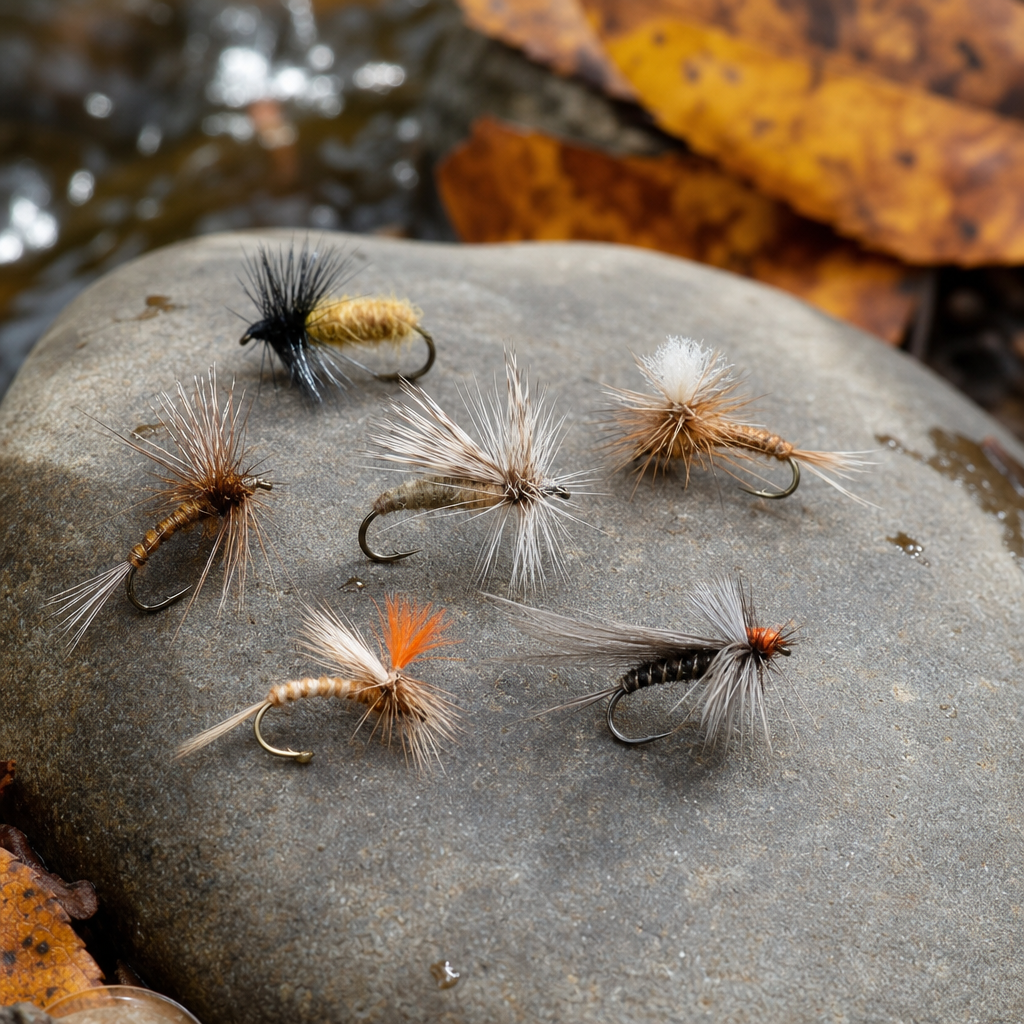
A disciplined spring fly box is built around function, not volume. For nymphs, the essentials are pheasant tail variants, hare’s ear patterns, slim perdigons, caddis pupa imitations, and a few heavier anchor flies on jig hooks with tungsten beads. These cover mayfly nymphs, generalist drift feeders, and fast-sinking search patterns. In richer lowland rivers, caddis can be especially important, so green or tan pupa patterns should not be an afterthought. For emergers, carry olive, midge, and shuttlecock-style patterns with sparse CDC or soft hackle. They represent the vulnerable stage fish often target most aggressively. Dry flies do not need to be complicated: small olives, parachute adams-style patterns, klinkhammers, and CDC duns handle most visible spring surface activity.
Streamer selection should stay compact and practical. In lowland rivers, 4 to 8 centimeter baitfish profiles in olive, black, white, and natural brown cover most situations. Sculpin-shaped flies, zonkers, and lightly weighted woolly bugger variants all work because they suggest movement and vulnerability rather than exact species. Color choice is straightforward: natural tones in clear water, darker silhouettes or brighter contrast in colored water. Hook quality matters in spring because cold-water fish often hit hard in heavy flow, and cheaper hooks can open on larger trout or chub. I also carry a small number of hotspot nymphs for dirty-water prospecting, but only where regulations allow their materials and weight. The point is not pattern obsession. It is carrying proven categories that match spring food forms at the correct depth and speed.
Gear setup: rods, reels, lines, leaders, and clothing
The best spring fly fishing gear for lowland rivers is versatile, not specialized to the point of compromise. If I had to choose one rod for this entire subtopic, it would be a 9-foot 5-weight with a medium-fast action. That length mends line effectively on broad glides, protects 5X or 6X tippet when fish turn selective, and still throws small streamers or indicator rigs without strain. Anglers who lean heavily into tight-line nymphing may prefer a 10-foot 3-weight or 4-weight for reach and contact, but on mixed-method days the 9-foot 5-weight remains the most adaptable option. Reels matter less for drag than balance and reliability, though a smooth drag helps if larger trout, out-of-season stocked fish where legal, or powerful coarse species are present.
For lines, a weight-forward floating line is the standard starting point because spring techniques in lowland rivers mostly rely on mending, controlled drifts, and occasional swing work. Keep the front taper practical rather than hyper-delicate; wind is common in spring, and turnover matters. Add a sinking polyleader or short sink-tip only if streamer work becomes a major part of the day. Leaders should match the tactic: 9 to 12 feet tapered to 4X or 5X for dries and emergers, stronger and shorter for streamers, and either standard tapered leaders or dedicated sighter systems for nymphing. Clothing is not a minor detail. Breathable chest waders with solid layering, a waterproof shell, studded boots where legal, polarized glasses, and a brimmed cap directly affect safety and fish spotting. Spring lowland banks are slick, water is cold, and long productive sessions depend on staying warm, mobile, and dry.
Presentation, timing, and common mistakes
Presentation in spring lowland rivers comes down to three controls: depth, drag, and angle. Newer anglers often change flies too quickly when the real problem is that the drift is too fast or the fly is not in the feeding lane long enough. With nymphs, lead the flies just enough to maintain contact without pulling them off the natural line. With dries and emergers, land the cast with built-in slack when currents vary, then mend early. With streamers, change the retrieve before changing the fly; many takes come on the pause, hang, or swing acceleration rather than on a steady strip. Timing also deserves discipline. In cold snaps, the best window may be noon to four. After a warm rain, the first stable afternoon can be excellent. During major hatches, fish may feed hard for twenty minutes and ignore poor presentation for none of it.
The most common spring mistakes are easy to fix. Fishing too fast is first. Lowland rivers look featureless from a distance, but their productive microstructure is subtle, so give each seam, inside edge, and depth change a complete drift sequence. The second mistake is underestimating water color. Slight stain usually helps the angler more than it hurts, because fish feel secure and move to feed. Third is carrying no plan for transition periods. Hatches often start subsurface, then rise through the column before fish fully commit on top. If you jump straight from nymphs to dries, you can miss the richest stage. Finally, many anglers fail to check tippet after snagging gravel or timber. In spring, one hidden nick can cost the best fish of the day. Good habits beat heroic casting almost every time.
Building a reliable spring strategy for every trip
A repeatable spring approach starts before you leave home. Check river gauges, rainfall totals, and water temperature trends, not just the weather forecast. Environment agencies, local clubs, and hydrometric stations often show whether a river is rising, dropping, or stable, and that trend matters more than the headline level. Stable or slowly dropping water is usually easier than a sharp rise. Once on the bank, spend the first ten minutes watching. Look for drifting shucks, midges in the air, nervous baitfish, and any rise form that suggests emergers rather than duns. Then fish in phases: begin with a searching nymph rig in likely holding water, switch to emergers if fish show mid-column behavior, and only commit to dries when repeated rises confirm surface feeding. If the water colors up or the hatch dies, rotate to streamers around structure and soft edges.
This hub on spring fly fishing in lowland rivers should leave you with a clear framework. Fish the conditions first, not the calendar. Use water temperature, clarity, and flow to predict location and feeding style. Carry a flexible outfit, a focused fly box, and enough leader material to adapt quickly. Most important, treat spring as a season of short feeding windows and moving targets rather than fixed patterns. When you do that, lowland rivers stop feeling inconsistent and start feeling readable. Build your next trip around observation, depth control, and clean presentation, and you will catch more fish with less guesswork. From here, explore related guides on nymphing, hatch matching, and river reading to turn this seasonal overview into a complete system for the months that matter most.
Frequently Asked Questions
What makes spring fly fishing in lowland rivers different from fishing the same rivers in summer or winter?
Spring changes lowland rivers quickly, and that is exactly why tactics that work well in summer or winter often need to be adjusted. In summer, anglers can sometimes rely on more predictable dry-fly periods, clearer water, and fish holding in stable lies. In winter, the approach often narrows toward slower presentations, deeper drifts, and fish conserving energy in cold water. Spring sits between those two worlds. Water temperatures begin to rise, but not in a smooth or reliable way. One mild week can trigger insect activity and more confident feeding, then a cold rain or overnight temperature drop can slow everything again.
Lowland rivers are especially affected because they often respond quickly to rainfall, runoff, and changes in water color. Flows can rise, fine sediment can stain the water, and fish may move from one type of holding water to another in a matter of days or even hours. Trout, grayling, and chub in these rivers often feed in short but intense windows, usually linked to temperature shifts, light levels, and drifting food. That means success in spring often comes from reading conditions well rather than committing to one fixed method all day.
Another major difference is fish positioning. In early spring, fish may still hold relatively deep or near slower seams where they can conserve energy, but as temperatures improve they begin using transitional water more confidently. That includes crease lines, inside bends, tailouts, shallow gravel runs, and areas below weed beds or structure where food collects. The angler who understands that spring is a moving target usually does better than the one who fishes it like a single season with a single pattern.
What fly fishing techniques work best in spring on lowland rivers?
The best spring techniques are usually the ones that let you adapt quickly to changing water levels, visibility, and feeding behavior. In many lowland rivers, nymphing remains the most consistent starting point because fish often feed subsurface before surface activity becomes reliable. Light to medium-weight nymph rigs, whether fished under an indicator or on a tight-line setup, are effective for covering deeper slots, walking-speed runs, and seams where fish intercept drifting food. Patterns that suggest general spring food sources such as caddis larvae, small mayfly nymphs, shrimp-like bugs, and attractor nymphs are often dependable when there is no obvious hatch.
As temperatures climb through the day, it pays to watch for signs of changing behavior. A brief hatch of olives, midges, or caddis can pull fish higher in the water column, and this is where soft hackles, emergers, and lightly weighted wet flies become very effective. Swinging or greasing a soft hackle through a riffled glide can be particularly good in spring because fish are often willing to chase just a little more than they were in winter, but may still not commit confidently to a fully dead-drifted dry fly.
Streamer fishing also has a place, especially after rain events or in slightly stained water. In low visibility, fish frequently key in on movement and silhouette more than fine detail. A compact streamer stripped slowly across current seams, under cut banks, or along deeper bends can trigger aggressive takes from larger trout, chub, or opportunistic fish that are taking advantage of increased food movement. The key is not to fish too fast in cold conditions. Even when the water looks lively, fish metabolism may still lag behind.
Dry-fly fishing can absolutely happen in spring, but it is often a targeted opportunity rather than an all-day plan. When fish rise consistently, match the size and profile of what is on the water rather than assuming a broad summer-style hatch. In spring, careful observation matters. If you stay flexible and move logically from nymphs to wets to dries based on what the river is telling you, you give yourself the best chance of catching throughout the day.
What gear should I bring for spring fly fishing in lowland rivers?
Spring gear should be chosen for versatility first. On most lowland rivers, a 9-foot rod in the 4- or 5-weight range is an excellent general tool because it handles indicator nymphing, light streamer work, wet flies, and occasional dry-fly fishing without feeling overly specialized. If the river is broad, windy, or prone to higher flows, many anglers prefer a 5-weight for better line control and turnover. A smooth drag reel is useful, especially if you may encounter stronger trout or chub in fuller flows, but the rod and line setup matter more than the reel in most situations.
Floating lines cover the majority of spring scenarios, but leader selection deserves more attention than many anglers give it. Carry a range of tippet sizes because water clarity can change from session to session. In clear conditions, longer leaders and finer tippets help with natural presentation, especially for emergers and dries. In stained or pushy water, shorter and slightly stronger leaders are often more practical for turning over nymph rigs or small streamers and controlling fish around structure. Fluorocarbon is commonly favored for subsurface work because of its abrasion resistance and sinking properties, while nylon remains a strong option for dry flies and delicate presentations.
Fly selection should cover three zones: bottom, middle, and surface. For the bottom, bring a mix of slim nymphs, heavier anchor flies, and mobile patterns in natural spring tones such as olive, brown, black, and hare-like blends. For the middle, carry soft hackles, emergers, and wet flies that imitate ascending insects or drifting invertebrates. For the surface, include small to medium olives, caddis, midge patterns, and a few general-purpose parachutes or comparaduns. If the river often colors up, add a small selection of darker or more visible flies and compact streamers that create a clearer silhouette.
Clothing and accessories matter more in spring than many anglers expect. Breathable waders, layered insulation, a waterproof shell, and good traction are essential because conditions can swing from warm sunshine to cold wind and rain in the same outing. Polarized glasses help detect subtle structure and fish movement in variable light. A thermometer is one of the most underrated tools in spring because it helps you track when water temperature begins to push fish into more active feeding. Add forceps, floatant, split shot, indicators, and a net suited to catch-and-release, and you will be equipped for the wide range of situations spring lowland rivers can present.
How do I find where fish are holding in a lowland river during spring?
In spring, fish rarely hold everywhere equally, so locating productive water is one of the most important skills you can develop. Start by thinking in terms of energy and food. Fish want current that delivers drifting insects, worms, larvae, and other natural food items, but they do not want to burn unnecessary energy fighting heavy flow all day. That puts many spring fish in transitional lies rather than in the fastest water or the deadest slack. Look for seams where slower and faster currents meet, the inside edge of runs, the heads and tails of pools, areas below riffles, and softer pockets near structure.
On lowland rivers, changes in height and color often reposition fish. When water rises and stains slightly, fish commonly move closer to the bank, into softer margins, behind obstructions, or onto gravelly shallows that suddenly feel safe enough for feeding. In clear, lower spring water, they may hold a bit deeper, especially early in the day, and become more active in shallower water only once light and temperature improve. Weed growth, bridge pilings, undercut banks, overhanging cover, and bends that create current breaks can all concentrate fish because they combine shelter with access to food.
It also helps to track fish movement through the day rather than treating a river beat as static. Morning fish may sit deep and feed sporadically. By late morning or early afternoon, a one- or two-degree temperature increase can shift them into more open lies or trigger short feeding spells. Watch for subtle clues such as a single rise, a flash below the surface, drifting shucks, birds working over the water, or insects lifting off quieter glides. These signs often tell you that fish are changing level or confidence.
If you are new to a particular lowland river, fish methodically rather than randomly. Cover likely lies at different depths, then adjust based on any contact, follows, or visible activity. The angler who builds a picture of current speed, depth, cover, and food movement will consistently find more fish than the one who simply targets the most scenic water.
How should I adjust my approach when spring rain makes a lowland river higher or more stained?
Higher or slightly colored water is not automatically bad for spring fly fishing. In fact, some of the best fishing of the season happens when a lowland river has just enough extra flow and color to give fish confidence without becoming unfishable. The first adjustment is to stop fishing the river as though it were still in low, clear conditions. Fish often shift toward banks, slacker channels, inside bends, flood-softened edges, and any area where they can feed without sitting in the heaviest current. Many anglers continue casting into the main push and miss where the fish have actually moved.
Presentation also needs