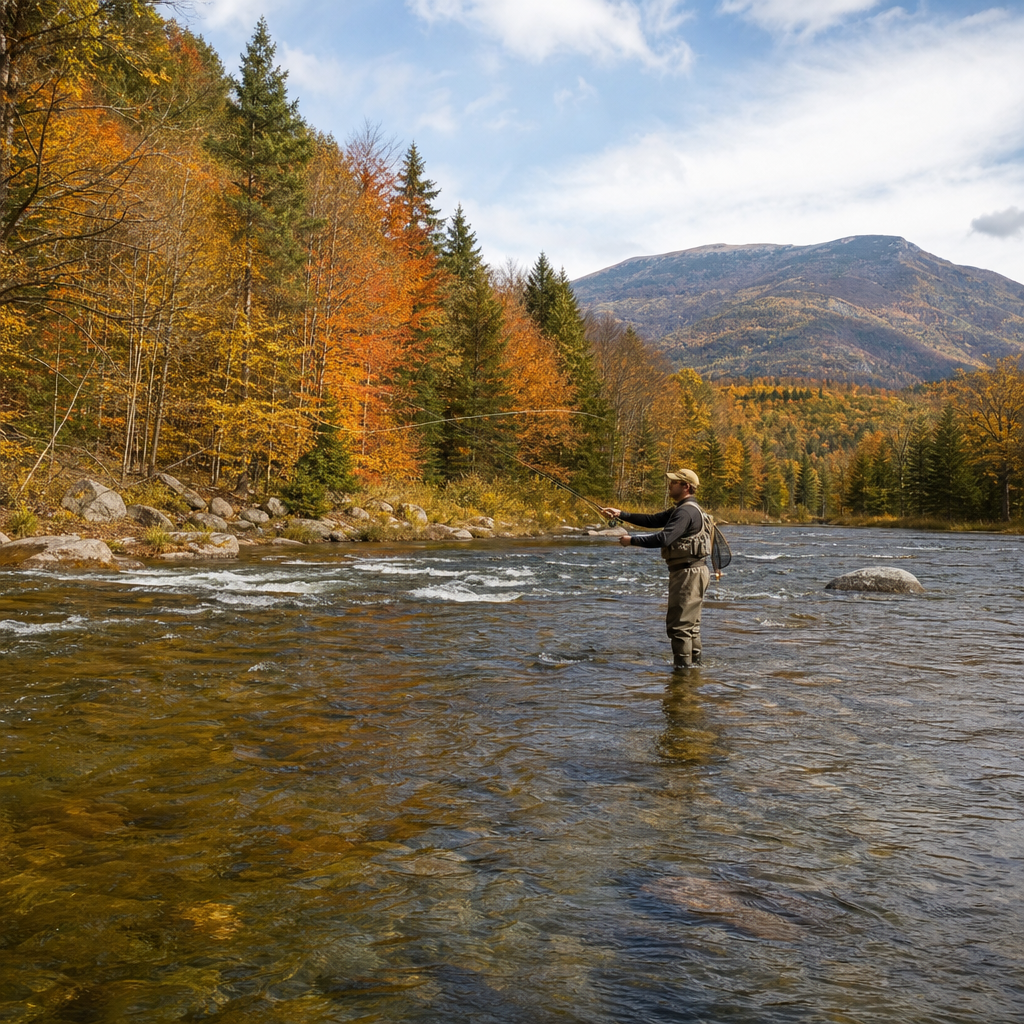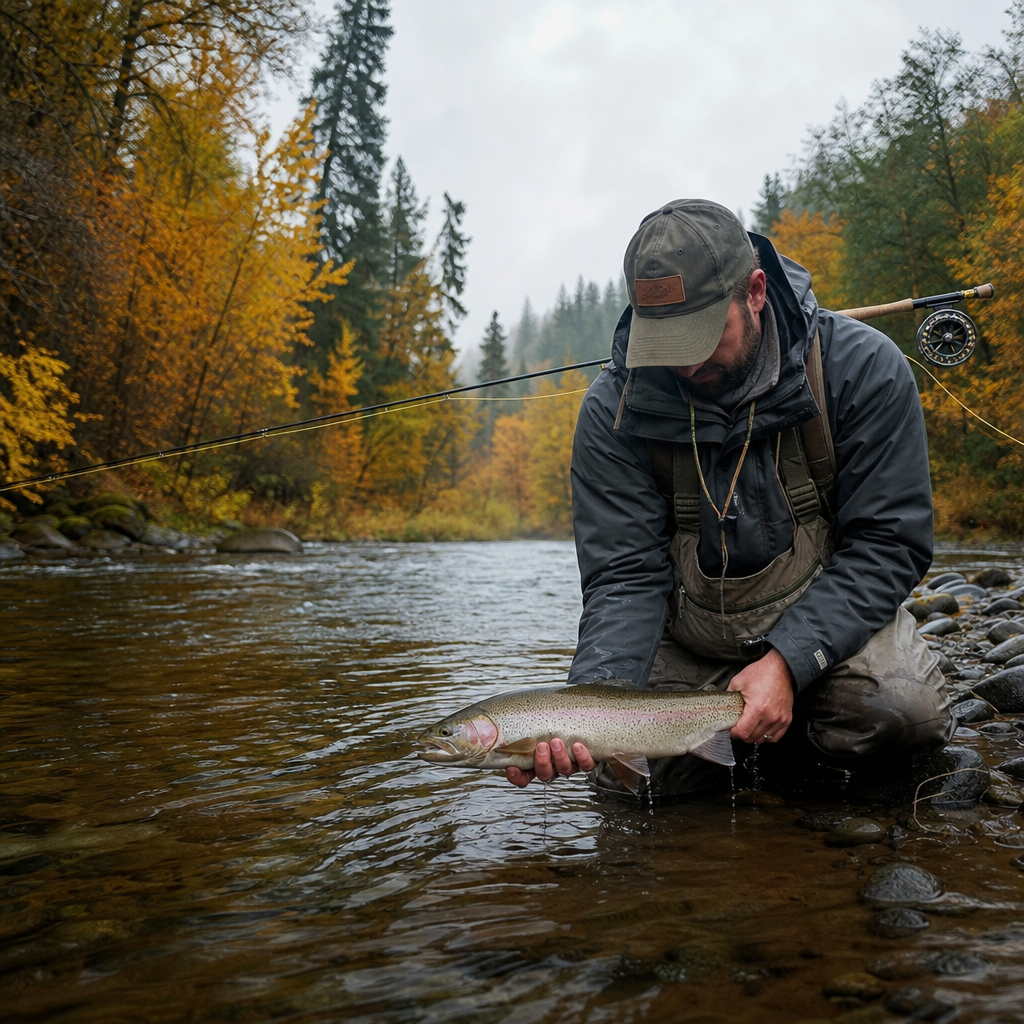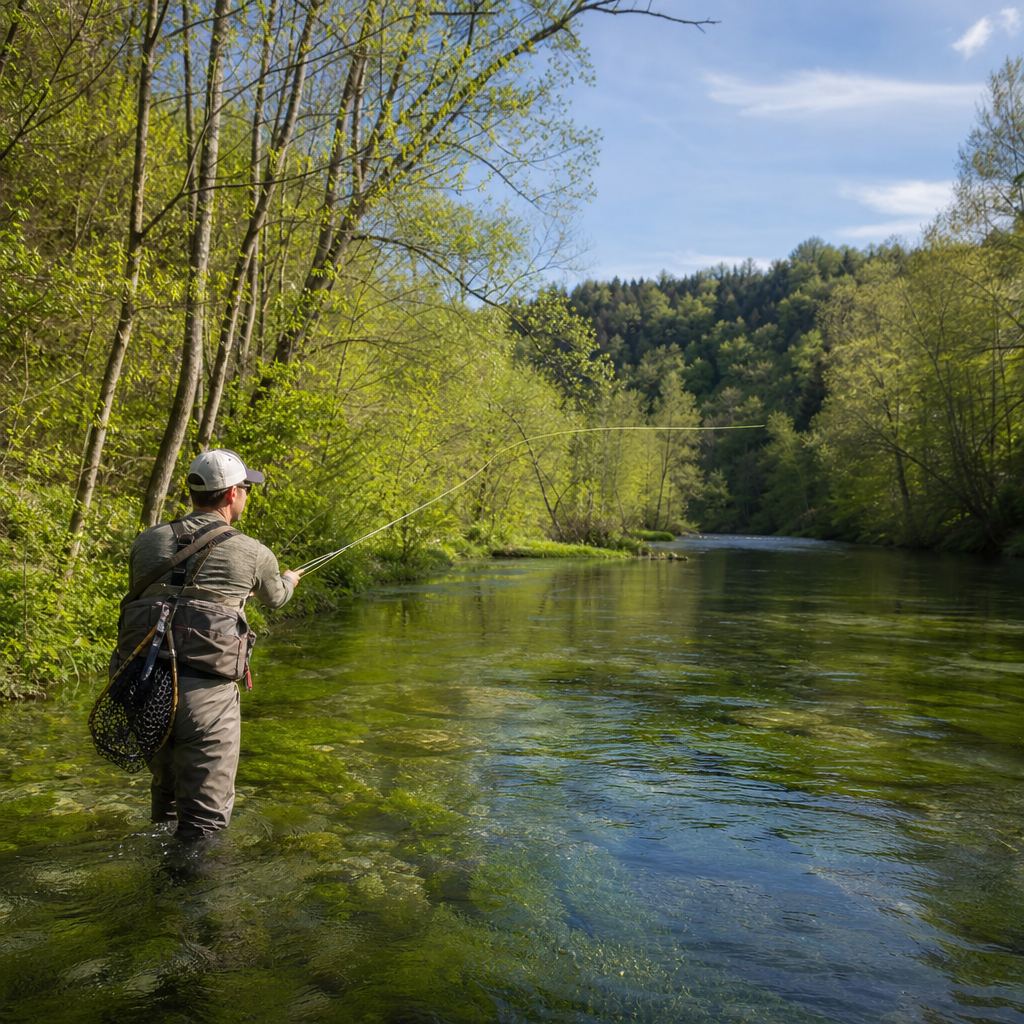
Spring fly fishing in spring creeks demands precision, patience, and a clear understanding of how stable water, prolific insect life, and wary trout intersect during one of the most technical seasons in freshwater angling. A spring creek is typically groundwater-fed, which means flows and temperatures remain far more consistent than freestone rivers driven by snowmelt or storms. That consistency creates fertile habitat for aquatic vegetation, scuds, sowbugs, midges, mayflies, and caddis, and it also creates trout that feed selectively because food is available almost every day. In spring, those trout emerge from winter with rising metabolism, longer feeding windows, and increasing insect activity overhead and subsurface.
When anglers talk about spring fly fishing, they often mean two related challenges: matching changing seasonal hatches and presenting flies cleanly to fish that have seen everything. On spring creeks, both challenges are amplified. Water is usually clear, current seams are subtle, and trout hold in predictable lanes where they inspect a fly for a long time. I have found that success rarely comes from covering water quickly. It comes from slowing down, reading one feeding fish carefully, and choosing tactics that fit the exact phase of the hatch, the light level, and the speed of the current.
This matters because spring creeks can humble even experienced anglers. The same conditions that make them beautiful also expose poor drifts, heavy footfalls, and lazy rigging. Yet they are also some of the most rewarding fisheries in spring because they stay fishable when runoff muddies nearby rivers, and because they offer dependable opportunities for nymphing, dry fly fishing, and emerger presentations within the same outing. As a hub for spring fly fishing, this guide explains the water, hatches, gear, rigs, approach, and common mistakes that determine whether a day on a spring creek becomes a lesson or a breakthrough.
What makes spring creeks different in spring
Spring creeks behave differently from freestones because their water source is groundwater, not direct surface runoff. Groundwater enters at a relatively stable temperature, often keeping winter water warmer and summer water cooler than surrounding rivers. In spring, that stability smooths out temperature swings and supports early and extended insect activity. Trout do not need to move as far to find comfortable water, so they establish feeding lies near weed beds, undercut banks, gravel shelves, and gentle seams where food drifts consistently.
The practical result is that fish on spring creeks become highly efficient feeders. They often key on one food form at a time: midge pupae in the film, blue-winged olive emergers in cloudy weather, or scuds dislodged from vegetation. Unlike fish in fast pocket water, they are not forced to make split-second decisions. If your fly drags, rides too high, or sits one inch outside the feeding lane, refusal rates climb immediately. That is why spring fly fishing on these waters is less about aggressive searching and more about accurate observation, exact fly choice, and drift control.
Access and etiquette also matter more. Many classic spring creeks flow through pasture, private ranchland, or conservation easements with limited public entry. Banks are soft, vegetation is fragile, and fish are easily put down by repeated casting. Staying low, avoiding skyline exposure, and planning each approach before stepping into the water preserve both the fishery and your odds of success. In my experience, the angler who waits two extra minutes before the first cast usually catches more trout than the angler who rushes in.
Reading seasonal trout behavior and prime holding water
Spring trout behavior changes with water temperature, insect availability, and spawning recovery. Brown trout and brook trout are typically past fall spawning stress, while rainbows may be approaching or completing spring spawning depending on latitude and regulation. In practical terms, feeding activity usually improves when water temperatures move through the upper 40s into the low 50s Fahrenheit. Midday often outperforms dawn early in the season because insect emergence and trout metabolism rise with the sun, especially after cold nights.
On spring creeks, prime holding water is rarely dramatic. Look for gentle current tongues feeding into weed edges, foam lines beside undercut banks, tailouts with concentrated midge shucks, and slicks below shallow riffles where emergers collect. Gravelly flats can produce excellent dry fly windows during blue-winged olive hatches, while deeper bends with aquatic vegetation are reliable nymphing zones for scuds, sowbugs, and cress bug patterns. During windy afternoons, terrestrials can occasionally matter even in spring, especially where adjacent grassland or brush contributes beetles and small ants.
Fish position also shifts by light level. Under bright sun, larger trout commonly slide tight to weed shadows, undercut banks, and darker bottom structure where they feel secure. Under cloud cover, they may feed more openly in flats and slicks. I watch for rhythm first: a snout breaking every ten seconds suggests deliberate surface feeding, while a flash below the film often points to emergers. If you identify not just where a trout is holding, but what level of the water column it is using, fly selection becomes much simpler.
Core gear for spring fly fishing on spring creeks
A balanced spring creek outfit favors finesse over raw power. For most situations, a 4-weight or 5-weight rod from 8 feet 6 inches to 9 feet offers enough delicacy for small dries and enough control for light nymph rigs. A true-to-line floating line is standard because most presentations occur in shallow to moderate depth, and line control on the surface is critical. Leaders matter enormously. I commonly carry 9-foot, 12-foot, and 15-foot leaders, then adjust tippet based on water clarity, fly size, and fish behavior.
Tippet diameters should be chosen deliberately. For size 18 to 24 midges or blue-winged olives in flat water, 6X is often appropriate, and 7X can be necessary for the most selective fish. For scuds, sowbugs, and small beadless nymphs under an indicator or dry-dropper, 5X to 6X is usually a better balance of turnover and stealth. Fluorocarbon helps subsurface because it sinks faster and resists abrasion; nylon remains excellent for dry flies because it floats better and lands softer. Degreasant, floatant, amadou or desiccant, and split shot in micro sizes should live in every spring creek vest or pack.
| Situation | Recommended setup | Why it works |
|---|---|---|
| Selective surface feeding on midges | 4-weight, 12-15 foot leader, 6X-7X, tiny dry or emerger | Long leader and fine tippet reduce drag and improve natural drift |
| Blue-winged olive hatch in moderate current | 4- or 5-weight, 10-12 foot leader, 5X-6X, dry plus emerger option | Allows quick adjustment between dun and emerger stages |
| Subsurface scud or sowbug fishing | 5-weight, floating line, 9-12 foot leader, 5X-6X fluorocarbon | Improves sink rate and maintains control around weed beds |
| Windy afternoon prospecting | 5-weight, 9-foot leader, 4X-5X, small attractor dry or dry-dropper | Turns over more reliably while staying subtle enough for clear water |
Matching spring creek hatches and food sources
The most important spring creek food sources in spring are usually midges, blue-winged olives, scuds, sowbugs, caddis, and, in some systems, pale morning duns later in the season. Midges hatch in cold weather and remain relevant all day. Blue-winged olives often emerge during overcast, damp, or lightly rainy conditions, making ugly weather a genuine advantage. Scuds and sowbugs are available year-round and become especially important where dense weed growth shelters abundant crustaceans. If a trout refuses your dry repeatedly, there is a good chance it is taking emergers or subsurface invertebrates instead.
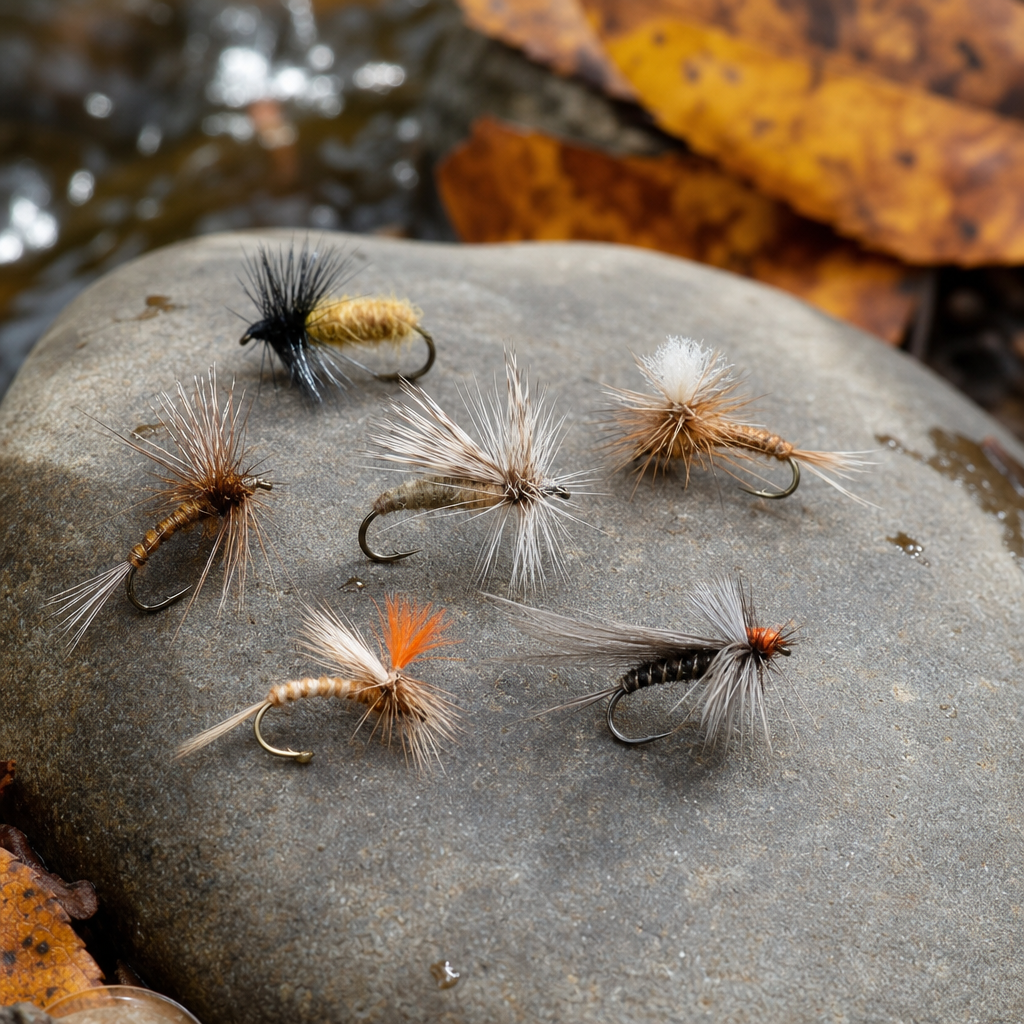
Pattern names matter less than profile, size, and stage, but proven standards consistently earn their place. Zebra Midges, WD-40s, RS2s, pheasant tail nymphs, unweighted soft hackles, scud patterns in gray, tan, or olive, and sparse blue-winged olive dries all belong in a spring fly fishing box. For technical fish, flashy materials can hurt more than help. Slim bodies, modest hackle, and realistic silhouettes outperform bulky ties. A CDC emerger can be deadly in flat water because it sits low in the film, while a simple parachute pattern is easier to track in riffled current.
Matching the life stage is often the deciding factor. During a hatch, trout frequently prefer emergers because insects are trapped and vulnerable in the surface film. Anglers who insist on fishing only duns over rising fish miss that nuance. I carry both high-floating and low-riding versions of the same hatch. When I see noses but not full head-and-tail rises, I start with an emerger or cripple. When fish are confidently taking adults and drifting farther between rises, a standard dry usually becomes the better tool.
Presentation tactics that fool selective trout
Presentation is the central skill in spring fly fishing on spring creeks. A perfect pattern with drag will fail; an acceptable pattern with a perfect drift often succeeds. Start by positioning yourself for the longest drag-free drift, not the easiest cast. That may mean kneeling thirty feet farther back, casting from downstream, or using a reach cast, pile cast, or aerial mend before the line lands. The goal is to separate leader and fly from conflicting currents so the fly travels at the exact speed of natural food.
For rising trout, cast less than most anglers think. Watch three or four feeding cycles, identify the trout’s lane, then place the fly slightly above the target so it arrives first without the leader crossing overhead. On flat water, slack is essential but must be controlled. Too little slack creates drag; too much prevents a clean hook set. I aim for just enough S-curve in the leader butt to buy one or two extra seconds of natural drift. With tiny flies, hook sets should be firm but short, driven by lifting from the rod hand rather than stripping hard with the line hand.
Subsurface presentations need the same precision. If trout are feeding below weed beds, set depth so the fly rides just above the vegetation, not buried in it. Tight-line methods can work in confined lanes, but classic indicator nymphing with very small indicators or dry-dropper rigs often gives better drift on smooth currents. Soft hackles swung at the end of the drift can be excellent during caddis or olive emergences, but the swing should be intentional, not accidental. On spring creeks, trout teach harshly; every refusal contains useful information if you pay attention.
Common mistakes, seasonal adjustments, and a practical plan
The biggest spring creek mistakes are approaching too closely, using leaders that are too short, ignoring subsurface food, and changing flies before fixing drag. Another common error is fishing the clock instead of the conditions. Early spring mornings can be slow, while a cloudy afternoon with water touching 50 degrees may bring the best hatch of the week. Wind can hurt visibility, but it can also break up the surface and make trout less cautious. Bright sun may reduce surface feeding, yet it often improves sighting of weed lines and cruising fish.
Seasonal adjustments should follow the progression of spring. In the cold early phase, focus on midges, scuds, and slow nymphing in softer water during the warmest part of the day. As insect activity builds, carry more olive and emerger patterns and watch for concentrated feeding windows from late morning through afternoon. Later in spring, as weeds thicken and hatches diversify, dry-dropper rigs, caddis emergers, and slightly larger mayfly imitations become more important. If nearby freestones are blown out by runoff, spring creeks often remain your best option for clear water and technical but consistent trout fishing.
A practical plan is simple. Start from the bank and observe for five minutes. Take water temperature. Check for shucks, adults, and subsurface drift in the shallows. Choose one target fish or one high-probability lane. Begin with the food source most available, not the fly you want to fish. Adjust only one variable at a time: first angle, then depth, then pattern. That discipline is how anglers improve on difficult water. If you want to catch more trout this season, make spring creeks part of your spring fly fishing rotation and practice the quiet, exact habits that these remarkable fisheries demand.
Frequently Asked Questions
What makes spring creeks different from other trout waters in spring?
Spring creeks are shaped by groundwater, and that changes nearly everything about how they fish in spring. Unlike freestone rivers that rise and fall with snowmelt, rain, and daily temperature swings, spring creeks usually maintain steady flows and relatively stable water temperatures. That consistency supports abundant aquatic vegetation and a dense food web made up of midges, mayflies, caddis, scuds, sowbugs, and other small invertebrates. As a result, trout in spring creeks often feed regularly and have access to food all year, which makes them healthy, selective, and far less impulsive than fish in rougher or less fertile systems.
In practical terms, anglers face a more technical game. Clear water, gentle currents, and flat slicks expose poor presentations immediately. Trout have more time to inspect a fly, and they often hold in subtle lies near weed beds, undercut banks, seams, and soft depressions rather than in obvious pocket water. During spring, hatches can be excellent, but success usually depends on matching the size, profile, and behavior of the available food as much as matching the species itself. The angler who approaches a spring creek with careful observation, long leaders, accurate casting, and a willingness to make fine adjustments will usually outperform the one who relies on aggressive coverage and quick prospecting.
What flies work best for spring fly fishing on spring creeks?
The best fly selection for spring creeks starts with realism and versatility. Because these waters are fertile and stable, trout commonly key on small, abundant food sources rather than large opportunistic meals. That means dependable spring creek boxes usually include midge larvae and pupae, zebra midges, scud patterns, sowbugs, small pheasant tails, RS2-style emergers, baetis nymphs, caddis pupae, and sparse mayfly imitations in modest sizes. On the dry-fly side, parachute patterns, CDC emergers, midge clusters, spent-wing mayflies, and low-riding dun imitations often produce far better than heavily hackled or overly buoyant patterns that sit unnaturally high on calm water.
Equally important is understanding what stage of the insect the trout are eating. In spring, fish on spring creeks frequently feed just below the surface on emergers rather than fully formed adults. If trout are rising but refusing your dry fly, they may be taking ascending nymphs, crippled insects, or tiny midge pupae in the film. A two-fly setup with a dry and a trailing emerger can be especially effective when fish are feeding subtly. Color and flash should also be used carefully. Natural olives, tans, creams, grays, and browns usually outperform bright or gaudy choices in clear, heavily fished creeks. The most productive approach is to observe first, then narrow your selection to the insects present, the stage the trout are targeting, and the drift lane where the feeding is actually happening.
How should I approach spooky trout in clear spring creek water?
Approaching spring creek trout requires stealth before skill. In clear, shallow, slow-moving water, fish often detect movement on the bank, sloppy wading, false casting overhead, and even leader splash well before the fly reaches them. The best approach is usually slow, low, and deliberate. Stay off the skyline, wear muted clothing, kneel or crouch when necessary, and use streamside vegetation or bank contours for cover. If wading is required, move sparingly and enter the water well below the target area. Often, the smartest move is to fish from the bank or from downstream rather than pushing into the fish’s window of awareness.
Once you are in position, presentation becomes everything. Long leaders, fine tippet, and minimal false casts help prevent lining fish and reduce disturbance. Focus on getting a natural drift through the feeding lane rather than simply putting the fly near the trout. On spring creeks, a fish may ignore a fly that drags just slightly or lands a foot off its rhythm line. It often helps to target the nearest fish first and work upstream carefully so you do not disturb the water ahead. If a trout refuses multiple good drifts, avoid repeatedly casting over it. Change angle, lengthen the tippet, switch fly size or stage, or rest the fish briefly. Experienced spring creek anglers know that restraint and adjustment catch more trout than force.
What are the most important casting and presentation techniques for spring creek fishing in spring?
The most important technique is achieving a drag-free drift in complex but subtle currents. Spring creeks may look simple because the surface is smooth, but underneath that calm appearance are conflicting micro-currents created by weed beds, narrow channels, undercut banks, and slight depth changes. A straight upstream cast is not always enough. Reach casts, pile casts, slack-line presentations, and aerial mends can buy critical extra seconds of natural drift before the fly starts to skate or pull unnaturally. In many situations, a downstream or down-and-across presentation to a rising trout is more effective because it keeps the leader away from the fish and allows the fly to arrive first.
Accuracy also matters more than distance in most spring creek conditions. Trout often feed in tight lanes only inches wide, and placing the fly just outside that lane can lead to repeated refusals. Keep your casting compact and efficient, and choose a rod and line setup that helps with fine control rather than brute power. For nymphing, light indicators or tight-line adaptations can work, but many spring creek anglers prefer subtle rigs with minimal splash and just enough weight to stay in the zone without hanging in vegetation. For dry flies and emergers, gentle landings are crucial. A perfect imitation delivered with a hard landing can fail instantly. When the fish are highly selective, the winning presentation is usually the quietest, cleanest, and most natural one you can make.
When is the best time of day to fish a spring creek in spring, and what conditions should I watch for?
The best time of day depends on water temperature, insect activity, and how the trout are feeding, but mid-morning through afternoon is often prime in spring. Because spring creeks maintain steady temperatures, they can offer more consistent fishing windows than many freestone rivers, especially during early-season cold snaps. Midges may hatch early, blue-winged olives often become important on overcast or damp days, and caddis or mayfly activity can build as light and temperatures improve. Rather than focusing only on the clock, watch for signs of life: shucks on the surface, insects gathering in the air, bulging rises, swirls near weed edges, or trout shifting from bottom-oriented feeding to surface or near-surface behavior.
Weather and light levels are especially important on technical water. Bright sun can make fish more cautious in shallow, clear sections, while cloud cover often extends hatch activity and gives anglers a better chance with dries and emergers. Wind can help break up the surface and reduce visibility for trout, but it can also complicate delicate presentations. Stable conditions generally favor predictable feeding, which is one reason spring creeks can be so rewarding for observant anglers. If no obvious hatch is happening, do not assume the fish are inactive. They may be feeding subsurface on scuds, sowbugs, or tiny nymphs all day. The anglers who succeed most consistently are the ones who read the creek continuously, adjust their flies and tactics to what the trout are actually doing, and treat each rise form or refusal as useful information rather than random chance.