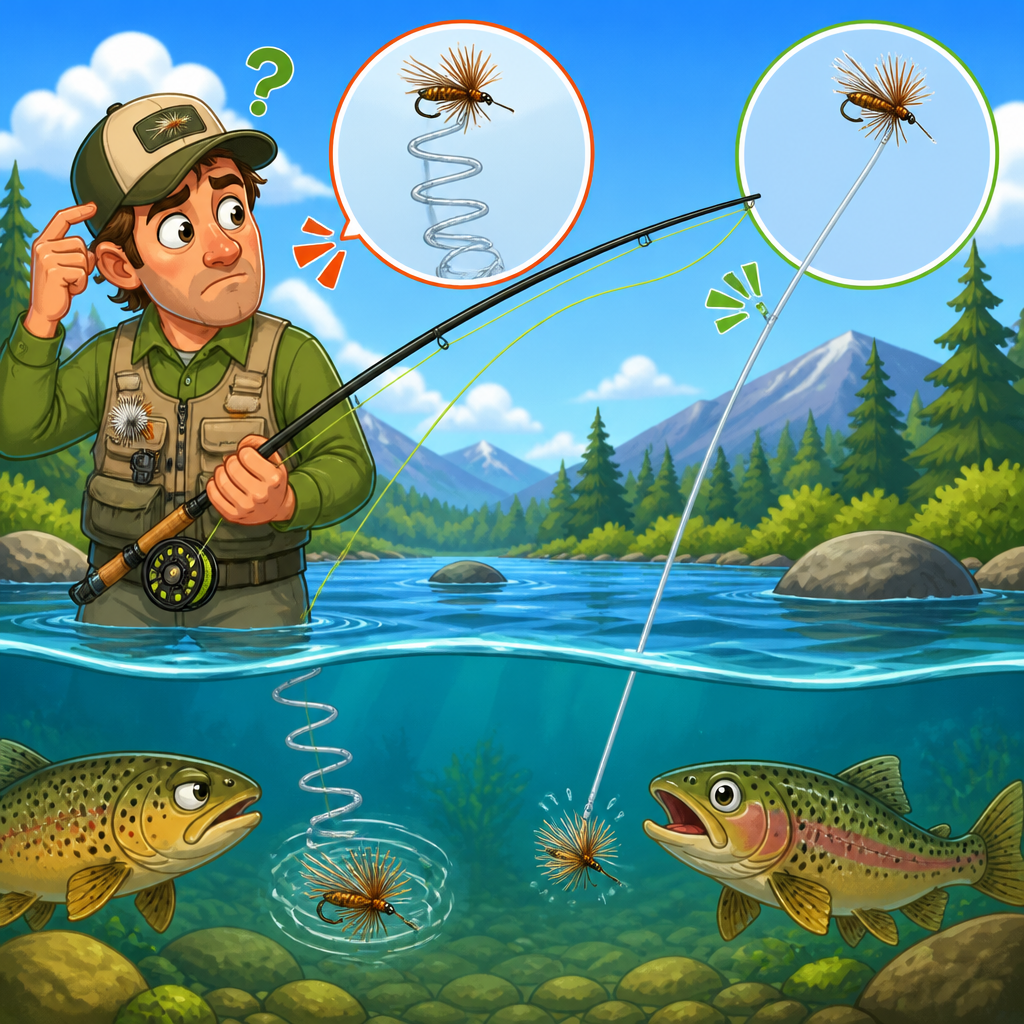
Nothing ruins a clean presentation faster than a fly leader that coils, kinks, and spins like a phone cord, and leader twist is one of the most common gear problems in fly fishing basics. A fly leader is the tapered section connecting your fly line to the tippet and fly, designed to transfer casting energy smoothly and turn over the fly with control. When that system starts twisting, the result is drag, poor turnover, wind knots, and frustrated casts. I have spent enough days on trout streams, salt flats, and warmwater rivers sorting out twisted leaders to know the problem is rarely random. It usually traces back to gear setup, casting mechanics, the fly itself, or the way line is stored and handled. Understanding those causes matters because the leader is the final delivery system in your entire rig. Even an excellent rod, premium reel, and expensive line cannot compensate for a twisted leader that destroys accuracy and drift. This article explains why your fly leader keeps twisting, how to diagnose the exact source, and which gear and equipment choices prevent the issue in the first place.
Because this page serves as a hub for gear and equipment within fly fishing basics, it also connects leader twist to the larger system around it: rod action, fly line design, tippet materials, knots, swivels, reels, storage tools, and maintenance habits. In practical terms, gear and equipment are not separate from technique. They shape how energy moves from your casting stroke into the line, through the leader butt, down the taper, and finally into the fly. If any part of that chain is mismatched, damaged, or poorly maintained, twist appears as a symptom. The fix is not always replacing the leader. Sometimes the real answer is changing fly size, correcting an unbalanced rig, cleaning line memory from the reel, or improving line management between trips. By the end, you should be able to inspect your setup, identify the true cause, and choose a durable fix instead of repeatedly cutting off knots and hoping the problem disappears.
What Causes a Fly Leader to Twist in the First Place
A fly leader twists when rotational energy builds in the terminal system faster than it can dissipate. In plain terms, something in the cast, drift, retrieve, or storage process is causing the fly and leader to spin around their axis. The most frequent culprit is an air-resistant fly. Deer hair bass bugs, heavily hackled dry flies, unweighted streamers, and foam hoppers can all act like little propellers if they are not aligned correctly in flight. If the fly rotates, the tippet twists first, then the twist moves up the taper. I see this often when anglers throw a bulky fly on a leader that is too light or too long for the pattern. The leader cannot fully turn over the fly, so the fly helicopter-spins and wraps energy back into the system.
Casting mechanics matter just as much. Tailing loops, overpowering the forward stroke, and drifting too far off plane can create line paths that force the leader into a spiral. A wide, open loop is not always elegant, but a crossed or collapsing loop is much more likely to twist the terminal tackle. Another common source is repetitive false casting with a fly that already wants to spin. Each false cast compounds the problem. Retrieve style can also be responsible. Fast strip retrieves with flies that track off-center, especially articulated streamers or poppers with uneven heads, create torque every time they move through current. If your leader looks fine during casting but curls after several strips, inspect the fly before blaming the leader material.
Storage and memory issues are the quieter causes. Nylon and fluorocarbon both retain coil memory, particularly after sitting on a spool in heat or cold. Memory is not the same as twist, but on the water it behaves similarly and often masks the underlying issue. A coiled butt section can make turnover inconsistent, while coiled tippet exaggerates any spin introduced by the fly. Leaders pulled straight from a package, tippet peeled from a small spool, or line left wet on a reel for weeks all deserve suspicion. In many cases, anglers replace a leader that is not actually damaged when a simple stretch and inspection would have solved the problem.
How Gear Mismatch Creates Twist
Leader twist often begins with mismatched equipment, which is why any useful discussion belongs inside a broader gear and equipment guide. The rod, fly line, leader, tippet, and fly must work as a transfer system. If you fish a fast 6-weight rod with a half-size-heavy weight-forward line and then attach a 12-foot 5X leader to throw a size 2 weighted streamer, something has to give. Usually the cast dumps, the fly kicks, and the tippet twists. In contrast, a 7.5-foot stout leader with an appropriate butt diameter would absorb and transfer energy more cleanly.
Leader design matters more than brand marketing suggests. A standard tapered trout leader is built to present smaller dry flies and nymph rigs delicately. It is not the best tool for wind-resistant foam terrestrials, split shot, or bulky indicator rigs. For those applications, a shorter leader or a hand-tied formula with a stronger butt and midsection is more stable. Saltwater leaders use stiffer mono for exactly this reason. The stiffness resists collapse and helps keep larger flies from spinning. Fluorocarbon sinks, resists abrasion, and can be excellent for subsurface fishing, but many fluorocarbon tippets are wirier and can show memory if not stretched. That memory can magnify poor turnover.
| Gear factor | How it creates twist | Best fix |
|---|---|---|
| Leader too light for fly | Fly overpowers the taper and spins in flight | Shorten leader or increase butt and tippet strength |
| Fly line and leader mismatch | Energy transfer is abrupt or incomplete | Match leader length and taper to line weight and fly size |
| Tippet too long | Fine terminal section cannot control air-resistant flies | Trim tippet to practical length for the pattern |
| Old material with memory | Coils behave like twist and worsen turnover | Stretch material or replace aged spools |
| Poorly balanced fly | Tracks off-center and rotates on retrieve | Swap patterns or tune the fly |
Reels and fly lines play a supporting role. A reel that stores line under uneven pressure can encourage memory, especially if backing tension is inconsistent. Fly lines that are cracked, dirty, or stiff from age do not unroll smoothly, which can cause kick at the leader connection. I have also seen welded loops with a permanent twist telegraph that shape directly into the butt section. If your leaders keep twisting across multiple rigs, inspect the front taper of the fly line and the loop-to-loop connection before changing everything else.
Fly Patterns, Rigs, and Knots That Commonly Cause Twisting
Some flies simply twist leaders more than others. Spun deer hair bugs, bushy dry flies, foam beetles with splayed legs, rabbit strip streamers, and heavily dressed saltwater patterns all create drag and spin potential. Indicator rigs are another frequent cause, particularly when the indicator is oversized relative to the leader or mounted in a way that creates hinge points. Split shot placed too close to the fly can make the entire terminal section tumble in the air. Dropper rigs can also twist when the tag lengths are uneven or when two flies have conflicting weights and wind resistance. If you are fishing a dry-dropper, the dry fly must be strong enough to carry the suspended nymph without collapsing the cast.
Knot selection is less glamorous but important. A poorly seated clinch knot can leave the fly slightly off-axis, encouraging it to track crookedly on the strip. Non-slip mono loops can improve streamer action, but if the loop is oversized or tied inconsistently, the fly may yaw and spin instead of swimming straight. Blood knots and triple surgeon’s knots in hand-tied leaders need clean tags and proper alignment; sloppy knots create hinge points that interrupt energy transfer. For pike, musky, or saltwater setups, a micro swivel between bite tippet and shock tippet can eliminate repeated rotational buildup without noticeably affecting presentation. In trout fishing, swivels are less common, but tiny tippet rings can reduce material waste and keep connection points cleaner when rebuilding leaders.
Real-world diagnosis usually comes down to one question: when does the twist appear? If it shows up immediately after several casts, suspect fly aerodynamics or casting path. If it develops during the retrieve, suspect the fly tracking unevenly underwater. If it is present before the first cast, suspect memory or storage. That sequence helps separate true twist from ordinary coils and saves time on the water.
How to Fix a Twisted Fly Leader on the Water
The fastest field fix is to remove the fly, pull out the leader and several feet of fly line, and let the current or downstream tension unwind the system. On stillwater, strip line behind a drifting boat or hold the bare leader in the water while walking it out. Then stretch the leader from butt to tippet with steady pressure. This removes memory and reveals whether actual twist remains. If the leader still bunches, inspect every knot and the fly itself. Replace damaged tippet first, because the twist usually concentrates in the finest section.
Next, simplify the rig. Shorten the leader by six to twelve inches, reduce tippet length, or move to a stiffer material. If you are throwing a wind-resistant fly, change to a more powerful leader formula rather than trying to force a delicate trout leader to do heavy work. For hopper-dropper or indicator setups, rebalance the system by reducing indicator size, spacing split shot properly, and matching fly weights. With streamers, test the fly in the water beside you. If it spins during a short strip, the pattern is the problem. Change flies or retie the knot so the fly sits centered.
Casting adjustments can solve twist immediately. Slow down the stroke, reduce false casts, and open the loop slightly with bulky patterns. Focus on a straight-line rod tip path and a positive stop rather than extra power. Most anglers respond to poor turnover by casting harder, but that often increases rotational energy. Smooth acceleration works better. When teaching beginners, I often tell them to make the same cast they would use for accuracy, then simply widen the timing window. The leader usually straightens because the fly has time to follow the line instead of overtaking it.
Prevention: Building a Twist-Resistant Gear System
The best prevention strategy is to treat leader choice as part of the whole gear system, not an afterthought. Start with the fly. Its size, weight, and air resistance determine the leader profile you need. Then match that leader to the fly line taper and rod weight. For dry flies on a 5-weight, a 9-foot tapered nylon leader in 4X or 5X is a standard baseline. For bass bugs on a 7-weight, a 7.5-foot leader with a stout butt and stronger tippet turns over better and twists less. For streamers, many anglers fish short leaders of 4 to 7 feet specifically because they reduce hinge points and improve control.
Maintain your materials. Store leader and tippet spools out of heat, replace old mono that feels chalky or springs off the spool, and stretch new material before fishing. Clean your fly line regularly with a manufacturer-approved dressing so the front taper shoots and unrolls without sticking. Check welded loops, nail knots, and loop-to-loop connections for built-in kinks. If you hand-tie leaders, use measured sections and proven formulas instead of improvising random diameters. Consistency matters. The classic leader formulas developed by anglers like George Harvey remain useful because they manage energy predictably.
Finally, think of this page as the gear and equipment hub for fly fishing basics because leader twist rarely lives in isolation. It points toward larger topics every angler should understand: how to choose a fly rod, how fly lines are tapered, when fluorocarbon outperforms nylon, how tippet diameter affects presentation, how reels influence line storage, and how knots change fly behavior. Solve those connected pieces and leader twist usually disappears. Inspect your setup before your next trip, tune one weak link at a time, and your leaders will straighten, your casts will track cleaner, and your flies will fish the way they were designed to fish.
A twisted fly leader is not a mystery and it is not just bad luck. It is a mechanical problem with identifiable causes: spinning flies, mismatched leader formulas, poor casting paths, memory in old materials, and rigging choices that overload the terminal tackle. Once you understand where rotational energy enters the system, you can remove it with better equipment decisions and a few practical on-water corrections.
The main benefit of fixing leader twist is control. Straight leaders turn over cleaner, drift more naturally, and let the fly track as intended. That means fewer wind knots, better presentations, and less wasted time retying on the bank. Start by checking the fly, then the leader, then the line connection, and finally your casting stroke. Build your rig around the fly you are actually fishing, not the leader that happened to be in your vest. If you want more consistency from your fly fishing basics gear and equipment, audit your setup on your next outing and correct the weakest link first.
Frequently Asked Questions
Why does a fly leader start twisting in the first place?
A fly leader twists when rotational energy gets introduced somewhere in the casting or presentation system and has nowhere to dissipate cleanly. In a properly functioning setup, the fly line transfers energy through the tapered leader, into the tippet, and finally into the fly in a straight, controlled way. When that energy becomes uneven, the leader can start spinning, coiling, or kinking instead of turning over smoothly. One of the most common causes is casting mechanics, especially tailing loops, overpowering the forward cast, or rushing the stroke. Those mistakes can cause the fly and tippet to kick around the leader and introduce repeated twist over time.
Fly design also matters a lot. Bushy dry flies, foam terrestrials, weighted nymphs, beadheads, streamers, and any pattern tied with an off-center profile can act like little propellers in the air or current. If a fly spins during false casting, on the forward cast, or while drifting in faster water, that spin often transfers directly into the tippet and then works its way up the leader. The same thing happens if your tippet is too light or too long for the fly you are trying to turn over. The fly gains too much freedom to rotate, and the leader starts paying the price.
Another overlooked issue is memory and wear. Leaders stored tightly wound on spools, left in a hot vest pocket, or fished well past their useful life can hold coils and become more prone to twisting. In many cases, anglers think they have a leader twist problem when they actually have a leader condition problem. The bottom line is that leader twist usually comes from a combination of casting inefficiency, mismatched fly-and-tippet balance, and leader material that is no longer behaving the way it should.
Can the fly itself cause leader twist?
Yes, absolutely. In many cases, the fly is the main culprit. If the pattern spins in flight or in the water, it can twist the tippet and leader surprisingly fast. This is especially common with heavily hackled dry flies, wind-resistant hopper patterns, foam bugs, weighted nymph rigs, and streamers tied with bulky materials or dumbbell eyes. Even a well-tied fly can rotate if it is too large for the leader you are using or if the cast does not straighten and stabilize it properly.
Presentation style can make the problem worse. Frequent false casting gives a spinning fly more opportunities to build twist. Open loops in the wind can also let the fly wobble and rotate. In moving water, certain rigs can twist after the cast as well. Dropper rigs, tandem nymph setups, and indicator systems may tangle or helicopter during turnover, and once that starts happening repeatedly, leader twist builds quickly. If you ever strip in and notice your fly hanging below the rod tip and slowly spinning on its own, that is a strong sign it is adding twist to the system.
The fix is usually practical rather than complicated. Match your tippet diameter and leader strength to the size and air resistance of the fly. Use a shorter, stouter leader when throwing larger or wind-resistant patterns. Reduce unnecessary false casts. Open up your casting loop when fishing bulkier flies. If a specific fly consistently creates twist, inspect it closely. A poorly balanced tie, bent hook, or awkwardly placed material can make one pattern behave far worse than another. Sometimes changing to a cleaner, more aerodynamic pattern solves the issue immediately.
How do I know whether leader twist is caused by my casting or by my tackle setup?
The easiest way to diagnose the cause is to look at when and how the twist appears. If the leader seems fine at first but gets worse after repeated casts, your casting stroke is a likely factor. Common warning signs include snapping the rod forward too aggressively, not pausing long enough on the back cast, forming tight collapsing loops, or hearing the fly crack like a whip. Those issues often create slack, crossing loops, or sudden kicks that wrap the tippet around the leader and gradually introduce twist.
If the problem shows up immediately after switching flies or rigs, your tackle setup is the more likely source. For example, if you move from a small dry fly to a bulky hopper or weighted streamer and suddenly the leader starts coiling and spinning, the leader may be too fine, too long, or too limp for the job. Likewise, an overly complicated rig with split shot, indicators, and multiple flies can create mini-helicopters in the air if it is not balanced correctly. In that case, the setup itself is making smooth turnover difficult even if your casting is decent.
A simple test helps narrow it down. Tie on a modest, easy-casting fly and fish a fresh leader with a clean, straightforward cast. If the twist largely disappears, the original fly or rig was probably the issue. If the problem remains, focus on your casting tempo, tracking, and loop shape. Another useful clue is where the trouble appears. Twist concentrated near the tippet often points to fly rotation or rig design, while repeated kinks and collapse farther up the leader can point to energy transfer and casting problems. In reality, both factors often contribute, so the best approach is to simplify the rig and clean up the stroke at the same time.
What are the best ways to fix a twisted fly leader on the water?
If your leader is already twisted, start with the fastest reset methods. Strip the leader and tippet off the water, remove tension from the system, and let the fly hang freely. In many cases, you will actually see the tippet or fly unwind on its own. You can also pinch the leader between your fingers and stretch it gently from butt section to tippet. That helps remove memory coils and reveals whether the problem is just coiling or true accumulated twist. If the leader is badly kinked or curled, replacing the tippet section is often the quickest and most effective solution.
Next, address the source of the twist before it returns. Shorten the leader if you are throwing heavier or wind-resistant flies. Step up in tippet diameter so the fly turns over instead of spinning. Reduce the number of false casts and make a smoother, more deliberate stroke with a cleaner stop. If you are fishing a multi-fly rig, simplify it. Many anglers try to solve twist by forcing the cast harder, but that usually adds more rotational energy and makes the problem worse. Smooth timing and a setup matched to the fly will fix more than extra power ever will.
If the leader has been used hard for a while, consider replacing the whole thing. Nylon and fluorocarbon leaders do not last forever, especially after repeated knots, wind knots, abrasion, and sun exposure. A tired leader may continue to coil and misbehave no matter how much you stretch it. On-stream efficiency matters, and sometimes the smartest fix is to start fresh with a properly sized leader for the flies and conditions you are fishing. That small reset can restore turnover, improve presentation, and save a lot of frustration.
How can I prevent leader twist from happening again?
Prevention starts with matching your leader system to the style of fishing you are actually doing. Use longer, finer leaders for delicate dry-fly presentations and shorter, stouter leaders for larger dries, weighted nymphs, or streamers. Make sure your tippet is not so light that the fly can freely spin and overpower it in the cast. If you fish bulky flies often, build or buy leaders designed for turnover rather than trying to force a light presentation leader to do every job. A balanced system is the first and best defense against twist.
Your casting habits matter just as much. Focus on smooth acceleration, crisp but controlled stops, and enough pause for the line to straighten on the back cast before beginning the forward stroke. Limit extra false casts, especially with larger flies. Keep your loops appropriate for the fly size and wind conditions rather than trying to throw every cast with a laser-tight loop. Good mechanics reduce slack, prevent crossing paths, and stop the fly from wrapping and spinning around the leader.
Finally, take better care of the leader itself. Store leaders loosely, stretch them before fishing, and replace them when they become nicked, kinked, or permanently coiled. Inspect flies that seem to cause repeated problems and retire any that are tied off-balance or fish poorly in the air. If you fish tandem rigs, indicators, or weighted setups, simplify whenever possible and watch how they turn over during the cast. Leader twist is common, but it is rarely mysterious. With the right fly-to-leader match, cleaner casting, and routine gear maintenance, you can prevent most twisting before it starts and keep your presentations straighter, cleaner, and more dependable.