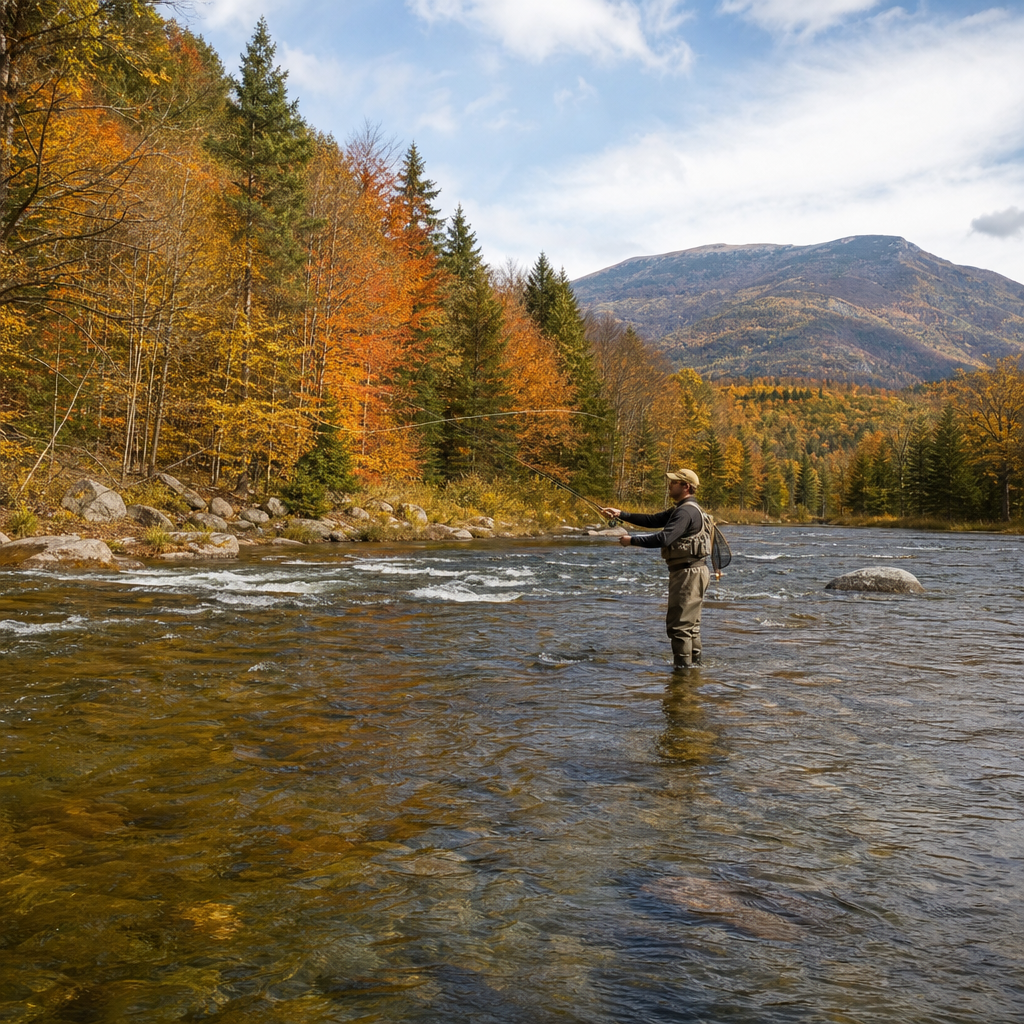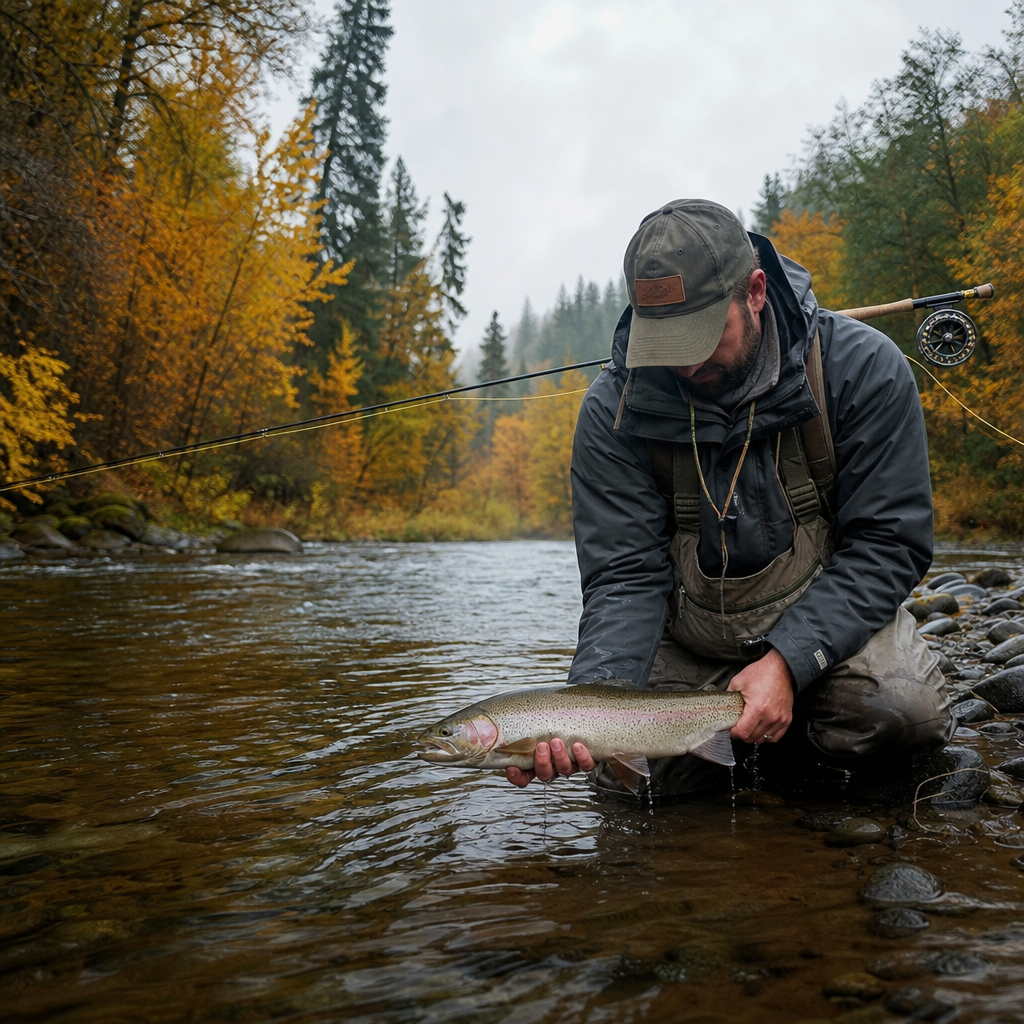
Spring fly fishing gear determines whether the season feels frustrating or electric, because spring conditions change faster than any other period on the trout calendar. In one week, anglers may fish snowmelt-swollen freestones, clear spring creeks, midge hatches on tailwaters, and windy lakeshore edges where cruising fish finally wake up after winter. “Spring fly fishing” is not one pattern or one setup. It is a collection of tactics built around rising water temperatures, unstable flows, early insect activity, and fish that are feeding more consistently but are still heavily influenced by cold water and sudden weather shifts. The gear you carry has to bridge those variables without turning your pack into dead weight.
When I rig for spring, I focus on range rather than specialization. A dependable spring fly fishing gear list covers rod and reel balance, line selection, leaders and tippet, layered clothing, traction, nymphing indicators and split shot, streamer tools, hatch-matching dry flies, and a compact storage system that keeps everything accessible with cold hands. That matters because spring rewards quick adaptation. You may start the morning tight-line nymphing deep seams, switch to an indicator rig as flows rise, throw streamers when clouds roll in, then finish on a Blue Winged Olive hatch in softer tailouts. If your equipment cannot support those transitions, you lose fishing time.
This topic matters beyond convenience. Fish behavior in spring is driven by biology and hydrology. Trout feed more aggressively as metabolism increases with water temperatures, but runoff, cold snaps, and spawning cycles can make them highly location dependent. Anglers who understand spring gear choices fish more efficiently, protect fish better in volatile conditions, and avoid common mistakes such as using oversized tippet in low clear water or underweight rods in heavy current. This guide is the hub for spring fly fishing equipment decisions, from essential basics to situational upgrades, so you can build a kit that works on rivers, creeks, and stillwaters throughout the season.
Choose a rod and reel that cover the broadest range of spring conditions
The best spring fly fishing rod for most trout anglers is a 9-foot 5-weight fast or medium-fast action rod. That setup remains the most versatile because it can cast weighted nymph rigs, small to medium streamers, and dry flies without forcing major compromises. On guided spring trips and my own river days, the 5-weight consistently handles the widest range of tasks, especially on medium freestones and tailwaters where depth and wind become part of the equation by late morning. If you fish larger rivers with heavier streamers or frequent high water, a 6-weight is often the better spring tool. If you live on spring creeks and small technical rivers, a 4-weight can be ideal, but it is a narrower answer.
Reel choice matters less for trout than rod choice, but spring is one season when a reliable drag and large arbor design become more useful. Higher flows mean fish can use current effectively, and cold wet conditions expose weak drag systems quickly. Look for a machined aluminum reel with smooth startup inertia, enough backing capacity for a weight-forward floating line, and a frame that limits thin running line from slipping around the spool. Brands like Lamson, Ross, Orvis, Hatch, and Hardy have proven trout reels that hold up well in gritty spring environments. Balance the rod in hand, not just by specification, because repeated high-stick nymphing and mending are tiring with a tip-heavy setup.
If you can own only one spring rod, buy the rod that best supports your most common water, not your occasional destination trip. Anglers often overbuy for rare streamer days and underprepare for standard nymphing and dry-dropper fishing. A balanced 5-weight with a quality floating line remains the center of an effective spring fly fishing gear system.
Use fly lines built for control, mending, and cold-weather casting
For spring fly fishing, a weight-forward floating line is the primary line you need. It covers indicator nymphing, dry flies, dry-dropper rigs, small streamers, and basic lake presentations. The difference is not whether you have a floating line, but which taper and coating you choose. Cold water and chilly mornings can make some lines stiff and memory-prone, so select a line designed for cooler temperatures with a supple coating and a front taper that turns over modest weight. Scientific Anglers Mastery MPX, Rio Gold, and Cortland Trout Boss are widely respected examples because they balance presentation with enough power to deliver two-fly nymph rigs and longer leaders.
Specialty lines become useful when spring conditions push beyond standard trout scenarios. If you regularly fish streamers in high off-color water, an integrated sink-tip line can be more efficient than trying to force depth with split shot alone. In lakes or reservoirs during ice-off periods, a full intermediate line often outfishes floating lines because it keeps leeches, damsels, and baitfish patterns in the upper feeding column without dragging the fly unnaturally. Still, for a hub-level spring gear kit, start with one excellent floating line before adding secondary tools.
Mending performance is critical in spring currents. Snowmelt edges, seam lines, and mixed-speed pockets demand line control, not just casting distance. A line with a visible head color change can help track position during drifts, while a slightly overweight half-size heavy taper can help load fast rods quickly when fishing from awkward banks or with gloves. Keep line dressing and a small cleaning pad in your kit. Dirty fly line loses floatation and shoots poorly, and spring mud finds every surface.
Carry leaders and tippet that match changing water clarity and fly size
Spring fly fishing leaders need to cover two opposite realities: dirty, pushy water where turnover and strength matter most, and clear technical water where drag-free drifts and fine diameter matter more. For that reason, I carry 7.5-foot and 9-foot tapered leaders in 2X through 5X, then build from there with fluorocarbon and nylon tippet. Fluorocarbon is my default for subsurface work because it is abrasion resistant, sinks faster, and holds up well against spring rocks and woody debris. Nylon remains better for dries because it floats more naturally and lands softer.
A practical spring tippet matrix looks like this: 2X and 3X for streamers, larger stonefly nymphs, and heavy indicator rigs; 4X for general mayfly nymphs, caddis pupae, and many dry-dropper setups; 5X and 6X for Blue Winged Olive dries, midges, and pressured fish in clear tailouts. Many anglers fish too heavy in clear spring water because they remember runoff conditions instead of the day in front of them. Diameter controls drift as much as breaking strength. If small flies are skating or dragging, downsize tippet before changing patterns.
Spring also exposes weak knots because cold fingers rush the process. Use proven terminal knots such as the improved clinch, Orvis knot, non-slip loop for streamers, and a triple surgeon’s knot for fast tippet connections. Check the first two feet of tippet often. Subsurface spring fishing puts constant abrasion on light material, and one rough spot is enough to lose a fish you actually did everything right to hook.
Stock flies and rigging tools for nymphs, streamers, and early dry-fly hatches
Most productive spring fly fishing gear lists are built around nymphs first. Trout feed subsurface through much of the season, especially during colder mornings and unstable flows. Core patterns should include Pheasant Tails, Hare’s Ears, Zebra Midges, RS2s, Perdigons, Pat’s Rubber Legs, Walt’s Worms, and caddis pupa imitations in sizes that match your local waters. Add split shot in multiple sizes, tungsten putty if you like adjustable weight, and both air-lock and yarn-style indicators so you can tune buoyancy and sensitivity. Forceps, nippers, a floatant bottle, and desiccant for dries are small items that directly increase efficiency.
Streamers deserve a fixed slot in spring boxes because pre-spawn aggression, higher flows, and stained water can produce some of the best fish of the year. Carry Woolly Buggers, Sculpzillas, Zonkers, Sparkle Minnows, and articulated baitfish patterns in olive, black, white, and natural sculpin colors. Spring fish often respond to movement changes more than color changes, so gear that supports different sink rates and retrieves is usually more important than owning thirty patterns that look similar.
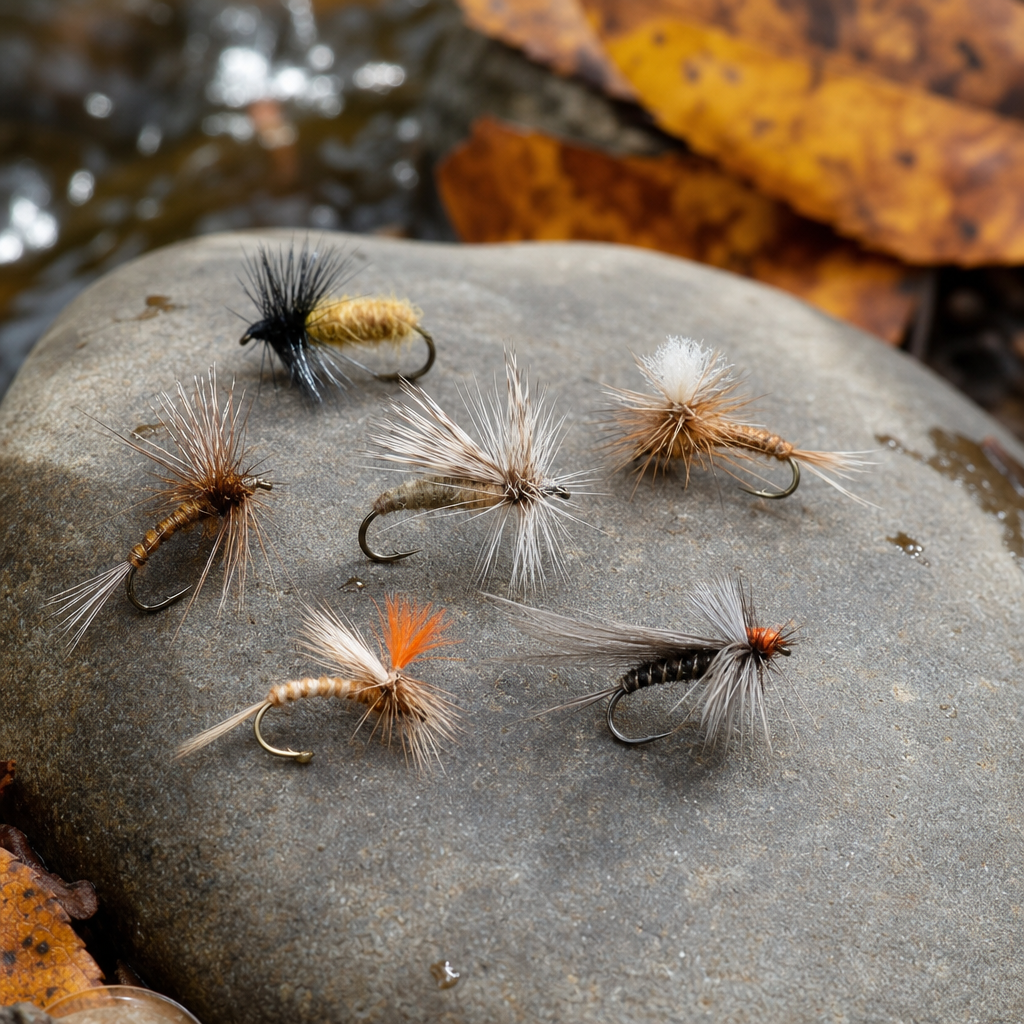
Do not neglect dry flies. Blue Winged Olives, midges, March Browns, skwalas in select Western rivers, and early caddis can all create memorable spring surface action. Keep Comparaduns, parachute BWOs, Griffith’s Gnats, elk hair caddis, and small cripples organized by hatch type rather than just size. In cold weather, fast access matters. If you have to open five boxes to find one size 18 olive parachute while fish are up, the hatch is often half over.
| Condition | Best Rig | Typical Flies | Tippet Range |
|---|---|---|---|
| High, stained freestone flows | Indicator nymph or streamer | Pat’s Rubber Legs, Perdigon, Woolly Bugger | 2X-4X |
| Clear tailwater mornings | Light nymph rig | Zebra Midge, RS2, Pheasant Tail | 4X-6X |
| Afternoon BWO hatch | Dry fly or dry-dropper | Parachute BWO, Comparadun, emerger | 5X-6X |
| Lake edge or slow backwater | Intermediate or floating retrieve | Leech, damsel nymph, baitfish streamer | 3X-4X |
Wear layers, waders, and boots that keep you fishing safely for a full day
Spring weather can move from freezing dawn temperatures to bright sixty-degree afternoons, then back to sleet by evening. Clothing has to regulate that swing. Start with a moisture-wicking synthetic or merino wool base layer, add a fleece or active-insulation midlayer, and finish with a waterproof breathable shell. Cotton has no place in serious spring fishing because it holds water, loses insulation value, and accelerates chilling in wind. Breathable chest waders are standard because they handle temperature changes better than neoprene and allow more mobility for hiking banks and stepping through uneven current.
Boot choice affects safety more than anglers admit. Spring riverbeds are slick with fresh algae, fine silt, and unstable cobble shifted by runoff. Felt soles still provide excellent grip where legal, but many states and fisheries have restrictions due to invasive species concerns. Modern rubber soles paired with studs often offer the best all-around compromise for mixed hikes and wading. Simms, Patagonia, Orvis, and Korkers all make serious boot systems; interchangeable soles are useful if you fish both muddy banks and boulder rivers. Add gravel guards, wool socks, and a wading belt every time. A properly worn belt materially reduces flood risk if you fall.
Cold hands are not a minor comfort issue; they reduce knot quality and fish handling. Fingerless wool or softshell gloves, a brimmed cap, polarized glasses with copper or amber lenses for variable light, and a waterproof pack jacket should be standard items in your spring setup.
Pack the accessories that solve spring-specific problems on the water
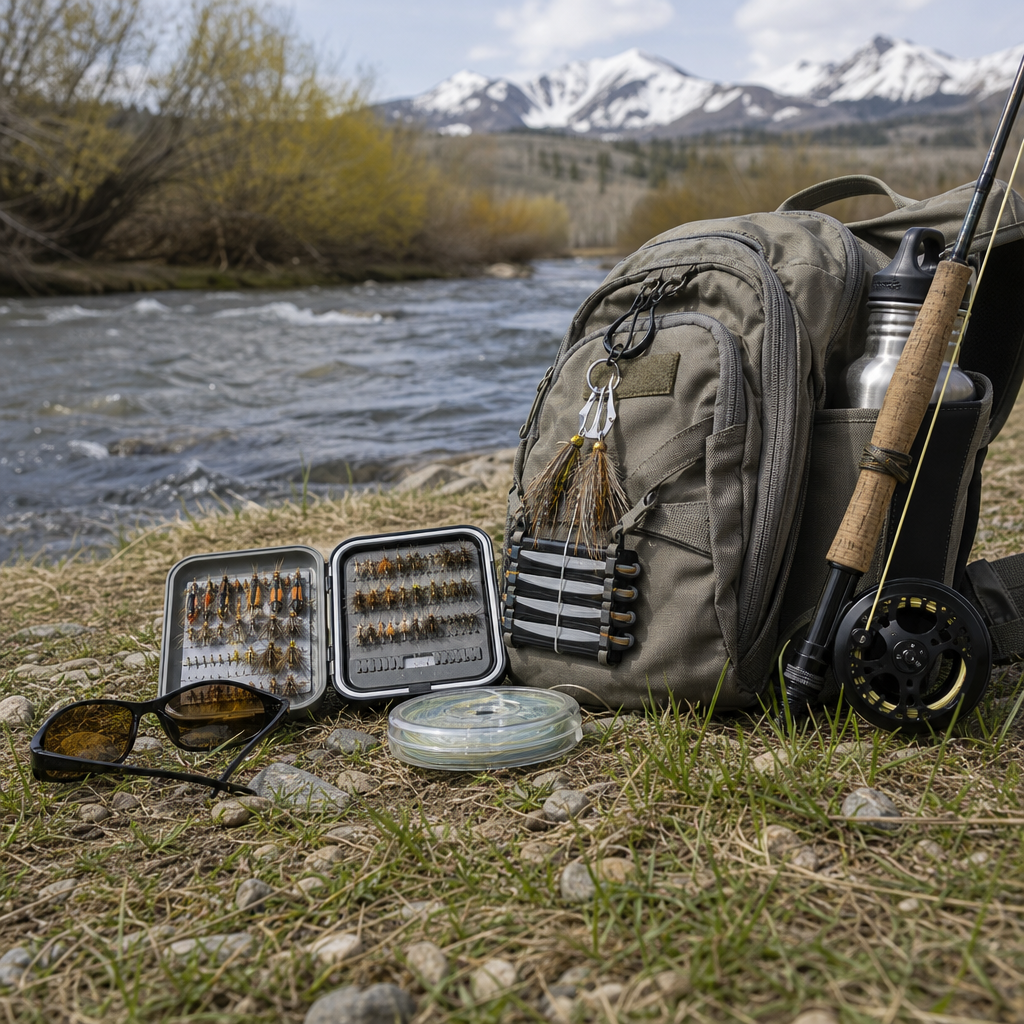
The most useful spring fly fishing accessories are not glamorous, but they save the day repeatedly. Polarized sunglasses improve fish spotting, depth judgment, and wading safety. A compact thermometer helps determine when fish may shift from sluggish morning holding water to more active feeding lanes; many trout fisheries begin fishing markedly better as temperatures move through the mid-40s Fahrenheit, though each river differs. A rubber-mesh landing net protects fish better than knotted nylon and reduces tangles with multi-fly rigs. Hemostats, hook hone, extra indicators, split shot storage, leader wallet, and a waterproof phone pouch are practical, not optional.
Your pack system should support fast changes. In spring, a sling pack or compact vest often outperforms a large backpack because it keeps rigging tools and fly boxes accessible without setting gear in mud. Keep one box for nymphs, one for streamers, one for dries, and one utility pouch for terminal tackle. If you carry too much, you become slow and disorganized. If you carry too little, you cannot adapt. The best spring setup feels curated, not maximal.
Safety accessories deserve equal attention. High water is common in spring, and rescue statistics consistently show that moving water is underestimated by experienced outdoors people. Carry a whistle, tell someone where you are fishing, and use a wading staff on unfamiliar or pushy rivers. I use one more in spring than in any other season, because snowmelt currents hide bad footing until you are already committed to the step.
Build a smart spring kit for rivers, creeks, and stillwater without overspending
You do not need premium everything to fish spring well, but you do need the right categories covered. A sensible budget should prioritize rod quality, fly line quality, wader reliability, and boots with strong traction. Those items affect casting, drift control, warmth, and safety every hour you fish. Reels, packs, and many accessories can be more modest without hurting performance much. For example, a mid-priced 9-foot 5-weight paired with a top-tier floating line usually fishes better than an expensive reel attached to a cheap memory-prone line.
Think in terms of system building. Start with one trout rod, one floating line, breathable waders, solid boots, polarized glasses, nippers, forceps, indicators, split shot, and a focused fly box. Then add upgrades according to your water. Tailwater anglers may add longer leaders, finer tippet, and more midge patterns. Freestone anglers may prioritize heavier nymphs, larger indicators, and a 6-weight streamer rod. Stillwater anglers may add an intermediate line and a stripping basket for windy shorelines. This subtopic connects naturally to deeper guides on spring hatches, runoff tactics, trout behavior, nymph rigs, and streamer strategies, but the foundation is always the same: choose gear that helps you adjust quickly and fish safely.
Spring fly fishing gear should make you more adaptable, not more complicated. If your current kit lets you cover depth, drift, visibility, weather, and traction, you are prepared for the season’s real demands. Review your setup before your next trip, replace weak links, and build a spring system you can trust when conditions change by the hour.
Frequently Asked Questions
What basic spring fly fishing gear should I carry if conditions can change throughout the day?
The smartest spring fly fishing setup is one built around flexibility. Spring weather, water clarity, and insect activity can all shift in a matter of hours, so your gear should let you adapt without feeling overpacked. For most trout anglers, a 9-foot 5-weight rod is the best all-around starting point because it can handle nymph rigs, small streamers, and a wide range of dry flies. If you regularly fish larger rivers, windy conditions, or heavier streamers during runoff, a 6-weight can be an even better spring choice. Pair that rod with a reliable reel that has a smooth drag and enough backing for larger fish in higher flows, even if trout are your main target.
Waders and quality wading boots are just as important as the rod itself in spring. Water temperatures are cold, banks are slick, and snowmelt can make footing unpredictable. Breathable chest waders layered over moisture-wicking base layers give you the best temperature control, while sturdy boots with strong traction help you move safely through mud, cobble, and uneven current seams. Many anglers also carry a wading staff in spring because riverbeds often shift after winter and runoff can make familiar water feel completely different.
On the terminal side, carry a well-rounded leader and tippet system rather than a single setup. Spring can demand everything from 9-foot 5X leaders for technical dry fly fishing on spring creeks or tailwaters to heavier 0X or 2X tippet for streamer fishing in stained water. Split shot, strike indicators, floatant, sink paste, forceps, nippers, and a landing net should all be considered standard equipment this time of year. Polarized sunglasses are non-negotiable for both fish spotting and safety, and a waterproof pack or sling makes it easier to keep extra layers, fly boxes, gloves, and rain gear close at hand. In spring, the most useful gear is the gear that keeps you fishing effectively when the river changes faster than your plan does.
Which fly rod, line, and leader setup works best for spring trout fishing?
If you want one spring trout setup that covers the broadest range of situations, start with a medium-fast 9-foot 5-weight rod, a quality weight-forward floating line, and leaders from 7.5 to 12 feet in a few different sizes. That combination handles most of what spring demands: nymphing cold mornings, switching to dries during short hatch windows, and throwing small to medium streamers when fish get aggressive. It is versatile enough for freestones, tailwaters, and many stillwater situations without forcing you into a compromise that hurts presentation.
That said, spring is one of the few seasons when line and leader adjustments matter as much as fly choice. In high, off-color water, trout are usually less leader-shy, so shorter, stronger leaders are often better. A 7.5-foot or 9-foot leader tapered to 3X or 4X turns over nymph rigs and streamers more cleanly in wind and turbulent flows. In clear, technical water such as spring creeks or tailwaters, longer leaders tapered to 5X or 6X can be a major advantage, especially during midge or early blue-winged olive hatches. If you fish lakes or deeper runs in spring, an intermediate or sink-tip line can also be worth carrying because cruising fish and drop-offs often sit just below the reach of a floating line presentation.
Many experienced anglers eventually build spring around two rod systems rather than one. A 4-weight or light 5-weight is excellent for delicate dry fly work and light nymphing on clear water, while a 6-weight is ideal for weighted rigs, streamers, and windy afternoons. If you only own one rod, however, do not overcomplicate it. A 5-weight with a floating line, a handful of leader lengths, and spools of tippet from 2X through 6X will cover the overwhelming majority of spring trout situations. The key is not finding a mythical perfect setup; it is carrying a system you can modify quickly as water level, clarity, and trout behavior change.
What flies should be in a spring fly fishing box?
A good spring fly box should reflect how varied the season really is. Trout are transitioning out of winter behavior, flows can rise and fall quickly, and food sources range from tiny midges to larger nymphs and baitfish. That means your box should not be built around one hatch or one technique. At minimum, carry three categories of flies: subsurface searching patterns, hatch-matching dries and emergers, and streamers. If you cover those three areas well, you will be prepared for most spring scenarios.
For nymphs, focus on confidence patterns that imitate the bugs trout see most often in spring. Zebra Midges, Pheasant Tails, Hare’s Ears, Prince Nymphs, stonefly nymphs, caddis larvae, and perdigon-style patterns are all strong choices. In many rivers, early season trout feed heavily below the surface even when occasional bugs are visible, so weighted nymphs in sizes ranging from very small midges up to larger stonefly imitations should make up the foundation of your box. Egg patterns can also be highly effective in systems where trout are still keyed on protein-rich opportunities from spawning activity.
For dry flies and emergers, think early-season realism and small profiles. Midges, blue-winged olive patterns, Griffith’s Gnats, parachute-style mayflies, soft hackles, and cripple or emerger patterns are especially useful because spring hatches are often subtle and trout may feed just below the surface rather than fully committing to high-floating dries. On lakes or lower rivers, early chironomid and stillwater presentations may matter more than classic river hatch matching, so local knowledge should guide your selections.
Finally, never ignore streamers in spring. As water warms and fish become more active, baitfish imitations can move larger trout that are not interested in sipping tiny bugs. Carry olive, black, white, and natural-toned streamers in a few sizes, including lightly weighted and heavier versions. In stained runoff water, bigger profiles and darker colors often stand out better. In clear water, slimmer patterns with subtle movement usually produce more natural presentations. A smart spring box is not the biggest box you own; it is the one stocked for cold mornings, short hatch windows, changing clarity, and opportunistic fish.
How should I dress for spring fly fishing when mornings are cold but afternoons warm up?
Layering is the most important clothing strategy in spring fly fishing because comfort and safety depend on your ability to adjust as conditions evolve. Spring often begins with near-freezing air temperatures, cold water, and stiff wind, then shifts into bright sun or even surprisingly warm afternoons. If you overdress, you sweat and chill later. If you underdress, long morning sessions in cold water become miserable fast. The goal is to build a system you can add to or subtract from without disrupting your fishing.
Start with a moisture-wicking base layer, not cotton. Synthetic or merino wool layers pull perspiration away from your skin and keep you warmer when temperatures dip or wind picks up. Over that, wear an insulating mid-layer such as fleece or light puffy material depending on the forecast. Your outer layer should be breathable and weather resistant, especially if rain, sleet, or strong wind is possible. Breathable chest waders remain the most practical option for most spring trout fishing because they let you layer intelligently while keeping cold water off your legs and core. Wading boots should provide dependable grip and ankle support, since muddy access points, slick rocks, and changing riverbeds are common in spring.
Do not overlook smaller pieces of clothing that make a major difference. A brimmed hat cuts glare and helps in light rain. Fingerless gloves or thin fishing gloves are invaluable on cold mornings when tying knots becomes difficult. Warm socks, preferably wool or technical synthetic blends, are a must because cold feet wear down your focus quickly. Many anglers also carry a packable rain shell and an extra insulating layer in their pack even on mild days because spring forecasts are famously unreliable.
Think of spring clothing as part of your fishing system, not an afterthought. If you stay dry, regulate temperature well, and move safely, you fish longer and make better decisions. In a season defined by instability, proper clothing is not just about comfort. It directly affects endurance, concentration, and your willingness to keep adapting when the bite turns on late.
How do I choose the right spring gear for rivers with runoff, clear creeks, tailwaters, and lakes?
The right spring fly fishing gear depends on matching your setup to the water type rather than trying to force one exact system onto every fishery. Spring is a season of extremes. Freestone rivers may be rising with snowmelt, spring creeks may remain cold and clear, tailwaters may offer stable flows and midge hatches, and lakes may suddenly come alive along warming shorelines. Each environment asks different things from your rod, flies, lines, leaders, and wading approach.
On runoff-swollen freestones, prioritize power, visibility, and control. A 5-weight or 6-weight rod is