Spring fly fishing in lakes rewards anglers who understand how warming water, shifting food sources, and trout behavior change from week to week. In practical terms, spring begins when ice leaves the lake, surface temperatures start climbing through the high 30s and 40s Fahrenheit, and aquatic life reactivates after winter dormancy. For lake anglers, that creates a short but exceptionally productive window: fish move into reachable water, oxygen is abundant throughout the water column, and trout feed aggressively to recover condition lost over winter. I have planned many stillwater seasons around this period because a few degrees of temperature change can turn a quiet shoreline into the best fishing of the year.
Fly fishing in lakes during spring is different from river fishing and different from summer stillwater tactics. In rivers, current concentrates food and defines holding water. In lakes, food is spread across shoals, weed edges, drop-offs, creek mouths, shoeline structure, and wind lanes. Trout, char, and warmwater species roam rather than simply hold in current seams. Success depends on reading temperature, light, wind, insect timing, and depth with more precision than many anglers expect. The central question is not just what fly to use, but where in the water column fish are feeding and why they are there that day.
Spring matters because it compresses several major feeding events into a relatively short season. Chironomids begin hatching in earnest, mayflies and caddis become important, baitfish and leeches are active, and newly flooded margins can hold scuds, damselfly nymphs, and juvenile perch or minnows. Lakes also warm unevenly. North shores that receive more sun, dark-bottomed bays, shallow shoals near inflows, and protected coves often gain temperature first. A two-degree difference may not sound dramatic, but in cold water fisheries it is enough to pull feeding trout onto a flat, especially after several stable days.
As a hub for spring fly fishing, this guide covers the essential system: how lake trout behave after ice-out, where to start on different lake types, which flies consistently produce, and how to adjust retrieve speed, depth, and presentation as conditions change. It also highlights the role of boats, float tubes, and bank access, because positioning is often the hidden factor behind successful stillwater angling. If you understand these spring fundamentals, every related topic becomes easier, from chironomid technique to wind strategy to choosing lines for intermediate-depth shoals.
How Spring Changes Lake Fish Behavior
Immediately after ice-out, most trout remain in cold water that is still well mixed from winter turnover. Oxygen is rarely the limiting factor in spring, so temperature and food availability drive location. Rainbows commonly cruise shallow shelves, marl flats, and windblown shorelines looking for chironomid pupae, leeches, scuds, and minnows. Brown trout often use structure more deliberately, sliding along drop-offs, flooded brush, creek mouths, and rocky points, especially during low light. Brook trout and tiger trout can be particularly aggressive in stained shallows where dark bottoms absorb heat. In fertile lakes, fish may spend long periods in less than eight feet of water.
As the season progresses, trout behavior becomes more structured. Early spring often favors broad searching with streamers, leeches, and slow nymph presentations. Once insect life ramps up, fish may key tightly on a specific stage such as chironomid pupae suspended just off bottom or emerging mayfly nymphs rising through the water column. On calm days, feeding lanes become obvious through subtle rises, swirls, or porpoising fish. On windy days, trout still feed heavily, but the clues are less visible; they may cruise just under surface chop along windward banks where food is pushed and concentrated. Consistency comes from matching fish position before matching exact pattern.
Where to Find Trout in Spring Lakes
The best starting areas in spring are places that warm first and gather food. Focus on north-facing shorelines, shallow bays with dark sediment, flats near creek inlets, weed edges adjacent to drop-offs, and points exposed to a steady breeze. Wind is critical because it stacks plankton, insects, and dislodged forage against a bank. Trout follow that concentration. If I arrive at a lake with a mild afternoon wind and no obvious hatch, I usually begin on the windward side with a slow intermediate line and a leech or baitfish pattern before I ever anchor over deep water.
Lake type matters. In shallow eutrophic lakes, fish may be almost anywhere food is present because productive bottoms and weed growth support dense invertebrate life. In deep oligotrophic lakes, trout often relate more closely to specific shelves, shoals, and drop-offs because broad featureless basins offer less forage. Reservoirs add another variable: rising or falling spring water can flood new margins or pull fish off them quickly. On clear lakes, trout may feed shallow at dawn and dusk but slide slightly deeper once light intensifies. On stained lakes, they often remain accessible all day, especially under cloud cover.
| Lake feature | Why it produces in spring | Best initial approach |
|---|---|---|
| North shore bay | Receives more sun and warms early, activating insects | Slow retrieve with leech, scud, or chironomid under indicator |
| Windward bank | Concentrates food and cruising trout | Intermediate line with searching flies parallel to shore |
| Creek mouth | Delivers warmer inflow, nutrients, and baitfish | Probe seams with nymphs or small streamers |
| Weed edge near drop-off | Provides cover, invertebrates, and depth transition | Figure-eight retrieve with balanced leech or damsel nymph |
| Shoal adjacent to deep basin | Easy feeding shelf next to security water | Anchor on edge and fish multiple depths methodically |
Best Spring Fly Patterns and How to Fish Them
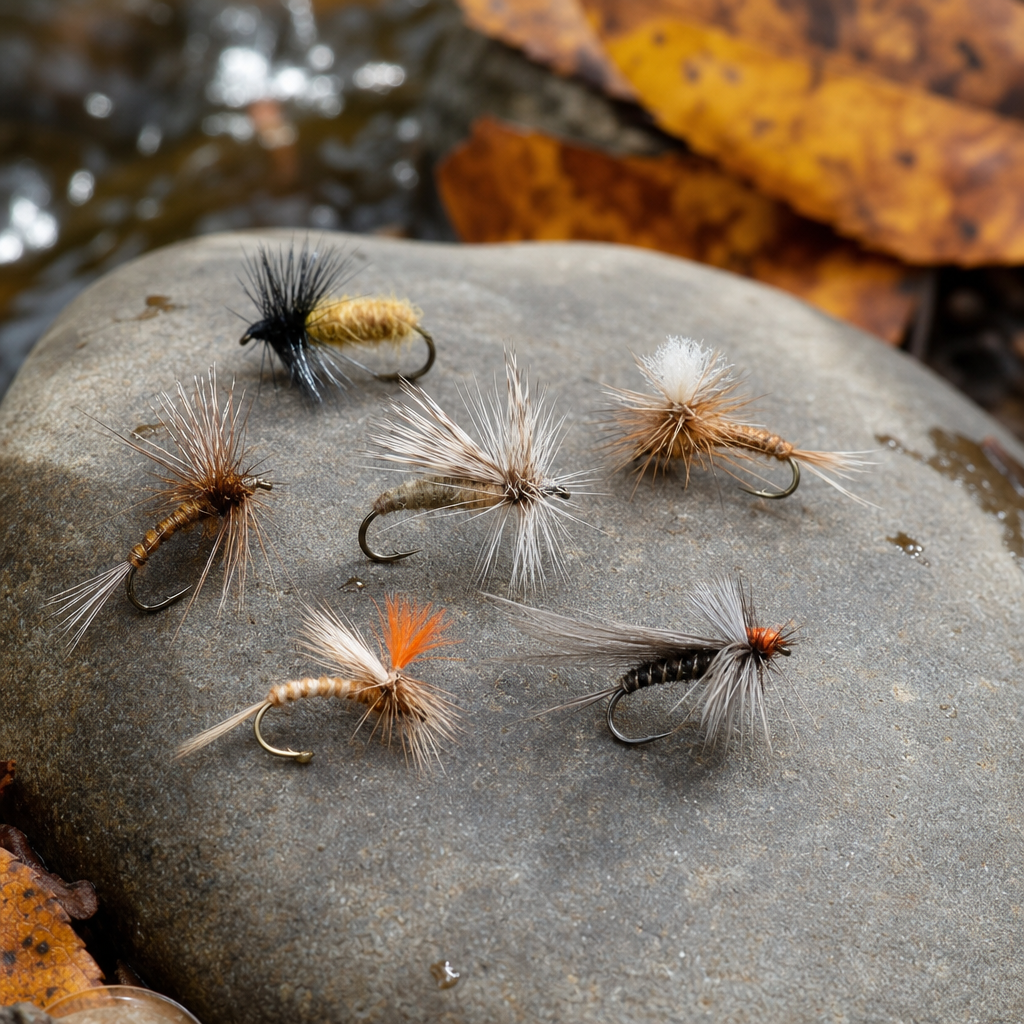
Chironomids are the foundation of spring stillwater fly fishing. In many trout lakes they are the most important food source from ice-out through early summer. Productive patterns usually imitate black, red, olive, brown, or maroon pupae in sizes 10 through 18, often ribbed with wire or tinsel and finished with a white bead, glass bead, or small tuft to suggest gills. Fish them under a strike indicator on a long leader, typically with the fly suspended close to bottom in water from six to twenty feet deep. The rule I trust most is simple: if trout are not visibly chasing, start with chironomids near bottom and let the lake tell you otherwise.
Leeches are the most reliable searching flies when no hatch is obvious. Black, olive, burgundy, and brown patterns from size 6 to 12 cover most situations. A balanced leech under an indicator hovers naturally and is deadly over shoals and weed edges. On a floating line, a beadhead or unweighted leech retrieved with short strips can trigger aggressive takes from cruising rainbows. On an intermediate line, a slender marabou leech or rabbit strip variant excels when fish are patrolling just subsurface. I have had many spring days saved by switching from exact insect imitation to a simple black leech fished slowly with deliberate pauses.
Scuds, mayfly nymphs, damsel nymphs, and small baitfish patterns round out the essential box. Scuds are especially important in alkaline lakes with weed growth and marl bottoms; patterns in gray, tan, olive, or orange often produce when trout feed inches above weeds. Mayfly nymphs become important during callibaetis development later in spring, and their active swimming motion should be imitated with short strips. Damsel nymphs are less dominant early but can still work around emergent vegetation. Small olive woolly buggers, zonkers, and fry patterns are excellent when stocked trout or larger browns are keyed on minnows or juvenile perch.
Lines, Leaders, and Presentation Strategy
In spring, line choice should follow depth and fish behavior, not habit. A floating line is indispensable for indicators, shallow nymphing, and fishing emergers in the top few feet. A clear intermediate line is arguably the most versatile line for lake fishing in spring because it keeps flies in the productive one-to-six-foot zone while maintaining direct contact during slow retrieves. Type 3 and Type 5 full-sinking lines become useful when bright conditions or abrupt weather changes push fish deeper along drop-offs. Many experienced stillwater anglers carry at least those four options because a lake can shift moods within hours.
Leader design matters more than many newcomers realize. For indicator chironomid fishing, leaders of twelve to twenty feet are common, often tapering to 3X, 4X, or 5X depending on fly size and fish pressure. The goal is vertical presentation with minimal drag, not elegant turnover. For intermediate and sink lines, shorter leaders from five to nine feet usually improve depth control and hook-setting. Fluorocarbon sinks slightly faster and resists abrasion around weeds, though nylon can be better for dries and emergers because it floats and can cushion sudden takes. Knots, especially on long leaders, should be checked constantly because cold spring water exposes weaknesses fast.
Retrieve style is where many spring days are won or lost. In cold water, trout often prefer restrained movement. A hand-twist retrieve, ultra-slow figure-eight, or short strip-pause cadence generally outfishes fast strips before the lake has warmed substantially. That said, when fish chase baitfish in the shallows or a warm afternoon energizes them, speed can become the trigger. The disciplined approach is to test retrieves in sequence rather than change flies every ten casts. Keep the same productive pattern and alter depth, speed, and pause length first. Lake trout are often telling you they want a different presentation, not a different imitation.
Reading Weather, Light, and Timing
Stable warming trends usually create the best spring lake fishing. Two or three mild days in a row can bring trout shallow and kick off stronger chironomid hatches. Sudden cold fronts often slow activity, but they rarely make fish disappear; more often they shift fish slightly deeper or tighten feeding windows. Cloud cover usually helps by reducing light penetration and allowing trout to cruise shallow longer. Rain can improve fishing if it is moderate and paired with wind, especially near inflows, but heavy runoff may muddy shallow margins enough to force a move toward cleaner adjacent water.
Time of day changes with season stage. Right after ice-out, the warmest part of the afternoon is often best because surface layers gain a crucial degree or two. Later in spring, mornings can be excellent for chironomids, while evenings may bring mayflies, caddis, or midge clusters near the film. Wind should be treated as a structural element, not an inconvenience, unless it becomes unsafe. A light ripple breaks up the surface, disguises leader and line, and corrals food. Flat calm can still fish well during a hatch, but in non-hatch conditions a moderate breeze often gives the advantage to anglers willing to position carefully and cast efficiently.
Bank, Boat, and Float Tube Tactics
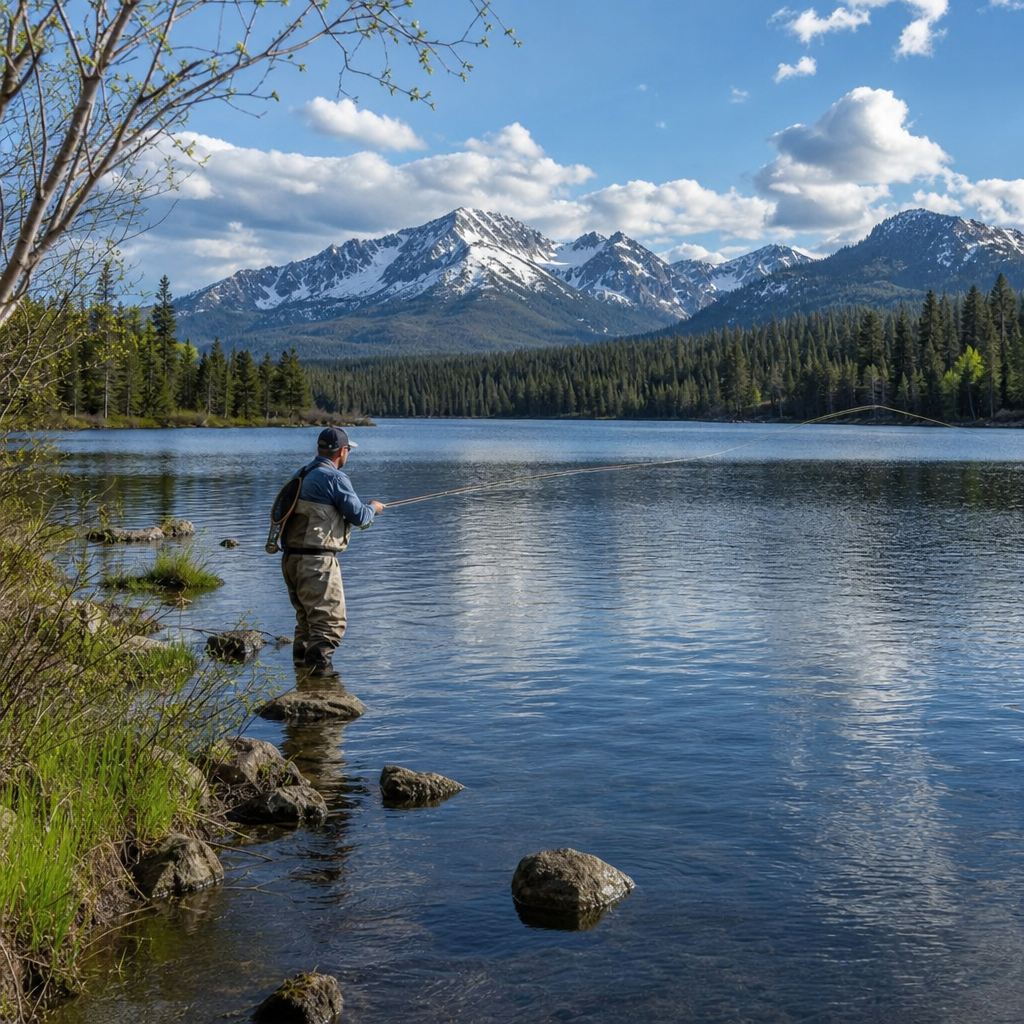
Shore anglers can do very well in spring because trout often patrol close margins. The key is mobility and angle. Instead of standing in one place and fan-casting for hours, move between points, bays, inflows, and windblown banks until you locate active cruisers or visible food. Cast parallel to shore whenever possible, especially along drop-offs or weed lines, because trout use those edges like travel corridors. Long leaders and stealth matter on clear lakes; avoid wading too deep and pushing fish off the flat. Polarized glasses help identify weeds, marl lanes, cruising fish, and subtle transitions in bottom color.
Boats and float tubes expand access to shoals, suspended fish, and deeper chironomid water. Anchoring is a technical skill in itself. Set up so your flies hang just off bottom on the edge of a flat rather than in dead water over a basin. In tubes and pontoons, a small change in anchor position can shift your depth by several feet, enough to move from productive to empty water. A fish finder is useful, but it should confirm observations rather than replace them. Surface temperature, visible insect shucks, bird activity, and repeated follows near a bank often reveal more about the day’s pattern than electronics alone.
Common Spring Mistakes and the Best Path Forward
The most common mistake in spring fly fishing is fishing too deep too soon or too fast for the water temperature. Many anglers assume lake trout must be in the basin because the calendar says early season, but ice-out fish often feed in very accessible shallows. Another error is changing flies constantly without first adjusting location, depth, and retrieve. On stillwaters, presentation depth is often the primary variable. Overlooking the windward shore is another costly habit; even a modest breeze can transform a bank into a conveyor belt of food. Finally, anglers frequently leave too early on cold mornings when the best action is scheduled by afternoon warming.
The path to consistent spring success is methodical observation backed by a small set of proven tactics. Start where water warms first or where wind pushes food. Fish one searching pattern and one suspended subsurface option with confidence. Measure depth, count down lines, and vary retrieves before changing flies. Watch for shucks, birds, rises, and temperature changes across the lake. Keep notes, because productive windows on a given lake often repeat with remarkable consistency year after year. If you want better spring fly fishing in lakes, simplify your fly box, sharpen your positioning, and let seasonal clues dictate every decision on the water.
Frequently Asked Questions
When is the best time to start fly fishing lakes in spring?
The best time to begin is right after ice-out, when the lake first opens and surface temperatures begin rising through the high 30s into the 40s Fahrenheit. This period is one of the most consistent and productive times of the year because trout are no longer confined by winter conditions and can move freely through the water column. Oxygen levels are generally strong throughout the lake in early spring, so fish are not forced into narrow bands of habitat the way they often are later in summer. That means they can cruise shallow shelves, shorelines, drop-offs, inlets, and weed edges in search of food.
What makes this window especially valuable is that trout behavior changes quickly from week to week. Immediately after ice-out, fish are often found in relatively shallow water because these areas warm first and attract early food activity. As days lengthen and the sun gains strength, midge hatches, scuds, leeches, and early-season nymphs become more active, and trout follow them into reachable water. In many lakes, the first several weeks after ice-out offer a rare combination of aggressive fish, manageable depth, and fewer highly selective feeding patterns.
Timing within the day matters too. Cold mornings can fish well, but late morning through afternoon is often better in early spring because a few degrees of warming can noticeably increase insect activity and trout movement. Calm, overcast days can be excellent, while bright sun may push fish slightly deeper or make them cruise more cautiously in clear water. In short, start as soon as the lake is safely open and focus on that transition period when the water is gradually warming but has not yet reached late-spring stability.
Where should I look for trout in lakes during spring?
In spring, trout are often far more accessible than many anglers expect, but location still depends on temperature, food availability, wind, light, and lake structure. The first places to check are shallow flats near drop-offs, shorelines with dark bottoms, bays protected from cold main-lake currents, and areas that receive the most sunlight. Dark mud or marl bottoms absorb heat faster than rocky or heavily shaded shorelines, and even a slight increase in temperature can draw in aquatic insects, minnows, and the trout that feed on them.
Productive spring structure also includes weed edges, submerged timber, creek mouths, inflows, points, and transition zones where shallow water meets deeper basins. Inflows can be especially good if they bring slightly warmer water or food into the lake, although snowmelt can sometimes make them too cold or muddy early on. Wind matters more than many anglers realize. A steady wind that pushes surface food, emergers, and dislodged invertebrates toward one shoreline can concentrate feeding fish there. Rather than avoiding wind entirely, many experienced lake anglers use it as a clue and target windward banks, points, and coves where food gets stacked up.
If trout are not visible in skinny water, move methodically. Fish often patrol just off the first break in 6 to 15 feet of water, especially when sunlight is strong or boat traffic increases. Early in the season, they may slide up and down this zone throughout the day rather than staying locked in one exact depth. A smart approach is to begin shallow, then progressively search deeper with different retrieves and line setups until you contact fish. In spring, success usually comes from understanding that trout are mobile but predictable: they go where the warming water and food sources develop first.
What flies work best for spring lake fly fishing?
The most reliable spring fly patterns are the ones that match the food sources waking up first in the lake. In most fisheries, that means chironomids, leeches, scuds, damselfly nymphs in some waters, early mayfly nymphs, and small baitfish imitations where trout are feeding on minnows. Chironomids are often the cornerstone of spring lake fishing because midge activity starts early and can be incredibly important as water temperatures rise. Suspended pupa patterns in black, red, olive, brown, and chrome variations are standard producers, especially when fished at the correct depth near drop-offs or over soft-bottom flats.
Leeches are another spring staple because they suggest a large, protein-rich meal and are effective both before and after visible insect activity begins. Balanced leeches, beadhead leeches, and unweighted patterns in black, olive, maroon, or natural tones can all be strong choices. Scud patterns are especially valuable in lakes with abundant weed growth, where trout feed heavily on shrimp-like invertebrates in shallow water. If you notice trout cruising weed edges or tailing in skinny water, a small olive, gray, tan, or orange-accented scud can be exactly what they are keyed in on.
The key is not just fly selection, but presentation and adjustment. If trout are moving slowly and feeding deliberately, smaller flies with subtle movement often outperform aggressive stripping patterns. If fish are chasing baitfish or intercepting emerging insects, speed and profile matter more. Carry a range of sizes and colors, but focus first on proven spring categories rather than overcomplicating your box. In most lakes, a thoughtful selection of chironomids, leeches, scuds, and a few searching nymphs will cover the vast majority of productive spring situations.
What is the best presentation and retrieve for spring trout in lakes?
The best presentation is the one that matches trout mood, water temperature, and the specific food item they are targeting, but in general, spring rewards controlled, thoughtful retrieves rather than fast, random stripping. Early in the season, trout metabolism is increasing but still influenced by cold water, so flies that move naturally and stay in the strike zone tend to outperform presentations that rip past fish too quickly. This is why slow hand-twist retrieves, short strips with pauses, and static or near-static chironomid presentations are so effective.
If fish are feeding on chironomids, suspending the fly under an indicator or using a balanced presentation can be the most efficient method. The critical factor is depth. Trout often cruise at a very specific level, and being even a few feet above or below them can dramatically reduce takes. When fishing leeches or scuds, a slow retrieve with intermittent pauses often imitates natural movement better than continuous stripping. Many strikes come during the pause, when the fly appears to hover, rise slightly, or change direction in a way that triggers a response.
It also helps to fish methodically. Count your fly down, vary retrieve speed, and work different depths before changing locations too quickly. In cold to cool spring water, trout may follow a fly longer before committing, so maintaining tension and avoiding overly abrupt movements can improve hook-up rates. If wind creates a chop, it may add natural motion that helps your presentation; if the water is flat calm and clear, longer leaders, finer tippets, and more subtle retrieves may be necessary. In spring lake fishing, presentation is rarely about doing more. It is usually about doing less, but doing it with precision.
How should I adjust my strategy as spring progresses and lake conditions change?
As spring advances, the biggest mistake anglers make is fishing the entire season as if it were still ice-out. Trout behavior changes quickly because water temperatures rise, insect life expands, light penetration increases, and food sources shift. In the earliest phase, shallow warming zones can dominate. A couple of weeks later, fish may still visit those areas, but they often become more depth-conscious, moving between feeding shelves and nearby deeper water. Successful anglers respond by checking shallow water first, then probing adjacent contours, drop-offs, and suspended zones if the action slows.
Your fly selection should evolve too. Early on, larger searching patterns like leeches and attractor nymphs can be excellent for covering water. As hatches strengthen, trout may become more focused on chironomids or other specific prey, requiring more exact depth control and finer matching of size and color. Retrieve speed may also need adjustment. Slightly warmer water can make fish more willing to chase, but increased clarity and fishing pressure can make them more selective. This is why a pattern that worked on a slow strip one week may fish better under an indicator or with a more delicate hand-twist the next.
Pay attention to environmental signals. Rising surface temperatures, bird activity over hatching insects, weed growth, wind direction, and the presence of cruising fish all tell you how the lake is progressing. Keep notes on water temperature, productive depths, and successful fly types each trip. Spring lake fishing is dynamic, and the anglers who adapt fastest usually catch the most fish. Rather than looking for one fixed formula, think in terms of progression: from immediate post-ice-out opportunity, to developing food concentration, to increasingly refined presentations as the season settles into late spring patterns.