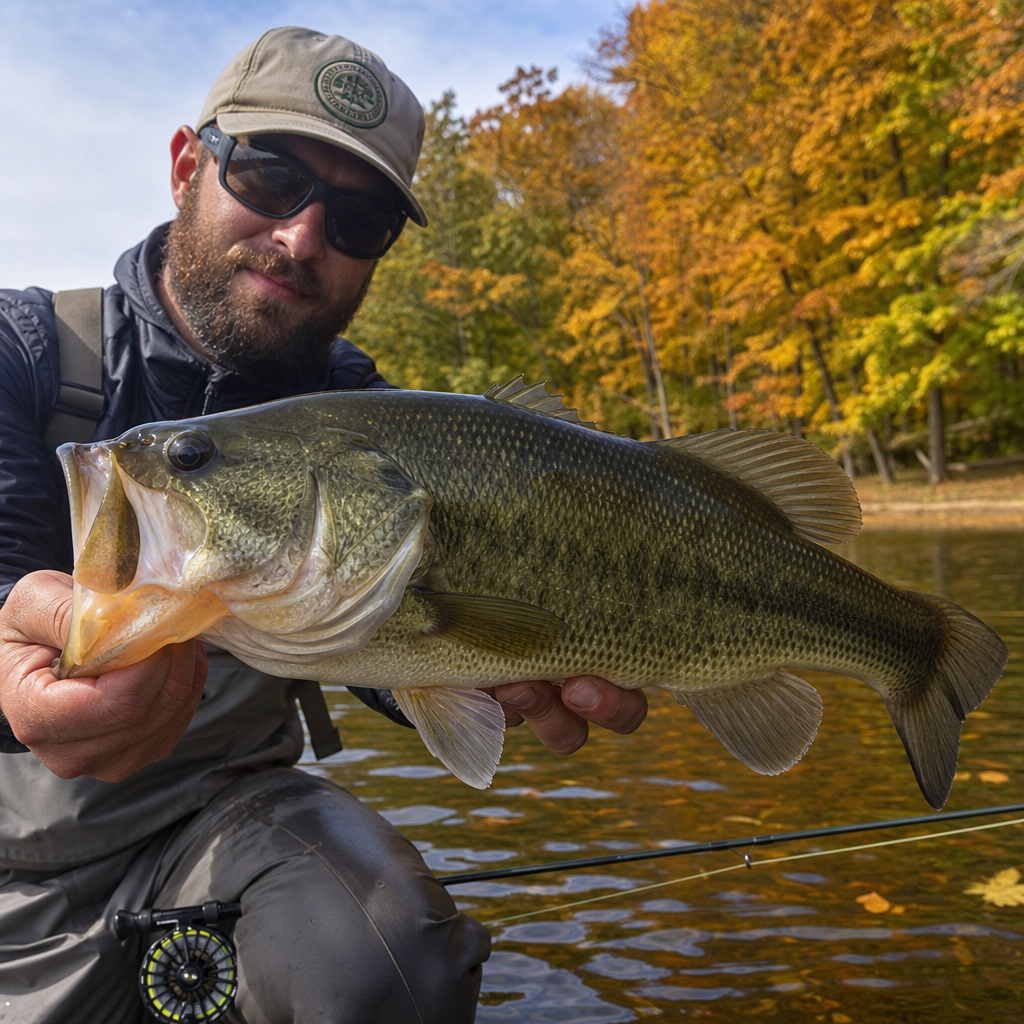
Spring fly fishing for bass is the season when water warms, forage wakes up, and largemouth and smallmouth move from winter holding areas toward feeding lanes and spawning flats. For anglers, that shift creates the most dynamic bass fishing of the year. Spring fly fishing means using fly tackle to match changing water temperature, bait movement, and bass behavior from late winter through the post-spawn period. It matters because success in spring rarely comes from one pattern; it comes from reading conditions, then choosing the right fly, line, presentation, and location for that week, that day, and often that hour.
I treat spring as three separate fisheries: prespawn, spawn, and post-spawn. In the prespawn, bass feed aggressively but often hold near deeper water. During the spawn, they protect beds and react more from irritation than hunger. In the post-spawn, recovering fish slide off while fry-guarding males stay shallow and become highly territorial. Understanding those phases is the foundation of consistent spring fly fishing. It also prevents the common mistake of assuming warm air alone means bass have fully committed to shallow water. Water temperature, daylight length, recent fronts, and reservoir or river flow all matter more than the calendar.
Across lakes, ponds, and rivers, spring offers fly anglers unusually broad opportunities. Crawfish are active, bluegill begin moving shallower, shad and alewives spawn in some systems, and juvenile perch, shiners, and minnows become available. That variety lets you fish streamers, craw patterns, poppers, divers, and finesse flies with confidence. It also rewards mobility. I have had mornings where smallmouth ate slowly crawled jig-style flies on a type III sinking line in forty-eight degree water, then switched by afternoon to chasing white baitfish patterns in windy pockets after surface temperatures climbed two degrees. Spring compresses a lot of seasonal change into a short window.
This hub article covers the complete playbook for spring bass on a fly: where fish set up, how weather shifts reposition them, which tackle choices make the biggest difference, and how to adapt presentations to cold fronts, muddy water, wind, and spawning behavior. If you want a simple definition, spring bass fly fishing is pattern-based fishing driven by water temperature and habitat transitions. If you want better results, focus on location first, then depth, then retrieve. Fly choice matters, but in spring, being in the right zone with the right sink rate is usually the deciding factor.
Understand the Spring Bass Calendar
The most reliable way to plan spring fly fishing for bass is to organize conditions by water temperature rather than by month. Largemouth commonly begin meaningful prespawn movement around 50 to 55 degrees Fahrenheit, with active spawning often occurring near 60 to 68 degrees depending on region, strain, and weather stability. Smallmouth often stage and spawn slightly cooler, frequently beginning their movements in the upper 40s and low 50s, then bedding in the upper 50s to mid 60s. Those are ranges, not hard rules, but they are useful enough to guide every decision on the water.
Prespawn fish usually hold near the first major break adjacent to flats, creek channels entering coves, outside weed edges, riprap banks, timber near depth, and current seams with access to slower water. Bass want quick movement between security and feeding areas. In natural lakes, that can mean the dark-bottom bays that warm first. In reservoirs, it often means secondary points inside creeks. In rivers, it can be wintering holes near softer gravel runs and protected eddies. When I start a spring day on unfamiliar water, I look for the nearest deep water to a shallow flat with cover. That simple filter removes most unproductive water.
During the spawn, bass choose substrate and protection. Largemouth favor protected pockets, reed edges, dock corners, and sandy or firm-bottom flats. Smallmouth are more likely on gravel, pea stone, and firm shelves with moderate current protection. Sight fishing can be effective where water is clear, but it is not always the best approach. Often, targeting staging fish just outside bedding areas produces better numbers and keeps pressure off visible nests. Many fisheries also have seasonal regulations around bedding fish, closed areas, or tackle restrictions, so checking local rules is mandatory before spring trips.
Post-spawn patterns are often misunderstood. Females commonly slide out to the nearest drop, brush, dock shade, or rock edge to recover, while many males remain shallow to guard fry. Those fry-guarders are perfect fly rod targets because they will charge hair bugs, small streamers, and deer-hair divers that invade the brood ball. Meanwhile, bigger females may feed selectively for short windows on shad, blueback herring, or perch fry. If a shallow bite dies suddenly after a warming trend, do not assume the fish left the area entirely. More often, they repositioned one depth zone deeper.
Read Weather, Water, and Habitat Before Choosing a Fly
Spring bass move because of conditions, and small changes can produce major swings in fish position. A stable warming trend of three to five days usually pushes fish shallower and makes them more willing to chase. A hard cold front often does the opposite, especially in clear water. Bluebird skies, rising barometric pressure, and overnight temperature drops tend to make bass less aggressive and more cover oriented. In that situation, I shorten casts to targets, use slower sink rates, and present flies repeatedly from different angles instead of covering water quickly.
Water clarity is another major driver. In clear water, natural olive, brown, smoke, white, and translucent baitfish colors usually outperform louder patterns, and longer leaders help when fish are shallow. In stained water, silhouette becomes critical. Black, black-blue, purple, and chartreuse-white combinations stand out better, especially in low light. Muddy inflow after rain can still be productive if you fish current breaks, flooded bushes, culvert outflows, and places where cleaner water mixes with dirty water. Bass use those edges as ambush lanes because forage gets disoriented there.
Wind is usually an ally in spring fly fishing for bass. It stacks plankton and bait, oxygenates shorelines, and disguises your presentation. Windblown banks, points, and pockets frequently hold feeding bass, especially prespawn smallmouth. The tradeoff is line control. A heavier fly rod and a compact leader turn over larger flies more reliably in gusts. I would rather fish an 8-weight comfortably in spring wind than struggle with a lighter outfit and lose accuracy. Habitat also matters by species: largemouth lean toward weeds, wood, docks, and slack pockets, while smallmouth favor rock, gravel, current, and transition banks.
| Condition | Where Bass Set Up | Best Fly Approach |
|---|---|---|
| Stable warming trend | Shallow flats, secondary points, windblown pockets | Baitfish streamers, divers, moderate retrieves |
| Cold front after warm spell | First drop, docks, wood, outside weed edge | Craw patterns, weighted streamers, slow pauses |
| Stained or muddy water | Shoreline cover, inflow seams, eddies, bushes | Dark silhouettes, bulky flies, short accurate casts |
| Clear calm conditions | Edges of spawning flats, isolated cover, rock transitions | Natural colors, longer leaders, subtle strips |
Choose the Right Fly Rod, Line, and Leader Setup
The best all-around spring fly rod for bass is a fast-action 7-weight or 8-weight between 9 and 9 feet long. A 6-weight can handle small flies on ponds and creeks, but once wind, larger streamers, or sinking lines enter the picture, the heavier rod becomes the practical choice. For largemouth around wood, pads, and docks, I strongly prefer an 8-weight because it lifts line quickly and moves fish away from cover. For river smallmouth, a 7-weight is often ideal because it still delivers weighted flies but feels lighter over a long day of repeated casting.
Fly line selection determines depth control more than any other tackle decision. A weight-forward floating line covers poppers, sliders, divers, and lightly weighted streamers around shallow cover. An intermediate line is excellent in 2 to 6 feet of water when bass are roaming flats or suspending over emerging vegetation. A sink-tip or full sinking line becomes essential when cold fronts push fish to the first break or when current requires the fly to stay near bottom. In spring, I carry at least two spools or reels because the same shoreline can require a floating line at noon and a sinking line at dawn.
Leaders for bass are simpler than trout leaders. Nine-foot tapered leaders in 0X to 2X work for many situations, but I often shorten to 7.5 feet or build stout leaders for turning over deer-hair bugs and weighted flies. Typical tippet sizes range from 10- to 16-pound fluorocarbon or nylon, depending on cover and fly size. Fluorocarbon sinks faster and resists abrasion well around rock and timber; nylon is useful with surface flies because it floats better. If pike are common, add a bite tippet or wire section. Losing your best spring bass flies to incidental toothy fish gets old fast.
Match Flies and Presentations to Bass Feeding Behavior
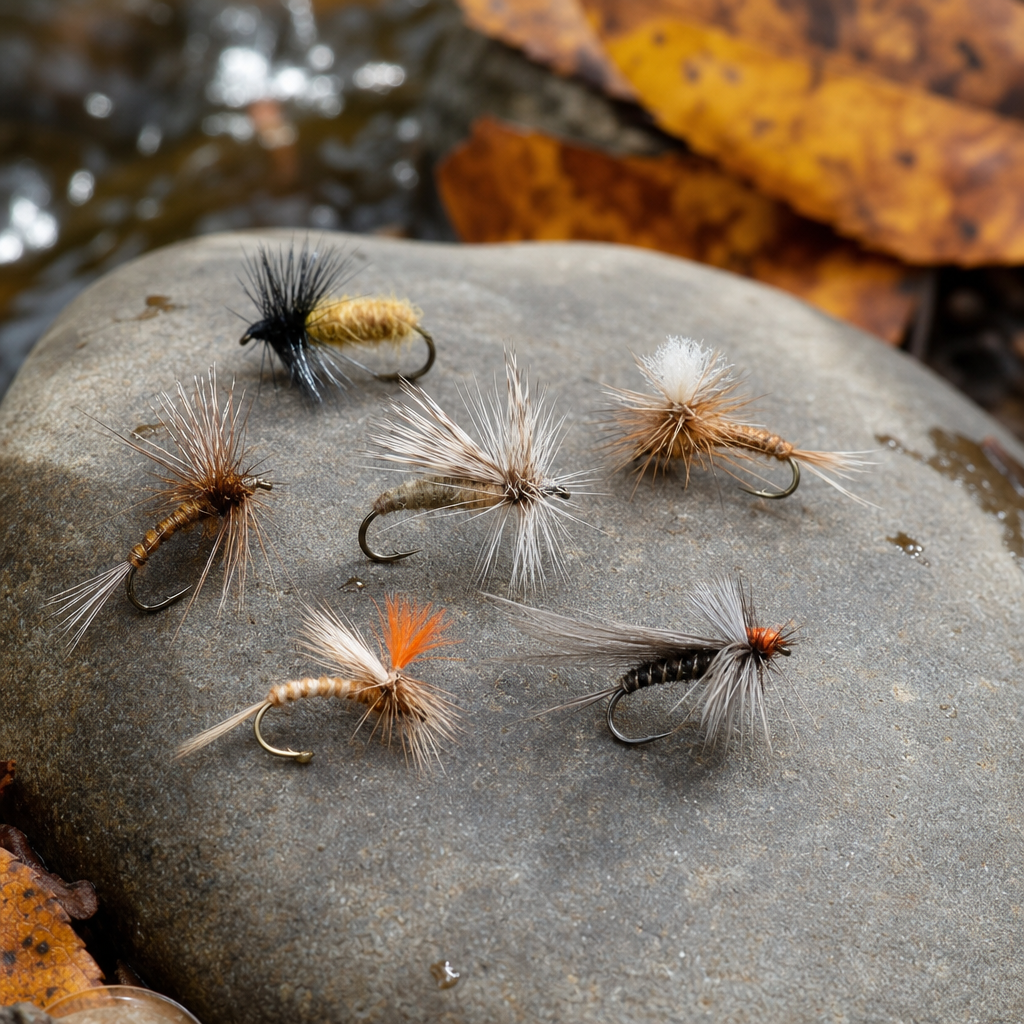
The most productive spring fly categories are baitfish streamers, crawfish patterns, leeches, and surface bugs. White, olive-white, and gray baitfish flies imitate shad, shiners, and juvenile perch. Olive, rust, brown, and black craws are outstanding whenever bass are near rock, wood, or bottom transitions. Leech and marabou patterns bridge the gap when fish want movement without speed. Surface bugs become better as water warms into the upper 50s and 60s, especially around fry-guarding males, shallow grass, and protected pockets in the evening.
Presentation should reflect fish mood, not angler preference. In cold prespawn water, most bass want the fly near them, below them, or slowly crossing their field of view. Long pauses, short strips, and bottom contact matter. I often use a crawl-crawl-pause retrieve with weighted crawfish flies, keeping the line tight enough to feel the tick of rock. As water stabilizes and fish become more active, longer strips and directional changes trigger reaction bites. Smallmouth especially respond to a streamer that rises and stalls near boulders or current seams.
Spawning and post-spawn fish react differently. Bedding bass often strike because a fly invades the nest, so precision matters more than realism. Compact dark flies, small crayfish, or marabou jigs can be effective when repeatedly placed in the sweet spot. Fry-guarding males are often even easier; they attack intruders quickly, and small topwater sliders can draw explosive takes. The key is not to overfish a visible target. If a bass has followed twice without committing, change angle, depth, or fly size. Repeating the same cast with the same retrieve usually wastes time in spring.
Use Location Strategies for Ponds, Lakes, Reservoirs, and Rivers
Small ponds warm fastest, so they can offer the earliest consistent spring fly fishing for bass. Start on the north bank, dark-bottom coves, inflow areas, and shorelines protected from cold north winds. In ponds with little structure, any irregularity matters: a laydown, a culvert, a shallow shelf, a corner with emerging reeds. Because pond bass often cruise tight to shore in spring, a quiet approach and parallel casts are more effective than bombing casts to the middle. Bank anglers catch more fish when they cover water slowly and fish each piece of cover from several angles.
Natural lakes and reservoirs require a bigger migration mindset. Bass generally move from winter basins or channels toward spawning areas in steps. Those steps include main-lake points, secondary points, bluff ends, channel swings, and flats near creek mouths. On reservoirs, map study before the trip saves hours. Contour mapping in Navionics, LakeMaster, or C-MAP can reveal the first breakline next to a spawning pocket, which is exactly where a cold-front prespawn fish often stops. In clear reservoirs, long casts with intermediate lines across sloping banks are especially effective for staging smallmouth.
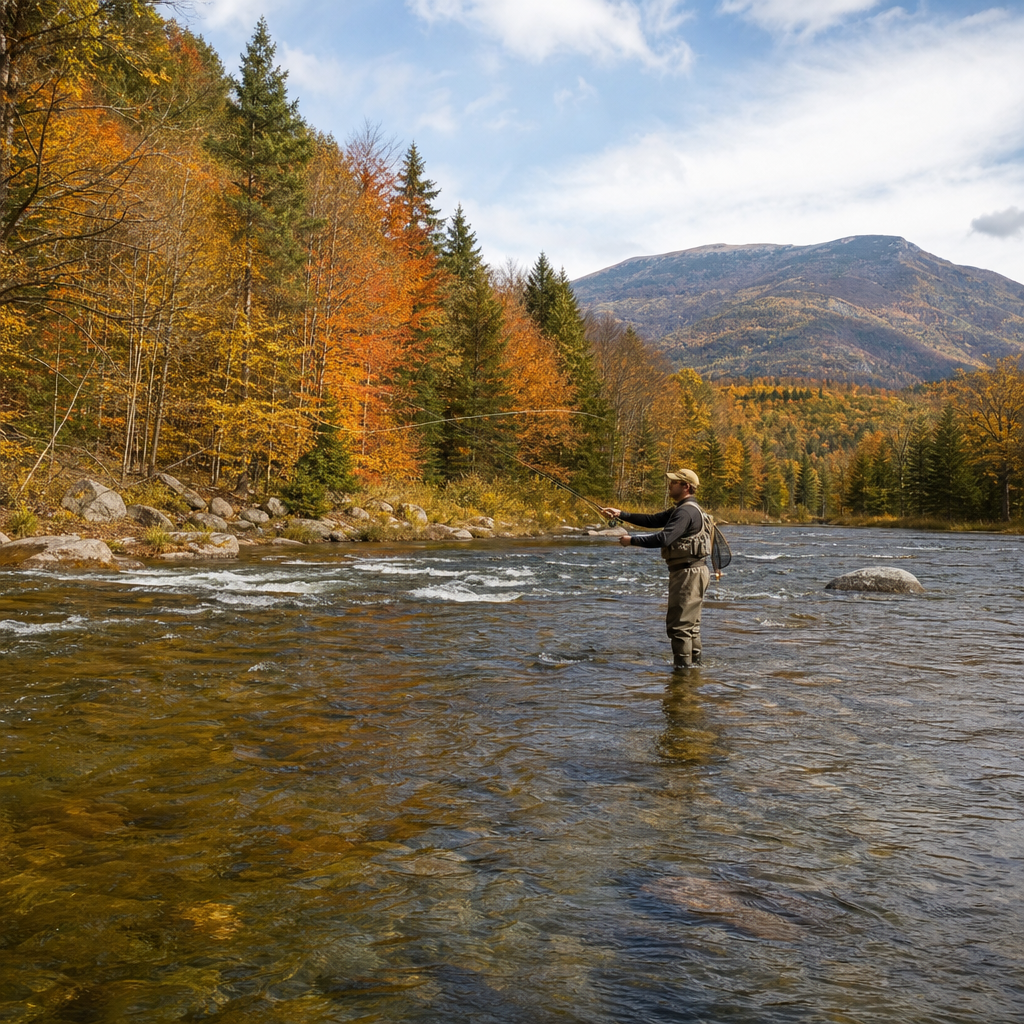
Rivers add current, which simplifies some decisions and complicates others. Current concentrates food, but bass still want rest. In spring, look for soft edges next to moving water, gravel bars with adjacent depth, tailouts, current seams beside laydowns, and eddies below islands. Rising water often pushes largemouth into flooded backwaters and side channels, while smallmouth may hold on slower banks and behind current breaks. Wading anglers should focus on safety because spring flow changes fast. A productive seam is never worth crossing if the bottom is unstable or upstream generation schedules are uncertain.
Avoid Common Mistakes and Build a Reliable Spring System
The biggest spring mistake is fishing too fast for the water temperature. Anglers see active birds, sunshine, and shallow cover and assume bass will chase all day. Often they will not. Another mistake is using one line for every scenario. A floating line cannot effectively probe the first drop in eight feet of water with a crosswind. A third error is ignoring transitions. Bass love edges: rock to sand, weeds to open water, slack water to current, dirty water to clear water. If your casts are landing in the middle of featureless water, you are probably skipping the best targets.
A reliable system starts with observation. Check surface temperature in several areas, note clarity, identify wind direction, and ask where the nearest deep water lies to likely spawning habitat. Then choose one search fly and one slower follow-up fly. For example, begin with a white baitfish streamer on an intermediate line for active fish, then switch to a rust craw on a sink-tip when follows do not convert. Keep notes after each outing. Over time, patterns emerge by water temperature, lake level, moon phase, and weather trend. That logbook becomes more valuable than any generic spring fishing advice online.
Spring fly fishing for bass rewards anglers who think in phases, trust water temperature, and adapt presentation to daily conditions. Learn the seasonal calendar, fish migration routes before obvious spawning banks, carry lines that cover surface to bottom, and match your fly to what bass are actually eating or defending. The benefit is consistency: more fish on unfamiliar water, fewer unproductive casts, and faster adjustments when a front changes everything. Use this guide as your spring hub, then apply it on your next trip with a thermometer, two line options, and a plan to fish edges thoroughly. That simple approach catches bass every spring.
Frequently Asked Questions
When is the best time in spring to fly fish for bass?
The best time depends less on the calendar and more on water temperature, weather trends, and where bass are in their seasonal movement. Early spring, when water is still cold, often means bass are holding near wintering areas such as deeper channel edges, steep banks, rocky transition zones, and protected coves that warm first. During this phase, fly anglers usually do best by fishing slowly and methodically with flies that stay in the strike zone longer. As temperatures continue to rise, largemouth and smallmouth begin shifting toward feeding lanes, secondary points, creek mouths, flats, and spawning habitat. That pre-spawn window is often one of the most productive periods of the entire year because bass are actively feeding and moving.
In practical terms, stable warming trends usually matter more than a single warm afternoon. A few consecutive mild days can position bass far better than one sudden spike in air temperature followed by a cold front. Midday is often best in early spring because the sun has had time to warm shallow water, especially in dark-bottom bays, wind-protected pockets, and shoreline cover that absorbs heat. Later in spring, low-light periods such as morning and evening can become more important as fish spread out and feed more aggressively. If you want a simple rule, focus on warming water, protected areas that collect heat, and transition routes between deep holding water and shallow spawning zones. Those factors consistently tell you more than the month on the calendar.
What fly patterns work best for spring bass fishing?
The most effective spring bass flies usually imitate the forage bass are actively targeting at that specific stage of the season. In cold early spring water, baitfish patterns, small streamers, leeches, and crawfish imitations are reliable because bass are often feeding opportunistically but may not want to chase far. A suspending or slowly sinking fly with movement but not too much bulk can be especially effective when fish are still lethargic. As the season progresses and bait becomes more active, larger baitfish flies, craw patterns, and swimming streamers often shine around transition banks, creek channels, emerging vegetation, and rocky structure. In many fisheries, crawfish are a major pre-spawn food source for both largemouth and smallmouth, so brown, olive, rust, and black craw imitations are excellent staples.
Once water temperatures climb and bass start cruising shallower water, you can expand into more aggressive patterns. Deceivers, Clouser-style minnows, bunny leeches, and articulated streamers can all be strong choices when fish are feeding heavily. If bluegill, perch, shad, or juvenile panfish are present, matching those bait profiles can make a big difference. In some waters, topwater flies begin producing well in late spring, especially on warm evenings, around shallow cover, or during the post-spawn period when bass are willing to attack on the surface. Poppers, divers, gurglers, and deer-hair bugs can all be deadly then. The key is not choosing one “magic” fly, but selecting patterns that match local forage, fish depth, and bass mood. Spring rewards anglers who rotate between craws, baitfish, and surface options as conditions change.
How should I adjust my retrieve for bass in different spring conditions?
Retrieve speed is one of the most important variables in spring fly fishing for bass because fish behavior changes quickly as water warms or cools. In colder water, bass typically prefer a slower, more deliberate presentation. Short strips, long pauses, and bottom-oriented retrieves often outperform fast, aggressive action. This is especially true after a cold front, during muddy inflow, or early in the season when fish remain close to winter structure. A slow crawl with an occasional hop can make a crawfish or leech pattern look natural and easy to catch. If you are fishing baitfish flies in cold water, try subtle strips with enough pause to let the fly hover, sink, or swing naturally.
As bass transition into stronger pre-spawn feeding behavior, they often respond better to more active retrieves. This is when strip-strip-pause, erratic darting action, and short bursts that imitate fleeing bait can trigger reaction strikes. Smallmouth in particular often like a fly that changes speed and direction. Largemouth around wood, grass edges, docks, and shallow pockets may prefer a retrieve that keeps the fly close to cover before suddenly accelerating. In warmer late-spring conditions, topwater retrieves can also become highly effective. Poppers may work best with distinct pops and pauses, while gurglers and divers often produce on a steady waking or chugging retrieve. The smartest approach is to begin with the speed the water temperature suggests, then let the fish tell you whether they want slower, faster, smoother, or more erratic movement.
Where should I look for largemouth and smallmouth bass during the spring transition?
Spring bass are rarely random. They move along predictable routes between winter holding areas, feeding stations, and spawning habitat, and understanding those routes is often the difference between a slow day and a memorable one. For largemouth, start by looking at protected coves, creek arms, channel swings near shallow flats, submerged wood, emerging grass, docks, and inside turns where fish can move up in stages. They often use secondary points and small pieces of cover as temporary stopping places while traveling toward shallower spawning zones. Sun-warmed water in the backs of pockets can attract bait and create short feeding windows, especially after a few stable warm days.
Smallmouth usually relate more strongly to rock, current, gravel flats, bluff transitions, and points near deeper water. In rivers, they often shift from winter pools toward current seams, eddies, softer edges below riffles, and shoreline structure that gives them both warmth and feeding opportunity. In lakes and reservoirs, rocky banks, staging points, and gravel flats near drop-offs are prime spring areas. Wind can also help by pushing bait into banks and points, concentrating active fish. A productive spring strategy is to fish “the path,” not just the destination. Instead of focusing only on spawning flats, target the edges, access routes, and stopping spots bass use on the way there. If you can identify water that offers depth nearby, quick access to shallows, and available forage, you are usually in the right neighborhood.
What fly rod, line, and leader setup is best for spring bass fishing?
A versatile spring bass setup for most anglers is a 7- or 8-weight fly rod paired with a quality reel and a line matched to the type of water you are covering. A 7-weight is a great all-around choice for smaller flies, river smallmouth, and anglers who want a lighter, more castable outfit. An 8-weight offers more authority when throwing larger streamers, weighted craw patterns, or wind-resistant topwater bugs, and it gives extra control around heavy cover where largemouth often live. In spring, line choice matters just as much as rod weight because bass can be anywhere from deeper staging edges to inches of water on warming flats. A weight-forward floating line is excellent for topwater, shallow streamers, and fishing around weeds, wood, and shorelines. A sink-tip or intermediate line becomes extremely useful when bass are holding on deeper breaks, rocky transitions, or channel edges before fully moving shallow.
Leaders for bass are generally shorter and heavier than trout leaders because you are turning over bigger flies and often fishing near cover. Many anglers do well with leaders in the 7.5- to 9-foot range, tapering to 10- to 16-pound tippet depending on fly size, water clarity, and the amount of structure present. In very clear water or when fish are pressured, lighter tippet may help, but in most bass situations abrasion resistance and turning power matter more than delicate presentation. For topwater, a floating leader setup keeps bugs working correctly, while streamer and craw applications may benefit from a shorter, more direct leader that helps maintain contact with the fly. The best spring setup is ultimately the one that allows you to change tactics quickly, because bass may shift from deep staging behavior to shallow aggression within the same day.