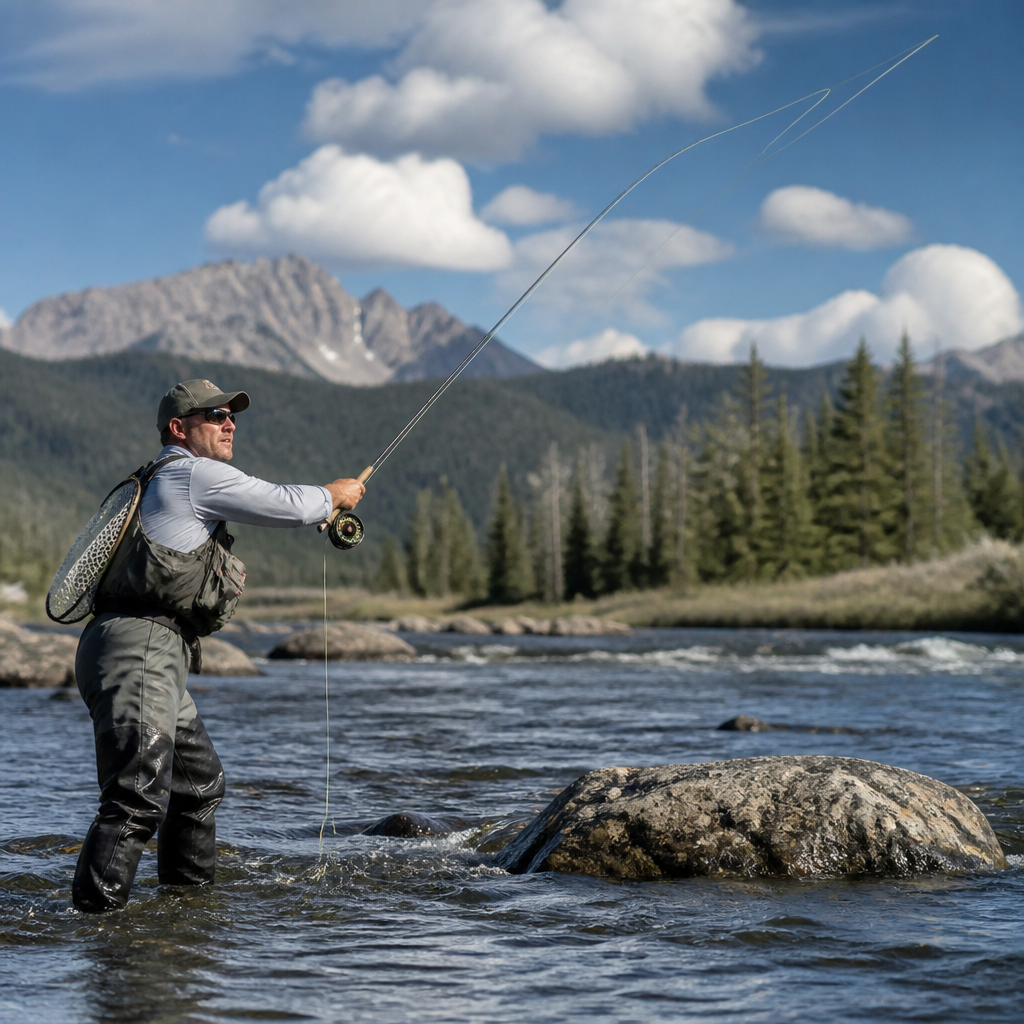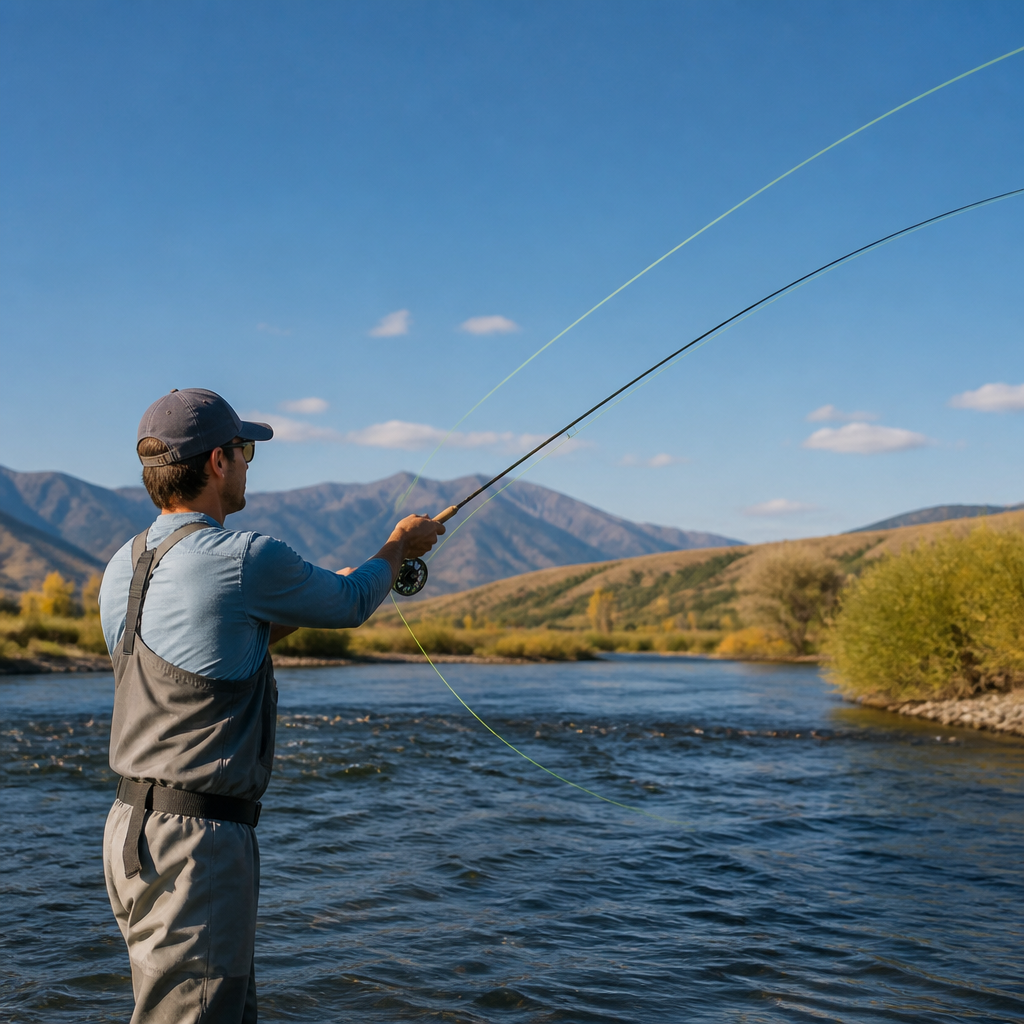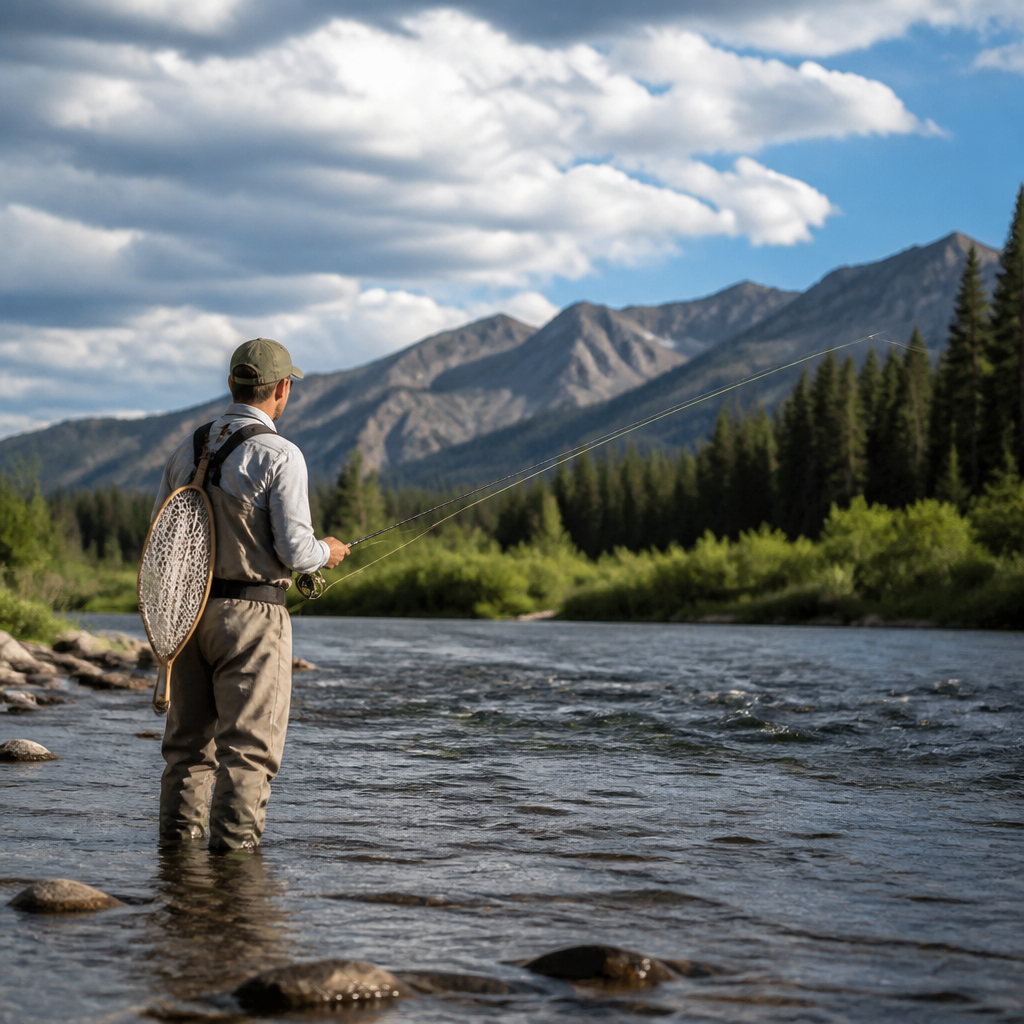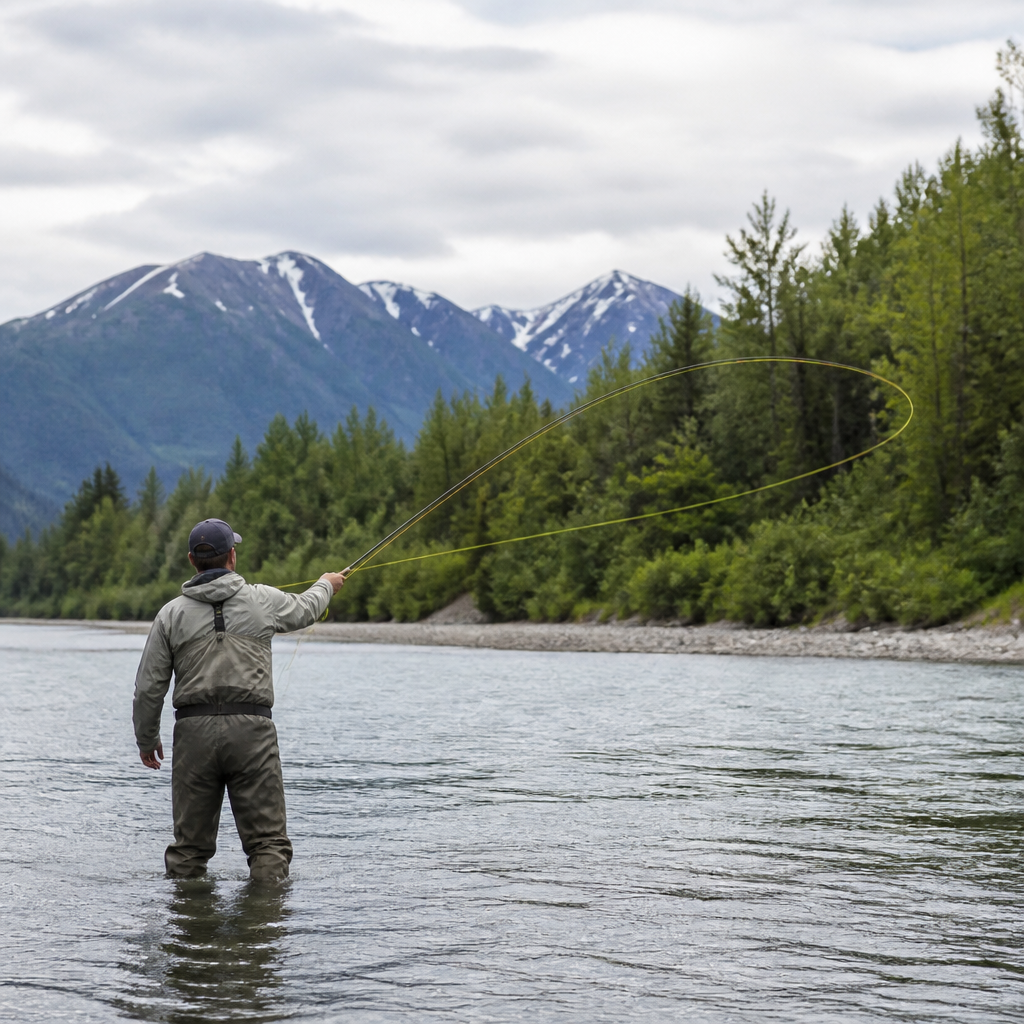
Skagit casting is a specialized Spey casting system built to deliver heavy sink tips, large flies, and efficient presentations in tight quarters, especially on steelhead and salmon rivers where a conventional back cast is impossible. The term “Skagit” refers both to a casting style and to a short, powerful shooting head designed to load a two-handed rod with minimal space behind the angler. As a hub topic within specialized fly-fishing techniques, Skagit casting matters because it solves a real problem: how to move dense tackle cleanly, safely, and repeatedly when banks are lined with brush, current is fast, and fish hold deep.
I have taught Skagit setups to new Spey anglers and rebuilt more than a few poor line systems at the river, and the same pattern shows up every season. People often buy a two-handed rod, add a random head, and assume power alone will make the cast work. In practice, Skagit success comes from matched components, disciplined anchor placement, and understanding why each cast shape exists. When anglers grasp those principles, distance improves, blown anchors decrease, and heavy winter flies become manageable instead of dangerous.
At its core, Skagit casting uses a sustained anchor. That means the line and often the fly remain connected to the water during the setup, allowing the rod to bend deeply before the forward stroke. This differs from touch-and-go styles, which rely on a brief anchor kiss and generally favor lighter tips and cleaner conditions. A few key terms define the system. The head is the short, thick section that carries energy. The sink tip is the replaceable front section that sets fishing depth. The running line is the thin line behind the head that shoots for distance. The anchor is the line stick on the water, and the D-loop is the wedge of line and rod load formed behind the caster before delivery.
Why does this technique deserve a dedicated hub page? Because nearly every advanced Spey subtopic connects back to it. Winter steelhead presentations, intruder fishing, sink-tip selection, compact stroke mechanics, downstream wind management, and casting from steep cutbanks all depend on Skagit principles. Once you understand how a short head turns over mass, you can make smarter decisions about rod length, grain windows, casting angle, swing speed, and wading position. That makes Skagit casting not just one tactic, but a framework for specialized two-handed fishing in demanding water.
How Skagit Casting Works in Real Fishing Conditions
Skagit casting works by combining water tension with a compact, forceful stroke so the rod can move heavy payloads efficiently. In plain terms, the water helps hold the line while you form the D-loop, and the short head stores energy quickly. That is why the system excels with T-8, T-11, T-14, and even denser tips, plus weighted flies that would collapse lighter Spey styles. On rivers such as the Skagit, Sauk, Clearwater, and Dean, that matters because holding water is often deep, cold, and fast enough that a floating presentation simply rides above fish.
The sustained anchor gives anglers more timing margin than touch-and-go casting, but it also imposes rules. If the anchor lands too far away, the cast sticks and dies. If it lands too close or too straight below the angler, the fly can jump dangerously during the sweep. A practical target is placing the anchor about a rod length away and slightly off the casting-side shoulder, with enough stick to hold the load but not so much that the head drags. Good Skagit casters learn to feel this balance instead of overpowering the rod.
Another defining feature is adaptability. A 12-foot to 15-foot sink tip can be changed in seconds to suit bucket depth, current speed, or water temperature. In winter, I often shorten casting effort by using a compact head with ten feet of T-11 and a lightly weighted intruder when river levels are moderate. If flows rise and the walking pace quickens, stepping up to T-14 or adding tip length gains depth without changing the entire line system. That modular design is one reason Skagit remains the dominant sink-tip platform in modern steelheading.
Essential Gear: Rods, Heads, Tips, and Running Lines
The most important gear decision in Skagit casting is matching grain weight to rod design. Manufacturers publish grain windows for a reason. A 7-weight two-handed rod might perform best with a 475- to 525-grain Skagit head, while a stronger 8-weight often prefers roughly 540 to 600 grains, depending on length and action. Ignore that window and the rod either feels lifeless or overloaded. In my experience, many anglers choose too much grain because overloaded casts feel powerful at first. Over time, though, tip bounce, poor loop control, and shoulder fatigue show the mismatch clearly.
Head length matters almost as much as grain weight. Traditional Skagit heads are short and compact, often around 18 to 23 feet, built for sustained-anchor casting and maximum turnover. Longer “hybrid” heads may cast more smoothly at distance and fish better on broad gravel bars, but pure Skagit heads remain the best choice when trees, high banks, or downstream wind limit space. Brands such as Airflo, Rio, Scientific Anglers, and OPST each offer heads with different tapers. Some are punchier for heavy tips, while others provide a slightly more refined turnover for lighter flies and summer conditions.
Sink tips should be selected by density, length, and total grain contribution. T-material is tungsten-impregnated line measured by grains per foot. T-8 is eight grains per foot, T-11 is eleven, and T-14 is fourteen. Ten feet of T-11 therefore adds about 110 grains to the front of the system. That extra mass changes both casting load and fishing depth. For smaller summer steelhead flies, MOW-style tips with floating and sinking sections can offer useful versatility. For winter work, straight sinking tips are usually cleaner, simpler, and easier to predict in the swing.
Running line is often overlooked, yet it strongly affects distance, handling, and cold-weather performance. Coated running lines are easier to grip and manage in freezing conditions, while monofilament and slick integrated systems can shoot farther but demand better line control. Anglers fishing boulder gardens or woody banks usually benefit from a handling-first setup rather than chasing maximum distance. Durable loops, clean connections, and a stripping basket in tidal or windy situations can improve efficiency more than buying a faster rod.
| Component | Primary function | Best use case | Main tradeoff |
|---|---|---|---|
| Compact Skagit head | Loads rod quickly and turns over heavy tips | Tight banks, winter flies, sink-tip work | Less delicate presentation |
| T-11 tip | Moderate sink with manageable casting weight | Medium depth, average winter flows | May not reach deep buckets fast enough |
| T-14 tip | Faster sink and stronger turnover | High water, deep slots, large flies | Harder timing and more physical effort |
| Coated running line | Control and easier handling | Cold weather, beginners, rough banks | Usually less shooting distance |
| Mono running line | Low friction and long shoots | Open bars, experienced casters | Tangles and poor grip in cold conditions |
Core Skagit Casts and When to Use Them
The three casts every Skagit angler should own are the Double Spey, Snap-T, and Perry Poke. Each solves a different setup problem, and together they cover most fishing situations. The Double Spey is the workhorse for downstream wind on the casting side because it keeps the fly under control and sets a stable sustained anchor. It is slower than a Snap-T, but that slower pace is often exactly what beginners need to learn clean sweep mechanics and proper alignment.
The Snap-T is faster and more compact. It shines when the wind comes from upstream on the non-casting side and you need to reposition line efficiently. The defining movement is the snap that lifts and redirects the tip before the sweep forms the D-loop. Done correctly, it creates excellent anchor placement with minimal false motion. Done poorly, it produces a blown anchor or a dangerous climbing fly. The cure is not more force; it is better path control and stopping the setup before the forward stroke begins.
The Perry Poke is indispensable with very heavy tips, sunk anchors, and difficult tension. In real river conditions, line often buries after a long swing, especially when anglers fish slow water thoroughly. The poke intentionally places slack and resets tension so the sweep can begin cleanly. Many advanced casters use a poke variation constantly without thinking about it, because it is the safest way to recover from sticky waterborne setups. If your cast feels glued to the river, a controlled poke is usually smarter than trying to rip the line free.
Technique Fundamentals: Anchor, Sweep, D-Loop, and Forward Stroke
Strong Skagit casting comes from sequence, not strength. Start with a stable stance and an intentional target line. As the swing finishes, lift only enough line to begin the setup. Excessive lift breaks tension and forces rushed corrections. The anchor should land lightly and in the right place, then the sweep should travel around the body on an upward plane, setting the rod into the D-loop without collapsing toward the water. If the sweep is flat, the D-loop narrows and the cast loses energy before the forward stroke even starts.
Rod path on the forward stroke determines loop shape and turnover. A smooth acceleration to a firm stop creates efficient line speed. Punching too early causes tailing loops and fly kick. Drifting too long without a crisp stop opens the loop and wastes energy. With Skagit systems, I coach anglers to think “lift, place, sweep, send” because the rhythm prevents the common mistake of mashing everything into one violent movement. When the sequence is clean, even a modest stroke can launch a heavy tip surprisingly far.
Body position matters as much as hand path. Rotate from the torso, keep the top hand authoritative, and let the bottom hand contribute only enough pull to support rod load. Many anglers overuse the lower hand and bury the tip. Others cast entirely with arms and never align shoulders with the target. Efficient movement feels connected from feet to hands. On larger rivers, changing wading angle by a single step often fixes anchor placement faster than any mechanical adjustment, which is why river awareness is part of good casting technique.
Specialized Applications for Steelhead, Salmon, and Tight Water
Skagit casting is most closely associated with winter steelhead, and for good reason. Cold water slows fish metabolism, pushes them toward softer structure, and usually demands deeper presentations. A short head and dense tip deliver that depth with control. Classic patterns such as intruders, rabbit-strip leeches, and composite loop flies create movement at slow swing speeds, and Skagit systems turn them over reliably. On Pacific Northwest rivers, this combination remains standard because it covers water thoroughly without requiring an overhead casting lane.
For salmon, especially chinook and coho in larger currents, the same principles apply but tackle often scales up. Heavier rods, stronger leaders, and larger flies increase system mass quickly, so precise matching becomes even more important. A rod that handles ten feet of T-14 with authority may struggle when anglers jump to fifteen feet plus a heavily weighted fly. In those situations, shortening the tip or reducing fly weight often improves fishing efficiency more than adding more grain to the head.
Tight water is where Skagit truly separates itself from general Spey methods. Brushy banks, overhanging alders, and steep canyon walls eliminate any room for a back cast, yet fish still hold there. Compact casts such as the Snap-T and Circle Spey let anglers fish productive seams that single-hand casters simply cannot reach safely. This is why many guides keep clients on Skagit gear even when distance needs are modest. The payoff is not casting style points; it is controlled presentation in water that consistently holds fish.
Common Mistakes, Safety, and Practice Drills
The most common Skagit mistakes are poor anchor placement, an underpowered or misdirected sweep, overpowering the forward stroke, and using mismatched tackle. Most failures can be diagnosed by watching where the anchor lands and where the D-loop points. If the cast blows left or right, alignment is usually off. If the line sticks and lurches, there is too much anchor. If the fly kicks dangerously upward, the setup was rushed or too close to the body. These are technical problems with technical fixes, not signs that the rod lacks power.
Safety must be explicit because Skagit systems cast dense tips and large hooks. Eye protection is mandatory. A hat is smart. Beginners should practice with yarn or hookless flies until anchor control is dependable. Wind direction should always influence cast choice; selecting a cast that keeps the fly downwind of the body is not optional. On crowded runs, anglers also need enough spacing to avoid crossing tips during the sweep. I have seen near misses happen fastest when confidence exceeds control, especially after one or two successful long casts.
Practice drills should isolate one variable at a time. Start by placing the anchor consistently without worrying about distance. Next, build a repeatable sweep that forms a high, round D-loop. Only then add line speed and shooting line. A simple drill is making short casts with the running line held, forcing the caster to learn clean turnover from rod load rather than from shooting distance. Filming from the side helps reveal whether the sweep climbs, whether the stop is firm, and whether the anchor lands where the caster believes it does.
Skagit casting is the hub technique for specialized two-handed fly fishing because it joins practical gear design, efficient mechanics, and real fishing utility in one coherent system. When you understand sustained anchor principles, grain matching, tip selection, and the purpose behind core casts like the Double Spey, Snap-T, and Perry Poke, the method stops feeling mysterious. It becomes a dependable way to fish deep, cast safely in confined spaces, and present large flies with control. That is why so many steelhead and salmon anglers build their sink-tip game around Skagit rather than treating it as a niche variation.
The key takeaway is simple: success comes from balance. Match the rod and head correctly, choose tips for the water you are actually fishing, and commit to disciplined anchor and sweep mechanics. Do that, and your casts become easier, not harder. You will spend less time fighting your line system and more time covering productive water at the right depth. If you are building out your specialized techniques library, use this page as your starting point, then apply these principles on the river and refine them one clean cast at a time.
Frequently Asked Questions
What is Skagit casting, and how is it different from other Spey casting styles?
Skagit casting is a compact, powerful branch of Spey casting designed to throw heavy sink tips, weighted flies, and short, aggressive shooting heads with very little room behind the angler. It was developed to solve a practical problem common on steelhead and salmon rivers: how to make effective casts when steep banks, trees, brush, or high water make a traditional back cast impossible. Instead of relying on long, elegant line layouts, Skagit casting uses a short head and sustained-anchor cast mechanics to load a two-handed rod efficiently and send bulky setups across current with minimal false casting.
What separates Skagit from other Spey systems is its emphasis on turning over mass. A Scandi setup, for example, is typically more touch-and-go in style and excels with smaller flies, lighter tips, and cleaner, more delicate presentations. Traditional long-belly Spey lines, meanwhile, reward advanced timing and more casting space, and they are often favored for graceful line control at distance. Skagit is more compact and more forgiving when conditions are difficult. It shines in cold water, deep runs, tight banks, and heavy winter fishing where anglers need to fish big flies low and slow.
Another key difference is the way the cast is organized. Skagit casting generally uses a sustained anchor, meaning part of the line system stays connected to the water a bit longer during the sweep and forward delivery. That water tension helps load the rod and stabilize heavy tips that would be awkward with lighter, faster styles. For many anglers, this makes Skagit one of the most practical and adaptable two-handed systems to learn first, especially if their home water demands sink tips and large profile patterns.
What gear do I need for an effective Skagit casting setup?
A strong Skagit setup starts with the right balance between rod, head, tip, running line, and fly. Most anglers use a two-handed Spey or switch rod matched to the size of the river and the species being targeted. Shorter switch rods can work well on smaller rivers and in extremely confined spaces, while full Spey rods provide more line control and mending ability on broader water. The key is not simply rod length, but proper grain matching. A Skagit head needs to load the rod deeply and quickly, so selecting the correct grain window recommended by the rod manufacturer is essential.
The Skagit head itself is the heart of the system. These heads are short and powerful, built to carry the payload of interchangeable sink tips and weighted flies. Anglers commonly pair them with a thin running line, either coated or monofilament-style, to maximize shooting distance. From there, the sink tip is chosen based on depth, current speed, and fly size. Heavier tungsten-impregnated tips are ideal for deep, fast holding water, while lighter tips or intermediate options may be better when fish are suspended higher or when snagging bottom becomes an issue.
Leaders in Skagit systems are usually short and straightforward. Because the head and tip do most of the work, there is no need for a long tapered leader. A short section of strong material is typically enough to connect the fly and preserve turnover. Fly choice often leans larger and more mobile than in floating-line systems, especially for winter steelhead or salmon. The overall idea is simple: every part of the setup should support efficient loading, easy turnover, and controlled presentation in demanding conditions.
It is also worth emphasizing that overlining or underlining a rod can quickly make Skagit casting frustrating. Too light a head may fail to bend the rod and make the cast feel weak or rushed. Too heavy a head can overpower the blank, distort timing, and increase fatigue. A properly matched system feels compact, direct, and surprisingly effortless once dialed in. That balance is what turns Skagit from a brute-force method into a highly refined fishing tool.
When should I choose Skagit casting over Scandi or overhead casting?
Skagit casting is the best choice when the fishing situation demands depth, power, and efficiency in limited space. If you are standing beneath overhanging trees, pinned against a cut bank, or working a run with no room for a back cast, Skagit is often the most reliable solution. It allows you to lift a heavy tip, form a compact casting setup, and deliver the fly across current without the long aerial line movements required in overhead casting or the lighter anchor style common in Scandi systems.
It is especially valuable in winter steelhead and salmon fishing, when water is often cold, high, and colored, and fish are more likely to hold near the bottom. In those conditions, anglers commonly fish weighted intruders, tubes, or large-profile flies on dense sink tips. Skagit was built for exactly that environment. The short head and sustained-anchor mechanics make it easier to reposition and cast a heavy system repeatedly, even when wind, current, and riverbank obstacles are working against you.
By contrast, Scandi casting is often preferred when a lighter touch is needed. If you are fishing smaller flies, shallower water, or floating or light intermediate tips, a Scandi line may offer smoother loops and more elegant turnover. Overhead casting can still be useful on open water, from boats, or on broad gravel bars where a back cast is available. But once room disappears or the setup gets heavier, Skagit usually becomes the more practical and fishable option.
In real-world terms, many experienced two-handed anglers use more than one system and switch based on conditions. Skagit is not “better” in every circumstance, but it is often the most versatile answer when the river gets tight and the presentation gets heavy. That is why it remains such a foundational technique for anadromous fishing in demanding water.
What are the most common Skagit casting mistakes, and how can I fix them?
One of the most common mistakes in Skagit casting is rushing the cast. Because the system is designed to be compact and efficient, many anglers try to force it with speed instead of letting the rod load through proper anchor placement and a controlled sweep. When the sweep is too abrupt or the forward stroke starts too early, the result is often blown anchors, collapsing loops, and piles of line instead of clean turnover. The fix is to slow down, maintain constant tension, and let the rod bend progressively before accelerating into the delivery.
Poor anchor placement is another frequent issue. In Skagit casting, the anchor is the section of line and tip that touches the water and helps load the rod. If that anchor lands too far away, too close, or too straight downstream, the cast becomes unstable and inefficient. A well-placed anchor should support the sweep and forward cast without sticking excessively or flying out of position. Many casting problems that seem like “power” issues are really anchor and alignment issues. Practicing set-up and positioning is often more helpful than simply casting harder.
Anglers also commonly make the mistake of using too much arm and not enough body rotation. Effective Skagit casting is not just a wrist-and-shoulder motion. It relies on coordinated movement through the hands, arms, torso, and stance. When the caster tries to muscle the line with the upper body alone, timing suffers and fatigue builds quickly. A more efficient stroke uses smooth rotational movement, stable posture, and a direct rod path that keeps the D-loop organized and the forward cast on target.
Another problem is mismatched gear. A sink tip that is too long or too heavy for the rod, a head outside the intended grain range, or a fly with too much wind resistance can make even a technically sound caster struggle. If the setup feels clumsy every time, it may not be a skill issue at all. Simplifying the system, shortening the tip, or moving to a better matched head can dramatically improve performance. For beginners in particular, a balanced outfit and medium-sized fly are often the fastest route to learning proper mechanics.
Finally, many anglers overlook the importance of line stick and waterborne tension. Skagit is a sustained-anchor style, so the water is part of the casting system. Learning how much stick is enough, and when that stick becomes excessive, is part of developing consistency. If the line feels glued down, the sweep probably needs to be smoother or the setup cleaner. If the anchor blows free, there may not be enough tension or the forward stroke may be starting too violently. Good Skagit casting sits in that middle ground where the line is connected to the water just long enough to load the rod and no longer.
How can I improve my Skagit casting technique and become more consistent on the water?
The fastest way to improve at Skagit casting is to focus on fundamentals before distance. Consistency comes from clean setup, proper anchor placement, smooth sweep, and a straight, efficient forward stroke. Many anglers chase more power too soon, but strong Skagit casting is rarely about brute force. It is about sequence. Start by making compact, controlled casts that turn over the tip and fly reliably. Once that becomes repeatable, distance usually follows without dramatic changes in effort.
Practice should be structured. Rather than standing in one place and making the same cast over and over, work on specific elements. Spend one session concentrating on anchor placement. In another, focus on sweep shape and maintaining tension. Then practice changing direction,