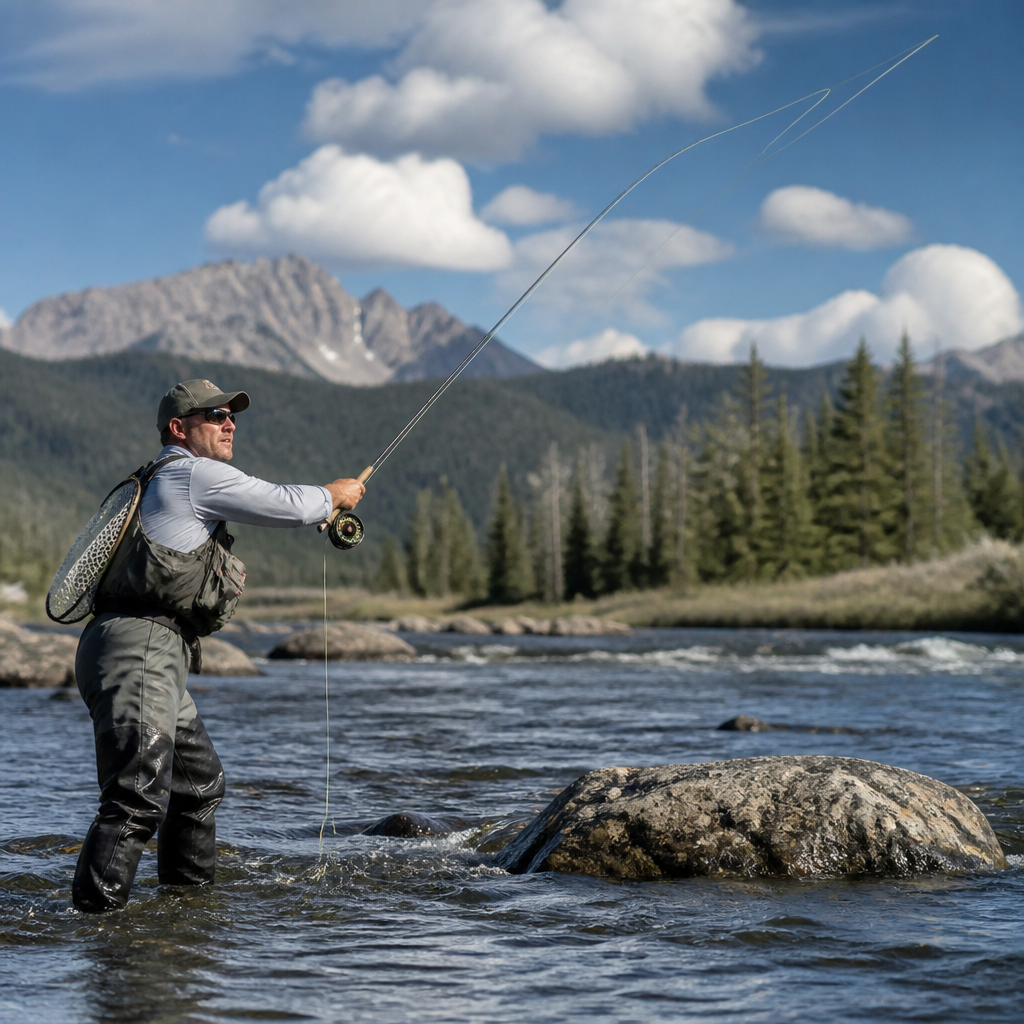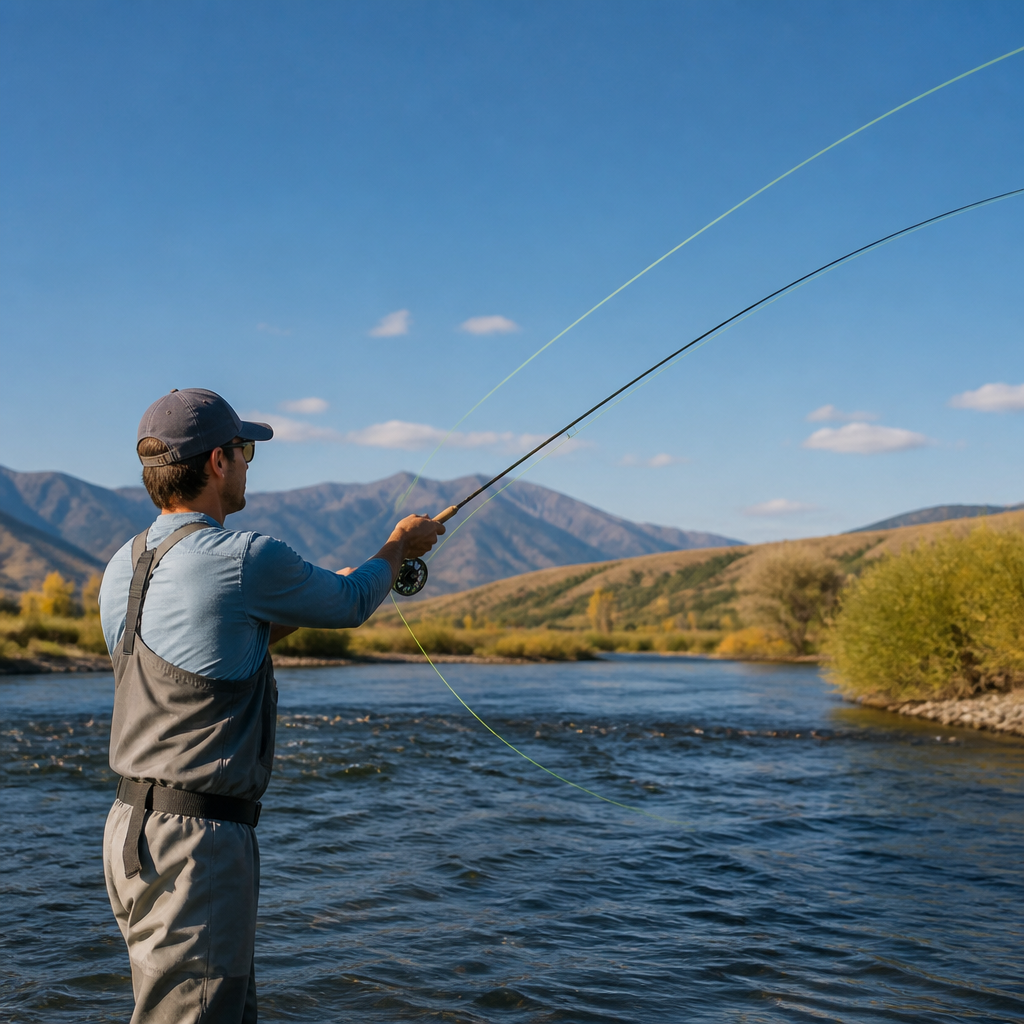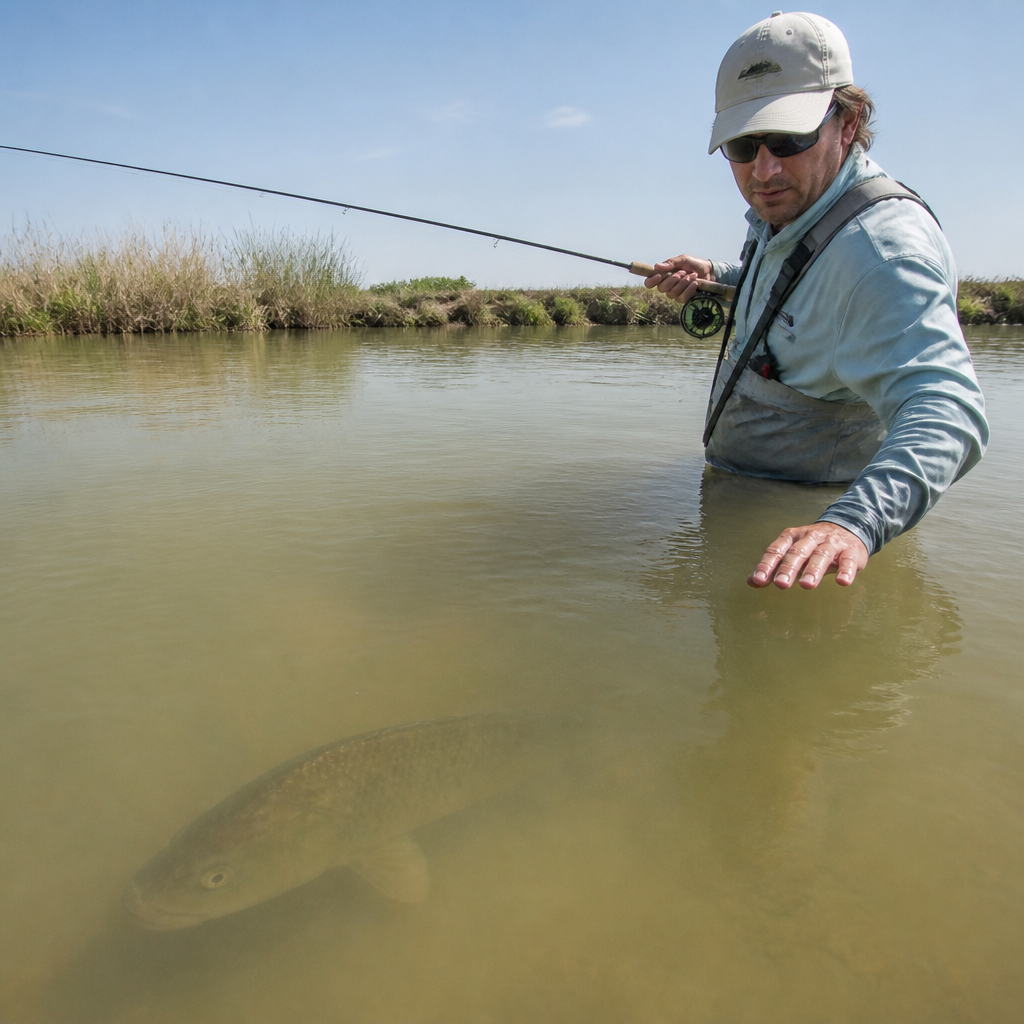
Sight fishing in murky water sounds contradictory, yet it is one of the most practical and rewarding skills an angler can build. In clear water, sight fishing usually means spotting a fish, reading its body language, and placing a lure where it can see it. In stained or muddy conditions, the definition shifts. You are still using vision, but you are also interpreting subtle visual clues: shadows, pressure wakes, tail tips, color changes, moving grass, nervous bait, and ambush lanes along cover. The target is rarely seen with the same clarity as it is on a shallow flat in gin-clear water, but it can still be found, tracked, and caught.
Murky water matters because many productive fisheries spend large parts of the year with reduced visibility. Rain events, wind, runoff, boat traffic, algae, tidal movement, and bottom composition all cut clarity. Bass anglers face it on reservoirs after storms, redfish anglers face it on flooded marshes, and inshore anglers see it whenever wind stirs sediment across a bay. I learned early that waiting for ideal visibility costs fishable days. The better approach is to adapt your sight fishing system so you can still identify high-percentage targets and trigger strikes when visibility drops to inches instead of feet.
For this article, murky water means any condition where underwater visibility is limited enough that fish are hard to fully see before the cast. That includes lightly stained water, chocolate runoff, tannic backwaters, and silted tidal flats. Sight fishing in these conditions depends on three linked skills: locating likely fish positions, recognizing indirect signs of fish presence, and presenting baits so fish can detect them through vibration, displacement, contrast, or sound. Those skills matter because they turn low-visibility water from a random casting exercise into a deliberate pattern-based approach that can be repeated across seasons and species.
This guide serves as a hub for sight fishing within a broader techniques and strategies framework. It covers how water color changes fish behavior, which environmental cues reveal hidden fish, what tackle improves your odds, and how to approach, cast, and hook fish you may barely see. If you want a practical method for finding fish when the water is ugly but the bite is still there, the sections below will give you a complete starting point.
How murky water changes sight fishing
The first rule is simple: fish do not stop feeding because the water gets dirty. They reposition, narrow their strike windows, and rely more heavily on their lateral line, hearing, and short-range vision. Reduced visibility compresses the zone in which a fish can inspect a lure. In clear water, a bass may travel several feet to intercept a soft plastic. In muddy water, that same fish may only react when the lure enters a tight corridor beside a stump, grass line, dock post, or current seam. That is why successful sight fishing in murky water is less about scanning broad water and more about reading exact holding spots.
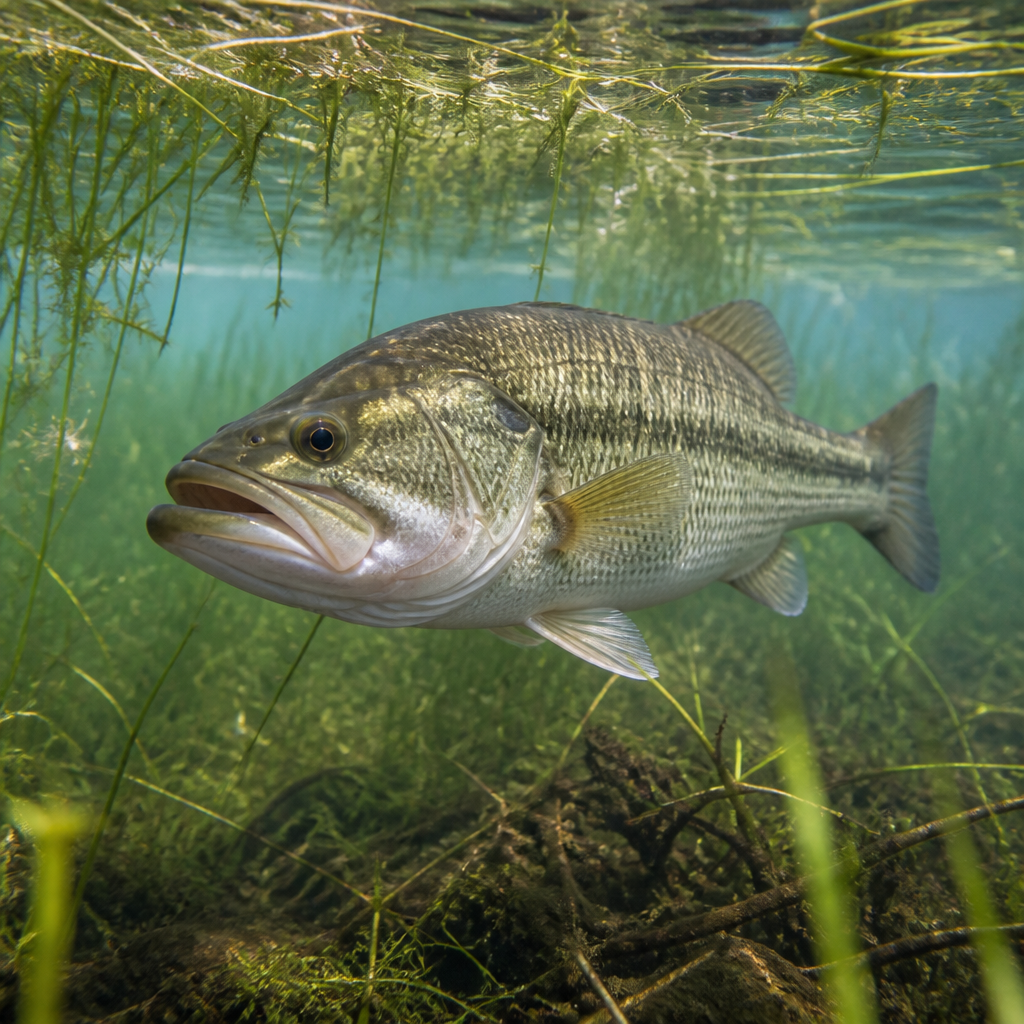
Different species respond in distinct ways. Largemouth bass often pin tighter to hard cover, shallow wood, isolated grass, and dark-bottom transitions where bait is easier to trap. Redfish in stained marsh ponds still tail and push wakes, but you may only notice a copper flash, mud puff, or V-wake instead of the entire fish. Common snook and striped bass frequently set up along current breaks where prey has to pass close. Carp remain visible at times by bubbles, tails, or rooting clouds. Across species, low visibility tends to reward anglers who fish edges, irregularities, and feeding lanes rather than featureless water.
Water color also affects light penetration, lure contrast, and boat positioning. Tannic water can look dark but still allow fish silhouettes in shallow sun. Clay-stained runoff often blocks vision completely beyond a few inches. Green algae stain may leave enough filtered light for fish to track movement better than anglers expect. Because of these differences, experienced anglers judge actual underwater visibility, not just surface color. I test it quickly by lowering a bright lure or push pole tip over the side. If it disappears at six inches, the presentation has to be loud, close, and precise. If I can still make it out at a foot or more, I can search for shadows and movement with more confidence.
Reading visual clues when you cannot clearly see the fish
In murky water, your eyes shift from fish identification to clue detection. The best anglers train themselves to notice anomalies. A pressure wake moving against the wind is a fish until proven otherwise. A patch of grass trembling in still water may mean a bass nosed into the edge. A tan puff over a dark flat can signal a redfish rooting. On shallow wood, the clue may be a dark vertical bar beside a laydown or a sudden flicker where sunlight catches a turn. These signs are subtle, but once you learn to separate them from wave noise and drifting debris, they become reliable.
Surface disturbance is often the easiest clue to decode. Wakes tell you direction, speed, and sometimes species. A broad push with steady momentum usually comes from a larger fish cruising shallow. Short, nervous pops around bait can indicate feeding activity. Tailing fish give away posture: a tail straight up suggests active rooting, while a brief tip may just be a turn. Mud clouds matter too, but only when read in context. Fresh mud has defined edges and often expands from a point near cover or bait. Old mud becomes diffuse and drifts with current or wind.
Birds, baitfish, and current lines are indirect visual clues that many anglers ignore. If mullet are showering along a marsh drain, predators are usually compressing them. If herons are focused on one shoreline pocket, that pocket likely concentrates forage. If a ripple line forms where cleaner water meets stained water, predators may patrol that edge because prey crosses it visibly. Even in freshwater, bluegill flickers around cypress knees or shad dimpling beside floating docks can reveal feeding lanes. The point is not to hunt random signs, but to connect each visible clue to a likely fish position and an angle of presentation.
Best conditions, angles, and positioning for sight fishing in dirty water
Murky water sight fishing improves dramatically when you manage light and boat angle. Most anglers only think about polarized sunglasses, but angle is equally important. With the sun at your back in light stain, shadows and wakes become easier to distinguish. With the sun high overhead, fish may be harder to see directly but bottom changes stand out better. Cloud cover can reduce glare, yet it also flattens contrast. In practice, I prefer early to mid-morning sun on one shoulder, which helps me track movement without staring straight into reflected light.
Wind direction shapes visibility and fish behavior. The windy shoreline is not automatically the wrong shoreline. In many lakes and bays, wind pushes oxygen, plankton, and bait, which can improve feeding activity. But it also stirs sediment. A common pattern is to fish the protected side for better visual detection early, then move to windblown feeding banks where fish are aggressive enough to reveal themselves through wakes and boils. Tides and current create similar tradeoffs. Moving water positions fish predictably, but too much flow muddies edges and reduces your reaction time.
Boat control is critical because dirty water fish are often shallow and close. Drifting too fast causes missed targets and poor cast angles. Push poles, shallow-water anchors, trolling motors on low constant settings, and controlled wading all help. Standing higher improves your field of view, but elevation can also increase your profile and spook fish in skinny water. The solution is steady movement, quiet adjustments, and longer casts to high-value targets. Position the boat so the cast travels slightly past the clue and enters the fish’s strike lane naturally. Dragging a lure directly over a wake usually ends the opportunity.
Tackle and lure choices that help fish find the bait
Good tackle for murky water sight fishing does two jobs at once: it helps you detect the target and helps the target detect the lure. Medium-heavy to heavy rods are common around grass, wood, docks, and marsh edges because fish often strike at close range and immediately bury into cover. Braided line excels around vegetation and gives direct control, while fluorocarbon still has value for abrasion resistance around shell, rock, or dock pilings. Leaders are not about invisibility here as much as shock absorption, abrasion resistance, and lure performance.
Lure choice depends on depth, cover, and how precisely you can identify the fish’s location. In very dirty shallow water, vibration and displacement usually beat subtle finesse. Spinnerbaits with Colorado blades, bladed jigs, swim jigs with bulky trailers, squarebill crankbaits, paddletails on weedless hooks, and compact flipping baits all produce because fish can feel them. Topwaters such as buzzbaits, walking baits, and popping plugs are excellent when fish are so shallow that surface disturbance helps them track the target. Soft plastics still work, especially creature baits and stick worms, but they need to land close enough to be discovered quickly.
Color matters less than many anglers think, yet contrast matters a lot. Black, blue, junebug, chartreuse, white, and red all have places depending on background and light. In dark tannic water, black can silhouette sharply. In clay-stained runoff, chartreuse or white can create the strongest contrast. Metallic flash helps when there is some light penetration, while matte finishes can look more natural in ultra-shallow calm water. Sound is another variable. Glass rattles, clacking blades, and hard-knocking crankbaits can call fish, but in heavily pressured water too much noise sometimes pushes them off. Start with a lure the fish can find, then reduce profile or sound only if they track without committing.
| Condition | Best visual clue | High-percentage lure | Presentation note |
|---|---|---|---|
| Light stain over grass | Shadow, wake, moving grass | Swim jig | Cast past target and swim through lane |
| Heavy mud around wood | Mud puff, dark shape at cover | Compact flipping jig | Pitch tight and soak briefly |
| Tannic marsh flat | Push wake, tail tip | Weedless paddletail | Lead fish by one to two feet |
| Windblown bank | Bait flicker, boils | Spinnerbait | Slow-roll near irregular cover |
| Shallow low-light edge | Surface nervousness | Buzzbait | Keep retrieve steady and audible |
Casting, retrieving, and triggering strikes
The cast in murky water is usually more important than the retrieve. Because the fish may only have a split second to locate the bait, entry angle and landing distance determine whether it ever knows the lure is there. Lead moving fish rather than casting on top of them. For bass tucked into cover, place the bait where it intersects the fish’s likely face line: the shady side of a stump, the inside notch of a grass point, the downcurrent edge of a dock post. For cruising fish, imagine a short corridor in front of the wake and bring the lure through that corridor at a speed the fish can track.
Retrieve speed should match visibility and fish mood. In colder or post-front conditions, a slower retrieve keeps the lure in the detection zone longer. In warm water or competitive feeding situations, a faster moving bait can trigger reaction strikes before the fish fully inspects it. Contact is useful. Ticking grass, bumping wood, grinding shell, or popping a lure free from vegetation creates vibration spikes that help fish home in. Pauses are equally important, especially with jigs, Texas rigs, and suspending hard baits. Many fish strike right after the lure deflects and stalls because the sound and displacement stop in a way that mimics vulnerable prey.
Hooksets need discipline. In dirty water, anglers often react to the boil instead of the weight. With moving baits, keep reeling until the rod loads. With bottom-contact lures, watch the line and feel for pressure before driving the hook. Missed strikes are common because fish often swipe short when they are tracking by vibration more than sight. A trailer hook on spinnerbaits, a slightly smaller profile, or a softer-plastic trailer that collapses easily can improve conversion. After a miss, cast back immediately. In murky water, fish frequently remain in position because they never got a complete look at what they attacked.
Common mistakes and the smartest next steps
The biggest mistake is treating murky water as blind casting with polarized sunglasses. True sight fishing in these conditions still depends on observation, but the observations are indirect. Another mistake is fishing too fast without a target. If you are not casting to a wake, shadow, edge, or specific cover feature, you are losing the main advantage of the method. Poor positioning is equally costly. Approaching from up-sun glare, drifting across the fish’s path, or dropping a trolling motor repeatedly can ruin shallow opportunities before they begin.
Anglers also overcomplicate color and underuse location. Fish in dirty water need proximity first, then detectability. A perfectly chosen color cannot rescue a bad cast. Conversely, a basic black-and-blue jig dropped into the correct root pocket will often outfish a box full of trendy patterns. Another frequent error is ignoring water improvement. The cleanest water in a dirty system may only be marginally better, but an extra six inches of visibility can completely change how fish set up. Productive anglers constantly search for favorable seams, protected pockets, incoming cleaner water, and bottom changes that reduce suspended sediment.
Sight fishing in murky water rewards patience, confidence, and pattern recognition. Start by narrowing your search to shallow cover, transitions, current breaks, and bait-rich lanes. Use light, wind, and position to improve what you can actually see. Watch for wakes, tails, flashes, mud puffs, and moving cover. Choose lures that fish can locate quickly, and place them where a hidden fish is most likely to be holding. As you build experience, the water stops looking featureless and starts revealing a steady stream of clues. Apply these techniques on your next trip, and you will turn dirty water from a frustration into a repeatable advantage.
Frequently Asked Questions
Can you really sight fish in murky water, or is it mostly guesswork?
Yes, you can absolutely sight fish in murky water, but it helps to broaden what the term means. In clear water, sight fishing usually involves directly seeing the entire fish, watching how it turns, follows, flares, or commits, and then adjusting your presentation in real time. In murky, stained, or muddy conditions, you are still fishing visually, but you are often tracking signs of a fish rather than the full outline of the fish itself. That may include a pressure wake sliding across a flat, a tail tip breaking the surface, a dark shape pinned against cover, a sudden flicker near reeds, a patch of grass moving against the current, or baitfish acting nervous in one small zone.
The key difference is that murky-water sight fishing is less about perfect visibility and more about visual interpretation. Experienced anglers learn to read shadows, water displacement, color contrast, and likely ambush positions. A bass tucked beside a stump in stained water may only reveal itself as a slight black bar or a faint movement that looks out of place. A redfish on a dirty flat may appear first as a push, a mud puff, or a waving tail rather than a full-bodied target. None of that is guesswork if you are pairing those clues with fish behavior, structure, light angle, and water depth. It is a skill based on pattern recognition, and with practice it becomes surprisingly reliable.
What are the best visual clues to look for when sight fishing in dirty or stained water?
The best visual clues in murky water are usually indirect signs that reveal a fish’s position, direction, or feeding mood. Pressure wakes are one of the most important. A wake moving steadily across shallow water often indicates a fish cruising with purpose, and its angle can tell you exactly where to cast. Tail tips, dorsal fins, and backs breaking the surface are obvious giveaways in skinny water, especially on calm mornings or in backwater flats. In slightly deeper stained water, you may only notice a dark blotch beside a log, under a dock float, or along the edge of vegetation where a predator is holding tight.
Beyond the fish itself, pay attention to what the environment is telling you. Nervous bait is a major clue. If shad, mullet, or small bluegill suddenly twitch, scatter, or pin tightly against grass or wood, a predator is often nearby. Mud puffs can indicate active feeding, especially when bottom-oriented fish root around or pin prey to the bottom. Moving grass or reeds can suggest a fish slipping through cover even when the body is hidden. Color changes also matter. In stained water, a fish may show up as a shadow that is slightly darker or slightly more defined than the surrounding bottom. The more you slow down and scan edges, seams, and cover transitions, the more these subtle details begin to stand out.
What lures and presentations work best for sight fishing in murky water?
The best lures for murky-water sight fishing are ones a fish can find quickly and react to confidently. Since visibility is reduced, your lure should create either a strong visual target, a clear silhouette, noticeable vibration, or all three. Compact soft plastics, lightly weighted creature baits, paddle tails, spinnerbaits, chatterbaits, swim jigs, and shallow-running plugs can all work depending on depth and cover. In shallow water where you are tracking a wake or tailing fish, a soft plastic placed just ahead of the fish’s line of travel often looks more natural and less intrusive than a loud bait dropped right on its head.
Color selection should prioritize contrast over personal preference. In stained water, darker colors such as black, junebug, green pumpkin, and black-blue often create a better silhouette, while in tannic or lightly muddy water, white or chartreuse accents can help fish key in faster. Presentation matters even more than lure choice. Cast beyond the fish or beyond the clue you are reading, then bring the lure into the strike zone naturally. Avoid splashing directly on top of the fish unless you are intentionally triggering a reaction bite. Slow, controlled retrieves usually outperform rushed ones because they give the fish time to locate the bait. If the fish is set up on an ambush lane near cover, keep your lure in that lane as long as possible rather than pulling it out too quickly.
How do you position the boat or approach fish without spooking them in low-visibility water?
Stealth still matters in murky water, even though the fish cannot see as far as they can in clear conditions. Many anglers assume dirty water gives them complete freedom to move carelessly, but fish are often even more tuned in to vibration, hull slap, trolling motor noise, sudden shadows, and pressure changes in shallow environments. A quiet approach is especially important when you are working flats, shorelines, grass edges, laydowns, or pockets where fish are using only a small strike window. Move slowly, keep unnecessary deck noise to a minimum, and use the wind, current, or tide to drift into range whenever possible.
Your positioning should also match the visual clue you are targeting. If you are following wakes or tailers, stay far enough back that you can cast ahead of the fish’s path without crossing over it. If you are picking apart ambush cover, hold the boat at an angle that lets you work parallel to the strike zone instead of making only straight-in casts. Light matters too. Try to keep the sun at a helpful angle so surface pushes, shadows, and bottom contrast are easier to detect. Polarized glasses remain essential even in stained water because they reduce glare and help you catch fleeting details you would otherwise miss. In short, the less intrusive your approach and the better your angle, the more time you give yourself to identify clues and make accurate presentations.
What are the biggest mistakes anglers make when trying to sight fish in murky water?
The biggest mistake is expecting murky-water sight fishing to look like clear-water sight fishing. Anglers often become frustrated because they are searching for a fully visible fish instead of training themselves to recognize indirect signs. If you wait to see the whole fish clearly, you will miss many of the best opportunities. Another common mistake is moving too fast. When anglers rush down a bank or across a flat, they blow past subtle wakes, shadows, bait reactions, and movement in cover that could have revealed feeding fish. Murky-water sight fishing rewards patience, deliberate scanning, and disciplined boat control.
A second major mistake is poor cast placement. Dropping a lure directly on top of a fish or too close to the only clue you have often spooks the fish or moves it off the line you were trying to intercept. It is usually better to cast past the target zone and bring the bait into view naturally. Anglers also make errors by choosing lures with the wrong profile, too little contrast, or retrieves that move out of the strike zone too quickly. Finally, many fishermen ignore environmental context. Mud lines, current seams, isolated cover, shade, grass points, and bait concentration all help narrow down where fish should be. The most consistent anglers do not rely on random visual luck; they combine subtle clues with high-percentage locations, then make smart, controlled presentations. That combination is what turns murky water from a handicap into an advantage.