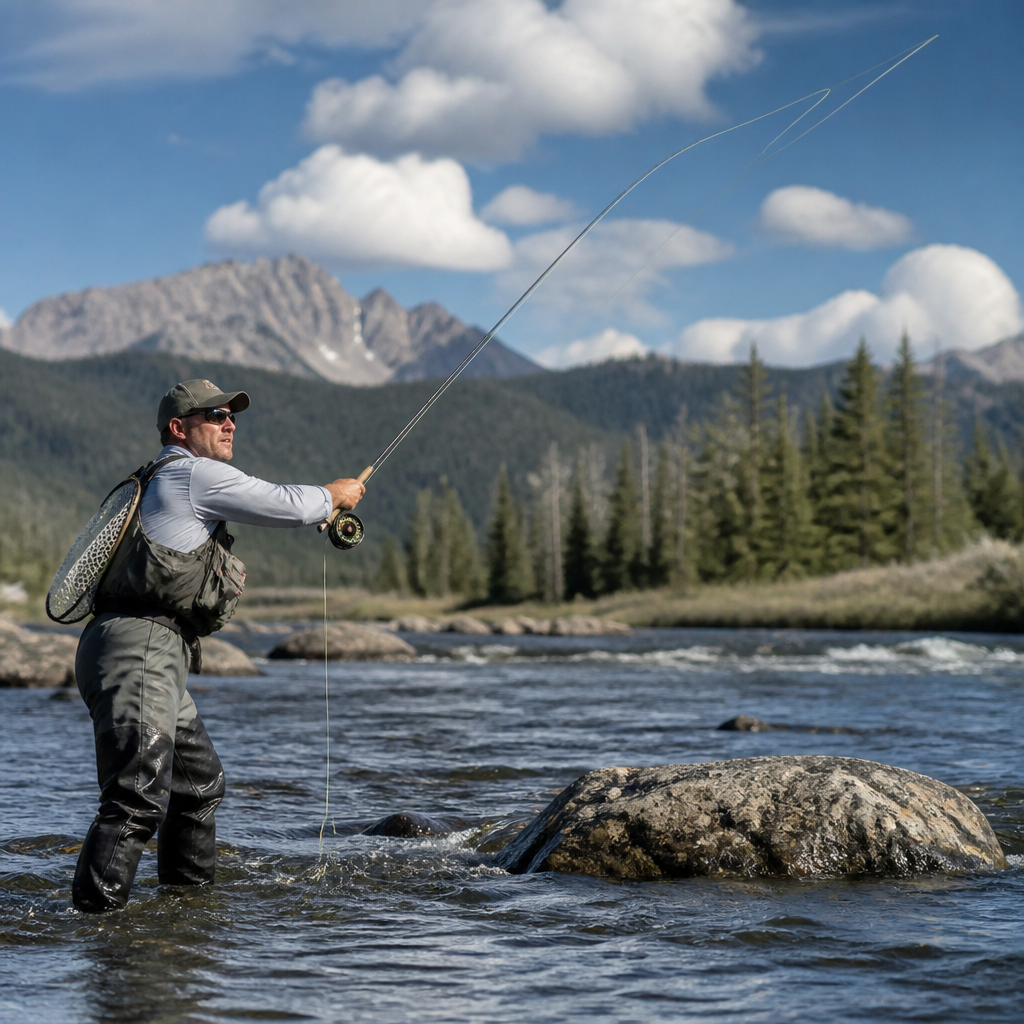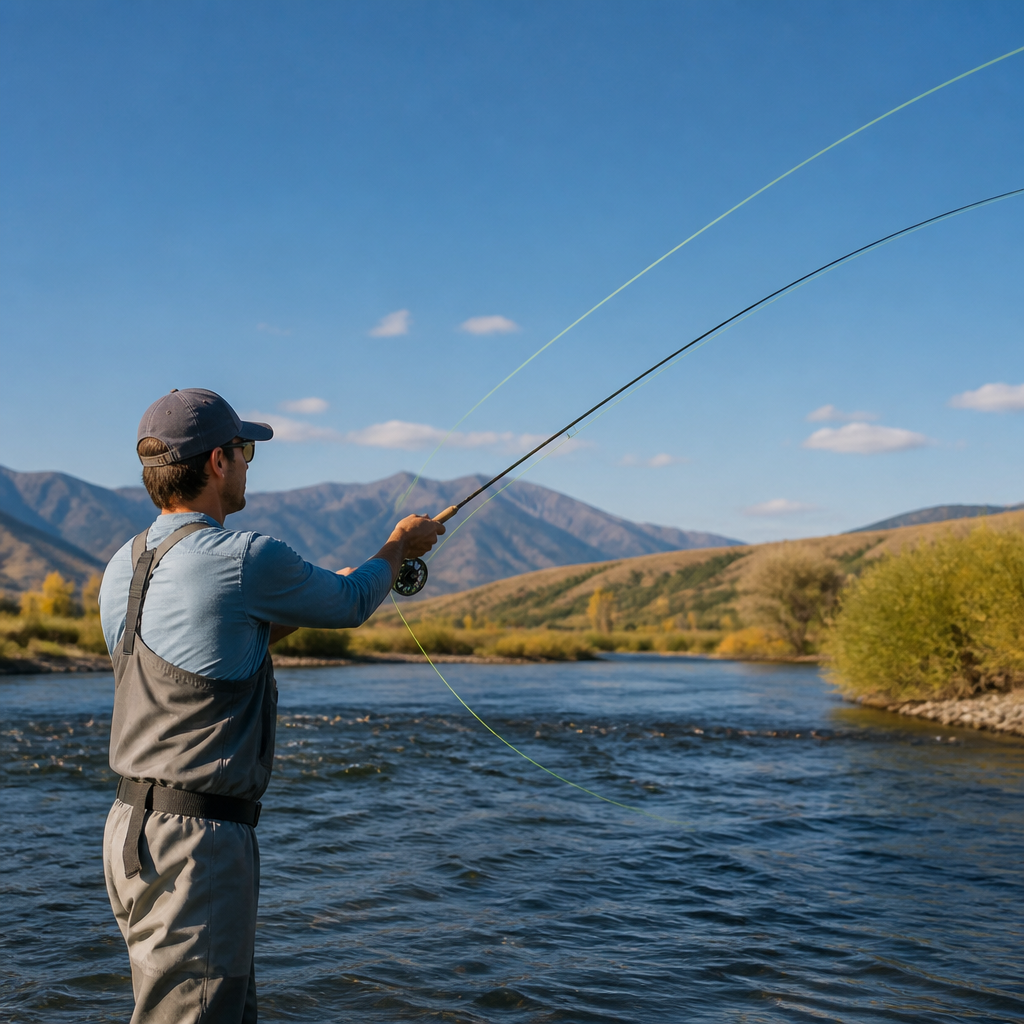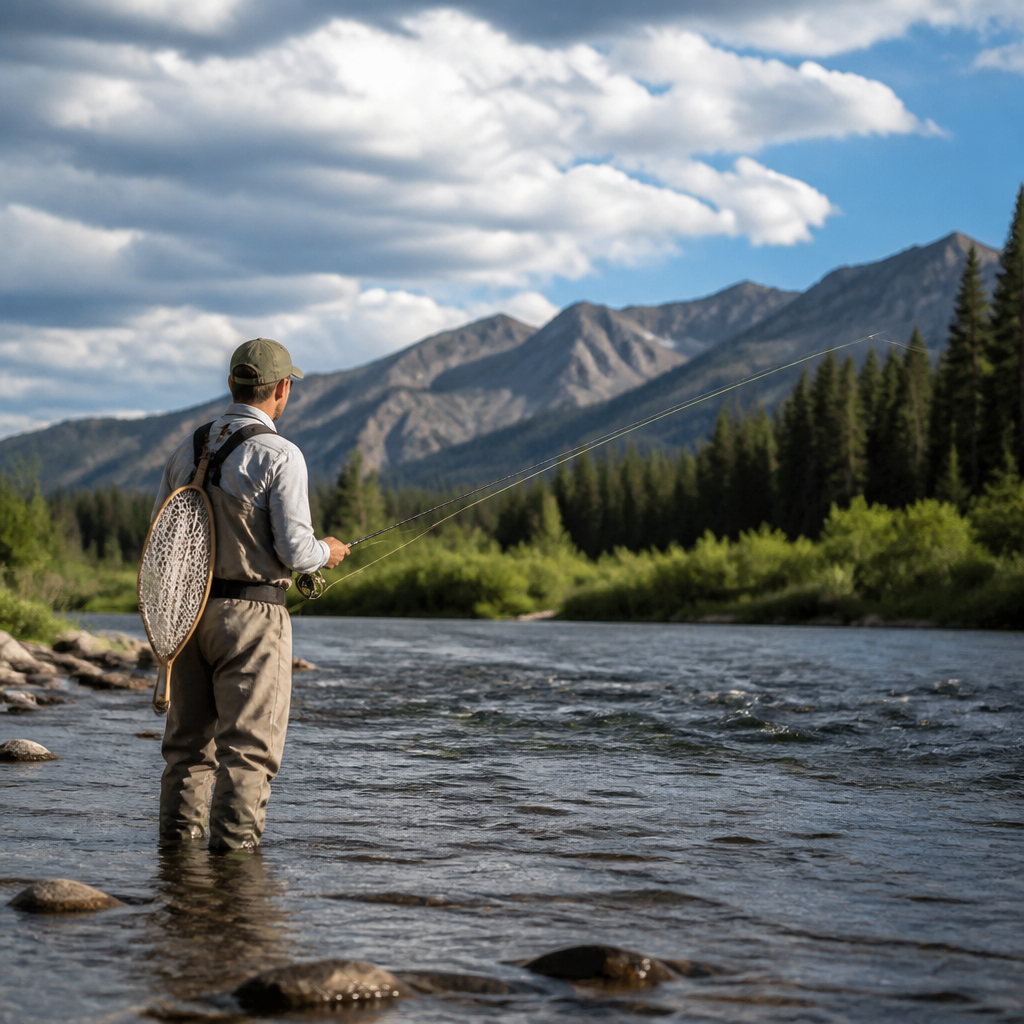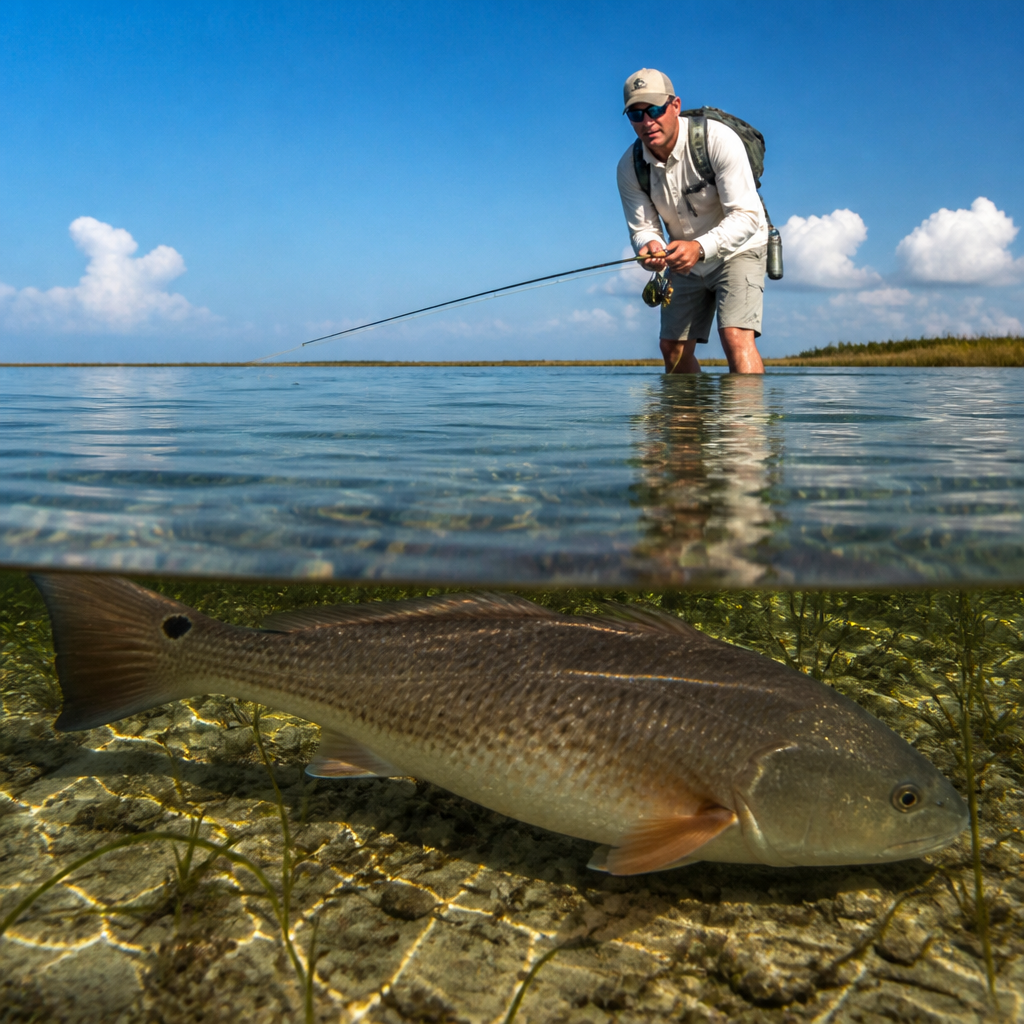
Sight fishing for redfish is one of the most visual, technical, and rewarding ways to target inshore game fish, because the angler is not casting blindly into likely water but actively locating fish, reading behavior, and presenting a lure or fly within a narrow window of opportunity. In practical terms, sight fishing means spotting a redfish before the strike, then making a deliberate presentation based on its direction, speed, depth, posture, and mood. Redfish, also called red drum, are exceptionally well suited to this method because they regularly feed in shallow marshes, grass flats, oyster edges, flood tides, and clear backwater ponds where their copper backs, blue tails, pushes, wakes, and tailing behavior give them away.
I have spent enough days polling skiffs across flooded spartina and wading knee-deep flats to know that success comes less from lucky casts than from a system: controlling the boat, understanding light and tide, seeing subtle signs before the obvious ones, and placing the bait where the fish expects food to appear. That is why this topic matters. Sight fishing compresses every inshore skill into one moment. You need fish location, stealth, tackle control, environmental awareness, and fast decision making. Done well, it produces cleaner hookups, fewer wasted casts, and a much deeper understanding of how redfish actually move and feed. As a hub topic within techniques and strategies, sight fishing sits at the center of redfish angling because it connects lure selection, seasonal patterns, skiff positioning, casting mechanics, fly presentation, and fish behavior into a single repeatable approach.
For anglers searching for practical redfish tactics, the biggest questions are straightforward: where can you see redfish, what signs reveal them first, when are conditions best, and how do you convert a visual encounter into a hookup? The answers begin with habitat and conditions. Redfish are most visible in relatively shallow water with enough clarity, contrast, and light penetration to separate fish from bottom. Clean incoming tides often improve visibility, but some of my best shots have come on falling water when fish funnel off grass edges and betray themselves with wakes. The core principle is simple: seeing fish is never just about clear water. It is about angle, glare, background, depth, sun position, bottom color, and the ability to detect movement that does not match the surrounding water.
Where sight fishing for redfish works best
The best sight fishing environments combine shallow depth, manageable surface texture, and predictable fish travel lanes. Classic examples include Gulf Coast turtle grass flats, Lowcountry flood-tide spartina marshes, Louisiana ponds with submerged grass, Texas back lakes, and oyster-lined creek mouths that drain at low water. On broad flats, redfish may cruise slowly in singles or small groups, exposing backs and shoulders as they tip down to feed. On flood tides, they push deep into grass after fiddler crabs and shrimp, often revealing only waving tails. Along drains and edges, they move with purpose, making V wakes or mud puffs that show direction even before the body becomes visible.
Bottom composition matters more than many anglers realize. Dark fish over pale sand are easy to spot at distance, while the same fish over mottled mud or broken grass can disappear instantly. I treat every flat like a contrast map. White potholes in seagrass, sand lanes near mangroves, and sparse shell patches all create visual windows where a fish is easier to pick up. Wind also reshapes opportunity. Ten knots over open water can ruin visibility on an exposed flat but leave a lee shoreline or protected pond fishable. If you are building a sight fishing plan, prioritize areas that give you a clean visual background and enough room to lead a fish without dragging a lure through heavy cover.
How to find fish before you actually see the fish
Most redfish are detected through signs rather than full body sightings. Experienced anglers scan for pushes, nervous water, subtle color changes, flashes, tails, bait showers, mud boils, and the unnatural cadence of something moving against current or wind. A push is often the first clue: a bulge of water advancing steadily, usually broader and heavier than a mullet wake. Tails are the giveaway everyone loves, but they are only one part of the equation. In marsh ponds, I often spot the shadow or displacement first, then confirm the fish when it rolls onto a lighter patch of bottom.
Search method matters. Instead of looking at the whole flat at once, break the water into lanes and sweep from near to far, then left to right, while pausing on likely intersections such as points, potholes, drain mouths, and grass edges. Polarized sunglasses are nonnegotiable; copper, amber, and green mirror lenses each have uses depending on brightness and bottom tone. Elevated position helps too. A polling platform, casting deck, or even standing on a cooler can reveal fish otherwise lost in glare. If you fish from kayaks or while wading, lower profile is a tradeoff, so compensate by slowing down and narrowing your scan to high-percentage water where fish must pass.
Boat positioning, stealth, and approach angles
Redfish tolerate some disturbance, but shallow fish under visual pressure become wary fast. Hull slap, dropped pliers, trolling motor cavitation, and rushed movements cost shots. The quietest approach is usually push pole, drift, or controlled wade, keeping the sun at an angle that lets you see ahead without silhouetting yourself. I prefer approaching quartering downwind or down-current when possible because it gives the lure a natural path and keeps line management simpler. Casting straight over the fish is the quickest way to blow the opportunity. Casting too far behind the fish is just a missed chance.
The ideal presentation lane places the lure where the redfish will intersect it naturally, usually one to four feet ahead depending on speed, depth, and bait type. A fish crawling with its back out in six inches of water may need a short, delicate lead; a cruiser in two feet may need more space so the splash does not spook it. Team communication is critical in a boat. The spotter should call clock direction, distance, speed, and behavior in plain language: “eleven o’clock, thirty feet, coming left, steady.” That is enough information for a clean cast. Long explanations usually happen after the fish has already passed.
Tackle choices for sight fishing presentations
Effective sight fishing tackle emphasizes accurate casting, quick lure entry, and control in shallow water. For conventional gear, a 7-foot to 7-foot-6 medium or medium-light fast-action spinning rod with a 2500 to 3000 size reel is the most versatile setup. Ten- to fifteen-pound braided main line paired with a 15- to 25-pound fluorocarbon leader gives casting distance, sensitivity, and abrasion resistance around shell and grass. Lure weight should match depth and mood. Light jigheads, weedless hooks, paddletails, shrimp imitations, and small gold spoons all remain standard because they land relatively softly and can be worked through skinny cover.
Fly anglers need enough rod to handle wind and weighted patterns without overpowering the shot. An 8-weight is the all-around choice, while a 9-weight helps in stronger wind or around bigger fish. Typical leaders run 9 to 12 feet, often tapering to 16- or 20-pound tippet. Productive flies include crab patterns for tailers, spoon flies for grass flats, and shrimp patterns for cruising fish. The rule across all tackle styles is simple: use the lightest presentation that still reaches the fish accurately. Heavy entries create shock waves. In shallow, clear water, the cast itself often determines whether the redfish feeds, follows, or vanishes.
| Situation | Recommended Presentation | Why It Works |
|---|---|---|
| Tailing fish in flooded grass | Weedless crab or lightly weighted soft plastic | Slides through cover and lands softly near a stationary feeder |
| Cruising fish on open flat | Small paddletail on light jighead | Lets you lead the fish and match a fleeing shrimp or baitfish |
| Fish along oyster edge | Gold spoon or compact jig | Covers water, flashes visibly, and resists snagging better than trebles |
| Muddy pond with visible wakes | Vibration-based lure with subtle retrieve | Helps fish track the bait when visibility is limited |
Presentation, hookset, and reading redfish behavior
Presentation is where sight fishing is won. A redfish looking down and rooting behaves differently from one cruising with intent, and your retrieve must match that posture. For tailing fish, I aim beyond the tail, then bring the lure slowly into the feeding window with minimal hops or strips. For cruising fish, I lead farther and keep the bait moving just enough to trigger pursuit. If the fish tips, flares, or accelerates, keep composure and continue the cadence. Many anglers strike too soon because they react to the visual drama instead of waiting for actual weight.
Behavioral reads separate average anglers from consistent ones. Relaxed fish move steadily, hold course, and resume feeding after minor interruptions. Alert fish twitch, pinwheel, or suddenly change speed. Negative fish may follow without commitment, often because the lure lands too close, moves unnaturally, or enters from the wrong angle. In those cases, a second cast can work if the fish has not been fully spooked, but repeated casts over the same fish rarely help. With hooks, a firm sweep set is usually better than a violent upward jerk, especially with braid or when using weedless plastics. Once connected, clear the line, steer the fish away from oysters, and avoid high sticking in shallow close-quarters fights.
Best conditions, common mistakes, and building a repeatable system
The best sight fishing conditions balance visibility with fish activity. Bright sun is helpful because it improves contrast, but high overhead light can flatten shapes on some bottoms, while low-angle morning or afternoon sun may illuminate fish better from one shoreline than another. Light wind is manageable and sometimes beneficial because it breaks up angler profile, but too much chop destroys detail. Tides matter differently by region. In flood-tide fisheries, rising water opens access to grass. On flats and creek systems, falling water can concentrate fish around drains and edges, making visual interception easier. Seasonal water temperatures shape metabolism too; shoulder seasons often produce active, shallow fish without the extreme boat traffic of peak summer.
The most common mistakes are moving too fast, staring at the water immediately in front of the boat, false casting excessively, and casting at the fish instead of ahead of it. Another major error is failing to reset after a missed shot. Good sight anglers recover quickly, scan again, and trust the process. Keep notes on tide height, sun angle, wind direction, bottom type, and fish response to particular lures. Over time, patterns emerge that turn random encounters into planned opportunities. That is the central benefit of mastering sight fishing for redfish: you stop guessing and start making informed decisions in real time. Study your local flats, refine your approach, and dedicate trips specifically to seeing fish before catching them. The hookups will follow.
Frequently Asked Questions
What exactly is sight fishing for redfish, and how is it different from regular inshore fishing?
Sight fishing for redfish means you are visually locating the fish before you cast, then making a controlled presentation based on what that specific fish is doing. Instead of fan-casting shorelines, points, potholes, grass edges, or oyster bars and hoping a fish is nearby, you are actively scanning the water for clues such as backs, tails, pushes, wakes, mud puffs, shadows, copper flashes, or the distinct shape of a cruising redfish. Once you see the fish, the real work begins: reading its direction of travel, speed, depth, body posture, and level of aggression so you can place the lure or fly where it will be noticed without spooking the fish.
This is what makes sight fishing so visual, technical, and rewarding. Success depends less on covering random water and more on observation, boat positioning, stealth, accurate casting, and fish behavior. A redfish rooting nose-down in shallow grass often needs a different presentation than a fish cruising a sand pocket or pushing a wake along a marsh bank. In other words, sight fishing is a deliberate, situational style of angling. You are not just trying to find fish; you are trying to solve a moving puzzle in real time, and that challenge is a big part of why so many inshore anglers consider it one of the most satisfying ways to target red drum.
What are the best conditions for spotting redfish clearly?
The best sight-fishing conditions usually combine good light, manageable wind, clean enough water, and a tide level that puts fish in visible zones. Bright sun is often your friend because it helps illuminate fish in shallow water, especially when the sun is high enough to reduce long shadows and improve bottom contrast. Light wind is ideal, since heavy chop makes it harder to pick out subtle signs like nervous water, slight pushes, or the shape of a fish moving just under the surface. Water clarity matters too, but “clear” does not always mean tropical-blue conditions. In many marshes and bays, redfish are still very visible in slightly stained water if they are shallow enough and the angle of light is right.
Tidal stage is another major factor. Depending on the fishery, redfish may become easier to see on flooding tides when they push into grass, or on falling tides when they funnel out of back lakes, creeks, and ponds into more predictable lanes. Early morning and late afternoon can be excellent feeding times, but low-angle light can make seeing fish more difficult if glare is strong. Polarized sunglasses are essential, and lens color should match conditions: copper, amber, and bronze lenses are popular because they improve contrast in shallow inshore environments. Elevated vantage points also help tremendously, whether you are standing on a skiff platform, polling from the bow, wading carefully, or drifting with the sun at your back. Overall, the best conditions are the ones that let you see before the fish sees you, because that is the advantage sight fishing is built on.
How should I approach and cast to a redfish without spooking it?
Approach is everything in sight fishing. Redfish in shallow water are often catchable, but they are also highly aware of pressure waves, hull slap, trolling motor noise, careless wading, and poorly placed casts. The goal is to move into range quietly and position yourself so the fish comes into an easy casting lane. If you are on a boat, that may mean polling instead of using a trolling motor in very shallow water, drifting with the wind at your back, or stopping early and waiting for the fish to come to you. If you are wading, slow your pace, keep your profile low, and avoid sudden movements that create flash or noise.
When it comes time to cast, the biggest mistake most anglers make is casting directly on top of the fish. A better approach is to lead the fish by a few feet, with the exact distance determined by how fast it is moving and how actively it appears to be feeding. A slow, tailing redfish may only need a short lead, while a steadily cruising fish may require a presentation farther ahead in its path. Ideally, you want the lure or fly to land softly, enter the fish’s field of view naturally, and then move in a way that suggests easy prey rather than danger. If the fish is coming toward you, it often helps to place the bait off to one side and let it cross naturally in front of the fish. If the fish is moving away, you need enough lead to avoid landing too close while still getting the bait into its line of travel.
After the cast, watch the fish more than the lure. Its body language will tell you whether to move the bait, pause it, speed it up, or stop altogether. A fish that tips down, flares slightly, or changes direction has likely noticed the offering. A fish that stiffens, veers off, or accelerates may be spooked. The best sight anglers are not just accurate casters; they are excellent readers of reaction and timing. Quiet approach, smart angles, soft landings, and controlled retrieves are what consistently turn sightings into eats.
What lures and flies work best for sight fishing redfish?
The best lures and flies for sight fishing redfish are the ones that match the water depth, bottom type, forage base, and mood of the fish while still landing quietly and remaining easy to control. In conventional tackle, weedless soft plastics are top choices because they can be cast around grass, potholes, oysters, and shallow marsh edges with less risk of fouling. Paddle tails, jerk shads, shrimp imitations, and small creature-style plastics all work well when rigged on light jig heads or weedless hooks. Gold spoons remain classic redfish producers because they cover water well, flash naturally, and can be retrieved steadily through shallow water without too much complexity. Small topwaters can be effective in low light or when fish are actively feeding high in the water column, but they are usually more situational in true close-range sight fishing than a subtle plastic or spoon.
For fly anglers, crab patterns, shrimp patterns, and baitfish flies are staples. Crab flies are especially effective for fish tailing over grass or mud, while shrimp patterns often excel when fish are cruising or feeding opportunistically along edges and drains. The ideal fly should land softly, ride at the right depth, and be visible enough for the angler to track without looking unnatural to the fish. Color selection matters, but profile, sink rate, and presentation usually matter more. Natural tones such as tan, olive, brown, rust, black, and muted chartreuse often perform well in common redfish habitats.
Whatever you throw, simplicity and control are critical. In shallow, close-quarters situations, a lure that splashes loudly, sinks too fast, or requires aggressive rod action can cost you fish. Redfish often respond best to presentations that appear vulnerable and easy to catch. That may mean a small hop, a short strip, a slow crawl, or even letting the bait sit briefly until the fish closes the distance. The right lure or fly is the one that lets you make a precise presentation and adjust naturally to what the fish is telling you.
How do you read redfish behavior to know when a fish is likely to eat?
Reading redfish behavior is one of the most important skills in sight fishing, because not every visible fish is equally catchable. A relaxed, actively feeding fish usually gives you positive signs: it may tail, tip downward, weave slowly, puff mud from the bottom, or change direction casually as it hunts. These fish are often the best targets because they are engaged with their environment and looking for food. A cruising fish can also be very catchable, especially if it is moving with purpose but not in a frantic or alarmed way. In that case, your job is to intersect its path cleanly and present something it can notice without having to chase too hard.
By contrast, nervous or pressured fish tend to show warning signals. They may move stiffly, travel too fast, stay just deep enough to be hard to track, or react sharply to small disturbances. A fish that suddenly accelerates, pushes a hard wake, or changes direction abruptly after your cast is often telling you it felt danger before it saw food. Posture matters too. A fish with its head down and tail slightly up is usually feeding. A fish moving level and steady may still eat, but often requires a more precise lead. A fish that seems locked into a straight line and ignores nearby forage is commonly in travel mode and can be much less responsive.
Experienced anglers also watch for “commitment cues.” If a redfish turns toward the lure, widens slightly, slows down, or follows with intent, the fish is engaged and you should avoid overworking the bait. Many missed opportunities happen because anglers panic and move the lure too much just as the fish is about to eat. On the other hand, if the fish notices the bait but does not commit, a subtle change in speed or direction may trigger a strike. Sight fishing is a constant process of reading, adjusting, and interpreting. The more time you spend watching how redfish react in different situations, the faster you will recognize the difference between a fish that is merely visible and a fish that is truly ready to feed.