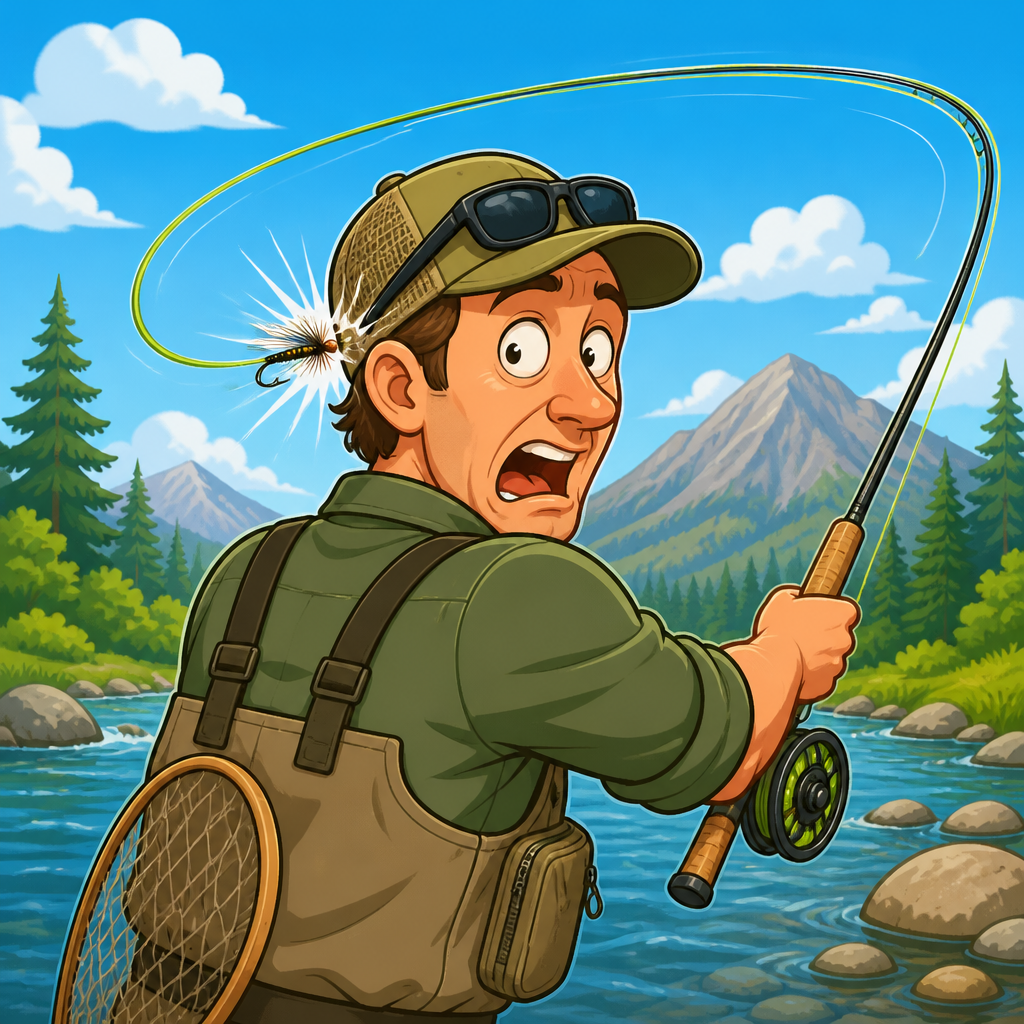
Few fly fishing mistakes feel as immediate, or as memorable, as a fly smacking the back of your head during a cast. In almost every case, that impact is not bad luck. It is a signal that timing, rod path, loop formation, or line control has broken down somewhere in the casting stroke. I have taught beginners on ponds, rivers, and salt flats, and when a fly taps a hat brim or buries itself in a hood, the same root causes appear again and again. The good news is that the fix is usually straightforward once you understand what the cast is supposed to do.
At its core, fly casting is the controlled transfer of energy from rod to line. The rod loads as it bends, then unloads and sends energy into the fly line, which turns over leader and fly. A clean cast depends on a straight-line rod tip path, correct timing between the back cast and forward cast, and loop shapes that stay safely above and away from the caster. When anglers ask, “Why does my fly hit me on the back cast?” the short answer is this: the line has collapsed, crossed the rod tip, or dipped too low behind the caster. That usually happens because of tailing loops, overpowering the stroke, dropping the rod tip, starting the forward cast too soon, or using the wrong casting plane for the wind.
This matters for more than comfort. A fly hitting your head is a safety problem, especially with weighted nymphs, streamers, or saltwater patterns tied on stout hooks. It also reveals inefficiency. The same flaws that put a fly near your neck rob distance, accuracy, turnover, and presentation. If you can diagnose why the fly is tracking into you, you will improve every part of your casting. This article serves as a hub for fly fishing basics within casting techniques, covering mechanics, common errors, wind management, equipment factors, and practical drills that build safer, cleaner casts.
Before digging into causes, define three key terms. A casting arc is the angular movement of the rod during the casting stroke. A loop is the shape formed by the fly line as the cast unrolls. A tailing loop happens when the rod tip dips below a straight-line path and the top leg of line crosses the bottom leg, often producing knots and dangerous hook trajectories. If you understand those terms, you can read almost any casting problem in real time. The fly does not randomly boomerang into your head; it follows the path your rod tip and line system force it to follow.
What Usually Causes a Fly to Hit the Back of Your Head
The most common cause is beginning the forward cast before the back cast has fully straightened. When the line is still traveling backward and you drive the rod forward, the line has nowhere clean to go. It sags, curves inward, or rebounds in a way that sends the fly dangerously close to your body. I see this constantly with anglers who rush because they are trying to cast harder for distance. They feel the rod move and assume the line is ready. In reality, they need to wait just long enough for the back loop to unroll nearly straight before changing direction.
The second major cause is dropping the rod tip too far on the back cast. Many beginners “swat” backward with the whole arm, then let the rod fall behind them. That creates a wide, collapsing loop. As gravity pulls the line down, the fly descends into head level. If there is any slight inward tracking, it clips a shoulder, hat, or ear. A crisp stop high on the back cast keeps the loop narrow and elevated. The stop matters because the line only unrolls efficiently when the rod tip decelerates decisively and directs energy into the line.
Power application is another frequent issue. Good casters accelerate smoothly and stop abruptly. Poor casts often use too much force too early. This abrupt jab bends the rod excessively at the wrong moment, making the tip dip and recover unevenly. The result is often a tailing loop. When anglers tell me the fly keeps “coming around” and catching them, I look first for a concave rod tip path caused by overpowering. Slowing down and applying power later in the stroke fixes more head-hitting problems than anglers expect.
How Casting Mechanics Create Safe or Unsafe Line Paths
A safe fly cast depends on geometry. If the rod tip travels close to a straight line during the stroke, the line forms a controlled loop that unrolls above the ground and away from the caster. If the rod tip travels in a convex or overly rounded path, the loop opens too much and loses directional control. If the tip travels in a concave path, the loop tails and the fly can cross dangerously close to the line hand, rod, or head. This is why instructors focus so heavily on rod tip path. It is the hidden blueprint of every cast.
Tracking also matters. Tracking is the rod’s side-to-side path relative to the target. If the rod drifts off plane on the back cast, the line no longer travels in a single vertical or sidearm plane. It curves around the caster, especially with soft leaders or bulky flies. Right-handed anglers often throw the back cast over the dominant shoulder and accidentally hook inward toward the head. Correct tracking keeps the line aligned with the intended path rather than wrapping around the body.
Loop control is not just about appearance; it is the direct predictor of whether the fly will travel safely. Narrow loops cut wind and carry energy well, but only if formed with proper timing and a suitable casting arc. Very narrow loops created with excessive force can tail. Very wide loops are forgiving but tend to collapse when underpowered or when the rod tip drops. The best loop is matched to the amount of line aerialized, rod action, and fly size. That balance is the foundation of all advanced casting, from short dry-fly shots to double-haul saltwater presentations.
Timing Errors on the Back Cast and Forward Cast
Timing is the answer to the question many beginners ask: when should I start the next stroke? The practical rule is simple. On the back cast, pause long enough for the line to nearly straighten behind you. On the forward cast, pause long enough for it to straighten in front if you are making false casts. The exact pause changes with line length. Ten feet of line outside the rod tip needs almost no pause. Forty feet needs much more. Anglers who use one fixed rhythm for every cast usually run into trouble.
Watch the line whenever possible. On open water or grass, turn your head slightly and learn to see the back cast. That visual feedback shortens the learning curve dramatically. In classes, anglers improve fastest when they stop casting blind and start reading loop shape and turnover behind them. If the line is still forming a loop when you start forward, you rushed. If the line has fully straightened and fallen, you waited too long. Both mistakes reduce efficiency, but the rushed stroke is more likely to drive the fly into your body.
Different casting techniques require different timing profiles. Roll casts rely on a D-loop and water tension, not an aerial back cast. Belgian casts use a continuous oval stroke that keeps heavy flies from crossing dangerous paths. Double hauling changes line speed and can shorten the apparent pause because the line straightens more quickly. Understanding these differences is important because many anglers apply the same stop-and-go tempo to every cast, then wonder why weighted rigs or sink tips behave unpredictably behind them.
Common Casting Faults and Their Practical Fixes
| Fault | What Happens | Why the Fly Hits You | Best Fix |
|---|---|---|---|
| Starting forward cast too soon | Back cast never straightens | Line collapses or rebounds inward | Pause longer and watch the back loop |
| Dropping rod tip on back cast | Loop opens and falls | Fly descends to head level | Make a higher back-cast stop |
| Overpowering the stroke | Rod tip dips, tailing loop forms | Fly crosses the rod leg toward the caster | Use smooth acceleration to an abrupt stop |
| Poor tracking | Line curves around the body | Back cast drifts over head or shoulder | Keep rod traveling in one plane |
| Wrong casting plane in wind | Wind blows line into caster | Fly is pushed into neck or head | Change shoulders or cast sidearm |
Tailing loops deserve special attention because they account for many painful fly impacts. They are usually caused by one of three things: applying power too early, using too short a casting arc for the amount of line carried, or creeping forward before the back cast straightens. The line crosses itself, and the fly often snaps downward or inward. You may also notice wind knots in the leader, another classic sign. The fix is mechanical, not mysterious: lengthen the casting arc as line length increases, delay the power application, and stop creeping the rod forward during the pause.
Creep is subtle but destructive. It happens when the caster unconsciously inches the rod forward during the pause after the back cast. That steals stroke length from the next forward cast and forces a sudden jab to compensate. The rod tip dips, the loop tails, and control disappears. I correct this by having anglers freeze after the back stop, then make the forward stroke only after they feel the line straighten. That pause discipline restores the available stroke length and cleans up the loop almost immediately.
Wind, Weighted Flies, and Other Conditions That Change the Risk
Wind is one of the biggest reasons an otherwise decent cast suddenly becomes unsafe. If a right-handed caster throws a standard overhead cast with the wind blowing from the right, the line can be blown directly into the rod side and head. In that situation, changing casting plane matters more than adding force. A backhand cast, casting off the opposite shoulder, or dropping into a sidearm presentation can move the line to the safe downwind side. Experienced guides teach this early because wind rarely rewards stubborn mechanics.
Weighted flies and multi-fly rigs multiply the danger. Tungsten beads, coneheads, dumbbell eyes, split shot, and indicator setups all change how a cast behaves. They increase momentum, widen loops if mishandled, and punish abrupt directional changes. For those rigs, a Belgian or oval cast is often the better tool because it keeps the fly moving on separate back-cast and forward-cast planes. Instead of stopping hard directly behind you and risking a collision, the cast sweeps around continuously and reduces line crossing. It is not a trick cast; it is standard risk management.
Rod and line choices also influence control. Fast-action rods produce high line speed, but they punish abrupt power spikes and poor timing. Moderate-action rods often help beginners feel load and tempo more clearly. A line that is overweight for the rod can make short casting easier, yet too much grain weight may overload the rod during false casts and collapse the loop behind you. Leaders matter as well. Very long, limp leaders with bushy flies can kick unpredictably on the back cast. Matching tackle to the job reduces surprises and improves safety.
Core Casting Techniques Every Beginner Should Learn First
The overhead cast is still the foundation because it teaches the essentials: lift, acceleration, stop, pause, and straight-line tracking. Start with thirty feet or less of line and aim for smoothness rather than distance. The roll cast comes next because it solves real fishing problems, especially on brushy streams where a back cast is impossible. It also teaches anchor placement and efficient rod loading. Once those two casts are dependable, anglers should learn line pickup and laydown, mending basics, and shooting line without collapsing the loop.
After that, sidearm casting becomes important, not as a novelty but as a wind and presentation tool. A lower casting plane keeps the line under crosswinds and helps with trajectory under trees. The reach cast introduces aerial mending by repositioning line before it lands, which is essential for drag-free drifts in dry-fly fishing. The curve cast helps bend line around conflicting currents or structure. Each technique builds from the same mechanical base. That is why a hub page on casting techniques should begin with loop control and timing before specialty presentations.
The double haul deserves mention because many anglers chase it too early. It is a line-speed tool, not a cure for flawed mechanics. When taught after solid basics, it adds distance, improves wind penetration, and tightens turnover. When taught too soon, it masks timing errors and encourages overpowering. I introduce it only after the caster can consistently form clean loops at short and medium range. Good technique scales. Bad technique simply accelerates the mistake, and that is exactly how flies end up hitting hats, collars, and sunglasses.
Practice Drills That Stop Head-Hitting Casts Fast
The best drill for most anglers is the pick-up-and-lay-down cast on grass with yarn instead of a hook. Strip out twenty-five to thirty feet of line, lift smoothly into a back cast, wait for the line to straighten, then make one forward cast and let it land. No false casting at first. This isolates timing and stops the frantic rhythm that often causes collisions. Once the line consistently straightens behind you, add a second false cast and maintain the same pause. If the rhythm speeds up, shorten the line and reset.
Another highly effective drill is the hard-stop exercise. Place a small target in front, then focus only on making a crisp stop at about one o’clock on the back cast and ten o’clock on the forward cast, adjusted for plane and distance. The goal is not force. The goal is controlled acceleration followed by a stop that sends energy into the line. Most unsafe casts improve when the stop becomes intentional. You can hear it in the line and see it in the loop shape immediately.
Finally, practice with environmental awareness. Wear glasses, a hat, and preferably a hookless practice fly while learning. Stand so the wind is easy to read. If it shifts onto your casting shoulder, change shoulders or planes instead of fighting it. Build the habit now. Cleaner loops, safer casting angles, and better timing are not separate skills. They are the same skill expressed well. To improve your fly fishing basics, work through each casting technique methodically, then apply them on the water with a specific goal for every session.
A fly hitting the back of your head during a cast is usually a clear diagnostic clue, not an unavoidable part of learning. It points to rushed timing, a dropped rod tip, poor tracking, too much early power, the wrong casting plane in wind, or a mismatch between technique and rig. Once you understand that the fly simply follows the path created by your rod tip and line, the problem becomes solvable. Better mechanics create safer casts, tighter loops, cleaner turnover, and more accurate presentations.
The core lesson is simple: slow down, watch the back cast, stop the rod cleanly, and match your casting style to the conditions. Learn the overhead cast, roll cast, sidearm cast, and oval cast in that order, then build toward reach casts, curve casts, and the double haul as your foundation improves. Use practice drills that isolate timing before adding distance or complexity. If a cast feels rushed or wild, it probably is. Reliable fly casting should feel controlled, balanced, and repeatable.
As a hub within fly fishing basics, this guide should give you the framework to diagnose errors and choose the right next skill to learn. Improve the mechanics first, then explore each casting technique in depth on your next practice session. Bring a rod to grass or water, focus on one correction at a time, and your fly will stop finding the back of your head and start finding the target instead.
Frequently Asked Questions
Why does my fly keep hitting the back of my head during a cast?
In most cases, a fly striking the back of your head means the cast has collapsed somewhere in the stroke, not that you were simply unlucky. The most common causes are starting the forward cast before the back cast has fully straightened, driving the rod tip on a poor path, dropping the rod too far behind you, or overpowering the cast with too much arm and not enough timing. When that happens, the line forms a wide or tailing loop, loses tension, or travels on a path that swings too close to your body. Instead of unrolling cleanly behind you and then moving forward in a straight, controlled plane, the line and fly dip, rebound, or hook inward. That is when the fly finds your hat, hood, neck, or shoulder.
A good fly cast depends on controlled acceleration, a straight-ish rod tip path, and a deliberate pause that allows the line to unroll before you change direction. If any one of those elements breaks down, the fly often tells you immediately. Think of getting hit not as random punishment but as feedback. The cast is announcing that the loop did not stay where it should have. The encouraging part is that this problem is usually very fixable. Small changes in timing, tracking, and stop position often eliminate it quickly.
Is poor timing the main reason this happens?
Yes, poor timing is one of the biggest reasons a fly comes back at your head. Many anglers, especially newer casters, rush the transition from back cast to forward cast. They feel the rod load, get eager to send the line, and begin moving forward before the line has straightened behind them. When that happens, there is still slack or curvature in the system, so the rod cannot unload efficiently. The result is a weak, collapsing back cast that never gets safely behind you, and the fly stays close enough to your body to become a hazard.
The fix is usually learning to wait just a fraction longer. On short casts, that pause is brief. On longer casts, the pause needs to lengthen because more line takes more time to unroll. A helpful cue is to turn your head slightly and watch the back cast in practice, or listen for the line to straighten if conditions allow. Once you feel the line fully extend behind you, then begin the forward stroke. Good timing does not mean moving slowly. It means changing direction only when the line is ready. That single adjustment often cleans up the cast and keeps the fly well away from your head.
Can my rod path or casting stroke cause the fly to hit me?
Absolutely. Rod path is a major factor. In an efficient cast, the rod tip travels in a controlled path that helps form a tight, stable loop. If the rod tip dips too much, sweeps in a big arc, or tracks off to the side, the line can cross over itself or travel on an unstable plane. That can create a tailing loop, which is one of the classic ways to send the fly on a collision course back toward the caster. A tailing loop happens when the top leg of the loop crosses under the bottom leg, often because the caster applies too much power too early, creeps forward before the back cast straightens, or uses an uneven stroke.
Another common issue is letting the rod drift too far behind the head on the back cast. That encourages a low, collapsing loop and makes it much easier for the line to drop into you. A cleaner stroke usually comes from keeping the elbow relatively controlled, accelerating smoothly, and making a firm stop that allows the rod to unload properly. You do not need to muscle the cast. In fact, trying harder often makes the problem worse. A compact stroke with smooth acceleration and crisp stops gives the fly line a much better chance of staying on track and away from your body.
How can I fix this problem quickly and safely?
The fastest way to fix it is to simplify everything. Start with less line out, slow down your tempo, and focus on making clean back casts with a deliberate pause. Many anglers improve immediately when they shorten the amount of line they are trying to carry in the air. With less line, it is easier to feel the rod load, see the loop form, and recognize when the line has straightened. Practice false casting at a comfortable distance and make it your goal to keep the fly, line, and rod all moving in one controlled plane.
It also helps to use a more open stance or slightly offset casting position so the rod travels beside your body instead of directly over your head. On windy days, or anytime your casting plane feels too close to you, a sidearm cast or backhand cast can move the loop away from your head. Wearing glasses and a hat is smart no matter your skill level, because even experienced anglers occasionally make a bad stroke. If you want a practical drill, make a few casts while consciously watching the back cast and waiting for it to fully unroll before coming forward. Then return your eyes forward and repeat the same timing by feel. That simple exercise builds awareness very quickly and often solves the problem faster than trying to cast harder or farther.
Does wind or line setup make this more likely?
Yes, both wind and tackle setup can increase the chances of getting hit. Wind can blow the line and fly off plane, especially if the breeze is coming onto your casting shoulder or quartering from behind. In those situations, even a decent cast can drift back toward your head if you do not adjust. Changing your casting angle, moving the rod to the opposite side of your body, lowering the casting plane, or using a backhand presentation can all help keep the fly safely away from you. Good casters do not fight the wind with force alone; they change geometry.
Your line and leader setup also matter. An extremely long leader, a heavy fly, or a poorly matched line can make the cast less stable and less predictable. Weighted flies and large indicators are especially unforgiving because they magnify timing errors and are more dangerous when they come off plane. If you are learning or troubleshooting your cast, use a simple, balanced setup: a standard weight-forward floating line matched to the rod, a moderate leader length, and an unweighted or lightly weighted fly. That removes variables and makes it easier to identify whether the real issue is timing, tracking, or power application. Once your mechanics are sound, you can adapt much more confidently to wind, larger flies, and specialized rigs.