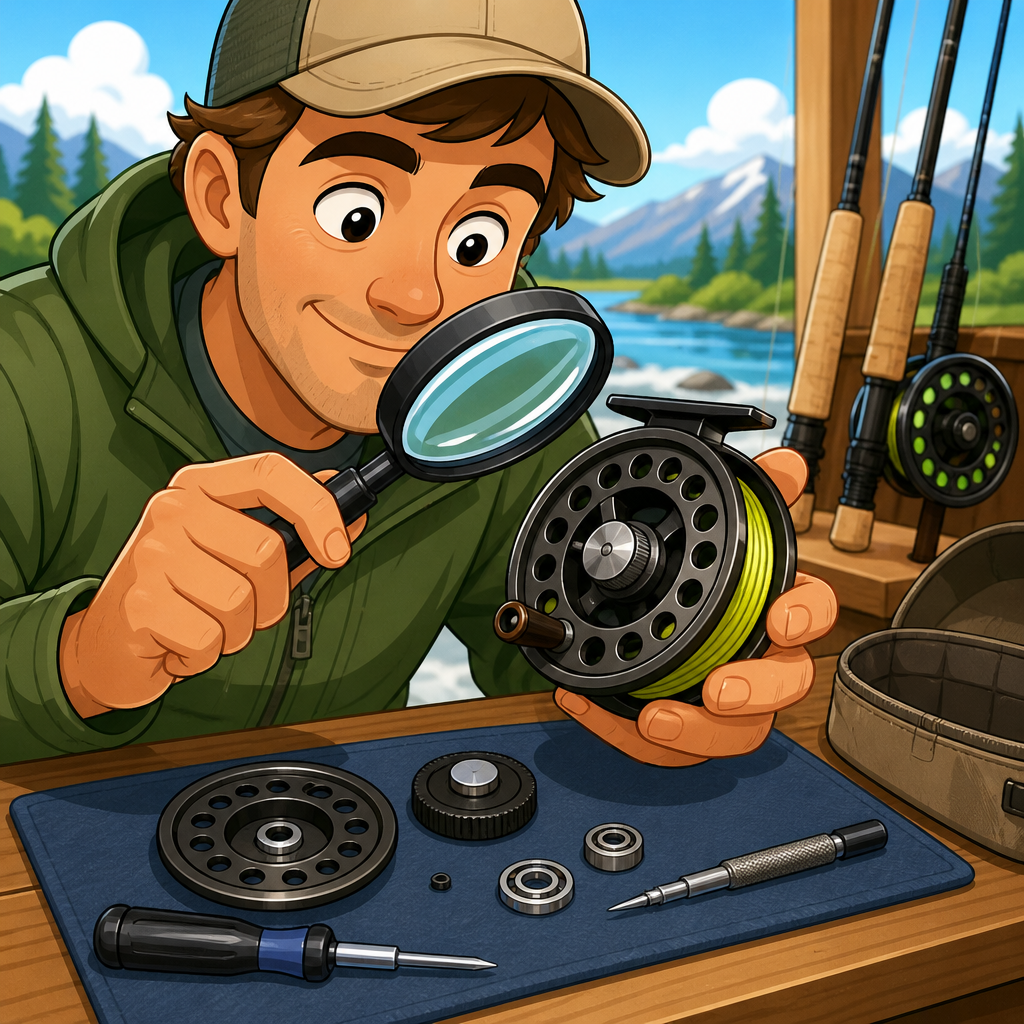
A used fly reel can be a bargain or a hidden repair bill, and the difference usually comes down to two systems: the drag and the bearings. In fly fishing basics, gear and equipment decisions matter because the reel does more than hold line. It stores backing, balances the rod, manages line tension, and protects tippets when a fish runs. If the drag surges, sticks, or slips, you lose fish. If the bearings are worn, corroded, or misaligned, the reel feels rough, wobbles under load, and often fails when pressure rises. I have inspected enough secondhand reels at shops, swaps, and boat ramps to know that cosmetic wear is cheap, but mechanical neglect is expensive.
This article explains how to inspect a used fly reel for drag and bearing problems, while also serving as a practical hub for gear and equipment within fly fishing basics. A fly reel drag is the mechanism that resists spool rotation during a run. Common systems include click-and-pawl, cork disc, composite disc, sealed carbon disc, and hybrid designs. Bearings are the low-friction components that support spool rotation, usually stainless ball bearings, bushings, or one-way roller bearings in large arbor reels. Understanding these parts helps you judge condition, maintenance history, and suitability for trout, bass, saltwater, or salmon use. The goal is simple: identify reels worth buying, spot red flags quickly, and know when a low price is not actually a deal.
Why does this matter so much in the broader gear and equipment conversation? Because the reel connects line, backing, rod balance, drag range, retrieval rate, and long-term corrosion resistance in one purchase. A rod can cast beautifully, but if the reel foot is bent, the drag is inconsistent, or the spindle is scored, the setup is compromised. This hub covers the inspection process, what tools and terms matter, how to compare reel types, and what findings should push you toward negotiation, service, or walking away. If you are building your first outfit or adding a backup reel, the inspection steps below will help you make a sound decision.
Start with the reel’s intended use, construction, and compatibility
Before touching the drag knob, confirm the reel fits the fishing job. Check the reel size against line weight ratings, arbor style, frame design, and capacity for backing. A 3/4-weight trout reel may feel smooth in hand, but it is the wrong choice for streamers on a 6-weight or for carp that can take 100 yards quickly. Large arbor reels retrieve line faster and reduce memory coils, but they also expose more drag startup issues because line tension changes are easier to feel. Mid arbor and standard arbor reels can be excellent, especially in click-and-pawl trout fishing, but capacity and retrieval speed should match the application.
Next, inspect materials and construction. Machined bar-stock aluminum reels generally hold alignment better than cast frames after impact, though many cast reels perform well when not abused. Look closely at the frame pillars, spool rim, drag housing, spindle, and reel foot. Bent feet, ovalized frame openings, or spool rub marks often signal a drop onto rock or gunwale. Ask whether the reel was used in freshwater, brackish estuaries, or full saltwater. Salt exposure changes the inspection standard because dissimilar-metal corrosion, seized screws, and pitted bearings become much more likely. Also verify spool interchangeability and parts support. Brands such as Abel, Hatch, Ross, Lamson, Nautilus, Tibor, Orvis, and Hardy have stronger service ecosystems than obscure private-label imports.
Compatibility matters beyond size. Mount the reel on a rod if possible. The foot should seat cleanly in the locking hardware without forcing. Test balance with the rod held near the front of the cork. An oversized reel can mask itself as quality because heavier setups often feel “solid,” yet that extra weight becomes tiring during long nymphing or streamer days. Likewise, inspect the line and backing already on the spool, not because old line adds value, but because it reveals use patterns. Deep grooves, crusted salt, and compacted backing can indicate years of hard runs, poor rinsing, or storage while wet.
How to inspect the drag system step by step
The fastest way to inspect a used fly reel for drag problems is to test for startup inertia, smooth progression, full-range adjustment, heat or contamination signs, and audible or tactile inconsistency. Startup inertia is the force needed to begin spool rotation. Good drags start smoothly. Bad drags “stick” at first, then break loose suddenly, which pops light tippets. Pull line by hand from the spool with the drag set low, medium, and high. You want constant resistance, not jerks. Rotate the spool both slowly and quickly. A quality sealed carbon drag should remain even across speeds. Cork drags may feel slightly different but should not chatter or grab if maintained correctly.
Listen carefully while turning the knob through its full range. The adjustment should feel deliberate, with repeatable increments or clear resistance changes. If the first half of the knob does almost nothing and the second half ramps up abruptly, the drag stack may be worn, contaminated, or assembled incorrectly. Remove the spool if the design allows tool-free access. Look for drag grease migration, black dust from carbon wear, dried cork, salt crystals, warped pressure plates, cracked O-rings, or blued metal from overheating. A faint odor of burnt grease after a hard pull test is another warning sign.
Use direct questions when buying from an owner. Has the drag ever been serviced? Was manufacturer grease used? Was the reel ever submerged in sand or surf? Was it stored with the drag backed off? On disc drags, long-term storage fully tightened can compress washers and reduce smoothness. On cork drags, neglect can dry the surface and cause uneven engagement. Test anti-reverse or one-way systems if present, though most modern fly reels are direct drive. Also compare incoming and outgoing sound. Sound alone does not prove quality, but sudden changes in click pattern can reveal broken springs, misaligned pawls, or debris in the spool path.
| Inspection point | What good looks like | Common problem | What it usually means |
|---|---|---|---|
| Startup pull | Smooth line release at first movement | Stick-slip surge | Dirty or worn drag surfaces |
| Drag knob range | Predictable increase across settings | Dead spots or sudden jumps | Compressed washers or poor assembly |
| Full pressure test | Strong resistance without binding | Grinding or lock-up | Warped plates, corrosion, heat damage |
| Spool removed | Clean surfaces, intact seals, light proper grease | Salt crust, black dust, leaking grease | Deferred maintenance or contamination |
Keep expectations realistic by drag type. Click-and-pawl reels are supposed to be simple and light, with modest resistance and clear sound. They are excellent for small-stream trout and classic tackle, but they are not the benchmark for saltwater stopping power. Sealed drags excel in wet, sandy, and salt-heavy conditions because the friction surfaces are isolated. Cork drags can be wonderfully smooth and strong, especially in bluewater-capable reels, but they demand correct maintenance. Composite discs sit in the middle and vary by brand execution. The right question is not “Which drag is best?” but “Does this drag type suit the fishing and has it been cared for properly?”
How to detect bearing wear, corrosion, and alignment issues
Bearing problems are easy to miss because many used reels feel acceptable when spun empty on a counter. Real faults show up under side load, with the spool mounted, and during direction changes. Start by rotating the spool gently with fingertips. A healthy bearing system feels free but controlled, with no gritty pulses. Then rock the spool side to side and fore to aft. A tiny amount of movement can be normal by design, but obvious knocking suggests worn bearings, spindle wear, or poor tolerances. Watch the spool gap as it turns. If the gap varies or the rim visibly wobbles, suspect a bent spindle, warped spool, or impact damage.
Take the spool off and inspect the spindle shaft under bright light. Scoring, discoloration, or grooves indicate abrasive contamination or inadequate lubrication. Examine bearing races if visible. Red-brown staining often means corrosion; gray paste points to metal wear mixed with old grease. On sealed cartridge bearings, ask whether replacements are available and whether they are proprietary. A bargain reel becomes a liability when one nonstandard bearing fails and parts cannot be sourced. If the reel uses bushings rather than ball bearings, wear shows as looseness, squeal, or uneven resistance rather than rough rolling.
Now apply pressure. Hold the reel frame firmly and pull line off while pressing lightly on the spool rim from the side. Bad bearings or alignment issues often reveal themselves as scraping, intermittent drag changes, or sudden noise when the spool is loaded laterally. Spin the empty spool and listen for hiss versus grind. A quiet hiss is normal. Crunching, ticking, or periodic scraping is not. In saltwater reels, remove any cap the seller allows and inspect for white oxidation around screws and bearing seats. Corrosion can expand under surfaces, seize parts, and distort alignment long before a reel actually stops turning.
One more overlooked check is handle rotation. Turn the handle slowly and then quickly. It should track straight, without eccentric wobble. If the handle shaft binds once per revolution, the spool or internal shaft may be slightly bent. That kind of damage often follows drops, and it tends to worsen under fish pressure. Also inspect the spool latch or release mechanism. A loose latch can mimic bearing play, and a worn retaining system is a safety issue in itself because a spool should never risk separating during a run.
Assess maintenance history, serviceability, and total value
The best used fly reel is not always the cleanest-looking one. It is the reel with honest wear, known service history, available parts, and no structural damage. Ask for receipts, service emails, spare pawls, extra spools, original case, and manual. Those details show ownership habits. A reel that has been factory serviced by Ross, Hatch, Hardy, or Nautilus is usually worth more than a pristine unknown-brand reel with no support. During inspection, check every screw head. Rounded slots or mismatched hardware suggest amateur repairs. Verify that the drag knob, spool release, and frame screws use consistent hardware and thread engagement.
Price the reel as a system, not as a shiny object. Include probable bearing replacement, drag service kits, line disposal, backing replacement, and shipping to a service center. A used premium reel at sixty percent of new price can be excellent value if the drag is smooth and bearings are clean. The same reel at forty percent of new price may still be a bad buy if parts are obsolete or the frame is bent. I also compare the seller’s story to the physical evidence. “Used twice in freshwater” does not match salt crystals under the drag cap. Trust what the reel shows you.
As a hub within gear and equipment, this inspection mindset carries into every other purchase. The same discipline applies when checking fly rods for ferrule fit, fly lines for cracking, waders for seam leaks, or boots for delamination. Good anglers learn systems, not just products. On reels specifically, prioritize fit for the fishery, drag behavior at startup and under load, bearing smoothness, alignment, corrosion resistance, and manufacturer support. If a reel passes those tests, minor rim wear and boat rash are negotiable cosmetics. If it fails them, move on.
Conclusion: buy confidence, not just a lower price
Inspecting a used fly reel for drag and bearing problems is the fastest way to separate a dependable tool from a future headache. Start with fit and construction, then test the drag for smooth startup, even pressure, and full-range control. After that, check bearings and alignment for roughness, wobble, corrosion, and side-load noise. Confirm service history and parts availability before you let a low price influence judgment. In practical terms, the reel should mount correctly, spin true, pull line smoothly, and show evidence of care rather than improvised repair.
For anyone learning fly fishing basics, this process builds better buying habits across all gear and equipment. You spend money where performance and reliability actually live, not where marketing language is loudest. The payoff is simple: fewer failures, better fish protection, and more confidence on the water. Bring these inspection steps to your next shop visit, swap meet, or private sale, and use them methodically. A careful ten-minute evaluation can save you years of frustration and put a truly fishable reel in your hand.
Frequently Asked Questions
What are the first signs that a used fly reel may have drag problems?
The earliest warning signs usually show up before you ever put the reel on a rod. Start by turning the spool slowly while adjusting the drag from its lightest setting to its heaviest. A healthy drag should change resistance in a smooth, predictable way. If nothing happens for part of the adjustment range and then the reel suddenly tightens, that can point to worn drag washers, contamination inside the drag stack, or a damaged adjustment mechanism. Another common red flag is startup inertia that feels too high. In practical terms, that means the spool resists turning at first and then breaks free abruptly. On the water, that kind of sticking can snap light tippets or pull hooks during a fast run.
You should also listen carefully. Grinding, chirping, squealing, or inconsistent clicking under tension often suggests internal wear or dirt in the drag system. Visually, check for signs of neglect such as corrosion around the drag knob, salt residue, missing screws, or evidence that someone opened the reel improperly. If the seller allows it, pull the spool and inspect the drag surfaces for grease contamination, discoloration from heat, or obvious scoring. Any drag that feels jerky, slips under steady hand pressure, or tightens unevenly deserves caution. None of these symptoms automatically make the reel unusable, but they do change its value because drag repairs can range from simple cleaning to difficult parts replacement, especially on discontinued models.
How can I test a used fly reel’s drag system before buying it?
A basic hand test tells you a lot if you do it methodically. First, mount the reel if possible or at least hold it firmly by the frame so you are not just feeling the whole reel move in your hand. Strip out a few feet of line if the reel is loaded, then pull line from the spool while the drag is set very light. Increase the drag in small increments and repeat. You want to feel a consistent increase in resistance at every stage. The reel should not alternate between loose and tight spots, and it should not require a sudden jerk to start turning. Smooth startup is one of the most important traits in a fly reel because the drag’s job is to protect light tippet during the first hard run.
If there is no line on the reel, rotate the spool by hand against the drag and pay attention to whether the resistance remains even through a full revolution. Some problems only show up under load, so if the seller is cooperative, pull against the reel with steady pressure for several seconds rather than just spinning it quickly. That helps reveal slipping, pulsing, and drag fade. Test the maximum drag too, but do not force the knob past its normal range. At the high end, the spool should not still spin freely unless the reel is specifically designed for very light drag output. Finally, back the drag all the way off and then reset it again. If the reel binds, fails to return to a low setting, or feels different on the second pass, internal wear or contamination is likely. A drag that works smoothly only in one narrow range is not a healthy drag.
What bearing problems should I look for in a used fly reel?
Bearing issues usually reveal themselves through roughness, noise, wobble, or side-to-side play. Spin the spool lightly and feel for a clean, fluid rotation. It does not have to spin forever like a baitcasting reel, but it should feel controlled and even, not gritty or hesitant. A dry, sandy sensation often means corrosion, contamination, or worn bearing surfaces. If the reel has been used in saltwater and not maintained well, corrosion is a major concern. Salt intrusion can damage bearings gradually, and the reel may still turn in the shop while being close to failure under fishing pressure.
Check spool alignment carefully. With the spool mounted, wiggle it side to side and look for excessive play. A little movement can be normal on some designs, but pronounced wobble suggests worn bearings, bushings, spindle wear, or frame issues. Turn the spool slowly and watch the gap between spool rim and frame. If that gap changes noticeably as it rotates, the spool may be bent, the spindle may be damaged, or the bearing assembly may be out of true. Also listen for ticking or scraping, which can indicate misalignment rather than a bad drag. On a used fly reel, bearing problems matter because they affect more than smoothness. They can cause uneven drag behavior, frame contact under load, premature wear, and eventually complete failure when a fish runs hard. Even if the reel still feels usable, rough bearings should be treated as a real mechanical defect, not a cosmetic issue.
Can a rough or noisy fly reel be fixed, or should I walk away?
It depends on the source of the problem, the reel’s brand and model, and the availability of replacement parts. Some roughness comes from simple neglect rather than major damage. Old grease, dried lubricant, fine grit, or salt residue can make a good reel feel much worse than it really is. In those cases, a proper teardown, cleaning, and relubrication may restore the reel completely. That is especially true if the drag still applies smoothly and the frame, spool, and spindle remain straight. For a quality reel from a manufacturer with strong service support, even a bearing replacement may be relatively straightforward and cost-effective.
However, there are times when you should walk away or negotiate very aggressively. If the reel has severe corrosion, a bent spool, frame rub, missing drag parts, stripped screws, or a model-specific drag cartridge that is no longer available, repairs can quickly exceed the value of the bargain. The same is true if the drag surges badly under pressure or the spool wobbles enough to suggest spindle or frame damage. Those are not routine maintenance issues. They are structural or system-level problems that often require parts, labor, and luck. A good rule is this: if the seller cannot explain the issue, will not allow a basic function test, or describes a clearly rough reel as “just needing line,” assume there is more wrong than you can see. Buying a used fly reel makes sense when the mechanical risk is known and priced in. It is a poor deal when you are guessing about hidden failure points.
How do drag and bearing problems affect real performance on the water?
On the water, drag and bearing problems show up at exactly the worst moment: when a fish runs and you need controlled, repeatable resistance. A sticky drag creates high startup inertia, which means the line does not leave the spool smoothly when pressure first spikes. That sudden hesitation followed by release can pop light tippet, especially in trout fishing where fine leaders are common. A slipping drag causes the opposite problem. Instead of applying dependable pressure, it lets the fish take line too easily, which reduces control and can prolong the fight unnecessarily. A drag that pulses or surges is even worse because it alternates between too much and too little resistance, making it difficult to protect knots, maintain hook hold, and steer fish away from current, structure, or other hazards.
Bearing problems affect both feel and function. Rough or corroded bearings can make the retrieve feel harsh, but more importantly, they can cause the spool to rotate unevenly under load. That contributes to wobble, vibration, and inconsistent drag behavior. If alignment is poor, the spool may rub the frame when pressure increases, which can create sudden resistance spikes that mimic drag failure. In a real fight, those mechanical inconsistencies reduce your margin for error. The reel stops being a smooth line-management tool and becomes a source of unpredictable tension. Since the fly reel stores backing, balances the outfit, and helps manage line during runs, its condition matters more than many anglers realize. A used reel with healthy drag and bearings can fish for years. One with hidden problems may work fine during a casual inspection and then fail the first time a strong fish exposes every weakness inside it.