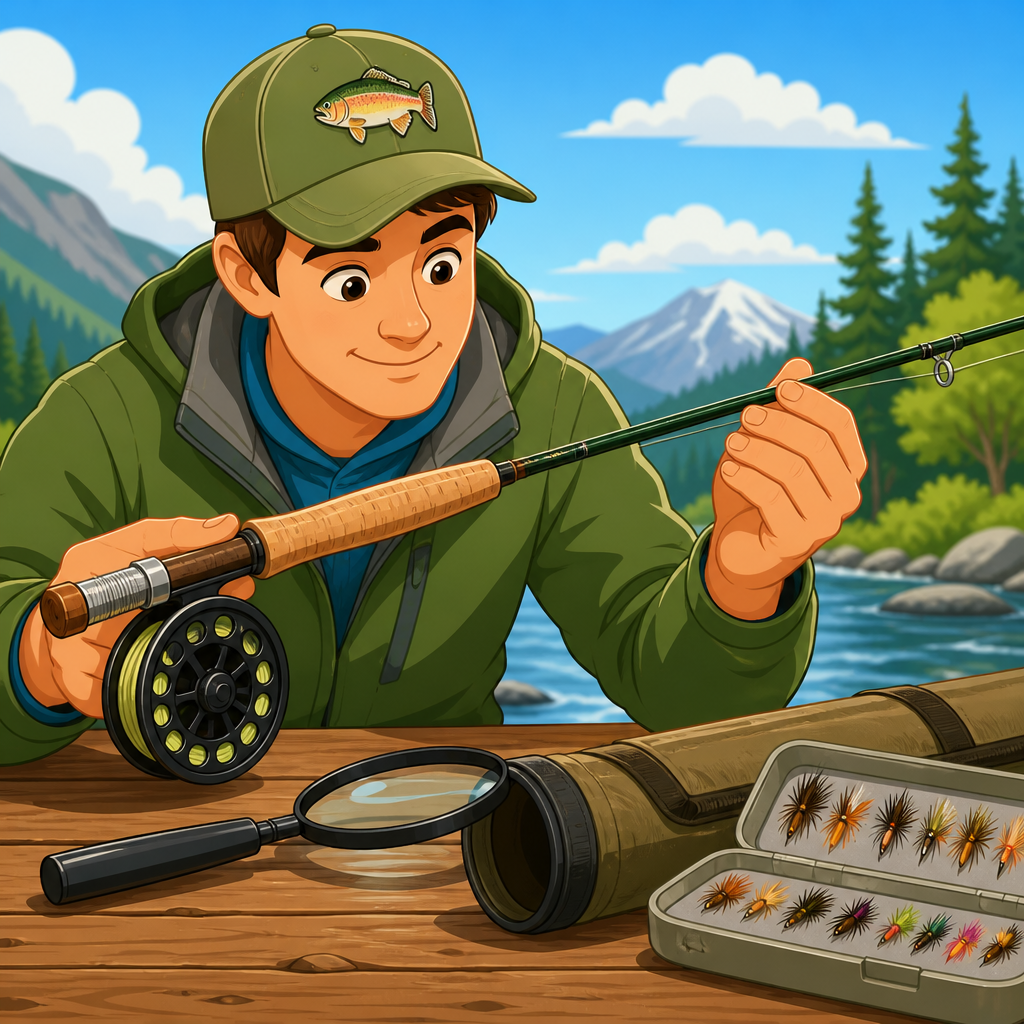
Buying a used fly rod can save money, unlock better performance than a new budget model, and help anglers build a smarter kit, but only if the rod is structurally sound and suited to the way it will be fished. In fly fishing basics, gear and equipment decisions shape everything that follows, from casting mechanics to line control to fish fighting. A fly rod is the central tool in that system, and a poor purchase creates problems that no premium reel, expensive line, or upgraded leader setup will fully solve. Before I buy any secondhand rod, I inspect it the way I would evaluate a client’s setup before a guided day: section by section, component by component, with attention to fit, balance, and intended use.
A used fly rod is simply a previously owned rod offered through a local shop, consignment rack, online marketplace, forum, estate sale, or direct sale from another angler. The appeal is obvious. High-end graphite rods from Sage, Scott, Winston, Orvis, G. Loomis, Douglas, and Hardy often sell used for far less than retail, and older models can be excellent casters. At the same time, hidden damage is common. Graphite can be weakened by impact without showing dramatic failure. Ferrules can loosen. Guides can groove. Repairs can be competent or crude. Warranty coverage may not transfer. Because of that, knowing what to check before buying a used fly rod is one of the most practical skills in the broader gear and equipment category.
This article serves as a hub for fly fishing gear and equipment within the larger fly fishing basics topic. If you are comparing rod weights, matching fly lines, choosing reels, or building a trout, bass, saltwater, or euro nymphing outfit, this is the starting point. The goal is straightforward: help you evaluate condition, value, fit, and long-term reliability so you can decide whether a used rod is a bargain, a fair buy, or an expensive mistake.
Start With the Rod’s Intended Use
The first check is not cosmetic. It is functional. Ask what species, flies, water types, and distances the rod is meant to handle. A used 9-foot 5-weight may be the most versatile trout tool on the market, but it is not automatically the right choice if you mostly fish small brook trout streams under tree cover, throw size 2 deer hair bass bugs, or need a dedicated indicator nymphing rod. Rod length, line weight, and action determine whether the purchase supports your fishing or creates constant compromise.
For example, small stream anglers often prefer rods in the 7-foot to 8-foot-6 range, usually in 2-weight through 4-weight classes, because shorter rods protect light tippet and cast well in tight quarters. General trout anglers often do best with an 8-foot-6 or 9-foot 4-weight or 5-weight. Western drift boat, hopper-dropper, and windy stillwater situations usually favor a 9-foot 5-weight or 6-weight. Bass anglers commonly step into 6-weight through 8-weight rods, while saltwater use starts around 8-weight and rises quickly based on species and wind. If a rod’s original purpose does not match your fishing, even a flawless used rod is the wrong buy.
Also verify the rod’s labeled specifications against reality. Most modern rods list line weight, length, and number of pieces above the handle. Make sure all sections are present and the rod matches the seller’s description. I have seen four-piece rods sold with a replacement tip from another model, and two-piece rods misidentified by line weight because the script was worn away. If possible, string the rod with the line you intend to fish. A rod that feels crisp and accurate with a true-to-weight line may feel overloaded with a half-size-heavy taper and lifeless with a long-belly presentation line.
Inspect the Blank for Cracks, Soft Spots, and Hidden Impact Damage
The blank is the rod’s structural backbone, so it deserves the most scrutiny. Start with a slow visual inspection under bright light. Rotate each section and look for cracks, whitening in the finish, dents, flat spots, deep scratches, bubbling epoxy, or suspiciously glossy areas that suggest overcoating after a repair. Pay close attention near ferrules, guide wraps, and the tip section, where failures are common. Graphite rods often break after point impacts from split shot, weighted flies, ceiling fans, car doors, or beadhead rebounds. The mark can be tiny. The consequence can be total failure under load.
Then run clean fingers lightly along the blank. You are feeling for ridges, crushed fibers, or abrupt changes in diameter. Flex each section progressively, not violently, and listen for clicking. A click often indicates a crack, loose ferrule fit, or guide foot issue. Sight down the rod as if aiming an arrow. Minor set or curve is not always fatal, especially in fiberglass, but unexplained bends in graphite deserve caution. A sound blank should flex smoothly and recover cleanly. Any hinge point, sudden softness, or rough sensation is a warning sign.
Repairs are not automatic deal breakers. A professionally sleeved repair on a backup rod might be acceptable if the price reflects it and the rod’s intended use is forgiving. But repaired rods lose value, often change action, and carry more uncertainty. For a primary fishing tool, especially one expected to cast long or fight strong fish, I generally pass unless the repair was done by the manufacturer and documented. That standard has saved me from more disappointment than any bargain has ever delivered.
Check Ferrules, Guides, Tip-Top, and Handle Components
Once the blank passes inspection, assemble the rod and evaluate the hardware. Ferrules should seat firmly with clean alignment and no wobble. On most graphite rods, sections should not bottom out completely; a small visible gap is normal because wear occurs over time. What you do not want is a ferrule that spins too easily, separates under a few false casts, or shows cracks at the female end. Loose ferrules can sometimes be managed temporarily, but chronic ferrule problems are a serious reliability issue.
Examine every guide ring and snake guide. Ceramic stripping guides should have no cracks, chips, or grooves. Snake guides should be straight, secure, and free of corrosion, especially on older rods or saltwater-exposed tackle. Grooved guides damage fly line coatings and eventually weaken tippet. Wiggle each guide gently. If wraps are lifting, thread is fraying, or epoxy is yellowed and separating, the rod may need a full rewrap. That is repairable, but it should lower the price because professional guide work is not cheap.
The tip-top deserves special attention. A slightly bent tip-top can often be replaced, but if the blank itself is fractured beneath it, walk away. Move down to the grip and reel seat. Cork naturally pits with age, but deep gouges, missing chunks, heavy filler loss, or obvious rot signal hard use and poor storage. The reel seat should lock securely without cross-threading. Test it with the reel size you expect to fish. On used rods, I often find hidden issues here: uplocking hardware that loosens under vibration, salt-corroded threads, or spacer materials that have cracked around the hood. None of these are catastrophic individually, but together they reveal how the rod was treated.
Verify Model History, Warranty Reality, and Fair Market Value
Used fly rods are easier to judge when you know exactly what model you are holding and how the maker supports it. Search the model name and serial number if present. Confirm original specifications, production era, and retail price. Some rod series have excellent reputations for durability and broad line compatibility. Others are known for fast actions that demand precise line pairing, delicate tip sections, or discontinued components. I always read archived product pages, shop reviews, and owner discussions before making an offer, because model history tells you whether a low price reflects opportunity or risk.
Warranty terms matter just as much as condition. Many premium fly rod companies offer repair or replacement programs, but transferability varies. Orvis has long maintained a well-known service program, while other brands limit support to the original owner or discontinued eras. Sage, Winston, Scott, and Hardy have each had different policies over time. Do not assume “lifetime warranty” applies to you. Ask the seller for the original receipt, registration status, repair history, and any correspondence from the manufacturer. If support does not transfer, price the rod as if future breakage is entirely your problem.
| Checkpoint | What Good Looks Like | What Lowers Value | What Usually Means Pass |
|---|---|---|---|
| Blank | Straight, smooth finish, no clicks under flex | Cosmetic scratches, minor set on older glass | Cracks, soft spots, impact marks near ferrules |
| Ferrules | Firm fit, aligned, no wobble | Light wear with proper seating gap | Spinning, splitting, or separating ferrules |
| Guides and wraps | Straight guides, intact epoxy, no grooves | Light corrosion or aging wraps | Cracked inserts, loose feet, line-cut grooves |
| Grip and reel seat | Secure hardware, solid cork, reel locks tight | Normal cork wear, minor filler loss | Corroded threads, cracked seat, unstable reel fit |
| Support and price | Verified model, fair comps, clear history | No receipt but credible seller | Unknown model, false claims, unrealistic price |
To estimate fair market value, compare recent sold listings, not optimistic asking prices. Check eBay completed sales, specialty forum classifieds, Facebook groups with transaction history, and used gear pages from reputable fly shops. A current-production premium rod in excellent condition may sell for 60 to 75 percent of retail. A discontinued model with strong demand may hold similar value. A rod with cosmetic wear but no structural issues often lands around 40 to 60 percent. Any repair, missing tube, absent sock, or uncertain history pushes the number lower. Paying a little more to buy from a trusted fly shop or established seller is often the cheapest insurance you can purchase.
Test Cast, Assess Balance, and Read the Seller
If there is one step buyers skip too often, it is casting the rod before money changes hands. A test cast reveals what visual inspection cannot: timing, recovery speed, tracking, line compatibility, and whether the rod feels alive in your hand. Use a realistic amount of line and make short, medium, and longer casts. Roll cast it. Throw a reach mend. If you plan to fish streamers, cast a weighted pattern. If you nymph with indicators, test overhead turnover and water-loaded repositioning. Rod labels are starting points; on-the-water behavior is what matters.
Balance should be checked with the reel and line you actually intend to use. An ultra-light reel can make a tip-heavy 10-foot rod fatiguing, while an oversized reel may deaden a nimble trout setup. I pay attention to how the rod carries with line off the tip, because that is how it will feel during a long day of mending, high-sticking, or shooting line. Comfort matters more than parking-lot hero casts. A rod that feels smooth and intuitive at fishing distances is worth more than one that only shines at seventy feet.
The seller is part of the evaluation. Ask direct questions: Has the rod ever been repaired? What line was it fished with? Why are you selling it? Has it seen salt? A reliable seller answers specifically and sends close photos of ferrules, script, guides, reel seat, and any blemishes. Vague language such as “should be fine” or “I do not know much about rods” is not always dishonest, but it raises the standard for proof. When buying online, insist on secure payment methods and insured shipping in a rigid tube. Many rods survive years of fishing and then break in transit because they were shipped carelessly.
How This Fits Into the Bigger Gear and Equipment Picture
A used fly rod should never be evaluated in isolation, because rod choice affects every major equipment decision in fly fishing basics. Line matching is the next hub topic most anglers should study after rod selection. Fly line taper, grain weight, and head design determine how a rod loads, especially with modern specialty lines that intentionally run heavy. Reel selection follows, with attention to arbor size, drag type, frame rigidity, and counterbalance to the rod’s length and intended species. Leaders and tippet then complete the system by translating the rod’s energy into turnover and presentation.
There are also important category-specific considerations. For trout outfits, line control and presentation usually matter more than brute lifting power. For bass and warmwater, durability and lifting authority become more important because larger flies create wind resistance. For saltwater, corrosion resistance, fighting butt integrity, and warranty support move higher on the checklist. For euro nymphing rods, sensitivity, recovery, and section alignment are critical, and a slightly damaged tip can ruin the entire purpose of the rod. Building a complete setup means understanding these relationships instead of chasing the cheapest individual component.
The main benefit of buying used is not simply spending less. It is gaining access to better design and materials for the same budget. A carefully inspected used mid- or high-end rod often outperforms a new entry-level rod in tracking, recovery, component quality, and resale stability. But smart savings come from disciplined evaluation, not optimism. Check the intended use, inspect the blank, verify components, confirm model history, understand warranty limits, compare market prices, and cast the rod if possible. Do that consistently and you will buy with confidence, fish better, and build the rest of your gear and equipment system on a reliable foundation. Use this page as your starting hub, then move on to the supporting topics that complete the outfit you actually need.
Frequently Asked Questions
What are the most important things to inspect on a used fly rod before buying it?
The first priority is structural condition. Start by looking down each section of the rod to check for bends, flat spots, or subtle warping that may signal previous damage or poor storage. Then inspect the blank closely in good light for cracks, fractures, deep scratches, soft spots, repairs, or areas where the finish looks uneven or clouded. Pay special attention to ferrules, because they are one of the highest-stress areas on any multi-piece fly rod. Ferrules should fit snugly without excessive looseness, wobble, or grinding, and they should not show splitting, wear rings, or signs that someone has over-tightened or sanded them to force a fit.
Next, examine the guides and wraps. Guides should be straight, firmly attached, and free of grooves, corrosion, or rust, especially the stripping guides and tip-top. Damaged guides can cut fly line and create casting problems, even if the blank itself is fine. The thread wraps should be tight and smooth, not lifting, cracking, or separating from the blank. Also inspect the reel seat to make sure it locks down securely and is not cracked, cross-threaded, or loose. A failing reel seat can turn into a constant annoyance on the water.
Finally, check the cork grip. Cosmetic wear is normal on used gear, but deep ridges, missing chunks, heavy filling, or a soft, spongy feel can suggest hard use or poor storage. None of these issues automatically make the rod a bad buy, but they affect comfort, resale value, and long-term reliability. A used fly rod can be a smart purchase if the blank is sound and the hardware is functional. Cosmetic wear is manageable; structural weakness is not.
How can I tell whether a used fly rod has hidden damage that will affect performance?
Hidden damage is one of the biggest risks when buying a used fly rod, because a rod can look acceptable at a glance and still have internal weakness from impact, overloading, or improper assembly. One of the best checks is a slow, careful flex test. Assemble the rod correctly, align the guides, and apply gentle, even pressure as if loading the rod during a cast. You are not trying to stress it aggressively. You are looking for clicking sounds, sudden flat spots in the bend, odd twisting, or any feeling that one section is collapsing differently from the rest. A healthy rod should flex progressively and recover smoothly.
Run your fingers lightly along the blank and around the ferrules to feel for raised edges, hairline fractures, repaired seams, or rough spots hidden under finish. Rotate the rod in bright light and watch for changes in reflection, because cracks and repairs often reveal themselves when the light catches them at an angle. Ferrules deserve another close check here as well. If sections separate too easily, stick excessively, or show uneven fit, that can indicate wear or previous damage. On spigot ferrules, look for proper gap spacing; on sleeve-over ferrules, make sure there is no splitting or deformation.
If possible, cast the rod before buying. Performance problems often reveal structural issues faster than visual inspection alone. A rod with hidden damage may feel unstable during the forward stop, fail to track cleanly, or vibrate more than expected. It may also feel dull, inconsistent, or unusually weak under load. Not every odd feeling means the rod is broken, since different rod tapers have different personalities, but unexplained inconsistency is a warning sign. If a seller cannot answer basic questions about the rod’s history, or if the rod shows suspicious refinishing, mismatched sections, or repairs that are not clearly disclosed, it is wise to proceed carefully or walk away.
Why does rod weight, length, and action matter so much when buying used instead of new?
When buying used, fit matters just as much as condition. A used fly rod may be a great value and still be the wrong tool for how you actually fish. Weight, length, and action determine how the rod casts, what line it handles best, how it manages wind, and how effectively it protects tippet or turns over larger flies. For example, a 5-weight is often a versatile trout rod, but that does not mean every 5-weight performs the same way. One might be a moderate-action dry-fly rod meant for delicate presentations, while another is a fast-action rod built for longer casts and windy conditions. If you buy based on price alone, you can easily end up with a rod that fights your technique instead of supporting it.
Length also affects control and presentation. A 9-foot rod is a common all-around length, but shorter rods can be better for small creeks and tight cover, while longer rods may improve mending, reach, line control, and nymphing efficiency. Action influences timing and feel. A slower or moderate-action rod often helps anglers who value touch, roll casting, and close-range accuracy, while faster rods can excel with distance, weighted flies, and more aggressive line speeds. None of those qualities are universally better; they simply need to match the fishing scenario and the angler.
This matters even more with used gear because return options may be limited, warranties may not transfer, and older rod labels do not always tell the full story of how a rod actually behaves. Before buying, think about your primary species, water type, fly size, and casting style. A structurally excellent rod that does not match your fishing needs is still a poor purchase. The smartest used-rod buy is not just the cheapest or most famous model. It is the one that fits the way you fish now and leaves room for your skills to improve.
Is it better to buy an older premium fly rod or a newer budget model?
In many cases, an older premium fly rod can be a better buy than a new budget rod, especially if the used rod is in solid condition and comes from a reputable maker with a proven design. Higher-end rods often have better blank materials, more refined tapers, improved guide spacing, better cork quality, and more durable components. That can translate into smoother loading, cleaner tracking, better line control, and less fatigue over a full day of fishing. For anglers trying to build a capable kit without overspending, used premium gear is often one of the best value plays in fly fishing.
That said, premium does not automatically mean better for every buyer. Rod technology, line design, and general preferences have changed over time. Some older rods feel heavier, slower, or more specialized than modern anglers expect. Others were designed around older fly line standards and may pair best with certain line tapers or sizing choices. A budget rod bought new may offer a warranty, modern ergonomics, and the peace of mind that comes with knowing its full history. That matters if you are hard on gear or do not feel confident judging used equipment.
The decision really comes down to condition, suitability, and total value. If the older premium rod is structurally clean, matches your fishing style, and is priced fairly, it can outperform a new entry-level rod in meaningful ways. But if it has questionable ferrules, worn guides, poor fit for your fishing, or no realistic path for repair, then the label alone should not persuade you. A used fly rod should be judged as a working tool, not as a trophy brand name. The best rod is the one that performs reliably and makes your time on the water easier, not the one that simply sounds impressive.
Should I worry about brand reputation, replacement parts, and warranty support when buying a used fly rod?
Yes, absolutely. Those factors do not matter as much as structural soundness, but they strongly affect the long-term value of a used rod. Brand reputation can tell you a lot about consistency, durability, repair options, and how honestly a rod tends to be represented in the resale market. Established fly rod makers usually have clearer model histories, better documentation, and more predictable quality control. That makes it easier to confirm original specifications, identify mismatched sections, and understand whether the asking price is fair.
Replacement parts are especially important with multi-piece rods. If a tip section breaks later, can the manufacturer still service that model? Are spare sections available, or has the rod been discontinued for so long that repairs are impractical? Some companies offer repair programs even for older rods, while others may not support second owners or discontinued series. Warranty support also varies widely. Many fly rod warranties apply only to the original owner, require proof of purchase, or involve repair fees that change the value equation. A used rod without transferable coverage is not necessarily a bad buy, but the price should reflect that reality.
It is also worth considering resale value. Well-known rods from respected brands typically hold value better, partly because buyers trust the manufacturing and service history more. Still, do not let branding override common sense. A lesser-known rod in excellent condition that fits your needs can be a smarter buy than a famous model with uncertain support and hidden wear. The practical approach is to check the manufacturer’s current repair policy, confirm the exact model and line weight, and factor future serviceability into the purchase price. That extra homework helps prevent a bargain from turning into a rod you cannot depend on or repair.