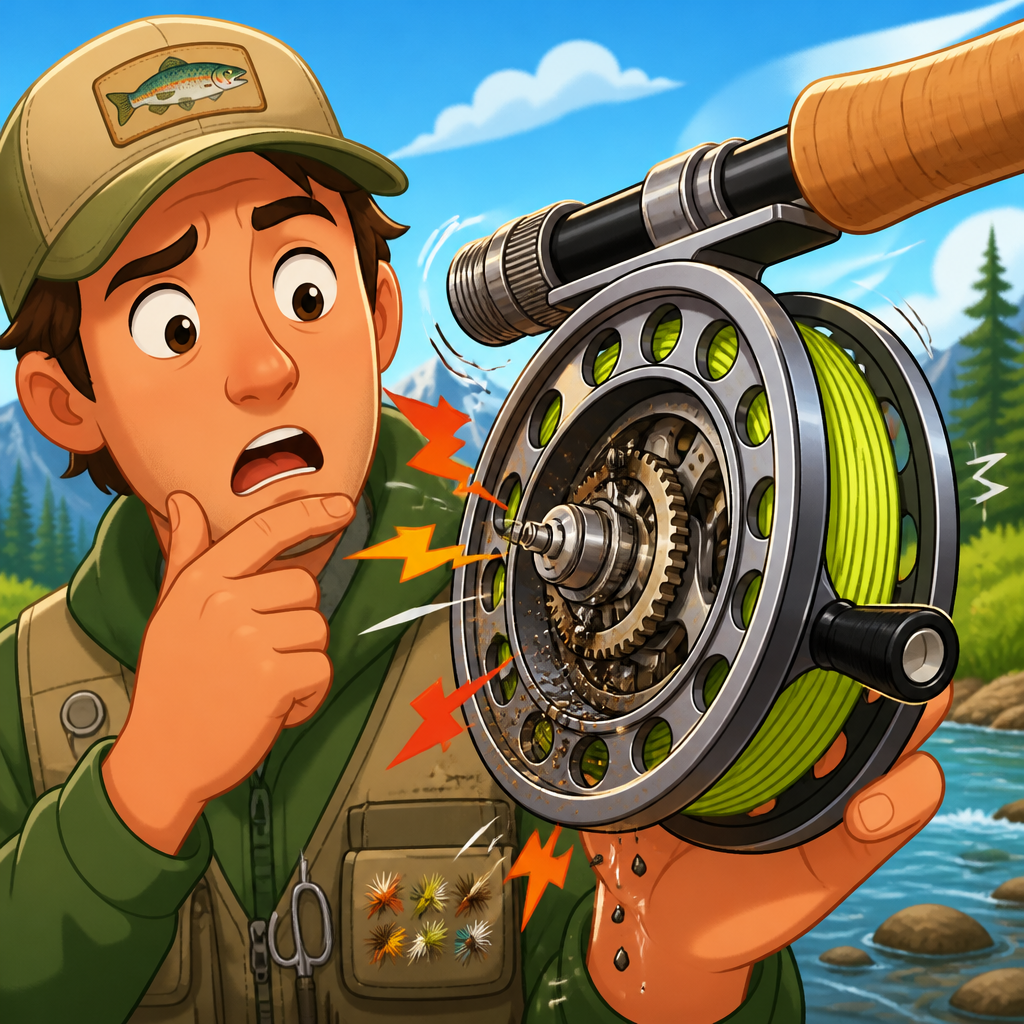
A grinding sound from a fly reel usually means one of three things: contamination, wear, or misalignment. In practical terms, grit has entered the drag, lubrication has broken down, or a spool, bearing, pawl, or spindle is no longer running true. For anglers learning fly fishing basics, that noise matters because the reel is not just a line holder once a fish runs. It becomes a braking system, and any roughness can cost casting performance, shorten equipment life, and in the worst case lead to a failed drag during a fight.
When anglers ask, “Why does my fly reel make a grinding noise?” they are usually describing a harsh, sandy, metallic, or clicking scrape heard while stripping line, retrieving line, or when the drag turns under pressure. Those symptoms point to specific parts inside the reel. A modern disc-drag reel may have sealed bearings, a cork, carbon fiber, or composite drag stack, a spindle, frame, spool, handle, and one-way clutch. A classic click-and-pawl reel uses simpler mechanics, but it can still grind if debris, corrosion, bent components, or poor lubrication interfere with smooth movement. I have serviced enough reels after beach trips, drift boat seasons, and neglected winter storage to say the pattern is consistent: noise starts small, anglers ignore it, then the repair gets more expensive.
This article is the hub for fly fishing gear and equipment within fly fishing basics, so it goes beyond the noise itself. Understanding reel problems helps you choose, maintain, store, and inspect the rest of your setup more effectively. A fly rod, fly line, backing, leaders, tippet, waders, boots, nets, packs, and tools all work as a system, and the reel sits at the center of line control. If it sounds wrong, it is telling you something useful. The key is knowing how to diagnose the sound, what causes it, when to stop fishing, and how smart gear habits across your setup prevent the same issue from returning.
What a Grinding Noise Usually Means Inside a Fly Reel
A true grinding noise is different from normal drag sound. Many reels are designed to make an audible outgoing click, and some incoming resistance is normal on click-and-pawl models. Grinding, by contrast, feels rough through the handle or spool and often changes as speed, pressure, or spool position changes. In my experience, the most common cause is contamination: fine sand, silt, dried salt, algae residue, old grease, or metal shavings migrate into moving parts and create abrasion. This is especially common after surf fishing, muddy river wading, or setting a reel down on gravel bars.
The second common cause is lubrication failure. Bearings and spindle surfaces need the right amount of suitable lubricant. Too little oil or grease allows metal-on-metal contact. Too much attracts grit and thickens in cold weather. I often see reels that were sprayed heavily with general-purpose lubricants, which can wash contaminants deeper into the drag housing or gum up one-way clutch bearings. A reel that ran quietly in summer may start grinding in late fall because old lubricant has become sticky and uneven.
The third major cause is misalignment or wear. A spool can warp from impact. A frame can get tweaked if dropped on rocks or crushed in a vehicle. A worn bushing, bad bearing, bent spindle, or loose handle screw can create intermittent rubbing that sounds like grinding. If the noise appears only when the spool is full of line, the issue may also involve line stacking or backing slipping into gaps and rubbing the frame. Distinguishing these causes is the first step before you clean, replace parts, or send the reel to the manufacturer.
How to Diagnose the Sound Before You Take the Reel Apart
Start with the simplest test: remove the spool and inspect everything in good light. Look for sand, caked grease, grooves, corrosion, bent edges, or backing trapped behind the spool. Spin the spool by hand off the reel. Then rotate the frame spindle or handle assembly separately. If the spool alone feels rough, suspect spool bearings, bushings, or drag surfaces. If the frame side feels rough, inspect the spindle, clutch, handle shaft, or drag mechanism. This basic isolation test solves the mystery quickly more often than anglers expect.
Next, change variables one at a time. Adjust the drag from minimum to maximum and listen for changes. If grinding increases with drag pressure, the problem is likely in the drag stack or contact surfaces. If it stays constant regardless of drag setting, bearings, alignment, or debris are more likely. Pull line off under tension while the rod is rigged, then retrieve line under no load. Some reels grind only under load because pressure shifts the spool enough to reveal a warped frame or contaminated drag washer.
Pay attention to location and timing. A reel that grinds after every saltwater outing but quiets after rinsing almost certainly has salt or sand intrusion. A reel that started grinding immediately after being dropped probably has a bent spool rim or frame. One that grinds after years of use may simply need new bearings or drag components. If you are unsure, check the manufacturer’s exploded diagram and service notes. Reputable brands such as Hatch, Nautilus, Abel, Lamson, Ross, Orvis, Hardy, Redington, and Sage often provide maintenance guidance or will inspect a reel for a modest service fee.
Common Causes, Symptoms, and Fixes
The fastest way to troubleshoot a noisy fly reel is to match the symptom to the likely fault. The table below covers the issues I see most often across freshwater and saltwater reels, from entry-level cast reels to fully machined sealed-drag models. Use it before ordering parts or attempting disassembly, because the wrong fix can damage a drag that was only dirty, not broken.
| Cause | Typical symptoms | Most affected reels | Practical fix |
|---|---|---|---|
| Sand or silt contamination | Rough scraping, inconsistent rotation, noise after wading or surf use | Open-frame reels, reels set on the ground | Rinse correctly, disassemble per manual, clean spindle and spool, inspect drag surfaces |
| Salt crystallization | Crunchy feel, stiff startup, corrosion spots, louder after drying | Saltwater reels without prompt rinse-down | Freshwater soak if approved, gentle cleaning, replace corroded hardware or bearings |
| Worn or dry bearing | Grinding at all drag settings, rough free-spin, vibration through handle | Heavily used disc-drag reels | Clean or replace bearing with manufacturer-spec part |
| Bent spool or frame | Noise at one point per revolution, visible rub marks, intermittent contact | Reels dropped on rocks or boat decks | Replace damaged spool or frame; do not force alignment |
| Drag contamination or glazing | Grinding under load, jerky startup, reduced smoothness on runs | Cork and composite drag systems | Service drag stack, use correct drag grease only if specified |
| Loose screw or handle hardware | Ticking that becomes scrape, side-to-side play, sudden onset | All reel types | Tighten to specification, inspect threads, use replacement hardware if worn |
Cleaning and Maintenance That Actually Prevents Grinding
Good reel maintenance is simple, but precision matters. After freshwater use, wipe the reel dry, back off the drag if the manufacturer recommends it, and inspect the spool rim and frame. After saltwater use, lightly rinse with low-pressure fresh water. Never blast a reel with a hose because high pressure drives salt and grit deeper into bearings and drag seals. Let the reel dry completely before storage. If the spool can be removed without exposing sensitive drag components, take it off and clean the spindle and mating surfaces with a lint-free cloth.
Use only lubricants approved for the reel. That sounds obvious, but it is one of the most common mistakes in gear care. Light reel oil may be right for a handle knob bearing and completely wrong for a cork drag. Grease that works on conventional spinning tackle can be too heavy for a fly reel’s tolerance stack, especially in cold weather. Many manufacturers specify a tiny amount of synthetic lubricant at precise points and no lubricant at all on sealed drag faces. If you cannot find the manual, stop and get it before adding anything.
Schedule service before problems become audible. For trout anglers fishing twenty to thirty days a year, a seasonal inspection is usually enough. For guides, surf anglers, and anglers targeting salmon, steelhead, striped bass, redfish, or bonefish, monthly checks during the season are reasonable. I also recommend inspecting backing at least once a year. Old backing can hold salt, mildew, and fine grit against the arbor and spool, creating hidden abrasion that eventually feels like a reel problem even though the contamination began in the line system.
When the Reel Noise Points to Broader Gear and Equipment Problems
A grinding reel often exposes larger weaknesses in an angler’s setup. If line is piling unevenly because the fly line has memory coils, the spool may load irregularly and exaggerate rubbing. If backing was installed sloppily, high spots can force the fly line to sit unevenly and contact the frame. If the reel seat on the rod is loose, the whole system can vibrate and make a harmless sound seem mechanical. In other words, diagnosing reel noise is part of learning how fly fishing gear and equipment function together.
This is why a basics-level gear hub should cover more than reel repair. The fly rod must match the line weight and intended species. The reel should balance the rod reasonably and hold enough backing for the fishery. Fly line taper should match the casting task, whether that is a weight-forward floating line for trout, a sink-tip system for swinging streamers, or a tropical line for flats heat. Leaders and tippet should complement the flies and fish, not force an over-tight drag setting that masks jerky reel startup. Even wading gear matters. Boots packed with grit, sandy stripping baskets, and mesh packs full of salt residue all contribute contamination that eventually finds its way into the reel.
Anglers building a dependable kit should think in categories: casting tools, line management, wading and safety, storage, and maintenance. For casting tools, prioritize a quality rod, matched line, and a reel with a proven drag appropriate to the fishery. For line management, include backing, leaders, tippet, nippers, hemostats, floatant, and a net. For wading and safety, think boots, waders, staff, glasses, and weather layers. For storage, use reel cases and dry bags. For maintenance, keep fresh water, soft cloths, spare leaders, and the manufacturer’s service instructions handy.
Repair or Replace: Knowing the Smart Next Move
Not every grinding fly reel should be repaired at home. If the reel has a sealed drag, one-way clutch bearing, or proprietary internal stack, opening it without the right tools can void the warranty or create a worse problem. In my own gear room, I handle external cleaning, spool and spindle inspection, and obvious hardware tightening. I send reels in when the issue involves sealed internals, corrosion on load-bearing parts, or signs of clutch failure. That approach saves money because it avoids turning a serviceable reel into a box of hard-to-source parts.
Replacement makes sense when repair cost approaches the value of the reel, when the frame is bent, or when parts are no longer available. Entry-level die-cast reels can fish well, but once tolerances loosen and components corrode, repairs may not hold. By contrast, a premium fully machined reel from a brand with long-term parts support is often worth servicing for years. This matters for anyone planning their fly fishing gear and equipment budget. Spend where durability and service support matter most, especially on reels used in saltwater, on big rivers, or for strong fish that expose drag weaknesses immediately.
As you build out your fly fishing basics knowledge, treat reel noise as a valuable warning, not an annoyance. Learn the normal sound of your reel, rinse and inspect it consistently, and connect what you hear to the rest of your equipment choices. A smooth fly reel protects tippet, controls fish, and lasts longer when paired with the right rod, line, backing, and maintenance routine. If your reel is grinding now, stop fishing it, inspect the simple causes first, and use the manufacturer’s guidance when the problem reaches the drag or bearings. Then review the rest of your gear system with the same discipline. Better habits across your equipment prevent repeat failures and make every day on the water more reliable. Start with the reel, fix the cause, and use that process to upgrade your entire kit intelligently.
Frequently Asked Questions
Why does my fly reel make a grinding noise in the first place?
A grinding noise from a fly reel usually points to one of three root causes: contamination, wear, or misalignment. In the most common scenario, fine grit, sand, silt, or dried debris has worked its way into the drag system or around moving parts such as the spool, spindle, pawl, or bearings. Once that happens, the reel no longer turns smoothly, and the rough particles create a scraping or grinding sound as the spool rotates. Another common cause is lubrication failure. If grease has dried out, been washed away, or broken down over time, metal parts begin contacting each other more directly, which increases friction, heat, and noise. The third issue is alignment. If the spool is slightly bent, the spindle is worn, a bearing is failing, or a pawl is not tracking correctly, the reel may no longer run true, and that uneven contact can produce a noticeable grinding sensation.
This matters more than many beginners realize. In fly fishing, the reel may seem passive until a fish starts running, but at that moment it becomes a braking system. A reel that grinds is not just annoying. It can affect smooth line payout, compromise drag consistency, and accelerate internal wear. Left alone, a minor grinding sound can turn into a damaged drag stack, scored spindle, seized bearing, or even failure under load when you need the reel most. That is why any new grinding noise should be treated as an early warning sign rather than normal reel behavior.
Is it safe to keep fishing with a fly reel that makes a grinding sound?
You can sometimes finish a session with a mildly noisy reel, but in general it is not a good idea to keep fishing a fly reel that has started grinding. The reason is simple: if grit or internal wear is causing the sound, continued use usually makes the problem worse. Every turn of the spool can drag abrasive particles across the drag surfaces or bearings, deepening scratches and increasing friction. If the issue is low or degraded lubrication, running the reel dry can quickly wear down precision parts that are expensive or difficult to replace. If the problem is misalignment, using the reel under pressure can put even more stress on the spindle, spool hub, frame, or drag components.
The real risk shows up when a fish makes a strong run. A rough reel may hesitate, pulse, or seize instead of paying out line smoothly. That can cause sudden tippet break-offs, poor pressure control, and a much higher chance of losing the fish. It can also shorten the working life of the reel considerably. If the grinding is very light and you are far from home, rinse the reel if possible, back off the drag slightly, and avoid forcing it. But once you are done, stop using it until you inspect and clean it properly. A fly reel should sound controlled and smooth, not coarse or gritty.
How can I tell whether the grinding noise is caused by dirt, worn parts, or misalignment?
Start with the easiest possibility: contamination. If the grinding began after fishing in sandy, silty, muddy, or saltwater conditions, grit is the first suspect. Remove the spool if your reel design allows it and inspect the spindle, drag surfaces, spool arbor, and frame interior for sand, dried salt, plant material, or old grease that has turned sticky. Rotate the spool slowly by hand and feel for roughness. If the reel feels gritty in specific spots, contamination is very likely. Also listen for whether the sound improves after a gentle freshwater rinse and drying. Temporary improvement often points to debris rather than structural damage.
Wear tends to show up as persistent roughness that does not go away after cleaning. Look for scoring on the spindle, wobble in the spool, excessive side-to-side play, visible wear on a click pawl, or bearings that feel crunchy even when cleaned. A worn bearing often creates a harsher, mechanical grinding sound and may feel rough through the handle or rim of the spool. If the drag is inconsistent, jerky, or louder under pressure than at light tension, the drag washers or related parts may be worn.
Misalignment is often revealed by wobble, rubbing, or uneven clearance. Spin the spool and watch it from the side. If it appears to oscillate, tilt, or contact the frame at one point in its rotation, something is no longer running true. That could be a bent spool, damaged spindle, warped frame, or improperly seated spool. In some cases, the problem is as simple as the spool not being fully engaged after reassembly. In others, it means the reel needs repair or replacement parts. If cleaning does not eliminate the noise and the reel still feels rough or visibly off-center, worn or misaligned components become much more likely.
What should I do to fix a fly reel that is making a grinding noise?
The first step is to stop using the reel long enough to inspect it properly. Remove the spool according to the manufacturer’s instructions and examine all accessible surfaces for grit, dried residue, corrosion, or obvious damage. Use a soft cloth, cotton swab, and clean freshwater to remove dirt from the spindle, spool interior, frame, and exposed drag area if the drag is user-serviceable. If you have been fishing in saltwater, a careful freshwater rinse is especially important, but avoid blasting water directly into sealed drag systems unless the manufacturer specifically recommends it. Let everything dry fully before reassembly.
Next, check whether the reel requires lubrication and use only the type recommended by the reel maker. Some reels need a light reel oil on bearings or spindle surfaces, while others require grease in very specific locations. Too much lubricant can attract more grit, and the wrong product can damage drag materials or seals. If the reel has a sealed drag, do not open it unless the manufacturer says it is serviceable by the user. Instead, clean the exterior contact points and inspect for wobble or rubbing.
Once cleaned and reassembled, rotate the spool slowly and then under light drag tension. If the grinding disappears, the issue was likely contamination or dried lubricant. If the noise remains, inspect for spool wobble, bearing roughness, frame contact, bent parts, or abnormal wear marks. At that point, replacing a bearing, pawl, or spool may be necessary. If you are unsure, the safest move is to send the reel to the manufacturer or a qualified reel technician. Fly reels are precise tools, and a professional service is often cheaper than continuing to fish the reel until multiple parts are damaged.
How can I prevent my fly reel from developing a grinding noise again?
Prevention comes down to routine care, especially after exposure to sand, silt, or salt. After each trip, lightly rinse the reel with freshwater if the conditions warrant it, then dry it thoroughly before storage. Pay extra attention after beach fishing, kayak launching, muddy bank fishing, or any situation where the reel may have been splashed with dirty water or set down on gritty ground. Avoid submerging the reel unnecessarily, and never lay it directly in sand if you can help it. Even very fine grit can work its way into drag surfaces and bearings.
Regular maintenance also matters. Back off the drag when storing the reel if the manufacturer recommends it, because that can reduce unnecessary pressure on the drag stack. Periodically remove the spool, wipe down the spindle and frame interior, and inspect for early signs of wear, corrosion, or line debris. Use only the proper lubricant in the proper amount. More lubricant is not better, and household oils are not a substitute for reel-specific products. If your reel uses a sealed drag, follow the service intervals recommended by the manufacturer rather than opening it casually.
Finally, pay attention to changes in feel and sound. A fly reel in good condition should operate smoothly and consistently. If you notice a new rasp, wobble, rubbing point, or uneven drag startup, address it early. Small problems are usually easier and cheaper to solve than major failures. Good reel habits not only prevent grinding noise, they also protect casting performance, improve drag reliability, and help ensure the reel does its job when a fish makes a hard run.