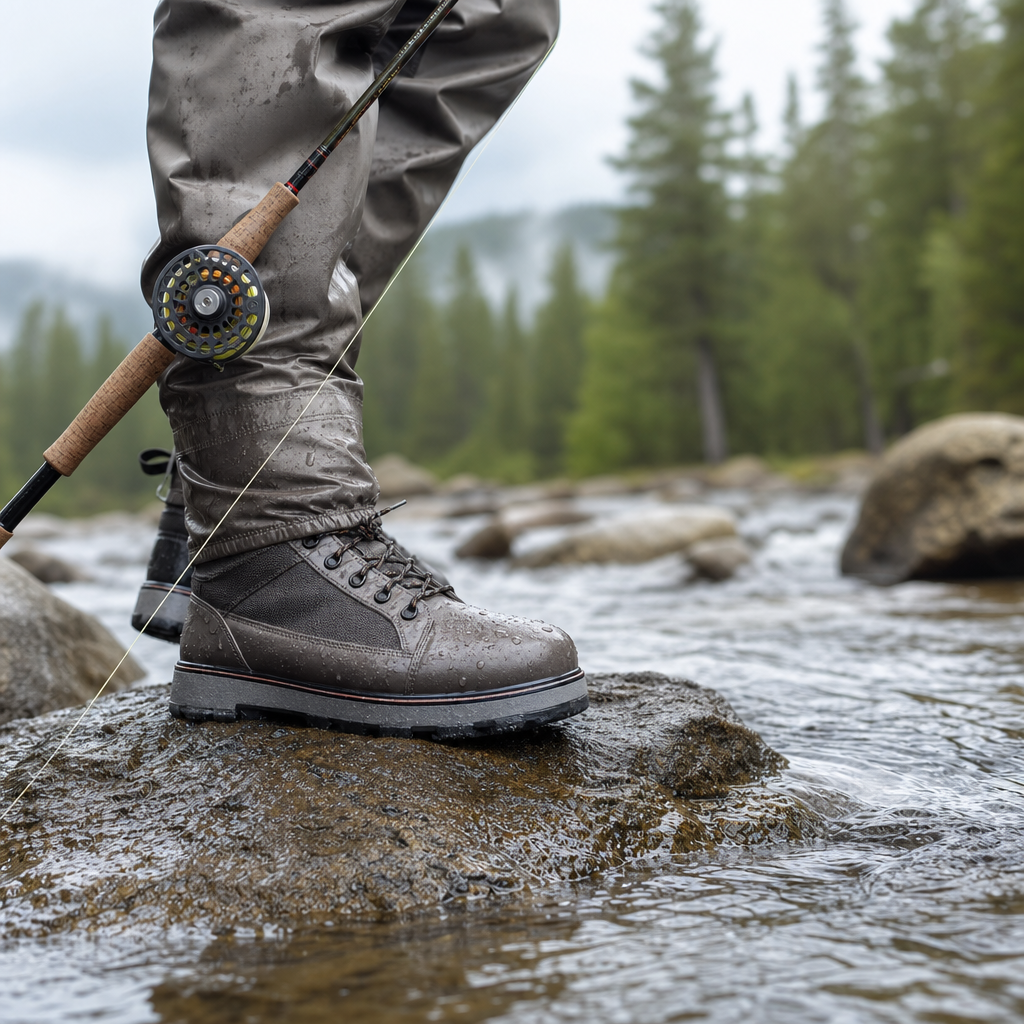
Wet wading and cold-river fishing expose one weak link faster than almost any other gear choice: boots that lose traction, stay heavy, or break down after repeated soakings. Reviewing the best fly fishing boots for wet conditions means looking beyond brand reputation and focusing on grip, drainage, ankle support, weight, upper materials, and how each design performs on slick rock, muddy banks, and long approaches. In practical terms, fly fishing boots are specialized wading footwear built to pair with stockingfoot waders or wet-wading socks, using high-drainage constructions, reinforced toe caps, and outsole systems tuned for unstable riverbeds. Wet conditions matter because moving water amplifies every equipment failure. A boot that feels fine on a dry path can become dangerous on algae-covered freestone boulders, and a boot that absorbs too much water can turn a half-mile hike back to the truck into a leg-burning slog.
I have tested boots on limestone streams, tailwaters with polished rock shelves, and coastal estuaries where salt, sand, and constant immersion reveal weaknesses quickly. The best models are not simply “waterproof,” because true waterproofing is irrelevant once a boot is submerged all day. What matters is rapid drainage, low water retention, predictable traction, durable stitching, corrosion-resistant hardware, and a fit that stays secure when saturated. For readers building a complete clothing system, this hub also connects naturally to wader layering, rain jackets, gravel guards, neoprene socks, and cold-weather insulation choices, because boots perform best when the surrounding apparel is chosen correctly. The goal here is straightforward: identify what makes a fly fishing boot excel in wet conditions, compare leading types, and explain which features are worth paying for so you can buy once and fish confidently.
What Makes a Fly Fishing Boot Good in Wet Conditions
The best fly fishing boots for wet conditions share a clear design logic. They drain fast, resist saturation, hold the foot firmly, and create reliable contact with slippery surfaces. Those four requirements sound simple, but many boots fail one of them. Quick drainage depends on ports placed low enough to release water yet protected enough to keep out excessive gravel. Modern synthetics such as hydrophobic TPU overlays, closed-cell foams, and tightly woven abrasion panels outperform old full-grain leather in this setting because they absorb less water and dry faster overnight. Leather can still be durable and supportive, but once soaked repeatedly it becomes heavier, slower to dry, and harder to maintain.
Outsoles deserve special attention because river traction is more complex than ordinary hiking traction. Sticky rubber compounds such as Vibram Idrogrip or proprietary high-friction blends work well on mixed terrain and are more versatile for hikes, drift-boat ramps, and travel. Felt soles still deliver excellent grip on slimy rock in many freshwater systems, which is why veteran anglers continue to trust them where regulations allow. However, felt is banned in some regions because it can transport invasive organisms. Studs increase bite on algae-coated stone and steep mud, but they can be loud in boats, harsh on knees during long walks on hardpack, and dangerous on certain raft surfaces. The right setup depends on where you fish most often, not on internet consensus.
Support also matters more in current than on land. A boot with a weak heel cup or sloppy lacing allows the foot to slide inside the boot when crossing current seams, increasing fatigue and blister risk. For anglers carrying packs, camera gear, or two-handed rods, a high-cut boot with rigid torsional support can reduce ankle roll substantially. I have seen this difference clearly on rivers with basketball-size boulders: lightweight sneaker-like models feel agile for short sessions, but stiffer boots remain safer and less tiring during all-day wading. That does not mean everyone needs the heaviest option. Small-stream anglers who prioritize hiking may prefer a lighter boot, but they should still demand drainage efficiency and outsole confidence.
Best Boot Categories and Who They Suit
There is no single best fly fishing boot for every wet condition. Instead, top-performing models fall into several categories. Lightweight synthetic boots are ideal for anglers who hike to backcountry water, travel by air, or wet-wade in summer. They reduce swing weight, dry relatively quickly, and often feel comfortable out of the box. Simms Flyweight, Orvis Ultralight Wading Boot, and Korkers River Ops represent this approach, though each balances support and durability differently. On trips where you cover miles of trail before entering the river, these lighter boots can preserve energy and keep pace with the rest of a technical clothing kit.
Midweight all-around boots are the most versatile choice for a clothing reviews hub because they suit the broadest range of anglers. Models such as the Simms Freestone, Orvis Clearwater, and Patagonia Forra strike a practical middle ground between structure, abrasion resistance, and weight. These boots usually pair well with chest waders, layered insulation, and standard gravel guards, making them the easiest recommendation for someone assembling an entire wet-weather system. They are also often the value leaders: not the cheapest, but the category where materials and support are good enough to handle frequent use without premium pricing reaching diminishing returns.
Heavy-duty boots serve anglers who fish large freestone rivers, spend long days standing in current, or carry substantial loads. Simms G3 Guide-style boots and similarly built premium models from Patagonia or Korkers use reinforced uppers, robust rand protection, and stiffer midsoles. In testing, this class consistently performs best when the riverbed is rough and exits are steep. The tradeoff is obvious: they weigh more, feel bulkier when hiking, and cost more. Yet if you fish 50 or more days each season, premium support and long-term durability often justify the investment better than replacing budget boots every year or two.
Interchangeable-sole systems deserve separate mention. Korkers has defined this niche with boots that accept rubber, felt, and studded sole packages. For anglers who move between drift boats, spring creeks, and rocky Western rivers, this flexibility can be excellent. It also helps travelers adapt to regional felt restrictions. The limitation is mechanical complexity. Any removable sole system introduces another point of potential failure, and anglers must keep attachment interfaces clean and inspect them regularly. The convenience is real, but so is the maintenance requirement.
How Leading Boots Compare in Real Use
When anglers ask for direct recommendations, they usually want a short list rather than theory. The models below stand out because each solves wet-condition problems in a distinct way, and each fits a different style of fishing.
| Boot | Best For | Strength in Wet Conditions | Main Tradeoff |
|---|---|---|---|
| Simms Freestone | General river use | Strong support, dependable drainage, durable upper | Heavier than ultralight options |
| Simms Flyweight | Hike-in trips | Low weight, fast drying, athletic feel | Less underfoot protection on sharp rock |
| Orvis Ultralight | Travel and summer fishing | Comfortable fit, low bulk, efficient water release | Not as robust for hard daily use |
| Korkers River Ops | Variable fisheries | Interchangeable soles, good drainage, versatile traction | Sole system requires upkeep |
| Patagonia Forra | Balanced all-around performance | Stable platform, quality materials, solid hiking comfort | Price can be high relative to midrange rivals |
The Simms Freestone remains one of the safest recommendations because it consistently meets the needs of average and advanced anglers. It is not the lightest boot on the market, but its balance is unusually good. The upper resists abrasion from gravel bars and boat ramps, the fit locks the heel effectively, and the boot remains stable when paired with stockingfoot waders. In cold, high-volume rivers where footing matters more than covering trail miles, the Freestone performs like a dependable tool rather than a compromise piece.
The Simms Flyweight and Orvis Ultralight appeal to anglers who dislike clunky boots. Their athletic profiles make them easier to pack and more comfortable for anglers crossing long trail sections before entering the water. In my experience, these lighter boots shine on smaller rivers, warm-weather wet wading, and destination travel. However, they do not offer the same level of edging power on sidehills or the same confidence when stepping between submerged boulders while wearing a loaded pack. That tradeoff is reasonable if mobility is your top priority.
Korkers River Ops is a strong choice for anglers who need traction flexibility. A guide working across multiple watersheds can switch outsoles instead of buying multiple boots. That is a meaningful advantage in a full clothing system, especially if your other gear already changes with season and fishery. Patagonia’s Forra, meanwhile, feels thoughtfully built, with a stable chassis and quality finishing that justify consideration for anglers who want premium construction without moving to the stiffest guide-class boot. In direct comparison, it feels refined underfoot and dependable in sustained wet use.
Fit, Sizing, and Pairing Boots With the Rest of Your Clothing System
Boot reviews are incomplete without discussing fit. Wet-condition performance starts with sizing for the exact socks and waders you use. Most anglers need to size up from street shoes to accommodate neoprene booties on stockingfoot waders. If you fish winter tailwaters, thick merino socks add even more volume. A boot that feels perfectly snug in a store can become circulation-restricting once layered correctly. I recommend trying boots at the end of the day, wearing the same sock thickness you plan to fish, and lacing them fully before making any judgment.
The heel should stay anchored when you climb, and the forefoot should have enough room to avoid toe bang on descents. Pressure points around the ankle collar, lace eyelets, or toe box usually worsen in wet use because materials soften and the foot shifts slightly under load. This is why good lacing hardware matters. Corrosion-resistant hooks and fabric loops that cinch evenly are not minor details; they influence both comfort and security after dozens of soaked outings. If a boot is hard to tighten with cold hands, that flaw will show up quickly on the river.
As the clothing hub for this subtopic, this article should sit alongside detailed pages on waders, rain jackets, base layers, insulated midlayers, gloves, hats, and wading socks. Boots interact directly with all of them. Gravel guards must seal cleanly to keep debris out. Neoprene booties need enough space without folding. Merino socks help manage friction and temperature better than cotton, which traps moisture and increases blister risk. In cold conditions, breathable waders with appropriate layering generally outperform overdressing inside the boot itself, because cramped boots reduce warmth by restricting blood flow.
Maintenance, Durability, and When to Replace Your Boots
The best fly fishing boots for wet conditions still require maintenance. After every trip, rinse off silt, mud, and organic residue, especially around drainage ports, stitching, and outsole edges. Saltwater anglers should be stricter because salt crystals accelerate hardware corrosion and degrade adhesives over time. Dry boots in moving air rather than direct high heat. A boot dryer on a low, gentle setting is useful, but placing saturated boots next to a heater can warp midsoles, stiffen adhesives, and shorten life.
Inspect wear patterns regularly. Uneven outsole erosion, peeling rand sections, crushed heel counters, and frayed lace channels all signal declining performance before complete failure. Studded soles should be checked for missing or rounded studs. Felt should be cleaned thoroughly and allowed to dry completely where regulations permit its use. Leather panels benefit from occasional conditioning, but heavy oils can reduce breathability and attract grit. Synthetic boots are generally simpler to maintain, another reason they dominate serious wet-condition use today.
Replacement timing depends on frequency and terrain. Anglers fishing a dozen weekends per year may get several seasons from a midrange boot. Guides or highly active anglers can wear out even premium models in one hard season, especially on abrasive volcanic rock or shale. Replace boots when support collapses, traction becomes unreliable, or upper integrity fails. Waiting until a sole separates midriver is not economical; it is a safety problem.
Choosing the best fly fishing boots for wet conditions comes down to matching design to use. Prioritize drainage, traction, support, and low water retention before you worry about branding or trend-driven weight claims. For most anglers, a sturdy midweight boot such as the Simms Freestone or Patagonia Forra offers the best blend of reliability and versatility. If hiking distance dominates your day, lighter options like the Simms Flyweight or Orvis Ultralight make sense. If your fisheries change constantly, Korkers and its interchangeable soles offer real flexibility, provided you maintain the system carefully.
This hub within Product Reviews and Recommendations should guide every related clothing decision, because boots are not isolated purchases. They work with waders, socks, rainwear, layering, and seasonal accessories as one integrated fishing system. Buy the boot that fits your primary river conditions, your walking distance, and your clothing setup, then care for it properly. If you are updating your kit this season, start with boots: better footing improves safety, comfort, and fishing focus from the first step into the water.
Frequently Asked Questions
What features matter most when choosing fly fishing boots for wet conditions?
The most important features are traction, drainage, support, weight, and long-term durability in consistently wet environments. In wet conditions, traction is usually the top priority because slick river rocks, algae-covered stone, muddy banks, and unstable gravel can quickly expose the weaknesses of a boot outsole. A quality fly fishing boot should use a sole design that maintains grip when submerged and while transitioning in and out of the water. Stud-compatible outsoles, aggressive tread patterns, and materials designed specifically for wet rock are all worth close attention when comparing models.
Drainage is just as important because boots that trap water become heavy, cold, and uncomfortable over a full day of fishing. Good wet-condition boots are built with ports or mesh panels that release water quickly and help the boot dry faster between trips. Support also matters, especially if you fish uneven river bottoms or hike into remote water. Solid ankle support and a stable midsole help reduce fatigue and lower the chance of turning an ankle on submerged rocks. Weight is another major factor. A boot that feels manageable in the shop can become exhausting after hours of walking against current if it gains too much water weight. Finally, look closely at the upper materials, stitching, toe reinforcement, and sole attachment. Wet use is hard on footwear, so the best boots are designed to handle repeated soaking, abrasion, and impact without breaking down prematurely.
Are felt soles or rubber soles better for wet wading and slippery river conditions?
Neither is universally better in every situation, but each has clear strengths. Felt soles have long been favored by many anglers because they grip extremely well on slick, algae-covered rocks, particularly in rivers with smooth stone bottoms. In pure underwater traction on certain surfaces, felt can still be hard to beat. That said, felt is less effective on muddy banks, grassy trails, boat ramps, and long approaches where the material can feel unstable or collect debris. It also dries slowly and may be restricted or banned in some areas due to concerns about transporting invasive species between watersheds.
Rubber soles are more versatile and have become the preferred option for many anglers who need one boot that performs both in and out of the water. Modern sticky-rubber compounds have improved significantly and can provide excellent traction, especially when paired with metal studs. Rubber soles generally perform better on trails, mud, gravel, and mixed terrain, making them a strong choice for anglers who hike to access points or fish varied conditions in the same day. If your fishing involves lots of slick boulders and short walks, felt may still appeal to you where allowed. If you need all-around performance, easier maintenance, and broader legal acceptance, rubber is often the smarter long-term choice. The best decision depends on your local river bottom, access style, and whether you value specialized underwater grip or broader versatility.
How much ankle support do fly fishing boots need in cold rivers and rough wading conditions?
In most wet and cold river situations, more support is better than less, especially if you fish fast current, uneven rocky bottoms, or carry extra gear. Ankle support helps stabilize your footing when your lower legs are working against current and when you cannot clearly see what is under the water. A taller, more structured boot can reduce lateral movement, improve confidence on irregular terrain, and help prevent ankle rolls when stepping between hidden rocks or navigating muddy, undercut banks. This becomes even more important in cold-water conditions, where reduced foot sensation and heavier layers can make missteps more likely.
That said, support should not come at the expense of comfort or mobility. Some of the best fly fishing boots balance a supportive upper with enough flex for natural walking and long days on the water. If a boot is too stiff, it can feel tiring on long approaches or create pressure points when wet. If it is too soft, it may not provide enough structure when the river pushes against your legs. Anglers who primarily wet wade in smaller streams may be fine with a lighter, more flexible design, while those fishing larger rivers or hiking with packs typically benefit from a boot with a reinforced ankle collar, secure lacing, and a stable platform underfoot. In practical terms, the right amount of support is the level that keeps you steady without making the boot feel bulky, restrictive, or overly heavy once soaked.
Why do drainage and boot weight make such a big difference during a full day of fly fishing?
Drainage and weight directly affect comfort, mobility, and fatigue. In wet conditions, every boot is going to get soaked, so the question is not whether water gets in, but how efficiently the boot sheds it. A poorly draining boot holds water in the upper, tongue, and internal padding, which increases weight and creates a heavy, waterlogged feel with every step. That extra weight becomes surprisingly noticeable over the course of a day, especially when wading against current, climbing banks, or walking long distances between pools. Boots that drain efficiently feel lighter, recover faster after each step, and generally place less strain on your legs.
Weight also influences balance and overall endurance. Lighter boots tend to feel more nimble and less tiring, which can matter a lot during long sessions or technical wading where precise foot placement is critical. However, lighter is not always better if weight savings come from sacrificing support or durability. The best wet-condition fly fishing boots keep overall weight under control while still offering enough protection, structure, and abrasion resistance for hard use. Good drainage systems, non-water-absorbing materials, and sensible construction all help maintain a manageable weight profile after repeated submersion. If two boots feel similar dry, the one that drains faster and gains less water weight will often be the better performer on the river.
How can you tell if a fly fishing boot will hold up after repeated soaking and hard use?
Durability in wet conditions comes down to materials, construction quality, and design choices that account for constant immersion and abrasion. Start by looking at the upper. Synthetic materials typically outperform traditional leather in repeated soaking because they dry faster, resist stretching, and are less likely to become heavy and degraded over time. Reinforced toe caps, abrasion-resistant side panels, and durable lace hardware are all signs that a boot is built for contact with rock, gravel, and debris. High-wear areas should look protected rather than minimal, especially around the toe, heel, and rand.
You should also examine how the sole is attached and how the boot is stitched or bonded together. In wet environments, weak adhesives, poor seam design, and low-grade materials can lead to sole separation, fraying, and breakdown much faster than expected. Boots designed specifically for wading typically account for these stresses with stronger bonding methods, tougher midsoles, and drainage systems that reduce internal moisture retention. Reading real-world reviews can help, but it is best to focus on comments about performance after months of use rather than first impressions. Signs of a durable boot include consistent shape retention, secure eyelets and hooks, intact sole edges, and uppers that do not collapse or delaminate after repeated wet-dry cycles. In short, the boots most likely to last are the ones built with purpose for cold rivers, wet wading, and abrasive terrain rather than repurposed hiking designs that only resemble true fishing boots.