Australia offers some of the most varied fly fishing in the world, from cold alpine streams loaded with wild trout to tropical flats where giant trevally test every knot and cast. A serious review of the best fly fishing spots in Australia has to do more than list famous rivers. It needs to explain what species live there, when to go, what techniques work, how access and regulations differ, and which destinations suit beginners versus experienced anglers. After years of planning trips, comparing guides, and fishing several of these regions, I have learned that the best Australian destination is rarely the one with the most hype. It is the one that matches your target species, budget, tolerance for weather, and preferred style of water.
Fly fishing in Australia matters because the country compresses an enormous range of fisheries into one continent. In a single travel plan, an angler can sight cast to brown trout in Tasmania, drift nymphs through Victorian freestone streams, then head north to strip baitfish patterns for barramundi or queenfish. That diversity makes Australia both exciting and complicated. Conditions are strongly seasonal, some legendary waters are remote, and success often depends on understanding local hatches, water levels, and biosecurity rules. This hub article reviews the standout destinations across the country and explains where each place excels. It also serves as a practical starting point for readers exploring broader travel and destination reviews, whether they are building a first Australian fly fishing itinerary or narrowing down a short list for a return trip.
Tasmania: Australia’s benchmark trout destination
If you ask experienced trout anglers to name the best fly fishing spot in Australia, Tasmania usually leads the conversation. The reason is simple: scale, quality, and variety. Tasmania has hundreds of trout lakes and tarns, productive rivers, and a strong culture of technical sight fishing. Much of the island’s reputation comes from its wild brown trout fisheries, though rainbow trout are present in selected waters. The highland lakes near locations such as Arthurs Lake, Great Lake, Penstock Lagoon, and Little Pine Lagoon are central to its fame, while rivers like the Mersey, South Esk, and Tyenna add moving-water options.
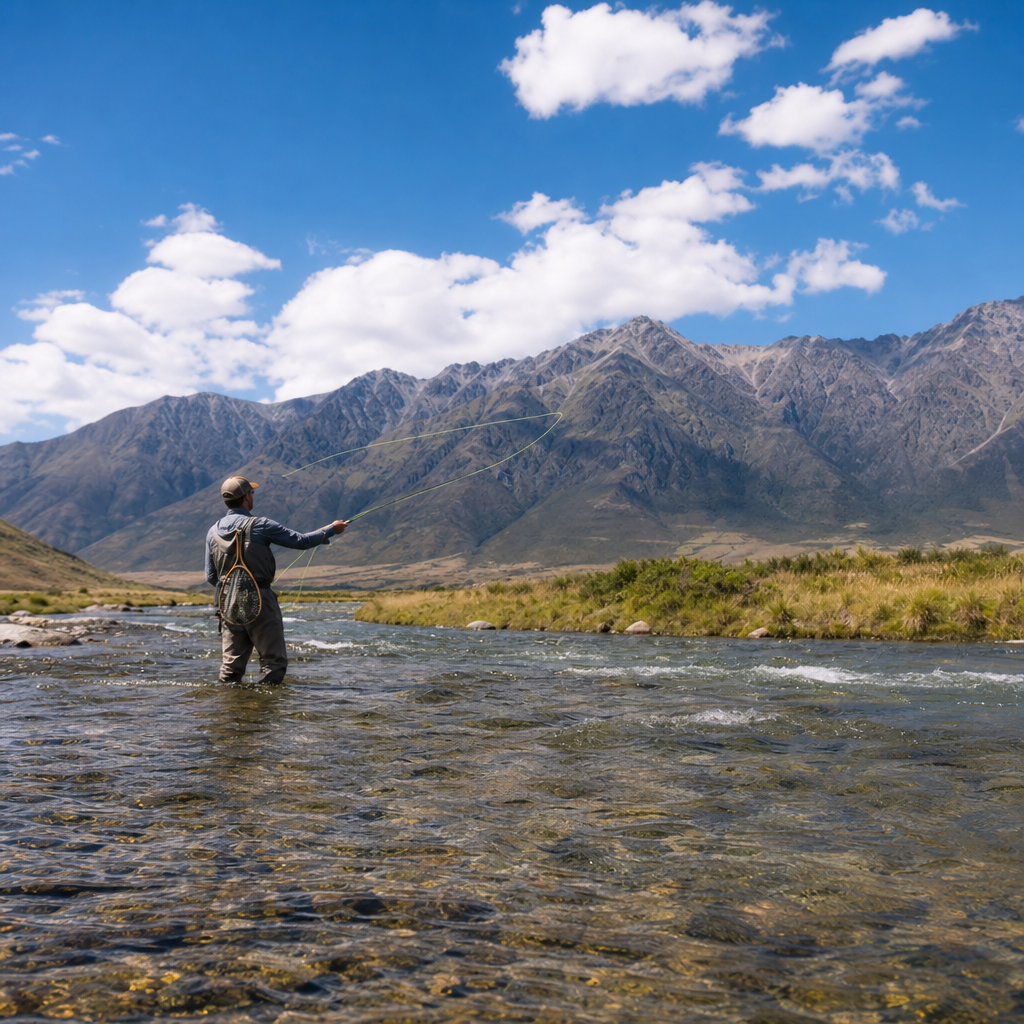
The defining experience in Tasmania is visual trout fishing. During mayfly hatches, gum beetle falls, and tailing periods over shallow weed beds, fish can often be located before the cast is made. That creates a highly skilled game built around presentation, leader control, and reading light and wind lanes. Late spring through autumn is the main season, with different lakes peaking at different times depending on temperature, water level, and insect activity. In my experience, Tasmania rewards anglers who remain mobile. Staying in one lodge and fishing one water can work, but hiring a guide for at least a day often reveals how quickly conditions shift between nearby lakes.
Tasmania is the best all-around recommendation for dedicated trout-focused fly anglers because it offers both trophy potential and technical depth. It is less ideal for anglers who want easy fish without weather challenges. Wind is part of the package, and the most memorable sessions often happen between fronts rather than during calm postcard conditions.
Snowy Mountains and New South Wales streams
Mainland trout anglers often start with the Snowy Mountains region in New South Wales. Around Jindabyne, Thredbo, Eucumbene, and surrounding streams, anglers can target brown and rainbow trout in rivers, lakes, and tailwater-style environments. Lake Eucumbene is nationally known, especially for seasonal lake-edge fishing and inflowing stream action, while the Thredbo River is one of the best-known spawning-run systems in the country. Nearby rivers and creeks also offer classic stream fishing with nymphs, dries, and small streamers.
The strength of this region is accessibility. Roads, accommodation, tackle support, and guide services are easier to organize here than in many remote Australian fisheries. For traveling anglers, that lowers the barrier to entry. The tradeoff is pressure. Popular beats can receive steady attention during peak periods, especially on weekends and around stocking-influenced waters. Success often comes from timing sessions early, walking farther than casual anglers, and adapting tactics to conditions rather than forcing one method all day.
The Snowy Mountains suit anglers who want a broad trout trip with a realistic chance to mix scenic travel, comfortable logistics, and productive fishing. They are especially useful for anglers transitioning from general freshwater fishing into dedicated fly fishing because the water types vary so much within a manageable area. If Tasmania is the specialist’s dream, New South Wales is often the practical gateway.
Victoria’s high country and freestone rivers
Victoria deserves more international attention than it usually gets. The state’s high country holds excellent freestone trout rivers, upland streams, and meadow-style water that can fish beautifully in the warmer months. The Goulburn, Delatite, Kiewa, Mitta Mitta, Ovens, and upper Murray systems all contribute to a diverse trout map. In addition, small tributaries across the alpine region can produce highly enjoyable dry-fly sessions for anglers willing to hike and fish light tackle.
What makes Victoria stand out is the blend of river structure and insect life. In many reaches, anglers encounter riffles, undercut banks, pocket water, timber, and glides within short distances, making it possible to switch between dry-dropper rigs, tight-line nymphing, and streamer tactics. During terrestrial season, hoppers can be especially effective, while evening rises on calmer water reward accurate dry-fly presentation. I often recommend Victoria to anglers who love river fishing more than stillwater hunting. It may not have Tasmania’s global status, but it offers enough quality to anchor an entire trip.
| Destination | Best Known For | Primary Species | Best For | Main Caution |
|---|---|---|---|---|
| Tasmania Highlands | Sight fishing on lakes and technical trout tactics | Brown trout, some rainbow trout | Experienced trout anglers | Wind and rapidly changing weather |
| Snowy Mountains NSW | Accessible rivers and lakes | Brown trout, rainbow trout | First destination trout trips | Pressure on popular water |
| Victoria High Country | Freestone river fishing and dry flies | Brown trout, rainbow trout | River-focused anglers | Flows can change after rain |
| Cape York and Top End | Tropical sportfish and remote adventure | Barramundi, saratoga, queenfish, trevally | Advanced warmwater anglers | Heat, remoteness, and seasonal access |
| Exmouth and WA coast | Flats, pelagics, and bluewater options | Bonefish, permit, trevally, queenfish | Saltwater sight casters | Wind and demanding casting |
Queensland and the Northern Territory: barramundi and tropical power
Not every review of the best fly fishing spots in Australia should revolve around trout. For many traveling anglers, the most uniquely Australian experience is tropical fly fishing for barramundi and related warmwater species. Northern Queensland, Cape York, and the Northern Territory offer systems where barra, saratoga, mangrove jack, threadfin salmon, queenfish, and giant trevally can all enter the conversation depending on location. Around Darwin and the Top End, runoff season is famous because receding floodwater concentrates bait and predators around drains and creek mouths. In Queensland, impoundments and tidal systems provide very different styles of fishing.
Barramundi are a premier fly target because they combine aggression, size, and habitat complexity. Successful presentations often involve large synthetic streamers, intermediate or floating lines depending on depth, and short, accurate casts tight to timber, lilies, rock bars, or current edges. Hooking the fish is only part of the challenge; landing it around structure is the real test. In guided operations, I have seen how much boat positioning matters. A small change in casting angle can turn follows into committed eats.
These fisheries are outstanding, but they are not casual. Heat, humidity, crocodile country, storm cycles, and long travel distances demand preparation. Anglers seeking comfort and convenience may prefer southern destinations. Anglers seeking explosive takes and species unavailable elsewhere should put northern Australia high on their list.
Western Australia: flats, reef edges, and bluewater options
Western Australia is arguably the country’s most underrated saltwater fly region. Exmouth, Ningaloo, and parts of the Pilbara give anglers access to flats fishing, reef-edge species, and bluewater opportunities that are difficult to replicate elsewhere in Australia. Depending on season and conditions, species may include bonefish, permit, golden trevally, giant trevally, queenfish, milkfish, mackerel, and tuna. This is not easy fishing, but it is world-class sight fishing when wind, tide, and water clarity align.
Exmouth in particular deserves attention because it supports multiple fisheries within one destination. An angler can wade or boat fish the flats, cast to cruising trevally over coral edges, or switch to offshore work when weather opens a window. The best guides in the region understand tides with near-scientific precision. On productive days, they are not merely taking clients to fish; they are intercepting moving opportunities based on moon phase, current speed, and light angle.
Western Australia is best for saltwater anglers with competent double-haul casting and realistic expectations. Shots can be brief and weather can erase an entire plan. But if your goal is a serious saltwater fly adventure, it belongs in any honest travel and destination review of Australia.
South Australia and smaller overlooked fisheries
Some of Australia’s best fly fishing experiences come from places that rarely dominate headlines. South Australia has notable saltwater options, particularly around the Coorong and select estuary systems, and it also provides yellowfish and redfin opportunities inland. In trout terms, it is not the first state most anglers choose, yet local fisheries can still reward those already traveling through the region. More broadly, overlooked streams in eastern states, farm-dam fisheries, urban estuaries, and seasonal carp opportunities provide depth to the national scene.
Carp are worth mentioning because they have become a legitimate fly target in parts of Australia, especially in warmer months when fish tail in shallow water. They are not glamorous to every angler, but they teach spotting, leading, and subtle presentation extremely well. In practical terms, carp fishing has improved many trout anglers’ visual skills. Likewise, estuary species such as bream can offer technical fly fishing near major population centers. A review hub should acknowledge these fisheries because not every traveler wants a remote expedition. Sometimes the best destination is the one that fits into a broader road trip and still delivers meaningful time on the water.
How to choose the right Australian fly fishing destination
The best fly fishing spot in Australia depends on four factors: target species, season, skill level, and logistics. If your dream is classic trout imagery and technical dry-fly or sight-fishing scenarios, choose Tasmania first and Victoria second. If you want a balanced, accessible trout trip with strong infrastructure, the Snowy Mountains make sense. If you want explosive warmwater takes and iconic Australian predators, plan around barramundi country in Queensland or the Northern Territory. If your priority is saltwater sight fishing and tropical species diversity, Western Australia stands out.
Budget also matters. Remote guided operations can be expensive because of distance, fuel, boats, and specialized local knowledge. That cost is often justified in difficult fisheries, especially in the north and west, where a guide can compress years of learning into a few productive days. On the other hand, self-guided trout travel in southeastern Australia can be highly rewarding if you study local regulations, monitor stream flows, and remain flexible. State fisheries departments, local fly shops, and river-level tools should be part of every planning process. Regulations change, seasons are species-specific, and catch-and-release expectations vary by water.
Australia rewards anglers who prepare carefully and travel with a clear purpose. That is the central lesson from reviewing its best fly fishing destinations. There is no single winner for every person, but there is a best match for each kind of trip. Tasmania remains the premier trout destination because its lakes and rivers create uniquely technical fishing. New South Wales and Victoria provide accessible, high-quality freshwater options with strong variety. Queensland and the Northern Territory deliver barramundi and tropical power that feel unmistakably Australian. Western Australia adds a saltwater dimension that can rival famous international flats destinations when conditions line up.
For readers using this page as a hub within travel and destination reviews, the next step is simple: narrow your trip by species first, then by season, then by how much guidance and travel complexity you are willing to take on. That approach prevents expensive mismatches and helps you spend more time in the right water. Start building your shortlist, compare regional articles in this hub, and plan around the destination that fits the way you actually like to fish.
Frequently Asked Questions
What are the best fly fishing spots in Australia for different species?
Australia stands out because no single region defines its fly fishing. The best destination depends heavily on the species you want to target. If your priority is trout, the Snowy Mountains in New South Wales, the highland lakes and streams of Tasmania, and Victoria’s alpine rivers are among the strongest options. These fisheries offer brown and rainbow trout in cold, clean water, with everything from technical dry-fly sight fishing to streamer work in lakes and tailwaters. Tasmania in particular is widely respected for its polaroiding opportunities, where anglers visually stalk trout in clear lakes and shallow margins.
For saltwater fly fishing, tropical Queensland and Western Australia are in a different class altogether. The flats and reef edges around Cape York, the Gulf country, and parts of the Northern Territory can produce barramundi, queenfish, permit, milkfish, and giant trevally. Christmas Island may be internationally famous, but mainland Australia has world-class flats fishing of its own. On the western side, the Kimberley and remote coastal systems offer hard-fighting tropical species in less pressured environments, although these locations usually demand more planning, stronger gear, and a willingness to deal with tides, heat, and distance.
If native freshwater species interest you, Australia also rewards anglers targeting Murray cod, golden perch, Australian bass, and Saratoga. The Murray-Darling Basin has iconic cod water, while bass fisheries in New South Wales and Queensland can be excellent in rivers and impoundments. These fisheries are very different from classic trout streams, but they are part of what makes Australian fly fishing so varied. A balanced review of the best fly fishing spots in Australia should always match the water to the species, because a great trout river and a great tropical flat are excellent for completely different reasons.
When is the best time of year to go fly fishing in Australia?
The best time to go depends almost entirely on the region and the species. In Australia’s southern trout fisheries, the traditional river season usually runs through the warmer months, with spring, summer, and early autumn offering the most consistent opportunities. Early season can bring higher flows and aggressive fish, while mid to late summer often produces classic dry-fly conditions with hatches, terrestrials, and sight fishing. In alpine areas, weather can remain unpredictable even in summer, so timing a trip around stable conditions often matters as much as the month itself.
Tasmania has its own rhythm, and many anglers plan trips around sight-fishing windows when light, wind, and water clarity align. Calm, bright days can transform a lake from difficult to exceptional. By contrast, tropical northern Australia is largely shaped by wet and dry seasons. The dry season is generally more reliable for travel and access, with clearer water and more manageable conditions for flats fishing and remote exploration. During the wet, heavy rain, flooding, and road closures can limit access, although some systems fish very well during runoff periods for species like barramundi.
For native freshwater species such as bass and cod, warmer water temperatures often improve activity, especially in low-light periods around dawn, dusk, or overcast weather. However, regulations, spawning closures, and local conditions all influence timing. The key point is that there is no single national “best season” for fly fishing in Australia. A strong destination review should always explain the seasonal windows for each region, because planning around weather, water levels, temperature, and species behavior often makes the difference between an average trip and an outstanding one.
Which Australian fly fishing destinations are best for beginners, and which are better for experienced anglers?
Beginners generally do best in destinations that offer easier access, good fish numbers, simpler casting conditions, and room to learn without the pressure of highly technical presentations. Many stocked or well-supported trout fisheries in Victoria, New South Wales, and Tasmania can be excellent starting points, especially rivers and lakes with established access points, clear local regulations, and nearby guides or fly shops. Australian bass fisheries can also suit newer anglers, particularly in impoundments or slower river sections where short, accurate casts with streamers, surface flies, or insect patterns are more important than long-distance double hauling.
More experienced anglers often gravitate toward technical sight-fishing scenarios, remote backcountry water, or tropical saltwater fisheries where fish are larger, conditions are harsher, and opportunities must be converted quickly. Tasmania’s clear-water lake fishing can be spectacular, but it can also be demanding because spotting fish, judging distance, and making the right cast under pressure takes practice. Likewise, alpine trout streams with wary wild fish reward good line control and drag-free drifts. In the salt, flats fishing for permit, milkfish, and giant trevally is usually far better suited to anglers who already cast accurately in wind and can handle fast-paced shots at moving fish.
The best overall approach is to choose a destination that matches your current skill level rather than just chasing famous names. Some of Australia’s most celebrated waters can be challenging enough to frustrate a newcomer, while less glamorous rivers or lakes may provide far more fish and a better learning experience. A useful review should not only highlight where the fish are, but also explain whether the destination favors wading or boats, short casts or long casts, visual fishing or blind searching, and relaxed conditions or high-pressure technical presentations.
What fly fishing techniques work best in Australia’s major freshwater and saltwater regions?
Technique in Australia varies dramatically by location. In trout streams across the southeast and Tasmania, dry flies, nymphs, and small streamers all have a place. On rivers, dead-drift nymphing through runs, pockets, and riffles is often a dependable method, while dry-fly fishing shines during insect hatches and periods of terrestrial activity. In lakes, techniques become more specialized: anglers may fish wet flies on intermediate lines, strip baitfish patterns, or stalk visible trout in the shallows with carefully presented nymphs, dry flies, or small wets. In many of the best trout waters, presentation matters more than fly pattern alone.
For Australian bass and cod, fly fishing tends to be more structure-oriented. Surface flies, deer-hair bugs, poppers, and divers can be very effective around timber, undercut banks, lily edges, and shaded pockets, particularly in low light. Subsurface streamers and baitfish patterns also work well when fish are holding deeper or less willing to rise. Murray cod in particular often reward patient, accurate casts tight to cover and a deliberate retrieve that keeps the fly in the strike zone. These are not usually finesse dry-fly scenarios; they are power, accuracy, and structure-reading fisheries.
Saltwater fly fishing in northern Australia is another world again. Flats species demand clear communication, fast target acquisition, and accurate casting at moving fish in wind. Crab patterns, baitfish flies, and shrimp imitations are standard, but the retrieve and presentation angle are often more important than the exact pattern. Giant trevally require heavy tackle, strong leaders, and total focus once the fly lands. Barramundi in estuaries, creeks, and lagoons often respond to larger streamers, deceiver-style patterns, and flies worked around snags, drains, and current edges. Across all of these regions, the most successful anglers adapt their technique to water type, fish behavior, and prevailing conditions rather than relying on one style everywhere.
Do you need a guide, and what should anglers know about access, licenses, and regulations in Australia?
You do not always need a guide, but in many Australian fisheries a good guide can shorten the learning curve dramatically and help you avoid costly mistakes. On accessible trout rivers and public lakes, experienced self-guided anglers can do very well with solid research, maps, and up-to-date local knowledge. However, in technical destinations such as Tasmanian sight-fishing lakes or remote tropical saltwater systems, hiring a guide often makes excellent sense. Guides bring local understanding of tides, weather, fish movement, safe access routes, and current productive patterns. In places where fish are visible only briefly or where tides control the entire day, that knowledge has real value.
Access and regulation vary by state, territory, and fishery, so anglers should never assume the rules are the same nationwide. Some regions require recreational fishing licenses, and trout waters in particular may have seasonal openings and closures. Bag limits, size limits, lure or bait restrictions, and protected areas can all apply depending on the location. Catch-and-release is common in many fly fishing circles, but it is still important to understand the actual legal framework for each water. In remote northern areas, practical access issues can matter just as much as regulations, including tides, road conditions, private property, national park rules, and safety concerns such as crocodiles and heat exposure.
The smartest approach is to verify the current rules through the relevant state fisheries authority before traveling, especially if your trip involves multiple regions. A trustworthy review of the best fly fishing spots in Australia should include not just fishing quality, but also realistic information on how hard the destination is to reach, whether wading access is straightforward, whether boats are useful or essential, and whether local regulations affect timing or methods. For many anglers, those practical details end up being just as important as the reputation of the fishery itself.