Fly fishing pants with pockets solve a very specific problem: anglers need mobility in current, weather protection on long days, and secure storage for tools they reach for constantly. In clothing reviews, this category matters because pants often decide whether a day on the river feels efficient or frustrating. A good pair keeps forceps, tippet, a phone, keys, and cold-weather accessories organized without creating bulk that snags while wading. After testing fishing apparel across freestone rivers, tailwaters, drift boats, and warmwater banks, I have learned that pocket layout matters almost as much as fabric, especially when you are climbing embankments, kneeling on gravel bars, or hiking to small streams.
When anglers search for the best fly fishing pants with pockets, they usually mean lightweight or midweight technical pants built for fishing, not insulated bibs or chest waders. The best models combine quick-drying nylon or nylon-spandex blends, articulated knees, gusseted crotches, durable water repellent finishes, and pocket designs that keep gear accessible while seated or moving. Some lean toward travel and wet-wading versatility, while others are closer to soft-shell river pants designed for colder conditions. Understanding those differences is the key to buying well.
This clothing reviews hub is designed to help you compare options clearly. It covers what separates great fly fishing pants from ordinary hiking pants, which brands consistently build useful pocket systems, and how to choose based on climate, river style, and storage needs. If you are building out a complete fishing kit, this page also points naturally toward shirts, rain shells, base layers, and wading accessories. Start here, and you can narrow the field quickly without paying for features you will never use.
What Makes Fly Fishing Pants with Pockets Worth Buying
The best fly fishing pants with pockets are purpose-built around repetitive river movement. Standard outdoor pants may look similar on a hanger, but many fail once they are wet, loaded with tools, and used all day. Fishing-specific designs usually place pockets higher and flatter so contents stay put while wading. They also reduce noisy fabric, improve articulation for stepping over rocks, and use closures that are less likely to dump gear when crouching or scrambling up a bank.
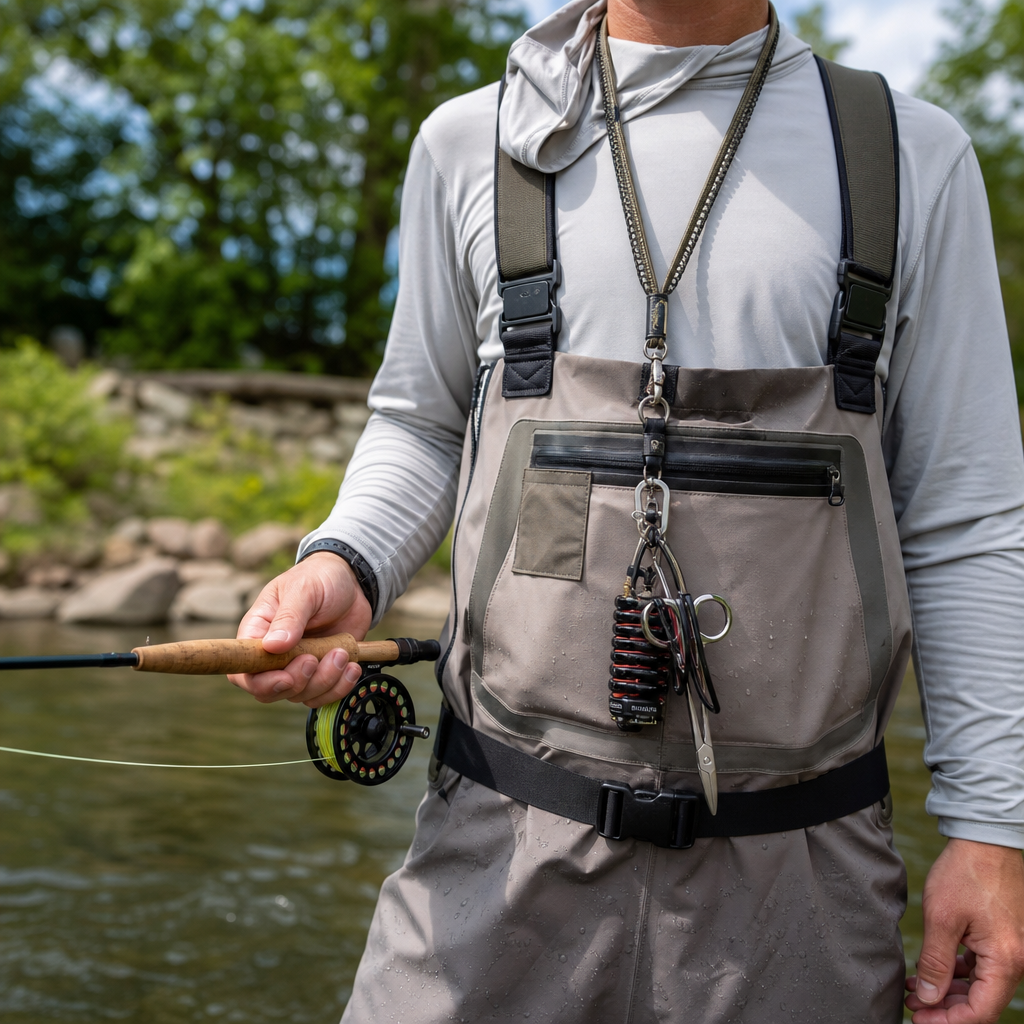
In practice, useful pocket design follows a few rules. Front hand pockets should be deep enough for a fly box or phone, but not so open that items slide out when seated in a drift boat. Zippered thigh pockets work best for small accessories such as indicators, split shot, gloves, or a license. Back pockets are less important on the water, though a secure rear zip pocket can hold a wallet during travel. The strongest designs avoid oversized cargo bellows, which catch on brush and feel heavy when wet.
Fabric matters just as much. Most high-performing fly fishing pants use abrasion-resistant nylon because it dries quickly and resists tearing on shale, willow branches, and raft frames. A small percentage of elastane improves mobility, but too much stretch can reduce long-term durability. For hot weather, look for lighter weaves, laser-cut venting, or roll-up hems. For shoulder season, tightly woven soft-shell fabrics block wind better and feel warmer during long periods in moving water.
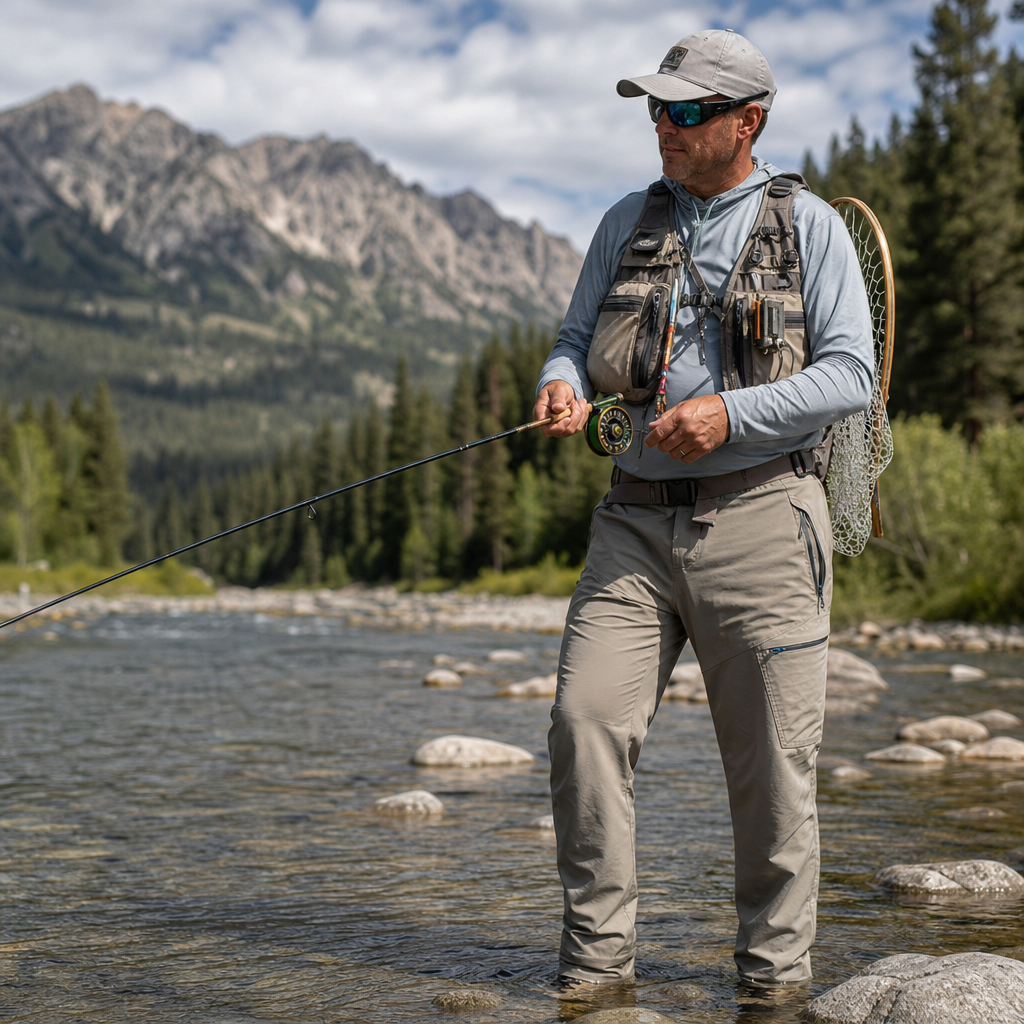
Fit is another deciding factor. Pants that are too trim bind at the knee and hip when stepping into current. Pants that are too baggy create drag in water and feel clumsy under a wading belt. The best fit is athletic but not tight, with room for a light base layer in cool weather. Many experienced anglers size based on hiking comfort, then check pocket access while kneeling and sitting. If a thigh pocket becomes unusable under tension, the cut is wrong for fishing.
Top Pants and How They Compare
Across recent clothing reviews, several brands repeatedly stand out: Patagonia, Simms, Orvis, Kuhl, and Columbia. Not every model from these companies is designed strictly for fly fishing, but the strongest options balance drying speed, pocket utility, and river durability. Patagonia’s Swiftcurrent Wet Wade Pants are among the most fishing-specific choices, with a tapered lower leg, stretch fabric, and a layout intended for wet wading and boat use. They are especially strong for anglers who move between walking, casting, and shallow crossings in warm weather.
Simms often builds the most river-focused pocket systems. Models such as the Simms Guide Pant and Superlight Pant have consistently offered smart zip storage, durable face fabrics, and cuts that work both inside and outside waders. Simms tends to prioritize abrasion resistance and practical fishing features over street styling, which is why many guides rely on the brand. In my own use, Simms pants usually hold up well around drift boat hardware and repeated kneeling on gravel, though some anglers may find them slightly more structured than travel-oriented alternatives.
Orvis excels at crossover pieces. Their PRO LT and Jackson Quick-Dry styles appeal to anglers who want something that can go from travel day to river day without looking overtly technical. Pocket designs are generally restrained but useful, and the fabrics feel comfortable during long wear. Kuhl and Columbia are often stronger value picks. Kuhl’s Renegade and similar soft-shell hybrids offer excellent movement and respectable pocket security, while Columbia’s PFG line can be a practical warm-weather choice for anglers who prioritize ventilation and price.
| Brand and Model | Best Use | Pocket Strength | Main Tradeoff |
|---|---|---|---|
| Patagonia Swiftcurrent Wet Wade Pants | Warm-weather wet wading and hiking to water | Thoughtful zip storage, easy access while moving | Less warmth in cold water conditions |
| Simms Guide Pant | All-around river use, guides, rough terrain | Secure, fishing-oriented pocket placement | Heavier feel in peak summer heat |
| Simms Superlight Pant | Hot climates and travel | Good zip pockets without excess bulk | Lower abrasion resistance than heavier models |
| Orvis PRO LT | Versatile travel and fishing crossover | Clean organization, comfortable access | Less specialized than pure fishing pants |
| Kuhl Renegade | Anglers wanting durable crossover soft shell | Reliable everyday pocket security | Not purpose-built for repeated wet wading |
If you want a direct answer, the best fly fishing pants with pockets for most anglers are usually the Patagonia Swiftcurrent Wet Wade Pants for warm conditions and the Simms Guide Pant for broader, tougher use. Those two options cover the largest range of fishing scenarios with the fewest compromises. If budget is tighter, Columbia and selected Orvis models often provide the best value per dollar.
How to Choose Based on Fishing Conditions
Choosing the right pair starts with where and how you fish. For hot summer trout streams, bass rivers, and salt-adjacent flats where wet wading is normal, prioritize low weight, fast drying, and minimal seam bulk. In these environments, you want pockets that drain and zippers that resist corrosion or grit. A heavy soft-shell pant can feel oppressive when temperatures climb above 80 degrees Fahrenheit, even if it is comfortable in the parking lot.
For spring and fall trout fishing, durability and wind resistance become more important. Water temperatures stay cold even when air temperatures are moderate, and pants that block wind reduce fatigue on long days. This is where midweight nylon and light soft-shell fabrics outperform ultralight travel pants. If you regularly kneel to release fish or fish from rocky banks, reinforced knees and tougher weaves are worth paying for. I have seen lightweight bargain pants fail in one season after repeated abrasion around the cuffs and seat.
If you wear pants mostly under chest waders, streamline matters. Bulky cargo pockets create pressure points under stockingfoot waders and can interfere with layering. Flat zip thigh pockets are ideal because they add storage during lunch breaks or after hiking out, but do not bunch badly under wader legs. For anglers who alternate between wet wading and waders in the same trip, convertible cuffs and articulated lower legs are more useful than oversized cargo capacity.
Travel anglers should also think about laundering and odor control. Pants that dry overnight in a hotel sink have real value on multi-day trips. Darker colors hide stains better, but lighter shades can stay cooler under strong sun. Some brands offer UPF-rated fabric, which is meaningful when paired with long sessions on open banks. If your fishing often includes bushwhacking to small water, snag resistance outranks style every time.
Key Features to Evaluate Before You Buy
Start with pocket architecture. Count the pockets, but do not stop there. Ask what each one is actually for. A strong setup usually includes two deep hand pockets, at least one zippered thigh pocket, and one secure rear or hidden pocket for valuables. The zipper pull should be usable with wet fingers. Mesh pocket bags can improve drainage, but they should not be so soft that sharp tools wear through them. If a pocket sits directly on the front of the thigh, test whether it interferes with high steps.
Next, inspect construction. Triple-needle stitching is not necessary everywhere, but stress points such as pocket edges, crotch seams, and belt loops should be reinforced. A gusseted crotch is close to essential for fly fishing because it reduces seam strain while stepping across current or climbing over deadfall. Articulated knees are more than a marketing phrase; they materially improve mobility and reduce that tight pulling feeling common in straight-cut casual pants.
Weather management deserves close attention. Durable water repellent finishes help pants shed splashes and light rain, but they are not waterproof and will eventually wet out. Quick drying is often more valuable than initial water beading. In my experience, tightly woven nylon with moderate stretch dries faster and feels less clammy than heavier blended fabrics marketed mainly for general outdoor use. If you fish humid regions, breathability can matter more than raw durability.
Finally, consider cuff design, waistband comfort, and compatibility with boots or sandals. Some of the best fly fishing pants with pockets taper enough to avoid drag in current but still fit over low-volume wading boots. Integrated belts are convenient for travel, though they can press awkwardly under backpack hip belts. Snap roll-up systems are useful for shallow crossings, but they need to hold securely when wet. Small design details like these often separate a merely decent pant from one you reach for every trip.
Common Mistakes in Clothing Reviews and Buying Decisions
One common mistake is judging pants by showroom comfort alone. Many pants feel excellent standing still under store lighting, then reveal poor pocket placement, slow drying, or limited articulation on the river. Another mistake is assuming any hiking pant is automatically suitable for fly fishing. Hiking designs often prioritize casual trail use, not repeated immersion, tool carry, or all-day contact with wet surfaces. That difference shows up quickly in pocket function and long-term wear.
Anglers also overvalue cargo capacity. More storage is not always better, because loaded pockets swing, trap water, and affect balance on uneven rocks. A compact, secure layout usually fishes better than oversized cargo compartments. Likewise, waterproof-breathable pants are frequently misunderstood. They have a role in severe weather or boat spray, but for many anglers they are less versatile than quick-dry pants paired with good rain gear. Breathability, drying speed, and freedom of movement matter more on most trout and warmwater days.
Price can mislead in both directions. Expensive pants are not automatically superior, and cheap pants are not always false economy. The real question is whether the fabric, stitching, and pocket layout match your use. A guide who fishes 120 days a year should buy differently from an angler taking six summer trips. Read product reviews carefully, but look for field-specific comments: pocket access while wading, drying time, abrasion resistance, and comfort under a pack or waders. Those details predict satisfaction far better than generic star ratings.
For a clothing reviews hub, the broader lesson is simple: evaluate fly fishing pants as working gear, not fashion. Compare them the same way you would compare packs or boots. If you do that consistently, the best options become obvious, and you avoid accumulating mediocre pieces that never quite fit the way you fish.
The best fly fishing pants with pockets combine four essentials: quick-drying fabric, unrestricted movement, durable construction, and storage that stays useful on the water. For most anglers, Patagonia and Simms set the benchmark, with Orvis, Kuhl, and Columbia offering strong alternatives depending on budget and crossover needs. Warm-weather anglers should lean toward lighter wet-wading designs, while shoulder-season and high-mileage river users often benefit from tougher midweight pants with flatter, more secure zip pockets.
As the hub for clothing reviews under product reviews and recommendations, this page gives you the framework to assess any fishing pant intelligently. Focus on pocket placement, not just pocket count. Prioritize articulation, gusseting, and cuff design alongside fabric weight. Match the pant to your fishing conditions instead of buying the most technical option on the shelf. That approach saves money and improves comfort every time you step into current.
If you are narrowing your shortlist now, start by comparing one lightweight wet-wading model and one tougher all-around river pant, then build the rest of your clothing system around those needs. Use this hub as your starting point for deeper clothing reviews, and choose a pair that works as hard as you do on the water.
Frequently Asked Questions
What should I look for in the best fly fishing pants with pockets?
The best fly fishing pants with pockets balance three things extremely well: mobility, weather protection, and smart storage. Pocket count alone should not be the deciding factor. What matters more is where the pockets are placed, how secure they are, and whether they stay accessible when you are moving through current, crouching to land a fish, or layering under waders. In practical use, zippered hand pockets, a thigh pocket for tools, and at least one secure rear or internal pocket for valuables tend to be the most useful setup. You want enough storage for forceps, tippet, a phone, keys, and small accessories, but not so much bulk that the pants feel heavy or catch on brush and gear.
Fabric is equally important. Lightweight nylon or polyester blends with a bit of stretch are usually the top performers because they dry fast, resist abrasion, and allow natural movement during long walks and uneven footing. A gusseted crotch, articulated knees, and a comfortable waistband make a much bigger difference on the water than many anglers expect. If you fish in changing conditions, look for water-resistant finishes, UPF sun protection, and ventilation features that help regulate temperature. The best pants are the ones you stop thinking about after the first hour because they move well, protect you from the elements, and keep your most-used tools exactly where you need them.
Are more pockets always better on fly fishing pants?
No, more pockets are not always better. In fly fishing, pocket design matters far more than pocket quantity. Too many pockets can create unnecessary bulk, shift the weight of your gear awkwardly, and increase the chances of snagging line, brush, or netting while wading. A poorly placed cargo pocket may look useful in product photos, but if it flaps, fills with water, or becomes hard to access under a jacket or wading belt, it quickly turns from convenience into annoyance.
The most effective fly fishing pants use a streamlined pocket layout that supports how anglers actually fish. For example, zippered front pockets are ideal for essentials you do not want to lose, while a low-profile thigh pocket can be perfect for a fly box, tippet spool, or multitool. Internal mesh or hidden security pockets are excellent for a phone, license, or keys. Good pocket construction also matters: quality zippers, drainable materials, and closures that stay shut when you kneel or step into current are signs of thoughtful design. In real fishing conditions, a few well-executed pockets outperform a long list of extra compartments nearly every time.
Can fly fishing pants with pockets replace a vest, sling, or pack?
For minimalist anglers, fly fishing pants with pockets can absolutely reduce the need for extra carry systems, but they usually do not replace a vest, sling, or pack completely. If you like to fish light for a few hours and only carry the essentials, a well-designed pair of pants can handle your core items surprisingly well. Forceps, nippers, tippet, keys, a phone, and a small fly box can often fit comfortably in secure pockets without making the pants feel overloaded. This can be a major advantage when you want to stay mobile, cover water quickly, and avoid extra straps or bulk on warm days.
That said, once your gear list expands, pocket capacity reaches its limit. Extra fly boxes, leaders, gloves, snacks, rain layers, and larger accessories are still better carried in a sling or pack. Heavy items in pants pockets can pull at the fabric, affect balance, and become uncomfortable over a long day. The best way to think about fly fishing pants with pockets is as a high-efficiency foundation for your most frequently used items. They work especially well in combination with a light chest pack or sling, where the pants handle quick-access tools and valuables while the larger bag carries backup gear and weather layers.
What materials and features perform best for different fly fishing conditions?
The best material for fly fishing pants depends on where and when you fish, but synthetic performance fabrics are usually the strongest choice across the widest range of conditions. Nylon is popular because it is tough, abrasion-resistant, and dries quickly after splashes or light rain. Polyester blends can also perform well, especially when combined with stretch panels or elastane for freedom of movement. For technical fishing use, a durable water-repellent finish is helpful in mist, wet grass, or shallow wading, though it should not be confused with full waterproof protection. If you fish in strong sun, UPF-rated fabrics add meaningful comfort and skin protection over long hours.
Cold-weather anglers should pay attention to layering compatibility, wind resistance, and interior comfort. Pants that fit cleanly over thermal base layers without binding at the knees or waist are much more practical than tight-fitting models, even if they feel sleek in a store. In hot weather, lightweight, breathable fabrics with venting and fast-drying construction become much more important than insulation. Articulated knees, gusseted crotches, reinforced cuffs, and secure zippers are all details that show whether a pair was built for real movement and repeated use on the river. The top-performing pants are not just made from good fabric; they combine that fabric with fishing-specific features that stay functional across changing weather and water conditions.
How should fly fishing pants fit for comfort, layering, and wading performance?
Fly fishing pants should fit trim enough to avoid excess material, but not so tight that they restrict movement or make pocket access awkward. The ideal fit allows you to step over rocks, crouch at the bank, climb in and out of the river, and walk long distances without feeling tension across the seat, thighs, or knees. A slightly athletic but not restrictive cut is usually the sweet spot. If the pants are too loose, they can bunch under waders, catch on vegetation, and feel sloppy once pockets are loaded. If they are too tight, they become uncomfortable quickly, especially when wet or layered over base garments.
Layering is a major part of fit, especially for anglers who fish from cool mornings into warmer afternoons or who spend time on tailwaters and high-country rivers. If you plan to wear thermal bottoms underneath, make sure there is enough room in the waist and legs to accommodate them without compressing circulation or limiting knee flex. The waistband should stay comfortable under a wading belt, and the cuff length should work with your boots or waders without dragging excessively. In reviews, the best-fitting fly fishing pants are usually the ones that disappear during the day: pockets stay usable, seams do not chafe, and the cut supports natural balance and movement in current. That combination of comfort and function is what separates a good pair from one that sits in the closet.