Protecting endangered species while fly fishing is not a niche concern; it is a core responsibility for anyone who steps into trout streams, salt flats, warmwater rivers, or coastal estuaries with a rod in hand. In practical terms, wildlife protection means reducing direct harm to vulnerable animals, avoiding habitat damage, and making informed decisions about where, when, and how to fish. Endangered species are plants or animals at serious risk of extinction, while threatened species are likely to become endangered without intervention. Fly fishing intersects with both groups more often than many anglers realize, because aquatic systems connect fish, birds, mammals, amphibians, insects, and shoreline vegetation. A careless cast near a nesting bank swallow colony, a boot sole carrying invasive organisms, or a long fight with a temperature-stressed native trout can all create consequences beyond one fish.
I have seen this firsthand on rivers where target species were abundant but the real conservation pressure centered on something else entirely: spawning lamprey in riffles, freshwater mussel beds below gravel bars, sea turtle foraging areas on tidal flats, or bull trout using cold tributaries that also hold popular trout fisheries. Many anglers think wildlife protection begins and ends with catch-and-release. That is only one piece. Effective protection includes understanding seasonal closures, species identification, gear choices, fish handling, access ethics, and habitat stewardship. It also requires accepting tradeoffs. The best run of striped bass may overlap with shorebird nesting habitat. The easiest crossing may trample redds. The perfect photo may cost a fish its recovery.
This topic matters because fly fishers occupy a unique position in conservation. We spend long hours observing water, insect hatches, migration timing, spawning behavior, and changes in habitat quality. Those observations can support protection when paired with discipline and science-based practices. In many regions, anglers have funded habitat restoration through license fees, excise taxes under the Federal Aid in Sport Fish Restoration framework, and nonprofit work led by groups such as Trout Unlimited, Bonefish & Tarpon Trust, and local watershed councils. Yet participation also creates pressure. More anglers, lighter tackle promoted for sport, and real-time social media reports can intensify disturbance in fragile places. Protecting endangered species while fly fishing therefore means balancing recreation with restraint. This hub explains the main risks, the legal and ethical standards that apply, and the field practices that help anglers enjoy fisheries without pushing vulnerable wildlife closer to the edge.
Why endangered species are affected by fly fishing
Fly fishing affects endangered species through four main pathways: accidental capture, handling stress, habitat disturbance, and ecosystem disruption. Accidental capture happens when protected fish strike flies intended for legal species, or when non-target wildlife becomes entangled in line or hooks. In the American West, native bull trout are often encountered in waters also managed for trout angling. In parts of the Southeast, anglers pursuing bass or panfish may fish near habitats used by imperiled mussels and salamanders. In marine settings, fly anglers targeting redfish, bonefish, or striped bass can overlap with sea turtles, manatees, and protected seabirds.
Handling stress is especially important because released fish do not always survive. Research summarized by fisheries agencies consistently shows that mortality rises with warmer water, longer fight times, deeper hooking, and prolonged air exposure. For coldwater species, that means a fish released alive may still die hours later when water temperatures are high and oxygen levels are low. Habitat disturbance is broader. Wading across spawning gravels can crush eggs. Anchoring on seagrass beds scars nursery habitat used by juvenile fish and invertebrates. Repeated foot traffic to remote banks can collapse vegetation, increase erosion, and destroy cover used by reptiles, amphibians, and nesting birds.
Ecosystem disruption often goes unnoticed because it is indirect. Transporting invasive species on boots, nets, boats, or waders can alter food webs and crowd out natives. Harvesting bait is not usually part of fly fishing, but cleaning gear in one watershed and using it in another can still spread whirling disease organisms, didymo, or New Zealand mudsnails. Even simple crowding can alter wildlife behavior. On some flats, repeated stalking of fish in shallow water also displaces rays, shorebirds, and juvenile turtles. Wildlife protection starts with recognizing that fly fishing is never isolated from the wider ecosystem.
Know the laws, closures, and protected species rules
The first rule of wildlife protection is simple: know the regulations before you fish, and check them again before each trip. Endangered species protections are often layered. A river can have statewide seasons, reach-specific closures, gear restrictions, sanctuary zones, and emergency temperature rules. Coastal waters may include marine protected areas, bird nesting setbacks, no-motor zones, and species-specific handling requirements. In the United States, federal protections can arise under the Endangered Species Act, Migratory Bird Treaty Act, Marine Mammal Protection Act, and local habitat conservation plans, while state agencies add finer-grained rules based on local conditions.
Anglers get into trouble when they rely on memory, guidebook summaries, or last year’s regulations. I have watched people step into closed side channels because the main stem was open, not realizing the side channel was designated critical spawning habitat. I have also seen well-meaning visitors fish over rolling tarpon in zones temporarily closed to protect migration corridors. Current information should come from primary sources: state wildlife agencies, tribal authorities where applicable, National Park Service units, NOAA Fisheries in coastal contexts, and posted access notices. Apps can help, but they are not substitutes for agency notices.
Species identification is equally important. If you cannot distinguish a protected fish from a legal target species, you should not fish water where the protected fish is likely to be encountered. That sounds strict, but it is the safest standard. Learn fin shape, spotting patterns, jaw structure, scale counts where relevant, and habitat clues. In mixed fisheries, carry a waterproof identification card. If protected species interactions are common, switch waters or tactics. Wildlife protection is easier when you avoid the encounter altogether.
Reduce harm through gear choice and fish handling
Gear selection directly influences injury rates. The most protective setup is the one that lands fish quickly, minimizes deep hooking, and allows controlled release without excessive handling. That usually means using a rod matched to the fish and current, not undersizing for sport. In warm summer trout fishing, a stronger tippet often protects fish better than a lighter one because it shortens fight time. Barbless hooks or pinched barbs reduce tissue damage and speed release. Rubberized landing nets protect slime layers better than coarse nylon mesh, and hemostats or forceps allow efficient hook removal.
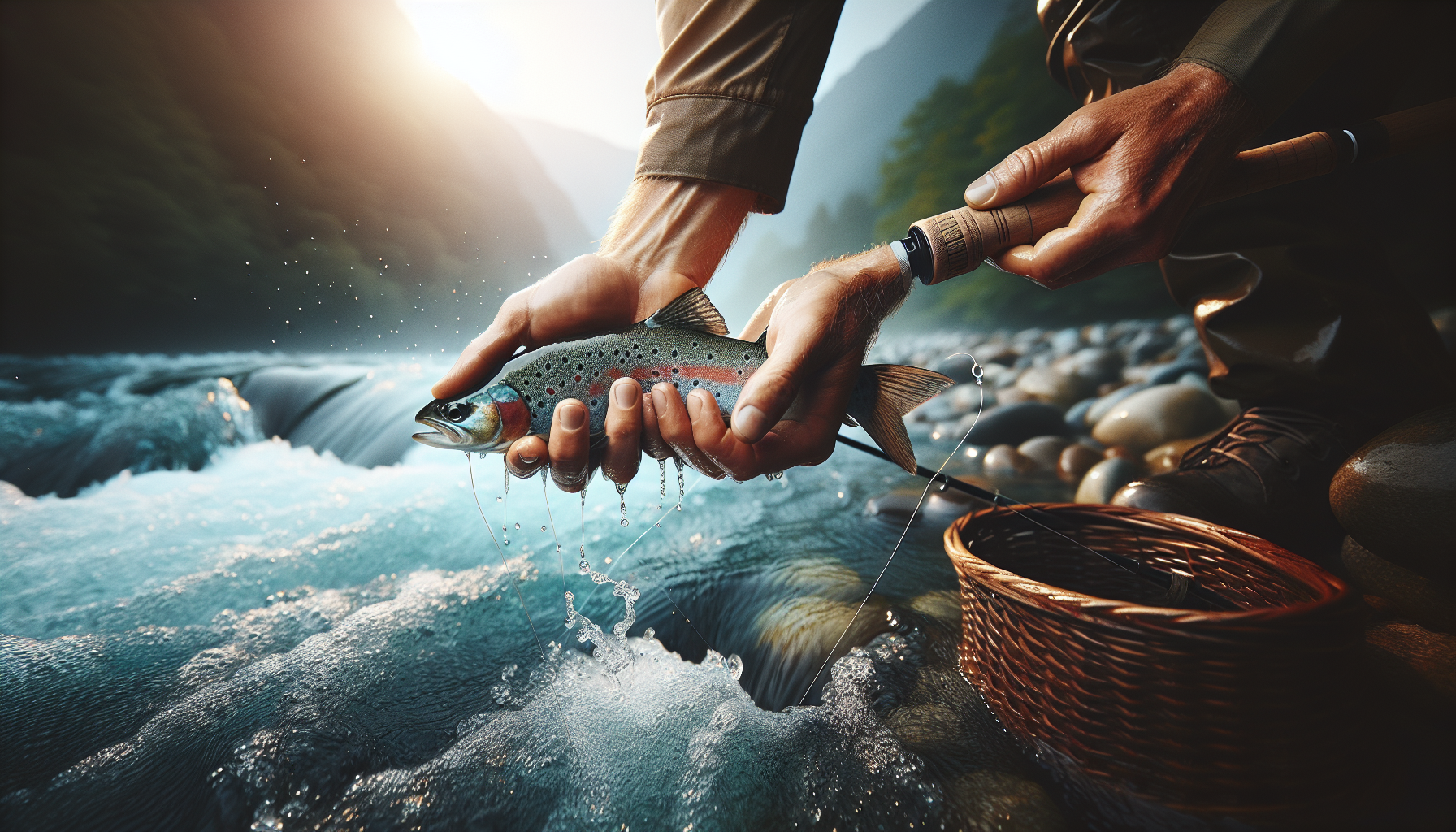
Handling standards should be routine, not optional. Keep fish in the water whenever possible. Wet your hands before touching them. Support the body horizontally rather than hanging a fish by the jaw. Skip hero shots when water temperatures are high or when the fish is clearly exhausted. If a fish is deeply hooked, cutting the tippet close to the hook is often safer than forcing removal. For large migratory fish, revival should happen in current or by controlled boat-side support, not by pushing the fish back and forth aggressively. If regulations require immediate release of protected species, have tools ready before the cast.
| Risk factor | Why it harms wildlife | Better practice |
|---|---|---|
| Light tackle on large fish | Longer fight times increase exhaustion and post-release mortality | Use heavier tippet and a rod with enough lifting power |
| Barbed hooks | More tissue damage and slower releases | Fish barbless or pinch barbs flat |
| Dry hands and rough nets | Removes protective slime and damages fins | Wet hands and use a rubberized net |
| Air exposure for photos | Reduces recovery, especially in warm water | Keep fish submerged and photograph quickly if at all |
| Poor hook-removal preparation | Extra handling time increases stress | Carry forceps, nippers, and release fish beside the net |
These practices help target fish, but they also matter when a protected species is hooked by mistake. The less time that animal spends fighting, out of water, or in contact with abrasive gear, the better its odds. Good fish handling is therefore wildlife protection in a direct, measurable sense.
Protect habitat while wading, boating, and accessing water
Many endangered species are harmed not by hooks but by feet, hulls, anchors, and repeated human presence. Wading is a clear example. Trout and salmon eggs develop in redds, which can be difficult to spot in glare, depth, or broken current. Other species spawn in shallow margins, spring seeps, and flooded vegetation. Freshwater mussels live partly buried in riverbeds and are vulnerable to crushing. On tidal flats, stingrays, juvenile fish, and turtle forage areas can be disturbed by careless traffic. The best approach is to enter and exit at durable points, shuffle only when needed for personal safety, and avoid spawning areas completely when identified by agencies or local signage.
Boating choices matter just as much. Prop scars in seagrass can persist for years and reduce nursery habitat used by fish, crustaceans, and invertebrates. Anchors dragged through submerged vegetation or oyster habitat cause additional damage. In skiffs and kayaks, use push poles, shallow-water anchors where legal and appropriate, or drift rather than powering across fragile flats. Give wide berth to marine mammals and nesting shorelines. If birds flush repeatedly as you approach, you are too close. In river corridors, avoid beaching boats on vegetated islands or side channels used by nesting waterfowl and turtles.
Access ethics often decide whether a fishery remains compatible with wildlife protection. Social trails to secret spots widen quickly. Bank cutting follows. Riparian plants disappear, water temperatures rise, and cover for amphibians and birds shrinks. Stick to established paths, pack out all tippet and leaders, and pick up litter that is not yours. Discarded monofilament and fly line can entangle herons, ospreys, otters, and deer. I keep a small zip bag in every pack for used leaders because line waste is one of the easiest preventable hazards in the field.
Fish with the seasons, water temperatures, and wildlife cycles in mind
Responsible timing is one of the strongest tools an angler has. Endangered species face predictable periods of vulnerability: spawning runs, nesting seasons, low-flow drought conditions, heat waves, winter anchor-ice stress, and migrations through bottlenecks. Fly fishers should plan around those windows instead of pressing into them. Many agencies now publish temperature advisories for trout and salmon waters, often recommending anglers stop fishing when water reaches about 68 degrees Fahrenheit, with some fisheries adopting stricter thresholds based on local conditions. Those advisories are not arbitrary. Warm water holds less dissolved oxygen, while fighting and handling increase metabolic stress.
Seasonal awareness extends beyond fish. Shorebird nesting on beaches and gravel bars often peaks when surf and estuary angling is most attractive. Desert spring creeks can host threatened amphibians during breeding periods when banks are easily damaged. In saltwater, tarpon migration corridors, bonefish spawning aggregations, and permit staging areas may require extra distance or full avoidance depending on local rules. Ethical anglers do not ask only, “Is this open?” They ask, “Is my presence appropriate right now?”
Weather events also change the equation. After floods, fish may be concentrated in side channels and refuges where repeated pressure causes disproportionate harm. During drought, trout stack in cold tributary mouths that act as thermal shelters; fishing those refuge areas can undermine survival even when regulations allow it. A good conservation habit is to set personal stop rules: no trout fishing above a chosen water temperature, no flats fishing over visible turtle forage beds, no approach inside posted bird buffers, and no targeting pre-spawn fish in sensitive tributaries. Personal standards close the gap between legality and stewardship.
Support science, restoration, and a culture of restraint
Wildlife protection improves when anglers contribute beyond their own behavior. Citizen science programs, creel surveys, invasive species monitoring, and habitat restoration days all turn time on the water into useful conservation effort. Many agencies rely on angler reports for observations of tagged fish, unusual mortality events, aquatic invasive species, and habitat damage. Nonprofits have used those reports to prioritize culvert replacements, reconnect floodplains, restore oyster reefs, and improve fish passage for species ranging from salmon to river herring. If you fish often, you are in a position to notice changes before formal surveys do.
Money matters too. Fishing licenses, habitat stamps, access fees, and donations fund enforcement, research, hatchery transitions toward native recovery goals where appropriate, and land acquisition for riparian protection. The most effective contributions usually go to organizations with a clear science program, transparent budgets, and long-term partnerships with agencies and local communities. Volunteer labor also has value, especially for fence removal, native planting, trash cleanups, and monitoring projects. Still, restoration cannot offset careless behavior. Conservation funding is not a license to fish irresponsibly.
Culture may be the most overlooked factor. How anglers talk about fisheries shapes pressure. Broadcasting exact locations of sensitive runs, posting grip-and-grin photos during heat stress, or celebrating illegal proximity to wildlife normalizes bad decisions. A stronger culture rewards restraint: vague location sharing, quiet compliance with closures, quick releases, and honest conversations when conditions are poor. Guides, shop staff, clubs, and experienced anglers set the tone. When newcomers see conservation treated as standard practice rather than optional etiquette, endangered species gain a real margin of safety.
Protecting endangered species while fly fishing comes down to informed restraint backed by practical skill. Learn the rules from primary sources, identify protected species accurately, use gear that reduces fight time and injury, handle fish in ways that preserve recovery, and keep boots, boats, and foot traffic off fragile habitat. Match your fishing calendar to water temperatures, spawning periods, migrations, and nesting seasons. Support the agencies, tribes, scientists, and conservation groups doing the daily work of restoration and enforcement. Most important, remember that wildlife protection is not separate from good angling; it is part of what makes fly fishing honorable and sustainable.
This hub on wildlife protection is the foundation for every related topic in conservation and ethics, from safe catch-and-release to habitat stewardship, invasive species prevention, and seasonal closure compliance. If you want your time on the water to help rather than harm, start by auditing your own practices on your next trip. Check conditions, simplify your gear, avoid sensitive water, and leave with less impact than you arrived. That is how anglers protect endangered species one decision at a time.
Frequently Asked Questions
Why does protecting endangered species matter so much when fly fishing?
Protecting endangered species matters because every decision an angler makes on the water can either reduce pressure on vulnerable wildlife or add to it. Fly fishing often takes place in ecosystems that support far more than the target fish species. Trout streams, marshes, estuaries, mangrove shorelines, and warmwater rivers can also be home to protected fish, amphibians, birds, reptiles, mammals, and rare aquatic plants. When species are endangered, even small disturbances can have outsized consequences. Repeated handling stress, trampling spawning beds, dragging boats through seagrass, fishing during sensitive migration periods, or unintentionally catching protected fish can all contribute to cumulative harm.
From a practical standpoint, conservation-minded fly fishing helps preserve the health of the entire watershed or coastal system. Healthy habitats support stronger food webs, cleaner water, more resilient fish populations, and better long-term angling opportunities. Protecting endangered species is not separate from fishing; it is part of responsible fishing. It means learning which species are protected in the places you fish, understanding seasonal closures and gear restrictions, and recognizing that good stewardship goes beyond legal compliance. The best anglers do not just ask, “Can I fish here?” They also ask, “How can I fish here without harming the wildlife and habitat that make this place possible?”
How can I avoid accidentally harming endangered or threatened species while fly fishing?
The most effective way to avoid harming protected species is to prepare before you ever step into the water. Start by checking local regulations, fishery notices, land management alerts, and wildlife agency guidance for the exact river, lake, flat, or estuary you plan to fish. Many areas have species-specific rules tied to spawning runs, nesting seasons, migration corridors, low-flow conditions, or temperature stress. Knowing what protected species are present helps you make smarter choices about where to wade, where to anchor, and what fish to avoid targeting altogether.
On the water, focus on reducing both bycatch risk and habitat disturbance. Use barbless hooks or pinch your barbs down to make releases faster and cleaner. Match your tackle to the fish you are targeting so you can land fish efficiently instead of playing them to exhaustion. Avoid fishing through schools of mixed species if protected fish may be present. In shallow areas, watch where you step to prevent crushing redds, aquatic vegetation, mussel beds, amphibian egg masses, or juvenile fish habitat. In saltwater environments, pole or drift instead of powering through seagrass or oyster-rich shallows. If birds, turtles, marine mammals, or other wildlife are actively feeding or resting nearby, give them wide space and do not cast into the middle of that activity.
If you accidentally hook a protected species, keep the fish in the water if possible, minimize handling, avoid squeezing the body or gills, remove the fly quickly with hemostats or pliers, and release it immediately. If the hook is deeply embedded, follow local guidance, which often means cutting the tippet rather than causing more injury. Never lift a protected species onto hot rocks, dry sand, or a boat deck for a photo. A careful release is always more important than a picture.
What fishing practices are most important for protecting sensitive habitat?
Habitat protection is one of the most important and often most overlooked parts of wildlife conservation in fly fishing. Endangered species do not just need to survive individual encounters with anglers; they need intact places to feed, spawn, migrate, and shelter. That means anglers should treat riverbanks, gravel bars, backwaters, marsh edges, tidal flats, and submerged vegetation as living habitat rather than just access points. Wading carelessly through spawning gravel can crush eggs. Repeated bank trampling can increase erosion and sedimentation. Dragging kayaks, rafts, or skiffs across shallow habitat can damage plants and nursery areas that fish and other animals depend on.
Good habitat protection starts with staying on established trails when approaching the water and using designated launch sites whenever possible. Avoid cutting new paths through vegetation. In rivers and streams, be especially cautious during spawning seasons, when fish eggs may be buried in gravel redds that are easy to overlook. In estuaries and flats, avoid scarring seagrass with propellers or disturbing shorebird nesting areas. Do not discard tippet, leaders, packaging, or food waste, as even small amounts of litter can entangle wildlife or degrade the environment. If you move rocks while wading or searching for insects, put them back carefully because many aquatic organisms depend on stable microhabitats.
It also helps to think beyond your own footprint. Support access practices and clubs that promote restoration, invasive species prevention, bank stabilization, and water quality protection. Habitat damage often happens gradually, but so does habitat recovery. Anglers who consistently choose low-impact behavior play a meaningful role in protecting the places endangered species rely on.
Are catch-and-release and barbless hooks enough to protect endangered species?
Catch-and-release and barbless hooks are valuable tools, but they are not complete conservation strategies on their own. A fish or other aquatic animal can survive release and still suffer delayed mortality from exhaustion, warm water stress, infection, or injury. That is why responsible fly fishing requires a broader approach. Barbless hooks help reduce handling time and tissue damage, and catch-and-release can lower harvest pressure, but neither practice cancels out the effects of poor fish fighting techniques, excessive air exposure, rough handling, or fishing during dangerous environmental conditions.
For endangered or threatened species, the standard should be even higher. Use tackle strong enough to land fish quickly. Wet your hands before touching a fish. Support the body gently rather than hanging it vertically by the jaw. Keep the fish submerged as much as possible and skip long photo sessions. In hot weather or low-water periods, consider not fishing at all if water temperatures are high enough to create serious stress. Likewise, if protected species are concentrated in a small area due to migration bottlenecks or seasonal holding water, even ethical catch-and-release may create too much pressure.
In short, catch-and-release is only truly protective when paired with good judgment. The goal is not simply to avoid keeping a fish; the goal is to avoid causing unnecessary harm. Sometimes that means changing flies, changing locations, shortening the outing, or deciding that the most responsible choice is to leave the water undisturbed.
How can fly anglers stay informed and make better conservation decisions over time?
Becoming a more conservation-minded angler is an ongoing process, not a one-time checklist. The best place to start is with reliable local information. Follow updates from state wildlife agencies, federal land managers, conservation nonprofits, watershed groups, and reputable fly shops that track real conditions on the ground. These sources often publish notices about seasonal closures, temperature advisories, spawning protections, invasive species concerns, and changes in species status. What was acceptable on one stretch of water last year may not be appropriate this season.
It also helps to build species identification skills. Many protected fish, birds, mussels, amphibians, and plants are overlooked simply because anglers do not recognize them. Learning to identify spawning habitat, nesting areas, juvenile fish concentrations, and vulnerable shoreline vegetation can dramatically improve your decision-making. Fish with experienced guides or local anglers who prioritize stewardship, and pay attention to why they avoid certain channels, flats, side creeks, or times of day. Those habits often reflect years of ecological awareness, not just fishing strategy.
Finally, support conservation with your actions off the water as well as on it. Participate in stream cleanups, habitat restoration projects, public comment periods, and local advocacy related to water quality and access management. Report illegal harvest, poaching, habitat destruction, or wildlife harassment when you see it. Buy gear from companies and shops that support conservation work. When anglers stay informed and engaged, they help create a culture where protecting endangered species is understood as a normal and essential part of fly fishing, not an optional extra.