Catch and release is the practice of returning fish to the water after capture, with the goal of reducing harvest while preserving recreational fishing opportunities and sustaining local fish populations. In a local fishing community, promoting catch and release means more than telling anglers to put fish back. It involves teaching fish handling, building social norms, aligning club rules with conservation goals, and showing how responsible release supports better fishing over time. I have seen the difference firsthand at ponds, rivers, and inshore areas where pressure increased faster than habitat could recover. Communities that normalized careful release protected larger breeding fish, reduced conflict over declining catches, and created a stronger ethic among new anglers.
The topic matters because many popular fisheries are accessible, heavily used, and vulnerable to cumulative stress. A neighborhood lake may not look overfished, yet repeated harvest of larger bass, trout, pike, or redfish can quickly shift size structure and spawning success. Even where regulations allow harvest, local conditions such as summer water temperature, low dissolved oxygen, shoreline development, and tournament pressure can raise mortality. Catch and release addresses part of that pressure, but only when it is done correctly. Fish can die after release from deep hooking, air exposure, rough handling, or exhaustion, so the conversation must be honest: release is a conservation tool, not a guarantee.
For a community hub page, the key terms should be clear. Catch and release refers to intentionally returning a captured fish alive. Post-release mortality is the percentage of released fish that die later from injury or stress. Selective harvest means keeping some fish within legal and sustainable limits while releasing others, often large breeders or sensitive species. Best handling practices include using gear that shortens fight time, wetting hands, minimizing air exposure, supporting the fish horizontally, and avoiding contact with hot or dry surfaces. Understanding these basics gives clubs, tackle shops, charter captains, and volunteer groups a common language for education and outreach.
Promoting catch and release locally also matters because it connects ethics with measurable outcomes. It can improve age structure, maintain trophy potential, protect spawning fish, and help agencies collect better data when anglers participate in tagging or citizen science. It supports access as well; waters known for healthy fisheries often attract members, customers, and conservation funding. Most importantly, it turns conservation from an abstract idea into a visible habit practiced at the dock, on the bank, and on the boat ramp. When local anglers understand why release matters and how to do it well, they become the people who teach the next person, and that is how a durable fishing culture is built.
Why Catch and Release Works When Communities Support It
Catch and release works best as a community norm, not an individual slogan. Fish populations respond to total pressure across a waterbody, so one careful angler helps, but a club, tournament circuit, school program, and bait shop working from the same message can change outcomes. Larger, older fish often contribute disproportionately to reproduction. In many species, bigger females produce more eggs, and those eggs are often higher quality. Releasing these fish helps maintain the spawning base that keeps a fishery resilient through poor year classes, drought, floods, or warm summers. On small lakes and urban ponds, where recruitment can be inconsistent, protecting larger fish is often the difference between steady angling and a fishery that feels picked over.
There are also social benefits. Communities that embrace release usually see less tension between anglers with different goals because expectations become clearer. Harvest still has a place in many waters, but selective harvest is easier to discuss when everyone accepts that not every legal fish needs to be kept. I have helped clubs rewrite event rules so photos, length boards, and immediate release replaced weigh-ins for certain species. Participation did not drop. In fact, more families joined because the events felt modern, practical, and aligned with stewardship. That is a pattern worth repeating: conservation messaging works better when it protects both the resource and the experience people value.
Best Practices That Actually Reduce Post-Release Mortality
The most effective way to promote catch and release is to focus on the details that determine survival. Tackle choice matters. Circle hooks reduce deep hooking when using natural bait for species such as striped bass, catfish, and some saltwater fish. Barbless hooks or pinched barbs make hook removal faster and often reduce tissue damage. Heavier tackle can be more ethical than ultralight gear when it shortens the fight and reduces exhaustion, especially in current or warm water. Landing nets should be rubberized, knotless, and deep enough to support the fish without scraping off protective slime.
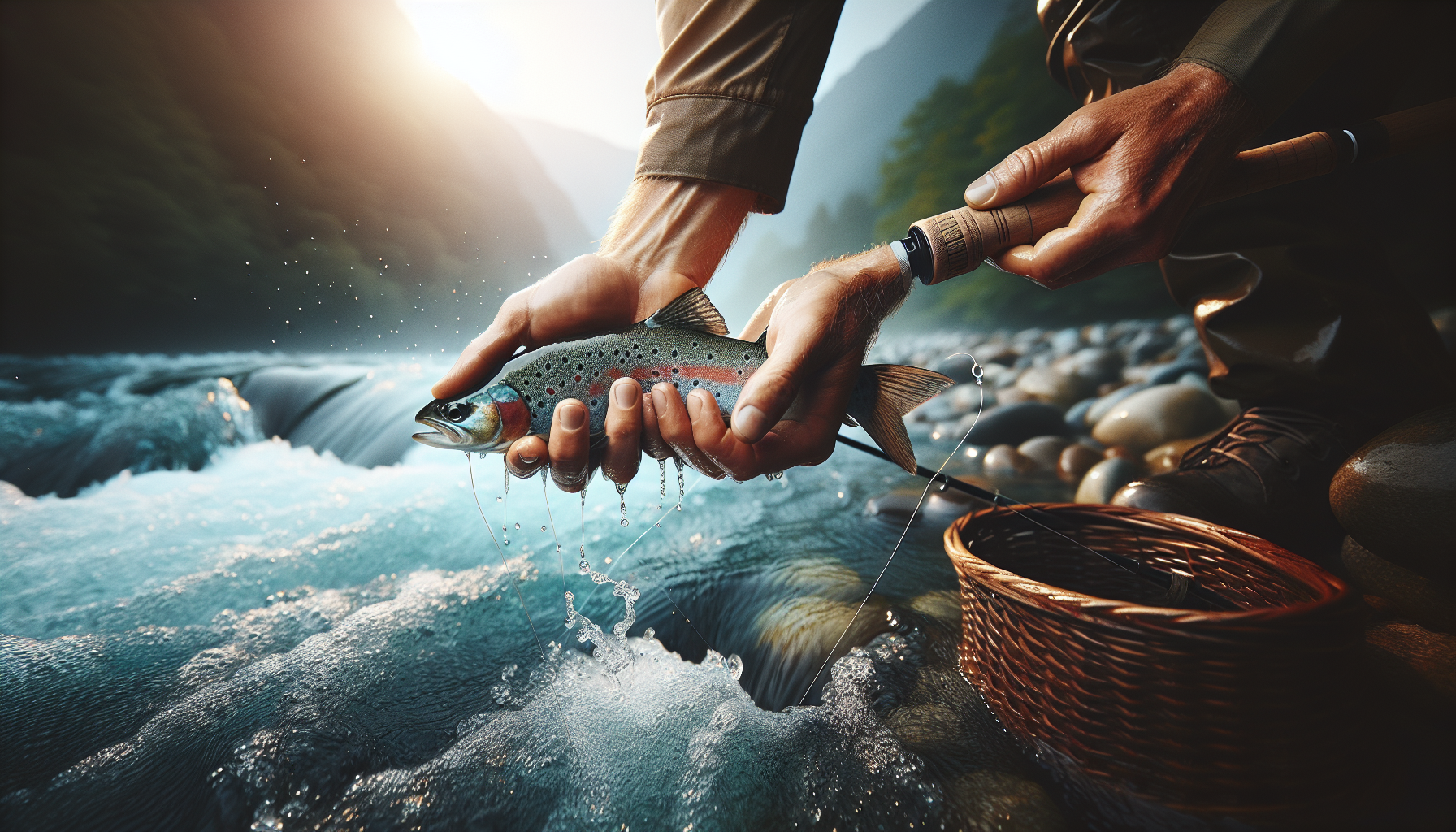
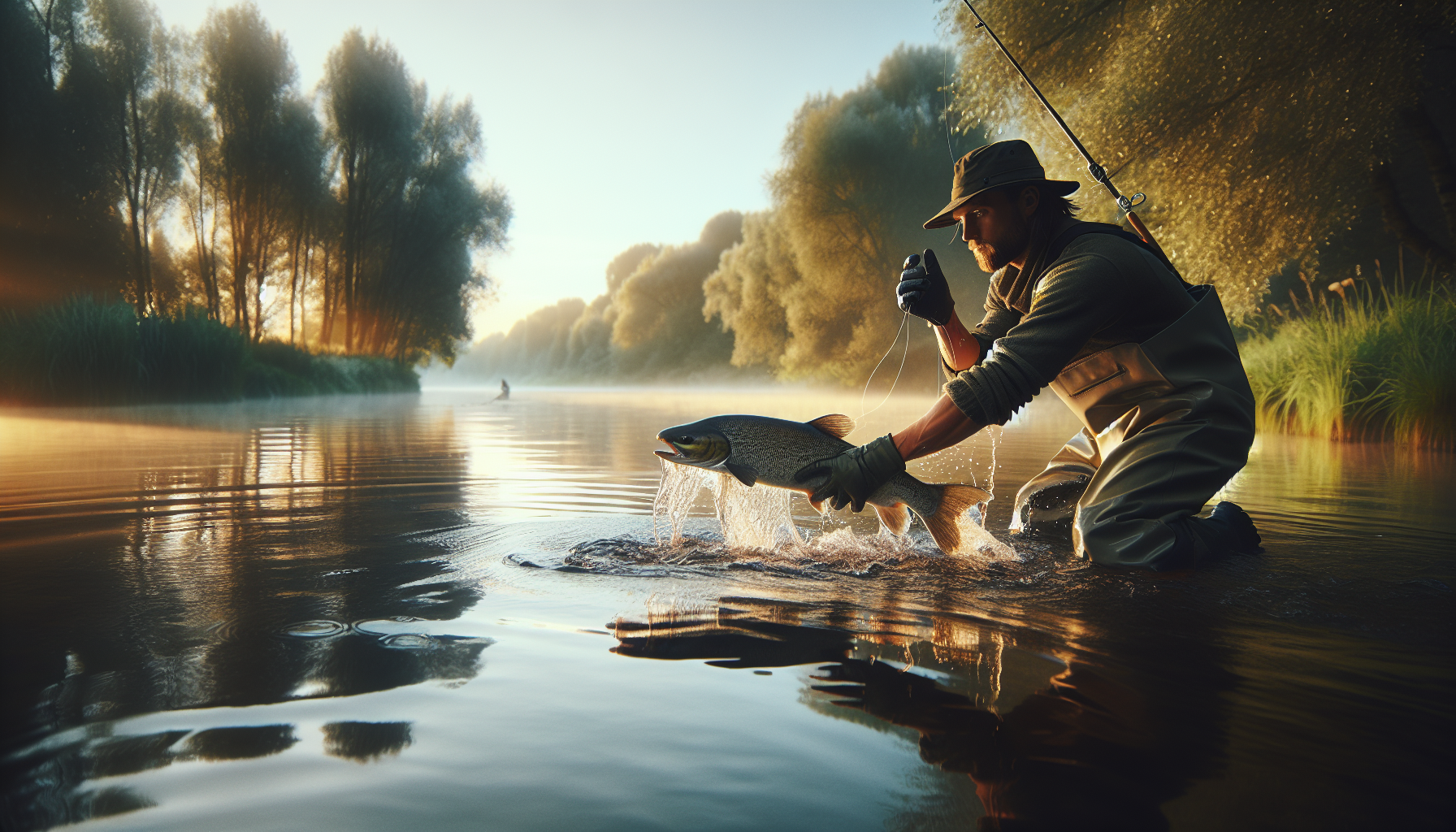
Handling is where many good intentions fail. Fish should stay in the water as much as possible. Before touching them, wet your hands. Never squeeze the belly or hang a larger fish vertically by the jaw for long periods, because that can injure the jaw, gills, or internal organs. If a fish is deeply hooked, cutting the line close to the hook is often safer than aggressive removal. For photos, prepare the camera first, lift the fish briefly, support it horizontally, and return it immediately. A useful benchmark taught by many guides is to limit air exposure to only a few seconds, because the damage rises quickly the longer gills are out of water.
Conditions matter too. Warm water increases stress because fish metabolism rises while dissolved oxygen falls. Trout, salmon, and other coldwater species are especially vulnerable during summer afternoons. In those periods, the most responsible choice may be to fish early, target hardier species, or stop altogether. Deep-water fish can suffer barotrauma when brought up quickly; visible signs include protruding stomach tissue, bulging eyes, and difficulty descending. In marine fisheries and some deep reservoirs, descending devices are now standard tools because they return fish to depth and improve survival better than outdated venting practices in many cases.
| Practice | Why It Helps | Local Example |
|---|---|---|
| Use circle hooks with bait | Reduces deep hooking and speeds release | Shore anglers targeting catfish at a town reservoir |
| Switch to rubber landing nets | Protects slime coat and fins | Kayak anglers releasing bass in a community lake |
| Fish during cooler hours | Lowers stress in low-oxygen summer conditions | Trout anglers starting at dawn on a tailwater |
| Keep fish in water for photos | Minimizes air exposure and gill damage | Youth derby participants using shallow bank cradles |
| Carry a descending device | Improves survival of deep-caught fish | Reef anglers releasing snapper offshore |
Teaching the Ethics: How to Change Local Angler Behavior
Most anglers are willing to do better when the advice is practical, respectful, and specific. The mistake many groups make is relying on slogans instead of instruction. “Release your fish” is not enough. “Use a rubber net, wet your hands, keep the fish in the water, and cut the line on deep hooks” changes behavior. In my experience, demonstrations at ramps, club meetings, and youth clinics outperform posters alone because anglers remember what they see. A five-minute live demo with a landing net, long-nose pliers, line cutters, and a measuring board can reset habits across an entire group.
Local credibility matters. Messages land better when they come from people the community already trusts: respected guides, tackle shop owners, fisheries biologists, tournament directors, and the reliable angler who always helps newcomers at the dock. Use those voices. Ask them to explain not only the “how” but also the “why.” For example, when a biologist explains that larger female bass produce more eggs, or a guide explains how warm water raises delayed mortality, anglers see the link between technique and fishery quality. That connection turns ethics into common sense rather than moralizing.
Language also shapes uptake. Avoid framing catch and release as a judgment against lawful harvest. In mixed communities, a better approach is selective harvest: keep fish where regulations and conditions support it, release fish that are breeding-sized, vulnerable, or unlikely to survive poor handling. This balanced framing reduces defensiveness and invites more people into the conversation. It is especially useful in diverse local fisheries where subsistence, tradition, and recreation overlap. Conservation succeeds when the message is inclusive, evidence-based, and adapted to the water in front of you.
Building a Local Program: Clubs, Shops, Schools, and Agencies
A strong catch and release culture rarely appears by accident. It is usually built through repeated partnerships. Start with fishing clubs and tournament organizers because they create norms quickly. Photo-release formats, on-the-water judging, reduced handling time, and mandatory fish care briefings all improve outcomes. Tackle shops can reinforce the same message by stocking rubber nets, dehooking tools, descending devices, and circle hooks near the register, then training staff to explain why those products matter. Small retail changes often have outsized educational impact because advice given at the moment of purchase feels useful rather than preachy.
Schools and youth programs are equally important. Young anglers adopt habits fast, and they carry those habits into families. A local clinic can include species identification, regulation review, fish anatomy, and a handling station using models or supervised live demonstrations. If your community has a parks department or nature center, partner there as well. Printed signage should be concise and durable: recommended gear, species-specific handling notes, and seasonal warnings such as “avoid targeting trout when water exceeds safe temperatures.” Signage works best when it is placed exactly where decisions happen, such as piers, launches, and cleaning stations.
Agencies and nonprofits add science and legitimacy. State fish and wildlife departments often provide outreach materials, creel data, and seasonal advisories. National Oceanic and Atmospheric Administration guidance, state marine fisheries programs, and organizations such as Trout Unlimited or B.A.S.S. conservation teams can supply templates for fish care, volunteer structure, and habitat messaging. Citizen science can deepen engagement. Tagging projects, spawning observations, water temperature logs, and invasive species reporting give anglers a role beyond compliance. Once people contribute data, they usually become stronger advocates for careful release because they can see that every fish is part of a larger system.
Addressing Objections, Limits, and Species-Specific Realities
Any honest hub on catch and release must acknowledge limitations. Some released fish die. Mortality varies by species, water temperature, hook type, fight time, handling, and depth. That does not make release pointless; it means practice matters. It also means selective harvest can sometimes be more ethical than releasing a severely injured fish where regulations allow retention. Anglers should know local rules for protected species, size limits, and closed seasons, because conservation begins with compliance. Promoting release without promoting regulation literacy is incomplete.
There are also fisheries where seasonal restraint is more important than release messaging alone. During extreme heat, low flows, spawning aggregations, or disease events, even careful catch and release can impose too much stress. Some rivers now see voluntary or mandatory afternoon closures for trout because water temperatures exceed safe thresholds. In saltwater, species such as sharks, tarpon, and reef fish each have handling requirements that differ substantially. Sharks may need in-water release and prohibited gaffing. Tarpon tournaments often use time-limited fight standards and heavy leaders. Reef species may require descending devices by regulation. A local community earns trust when it teaches these nuances instead of pretending one rule fits every fish.
The practical takeaway is straightforward. If you want to promote catch and release in your local fishing community, make it visible, teachable, and species-specific. Show anglers how to release fish properly, explain the biological reason, equip them with the right tools, and adapt advice to seasons and local waters. Build support through clubs, shops, schools, and agencies so the message appears consistently wherever people fish. Most of all, model the behavior every time you are on the water. Start with one dock talk, one clinic, one updated club rule, or one better net at your local shop. Small actions, repeated by many anglers, create healthier fisheries and a more responsible community.
Frequently Asked Questions
Why is catch and release important for a local fishing community?
Catch and release helps protect local fish populations while preserving the enjoyment and tradition of recreational fishing. When more anglers release fish carefully, especially larger breeding fish and species under pressure, the community gives those fish a chance to survive, reproduce, and contribute to a healthier fishery over time. That matters on small lakes, rivers, ponds, and inshore waters where fishing pressure can build quickly and where even modest overharvest can reduce population quality.
Just as important, catch and release supports long-term fishing quality. A community that values responsible release often sees better size structure, more consistent catch rates, and stronger confidence in the future of the fishery. It also creates a culture of stewardship. Instead of viewing fish only as something to keep, anglers begin to see themselves as participants in protecting a shared local resource. That shift can influence everything from club policies and tournament practices to how new anglers are taught. In practical terms, promoting catch and release is one of the most accessible ways a local fishing community can balance enjoyment, conservation, and sustainability.
How can we teach anglers to practice catch and release correctly?
Effective promotion starts with education, because releasing a fish is only beneficial if the fish has a strong chance of survival afterward. Anglers should be taught to minimize fight time, use appropriate tackle to land fish quickly, wet their hands before handling, avoid squeezing the body or touching the gills, and keep the fish in the water as much as possible. Using barbless or circle hooks where appropriate can reduce injury and make hook removal easier. Rubberized landing nets, long-nose pliers, and simple release tools can also make a big difference.
Local fishing clubs, bait shops, marinas, guides, and conservation groups can help normalize these practices by offering short demonstrations, posting signage at access points, and sharing clear guidance on social media. It is especially helpful to explain the “why” behind the advice. For example, many anglers are more willing to change their handling habits when they understand that dry hands can damage a fish’s protective slime coat, prolonged air exposure can increase stress, and deep-hooked fish may need special release techniques rather than forceful hook removal. The goal is not to shame people, but to make good release practices simple, visible, and easy to adopt.
What are the best ways to build community support for catch and release?
Community support grows when catch and release is presented as a shared local value rather than a lecture. One of the strongest approaches is to connect release practices to outcomes anglers care about, such as healthier fish populations, more opportunities to catch quality fish, and better fishing for kids and future generations. Local success stories are especially persuasive. If anglers can point to a nearby pond, river stretch, or club-managed waterbody where responsible release improved the fishery, the message becomes much more credible.
Social norms also matter. Fishing clubs can adopt conservation-minded rules, tournaments can reward live release and proper fish care, and respected local anglers can model best practices publicly. Community events, youth fishing clinics, and partnership efforts with local businesses can reinforce the message in a positive way. Even small actions help, such as celebrating responsible release photos, creating simple dock or boat-ramp reminders, and encouraging anglers to share what they are learning. Over time, catch and release becomes part of the identity of the local fishing scene, not just an optional extra. That kind of cultural shift is often what makes conservation efforts stick.
Does catch and release always work, or are there situations where it can still harm fish?
Catch and release is a valuable conservation tool, but it is not automatically harmless in every circumstance. Fish can experience stress, exhaustion, injury, and delayed mortality depending on water temperature, species sensitivity, hook type, handling time, and release conditions. For example, fish released during very warm weather may struggle to recover because warm water holds less oxygen. Deep-hooked fish, fish played too long on light tackle, or fish kept out of the water for extended photos may have lower survival rates. In some fisheries, barotrauma, spawning stress, or repeated catch pressure can also be important concerns.
That is why good promotion efforts should be honest and practical. The message should not be simply “release every fish and everything will be fine.” Instead, communities should encourage anglers to use methods that improve survival and to adapt to local conditions. That may include avoiding fishing during extreme heat, choosing gear that shortens fight time, using species-specific release practices, and following seasonal protections. In some cases, local regulations and fishery management guidance should shape what responsible angling looks like. The strongest catch and release programs are the ones grounded in real fish care, local science, and a willingness to adjust practices when conditions call for it.
How can fishing clubs, tournaments, and local leaders promote catch and release in a meaningful way?
Organizations and local leaders have enormous influence because they can turn general conservation ideas into visible standards. Fishing clubs can update their rules to encourage or require best handling practices, include catch and release education in membership materials, and host workshops on fish care and species-specific release methods. Tournament organizers can use formats that reduce fish stress, provide livewell and weigh-in guidance, reward successful live release, and clearly communicate fish handling expectations before events begin. These steps show that conservation is not just a slogan but part of how the community actually fishes.
Local leaders can also create partnerships that extend the message beyond organized events. Working with bait shops, parks departments, lake associations, schools, and wildlife agencies can help spread consistent guidance throughout the area. Posting educational signs at launches, supporting youth programs, inviting biologists to speak, and sharing local monitoring results all help build trust and understanding. The most effective leaders also lead by example. When experienced anglers handle fish carefully, explain their choices, and stay respectful toward others who are still learning, they help make catch and release more approachable. Over time, those consistent signals can shape a stronger local fishing culture—one where conservation and great fishing are seen as working together, not competing with each other.