Matching the hatch in winter is one of the most misunderstood skills in fly fishing, yet it consistently separates average days from exceptional ones. In simple terms, matching the hatch means choosing flies, presentations, and depths that imitate the insects trout are actively feeding on at a given moment. Winter changes that equation. Water temperatures drop, insect activity narrows, trout conserve energy, and feeding windows become shorter but often more predictable. For anglers building a practical approach to seasonal hatches, winter deserves its own playbook because the bugs are fewer, the fish are less willing to move, and small details matter more than they do in summer.
When I fish cold rivers from December through early March, I do not expect broad, splashy rises or a dozen competing hatch phases. I expect selectivity. The dominant winter food sources on many trout streams are midges, tiny blue-winged olives, immature mayfly nymphs, scuds, sowbugs, eggs, and occasional winter stoneflies. In tailwaters, spring creeks, and fertile freestones, these food sources appear in different proportions, but the principle stays constant: trout usually key on what is abundant, easy to capture, and drifting at the depth where they are holding. Seasonal hatches in winter are therefore less about variety and more about precision.
This matters because winter fishing rewards observation more directly than almost any other season. If you can identify whether trout are eating midge larvae near the bottom, emergers in the film, or sparse afternoon olives, you can narrow fly choice, rigging, and presentation quickly. If you ignore those clues and fish generic patterns without adjusting size, profile, and drift, the same trout that would have eaten confidently in June may refuse all day. A strong winter hatch strategy also creates a foundation for the rest of the year. Learning to read subtle feeding behavior, inspect naturals, and fish small imitations cleanly improves your approach in every season.
As a hub for seasonal hatches, this guide explains the core winter insects, where and when they appear, how trout respond, and which tactics consistently produce. It also points toward the larger idea behind all hatch-based fishing: successful imitation is not just about the fly. It is about timing, water type, depth control, and understanding the stage of the insect that matters most. In winter, those variables become unusually clear, which is why mastering them now pays off long after snowmelt and spring runoff arrive.
What winter hatches really look like on trout water
Winter hatches are typically sparse, concentrated, and temperature dependent. Unlike late spring, when multiple insect groups may overlap and fish can feed in several lanes at once, winter often presents one meaningful food event at a time. On many rivers, the first reliable activity begins late morning as sunlight warms the water by a degree or two. That modest change can trigger midge pupation or bring small baetis nymphs into the drift. Because trout metabolism is slower in cold water, they often feed best when food becomes easiest to intercept, not necessarily when the hatch is largest by absolute volume.
The most productive winter rivers usually share one of three traits: stable flows, relatively consistent temperatures, or high invertebrate density. Tailwaters below dams commonly fit all three. Spring creeks maintain stable temperatures and support strong midge and scud populations. Fertile limestone streams often produce dependable winter baetis. Freestone rivers can fish well too, but activity is usually more compressed around the warmest hours of the day. In every case, good winter anglers think first about current speed and holding water. Trout avoid burning energy in heavy flow, so they slide into softer seams, tailouts, inside bends, deep buckets, and slow edges near structure.
Matching winter hatches starts with asking direct questions. Are trout feeding below the surface or showing noses? Are rises rhythmic, suggesting pupae or emergers, or random, suggesting opportunistic feeding? Are there shucks on the water, adults in the air, or tiny insects collecting in eddies? I rely on a stream thermometer, a small aquarium net, and close visual checks of my fly patch against natural insects. Winter bugs are often size 18 to 24, so assumptions fail quickly. A fish that refuses a size 18 midge may eat the same profile in size 22 fished six inches deeper.
The primary winter food sources and how to imitate them
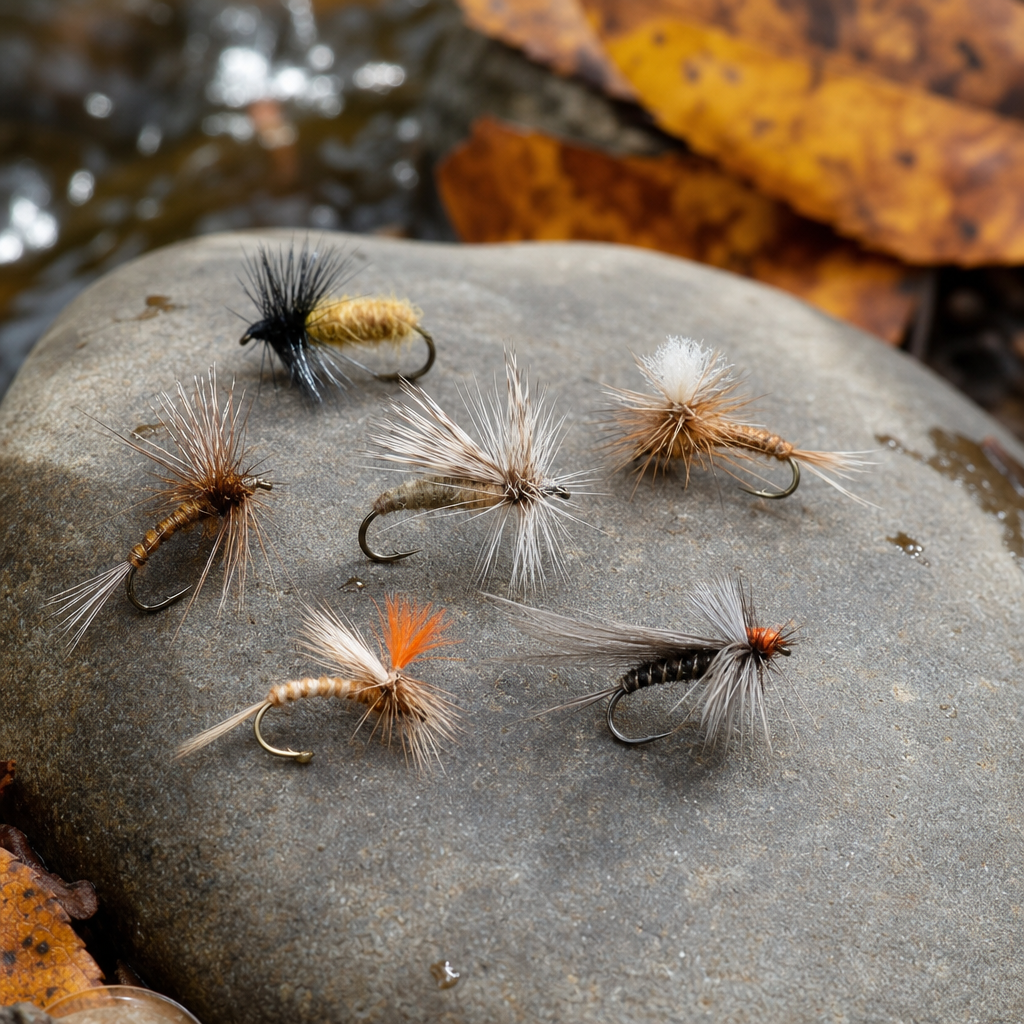
Midges are the backbone of winter hatch fishing on most trout streams. They remain active in cold conditions, and trout eat them in every stage: larva, pupa, emerger, and adult. Larvae are slender and wormlike, commonly red, cream, olive, brown, or black. Pupae become more buoyant and drift upward, which is why suspended fish often feed subtly just before surface activity becomes visible. Adult midges can blanket slow pools on calm afternoons, but many takes still happen in or just under the film. Productive midge patterns include Zebra Midges, thread midges, Griffith’s Gnats, RS2s, and sparse pupa patterns with slim bodies and small wing buds.
Blue-winged olives, usually baetis species, are the next major winter hatch in many regions. They are especially important on overcast days with moderate humidity and water temperatures that have crept upward from the coldest overnight lows. Baetis nymphs are agile swimmers, olive to brown in tone, and usually range from size 18 to 22 in winter. The hatch can produce classic dry-fly fishing, but in my experience the best action often comes just before visible emergence, when nymphs drift and emergers stall in the surface film. Pheasant Tail variants, olive RS2s, WD-40s, and sparse parachute olives all belong in a winter box.
Scuds and sowbugs are not hatches in the mayfly sense, but on tailwaters and spring creeks they are essential winter food. They drift when weed beds break loose, flows change, or fish simply root them out along the bottom. Scuds are curved freshwater crustaceans, often gray, tan, olive, or pinkish, while sowbugs are flatter and more pill shaped. In nutrient-rich systems, trout may feed on them every month of the year. Egg patterns can also be highly effective in winter, particularly where brown trout or rainbow trout are spawning or have recently spawned. The key is moderation and realism: small, translucent eggs in natural colors usually outperform oversized fluorescent patterns on pressured trout.
Winter stoneflies matter on many freestones, especially in the West and mountain regions. These insects are usually small, dark, and active along bankside structure. Trout do eat the adults, but nymphs and egg-laying females often create better opportunities than obvious topwater events. Because stoneflies crawl toward shore before emergence, fish may shift shallower than expected. The hatch is rarely dense, yet it gives anglers a useful searching signal: if you see adults on snow, bridge rails, or streamside rocks, fish small dark nymphs near banks and seams. Tiny black stimulators, elk hair stoneflies, and slender dark nymphs can all be effective.
| Winter food source | Typical size | Best timing | Effective imitation | Primary tactic |
|---|---|---|---|---|
| Midge larva and pupa | 20-24 | Late morning to afternoon | Zebra Midge, thread pupa, RS2 | Dead drift deep, then suspend near film |
| Blue-winged olive | 18-22 | Cloudy afternoons | Pheasant Tail, WD-40, parachute BWO | Fish nymphs before hatch, emergers during rises |
| Scud or sowbug | 14-20 | All day in fertile water | Scud, sowbug, Czech-style patterns | Short drifts near bottom in soft current |
| Eggs | 12-18 | Post-spawn periods | Small glo-bug, yarn egg, otter egg | Drift below redds, avoid active spawning fish |
| Winter stoneflies | 14-18 | Midday on milder days | Dark nymph, small adult stonefly | Target banks, edges, and shallow seams |
Reading trout behavior during winter hatches
Trout behavior in winter is governed by energy economics. In cold water, fish hold where they can gain calories without fighting current unnecessarily. That is why many winter feeding lies look unremarkable compared with summer riffles. Soft slots beside faster water, the downstream edges of gravel bars, and the inside cushion behind rocks become prime positions because they deliver food while limiting effort. If trout are set up deep and barely moving, they are usually taking subsurface food. If you see occasional dimples without head-and-tail rises, pupae or emergers are likely more important than adults.
One of the most useful distinctions is whether trout are feeding selectively by stage or simply by availability. During a light midge hatch, a fish may ignore dozens of adults and focus only on ascending pupae trapped just under the surface. During a baetis event, trout may slide from a winter lie into a softer riffle edge because drifting nymphs are concentrated there. I watch rise forms, drift lanes, and the spacing of feeding fish. Consistent rises in one narrow seam usually indicate a defined conveyor belt of insects. Random splashy takes in multiple lanes may point to opportunistic feeding on mixed items.
Refusals are especially informative in winter. A trout that tracks a fly but turns away is often telling you the profile, size, or depth is close but not exact. A trout that never reacts may not be in a feeding mode at all, or your drift may be outside the feeding lane. Because fish move less in cold conditions, being one foot off matters. I often shorten casts, change indicator placement by inches, add a tiny split shot, or switch from a flashy pupa to a matte thread pattern before making bigger changes. In winter, minor corrections routinely outperform wholesale fly-box chaos.
Rigging and presentation that match winter conditions
The best winter hatch tactics are usually simple, controlled, and depth focused. For subsurface work, I favor long leaders, light tippet appropriate to fly size, and enough weight to reach the feeding zone quickly without dragging unnaturally. On many tailwaters, that means a two-fly rig with a heavier anchor such as a size 18 tungsten nymph and a lighter dropper midge below or above it, depending on current speed and snag risk. Strike indicators should be small and adjustable. If the indicator is too large, subtle winter takes disappear; if it is too far from the flies, depth control suffers.
For dry-dropper fishing, winter usually demands restraint. Large buoyant dry flies popular in summer often create too much disturbance and misrepresent the hatch. Instead, use a tiny parachute, midge cluster, or adult stonefly only when naturals support it. When trout are eating emergers in the film, greasing the leader but not the tippet can help present a low-floating fly naturally. In flat water, reach casts and slack-line presentations are valuable because even micro-drag ruins small-fly drifts. I also lengthen my pause before lifting at the end of the drift; winter trout frequently eat late and softly.
Streamer fishing has a place in winter, but it is not usually hatch matching unless trout are keyed on minnows or sculpins during low insect activity. If you use streamers, fish them slower and deeper than you would in warm months. Still, when a midge or baetis hatch is underway, imitative nymphs and emergers are the higher-percentage choice. This is one of the biggest seasonal lessons: successful winter anglers resist forcing a favorite method when the river is clearly offering a narrower menu. Matching the hatch means following the food, not your habits.
Building a winter hatch plan for different river types
On tailwaters, start with midges, scuds, sowbugs, and baetis. These rivers often maintain fishable temperatures all winter, so insect activity can be dependable even when air temperatures are severe. Focus on transition water below riffles, long flats with moderate current, and shelves adjacent to deeper holding areas. On spring creeks, stealth matters as much as fly choice because clear water and slow currents magnify mistakes. Expect technical midge and baetis fishing with long leaders, fine tippet, and careful wading. On freestones, narrow your effort to the warmest part of the day and target softer current near depth where trout can hold comfortably.
A practical seasonal hatch plan should also connect this winter hub to the rest of your calendar. The insects you see now establish patterns that expand later. Winter baetis often foreshadow stronger spring olive activity. Midges remain relevant year-round, especially on technical trout water. Scud and sowbug fisheries continue producing whenever aquatic vegetation and stable conditions support them. If you keep a stream log with date, water temperature, weather, insect size, hatch start time, and successful patterns, you will build a far more useful resource than any generic hatch chart. After several winters, those notes become river-specific intelligence.
Safety and ethics belong in any serious winter strategy. Cold water immersion is dangerous, felt traction varies by regulation and riverbed type, and shelf ice can collapse without warning. Fish handling also requires care. Keep trout in the water, minimize air exposure, and avoid targeting fish actively spawning on redds even when egg patterns are effective downstream. Matching the hatch should sharpen your respect for the river, not reduce it to a formula. The more closely you observe winter insects and trout behavior, the more obvious it becomes that good fishing comes from disciplined attention, not luck.
Winter hatch fishing rewards anglers who slow down, observe carefully, and fish with intention. The core lesson is straightforward: seasonal hatches in winter are narrower, subtler, and more exacting than in other periods, so success depends on identifying the dominant food source, matching the relevant life stage, and presenting the fly at the right depth and speed. Midges lead the list on most waters, blue-winged olives create key afternoon windows, and scuds, sowbugs, eggs, and winter stoneflies fill important regional roles. Trout respond by holding in energy-efficient lies and feeding selectively when conditions line up.
As the hub for seasonal hatches, this winter guide should help you connect insect activity, trout behavior, and tactical decisions into one system. Start with water type, check temperature and timing, inspect naturals, and let the river tell you whether to fish deep nymphs, suspended pupae, emergers, or sparse dries. Make small adjustments before big ones. Record what you learn. Those habits will improve not only your winter fishing, but every hatch you encounter through spring, summer, and fall.
If you want more consistent cold-season trout fishing, build your next outing around observation first and fly selection second. Bring a thermometer, carry small imitations, fish the warmest window of the day, and treat winter hatches as precise opportunities rather than slow-season leftovers. That shift in approach is what makes matching the hatch in winter so effective.
Frequently Asked Questions
What does “matching the hatch” really mean in winter fly fishing?
In winter, matching the hatch means far more than simply tying on a fly that looks vaguely like a bug. It is the process of identifying what trout are feeding on, where in the water column they are feeding, and how actively they are willing to move for food in cold conditions. During winter, insect diversity usually shrinks compared with spring and summer, which can make the menu appear simpler, but it also makes trout more selective at key times. Midges, small blue-winged olives, winter stoneflies, and subsurface nymphs often dominate the picture. Because fish metabolism slows in cold water, trout usually feed in shorter windows and conserve energy by holding in softer seams, slower runs, and deeper pools where food can drift directly to them.
That means successful winter matching is about three things working together: size, stage, and presentation. Size is often critical because winter insects tend to be small, sometimes much smaller than anglers expect. Stage matters because trout may be eating larvae, pupae, emergers, duns, or spent adults rather than whatever happens to be most visible on the surface. Presentation is often the deciding factor, because even the right fly can fail if it drifts too high, too fast, or unnaturally across the current. In practical terms, winter matching the hatch usually involves careful observation, subtle fly selection, and a willingness to fish slower, deeper, and more precisely than you might during warmer months.
What insects should anglers focus on most when trying to match the hatch in winter?
The most important winter food sources in many trout rivers are midges and blue-winged olives, with winter stoneflies and small mayfly or caddis activity contributing in certain systems. Midges are often the foundational winter hatch because they can be present almost every month of the year and remain active even when conditions are cold. Trout may key on midge larvae near the bottom, midge pupae rising through the water column, or adults trapped in the surface film. Blue-winged olives, especially on overcast or slightly milder winter days, can create some of the most important feeding opportunities of the season. These mayflies are typically small and subtle, but when trout lock onto them, matching size and silhouette becomes extremely important.
Winter stoneflies deserve attention as well, particularly on freestone streams and rivers with strong seasonal stonefly presence. Although adults crawling on snow-covered banks get a lot of attention, trout are often feeding more consistently on nymphs than on adult skittering insects. In tailwaters and spring creeks, anglers should also think in terms of year-round subsurface food such as sowbugs, scuds, small baetis nymphs, and midge larvae. The best approach is to build a winter box around dependable patterns in small sizes and neutral colors: black, olive, brown, cream, and gray. If you are unsure where to begin, start by assuming trout are feeding on small subsurface insects rather than waiting for a dramatic surface hatch. That single mindset shift improves winter success immediately.
How can you tell what trout are feeding on during a cold-weather hatch?
The fastest way to figure out a winter hatch is to slow down and observe before making repeated casts. Watch the water closely for subtle rise forms. In winter, rises are often gentle dimples, soft sips, or barely noticeable bulges rather than aggressive surface breaks. Those quiet rises usually indicate trout feeding on tiny adults or emergers in the film. If there are no visible rises, turn your attention to what is drifting naturally. Look at the water’s surface, inspect streamside rocks, and check the edges of slower currents. A small aquarium net or fine-mesh seine can reveal far more than guesswork, especially when trying to distinguish between midge pupae, baetis nymphs, and other small insects.
It is also smart to pay attention to timing, weather, and trout position. Many winter hatches become more active during the warmest part of the day, often from late morning into early afternoon. Cloud cover can encourage blue-winged olive activity, while calm conditions may make midge activity easier to spot. If trout are holding deep and refusing to move, they are likely feeding on subsurface forms. If they slide into softer seams or tailouts and begin sipping rhythmically, they may be taking emergers or adults. Another reliable method is to check the mouth of a landed trout only if regulations and fish handling ethics allow for quick, minimal-stress inspection. Often, the clues are tiny. In winter, one millimeter in fly size or a small shift from nymph to emerger can be the difference between an unproductive drift and a fish-eating pattern.
Why is presentation often more important than fly pattern in winter?
Presentation matters so much in winter because trout are less willing to chase and more likely to inspect food carefully in cold water. Their metabolism is slower, so they prefer to hold in energy-efficient lies and eat insects that come directly to them. If your fly drifts too fast, rides too high, swings unnaturally, or passes outside the trout’s narrow feeding lane, the fish may never move for it. This is why an average-looking fly with a perfect drift often outperforms a highly detailed imitation delivered poorly. In winter, trout reward precision. They are not usually looking for a broad menu; they are waiting for an easy meal.
For nymphing, that means getting flies down to the correct depth quickly and maintaining a natural dead drift. Small split shot adjustments, longer leaders, lighter tippet, and indicator placement all matter. For dry flies and emergers, drag-free drift becomes absolutely essential because surface-feeding trout in winter often have extra time to study tiny insects. Even your casting angle can influence success by reducing micro-drag across conflicting currents. The best winter anglers think less about constantly changing patterns and more about dialing in drift speed, depth, and fly behavior. If you are around fish and not getting takes, a depth change of a few inches or a cleaner drift often solves the problem faster than cycling through ten different flies.
What is the best winter strategy if there is little or no visible hatch activity?
When there is no obvious hatch, the best winter plan is to fish subsurface first and assume trout are feeding opportunistically on small, available food items near the bottom. Start with a simple, confidence-based rig built around proven winter staples such as midge larvae, midge pupae, small pheasant tail-style nymphs, baetis imitations, scuds, or sowbugs depending on the river. Focus on slower walking-speed water, inside seams, tailouts, deep buckets, and transition lanes where trout can hold comfortably without expending much energy. In winter, fish often pod up in a relatively small amount of productive water, so methodical coverage matters more than constantly changing locations.
As the day warms, keep watching for any sign that fish are shifting upward in the water column. A non-visible hatch can become visible quickly, especially on stable afternoons. If you begin to notice subtle flashes, suspended takes, or occasional sips, switch from a bottom-oriented nymph approach to an emerger or pupa presentation. That adjustment often unlocks fish that seemed inactive just minutes earlier. The key is to treat winter as a game of efficiency and timing rather than speed. Fish the most likely water carefully, make small refinements in depth and drift, and stay alert for brief feeding windows. Winter hatches may be narrower and quieter than spring events, but they are often highly predictable for anglers who remain observant and disciplined.