Fly fishing conservation education works best when it connects ethics, ecology, and practical action. Anglers often care deeply about rivers and fish, but many do not automatically understand how watershed health, handling practices, invasive species, stocking policy, and habitat restoration fit together. Teaching others about fly fishing conservation means turning that concern into informed behavior. It requires clear language, accurate science, and examples people can see on the water. In my experience working with anglers, guides, clubs, and youth programs, the biggest breakthroughs happen when conservation stops sounding abstract and starts sounding local: this trout stream, this spawning run, this access point, this season, this fish.
Conservation in fly fishing refers to protecting fish populations, aquatic habitat, water quality, and public access so fisheries remain healthy over time. It includes catch-and-release best practices, streambank restoration, barrier removal, responsible stocking decisions, native fish recovery, and policy advocacy around flow, temperature, and pollution. Ethics is the behavior side of that equation: respecting regulations, reducing harm, and recognizing that legal is not always responsible. Education matters because many threats are cumulative. A single fish handled poorly may survive, but repeated stress during warm water periods can push a fishery toward decline. One angler moving between waters without cleaning gear can spread invasive organisms far beyond a single trip.
This hub article explains how to educate others about fly fishing conservation in a way that is useful for beginners, persuasive for skeptical anglers, and credible to conservation partners. It covers the core conservation efforts every educator should understand, the teaching methods that work on riverbanks and online, and the metrics that show whether outreach changes behavior. If your goal is to build a stronger conservation culture in a club, guide business, school program, or local watershed group, the most effective approach is consistent, specific, and grounded in real fisheries management.
Start with the Core Message: Healthy Fisheries Depend on Healthy Watersheds
The most effective entry point is simple: fish do not exist apart from habitat. When I teach conservation to new fly anglers, I begin upstream and out of sight. Stream temperature, dissolved oxygen, flow timing, sediment load, riparian cover, and insect diversity all shape whether trout, salmon, bass, or grayling can thrive. If people only learn casting, fly selection, and landing techniques, they understand recreation but not stewardship. Once they see the watershed as the unit of conservation, every issue makes more sense.
Explain the basic chain clearly. Forest cover and intact floodplains moderate runoff. Stable banks reduce fine sediment that smothers eggs and aquatic insects. Cold, connected tributaries provide thermal refuge during summer. Clean gravel supports spawning. Adequate instream flow keeps riffles oxygenated and pools usable. Conservation efforts are therefore not limited to fish-saving rules; they include land management, water allocation, culvert replacement, wetland protection, and wastewater control. This systems view helps people understand why a river can look beautiful and still be biologically stressed.
Use local examples whenever possible. A tailwater trout fishery below a dam may depend on precise flow releases and temperature management. A freestone stream may be more vulnerable to post-fire sedimentation or drought. An urban creek may recover dramatically after stormwater improvements and riparian planting. Specificity builds trust. If you can say, “This reach warms above 68 degrees Fahrenheit by midafternoon in July, which increases stress on trout,” people remember it. General appeals to protect nature are less persuasive than direct connections between conditions and fish survival.
Teach the Main Conservation Efforts Anglers Should Understand
To educate others well, organize the topic into recognizable categories. People retain conservation information better when they can place each issue under a clear heading: habitat restoration, water quality protection, fish handling, invasive species prevention, native fish recovery, access stewardship, and policy advocacy. These categories also mirror how many watershed groups, agencies, and fly-fishing organizations structure their work, making it easier to connect learners with next steps.
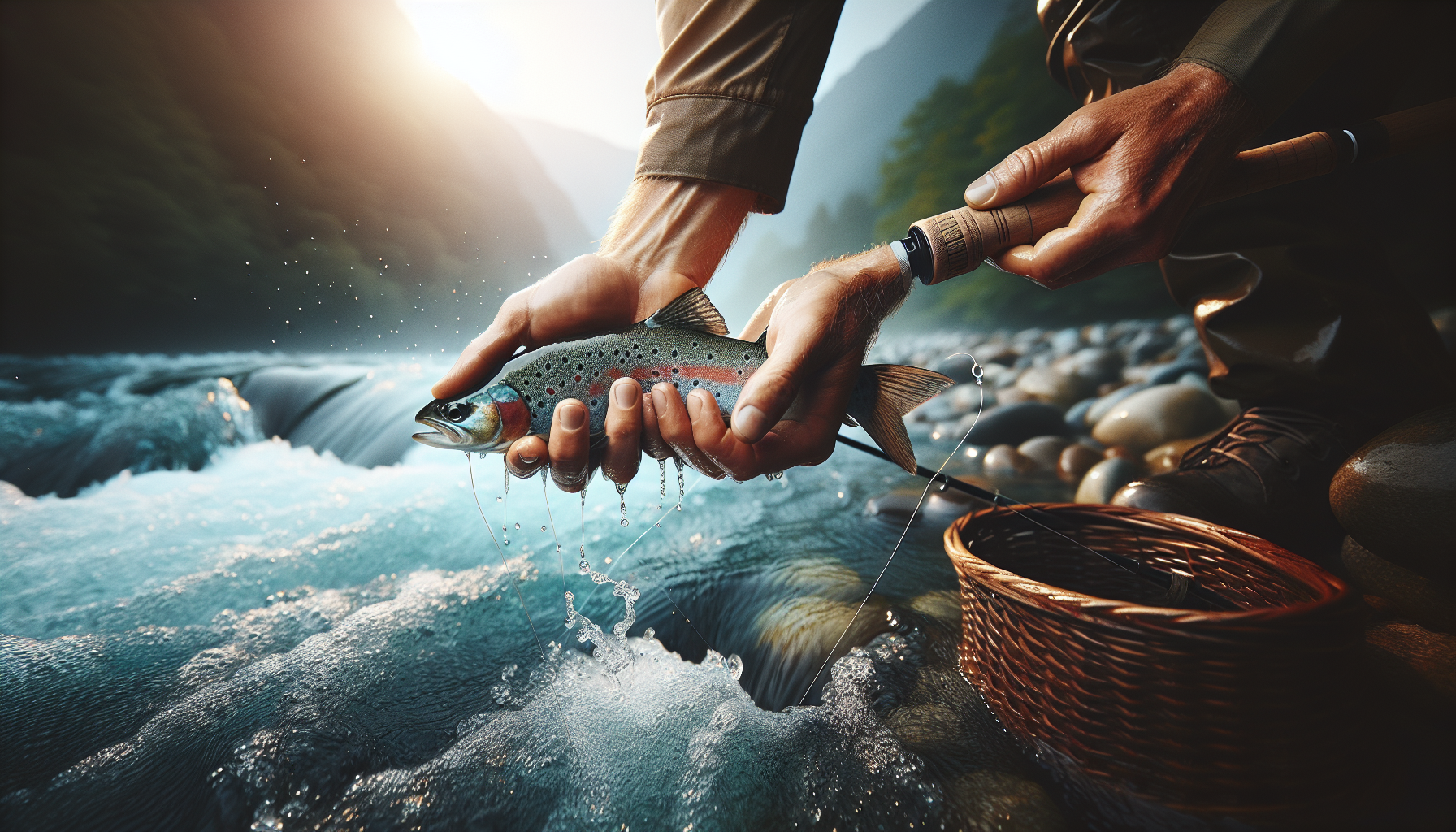
Habitat restoration includes adding large woody debris, reconnecting side channels, stabilizing eroding banks with natural materials, replanting riparian vegetation, and replacing perched or undersized culverts that block fish passage. Water quality protection covers nutrient reduction, acid mine drainage treatment, agricultural runoff control, and urban stormwater management. Fish handling education addresses barbless hooks, minimizing air exposure, using rubber nets, avoiding beaching fish, and stopping during extreme heat. Invasive species prevention includes cleaning waders, boots, boats, and nets to limit the spread of organisms such as didymo, New Zealand mudsnails, or whirling disease vectors. Native fish recovery may involve changing stocking practices, removing nonnative competitors, and protecting spawning tributaries.
Make policy part of the lesson rather than avoiding it. Fisheries conservation depends heavily on rules, funding, and public process. Water withdrawals, dam relicensing, land use permits, hatchery operations, and endangered species plans all affect angling outcomes. Many anglers will volunteer for a cleanup but hesitate to comment on a management proposal because they do not understand the process. A strong educator explains how public meetings, agency comment periods, and nonprofit advocacy shape real fisheries decisions.
| Conservation effort | Main goal | Plain-language example | What anglers can do |
|---|---|---|---|
| Habitat restoration | Improve spawning, rearing, and refuge habitat | Replacing a culvert so trout can reach cold upstream water | Volunteer, donate, support access for restoration crews |
| Water quality protection | Reduce pollutants and temperature stress | Planting streamside trees to cool a smallmouth river | Report pollution, support buffer projects, attend hearings |
| Fish handling education | Lower release mortality | Keeping trout in the water during photos | Use barbless hooks, land fish quickly, stop in heat |
| Invasive species prevention | Prevent spread between waters | Disinfecting boots after fishing multiple streams | Clean, drain, dry gear every trip |
| Native fish recovery | Rebuild wild, locally adapted populations | Protecting cutthroat strongholds from hybridization | Follow regulations, support science-based management |
| Access stewardship | Keep public access open and low impact | Packing out trash and respecting private boundaries | Model etiquette and join river cleanups |
Use Science Without Losing the Audience
Good conservation education is accurate, but it should not sound like a graduate seminar. The goal is translation, not simplification to the point of error. For example, when discussing catch-and-release mortality, tell people the direct answer first: mortality is usually low when fish are landed quickly in cool water and handled properly, but it increases with high water temperatures, long fights, deep hooking, and excessive air exposure. Then explain why. Warm water holds less oxygen, fish accumulate physiological stress during the fight, and recovery becomes harder after release. That sequence keeps the lesson practical.
Name standards and tools that professionals use. State fish and wildlife agencies monitor populations with electrofishing surveys, redd counts, creel surveys, PIT tags, temperature loggers, and macroinvertebrate sampling. Water quality benchmarks are often guided by Clean Water Act frameworks in the United States, while habitat projects may use stream geomorphology assessments and passage design criteria from engineering and fisheries manuals. Mentioning these methods shows that conservation decisions are based on measurement, not sentiment. It also helps anglers understand why a temporary closure or gear restriction may be justified.
Be honest about uncertainty and tradeoffs. Hatcheries can support harvest and opportunity, but they may also create genetic, ecological, or competition concerns in some wild fish systems. Catch-and-release protects breeding fish, but it is not impact-free under all conditions. Stream restoration can improve habitat, yet poorly designed work can fail after floods. Credibility grows when you acknowledge limits. People trust conservation educators who say, “Here is what the evidence supports, here is where managers still debate the best path, and here is what is clearly irresponsible.”
Show, Do, Repeat: The Teaching Methods That Change Behavior
Most anglers learn conservation by imitation. That means demonstrations matter more than lectures. On-stream instruction is especially powerful because people can watch small decisions in context: wetting hands before touching a fish, keeping fish submerged while removing the fly, checking river temperature at midday, or choosing not to target trout during a heat event. When I guide or teach clinics, I narrate those decisions out loud. Without that narration, beginners often miss the conservation reasoning behind what looks like routine behavior.
Use short, repeatable teaching formats. A five-minute “river briefing” before fishing can cover local regulations, thermal risk, invasive species protocols, and access etiquette. A post-trip debrief can revisit what was observed: bank erosion near an access trail, siltation after rain, or evidence of spawning redds that should be avoided. In clubs and shops, conservation nights work best when they center on one local issue rather than trying to cover everything. A talk on a dam removal proposal or native brook trout recovery plan draws stronger engagement than a vague appeal to protect rivers.
Digital education extends reach if it stays concrete. Effective formats include gear-cleaning checklists, seasonal fishing advisories, river maps showing thermal refuges, short videos on fish handling, and explainers on public comment opportunities. Avoid treating social media as the message itself. It is a distribution channel. The substance still needs to be clear, sourced, and practical. The best-performing conservation content answers a real question directly: When should I stop fishing for trout in summer? Why does this river have a hoot-owl restriction? How do I avoid stepping on redds? Those are the moments when education turns into action.
Tailor the Message to Beginners, Experienced Anglers, and Non-Anglers
Different audiences need different framing. Beginners need essentials and confidence. Teach them that conservation is part of learning the sport, not an advanced topic for later. Focus on simple, high-impact habits: know regulations, carry forceps, use appropriate tippet to shorten fights, handle fish minimally, and clean gear before moving waters. They do not need every management controversy on day one. They need a conservation baseline that becomes normal.
Experienced anglers often need a different conversation. Many already care, but habits may lag behind current science or local conditions. An angler who learned catch-and-release twenty years ago may still hold fish out for long photo sessions or fish through marginal temperatures because it was once common practice. With this group, respectful specificity works best. Share updated temperature thresholds, local mortality concerns, or agency recommendations. Experienced anglers respond well when they are invited to model better behavior for others rather than scolded for past norms.
Non-anglers, landowners, and community leaders need to hear why fly fishing conservation benefits more than anglers. Healthy rivers support biodiversity, flood resilience, drinking water quality, tourism, and local economies. In many rural regions, fishing-related travel supports guides, motels, restaurants, gas stations, and tackle shops. Trout Unlimited chapters, watershed councils, and state agency reports often document the economic value of healthy fisheries and river access. When speaking to broader audiences, pair ecological arguments with community outcomes. That wider framing builds durable support for restoration and policy change.
Build a Hub of Resources and Local Pathways for Action
A sub-pillar hub page should help readers navigate the full conservation efforts landscape. That means offering a strong overview while signaling the deeper topics that deserve their own articles. Readers looking for fly fishing conservation guidance typically have one of three needs: they want to understand the issues, improve personal practices, or join a local effort. Your educational structure should support all three. In practice, that means linking habitat restoration to separate guidance on streambank projects, fish handling to a detailed release best-practices article, and policy advocacy to explainers on commenting effectively during agency review periods.
Include recognized organizations and tools readers can use immediately. State fish and wildlife agencies publish regulations, stocking plans, species status updates, and seasonal advisories. The U.S. Geological Survey provides streamflow data, and many watershed groups maintain temperature dashboards or volunteer monitoring reports. Conservation nonprofits often host planting days, barrier surveys, and cleanup events. Local fly shops can also be strong partners because they reach anglers at the exact moment decisions are made. A shop bulletin about warm water closures can change behavior faster than a generic online post.
Finally, define success in observable terms. Good conservation education leads to fewer fish handled poorly, more anglers cleaning gear, stronger turnout at habitat projects, better-informed public comments, and broader acceptance that sometimes the ethical choice is not to fish. That cultural shift is the real goal. Teach people to connect enjoyment with responsibility, and the message lasts beyond one article, one clinic, or one season.
Educating others about fly fishing conservation means making stewardship practical, local, and repeatable. Start with the watershed, because fish health depends on habitat, water quality, flow, and connectivity. Teach the main conservation efforts clearly: restoration, water protection, careful fish handling, invasive species prevention, native fish recovery, access stewardship, and policy engagement. Use science in plain language, show the behavior you want others to adopt, and tailor the message to the audience in front of you. People learn fastest when they understand not only what to do, but why it matters for a specific river and fishery.
The strongest conservation educators are consistent. They explain temperature risk before the first cast, model low-impact handling during the catch, and follow up with ways to volunteer or speak up when fisheries management decisions are on the table. They do not separate angling skill from river stewardship. They treat ethics as part of competence. Over time, that approach builds clubs, guide communities, and local fisheries cultures where responsible behavior becomes the norm rather than the exception.
If you are building out a conservation and ethics content hub, use this page as the starting point for every deeper topic in conservation efforts. Then turn knowledge into participation: pick one local river issue, share one clear lesson with another angler, and join one concrete project this season. Conservation becomes real when education leads to action.
Frequently Asked Questions
Why is education so important in fly fishing conservation?
Education is what turns good intentions into responsible habits. Many anglers already care about trout, rivers, insect life, and wild places, but conservation requires more than appreciation. People need to understand how fish survive, how streams function as ecosystems, and how everyday decisions on the water can either protect or harm those systems. When someone learns why water temperature matters, why spawning beds should not be disturbed, or why fish handling practices affect survival after release, they are much more likely to change their behavior in meaningful ways.
Teaching conservation also helps anglers connect individual actions to larger environmental outcomes. A single person cleaning their boots, avoiding trampling streamside vegetation, or respecting seasonal closures may seem like a small act, but multiplied across a fishing community, those choices can reduce invasive species spread, limit habitat damage, and support healthier fisheries. Education builds that bridge between personal ethics and collective impact. It also creates better advocates. Anglers who understand watershed health, pollution sources, habitat fragmentation, and restoration challenges are more prepared to support sound policy, volunteer efforts, and science-based management.
Just as importantly, conservation education keeps the conversation practical. Instead of presenting conservation as an abstract ideal, it shows people exactly what they can do differently today. That might include using barbless hooks, minimizing air exposure during release, learning to identify redds, participating in local stream cleanups, or explaining to new anglers why native fish and intact habitat matter. The goal is not to shame people, but to equip them with the knowledge to fish responsibly and help others do the same.
What are the most important conservation topics to teach new fly anglers?
The best place to start is with the topics anglers will encounter most often and can act on immediately. Fish handling is one of the most important. New anglers should understand how long fight times, dry hands, rough net materials, warm water, and excessive air exposure can all increase post-release mortality. Teaching them to land fish efficiently, wet their hands, support the fish gently, keep it in the water when possible, and release it quickly gives them a strong conservation foundation from the beginning.
Watershed health is another essential topic because it helps anglers see that fishing quality depends on far more than the fish they catch. Healthy rivers require cool, clean water, stable flows, intact streambanks, functioning floodplains, and diverse aquatic insect communities. When people learn how erosion, sedimentation, nutrient pollution, deforestation, development, and water withdrawals affect these systems, they begin to understand conservation as a whole-picture issue rather than just a fish issue. That broader perspective is critical for long-term stewardship.
It is also important to teach anglers about invasive species, habitat protection, and fisheries management. Invasive organisms can be spread through waders, boots, boats, and gear, so cleaning and drying equipment should be presented as standard angling practice. Habitat protection includes respecting streamside vegetation, avoiding sensitive spawning areas, and understanding why restoration projects matter. Fisheries management topics such as wild fish versus hatchery fish, stocking policy, seasonal regulations, and catch-and-release rules also deserve attention because they shape how a fishery functions over time. When these subjects are explained clearly, with real examples from local water, new anglers are much more likely to remember them and act responsibly.
How can you explain complex conservation issues in a way that everyday anglers understand?
The most effective approach is to use clear language, direct examples, and visible cause-and-effect relationships. Many conservation topics become confusing when they are explained only in technical or policy-heavy terms. Instead of starting with abstract concepts, begin with what anglers already notice: fewer insects on the water, warmer summer flows, eroded banks, algae growth, declining wild fish numbers, or changes in stream access. From there, connect those observations to the underlying science. For example, if water temperatures rise beyond a species’ tolerance, released fish experience more stress and lower survival. If streamside vegetation is removed, banks erode more easily, shade declines, and the stream warms.
It also helps to break large issues into manageable parts. Rather than saying “watershed degradation harms fisheries,” explain that a river depends on upstream land use, tributary health, groundwater input, floodplain function, and water quality. Show how each piece influences the fishery anglers care about. The same method works with stocking policy, invasive species, or restoration work. People do not need every scientific detail at once; they need a logical framework that helps them understand why the issue matters and what actions follow from that understanding.
On-the-water teaching is especially powerful because it makes conservation visible and immediate. Point out a redd in shallow gravel and explain why wading through it can destroy eggs. Show a temperature reading in midsummer and discuss why fishing pressure should be reduced during thermal stress. Compare a healthy, shaded stream reach with a degraded section and discuss differences in habitat quality. These kinds of concrete examples make conservation feel real, not theoretical. When anglers can see the connection between what is happening around them and the fishery’s health, the lesson tends to stick.
What practical actions should anglers take to model good conservation behavior?
Modeling conservation starts with consistency. Anglers who want to educate others should demonstrate the habits they recommend, because people learn as much from observation as they do from instruction. That includes handling fish carefully, using appropriate tackle to avoid prolonged fights, pinching barbs when suitable, keeping fish in the water during release, and choosing not to target vulnerable fish during periods of high water temperature or spawning activity. These actions send a strong message that conservation is not just something people talk about, but something they practice every trip.
Gear hygiene is another practical area where good examples matter. Cleaning and drying boots, nets, boats, and other equipment between waters helps reduce the spread of invasive species and aquatic pathogens. Respecting posted closures, private property boundaries, and restoration areas also reinforces a conservation mindset. Anglers should avoid trampling streambanks, disturbing redds, littering, or damaging vegetation. Even small acts, such as picking up discarded tippet and packing out trash that others leave behind, help set a visible standard for stewardship.
Beyond streamside behavior, modeling conservation also means participating in the larger life of the fishery. That can include volunteering for habitat restoration projects, supporting local watershed groups, attending fisheries meetings, contributing to citizen science efforts, and staying informed about management issues. When anglers openly explain why they support these efforts, they help others see that conservation is not limited to catch-and-release etiquette. It includes habitat, policy, science, and community involvement. The most persuasive educators are often the ones who show, through their own behavior, that caring for fisheries is an ongoing responsibility rather than a one-time lesson.
How can someone encourage others to care about fly fishing conservation without sounding preachy?
The key is to lead with shared values rather than criticism. Most anglers already care about healthy rivers and strong fisheries, even if they do not yet understand every conservation issue. Start from that common ground. Instead of telling someone they are doing everything wrong, frame the conversation around protecting the resource everyone enjoys. A statement like, “I started keeping fish in the water more once I learned how much air exposure affects release survival,” is usually more effective than, “You should not do that.” It invites conversation instead of defensiveness.
Questions and stories are often more persuasive than lectures. Asking, “Have you ever noticed how this stretch gets really warm in late summer?” opens the door to discussing thermal stress and voluntary restraint. Sharing a story about a local restoration project, a decline in insect hatches, or a positive change after better habitat management can make the issue feel personal and relevant. People tend to respond well when they can connect conservation to real experiences, especially on waters they know. The goal is to make the information practical, relatable, and useful rather than moralizing.
It also helps to focus on solutions. Conservation can feel overwhelming when it is presented only as a list of problems, but people are far more likely to engage when they understand that their actions matter. Offer simple, specific steps: clean your gear, learn to recognize redds, avoid fishing when water temperatures are dangerously high, support habitat groups, and share accurate information with new anglers. Encouragement works best when it is respectful, informed, and hopeful. If people leave the conversation feeling capable of helping instead of ashamed or dismissed, they are much more likely to adopt conservation-minded habits and pass them along to others.