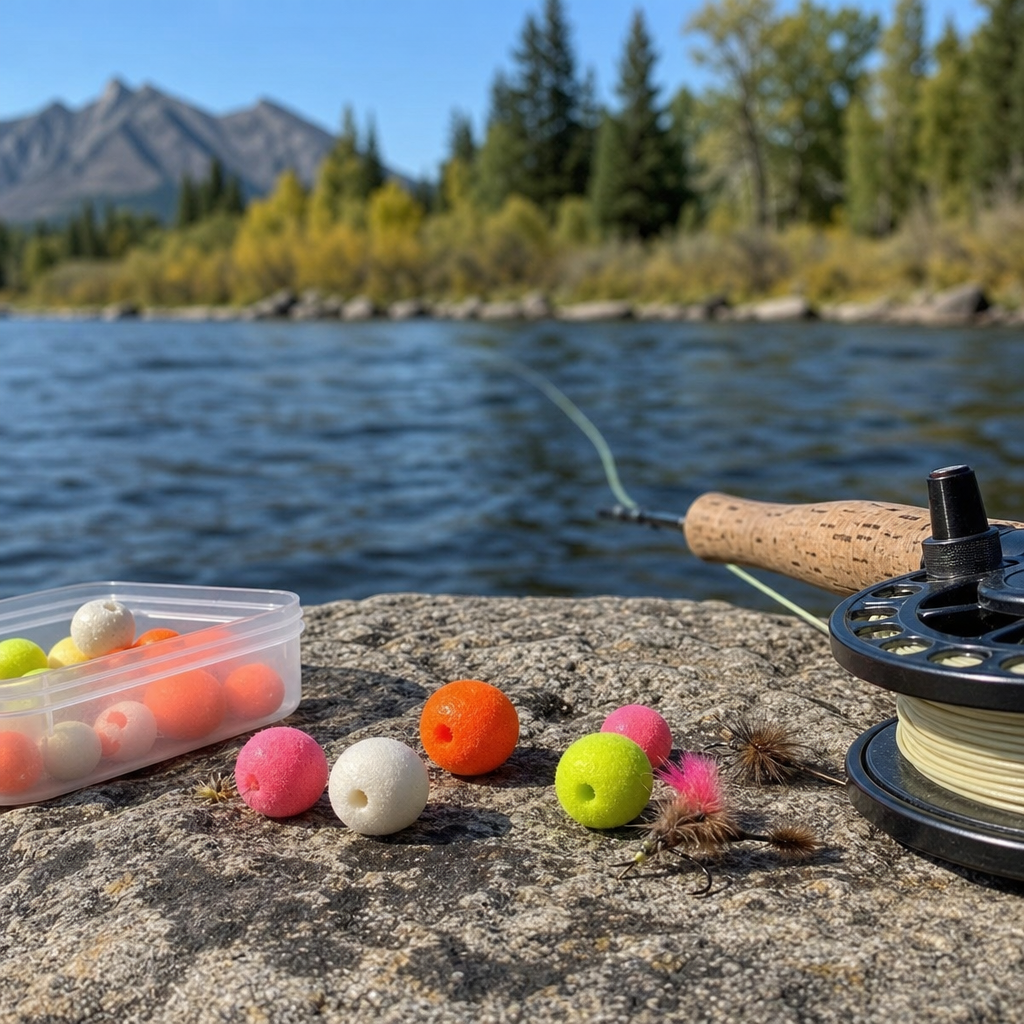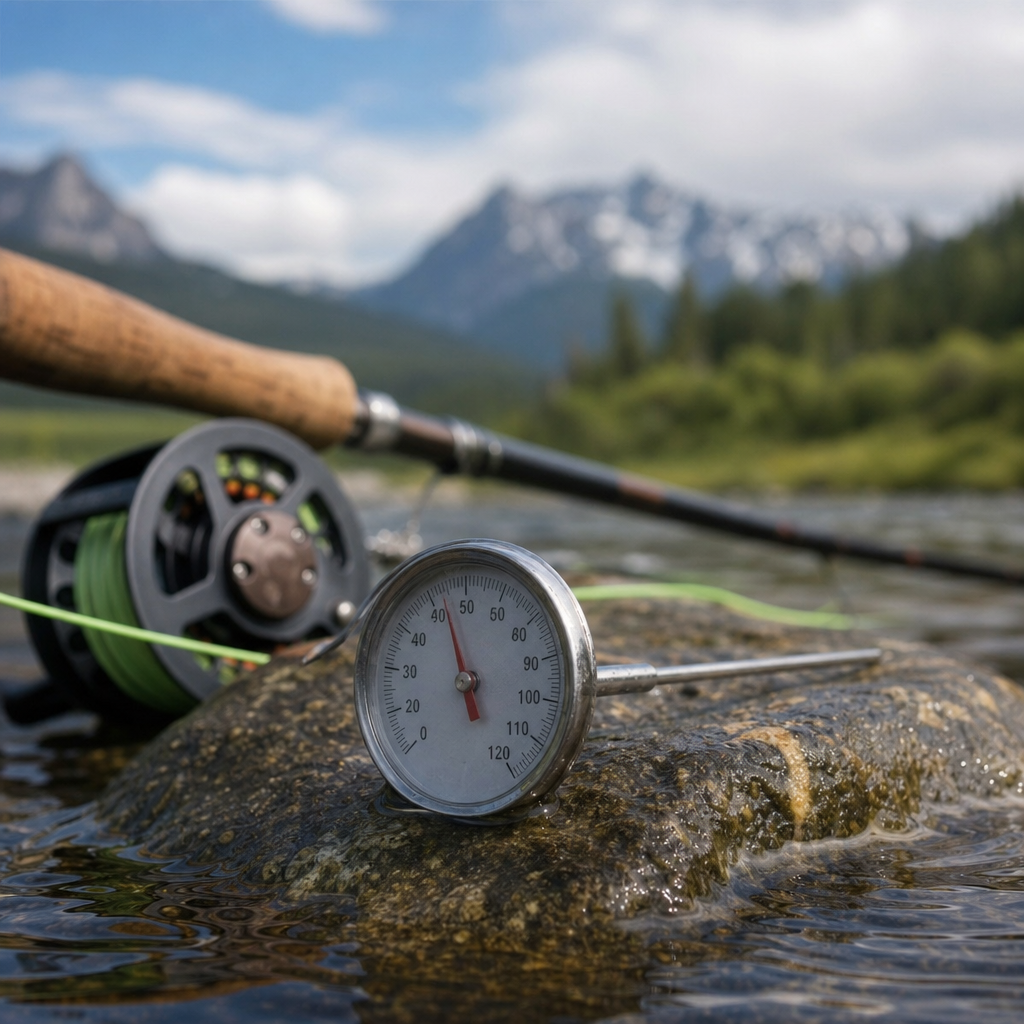
Best fly fishing thermometers help anglers make better decisions because water temperature affects trout metabolism, insect activity, dissolved oxygen, and the hours when fish are most willing to feed. In practical terms, a thermometer is not a gimmick clipped to a vest; it is one of the simplest fish-finding tools you can carry. I have used stream thermometers for years on spring creeks, tailwaters, freestones, and warmwater rivers, and the pattern is consistent: when I know the temperature, I waste less time, handle fish more responsibly, and choose better water. For anyone building out a serious kit of fly fishing accessories, a thermometer belongs in the same conversation as nippers, forceps, floatant, strike indicators, and tippet spools.
Within accessory reviews, thermometers deserve hub-level attention because they connect directly to both performance and conservation. Trout are coldwater fish, but “cold” is not a single number. Brown trout, rainbow trout, brook trout, and cutthroat all tolerate slightly different ranges, while local conditions such as elevation, flow volume, groundwater input, shade, and dam releases change the safe and productive window. Most anglers know that very warm water is risky, yet many still fish blindly without taking readings. A good fly fishing thermometer answers the questions anglers actually have: Is this river too warm to fish? Should I focus on faster riffles, deeper runs, or spring seeps? Is the hatch likely to improve as temperatures climb a few degrees? Which thermometer is accurate, durable, and easy to read on the water?
This article covers the best fly fishing thermometers as a complete hub for accessory reviews, so it explains what these tools do, which features matter, how leading models compare, and when each type makes sense. It also points to the broader buying logic behind accessory selection: the best product is the one that improves decisions under real fishing conditions, not the one with the longest feature list. For thermometers, that means reliable readings, quick response time, practical attachment options, and enough toughness to survive dunking, freezing mornings, and years in a pack. If you want to choose the right thermometer for trout fishing, understand safe water temperatures, and build a more capable accessory setup, this guide gives you the full framework.
Why water temperature matters more than most anglers realize
Water temperature influences nearly every part of a trout’s day. As temperature rises within a suitable range, a trout’s metabolism increases, so fish feed more regularly and move farther to intercept insects. Aquatic insect development also tracks temperature, which is why mayfly, caddis, and midge activity often becomes more predictable once a river reaches certain morning thresholds. In my own fishing, a six-degree difference between dawn and late morning has often separated dead water from a strong hatch. On freestone streams in early spring, readings in the mid-40s Fahrenheit frequently signal slow nymphing, while low-50s water can bring fish into softer seams and trigger far more consistent takes.
The other side of the equation is fish stress. Warm water holds less dissolved oxygen, and trout already work harder during summer heat. Many fisheries departments and conservation groups advise anglers to avoid targeting trout once water temperatures approach the upper 60s Fahrenheit, with 68 degrees often treated as a caution point and 70 degrees as a strong stop-fishing threshold for many trout waters. Local regulations and species tolerance vary, so a thermometer does not replace local guidance, but it gives you a direct, measurable basis for ethical choices. This is one reason the best fly fishing thermometer is as much a conservation tool as a convenience item.
What to look for in the best fly fishing thermometer
The most important qualities are accuracy, response time, readability, and field durability. Accuracy matters because a two- or three-degree error can change a decision about whether to fish, wait, move upstream, or stop altogether. A response time under a minute is ideal, especially when you are checking several runs. Readability matters more than many product pages suggest; small scales and low-contrast markings become frustrating in glare, rain, or low light. Durability means impact resistance, waterproof construction, corrosion-resistant clips or chains, and a design that will not crack after living in a chest pack.
Attachment method is another overlooked detail. Some anglers prefer a retractor clipped to a pack strap, while others like a chain attached to forceps or zingers. Pocket thermometers are compact, but they are easy to misplace. Floating models are useful from drift boats or when wading deep. Digital thermometers offer fast, easy readings, but batteries can fail, displays can fog, and cheaper units often prove less trustworthy over time than a well-made analog stream thermometer. Analog alcohol thermometers remain popular because they are simple, durable, and immune to battery issues. In accessory reviews, this is a classic tradeoff: convenience versus long-term simplicity.
Top thermometer types and where each one fits
Most fly fishing thermometers fall into three categories: analog stream thermometers, digital pocket thermometers, and integrated sensors built into watches or multi-tools. Analog models dominate among dedicated trout anglers because they are straightforward and often surprisingly durable. The best ones have a protective case, a clear Fahrenheit scale, and attachment hardware that is secure but not cumbersome. Digital pocket models appeal to anglers who want quick, large-format readings, especially guides checking multiple clients’ water. Integrated sensors are the least specialized; they can be convenient, but they are often measuring air temperature unless deliberately immersed, and that limits their value for serious fishing decisions.
| Type | Best for | Main advantages | Main limitations |
|---|---|---|---|
| Analog stream thermometer | Trout anglers who want reliability | No battery, durable, simple to verify | Can be slower to read, glass can break |
| Digital pocket thermometer | Guides and anglers wanting speed | Fast readings, easy display, compact | Battery dependence, variable waterproofing |
| Integrated wearable sensor | Casual use and backup checks | Convenient, fewer separate tools | Often less precise for water measurement |
For most readers looking for the best fly fishing thermometer, the safest recommendation is still a purpose-built analog or a high-quality waterproof digital model from a reputable outdoor or instrument brand. That conclusion comes from repeated stream use, not theory. Accessories that work best in fly fishing are usually the ones with the fewest failure points.
Best fly fishing thermometers worth considering
The Fishpond Riverkeeper Digital Thermometer is one of the most recognized options in this category because it is compact, purpose-built for anglers, and easy to read. It clips neatly to packs and zingers, and the digital display makes quick checks simple. For anglers who fish often in changing conditions or want faster spot checks while moving between runs, this style is highly practical. The tradeoff is dependence on electronics. If you buy a digital model, treat waterproofing claims seriously, rinse it after dirty water exposure, and replace batteries before a major trip rather than after problems begin.
Umpqua’s stream thermometers have long been common in trout kits because they focus on core function: visible scale, practical case, and straightforward attachment. They fit the analog category many experienced anglers still trust. They are especially useful for anglers who fish remote water and do not want one more battery-powered item to manage. A well-made analog thermometer is not glamorous, but in accessory reviews it earns points for consistency. I have seen old-school stream thermometers outlast several generations of trendy gadgets simply because they did one job well and asked little from the user.
Another route is borrowing from industrial or kitchen-grade waterproof thermometers, particularly digital probe units with verified calibration specs. This is not the first choice for everyone because probes are less elegant on stream than dedicated fishing models, but some are extremely accurate and robust. The key is making sure the sensor can be immersed safely, the display is easy to read outdoors, and the unit can be attached securely. In many tackle systems, a thermometer that stays with your net, sling pack, or wader suspender will get used; one buried in a pocket usually will not.
How to use a stream thermometer correctly
To get a meaningful reading, place the thermometer in the main body of water rather than skimming the surface film or measuring a sun-warmed edge. Hold or suspend it at least several inches below the surface and allow enough time for the reading to stabilize. In small streams, thirty to sixty seconds may be enough. In larger rivers, I often wait a bit longer, especially with analog models. If you are checking whether a river is becoming too warm for trout, take readings in the sections you plan to fish, not just at the access point. Tributary influence, dam releases, shallow bars, and long exposed flats can all change temperature materially within a short distance.
Time of day matters just as much as location. Morning, midday, and late afternoon readings can tell completely different stories. On many summer trout streams, the best practice is to take an early reading, fish only if temperatures are comfortably safe, and recheck as the day warms. During spring and fall, temperature tracking is often about finding the feeding window rather than avoiding harmful conditions. For example, on a cold April morning, 44-degree water may suggest patient nymphing, while a later 50-degree reading can justify shifting focus toward emergers or dry flies in softer current. The thermometer is valuable because it turns guesswork into a fishable plan.
Recommended temperature ranges for trout fishing
There is no universal number that guarantees success, but practical ranges are well established. Many anglers find trout feeding activity especially consistent from roughly 50 to 60 degrees Fahrenheit. Water in the mid-40s can still fish well, particularly for nymphs and streamers, but trout are usually less willing to move far. Once temperatures rise into the low to mid-60s, fishing can remain productive, yet the margin for fish stress narrows, especially on low-flow rivers. Around 68 degrees, caution becomes essential; at 70 degrees and above, many responsible anglers stop targeting trout entirely, especially during prolonged heat.
Species, strain, and watershed conditions matter. Tailwaters below deep-release dams may remain cold enough in summer to fish ethically all day, while a meadow stream at lower elevation can become unsuitable by late morning. Brook trout in high-gradient streams often live in colder systems than lower-river brown trout, but all trout face oxygen stress as temperatures climb. If you fish across regions, use local fisheries agency guidance alongside your own thermometer readings. Good gear supports good judgment; it does not replace it.
How this hub fits into accessory reviews
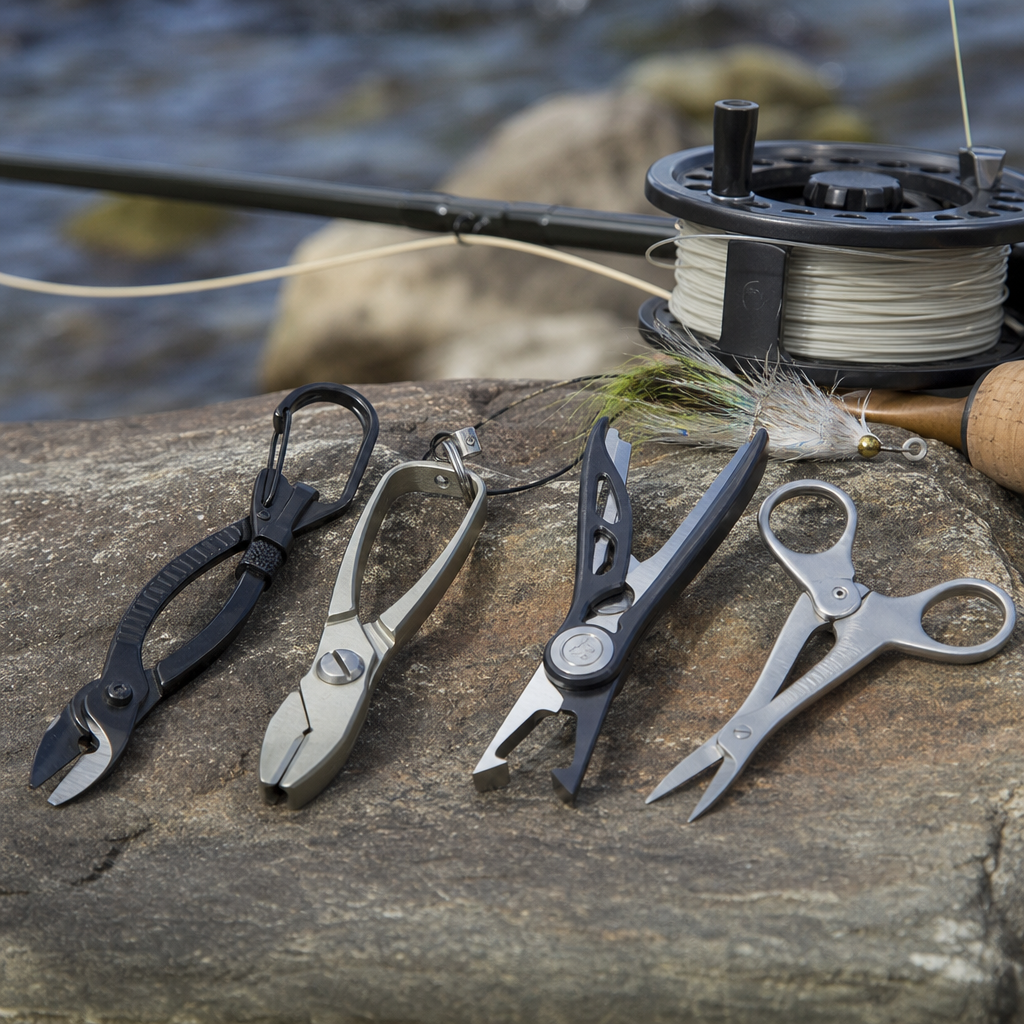
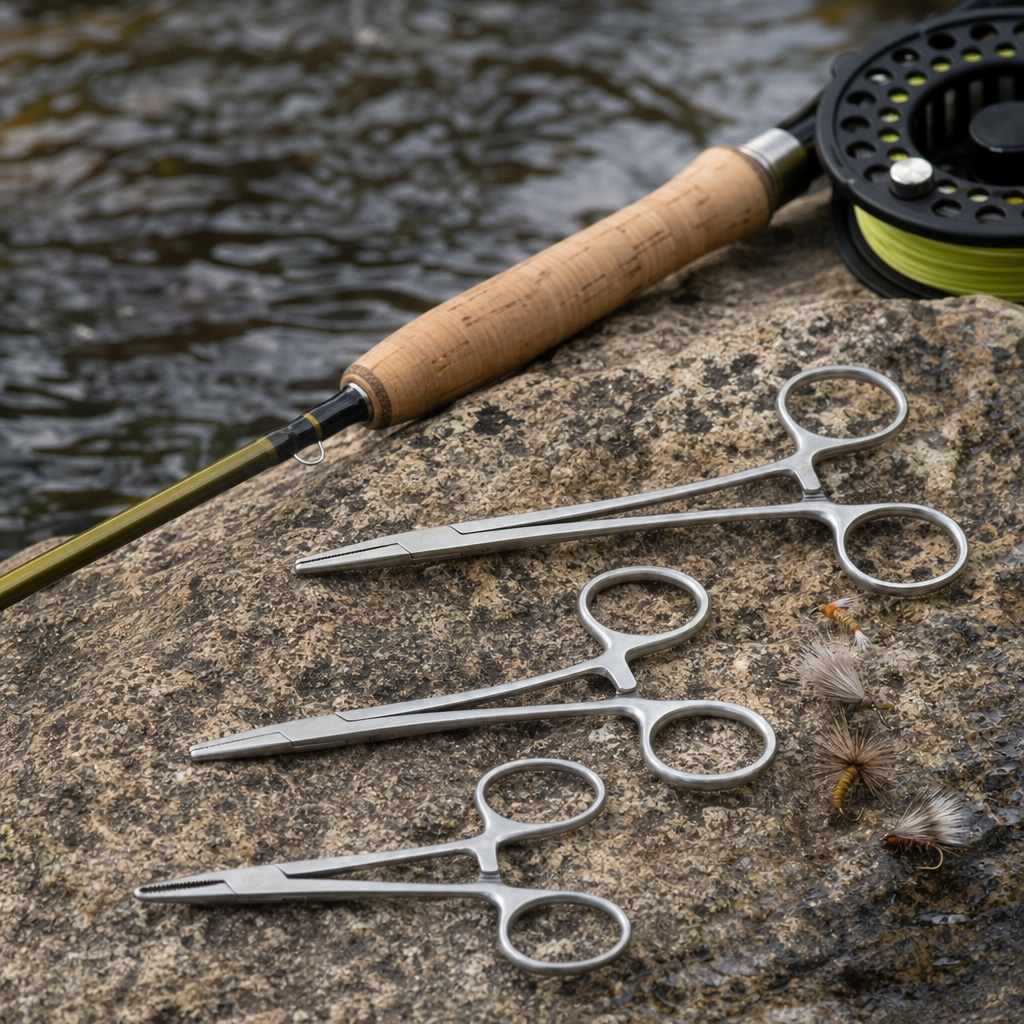
A thermometer is one node in a broader accessory system, and that is why this page serves as a hub within product reviews and recommendations. Anglers shopping thermometers are often also comparing zingers, pack organization, floatant holders, hemostats, waterproof boxes, and nets with integrated measuring scales. These accessories overlap in real use. A thermometer that clips securely to a retractor is more useful than one stored loose. A net with a long handle lets you recover fish faster in warm water. Forceps, barbless hooks, and a thermometer together support quicker, lower-stress releases during summer conditions.
When building your setup, buy accessories in order of decision-making value. Start with items that protect fish and improve efficiency: forceps, nippers, a net, and a thermometer. Then refine convenience with retractors, tippet management, and pack layout. This is the same framework I use when evaluating gear on the water. The best accessory is not the one that looks clever in isolation; it is the one that changes outcomes, reduces wasted motion, and earns a permanent place in your kit.
The best fly fishing thermometers are simple tools with outsized impact. They help you locate productive water, time hatches, understand trout behavior, and avoid fishing when conditions become unsafe. For most anglers, the best choice is a dedicated analog stream thermometer or a high-quality waterproof digital model that is easy to clip where it will actually be used. Accuracy, readability, attachment security, and durability matter more than novelty features.
As a hub for accessory reviews, this page should guide your broader gear decisions as well. Thermometers pair naturally with nets, forceps, retractors, and smart pack organization because all of them support efficient, fish-friendly angling. If you fish trout regularly, make water temperature part of your routine rather than an occasional curiosity. Check it at the access, recheck it as conditions change, and let the reading shape where, when, and whether you fish.
If you are updating your accessory kit, start with a thermometer you trust and build around it. That one small addition can improve catch rates, sharpen seasonal strategy, and help you protect the fisheries you return to year after year.
Frequently Asked Questions
Why is a fly fishing thermometer so important for trout fishing?
A fly fishing thermometer matters because water temperature influences almost everything trout do. It affects metabolism, feeding intensity, oxygen demand, insect activity, and where fish position themselves in a river or stream. When the water is in a favorable range, trout are generally more willing to move for a fly, feed longer, and hold in predictable lies. When temperatures fall too low, their metabolism slows and feeding windows can become brief and subtle. When temperatures rise too high, trout often become stressed, less willing to chase food, and more dependent on oxygen-rich water such as riffles, spring inflows, or shaded runs.
For anglers, that information is practical, not theoretical. A thermometer helps you decide when to fish, where to fish, and whether conditions are improving or declining. It can tell you if the morning is still too cold for steady activity, whether the afternoon may bring a better hatch window, or if a warm summer river is reaching temperatures where it is smarter and more ethical to stop targeting trout. Instead of guessing based on air temperature or sunlight, you are making decisions based on the conditions fish actually experience. That is why many experienced anglers treat a stream thermometer as one of the most useful small tools they carry.
What water temperature range is best for trout, and when should anglers be cautious?
The exact sweet spot varies by species, river type, elevation, and season, but in general, many trout fisheries fish best when water temperatures are roughly in the low 50s to mid 60s Fahrenheit. In that range, trout are often active, comfortable, and willing to feed on nymphs, emergers, dries, and streamers depending on the food available. Brown trout, rainbow trout, and cutthroat trout can all fish well within broad portions of that range, though local conditions always matter. Tailwaters and spring creeks may stay productive at narrower, more stable temperatures, while freestone streams can swing dramatically over the course of a day.
Caution becomes increasingly important as water temperatures climb into the upper 60s. Around 68 degrees Fahrenheit, many anglers begin paying very close attention because dissolved oxygen is lower and fish stress can increase, especially if trout are played hard or released poorly. At 70 degrees and above, ethical concerns become much more serious in many trout waters, and in some places anglers stop fishing altogether or shift to cold headwaters, tailwaters, or non-trout species. On the cold end, water in the upper 30s and low 40s can still produce fish, but feeding windows may be shorter and presentation often needs to be slower and more precise. The key point is that a thermometer helps you interpret the day realistically instead of relying on assumptions.
How do you properly use a fly fishing thermometer on the water?
The best way to use a fly fishing thermometer is to measure the actual water you plan to fish, not just take a quick reading at the bank and move on. Submerge the thermometer in the current long enough for it to stabilize, which usually takes a little longer than many anglers expect. Fast readings are convenient, but accuracy matters more than speed. Try to measure in the same type of water where trout are holding rather than in shallow, sun-baked edge water that can read warmer than the main flow. If you are fishing a larger river, taking readings in several locations can be helpful because spring seeps, tributary inflows, dam releases, and broad sunny flats can all create meaningful temperature differences.
It is also smart to check temperature at multiple times during the day. Morning, midday, and late afternoon readings can show whether the river is warming into a productive range or drifting toward stressful conditions. In summer, an early reading may suggest safe fishing, while an afternoon check reveals a sharp rise that should change your plan. In spring or fall, the reverse can happen, with cold morning water warming into a better feeding window later in the day. If you keep mental or written notes on temperature, hatches, and fish activity, a thermometer becomes even more valuable over time because it helps you recognize repeatable patterns on specific rivers.
What features should you look for in the best fly fishing thermometers?
The best fly fishing thermometers combine accuracy, durability, and ease of use. Accuracy is the top priority because even a few degrees can influence how you interpret fish activity and stress levels. A clear, easy-to-read scale or digital display matters, especially in bright light, cold weather, or fast-changing fishing situations. Durability is also important because stream thermometers get dropped, clipped to packs, dunked repeatedly, and exposed to mud, sand, and temperature extremes. A thermometer that is waterproof, impact-resistant, and securely attached to a retractor, lanyard, or zinger is usually more practical than one that is fragile or easy to lose.
Beyond the basics, think about the style that fits how you fish. Some anglers prefer classic analog stream thermometers because they are simple, reliable, and easy to clip to a vest or pack. Others like digital models for quick readings and high visibility. A protective case, strong clip, and fast response time are all worthwhile features. If you fish often in backcountry conditions or from a drift boat, compact size and secure carry options can make a big difference. The best model is not necessarily the most expensive one; it is the one you will actually carry, trust, and use consistently every time conditions matter.
Can a thermometer really help you catch more fish, or is it mainly for conservation?
It does both. From a catch-rate standpoint, a thermometer helps you identify the most productive windows and avoid dead periods. If you know a freestone stream is still too cold at first light, you may wait for it to warm before expecting stronger nymphing or dry-fly action. If a tailwater is holding steady in a prime range, you may fish confidently and focus on matching the hatch rather than wondering if fish are inactive because of temperature. On warm rivers, a thermometer can steer you toward cooler tributary junctions, deeper runs, shaded banks, or earlier hours when trout are more comfortable and likely to feed.
From a conservation standpoint, it is just as valuable. Trout can be vulnerable when water is warm and oxygen levels are lower, and anglers who monitor temperature can make better ethical choices about when to stop fishing, shorten fights, use stronger tippet, and handle fish minimally. In that sense, a thermometer is not just a fish-finding tool; it is part of responsible angling. The anglers who consistently fish well over the long run are usually the ones who pay attention to conditions, and water temperature is one of the clearest, most useful condition signals available. When you carry a good thermometer and use it regularly, you are giving yourself a better chance to fish effectively while also protecting the resource.