The best fly fishing backpack for long trips does more than carry gear; it protects expensive tackle, manages weight over miles of walking, keeps essentials accessible in bad weather, and reduces fatigue over full days on the water. In accessory reviews, backpacks deserve hub-level attention because they connect every other piece of equipment a fly angler depends on, from fly boxes and tippet spools to hydration reservoirs, rain shells, camera kits, and emergency layers. After testing packs on western freestone rivers, tailwaters, stillwater shorelines, and brushy mountain creeks, I have found that the right backpack changes how efficiently you fish and how comfortably you finish a trip. For long trips, the key terms matter. Capacity refers to internal volume, usually measured in liters. Suspension means the shoulder straps, back panel, sternum strap, and hip belt that transfer load. Organization covers compartments, lash points, net sleeves, and external pockets. Weather resistance includes coated fabrics, sealed zippers, drain ports, and integrated rain covers. A long-trip fly fishing backpack must balance all four. That matters because anglers rarely pack light once food, water, extra layers, wading accessories, and safety items are added. A poor pack creates hot spots on the shoulders, throws off casting movement, and turns routine gear changes into frustrating delays. A well-designed pack supports better decisions on the water: you stay hydrated, keep leaders dry, find indicators quickly, and carry enough insulation to stay out longer when conditions shift.
What makes a fly fishing backpack ideal for long trips
The best fly fishing backpack for long trips prioritizes carry comfort first, then fishing-specific access. Many general hiking daypacks look attractive because they offer low weight and clean lines, but they often miss the details anglers need, such as quick-access front pockets for fly boxes, hemostat docking points, net attachment, and wet-dry separation. In practice, most long-trip anglers perform best with packs in the 20-liter to 35-liter range. Below 20 liters, you start sacrificing insulation layers, lunch, or camera storage. Above 35 liters, packs often tempt overpacking and become cumbersome during repeated casting and wading. I usually recommend 25 liters to 30 liters for full-day river trips and 30 liters to 35 liters when hiking into alpine lakes or carrying bulkier cold-weather clothing.
Frame structure matters more than many buyers realize. A lightly framed or foam-structured back panel improves load transfer when the pack carries three liters of water, several fly boxes, boots-on approach sandals, and a shell. Ventilated back panels reduce sweat buildup, but they also can shift the center of gravity farther from your body. That tradeoff is acceptable on trails, less so in technical wading, where balance matters. Fabric choice is another dividing line. High-denier recycled nylon with a TPU or PU coating is now common in premium fishing packs because it resists abrasion from rock, drift boat hardware, and brush. Water-resistant zippers help, but they do not make a backpack fully waterproof unless the seams and construction are designed for submersion protection. For most long trips, highly weather-resistant beats fully waterproof because it offers better organization, easier zippers, and less stiffness.
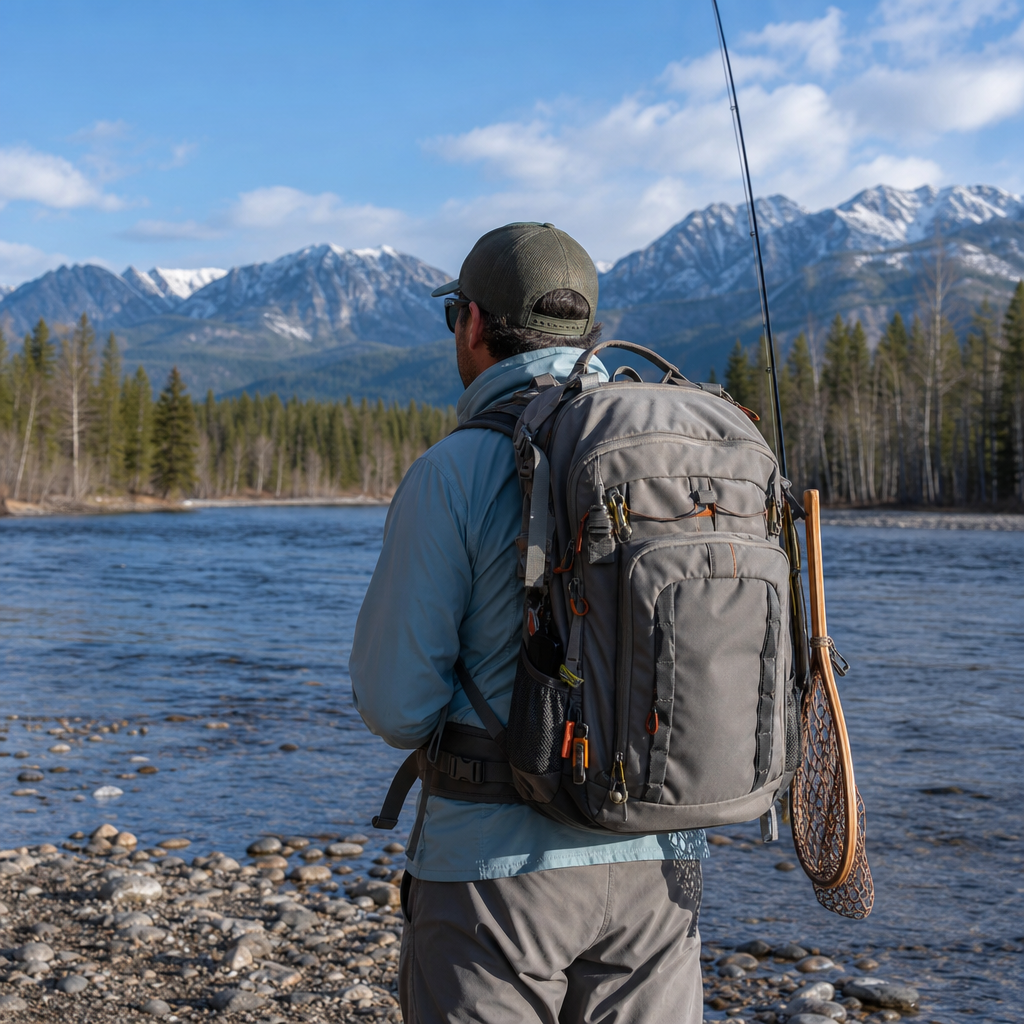
Fit is nonnegotiable. A sternum strap stabilizes shoulder movement during scrambling. A real hip belt, not a thin webbing strap, matters when total weight climbs above roughly fifteen pounds. Shoulder straps should curve cleanly without pinching the neck, and the pack should ride high enough to stay clear of a wading belt and net handle. The best packs also integrate with chest packs or accessory docks, letting anglers create modular systems for changing conditions.
How to choose pack size, layout, and materials
Choosing the right fly fishing backpack begins with trip duration and access style. If the day involves a short walk from the truck and frequent fly changes, a compact fishing pack with dense front organization is useful. If the day includes six miles of hiking before first cast, hiking ergonomics matter more than the number of zippered pockets. I advise anglers to start with a packing list and assign volume honestly. Two large fly boxes can consume more space than expected, especially if they are slit-foam streamer boxes. Add a 2.5-liter bladder, puffy jacket, rain shell, lunch, gloves, beanie, leader wallet, and a first-aid kit, and many so-called minimalist packs stop making sense.
Layout should support your fishing rhythm. One main compartment for bulk storage, one secondary compartment for small accessories, two stretch side pockets, a top quick-stash pocket, and external attachment points cover most scenarios. Internal bright-colored lining is underrated because it helps you see black tippet spools and nippers in low light. Compression straps are valuable for cinching down half-full loads, but avoid designs that block zipper access. Materials should match climate and abuse level. In brushy Appalachian streams, abrasion resistance is critical. In coastal environments, corrosion-resistant hardware and easy-clean fabrics matter more. On long trips, I prefer packs with drain-compatible lower pockets or at least mesh sections so wet tools do not marinate all day.
| Trip Type | Recommended Capacity | Best Features | Main Tradeoff |
|---|---|---|---|
| Half-day walk-in river | 20L to 25L | Fast-access pockets, hydration sleeve, net holder | Limited room for extra layers |
| Full-day wade trip | 25L to 30L | Supportive harness, weather-resistant fabric, hip belt | Slightly heavier empty weight |
| Remote lake or canyon day | 30L to 35L | Better load transfer, food storage, trekking compatibility | More bulk while casting |
| Travel-heavy mixed use | 28L to 32L | Modular organization, laptop sleeve, carry-on friendly shape | Fishing access may be less specialized |
Top backpack categories and standout options
In accessory reviews, I group long-trip fly fishing backpacks into three useful categories: fishing-first technical packs, crossover hiking-fishing packs, and waterproof submersible packs. Fishing-first technical packs include models from Simms, Fishpond, Orvis, and Patagonia. These typically offer integrated net sleeves, forceps docks, tippet garages, and attachment points for zingers or retractors. Simms packs often excel in practical layout and durable fabrics. Fishpond stands out for thoughtful organization and recycled material construction, including NewStream fabric in some lines. Orvis tends to blend polished design with travel-friendly usability. Patagonia often wins with clean engineering, restrained feature sets, and durable recycled textiles.
Crossover hiking-fishing packs are ideal for anglers who hike hard before they fish. Osprey, Gregory, and Deuter make excellent carry systems, and some anglers adapt them with aftermarket tool keepers and net attachments. This route works especially well for backcountry stillwater anglers who prioritize walking comfort over chest-level access. I have used crossover packs on steep approaches where a dedicated fishing backpack felt too compromised in suspension. The downside is that you may need to stop and remove the pack for every major tackle change.
Waterproof submersible packs from brands such as Fishpond, YETI, and some specialty fishing makers solve one specific problem better than anything else: keeping contents dry in boats, surf, heavy rain, or deep wading mishaps. They are excellent when camera gear, satellite communicators, or insulation absolutely must stay dry. Their limitations are real. Waterproof zippers are stiff, pocket layouts are simpler, and comfort can be less refined than similarly priced non-submersible packs. For most anglers on long freshwater trips, a highly water-resistant pack plus dry bags for electronics is the smarter and more versatile system.
If you want a direct buying answer, the best overall choice for most long trips is a 25-liter to 30-liter technical fishing backpack with a genuine hip belt, hydration compatibility, external net carry, and a weather-resistant shell. That category handles the broadest range of fisheries without forcing major compromises.
Comfort, load management, and on-water efficiency
Backpack comfort is not a luxury feature; it is a fishing performance variable. When shoulder straps bite or the load swings, your posture changes, your wading becomes less stable, and your concentration drops. On long trips, total carried weight often lands between twelve and twenty pounds. At that threshold, the shape of the harness and the quality of the hip belt become more important than tiny differences in pack weight. An ultralight pack that collapses into your back under load often feels worse after four hours than a slightly heavier pack with a supportive frame sheet and better padding.
Load management starts with packing heavy items close to the spine and centered between the shoulders. Water, camera gear, and dense fly boxes belong inboard, not hanging from exterior pockets. Rain jackets, gloves, and lunch can occupy outer compartments. Frequently used items should live in consistent locations. I keep indicators and split shot in one upper pocket, leaders and tippet in another, and first aid in a clearly marked internal pouch. That consistency matters in wind, rain, and fading light. Efficient packs reduce the number of times you spread gear on the bank, which lowers the odds of losing a fly box or forgetting nippers on a rock.
Long-trip efficiency also depends on how the pack works with the rest of your system. If you wear a lumbar pack or chest pack, the backpack must not create strap conflict. If you carry a landing net, the handle should ride securely without snagging brush. If you use a hydration bladder, routing ports should keep the hose clear of your casting arm. These details sound minor until you fish ten hours in mixed weather. Then they become the difference between a pack you trust and one you tolerate.
Durability, weather protection, and maintenance
Durability in fly fishing backpacks is mostly about abrasion, stitching quality, zipper life, and hardware corrosion resistance. River rocks, drift boat decks, and vehicle tailgates punish the bottom panel first, so reinforced bases are worth paying for. Bar-tacked attachment points and quality buckles from suppliers such as Duraflex or Woojin signal better long-term reliability. Zippers deserve special scrutiny. YKK remains the benchmark, and larger coil zippers often outlast smaller, stiffer water-resistant versions when exposed to grit. I clean pack zippers after silty trips because fine sediment shortens their life quickly.
Weather protection should match your fishery, not your imagination. Most trout anglers do not need a fully submersible backpack for ordinary river days. They need dependable rain resistance, fast-drying materials, and smart internal protection. I recommend using lightweight roll-top dry sacks inside the pack for insulation, electronics, licenses, and spare gloves. This modular approach beats relying on marketing claims about “waterproof” seams that may fail under pressure or wear. In sustained rain, even premium coated fabrics eventually wet out on the surface, but internal dry storage still performs.
Maintenance is simple and often ignored. Empty the pack after each trip. Remove organic debris, open all zippers, and let the interior dry fully. Saltwater anglers should rinse hardware and zipper tracks with fresh water. Never store a damp pack compressed in a truck bin; mildew and odor set in fast. Once or twice a season, inspect stitching at shoulder strap junctions and net sleeves, the two areas that commonly fail first under repeated load and snag stress.
How this hub supports accessory reviews and smarter buying
As a sub-pillar hub under Product Reviews and Recommendations, this guide should help readers move beyond one-off backpack picks and evaluate accessories as a system. A fly fishing backpack affects which hydration setup works best, how many fly boxes you can carry, whether a rain jacket stays usable, and how easily tools remain accessible. That is why accessory reviews should not treat packs in isolation. The best backpack for long trips is usually the one that complements your net, wading jacket, chest pack, water storage, and layering strategy.
Use this hub as the starting point for deeper comparisons across accessory categories. If you are building a long-trip setup, review pack capacity alongside fly box dimensions, hydration options, waterproof pouches, and outerwear bulk. Compare how brands handle modular attachments and repair support. Look for practical design rather than gimmicks. The winning backpack will fit your body, your gear list, and your water type better than it fits a trend. Choose a pack in the 25-liter to 30-liter range if you want the safest all-around answer, size up for remote approaches, and reserve fully waterproof models for genuinely wet environments. Start with honest packing needs, prioritize suspension and access, and then buy once instead of replacing a disappointing pack after one hard season.
Frequently Asked Questions
What should I look for in the best fly fishing backpack for long trips?
The best fly fishing backpack for long trips should balance comfort, organization, weather resistance, and fishing-specific usability. Capacity is one of the first things to evaluate. For full-day trips, many anglers do well with a pack in the 20- to 30-liter range, while multi-day or gear-heavy outings may call for something larger. The goal is to carry everything you need without creating unnecessary bulk that slows you down on the trail or in the water.
Suspension and fit matter just as much as storage. A quality fly fishing backpack should have padded shoulder straps, a supportive back panel, and ideally a hip belt or sternum strap to stabilize the load over miles of walking. If a pack carries weight poorly, even a well-organized layout will not save you from fatigue by the end of the day. Look for designs that transfer weight efficiently and stay comfortable when loaded with fly boxes, rain gear, water, tools, and extra layers.
Fishing-specific organization is another major factor. Useful features include quick-access pockets for tippet and leaders, secure compartments for fly boxes, external lash points, net sleeves or attachment systems, and hydration compatibility. On long trips, you should not have to unpack the entire bag just to grab a streamside essential. The best packs let you access the items you use most often without disrupting the rest of your setup.
Weather protection is also critical. Long trips often mean changing conditions, wet brush, river crossings, and sudden rain. Water-resistant materials, coated zippers, and reinforced bottoms help protect expensive tackle, electronics, and dry clothing. Some anglers prefer fully waterproof packs, but even highly water-resistant models can perform well if paired with dry bags or internal waterproof pouches for sensitive gear.
Finally, durability should not be overlooked. Fly fishing packs get dragged through brush, set on rocks, and exposed to mud, hooks, and moisture. Strong stitching, abrasion-resistant fabric, quality buckles, and dependable zippers are worth paying for. A good long-trip backpack is not just a container for gear; it is the piece of equipment that supports everything else you rely on during a demanding day on the water.
How much backpack capacity do I need for long fly fishing trips?
The right capacity depends on how long you are out, how remote the water is, and how much gear you realistically carry. For many anglers, a 20- to 30-liter fly fishing backpack is a sweet spot for long single-day trips. That size usually provides enough room for fly boxes, tippet, leaders, a rain jacket, lunch, hydration, tools, camera gear, and an extra layer without becoming oversized or cumbersome.
If your long trips involve hiking deep into backcountry water, carrying cold-weather clothing, packing safety gear, or bringing more camera and food supplies, you may want to move into the 30- to 40-liter range. This is especially true for anglers fishing in variable mountain conditions where gloves, insulation, and waterproof shells become non-negotiable. On the other hand, choosing the biggest pack available is rarely the best solution. Extra space often encourages overpacking, and unnecessary weight becomes very noticeable after several miles.
Think in terms of your core loadout. Start with what you always bring: fly boxes, tippet spools, forceps, floatant, nippers, leaders, water, and a net. Then add the trip-specific items such as food, extra layers, rain gear, first-aid supplies, a headlamp, and emergency basics. If you regularly carry a hydration reservoir, that also affects usable storage space. A pack that seems large enough on paper can fill quickly once water and bulky clothing are added.
Pack shape and pocket design matter nearly as much as total volume. A well-designed 25-liter backpack with smart compartment layout may fish better than a poorly organized 35-liter bag. Narrow, tall packs can keep weight closer to your back, while wide packs may feel awkward during casting or scrambling along tight banks. For long fly fishing trips, efficient use of space is more important than raw size alone.
In practical terms, most anglers choosing a backpack for long trips should focus on fit and function first, then capacity second. A moderately sized pack that carries comfortably and keeps essential gear accessible will outperform a larger pack that causes shoulder strain and forces you to dig for everything. The best capacity is the one that covers your longest realistic day without tempting you to bring half the garage.
Is a waterproof fly fishing backpack necessary for long trips?
A fully waterproof fly fishing backpack is not always necessary, but it can be a major advantage on long trips where you are exposed to rain, river spray, wet brush, or accidental submersion. If you spend a lot of time wading deep, fishing from small watercraft, or hiking in unpredictable weather, waterproof protection adds peace of mind and can save expensive gear from serious damage. Electronics, spare layers, cameras, and fly boxes all benefit from better moisture control.
That said, many anglers do perfectly well with highly water-resistant backpacks instead of fully waterproof ones. Water-resistant packs are often lighter, more breathable, and easier to organize because they may include more external pockets and fishing-friendly access points. For long trips, that usability can be a real benefit. A pack with durable water-repellent fabric, sealed or coated zippers, and a reinforced base can handle typical fishing conditions well, especially if sensitive items are stored inside dry bags or waterproof internal pouches.
The tradeoff usually comes down to protection versus convenience. Fully waterproof backpacks tend to use simpler roll-top or submersible-style designs, which can be excellent for keeping contents dry but sometimes slower to access on the water. If you need to reach tippet, flies, snacks, or rain gear quickly throughout the day, a more conventional pack with weather-resistant construction may feel more practical. Long trips often reward a system that is both protective and easy to use when you are tired, cold, or standing in current.
Consider where and how you fish most often. In arid climates or on short walk-in rivers with mild conditions, full waterproofing may be unnecessary. In coastal fisheries, alpine environments, or regions with frequent storms, it becomes much more valuable. Even then, many experienced anglers use a hybrid approach: a water-resistant fishing backpack combined with internal dry storage for critical gear. That setup often provides excellent versatility without the added cost or reduced accessibility of a fully waterproof pack.
In short, waterproofing is important, but it should match your fishing conditions rather than drive the whole buying decision. For long trips, the best backpack is one that keeps essentials protected enough for your environment while still carrying comfortably, organizing gear efficiently, and allowing quick access when conditions turn rough.
How do I pack a fly fishing backpack to reduce fatigue on long days?
Packing strategy has a direct effect on comfort, balance, and energy levels during long days on the water. The first rule is simple: carry only what you truly need. Long trips do require more preparation, but they also punish overpacking. Every extra fly box, duplicate tool, or unnecessary layer adds weight that your shoulders, back, and legs must carry over miles of walking and repeated casting.
Place heavier items close to your back and near the middle of the pack. This keeps the load centered and reduces the feeling that the backpack is pulling you backward. Water reservoirs, dense fly boxes, camera gear, and food should generally sit in the most stable part of the pack. Lighter or compressible items such as rain shells or insulation layers can go farther from the back panel or toward the top, depending on the pack’s layout.
Keep frequently used essentials accessible without forcing repeated unpacking. Tippet, leaders, nippers, forceps, floatant, indicators, and a small rotation of flies should be easy to reach from exterior pockets, hip belt pockets, or top-access compartments. If you have to stop and unload your backpack every time you change rigs, the day becomes less efficient and more physically draining. Good organization reduces wasted movement and frustration.
Use compression straps and internal dividers to prevent shifting. A backpack that rides well in the parking lot can feel sloppy and tiring once you are climbing banks, ducking through timber, or crossing uneven terrain. Load movement throws off your balance and increases strain over time. Tight, stable packing helps the pack move with you rather than against you.
Fit adjustments are equally important. Tighten shoulder straps enough to keep the pack snug, use the sternum strap for added stability, and engage the hip belt if the pack is built to transfer weight there. On longer walks, that weight transfer can make a noticeable difference in comfort. Also pay attention to hydration and layering. If drinking water or grabbing a shell is inconvenient, you are more likely to postpone both, which can lead to fatigue faster than the pack itself.
The smartest way to pack for a long fly fishing day is to think like a backpacker and a fisherman at the same time. Build around essentials, keep the load stable, prioritize quick access to high-use items, and eliminate anything that does not earn its place. A well-packed backpack not only feels better but helps you stay sharper and fish more effectively from first light to the hike back out.