Fly fishing puts anglers in intimate contact with rivers, lakes, marshes, and shorelines, which makes wildlife protection a practical responsibility, not an abstract ideal. When people ask how to avoid disturbing wildlife while fly fishing, they usually mean more than not scaring fish. They mean protecting nesting birds on gravel bars, reducing stress on mammals using riparian corridors, preventing damage to amphibian habitat in shallow margins, and avoiding the cumulative pressure that repeated human presence can place on sensitive ecosystems. In conservation and ethics, this matters because a single careless day on the water can disrupt feeding, breeding, sheltering, or migration patterns that wildlife depend on for survival.
Wildlife protection in fly fishing means minimizing physical disturbance, noise, habitat trampling, pollution, and unintended attraction or harassment of animals. It also includes understanding seasonal vulnerability. A heron flushed off a bank may simply relocate, but a duck pushed from an active nest, an elk repeatedly displaced from a river crossing, or spawning fish stepped on in redds can suffer meaningful consequences. I have seen productive side channels go quiet after too many anglers marched through nursery water, and I have watched birds abandon shoreline perches when people insisted on squeezing out one more cast from an obvious roosting area. Good intentions are not enough; effective protection comes from informed decisions made before, during, and after each trip.
This hub article covers the full wildlife protection picture for fly anglers. It explains how to read habitat, approach water with less impact, handle gear and movement responsibly, and adapt to birds, mammals, reptiles, amphibians, and fish in different seasons. It also addresses legal requirements, common mistakes, and practical habits that should connect to every other conservation topic, from catch-and-release ethics to invasive species prevention and river access. The goal is simple: help you fish well while leaving wildlife behavior, habitat quality, and ecological function as undisturbed as possible.
Understand where disturbance happens and why it matters
The first step in avoiding disturbance is recognizing that wildlife responds to anglers long before a cast lands. Disturbance occurs through direct presence, repeated approach, sound, shoreline trampling, light at dawn or dusk, pets, and even the silhouette of a person standing high on an exposed bank. In riparian systems, edge habitat is especially sensitive because it concentrates life. Songbirds nest in streamside shrubs, mink and otter travel banks, turtles bask on logs, amphibians use wet margins, and juvenile fish hide in undercut cover. If you walk straight down the bank, cut through reeds, or enter every side channel, you are moving through the exact places animals use most.
Biologists often describe wildlife responses in terms of displacement, stress, reduced feeding time, and reproductive failure. Those outcomes are not dramatic every time, but repeated low-level disturbance adds up. A flock of shorebirds flushed once may lose minutes of feeding; flushed ten times in a tide cycle, they can lose enough energy to affect migration. On trout water, stepping through shallow gravel during spawning season can crush eggs inside redds. On warm afternoons, fighting fish too long near seals, birds of prey, or river otters can make hooked fish easy prey. The key principle is cumulative impact: your individual action may seem small, but wildlife experiences pressure from everyone using the water.
Read the water, banks, and sky before you fish
Skilled anglers observe before they move, and that same discipline protects wildlife. Pause at access points and scan for obvious signs: nesting birds circling and calling, waterfowl tucked into shoreline vegetation, deer trails entering the river, turtles on sunning structure, or baitfish packed into nursery shallows. Look for tracks, scat, feathers, burrows, flattened grass, and repeated game paths. If a kingfisher keeps diving into a quiet side pocket, avoid occupying that pocket. If swallows are entering a bank wall, there may be active nests. If a gravel bar holds resting geese or plovers, choose another route.
Listen as carefully as you look. Alarm calls from birds often reveal that you are too close to a nest or brood area. Sudden splashing from the bank may indicate mammals retreating through cover. At dawn and dusk, wildlife movement increases, which is also when many anglers are most active. That overlap raises the need for patience. I often spend five extra minutes watching a reach before stepping in, and that brief delay regularly changes my plan. A slower entry usually reveals safer wading lanes, less sensitive casting positions, and fishable water that does not require pressing into wildlife habitat.
Approach and move with the lowest possible impact
Once you begin fishing, movement becomes the main controllable variable. Stay on established trails whenever possible. Social trails cut through vegetation may look harmless, but repeated use widens bankside erosion and fragments cover. Enter the water at durable points such as rock, sand, or hardened access sites rather than through sedges and willow roots. Avoid trampling undercut banks and emergent vegetation, which shelter fry, insects, frogs, and nesting birds. In meadow streams and spring creeks, one misplaced step can collapse a bank that took years to stabilize.
In the water, wade only when necessary. Many anglers enter immediately out of habit, but bank fishing, longer leaders, and careful positioning often eliminate extra crossings. Fewer crossings mean less sediment disturbance, fewer crushed invertebrates, and less risk of stepping on eggs or juvenile fish. Keep profiles low on open banks, avoid rapid direction changes, and do not crowd wildlife for photographs. If an animal changes posture, stares, vocalizes, bunches up, moves away, or stops feeding because of you, increase distance at once. A good field rule is simple: if your presence changes behavior, you are too close.
| Situation | Low-impact choice | Why it protects wildlife |
|---|---|---|
| Approaching a run | Use an existing trail and enter on gravel | Reduces bank erosion and avoids trampling nesting cover |
| Crossing a side channel | Skip the crossing unless access is essential | Protects nursery habitat, amphibians, and spawning areas |
| Seeing alarmed birds | Back off and fish another seam | Prevents nest abandonment and repeated flushing |
| Taking photos | Shoot from distance with a longer lens | Avoids crowding, pursuit, and stress responses |
| Planning a route | Stay on durable surfaces and limit shoreline wandering | Preserves riparian plants used for shelter and feeding |
Protect birds, nests, and shoreline breeding areas
Birds are among the most visibly disturbed animals on popular fisheries, especially where anglers share gravel bars, islands, estuaries, and reservoir edges with nesting or roosting species. Plovers, terns, ducks, geese, swallows, ospreys, eagles, and herons all use waterside habitat differently, so distance matters in different ways. Ground-nesting birds are especially vulnerable because their nests are hard to see and easy to crush. Colonial nesters may react as a group, causing widespread flushing. Raptors can tolerate distant angling but may abandon a perch or nest area if repeatedly approached from below.
The practical response is to treat islands, gravel bars, reed edges, and drift piles as possible breeding habitat during spring and early summer. If birds circle overhead, dive, call persistently, or perform distraction displays, leave immediately. Never walk through a colony to reach “better water.” Avoid beaching boats on bird roosts, and keep false casts away from overhanging nest trees. Waterfowl with young deserve extra space because broods burn energy quickly when repeatedly moved. In many places, buffer guidance from wildlife agencies ranges from roughly 100 to 300 feet depending on species and conditions. When no official distance is posted, choose the more conservative option.
Reduce encounters with mammals, reptiles, and amphibians
Mammals often absorb more angling pressure than people realize because rivers function as travel corridors. Deer, moose, elk, otter, beaver, muskrat, fox, and even bears may use the same banks and crossings anglers do. Most conflict comes from surprise. Moving quietly, looking ahead, and avoiding dense cover at first light lowers the chance of suddenly displacing an animal. Give mothers with young a very wide berth. Never block an access path to water, and do not linger near dens, lodges, burrows, or game trails. If a large mammal changes direction because you are there, you are occupying a route it needs.
Reptiles and amphibians require a different kind of attention because they are easy to overlook. Turtles bask on logs and banks; repeated close approach forces them back into the water, reducing thermoregulation time. Frogs, salamanders, and toads use shallow margins, backwaters, and wet grass that are heavily trampled by careless wading. During warm months, I avoid unnecessary steps in soft shoreline edges and side pools for exactly this reason. In some watersheds, amphibian populations are already stressed by disease, drought, and habitat loss. Disturbance from recreation may seem minor, but in degraded systems every intact refuge matters.
Fish in ways that protect habitat as much as fish
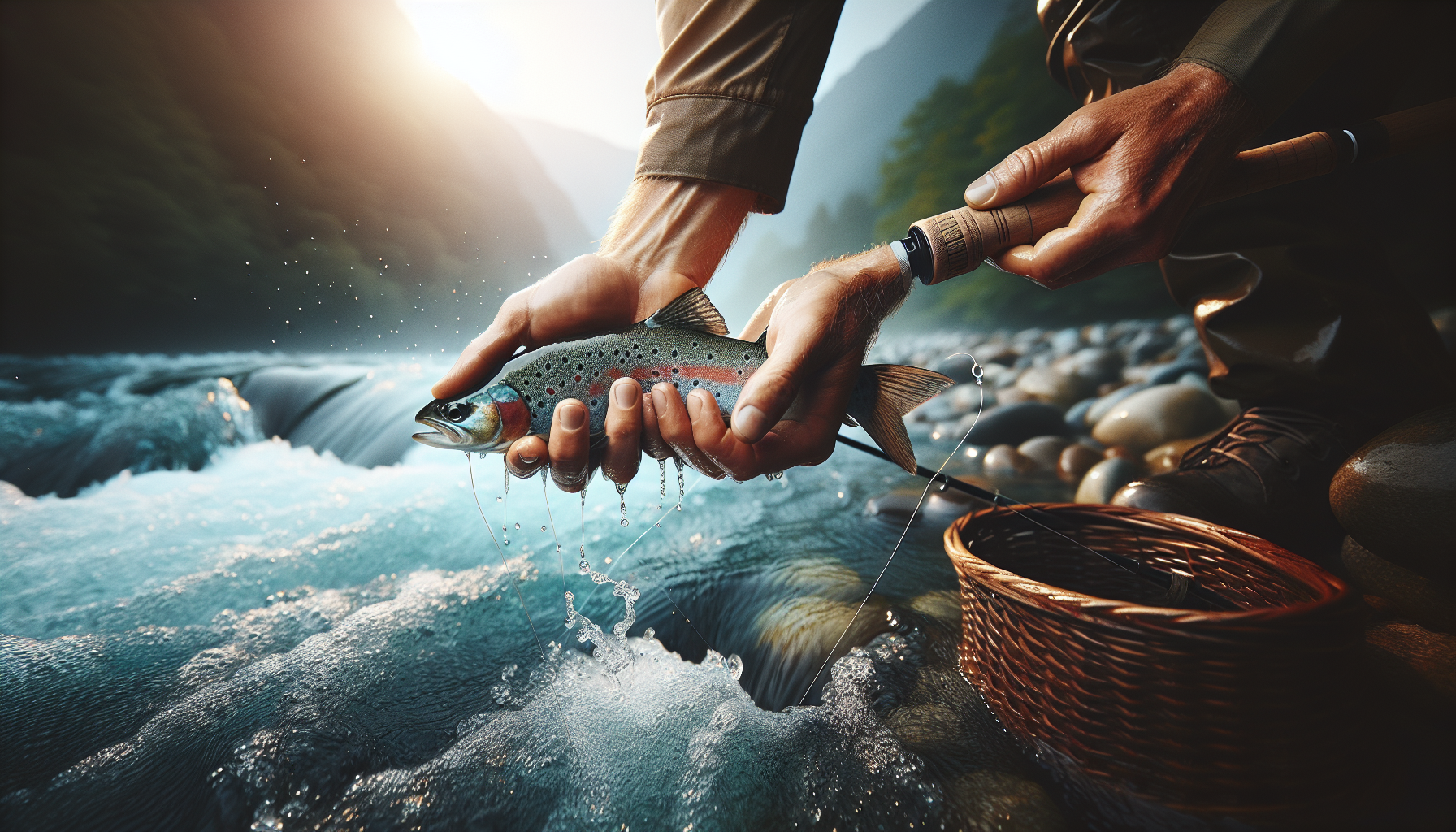
Wildlife protection is not separate from angling technique. Casting, fighting, landing, and releasing fish all have habitat consequences. Long fights in warm water increase post-release mortality and can attract predators, especially in clear rivers where birds quickly notice struggling fish. Pinch barbs when regulations allow, use tippet strength appropriate for the species, and keep fish in the water during release. If spawning fish are present, do not target them on redds and do not wade through clean gravel patches where eggs may be incubating. Trout and salmon redds often appear as lighter, freshly swept depressions in gravel tails and shallows.
Choose flies and tackle with environmental risk in mind. Weighted flies and split shot can increase snagging in woody habitat used by birds and mammals. Lost line, leader, and tippet are serious hazards because they entangle wildlife long after an angler leaves. I carry a small waste pouch and pick up discarded mono every trip, including line left by others. Lead-free alternatives for shot and materials are worth using because waterfowl and other animals can ingest toxic metal. Small gear choices matter: non-felt soles where required to reduce organism transfer, rubber nets that protect fish, and wading staffs that reduce random stumbling through habitat.
Follow seasonal closures, regulations, and local guidance
The fastest way to avoid disturbing wildlife is to respect the rules designed for that purpose. Seasonal closures, sanctuary zones, spawning-area restrictions, bird nesting buffers, and no-landing islands exist because agencies have documented repeated harm. Anglers sometimes treat these as inconveniences or assume local knowledge overrides them. That is a mistake. State wildlife agencies, provincial ministries, the U.S. Fish and Wildlife Service, the National Park Service, and local river managers often adjust access based on species-specific timing that casual observation will miss. A closure on one side channel may protect nesting birds, staging salmon, or wintering waterfowl all at once.
Check regulations before every trip, not just at the start of the season. Conditions change with flows, fire recovery, storms, and migration timing. In guided operations and clubs I have worked with, the best practice is a pre-trip conservation check: regulations, recent wildlife advisories, invasive species protocols, and weather-driven access changes reviewed together. If signage is unclear, contact the managing agency or local fly shop. Responsible anglers should also support internal linking between topics in their own learning: wildlife protection connects directly to river etiquette, fish handling, access law, litter prevention, and decontamination. Treat it as a complete system, not a single rule.
Build habits that make low-disturbance fishing automatic
The most effective wildlife protection measures are habits repeated until they become automatic. Plan routes before stepping out of the vehicle. Keep group sizes small in sensitive water. Leave dogs at home where birds nest on the ground or mammals den near banks. Pack food securely so animals are not conditioned to human presence. Avoid loud conversation, headlamp sweeping, and repeated shoreline laps. If you fish from a boat or paddlecraft, beach only on durable surfaces and drift wide of roosts, reed beds, and basking structure. The goal is not to eliminate human presence, but to remove unnecessary pressure.
For this subtopic hub, the big takeaway is clear: protecting wildlife while fly fishing starts with observation, distance, timing, and disciplined movement. Read habitat before entering it. Stay on durable access points. Give birds, mammals, reptiles, amphibians, and spawning fish more space than seems necessary. Follow closures and seasonal guidance without exception. Secure your gear, remove line, and fish with methods that reduce stress on both habitat and fish. When anglers adopt these practices consistently, they protect the places that make fly fishing possible. On your next trip, choose one reach, slow down, and fish it in a way that leaves wildlife behavior unchanged.
Frequently Asked Questions
How can I avoid disturbing birds and other wildlife while moving along the water?
The most effective approach is to treat every shoreline, gravel bar, and shallow edge as shared habitat rather than empty space. Many birds nest on open gravel bars, along banks, and in shoreline vegetation that can look insignificant to an angler focused on casting lanes. Before you wade in, stop and scan the area for signs of wildlife use such as birds calling repeatedly, circling overhead, feigning injury, or flushing from the ground. Those behaviors often signal a nearby nest or young. If you notice them, back out immediately and give the area a wide berth.
It also helps to stay on established access paths whenever possible, avoid cutting through reeds, sedges, and low bank vegetation, and resist the urge to explore every side channel or exposed island. Mammals often use riparian corridors as travel routes, especially at dawn and dusk, so limiting noise, keeping movements steady, and avoiding sudden approaches can reduce stress. A good rule is simple: if an animal changes its behavior because of your presence, you are too close. Move slowly, keep your profile low, and choose routes that minimize trampling, flushing, and repeated passes through sensitive areas.
What parts of a river or lake are most sensitive to wildlife, and should I avoid them when fly fishing?
The most sensitive areas are usually the ones anglers are tempted to enter for convenience or better casting angles: shallow margins, backwaters, side channels, vegetated shorelines, gravel bars, undercut banks, and quiet sloughs. These areas are often nurseries and refuges for far more than fish. Amphibians use shallow edges for breeding and shelter, waterfowl loaf and feed in calm backwaters, and mammals rely on dense bank cover for movement and security. Even a few footsteps in these zones can crush eggs, disturb young, or degrade habitat structure.
When planning where to fish, prioritize durable surfaces such as established trails, bare rock, firm banks, and already-used entry points. Avoid repeatedly entering and exiting through soft shoreline vegetation or muddy margins, because that kind of concentrated pressure can create long-lasting damage. If a location looks especially quiet, sheltered, or full of life, that is often a reason to leave it alone rather than fish through it. On heavily pressured waters, this matters even more, because wildlife is affected not just by one angler, but by the cumulative impact of many people making the same choices day after day.
How does wading affect wildlife habitat, and what can I do to reduce harm?
Wading is one of the most common ways fly anglers unintentionally disturb habitat. It can displace fish, but it also affects amphibians, aquatic insects, shoreline plants, and animals using the edges of the water. Shallow margins may hold amphibian eggs, tadpoles, or juvenile frogs and salamanders. Soft bottoms can contain insect larvae that support the food web. Repeated foot traffic can cloud the water, crush vegetation, and alter microhabitats that wildlife depends on for cover and feeding.
To reduce harm, wade only when it is truly necessary and enter the water at durable, low-impact spots. Avoid broad, slow, shallow margins where life tends to be concentrated. Instead of marching upstream through every soft edge, look for firmer substrate and deeper approaches that let you bypass the most sensitive areas. Take fewer steps, move deliberately, and stay in one position longer rather than constantly repositioning. If the bank allows a good presentation, fish from shore and leave the margins undisturbed. The less you churn, trample, and crisscross habitat, the less pressure you place on the wider ecosystem.
Are there times of day or seasons when fly fishing is more likely to disturb wildlife?
Yes. Wildlife sensitivity changes throughout the day and across the year, and responsible anglers adjust accordingly. Spring and early summer are often the highest-risk periods because many birds are nesting, amphibians are breeding, and mammals may be raising young. During these times, even brief disturbance can cause adults to abandon nests temporarily, expose eggs or chicks, or alter feeding and movement patterns. Low-water periods can also concentrate wildlife and make shoreline habitat more vulnerable to trampling.
Time of day matters too. Dawn and dusk are peak movement periods for many mammals and birds using riparian corridors, shorelines, and watering areas. Fishing those windows is often productive, but it can also overlap with crucial feeding, travel, and drinking behavior. If you are in an area known for waterfowl, shorebirds, beavers, otters, deer, or other regularly active wildlife, consider fishing later in the morning or earlier in the afternoon instead. Always check seasonal closures, nesting-area restrictions, and local advisories, because they are often based on real wildlife pressures rather than simple bureaucracy. When in doubt, giving wildlife more space during breeding, nesting, and low-water periods is the safer and more ethical choice.
What are the best overall habits for protecting wildlife every time I go fly fishing?
The best habits are consistent, practical, and easy to repeat. Start by researching the water before you go so you know whether there are nesting birds, spawning closures, amphibian-sensitive wetlands, or protected shoreline zones nearby. Once on the water, keep noise low, avoid crowding wildlife, and watch for signs that animals are stressed or changing behavior because of you. Use existing access points, pack out all trash and discarded tippet, and avoid leaving food scraps that attract animals to anglers. A clean, quiet, predictable presence is far less disruptive than one that is noisy, erratic, and careless.
It is also important to think beyond the individual moment. Repeated disturbance is often the real issue on popular fisheries. If everyone walks the same gravel bar during nesting season or repeatedly pushes through the same marsh edge, the cumulative impact can be serious. Rotate away from obvious wildlife-use areas, skip spots that show signs of active nesting or heavy animal traffic, and be willing to sacrifice a promising run if fishing it would put pressure on habitat. Ethical fly fishing is not just about what you catch or release; it is about leaving the river corridor functioning for birds, mammals, amphibians, insects, and fish after you are gone. That mindset is the clearest answer to how to avoid disturbing wildlife while fly fishing.