Fly fishing and habitat conservation are inseparable because healthy trout streams, intact wetlands, coldwater rivers, and functioning estuaries determine whether fish populations persist, whether angling remains ethical, and whether future anglers inherit living waters rather than memories. In practice, habitat conservation means protecting and restoring the physical, chemical, and biological conditions fish need to feed, spawn, migrate, and survive seasonal stress. Environmental impact, in this context, includes everything from streambank erosion and warming water to invasive species spread, road runoff, dam fragmentation, gear loss, and the cumulative pressure created when popular fisheries receive heavy recreational use. I have spent enough dawns on rivers with temperature gauge in hand, enough volunteer weekends planting willows, and enough conversations with biologists and watershed groups to know that the quality of a fly fishing day is usually a direct reflection of prior conservation decisions. If riffles are embedded with fine sediment, if side channels are cut off, or if dissolved oxygen crashes during summer heat, no casting skill compensates. That is why this subject matters beyond sport. Fly fishing can support river protection through license revenue, advocacy, restoration labor, and public attention, yet it can also degrade habitat when anglers ignore access rules, trample redds, crowd thermal refuges, or treat wild fish as durable resources. A responsible hub on environmental impact must therefore answer two questions clearly: how does habitat shape fly fishing, and how does fly fishing shape habitat?
How Habitat Determines Fish Health and Fishing Quality
Habitat is the operating system of a fishery. For trout and salmon, the critical variables are water temperature, dissolved oxygen, streamflow, channel complexity, cover, clean spawning gravel, aquatic insect production, and connectivity between seasonal habitats. Small changes in any one factor can alter growth rates, recruitment, and mortality. A stream that looks beautiful from the road can still be biologically impaired if summer temperatures exceed species thresholds. For example, many trout experience increasing stress above roughly 68 degrees Fahrenheit, while prolonged exposure near or above 70 degrees can be lethal, especially when low flows reduce oxygen. Anglers often notice the symptom first: fish stop rising, hold in springs or deep runs, and recover slowly after release.
Channel structure matters just as much. Large woody debris, undercut banks, boulders, pools, riffles, and floodplain connections create velocity shelters and feeding lanes. Juvenile fish need shallow margins and side channels that many simplified rivers no longer provide after decades of straightening, dredging, or riprap installation. Invertebrates also depend on habitat diversity. Mayflies, caddisflies, and stoneflies respond to substrate size, current speed, and water quality, so insect hatches often reveal the condition of the system better than a casual visual inspection. When an angler says a river has “life,” that usually means habitat complexity is still supporting multiple trophic levels.
Riparian zones are another foundational element. Native trees and shrubs shade water, stabilize banks, filter sediment, contribute leaf litter, and recruit wood into channels. Lose the riparian corridor and streams warm faster, banks erode more easily, and high flows carry more fine sediment into spawning gravels. I have watched restored reaches with willow plantings recover noticeably within a few seasons: narrower summer water temperatures swings, more overhead cover, and visibly better bank stability after runoff. Good habitat is not abstract conservation language. It is the difference between a resilient fishery and one summer away from collapse.
Major Environmental Impacts Linked to Fly Fishing and River Use
Fly fishing itself is generally lower impact than many extractive uses, but it is not impact free. The most immediate direct effects come from wading, bank access, fish handling, and movement between watersheds. Wading through spawning areas can crush eggs or displace gravel needed for oxygen flow. On many trout rivers, redds appear as lighter, cleaned patches in gravel tails of pools and side channels during fall or spring, depending on species. Avoiding those zones is one of the simplest and most important conservation habits an angler can adopt.
Bank erosion is another recurring problem on heavily used fisheries. Informal trails, repeated entry at the same soft banks, and cutting switchbacks on steep approaches strip vegetation and accelerate sediment delivery. Sediment seems minor until you see how it embeds gravel, fills interstitial spaces, and reduces egg survival. In tailwaters and spring creeks with high visitor numbers, concentrated foot traffic can transform stable banks into chronic erosion sources.
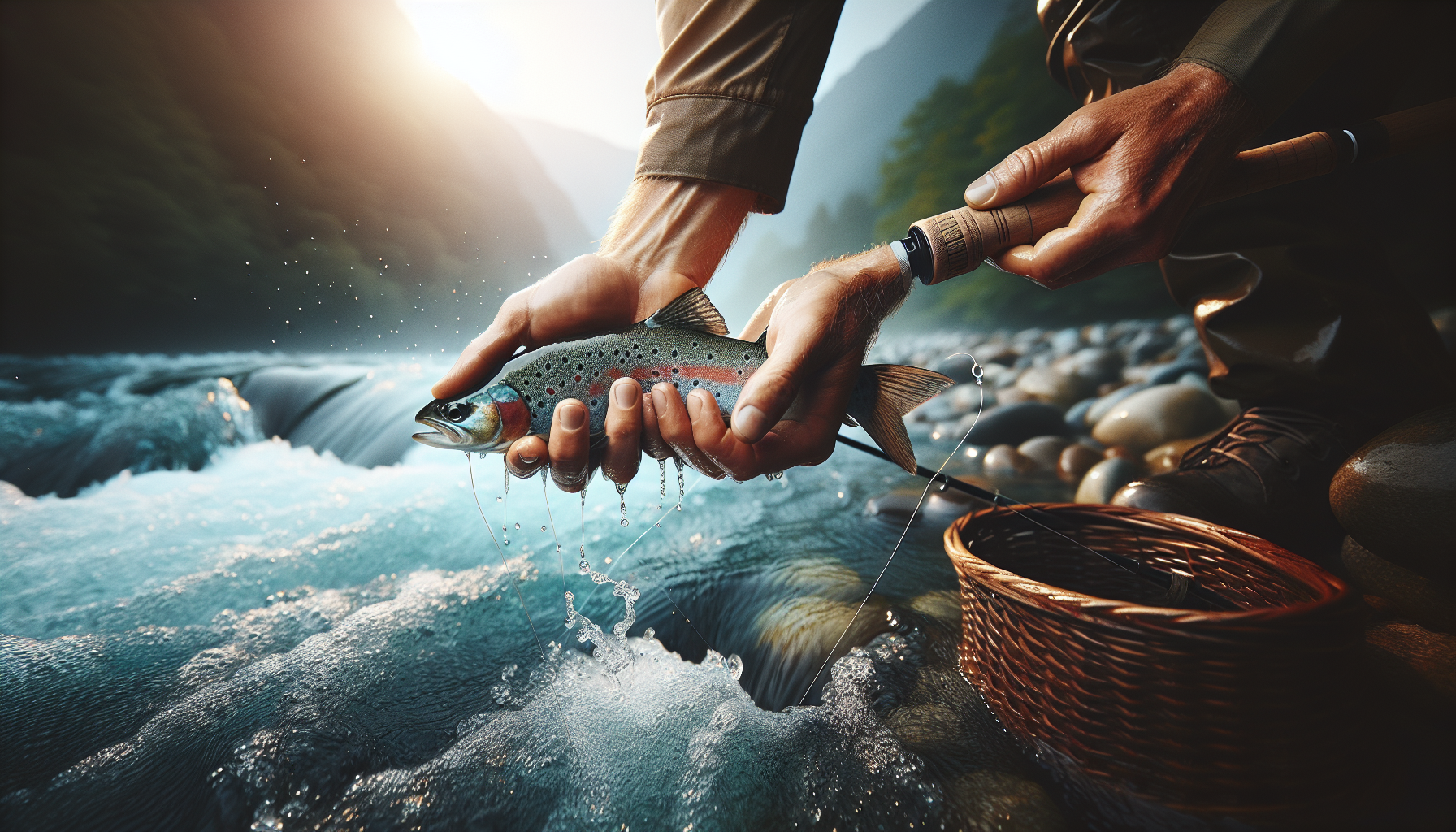
Fish handling affects individual survival and, in aggregate, fishery quality. Catch-and-release is not automatically harmless. Mortality increases with high water temperatures, long fight times, air exposure, and rough handling. Multiple studies across salmonids show that even when immediate release looks successful, delayed mortality can occur under thermal stress. Barbless hooks, rubber nets, and keeping fish submerged materially reduce risk. So does choosing not to fish during afternoon heat or voluntary closures. Ethical restraint is often more beneficial than better technique.
Anglers can also spread invasive species and pathogens. Didymo, New Zealand mudsnails, whirling disease spores, and nuisance aquatic plants move on felt soles, boot treads, nets, boats, and trailers. The shift away from felt-soled wading boots in many regions was not symbolic; it reflected evidence that porous materials can retain moisture and organisms more effectively. Cleaning, draining, drying, and disinfecting equipment between waters are now baseline responsibilities, especially for anglers traveling across states or basins.
Climate Change, Water Management, and Cumulative Stressors
The most serious environmental impacts affecting fly fishing today are often broader than angling pressure. Climate change is warming rivers, altering snowpack, shifting runoff timing, and increasing drought severity and wildfire frequency. In western North America, lower late-summer flows and hotter water have already forced temporary fishing closures on iconic trout rivers. Warmwater events reduce dissolved oxygen, concentrate fish into limited refuges, and increase disease risk. After severe fires, ash and sediment can wash into streams, degrading habitat for years. In some watersheds, beaver restoration and floodplain reconnection now play a climate adaptation role by storing water, raising water tables, and moderating downstream temperatures.
Water management is equally decisive. Dams can provide cold releases that support tailwater fisheries, but they also alter sediment transport, suppress natural flow cues, block migration, and simplify downstream habitat. Poorly timed hydropeaking can strand juvenile fish and dewater redds. Irrigation withdrawals fragment small tributaries and can leave reaches too shallow or warm for survival. In agricultural valleys, nutrient runoff may trigger algal growth and dissolved oxygen swings. In urban areas, stormwater carries oil, heavy metals, road salt, and heat into receiving streams. None of these pressures occurs in isolation. A river already stressed by warming is less able to absorb added sediment, low flow, or repeated catch-and-release pressure during heat waves.
Because these stressors accumulate, anglers should stop thinking in single-cause terms. A poor fishery is rarely the result of one bad actor. More often it reflects combined land use, infrastructure, climate trends, and recreation pressure. That broader view changes conservation priorities. It shifts attention from only regulating harvest to protecting flow, restoring riparian cover, removing barriers, and coordinating watershed-scale monitoring.
What Effective Habitat Conservation Looks Like on the Ground
Successful habitat conservation combines protection, restoration, and behavior change. Protection comes first because intact systems are cheaper and more reliable to maintain than damaged ones are to rebuild. Conservation easements, public access agreements that steer foot traffic, riparian buffer rules, wetland protection, and instream flow safeguards prevent avoidable degradation. Once habitat is impaired, restoration can recover function, but only when it addresses root causes. Adding random rocks to a channel rarely works if livestock still denude banks, if culverts still block passage, or if summer withdrawals still dry the reach.
On effective projects, the sequence is usually clear: assess watershed conditions, identify limiting factors, secure landowner and agency cooperation, design to geomorphic reality, then monitor outcomes over several years. Common methods include planting native riparian vegetation, installing large woody material, reconnecting floodplains, replacing perched culverts, removing obsolete dams, fencing sensitive banks, and improving irrigation efficiency to leave more water instream. Organizations such as Trout Unlimited, American Rivers, and many state fish and wildlife agencies routinely use these tools because they address measurable bottlenecks in fish survival.
| Impact | Why It Matters | Conservation Response |
|---|---|---|
| High water temperature | Reduces oxygen and increases fish stress | Protect riparian shade, restore floodplains, set voluntary hoot-owl closures |
| Fine sediment in gravel | Lowers egg and insect survival | Stabilize banks, improve road drainage, manage access points |
| Blocked fish passage | Prevents spawning and seasonal movement | Replace culverts, remove obsolete dams, reconnect side channels |
| Invasive species spread | Alters food webs and damages native fisheries | Clean, drain, dry, and disinfect gear between waters |
Monitoring is what separates serious conservation from good intentions. Temperature loggers, macroinvertebrate sampling, electrofishing surveys, redd counts, and photo-point comparisons reveal whether a project is improving habitat. I trust restoration most when proponents can show trend data rather than just before-and-after pictures. Fisheries recover on biological timelines, not marketing timelines.
The Angler’s Role: Low-Impact Practices and Advocacy
Individual anglers influence habitat more than many realize. The first responsibility is situational awareness. Know spawning seasons, identify redds, carry a thermometer, and leave when water temperatures become unsafe. Use established access paths, avoid trampling riparian vegetation, and choose durable entry points instead of creating new ones. Pack out tippet, strike indicators, and food waste; discarded monofilament and soft plastics injure birds, fish, and mammals. If a fish is deeply hooked or visibly exhausted, cut the line or release it without a hero shot. That decision protects the resource better than forcing a photograph.
Travel practices matter too. Decontaminate boots, nets, and boats. Many agencies recommend a clean-drain-dry routine, and some add hot-water disinfection or specific drying times for mudsnails and pathogens. Follow those protocols exactly. On popular rivers, respect rotational pressure by moving often and not camping on thermal refuges where fish congregate. If local managers announce emergency closures, treat them as conservation tools, not inconveniences.
Advocacy is the second responsibility. Buy licenses and habitat stamps where available because they fund management and access. Join watershed groups, attend public meetings on water withdrawals or dam relicensing, comment on management plans, and support organizations doing unglamorous work such as culvert replacement, mine cleanup, and water-rights negotiation. Some of the best conservation outcomes I have seen came from persistent local coalitions rather than headline campaigns. When anglers bring field observations, volunteer labor, and political attention, agencies move faster and landowners participate more readily. Fly fishing earns its social license when anglers become visible stewards of the places they use.
Building a Conservation-Minded Fly Fishing Culture
A durable conservation ethic depends on culture, not just rules. Guides, clubs, fly shops, lodges, and media shape what new anglers consider normal. If instruction focuses only on casting distance and fly selection, environmental impact becomes an afterthought. The better model teaches fish handling, invasive-species prevention, seasonal closures, and habitat literacy alongside knot tying. Fly shops are especially influential because they can translate complex science into practical river decisions: where not to wade, when to stop fishing for the day, why a closure exists, and how to volunteer locally. Guides set the standard on the water by refusing risky midday trips during heat, rotating beats to reduce bank wear, and explaining conservation choices to clients.
This hub article sits within the broader conservation and ethics conversation because environmental impact is the connecting issue. Harvest regulations, access debates, native fish recovery, stocking policy, and catch-and-release all depend on habitat conditions. A river with intact flow and floodplain function can absorb some pressure; a simplified, overheated system cannot. That is the practical lens anglers should carry into every related topic. Before asking what fly to tie on, ask what the river needs today. Before celebrating a fishery, ask what keeps it alive. The central lesson is simple: fly fishing thrives when habitat is protected, restored, and respected at watershed scale. If you want better fishing next season and ten years from now, support local conservation projects, fish with restraint, and make every day on the water leave the place better than you found it.
Frequently Asked Questions
Why are fly fishing and habitat conservation so closely connected?
Fly fishing depends on functioning aquatic ecosystems, not just on the presence of fish in a river or lake. Trout, salmon, and many other game fish need clean water, stable stream flows, cold temperatures, healthy insect populations, spawning gravel, cover from predators, and connected habitat that allows them to move through different parts of a watershed during different life stages. When any of those pieces break down, the fishing experience changes quickly. Fish become stressed, insect hatches decline, reproduction drops, and once-reliable waters can become inconsistent or even biologically impaired.
That is why habitat conservation is not separate from angling; it is the foundation of it. A healthy trout stream is supported by intact riparian vegetation, shaded banks, groundwater inputs, floodplain function, woody debris, and water quality that can support aquatic life year-round. Wetlands store and slowly release water. Estuaries provide nursery habitat for migratory species. Side channels and backwaters offer refuge during floods, drought, and extreme temperatures. Fly anglers may see only the casting lane in front of them, but the fish they pursue are responding to conditions shaped across an entire watershed.
There is also an ethical dimension. Fly fishing often presents itself as a conservation-minded sport, especially through principles like catch and release, careful fish handling, and respect for seasonal closures. Those practices matter, but they mean far less if habitat is neglected. Releasing a trout into water that is too warm, too polluted, or too altered to support survival does not solve the underlying problem. Conservation ensures that angling remains responsible, sustainable, and rooted in stewardship rather than extraction. In that sense, protecting habitat is how anglers help guarantee that future generations inherit living fisheries instead of stories about what those waters used to be.
What does habitat conservation actually involve in fly fishing waters?
Habitat conservation includes both protection and restoration. Protection means keeping high-quality waters and surrounding landscapes from being degraded in the first place. That may include preserving streamside vegetation, limiting damaging development in floodplains, reducing sediment runoff from roads or agriculture, safeguarding wetlands, maintaining natural flow regimes, and preventing barriers that block fish migration. In many cases, the most effective conservation work is proactive rather than reactive, because intact habitat is usually far easier and less expensive to preserve than a damaged system is to rebuild.
Restoration focuses on repairing habitat that has already been altered. On rivers and streams, that can include stabilizing eroded banks with natural materials, replanting riparian corridors, reconnecting side channels, removing obsolete dams, replacing undersized culverts, improving in-stream structure, restoring spawning substrate, and reducing water temperatures by increasing shade and flow resilience. In estuaries and wetlands, restoration may involve reestablishing tidal exchange, rebuilding marsh vegetation, improving water circulation, and bringing back nursery habitat that supports fish and invertebrates.
Good habitat conservation also addresses water quality and biological integrity, not just physical appearance. A stream can look beautiful and still be impaired by excessive nutrients, low dissolved oxygen, chemical pollution, or altered flow timing. Likewise, a river channel may hold water but still fail to support a healthy fishery if insect life has collapsed or seasonal migration routes have been blocked. Effective conservation therefore considers the physical, chemical, and biological conditions fish need to feed, spawn, migrate, avoid stress, and survive year after year. For fly anglers, this broad view matters because successful fishing is ultimately a visible sign of invisible ecological health.
How does habitat loss or degradation affect trout and other fish important to fly anglers?
Habitat loss affects fish in direct and cumulative ways. Coldwater species such as trout are especially vulnerable because they live within narrow environmental limits. If stream temperatures rise, dissolved oxygen falls, and fish must expend more energy simply to survive. If fine sediment buries gravel beds, eggs can suffocate and spawning success drops. If streambanks are stripped of vegetation, channels may widen, warm, and lose the overhead cover fish use for security. If flows are reduced during summer or altered by withdrawals and development, fish may lose access to refuges that help them survive seasonal extremes.
Degradation also disrupts food webs. Fly anglers often think in terms of hatches, and for good reason: aquatic insects are a critical link between water quality and fish condition. Pollution, warming, excessive nutrients, channel simplification, and siltation can reduce the abundance and diversity of mayflies, caddisflies, stoneflies, and other macroinvertebrates. When the bug life declines, fish growth, body condition, and feeding behavior change. That means fewer healthy fish, more stressed fish, and often a less dynamic and rewarding fishery.
Another major issue is fragmentation. Fish frequently need more than one type of habitat during their life cycle. They may spawn in tributaries, rear in side channels, seek thermal refuge in spring creeks, or migrate to larger rivers, lakes, or estuaries. Dams, poorly designed road crossings, dewatered reaches, and degraded floodplains can cut off those pathways. Even if one section of water looks fishable, the population may still decline if critical seasonal habitat elsewhere in the system has been lost. For fly anglers, the takeaway is simple: fish numbers and fishing quality are shaped by whole connected ecosystems, not isolated casting spots.
What can fly anglers do to support habitat conservation in practical, meaningful ways?
Fly anglers can have real influence because they spend time on the water, notice changes early, and often care deeply about specific places. One of the most effective actions is supporting organizations and local partnerships that protect watersheds, restore streams, remove barriers, improve water quality, and advocate for science-based management. Donations, volunteer labor, public comments on land and water decisions, and participation in habitat projects all help move conservation from good intentions to measurable outcomes.
On the water, anglers can reduce their own impact by practicing low-impact wading, avoiding trampling spawning redds, respecting seasonal closures and thermal restrictions, cleaning gear to prevent the spread of invasive species, packing out waste, and handling fish responsibly. Those actions may seem small, but collectively they matter, especially on pressured rivers. Ethical behavior is part of habitat stewardship because fish populations are stressed not only by landscape-scale problems but also by repeated human disturbance.
Anglers can also become effective advocates by learning how their local watershed functions. That includes understanding where water comes from, what land uses influence it, where fish spawn, which tributaries provide coldwater refuge, and what threats are most serious in that system. In one watershed the issue may be development in the floodplain; in another it may be warming temperatures, sediment from roads, nutrient runoff, water withdrawals, estuary degradation, or migration barriers. The more specific an angler’s knowledge is, the more useful their voice becomes. Fly fishing culture is often strongest when it evolves from appreciation into stewardship, and stewardship becomes most powerful when it is informed, local, and persistent.
Why is habitat conservation becoming even more important for the future of fly fishing?
Habitat conservation is increasingly urgent because many fisheries now face overlapping pressures rather than single isolated problems. Climate change is warming streams, altering snowpack and runoff timing, increasing drought frequency in some regions, intensifying floods in others, and pushing coldwater species closer to their physiological limits. At the same time, population growth, land conversion, water withdrawals, invasive species, and pollution continue to strain rivers, wetlands, and estuaries. A fishery may withstand one stressor for a while, but multiple stressors acting together can reduce resilience quickly.
Conservation helps build that resilience. Intact riparian forests keep water cooler. Connected floodplains absorb floods and store water. Wetlands moderate hydrology and filter pollutants. Groundwater-connected tributaries provide thermal refuge during hot periods. Estuaries with healthy vegetation and natural flow patterns support juvenile fish during critical transitions. In other words, habitat conservation does not merely preserve scenic landscapes; it creates the ecological capacity fish need to endure changing conditions. For fly anglers, that means conservation is increasingly about adaptation as well as preservation.
Looking ahead, the future quality of fly fishing will depend less on nostalgia and more on deliberate stewardship. Healthy fisheries cannot be assumed, and they cannot be replaced easily once ecological damage becomes severe. Stocking may temporarily mask decline in some places, but it rarely substitutes for self-sustaining wild fish populations supported by functioning habitat. If anglers want rivers that still produce hatches, hold wild fish, and reward careful observation and skill, habitat conservation must remain central to the sport. It is the long game of fly fishing, and it is what determines whether the next generation steps into living water or into a diminished version of it.