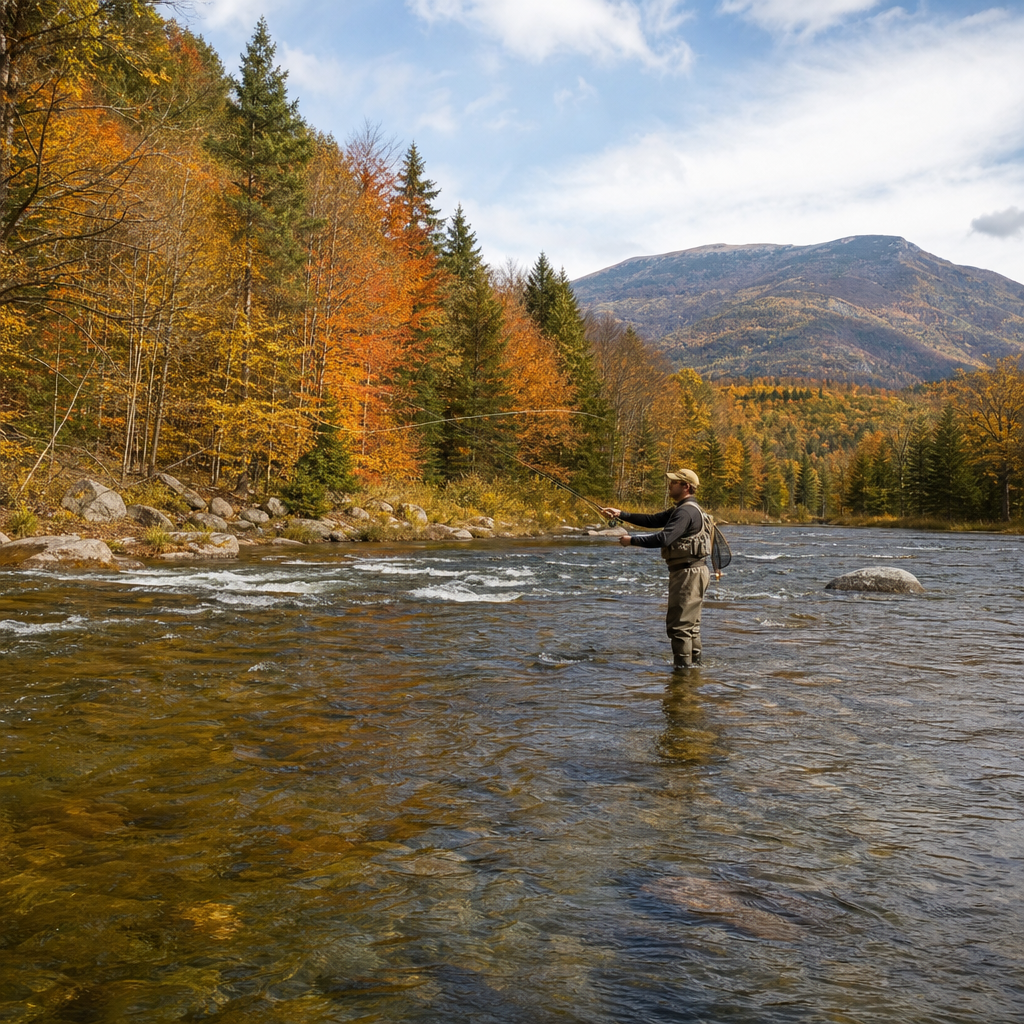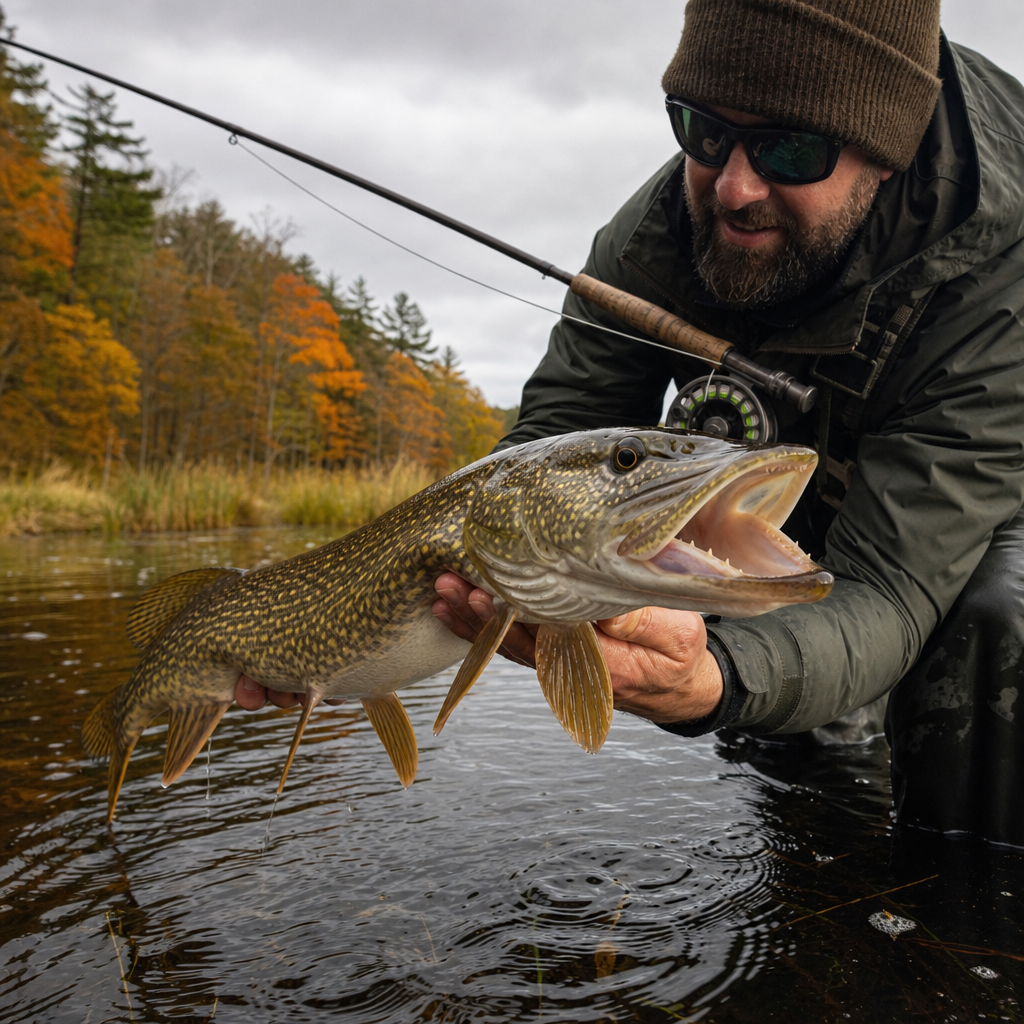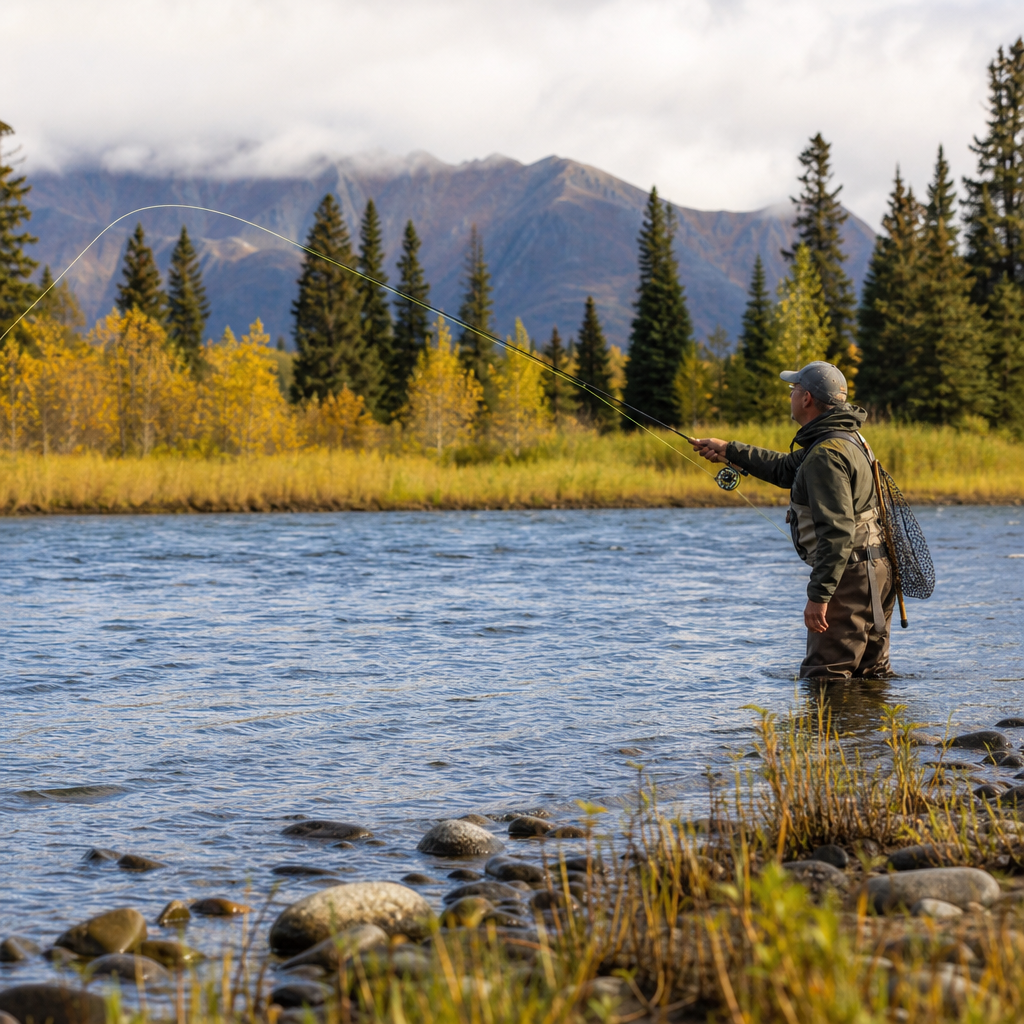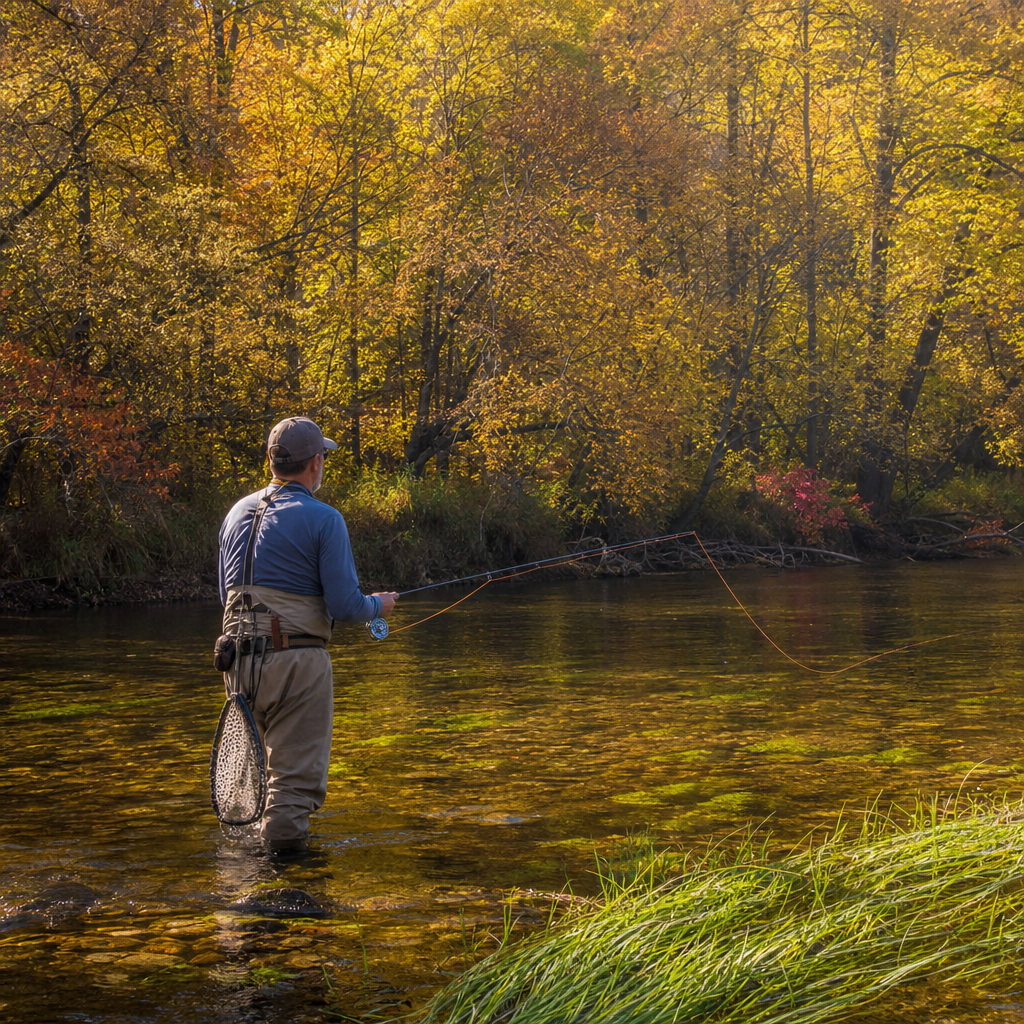
Fall fly fishing in spring creeks rewards anglers who understand how stable water, selective trout, and autumn insect activity intersect. Spring creeks are groundwater-fed fisheries with relatively constant temperatures, consistent flows, rich weed growth, and prolific aquatic life. In fall, those traits create a unique mix of opportunity and difficulty: trout feed heavily before winter, hatches can be technical, low clear water exposes mistakes, and changing light alters fish behavior by the hour. I have spent many autumn days on famous and lesser-known spring creeks, and the pattern is consistent. Anglers who treat fall spring-creek fishing like freestone fishing usually struggle. Anglers who slow down, read weeds and seams carefully, and match both food form and presentation catch more fish.
Fall fly fishing matters because spring creeks often fish best when summer heat fades and before winter locks anglers into narrow windows. Brown trout begin pre-spawn movements, midges and blue-winged olives become reliable, terrestrials still matter on warm afternoons, and streamer opportunities improve as aggression rises. Yet the same season demands precision. These creeks commonly run clear enough that trout inspect tippet, fly posture, drag, and even leader shadow. Success comes from understanding the creek as a system rather than chasing a single hatch. This hub article explains the core techniques and decision points for fall fly fishing in spring creeks, from reading water and timing hatches to nymphing, dry-fly work, streamers, trout behavior, and practical gear choices that consistently produce.
Why Fall Changes Spring Creek Fishing
Fall changes spring creek fishing by shifting trout metabolism, insect timing, weed structure, and angler pressure all at once. Groundwater keeps temperatures more stable than on freestones, often holding many spring creeks in the trout-friendly range while nearby rivers swing sharply. That stability extends feeding windows. On cool mornings, fish may still hold deep and deliberate, then slide into classic lanes when sunlight raises insect activity. On overcast days, especially with light drizzle or a dropping barometer, blue-winged olive emergences can start earlier and last longer.
Autumn also reshapes the creek physically. Weed beds begin thinning, opening slots that were unreachable in midsummer, but they still funnel current and food into narrow feeding lanes. Brown trout become more territorial as spawning approaches, though actual spawning fish should be left alone and redds avoided completely. Rain can stain some systems lightly, creating brief streamer windows, while long dry spells leave glass-clear water that favors fine leaders and downstream presentations. In practical terms, fall is not one pattern but a series of short, high-value windows. The best anglers adjust from nymphs in the morning to olives or midges at midday, then to terrestrials, cripples, or streamers depending on light and trout response.
Reading a Spring Creek in Autumn
Reading water on a spring creek is less about obvious pocket water and more about microcurrents, weeds, undercut banks, and feeding geometry. Trout often hold where soft water meets a dependable conveyor of food: the inside edge of a weed lane, the tail of a shallow riffle entering a slick, a depression beside a gravel shelf, or a bend where undercut sod offers cover. In fall, these positions become more visible because lower sun angles reveal bottom contours and because some vegetation recedes. Polarized glasses are essential, but observation matters more than gear. Spend several minutes watching before making the first cast. You are looking for head-and-tail rises, lateral movement, white mouths under the film, and repeat feeding rhythm.
One mistake I see often is anglers targeting the center of a pool because it looks fishy. On spring creeks, the prime lie is frequently a narrow strip no wider than a boot. Another mistake is ignoring access angle. Because water is clear and fish are used to avian predators, approach from downstream or quartering downstream whenever possible. Stay low, keep rod and body off the skyline, and use bank vegetation for cover. If a fish refuses more than twice, change angle, leader length, or fly stage before changing the entire idea. In many fall situations the trout is telling you the drift or silhouette is wrong, not that the hatch match is completely off.
Key Fall Food Sources and Hatch Timing
The most important fall food sources on many spring creeks are blue-winged olives, midges, scuds, sowbugs, small baetis nymphs, terrestrials, and, in some systems, craneflies or late caddis. Brown trout also respond to minnows and juvenile fish as aggression increases. Knowing which food dominates lets you fish with intention instead of habit. Blue-winged olives generally prefer cool, cloudy, humid conditions and often hatch from late morning into afternoon. Midges can appear almost any day and become central during calm periods, especially when rises are subtle and concentrated in slower slicks. Scuds and sowbugs are year-round staples in fertile spring systems, making them ideal searching flies when no hatch is obvious.
| Food source | Typical fall timing | Best clue on the water | Effective pattern category |
|---|---|---|---|
| Blue-winged olives | Late morning to afternoon, strongest on cloudy days | Soft, steady rises in slicks or tails | Emergers, cripples, tiny duns, baetis nymphs |
| Midges | All day, often best in calm conditions | Nose-up sips with little surface disturbance | Pupae, emergers, clusters, Griffith’s Gnat styles |
| Scuds and sowbugs | Any time, especially between hatches | No obvious riseform; fish glued to feeding lanes | Weighted or unweighted imitations in olive, gray, tan |
| Terrestrials | Warm afternoons and breezy banks | Opportunistic rises near grass edges | Ants, beetles, small hoppers |
| Minnows | Low light, stained water, pre-spawn aggression | Chasing behavior, follows, territorial flashes | Small streamers and leeches |
Timing matters, but life stage matters more. On spring creeks, trout often key on emergers and cripples because those insects are trapped in or just under the surface film longer than fully emerged adults. If fish ignore your dun but continue rising, switch to a trailing shuck pattern, a soft-hackle emerger, or a midge pupa suspended just below the film. This is one of the biggest fall fly fishing lessons: match vulnerability before appearance. A trout feeding confidently in slow water has time to refuse perfect color if the fly sits at the wrong depth or angle.
Nymphing Tactics for Selective Trout
Nymphing remains the most reliable way to catch trout in fall, especially outside concentrated hatch periods. On spring creeks, effective nymphing is controlled, short-range, and deliberate rather than heavy and blind. My standard approach is a long leader, a small indicator only when needed, and flies that reflect the creek’s dominant subsurface food. Scuds, sowbugs, pheasant tails, baetis nymphs, zebra midges, and tiny soft hackles cover most conditions. Because fish often hold in shallow, even water, too much split shot spooks trout and hangs on weeds. Use the least weight that gets the fly into the feeding lane, then adjust by inches, not feet.
Two methods consistently work. The first is tight-line or contact nymphing along weed seams and undercut edges where precise depth control matters. The second is a light-indicator drift through slick tails where fish feed steadily but subtly. In both cases, the best drifts are short enough to stay connected yet long enough to achieve natural speed. Set on hesitation, stall, or any sideways tick. Spring creek takes in fall are often no more than the leader stopping for a fraction of a second. If trout inspect but refuse, try unweighted patterns. In calm water, a free-drifting scud or midge pupa often outfishes a beadhead because it behaves like the real thing.
Dry-Fly Presentation and Technical Surface Fishing
Dry-fly fishing is the signature challenge of fall spring creeks because trout can feed rhythmically while refusing dozens of good casts. The solution is not random fly changes. Start by identifying the exact lane and cadence of the rise. Then choose a position that allows a drag-free drift before the fly reaches the trout. Reach casts, parachute casts, and slack-line presentations are more important than pattern minutiae. Long leaders, often 12 to 15 feet with 5X to 7X tippet depending on fly size and fish behavior, help separate fly line from fish. However, leader length alone does not solve drag if currents cross between rod tip and target.
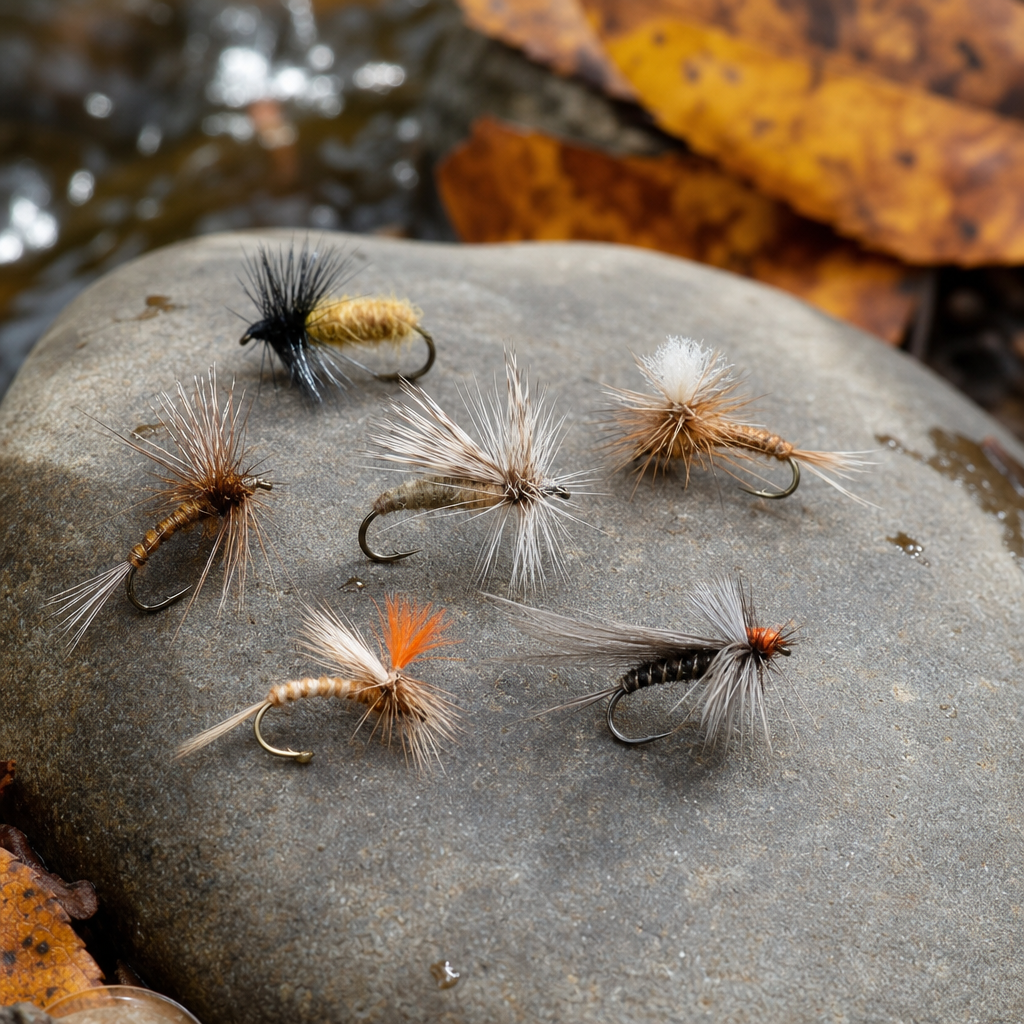
Fall trout frequently prefer low-riding flies: emergers, cripples, spent adults, and sparse parachutes. If fish are feeding in flat water, trim hackle-heavy patterns from the rotation. A CDC emerger, baetis sparkle dun, midge cluster, or tiny parachute can be far more convincing than a high-floating attractor. Refusals also come from microdrag that anglers cannot easily see. Watch the ring around the fly and the fish’s body language. If a trout rises, tracks, and turns away, the problem is usually drift, profile, or tippet flash. Downstream slack presentations and side currents managed with aerial mends solve more refusals than color changes. During strong olive hatches, covering one target fish patiently often beats casting to every rise in the pool.
When and How to Fish Streamers
Streamer fishing in fall spring creeks is most effective when tied to fish behavior, not just angler preference. Brown trout become more territorial before spawning, low light gives larger fish cover, and occasional color in the water reduces scrutiny. That does not mean stripping oversized flies through crystal-clear noon water is productive. Better conditions are first light, last light, cloudy afternoons, windy banks, and slight stain after rain. In these windows, small to medium streamers often outperform giant patterns because spring-creek forage is frequently modest in size. Think sculpins, dace, leeches, and juvenile trout or whitefish where present.
Presentation should match mood. In cold stable water, slow strips with pauses, short swings across undercut banks, or hand-twist retrieves through deep bends can trigger follows into eats. When fish are aggressive, a quick strip past cover may provoke a reaction strike. Use enough tippet strength to turn fish away from weeds and banks, but keep the fly moving naturally; 3X or 4X is common. If a fish follows repeatedly without eating, change angle or color before changing location. Olive, black, tan, and natural baitfish shades are dependable. Streamers are also an excellent way to locate better browns between hatches, but avoid actively spawning fish and never cast onto redds, which appear as clean, bright gravel patches.
Gear, Seasonal Strategy, and Ethical Considerations
A versatile fall spring-creek setup starts with a 4- or 5-weight rod between 8’6″ and 9 feet for dry flies and light nymphing, plus a separate spool or line system if streamers are part of the plan. Weight-forward floating lines handle most work. Leaders should range from 9 feet for streamers to 15 feet for technical dries, with fluorocarbon useful subsurface and nylon preferred for many dry-fly situations because it lands softer and floats better. Essential flies include baetis nymphs, RS2-style emergers, zebra midges, scuds, sowbugs, tiny soft hackles, sparse olives, midge clusters, ants, beetles, and small streamers. Forceps, floatant, desiccant, split shot in micro sizes, and quality polarized glasses are not accessories; they are core tools.
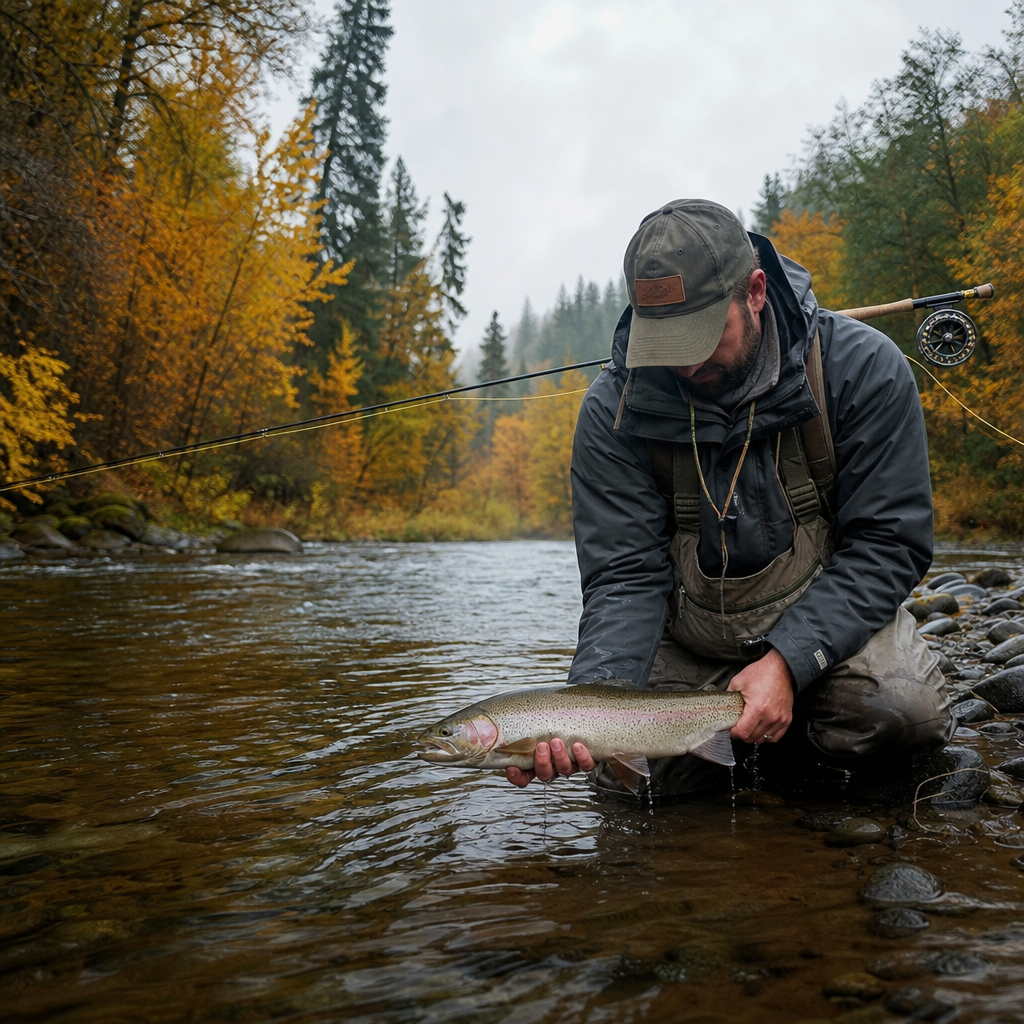
Seasonal strategy matters as much as tackle. Start by checking water temperature, weather trend, and cloud cover. A gray day may justify waiting for the olive hatch, while a bright calm morning may call for subsurface work until shadows lengthen. Keep notes on exact timing of rises, fly stage, and productive water type. Over several trips, patterns become obvious. Finally, fish responsibly. Fall is a sensitive time for brown trout. Avoid stepping on redds, give paired fish space, and focus on pre-spawn holding water rather than active spawning sites. Handle trout minimally, especially on warmer afternoons in early fall, and pinch barbs if regulations or personal practice support quicker releases. If you want to improve at fall fly fishing in spring creeks, commit to observation first, presentation second, and fly choice third. That order consistently produces more trout and a deeper understanding of the season.
Frequently Asked Questions
What makes fall fly fishing in spring creeks different from fishing freestone rivers or tailwaters?
Fall fly fishing in spring creeks stands apart because these waters are defined by stability. Spring creeks are groundwater-fed, which means water temperatures and flows usually remain far more consistent than what anglers see on freestone rivers after rain or on tailwaters influenced by dam releases. That consistency supports dense weed beds, abundant aquatic insects, and healthy trout populations, but it also creates fish that are highly conditioned to their environment. In autumn, trout in spring creeks often feed aggressively ahead of winter, yet they do so in clear, low water where every drag line, false cast, and boot step can ruin a good setup.
Compared with freestones, spring creeks usually demand finer tippets, more precise drifts, and a stronger understanding of feeding lanes. The currents can look slow and simple on the surface, but subsurface flow around weeds, undercut banks, and subtle depressions creates highly technical presentations. Compared with tailwaters, spring creeks often feature more intimate sight-fishing situations, where anglers can target individual fish but must solve a much more exact puzzle. In the fall, changing light angles, decaying vegetation, and seasonal insect activity make trout behavior even more nuanced. The reward is that when you approach these fisheries correctly, they can offer some of the most visual, methodical, and satisfying dry-fly and nymph fishing of the year.
What flies work best on spring creeks in the fall?
The best fall fly selection for spring creeks usually centers on three categories: small mayflies, midge patterns, and terrestrial or attractor options that still remain believable in clear water. Autumn often brings technical hatches of Blue-Winged Olives, midges, and in some systems late-season mayflies such as Tricos or PMD-related imitations depending on the region. Because spring creek trout see a tremendous amount of natural food and often inspect flies closely, size, profile, and presentation usually matter more than flashy materials or oversized patterns. A simple, sparse fly that rides correctly and matches the natural insects will usually outperform something more complicated.
For dry flies, anglers should carry a range of small parachutes, emergers, cripple patterns, and low-riding adults in sizes that reflect the creek’s common autumn insects. Blue-Winged Olive dries and emergers are especially important on overcast days, while midge clusters and tiny adult midge patterns can save slow afternoons. For subsurface fishing, slender pheasant tail nymphs, midge larvae and pupae, small soft hackles, and unweighted or lightly weighted emerger patterns are staples. In weedy spring creeks, heavy flies can be a disadvantage because they snag vegetation or drift unnaturally, so subtle weighting is often better than trying to get deep too quickly. It is also wise to carry terrestrial patterns such as beetles and small ants early in the fall, especially on warmer afternoons when fish are still willing to take opportunistic food forms. The key is not just having the right hatch match, but having multiple life stages of the same insect so you can respond when trout refuse adults but confidently eat emergers or pupae just below the film.
How should I approach spooky trout in low, clear fall water?
Approaching spooky trout in a spring creek during fall starts long before the cast. In low, clear water, trout have an excellent view of movement, shadows, and unnatural disturbance. The most effective anglers slow down, stay low, and observe before entering the casting range. That means using streamside cover, kneeling when necessary, avoiding skyline exposure, and approaching from downstream or slightly off-angle whenever possible. Wading should be minimized because even gentle foot movement can send pressure waves through shallow flats or stir up silt that alerts fish. On many spring creeks, success comes from stalking one fish carefully rather than covering lots of water quickly.
Presentation is just as important as stealth. Long leaders, fine tippets, and accurate first casts matter because trout on spring creeks often will not give you many chances. A reach cast, slack-line presentation, or aerial mend can help deliver a drag-free drift across narrow feeding lanes. Rather than casting directly over a fish, target the lane it is using and let the fly arrive naturally before the leader and fly line influence the drift. If fish are refusing your fly, it is often not the pattern alone; micro-drag, improper angle, or too much line over conflicting currents may be the real issue. Fall light can also help or hurt. Early and late in the day, lower light may make trout less wary, but it can also make rise forms harder to read. Midday glare may expose you, while cloud cover can improve both fish confidence and Blue-Winged Olive activity. In practical terms, the best approach is patient observation, minimal movement, and a drift so clean that the trout never realizes it is looking at an imitation.
What techniques are most effective for presenting flies in weedy spring creeks during autumn?
Weedy spring creeks reward controlled, deliberate presentations. In fall, aquatic vegetation still shapes current seams, trout holding positions, and insect drift, even as some weed growth begins to thin or shift. One of the most effective techniques is short-to-medium range dry fly fishing to visible risers, where the goal is not distance but angle and drift quality. Trout often position along weed edges, in tiny current cushions, or in narrow slots between vegetation beds. A cast that lands gently with enough slack to drift naturally over those lanes is often the difference between a confident take and an immediate refusal. Reach casts, parachute casts, and stack mends are especially useful because they buy precious extra seconds of drag-free drift.
When fish are feeding subsurface, light nymphing with small indicators, yarn markers, or even tight visual tracking can be highly effective, but only if the setup matches the creek. Bulky indicator rigs and heavily weighted flies can plow into weeds and create unnatural drifts. Instead, use slim nymphs, emergers, or midge pupae with just enough weight to enter the feeding zone. In many spring creeks, trout feed just below the surface film or midway in the column rather than hugging the bottom, so over-weighting is a common mistake. Another productive method is the soft hackle swing or induced emerger lift at the end of a drift, especially during active hatches when insects are ascending. Because weeds interrupt current, anglers should think in terms of micro-drifting: placing the fly into short, precise feeding channels and managing line instantly. Autumn conditions make this even more important because trout are feeding heavily but remain selective, so a technically correct presentation through structure often matters more than changing flies repeatedly.
When is the best time of day to fish spring creeks in the fall, and how do changing conditions affect trout behavior?
The best time of day for fall fishing on spring creeks depends on temperature, light, and insect activity more than on a simple morning-versus-evening rule. Because spring creeks maintain relatively stable temperatures, they often fish consistently across the day, but autumn light and weather still shape trout behavior in important ways. Cool mornings can start slowly, especially after cold nights, with fish holding in softer water and feeding less visibly until light reaches the water and insect activity increases. As the day warms, midges or small mayflies may begin to hatch, and trout often shift into more predictable feeding lanes. Overcast afternoons can be especially productive because cloud cover reduces glare, improves trout confidence in shallow water, and commonly triggers Blue-Winged Olive activity.
Evening can also be excellent, particularly when spinner falls, midge activity, or low-light security brings larger fish into softer edges and flats. However, bright, calm afternoons in very clear water can be some of the toughest periods because trout see exceptionally well and may slide into narrow, hard-to-reach feeding positions. Wind can be both a blessing and a challenge: it may break up the surface and make fish less wary, but it can also complicate precise casting. Early fall may still favor terrestrials during warmer parts of the day, while later fall often shifts the focus toward smaller mayflies and midges. The most reliable strategy is to watch the creek closely and let the conditions dictate your timing. If you see active feeding but no visible hatch, fish subsurface with emergers or midge pupae. If cloud cover builds, be ready for BWO activity. If evening light softens and fish begin porpoising, switch quickly to spent or cripple patterns. In fall spring creek fishing, timing is less about rigid hours and more about matching your tactics to the subtle environmental changes that move trout from cautious to catchable.