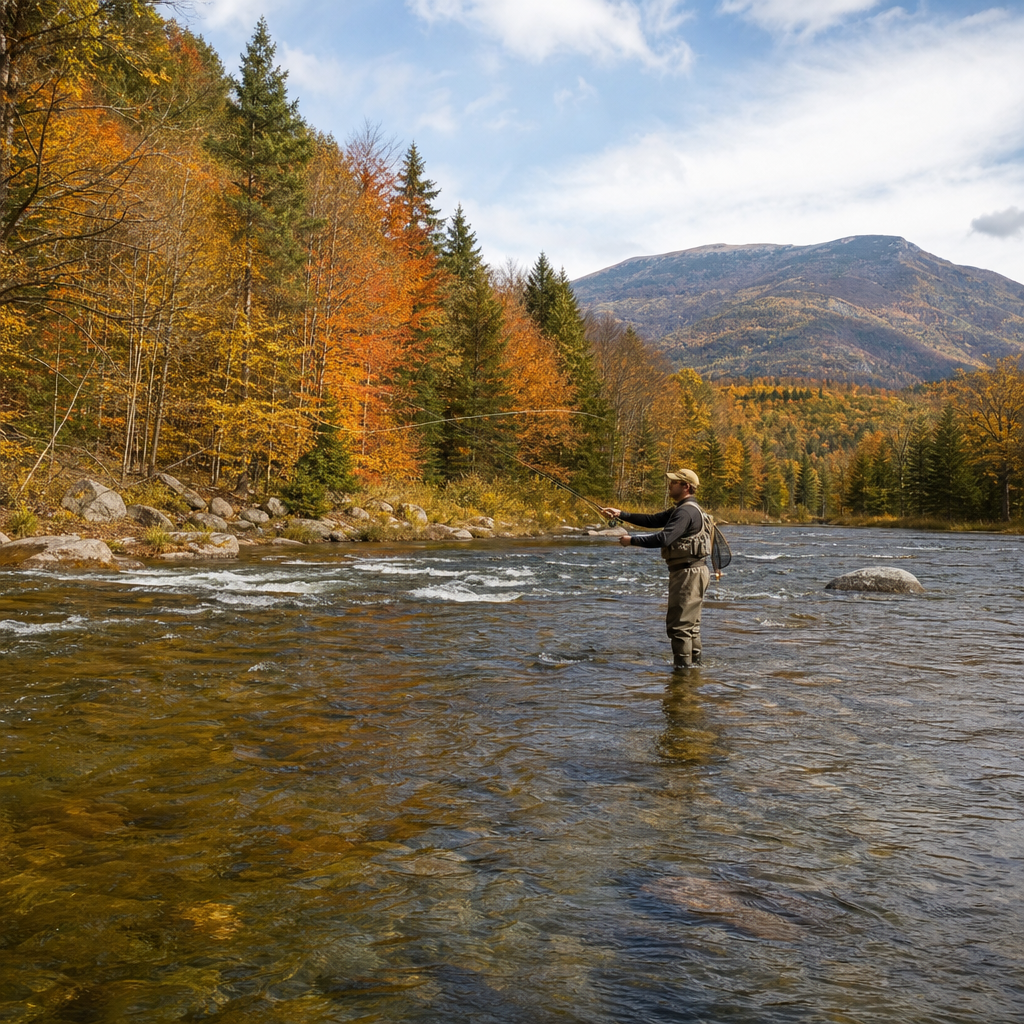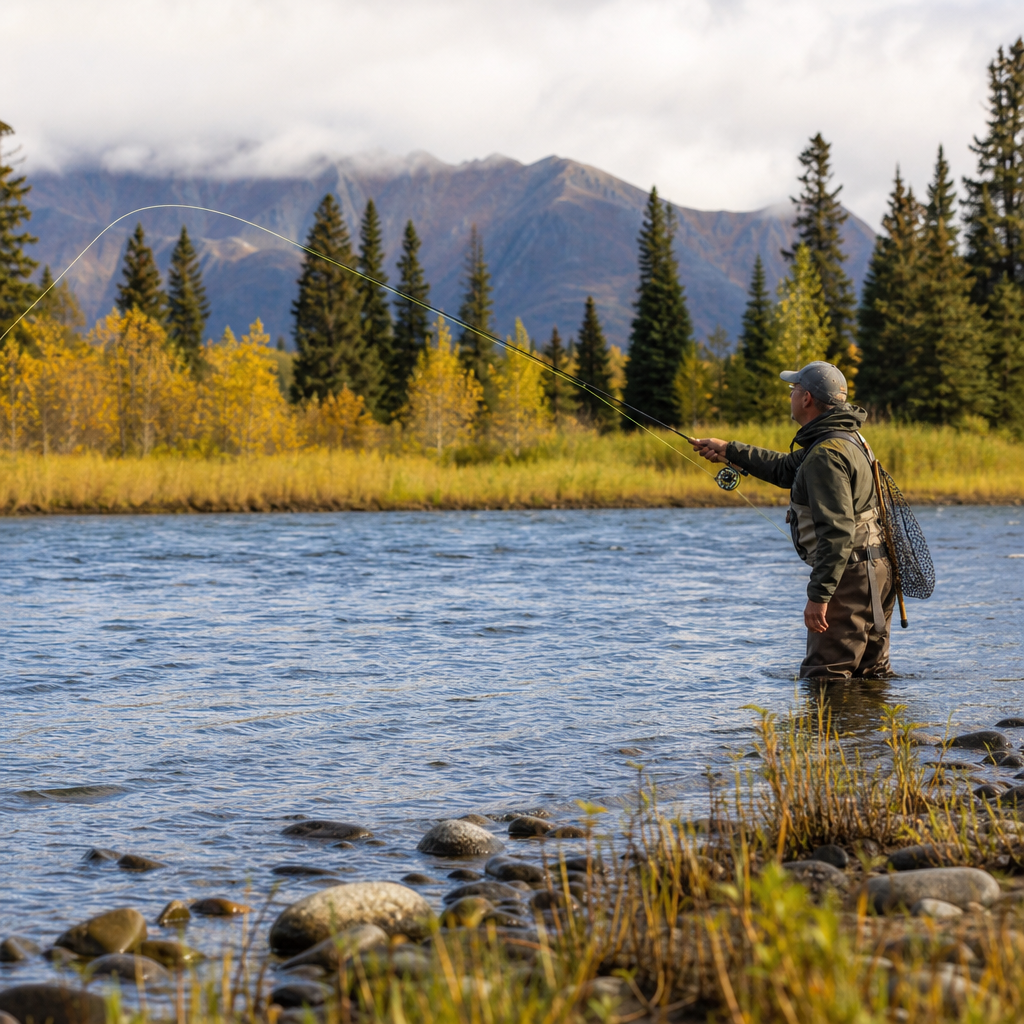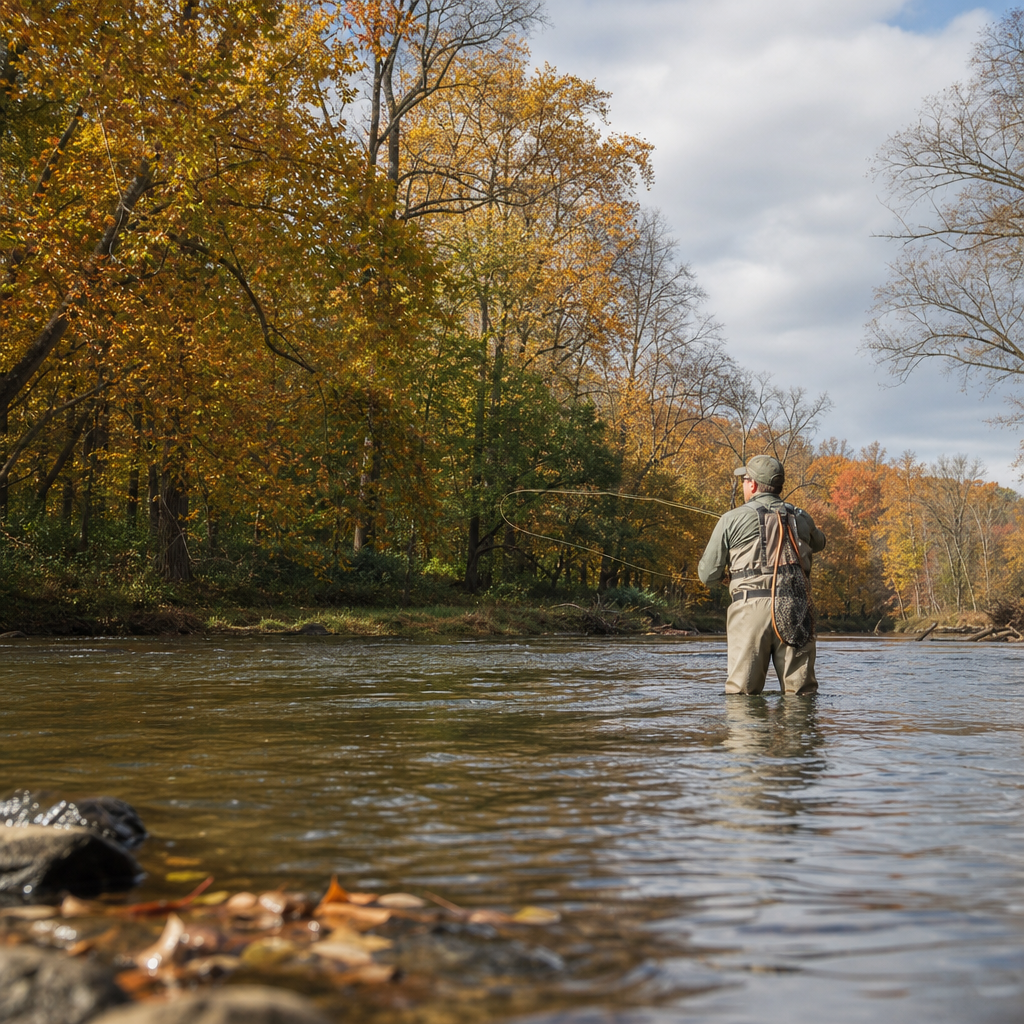
Fall fly fishing in lowland rivers rewards anglers who understand how dropping temperatures, shorter daylight, and changing river flows reshape trout behavior and insect activity. In practical terms, “lowland rivers” are lower-elevation systems with gentler gradients, broader channels, slower pools, softer transitions, and stronger seasonal influence from rain, agriculture, and temperature swings than mountain freestone streams. “Fall fly fishing” covers the period from late summer transition through pre-winter conditions, when fish feed with purpose, hatches narrow but become more predictable, and river conditions can change quickly after the first major cold fronts.
I have always considered autumn the most technical and the most generous season on these rivers. Technical, because fish see changing food forms, shifting flows, and fluctuating water clarity, so presentation matters. Generous, because trout and other game fish often feed with urgency before winter, especially where summer heat limited daytime activity. On many lowland rivers, fall also brings fewer recreational users, more comfortable wading, and windows of exceptional fishing during overcast afternoons, post-rain flow drops, and mild evenings with late insect emergence.
This matters because anglers often apply mountain-stream assumptions to lowland water and miss what autumn really offers. In lowland rivers, fish may slide from shallow summer lies into walking-speed seams near depth; baitfish become more important; leaf fall affects drifts; dissolved oxygen improves; and water levels may rise, then stabilize, creating fresh feeding lanes. A strong fall approach means matching the river’s seasonal food supply, reading softer structure, and adjusting tactics as fish shift between nymphing, dry-fly feeding, and streamer aggression. When you understand those patterns, fall becomes one of the highest-percentage periods of the entire fly-fishing year.
How fall changes fish behavior in lowland rivers
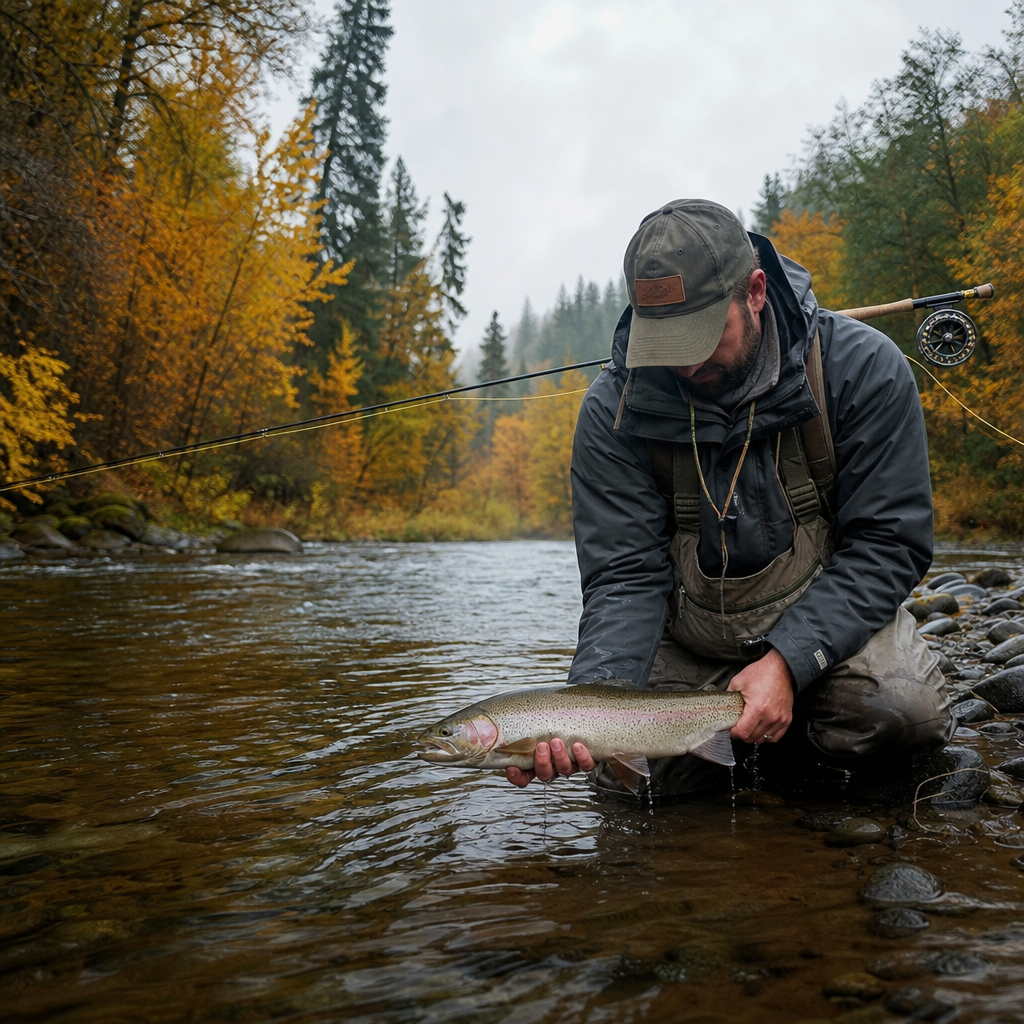
The most important fall shift is metabolic balance. Summer in lowland rivers often forces trout into survival behavior: feeding at dawn, after dark, or only where springs, tributaries, and shade keep water cool. As autumn progresses and water temperatures commonly move into the mid-50s Fahrenheit range, fish gain a broader feeding window. Brown trout, in particular, become more mobile and territorial ahead of spawning, while rainbows often capitalize on increased invertebrate drift and available eggs later in the season where spawning activity occurs legally and naturally.
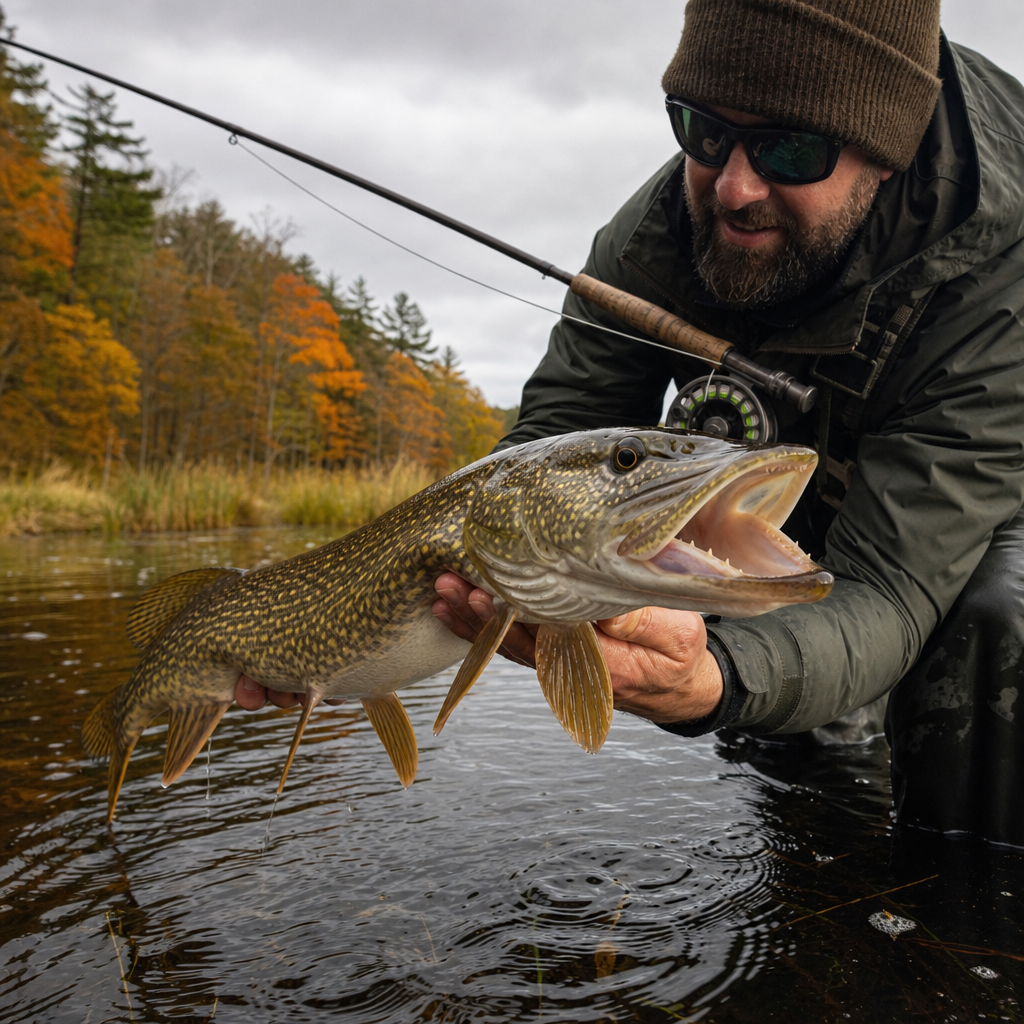
Current preference changes too. In low, warm late-summer water, fish commonly hold in oxygen-rich riffles and fast heads of runs. After fall rains and cooler water arrive, they often spread into classic lowland lies: inside seams, tailouts with depth nearby, slower slots beside weed beds, undercut banks, and the softer edges of deeper pools. These locations reduce energy use while keeping fish close to drifting nymphs, drowned terrestrials, and small baitfish. On rivers with pike, perch, chub, or sea-run fish, predatory interactions also increase, which is one reason streamer fishing can improve dramatically in autumn.
Visibility and security are part of the equation. Shorter days and lower sun angles help fish feel safer. Cloud cover can extend feeding periods by hours. At the same time, heavy leaf fall, sudden stain, and fluctuating discharge may make trout less willing to move far for small food items. That is why precise depth control with nymphs and more obvious silhouettes with streamers outperform generic “searching” drifts in many fall scenarios.
Reading seasonal water: where fish hold and why
If you want consistent results, stop thinking only in terms of spots and start thinking in terms of seasonal positions. In lowland rivers, productive fall water usually combines three elements: manageable current, nearby depth, and a conveyor belt of food. A broad run that looked featureless in July can become prime in October if a fresh push of water creates a defined inside seam over gravel, with slower water adjacent to a darker trough. Fish use these travel lanes because they can feed efficiently without fighting main current.
Undercut banks deserve special attention. Autumn bank erosion, fallen leaves, and increased worm and terrestrial wash-in make these edges natural feeding lines. I fish them methodically with short drifts, tight-line nymphs, or small streamers quartered downstream. Pool tailouts are another overlooked fall asset. Even when obvious surface rises are absent, tailouts collect drifting olives, caddis pupae, and spent insects, and trout station there where current narrows before the next riffle.
Confluences and temperature refuges matter throughout the season. A cool tributary entering a silty lowland main stem can create a distinct holding zone extending well below the junction. Likewise, a spring seep, shaded cutbank, or deeper outside bend may support fish through warm early fall weeks before the wider river fully cools. During or after rain, look for transition water instead of the heaviest flow: soft edges beside flooded grass, sheltered margins behind fallen timber, and side channels with enough clarity for fish to track flies.
Best flies and how to match fall food sources
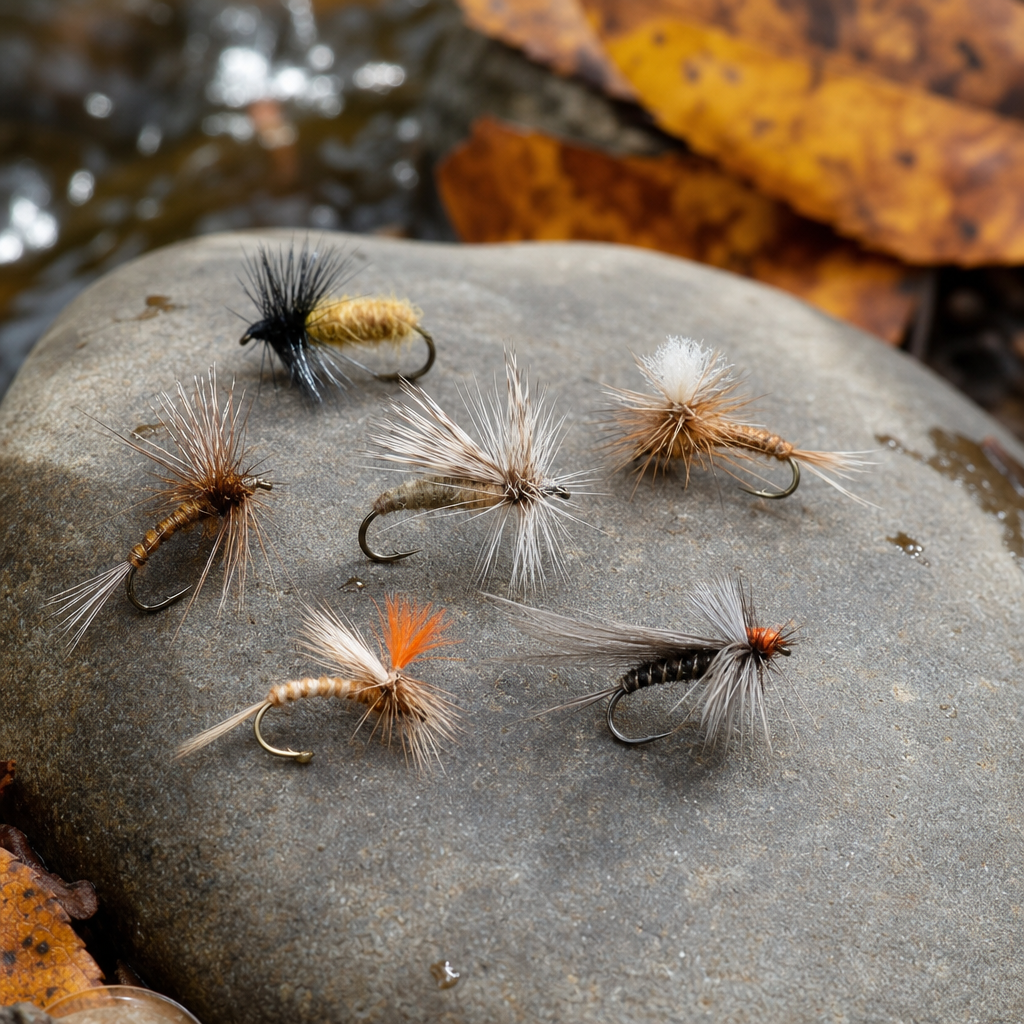
Fall fly selection in lowland rivers is narrower than many anglers think, but each category matters. Blue-winged olives, pale wateries in some systems, and caddis remain important hatch insects. Nymphs should cover mayfly swimmers, cased and free-living caddis, and general attractor patterns in sizes 14 through 20. Pheasant Tail, Hare’s Ear, Walt’s Worm, Perdigon variants, and small caddis pupa patterns consistently produce because they suggest common drift rather than one exact species. In stained water, a hotspot collar or tungsten bead often helps fish locate the fly without making it gaudy.
Terrestrials do not disappear overnight. Early fall can still favor beetles, ants, and small hoppers, especially on grassy, slow-banked reaches during warm afternoons. As leaf fall increases and flows rise, worms and larger food forms enter the picture. Squirm-style worm imitations, used sparingly and legally where permitted, can be highly effective after rain when natural annelids wash from banks. Egg patterns come into play where trout or salmonids are actively spawning and regulations allow targeting nearby fish responsibly; avoid casting to paired fish on redds and instead focus on downstream opportunists.
Streamers become central in autumn because lowland rivers often hold larger browns that shift toward piscivory. Black, olive, and white patterns in sizes 4 to 10 cover most needs. Zonkers, Woolly Buggers, Sculpzillas, and slim baitfish patterns all work, but profile and depth matter more than brand-name recipes. On clear days I lean smaller and more natural; in colored water I choose darker silhouettes, articulated movement, or a touch of flash. The goal is not random stripping. It is presenting a vulnerable baitfish across the fish’s lane at the right depth and speed.
Rigging and presentation that work in autumn
In my experience, fall success comes from choosing the simplest rig that solves the day’s problems. If fish are near the bottom and surface activity is limited, a two-fly nymph setup under a buoyant indicator remains the most efficient system on broad lowland runs. A heavier point fly anchors the drift, while a smaller dropper covers active feeders higher in the column. In shallower glides and pocketed margins, tight-line nymphing offers better contact, especially when leaves make long indicator drifts frustrating.
For dry-fly fishing, use longer leaders and protect drag-free drifts with reach casts or slack-line presentations. Lowland currents often look smooth but contain multiple micro-seams that pull a small olive pattern off line almost instantly. Greasing only the right section of leader and dropping tippet diameter when conditions are calm can turn refusals into takes. During spinner falls or delicate olive hatches, fish the rise form, not the loudest rise. Consistent sippers in softer water are usually easier to cover than slashy feeders chasing emergers in mixed currents.
Streamer presentation should match fish mood. In colder water, many anglers strip too fast. Start with controlled swings, short strips, and pauses near structure. Across-and-down presentations let the fly track naturally through a lie. When fish are aggressive after a rise in flow, a more animated retrieve can trigger reaction strikes, but only after you have established the holding depth. Weighted flies, sink-tip lines, and intermediate tips all have a place; the wrong depth is the main reason good streamer water appears unproductive.
| Condition | Best Water Type | Recommended Approach | Effective Fly Types |
|---|---|---|---|
| Warm early fall, clear water | Shaded riffles, tributary mouths, oxygenated runs | Light nymphing, terrestrials, careful dry-fly presentation | Beetles, ants, small PT nymphs, olives |
| Cool stable weather | Inside seams, tailouts, mid-depth runs | Indicator or tight-line nymphing | Perdigons, Hare’s Ear, caddis pupa, small worms |
| Overcast hatch day | Glides, soft pool tails, slick edges | Targeted dry-dropper or single dry | BWO dries, emergers, soft hackles |
| After rain with slight color | Soft edges, flooded margins, structure near depth | Short-line nymphing or streamers | Worms, larger nymphs, black buggers, olive baitfish |
| Late fall, colder water | Deeper pools, slower slots, bank cover | Slow deep nymphing, measured streamer swings | Heavy jig nymphs, eggs where legal, slim streamers |
Timing, weather, and water conditions
The best time of day in fall depends on where the river sits in the seasonal curve. In early fall, late morning through evening is usually strongest because water has had time to warm slightly and insect activity builds with light. By late fall, the warmest part of the day often produces best, especially after frosty nights. I watch water temperature closely. A simple stream thermometer gives more actionable information than guesswork, and even a two-degree change can transform activity.
Weather fronts are critical. Stable, mild overcast conditions are often ideal for lowland trout because they soften light and prolong feeding. The first day of a severe cold snap can be slow, but the second or third stable day after it can fish very well. Rain is not automatically bad. A moderate rise with improving clarity often triggers feeding because it dislodges food and gives fish cover. A river that is dropping and clearing after rain is one of autumn’s most reliable situations, provided flows remain safe and not excessively high.
Wind affects more than casting. It knocks leaves, beetles, and terrestrial debris into the water, and it can create excellent downstream banks where food accumulates. Bright sun, meanwhile, pushes fish toward shade, depth, and undercut banks, particularly on clear lowland systems with fine substrate. Learn to combine variables instead of treating them separately: cool water plus cloud plus a steady flow almost always expands fishable water and improves confidence feeding.
Gear, safety, and seasonal mistakes to avoid
A 9-foot 4- or 5-weight covers most lowland river fall fly fishing, with a 6-weight useful for larger streamers, windy reaches, or mixed-species water. Floating lines handle the majority of dry-fly and nymphing situations, while a spare spool with an intermediate or light sink tip broadens streamer options. Felt restrictions vary by region, so check local rules; modern rubber soles with studs often provide better all-around traction on mixed mud, gravel, and leaf-slick banks than many anglers expect.
Carry polarized glasses in amber or copper lenses for flat light, plus clear eye protection for windy afternoons when leaves and weighted flies become hazards. Autumn hypothermia risk is real because lowland rivers often invite anglers into deeper, slower water where a slip becomes consequential. A wading staff, layered clothing, and a dry bag for spare insulation are practical, not excessive. If rains have raised flows, study gauge data from sources such as the USGS or Environment Agency before leaving home, and cross-reference with local club reports.
The biggest mistakes I see are fishing too fast, ignoring water temperature, and standing too close to soft-edge fish. Another common error is overcommitting to one method. Fall rewards flexibility. Start with the evidence: rises, drift, clarity, temperature, and flow trend. Then choose the tactic with the highest percentage. If nymphs stop producing after cloud cover arrives and olives begin hatching, change immediately. If fish slash but miss a streamer, shorten the pattern before changing color. Deliberate adjustments beat constant random tinkering.
Fall fly fishing in lowland rivers is at its best when you treat the season as a progression rather than a single set of conditions. Early fall still carries summer’s temperature constraints and terrestrial opportunities. Mid-fall often delivers the richest balance of cool water, active trout, and dependable subsurface feeding. Late fall narrows the windows, but it also concentrates fish in predictable lies and rewards patient, depth-focused presentations. Across all phases, the same principle holds: fish where current, cover, and food intersect with the least energy cost.
The most effective strategy is simple to state and demanding to execute. Read the river for seasonal holding water, match the dominant food forms, control depth precisely, and let weather guide your timing. Use nymphs as the default search method, stay ready for olive and caddis windows, and bring streamers for larger fish and colored water. Watch tributaries, undercut banks, pool tails, and post-rain soft edges. Respect spawning fish, follow local regulations, and rely on river gauges and temperature data instead of assumptions.
If you want more consistent fall fly fishing, build your days around observation first and fly choice second. Keep notes on water temperature, flow trend, hatch timing, and productive lies on each lowland river you fish. Those records become the foundation for better decisions every autumn. Start with one river, one thermometer, and one focused plan, then refine it trip by trip. That disciplined approach will put more fish in the net and make this season the most rewarding part of your year.
Frequently Asked Questions
What makes fall fly fishing in lowland rivers different from fishing mountain streams?
Fall fly fishing in lowland rivers is shaped by a very different set of conditions than what anglers typically see in steeper mountain freestone streams. Lowland rivers generally have broader channels, gentler gradients, slower pools, softer seams, silty or mixed bottoms, and more gradual transitions between shallow and deep water. Because of that, trout in these systems often spread out differently, hold in less obvious structure, and respond more strongly to seasonal changes in water temperature, river height, and clarity. In fall, dropping temperatures can improve trout activity after the stress of summer, but these rivers are also heavily influenced by rain events, agricultural runoff, weed growth, leaf fall, and fluctuating flows.
Another key difference is how fish use current speed and oxygen-rich water. In lowland rivers, trout often look for moderate current, depth stability, and access to food rather than simply tucking behind boulders or pocket water. That means productive areas in fall may include tailouts, inside bends, slow riffle drop-offs, undercut banks, confluences, current edges near weed beds, and the softer water adjacent to deeper slots. Insect activity can also be more nuanced. Rather than explosive, highly visible hatches in turbulent water, anglers often deal with subtle emergences of midges, blue-winged olives, caddis, and occasional terrestrials lingering into early fall. Success usually comes from reading transitions carefully, adjusting to changing water color and flow, and presenting flies with more patience and precision than many anglers expect from a “slower” river.
Where should I look for trout in lowland rivers during the fall season?
In fall, trout in lowland rivers usually shift location as water temperatures cool, daylight shortens, and food availability changes. Early in the season, especially during the late-summer transition, fish may still favor oxygenated runs, riffle heads, shaded banks, and areas with dependable current. As conditions stabilize and cool further, trout often become more comfortable feeding in broader sections of river, including tailouts, walking-speed runs, deeper glides, and the soft edges of pools. These fish are often not randomly distributed; they tend to set up where they can conserve energy while intercepting drifting nymphs, emerging insects, dislodged baitfish, and seasonal food items washed in by rain.
Focus first on transitions. In lowland rivers, trout frequently hold where faster water merges into slower water, where shallow gravel shelves fall into darker troughs, or where weed beds create current breaks and feeding lanes. Undercut banks and outside bends can be especially valuable when flows are stable, while inside bends and soft gravel bars may produce during lower, clearer conditions. After rainfall, look for edges of colored water, softer seams near the bank, and places where the main flow pushes food toward sheltered holding water. If the river rises significantly, trout often move out of heavy current and into slower margins, side channels, back-eddies, or protected inside-water. If the river is low and clear, fish may slide into deeper slots and become more selective, especially during bright midday light.
It also pays to think about time of day. Cool mornings may push activity later, while afternoons often fish better as water temperatures rise slightly and insect activity improves. During overcast weather, trout may roam more freely across flats and softer runs, but under bright skies they typically become more structure-oriented. In practical terms, anglers who systematically cover likely holding water from shallow feeding shelves to adjacent depth tend to find more fish than those who only cast at the deepest pool in sight.
What fly patterns and techniques work best for fall trout in lowland rivers?
Fall trout in lowland rivers are usually best approached with versatility. A rigid one-method plan rarely performs as well as a thoughtful mix of nymphing, dry-dropper fishing, small streamer presentations, and occasional dry-fly work when insect activity is visible. Productive fly selections often include pheasant tails, hare’s ears, soft hackles, caddis pupae, midge larvae and pupae, blue-winged olive nymphs and emergers, and lightly weighted attractor nymphs in sizes that match the river’s food base. In lower, clearer water, smaller and more natural patterns often excel. In slightly stained or rising flows, heavier flies, darker silhouettes, and more noticeable profiles can help trout find the offering.
For dry-fly fishing, fall often rewards anglers who stay observant rather than blindly optimistic. Blue-winged olive patterns, caddis adults, midge clusters, and parachute-style dries can all be effective when fish are feeding near the surface. However, many lowland river trout in autumn take emergers or insects trapped in the film rather than fully formed adults. That is why a dry-dropper rig or a single emerger fished on a controlled dead drift can outperform a pure dry. Soft hackles are especially useful in this season because they imitate a broad range of ascending insects and can be dead-drifted, swung, or lifted at the end of the drift to trigger takes.
Streamers become more important as fall progresses, particularly when trout turn opportunistic ahead of winter and when larger fish begin responding to baitfish movement. Small to medium streamers in olive, black, white, and natural baitfish tones are often excellent choices in lowland rivers. Fish them on a controlled swing through soft edges, strip them across deeper glides, or quarter them downstream along undercut structure and current seams. The most effective retrieves are often slower and more deliberate than anglers expect, especially in cooler water. In many cases, the key is not simply fly choice but presentation depth, speed control, and the ability to keep the fly in the trout’s feeding lane long enough for a committed take.
How do changing water levels, rain, and temperature affect fall fly fishing success?
These factors are central to fall success in lowland rivers. Unlike some higher-elevation streams that can remain relatively stable for stretches of autumn, lowland systems often react quickly to rainfall, overnight cooling, irrigation changes, and runoff from surrounding land. A small change in river level can alter current speed, visibility, fish position, and feeding confidence. Falling temperatures generally improve conditions after summer by reducing thermal stress and increasing the amount of time trout are willing to feed, but sudden cold snaps can temporarily slow activity. Conversely, a modest warming trend after a chilly period can create an excellent bite window, especially in the afternoon.
Rain can be either a major advantage or a serious complication depending on timing and intensity. A light rise in flow often helps by adding color, loosening food, covering angler movement, and encouraging trout to feed more confidently in shallower or more open water. In these conditions, nymphs and streamers often shine, and anglers should target current edges, newly flooded margins, soft pockets beside stronger flow, and any place where food is funneled without overwhelming the fish. Heavy rain, however, can create too much turbidity, push debris downstream, and scatter trout into sheltered holding areas that are harder to identify and fish effectively.
Water temperature should guide both timing and tactics. In early fall, lowland trout may still avoid the warmest parts of sunny afternoons if summer heat lingers, but once the river cools into a stable range, midday through late afternoon often becomes highly productive. Colder mornings may fish slowly until light and temperature rise enough to stimulate insect activity. This is why successful anglers monitor trends rather than single readings. A river at the same temperature can fish very differently depending on whether it is warming, cooling, rising, or dropping in flow. Understanding those trends helps you decide whether to fish deeper with nymphs, move trout with streamers, or watch for subtle surface feeding when insects begin to appear.
What are the most common mistakes anglers make when fly fishing lowland rivers in the fall?
One of the biggest mistakes is treating lowland rivers like generic trout water and failing to adapt to their slower, more transitional character. Many anglers move too quickly, cast only to obvious deep holes, or ignore soft water near current seams because it looks less dramatic than classic mountain-stream structure. In fall, trout often feed in subtle lies that require careful observation: the lip of a tailout, the trough beside a weed bed, the sheltered edge under a cut bank, or the soft cushion where a riffle spills into a glide. Missing these holding zones can make a good river seem empty.
Another common error is using the wrong pace and depth in presentation. In cooler autumn water, trout are often willing to eat well, but they still expect the fly to behave naturally. Nymphs drifting too high in the column, streamers stripped too fast, or dries skated unnaturally across slow slicks all reduce success. Anglers also often fail to adjust leader length, weight, or indicator placement when moving between shallow runs and deeper glides. On lowland rivers, small changes in depth control can matter far more than changing flies repeatedly. If fish are present but not responding, the first correction should often be drift quality and depth rather than an immediate pattern swap.
A final mistake is ignoring conditions as they evolve through the day and season. Fall is dynamic. Morning may call for deep nymphing, while late afternoon might produce emerging insects and surface takes. A minor