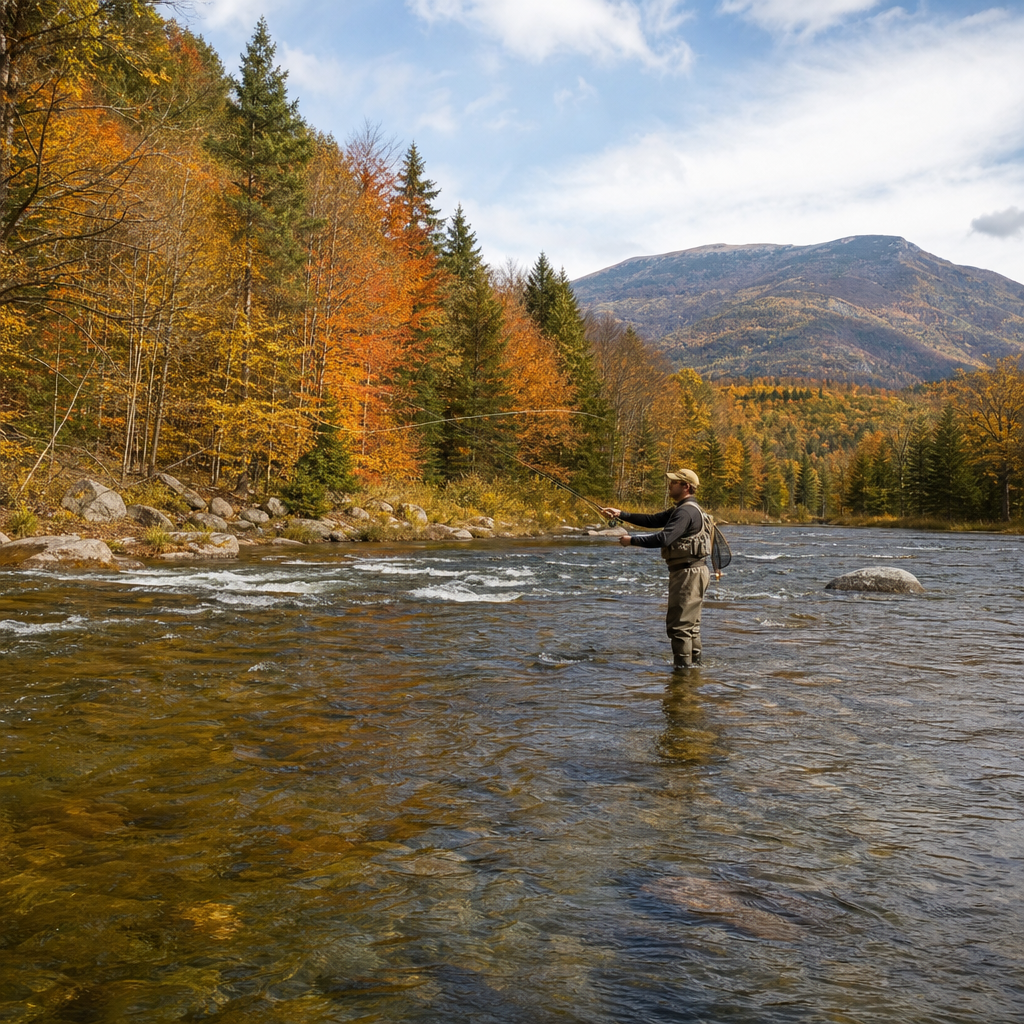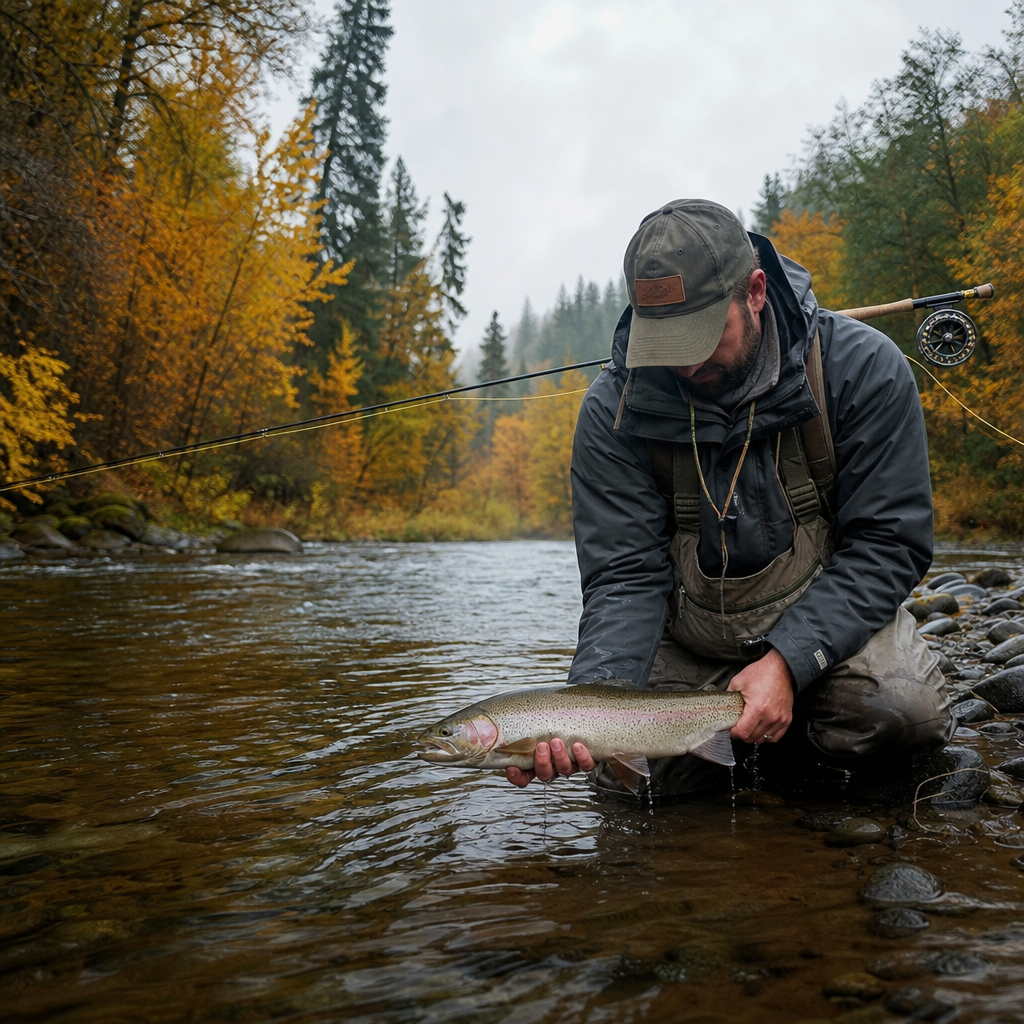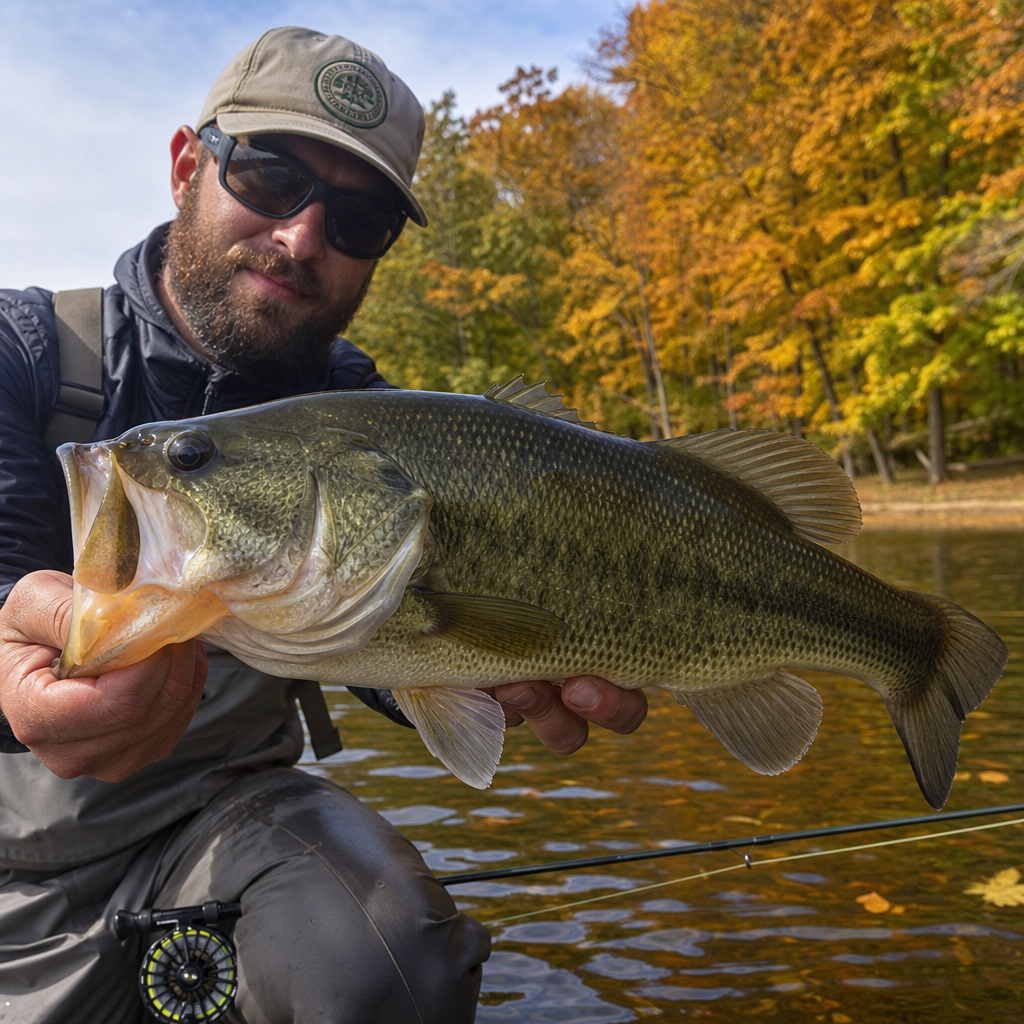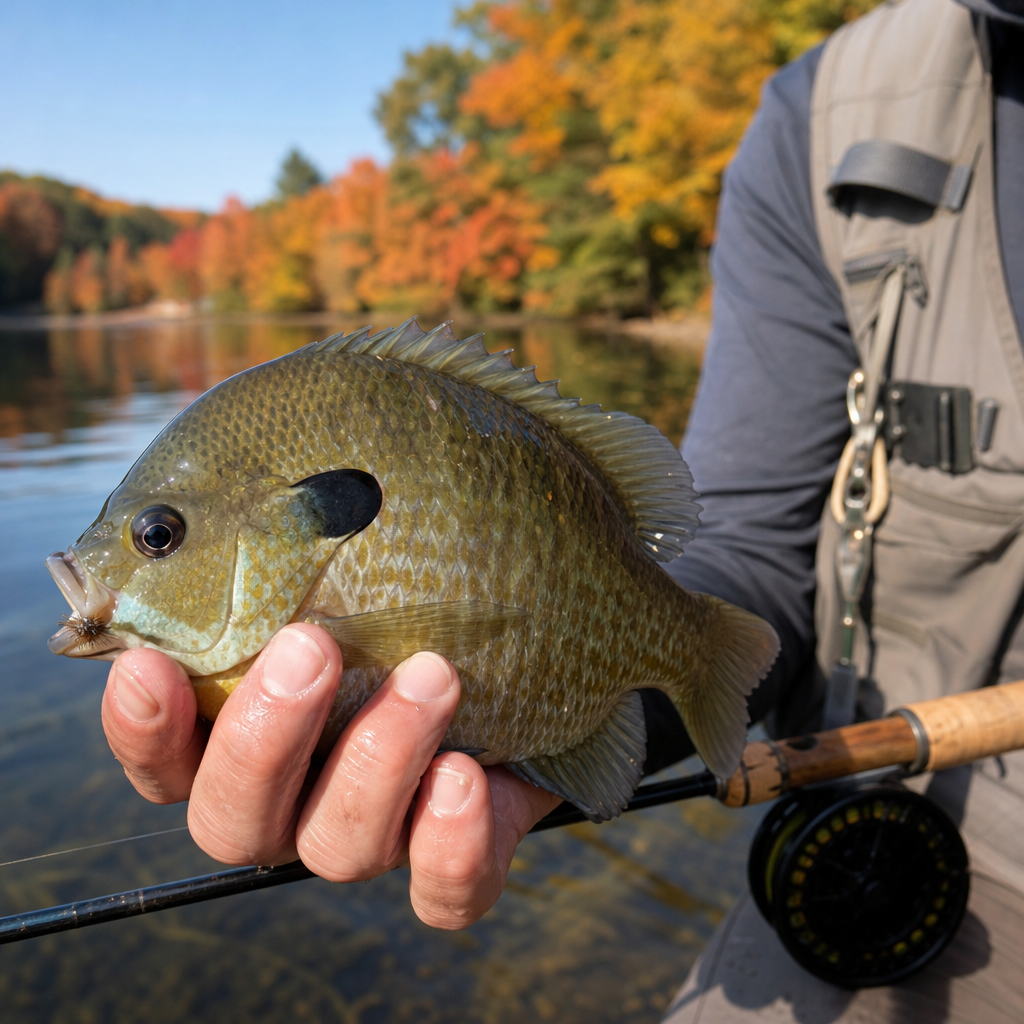
Fall fly fishing for panfish is one of the most reliable and overlooked seasonal opportunities in freshwater angling. As water cools, bluegill, crappie, perch, pumpkinseed, and other common panfish shift from scattered summer patterns into tighter feeding zones, and that change creates consistent action for anglers who understand location, presentation, and timing. In practical terms, fall fly fishing means using fly tackle to match the behavior of fish during the transition from late summer warmth to winter dormancy. Panfish are small compared with bass or trout, but they are abundant, responsive to flies, and ideal for learning seasonal strategy because their movements closely track temperature, light, forage, and weed decline.
I have found that autumn panfish fishing rewards methodical observation more than constant casting. On many lakes, the same shoreline pocket that feels dead at noon can produce fish after a slight breeze pushes plankton and bait into remaining green weeds. A shallow cove that held bedding fish months earlier may now be empty, while a drop from six to ten feet near standing cabbage can be loaded with bluegill. Understanding those changes matters because fall compresses feeding windows. Fish feed hard, but not everywhere and not all day. Anglers who know where panfish stage can catch numbers and better fish on flies from shore, kayak, canoe, pontoon, or skiff.
This hub article covers the core system for fall fly fishing across ponds, natural lakes, reservoirs, marinas, and slow river backwaters. It explains where panfish move as vegetation dies back, how weather and turnover affect behavior, which fly patterns produce consistently, and how to adjust retrieve, depth, and tackle. It also sets up related subtopics within the broader seasons and conditions category, including cold-front adjustments, low-light approaches, wind-driven positioning, and early versus late fall transitions. If you want a practical framework for finding and catching panfish on flies in autumn, start with water temperature, available cover, and the depth where food remains concentrated.
Why Fall Changes Panfish Behavior
Fall is productive because cooling water increases oxygen stability in many systems and pulls fish away from the dispersed, often frustrating patterns of midsummer. Bluegill and crappie do not simply become “deeper” in a generic sense. They reposition according to forage and cover. In early fall, panfish often hold around outside weed edges, boat docks, laydowns, and shaded banks, especially where healthy vegetation still supports insect life and minnows. As nights get colder and weed beds collapse, fish slide toward basin edges, channels, submerged timber, and man-made structure near access to deeper water.
Water temperature is the best starting indicator. In many northern and midwestern lakes, panfish remain active in the 60 to 68 degree range and feed aggressively before conditions settle into the low 50s and 40s. In southern waters, the same behaviors occur later and often less dramatically, but the pattern still holds: cooling water groups fish. Crappie commonly suspend over brush or along breaklines, while bluegill may relate tightly to remaining weeds, wood, or soft-bottom transition areas rich with invertebrates. Yellow perch often roam flats near deeper basins and can be intercepted with small streamers or nymphs.
Lake turnover also matters. During turnover, water mixes, visibility can drop, and panfish may scatter or become temporarily inconsistent. I have seen otherwise dependable crappie brush piles go quiet for several days during turnover, then reload once water stabilizes. In ponds and smaller lakes, this phase may be brief. In larger natural lakes and reservoirs, it can be more disruptive. If fishing slows suddenly despite good-looking habitat, unstable water conditions may be the reason.
Where to Find Panfish in Early and Late Fall
Early fall usually offers the broadest range of options. Focus first on remaining green weeds, especially cabbage, coontail, eelgrass, or pondweed with nearby depth. Green vegetation holds damselfly nymphs, scuds, immature baitfish, and zooplankton-rich food chains. Bluegill often stack on inside turns, points in weed lines, and pockets where wind pushes food. Crappie may use the same zones during low light, then drift off the edge to suspend. Around marinas, pontoon slips, and dock posts, shade plus retained heat can extend feeding windows.
Late fall narrows the map. Once shallow weeds brown out, panfish shift to winter-adjacent habitat. Think channel edges, brush piles in eight to fifteen feet, steep banks entering soft basins, bridge pilings, riprap corners, and standing timber. In clear lakes, fish may suspend several feet off bottom over much deeper water, especially crappie. In fertile ponds, bluegill can still hold surprisingly shallow on warm afternoons if dark bottom absorbs sun and bloodworms or midge larvae remain available.
| Fall phase | Best panfish locations | Fly approach |
|---|---|---|
| Early fall | Green weed edges, docks, shallow brush, windblown coves | Unweighted nymphs, small poppers, light streamers, slow strips |
| Mid fall | Outside weeds, drop-offs, marina basins, deeper wood | Balanced leeches, beadhead nymphs, intermediate line retrieves |
| Late fall | Brush piles, channels, basin edges, steep transitions, suspended schools | Count-down presentations, small baitfish flies, hover-and-twitch retrieves |
Shore anglers should prioritize places where deep water approaches casting range: public docks, culverts, dam faces, bridge edges, and points with quick drop-offs. Anglers in kayaks or canoes have a major advantage because they can hover over schools and present vertically or at controlled angles. Electronics help, but they are not mandatory. Polarized glasses, a thermometer, and careful counting down of sinking flies often reveal enough.
Best Fall Flies for Bluegill, Crappie, and Perch
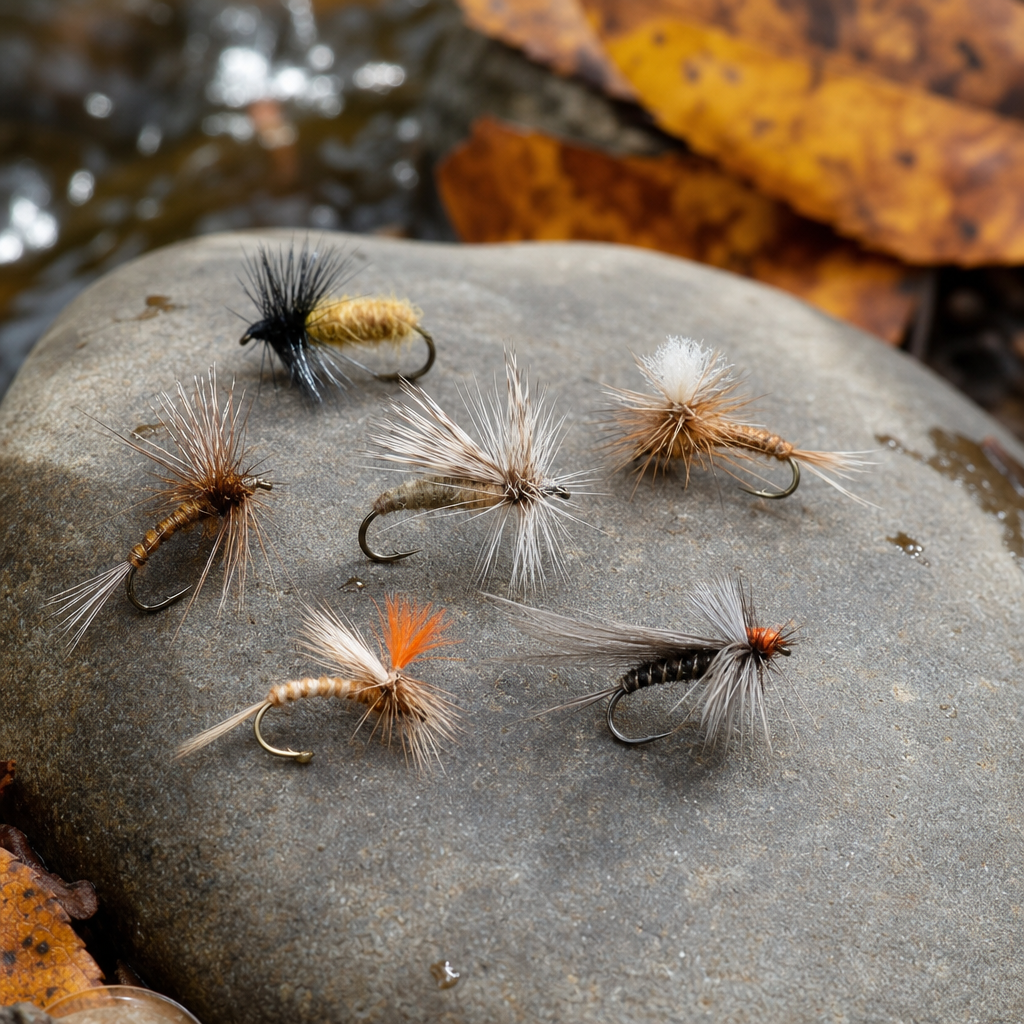
The best fall flies for panfish imitate three major food categories: aquatic insects, leeches, and small baitfish. For bluegill, I rely heavily on size 10 to 14 nymphs, small woolly buggers, pheasant tails, hare’s ears, damsel nymphs, midge larva patterns, and soft hackles. Black, olive, brown, and rusty orange are dependable colors because they match common invertebrates and show well in stained water. A beadhead helps in wind or deeper water, but too much weight can kill the slow, natural drop that often triggers takes.
For crappie, minnow patterns are especially important. Sparse marabou streamers, micro Clousers, small Deceivers, craft-fur baitfish, and lightly dressed jig-style flies in white, chartreuse, olive, gray, and black consistently produce. Crappie often eat on the pause, so flies that hover or pulse matter more than flies with excessive flash. When fish suspend, a balanced leech under a tight line or indicator can be deadly because it stays in the strike zone longer.
Yellow perch and pumpkinseed are less selective than many anglers assume, but they still respond best when profile matches prey size. Perch commonly hit small olive buggers, tan nymphs, chironomid patterns, and baitfish flies stripped just above bottom. Pumpkinseed often favor nymphs around weed remnants and wood. Foam spiders and tiny poppers can still work during warm spells, especially in early fall evenings, but topwater gradually loses efficiency as temperatures fall.
If you carry only a compact autumn panfish box, include beadhead pheasant tails, black woolly buggers in sizes 10 and 12, olive damsel nymphs, white marabou minnows, rust leeches, soft hackles, and midge larvae. Those patterns cover nearly every fall situation without unnecessary duplication.
Tackle, Lines, and Presentations That Work
A three- to five-weight fly rod handles most fall panfish situations. My default is a nine-foot four-weight because it protects light tippet, throws small indicators cleanly, and still turns over weighted nymphs or size 10 streamers. A five-weight is better in wind or around heavier cover. Reels matter less for drag than for balance and line management, though a smooth retrieve helps when crappie surge near the net.
Floating lines remain useful longer than many anglers think. With a long leader, split shot when needed, or an indicator rig, you can cover shallow weeds, dock edges, and moderate-depth brush. Intermediate lines become excellent in mid to late fall because they maintain direct contact and keep small streamers in the upper part of deeper water columns. Type III sink tips or full-sinking lines help when fish hold below ten feet, but they are not always ideal for panfish because small flies can drop beneath suspended schools if retrieval speed is misjudged.
Leader design should match presentation. For nymphing under an indicator, a nine-foot leader tapering to 4X or 5X is standard, with tippet adjusted so the fly rides slightly above fish depth. For streamers on an intermediate line, a shorter leader of five to seven feet improves control. Retrieve style is critical. Panfish in cold water rarely want a fast, continuous strip. Better options are short pulls, hand-twist retrieves, slow figure-eights, and long pauses. If fish are visible on sonar or under a dock, count the fly down, hold it nearly still, then add tiny twitches. That is often the difference between follows and eats.
Strike detection becomes subtle in autumn. Bluegill may simply stop the line. Crappie often inhale a fly and suspend in place, creating nothing more than slack or a slight tick. Keep contact without dragging the fly unnaturally, and set with a controlled lift rather than a violent trout-style hookset.
How Weather, Wind, and Light Affect the Bite
Stable weather usually produces the most predictable fall fly fishing. After two or three consistent days, panfish settle into repeatable locations and feeding windows. Sharp cold fronts can push fish tighter to cover or slightly deeper, reducing movement but not eliminating feeding. On those days, slower presentations and vertical access become more important than covering water. A warm afternoon following a frosty night can create a short but excellent bite on dark-bottom flats near deeper water.
Wind is often an advantage, not a problem. Light to moderate wind pushes plankton and bait toward one bank, activates weed edges, and breaks up surface light so fish feel less exposed. Some of my best bluegill afternoons in October have come from casting into the protected side of a windblown point where drifting food accumulated along still-green cabbage. The exception is heavy wind that muddies shallow water or makes boat control impossible.
Low light extends activity, especially for crappie. Dawn, dusk, overcast skies, and the first hour before full dark can pull fish shallower around docks, marinas, and brush. Bright, high-pressure afternoons often push crappie deeper, while bluegill may remain catchable if they are pinned to weed clumps or wood. Moon phase matters less than weather stability and forage concentration, though evening crappie fishing can improve around brighter lunar periods in clear reservoirs.
Common Mistakes and a Better Fall System
The biggest mistake in fall fly fishing for panfish is fishing where fish were in summer instead of where food and stable cover remain in autumn. Anglers also move flies too quickly, fish above the strike zone, or leave an area before determining depth. Another common error is relying only on surface activity. By October, many productive takes happen well below visible signs. If you are not counting down flies or probing structure methodically, you are guessing.
A better system is simple. Start by identifying one shallow feeding area, one transition zone, and one deeper holding area on each water body. Check water temperature. Look for green weeds, hard-to-soft bottom changes, shade, brush, and access to depth. Fish the upper part of the water column first with a nymph or small streamer, then adjust deeper in one-foot increments. Once you contact a school, slow down and repeat the exact depth, angle, and pause length that drew the strike. Panfish are often tightly grouped in fall, so precision matters more than variety.
Keep notes after every trip. Record temperature, weather trend, productive depth, cover type, and fly color. Within one season, patterns become obvious. That information will support your next step: apply this hub’s framework to your local waters, then build on it with targeted articles covering specific conditions, species, and rigging adjustments.
Fall fly fishing for panfish works because autumn concentrates fish and clarifies decision-making. Instead of searching endless summer water, you can focus on remaining weeds, transition edges, brush, marinas, channels, and other structures near depth. Match your flies to insects, leeches, or small baitfish. Use floating or intermediate lines to control depth deliberately. Retrieve slowly, pause often, and let fish tell you how high in the water column they want the fly. Weather stability, moderate wind, and low-light periods improve consistency, but careful depth control catches fish even on tougher days.
The main advantage of this season is repeatability. Once you understand how cooling water shifts bluegill, crappie, perch, and pumpkinseed, you can transfer that knowledge from ponds to reservoirs and from shorelines to open basin edges. Fall does not demand complicated gear. It rewards observation, precise presentations, and a willingness to fish slightly deeper and slower than instinct suggests. For anglers exploring the seasons and conditions category, this hub provides the foundation: location first, depth second, fly selection third, and retrieve refinement throughout.
Use this framework on your next autumn outing. Bring a thermometer, a small box of proven flies, and a plan for early, mid, and late fall water. Start with the best remaining cover, confirm depth carefully, and fish each likely zone with purpose. Panfish are available all season, and fall is when fly anglers can catch them most consistently.
Frequently Asked Questions
What makes fall such a productive season for fly fishing for panfish?
Fall is productive because cooling water changes how panfish behave. During summer, bluegill, crappie, perch, pumpkinseed, and similar species often spread out across weed beds, shallow flats, docks, and shoreline cover, which can make them harder to pattern consistently. As temperatures drop, those fish begin leaving random summer holding areas and concentrate around more dependable feeding zones such as remaining green weeds, drop-offs, brush, channels, basin edges, and transition areas between shallow and deeper water. For fly anglers, that concentration is a major advantage because it turns a lot of water into a smaller number of high-percentage locations.
Another reason fall fishing shines is that panfish are often feeding with purpose. They are taking advantage of baitfish, immature perch, aquatic insects, and other available forage before colder conditions reduce activity further. That means they are usually willing to chase a properly presented fly, especially during stable weather periods. In many lakes and ponds, this seasonal shift produces some of the most repeatable action of the year. Instead of searching endlessly for scattered fish, anglers can focus on structure, depth changes, and schools that tend to reload with fish. That combination of concentration and active feeding is exactly why fall is one of the most reliable yet overlooked windows for panfish on the fly.
Where should I look for panfish in the fall when fly fishing lakes, ponds, and small reservoirs?
In fall, the best starting point is to look for places where panfish can feed efficiently while staying close to security and depth. Remaining healthy weed edges are excellent because they continue to hold insects, minnows, and small invertebrates even after dying vegetation starts to lose value. Focus on the outside weed line first, especially where it meets a drop into deeper water. Bluegill and pumpkinseed often hold near that edge, while crappie may suspend slightly deeper nearby. Perch frequently roam transitions, especially around weed-to-sand or weed-to-mud edges.
Brush piles, fallen timber, dock posts near deeper water, creek channels, old pond depressions, and points that taper into basins are all strong fall locations. In small reservoirs, coves near channel swings and flats with access to deeper water can be especially productive. If wind pushes plankton and bait into one side of a lake, that bank or adjacent structure can become a feeding hotspot. In clear water, fish may set up deeper or hold farther off the edge, while in stained water they often remain shallower and tighter to cover.
One of the smartest approaches is to think in terms of zones rather than exact spots. Start shallow during warm afternoons, then work progressively deeper if bites slow. If you catch one fish from a particular depth or piece of cover, keep probing that level thoroughly because fall panfish are commonly grouped. When you find a school, the action can be fast and repeatable, so efficient location is often more important than constantly changing flies.
What fly patterns and tackle work best for fall panfish?
A simple, balanced setup covers most fall situations very well. A 3- to 5-weight fly rod is ideal for panfish because it casts small flies easily, protects light tippets, and still has enough control for fishing around weeds, brush, or docks. A floating line is the most versatile option and should be the first choice for many anglers, especially when fishing indicators, lightly weighted nymphs, small streamers, or unweighted soft-hackle patterns. If fish are consistently deeper, an intermediate line or a sink-tip can make presentations much more efficient, particularly for suspended crappie or perch along breaklines.
As for flies, fall panfish are usually best targeted with small streamers, nymphs, and bug-like patterns that imitate minnows, insect larvae, and general forage. Woolly Buggers, micro leeches, small Clouser-style minnows, marabou jigs, damsel nymphs, dragonfly nymphs, soft hackles, and beadhead nymphs are all proven options. Sizes in the 8 to 12 range are excellent all-around choices, though downsizing may help in clear water or after a cold front. Natural colors such as olive, black, brown, tan, and white are consistently productive, while chartreuse or combinations with flash can be excellent in stained water or low light.
Do not overlook subtle presentation details. Weighted flies are helpful for probing deeper fish, but too much weight can reduce a natural sink and make the retrieve less convincing. Many days, a lightly weighted marabou fly or a sparse nymph outperforms bulkier patterns because it hangs in the strike zone longer and moves more naturally with short strips or pauses. Leaders in the 7.5- to 9-foot range with 4X to 6X tippet are usually plenty. The goal is not complicated gear; it is having a setup that lets you control depth, maintain contact, and present small food items in a lifelike way.
What retrieve and presentation techniques are most effective for fall fly fishing for panfish?
Depth control is usually the most important part of the presentation. In fall, panfish are often feeding in a specific layer, and being just above or just below that zone can make the difference between steady action and no bites. Start by making a cast, allowing the fly to sink on a controlled count, and then retrieving with short strips, gentle hand twists, or a slow strip-pause rhythm. Many panfish, especially crappie and bluegill, respond best to a slower presentation in cooling water. The pause is often critical because that is when the fly drops, flutters, or suspends like vulnerable prey.
When fishing around weed edges or brush, cast beyond the target and bring the fly through the likely holding zone rather than landing directly on top of the fish. If using a nymph or bug pattern under a small indicator, adjust depth often until you find the level where fish are holding. This is especially effective when panfish are hovering just off bottom or suspending over structure. For small streamers, vary the cadence before changing the fly. A simple sequence such as two short strips and a pause, or one longer pull followed by slack, can trigger fish that ignore a steady retrieve.
Contact matters too. Strikes from fall panfish are not always aggressive. Sometimes the line merely tightens, stops early on the sink, or twitches during a pause. Because of that, staying attentive and keeping slack under control is essential. If fish follow but do not commit, reduce retrieve speed, shorten the strip length, or switch to a smaller fly with less flash. If you are catching fish but the action stops quickly, do not leave immediately. Schools often shift slightly in depth or position, so a longer sink count or a cast angle change can put you back in the bite.
What time of day and weather conditions are best for catching panfish on the fly in fall?
Stable conditions usually produce the most dependable fall panfish fishing. A warming trend, moderate cloud cover, light wind, and consistent barometric conditions often encourage fish to feed well. In many waters, the best action happens from late morning through afternoon, when the sun has had time to raise shallow or mid-depth temperatures slightly. That small increase can be enough to activate baitfish, insects, and panfish alike. Early morning can still be good, but in colder fall periods it is often slower until the day warms a bit.
Wind can help if it is not excessive. A light chop breaks up surface light, pushes food into banks and structure, and can position schools along productive edges. On the other hand, severe cold fronts often make fish less aggressive and more depth-oriented. After a front, it usually pays to slow down, fish deeper, and use smaller, more precise presentations. Clear, calm days may require longer leaders, finer tippets, and more subdued flies, especially on pressured lakes or ponds.
Timing also depends on the stage of fall. In early fall, panfish may still use shallow weeds extensively, especially during warm afternoons. In mid to late fall, they often slide toward deeper edges, basins, and suspended positions near structure. The key is to let conditions guide the approach. If the day is warming and bait is active, check shallower feeding zones first. If temperatures drop sharply overnight or the weather turns harsh, shift your focus to nearby depth and fish more methodically. Consistency in fall comes from matching the fish’s location and mood to the day’s conditions rather than assuming the same pattern will hold all season.