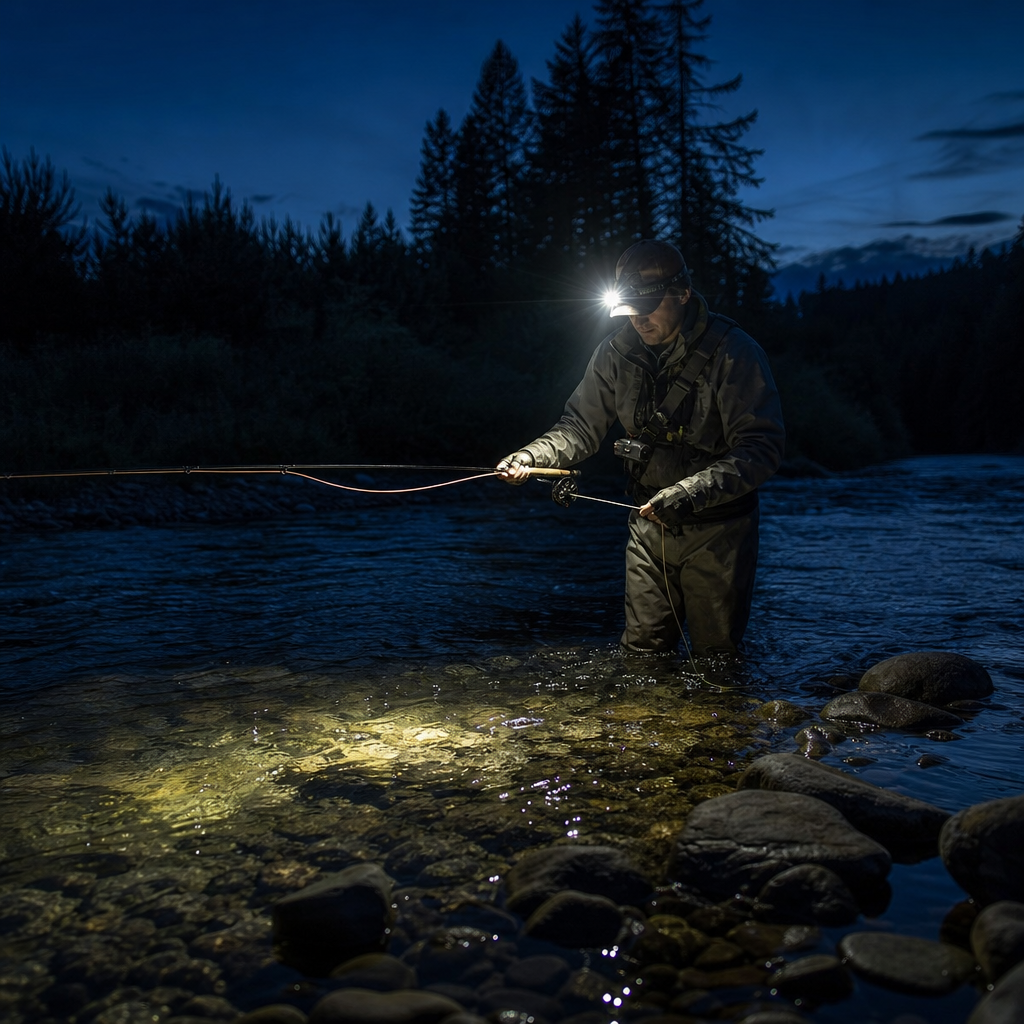
Night fly fishing succeeds or fails on light quality, beam control, and battery reliability, which is why choosing the best fly fishing lighting systems for night fishing matters as much as picking the right line, leader, or fly. In this technology-focused hub, “lighting systems” means the complete set of illumination tools an angler uses after dark: headlamps, chest lights, clip lights, lanterns, UV charge lights for glow materials, navigation lights for boats or kayaks, and the power accessories that keep them running. Good lighting improves knot tying, wading safety, fish handling, and legal compliance, while bad lighting ruins night vision, spooks fish, and creates avoidable risk around hooks, current, and slippery banks. After years of testing gear on trout rivers, stillwaters, and salt marsh edges, I have learned that the best setup is rarely the brightest one. It is the system that gives enough focused task light, enough wide flood for movement, and enough runtime to last a full session without forcing constant battery management. Modern options now use high-output LEDs, regulated drivers, USB-C charging, red and green preserve-vision modes, motion sensors, waterproof housings, and programmable beam profiles, so anglers have more choices than ever. This article reviews the core technologies, explains which features matter, compares common product categories, and shows how to build a dependable lighting kit for different night fishing scenarios.
What makes a fly fishing lighting system effective at night
An effective night fishing lighting system balances four factors: visibility, night vision preservation, durability, and power efficiency. Visibility sounds simple, but on the water it splits into separate jobs. You need close-range task lighting for threading tippet through a hook eye, medium-range flood for walking trails or organizing a boat deck, and occasional long-range spot output for scanning shoreline obstacles or reading current seams. A single beam pattern almost never handles all three jobs well. That is why experienced anglers usually carry at least one primary wearable light and one secondary backup light.
Night vision preservation is the factor most new anglers underestimate. White light, especially in cool color temperatures around 6000K to 6500K, rapidly constricts pupils and reduces the ability to see in low ambient light. Red modes help preserve dark adaptation for tasks like checking gear or moving between pools without turning the riverbank into daylight. Green light can improve map or tackle visibility for some anglers, but red remains the standard for preserving night vision. The practical rule is simple: use the lowest output needed, keep white light brief, and angle beams down rather than sweeping the water.
Durability matters because fly fishing environments punish electronics. Water resistance should be rated at least IPX4 for rain and splashes, while IPX7 or IP68 is better for wading and kayak use. I have seen inexpensive headlamps fail not because the LED burned out, but because charging ports corroded or battery doors loosened after repeated wet sessions. Housing material, switch design, and strap quality all affect long-term reliability more than headline lumen numbers.
Power efficiency determines whether a light remains useful through a full evening hatch or overnight outing. Regulated output is important here. Many budget lights advertise high lumen peaks but quickly step down as heat builds or battery voltage drops. A regulated light maintains usable brightness for a predictable period. For anglers, predictable runtime is more valuable than a short turbo mode. When evaluating lighting systems, prioritize beam options, waterproofing, and true runtime before maximum brightness claims.
Best lighting categories for night fishing and where each one fits
Most anglers should think in systems rather than single products. The primary categories are headlamps, clip-on or chest-mounted task lights, camp or boat area lights, UV lights, and safety/navigation lights. Headlamps are the foundation because they keep both hands free. For fly fishing, the best headlamps have a neutral or slightly warm white beam, a low-output red mode, easy single-button access, and enough articulation to aim the beam at your hands instead of the water. Models from Petzl, Black Diamond, Fenix, Nitecore, and Princeton Tec consistently perform well because their driver regulation, waterproofing, and strap designs are mature.
Clip-on or chest-mounted task lights solve a specific problem: headlamps create shadows when you tie knots close to your face. A chest light aimed upward or a brim clip light aimed downward often gives better contrast on small flies and tippet. I often pair a headlamp on low red mode for movement with a compact chest light for detailed rigging. This reduces the temptation to blast high white output every time a knot needs retying.
Area lights and lanterns belong in boats, bank camps, and staging areas, not in active casting positions. Diffused lantern light is ideal for changing reels, sorting fly boxes, and landing fish at a net station, but it should be dimmable and placed away from the water’s edge. Over-lighting the immediate fishing zone can flatten depth perception and attract insects aggressively. Goal Zero, BioLite, and Black Diamond make compact lanterns with sensible dimming and rechargeable options.
UV lights are niche but useful when fishing glow indicators, luminous soft materials, or charged strike markers in saltwater or stillwater applications. A UV flashlight with a focused beam can recharge glow components much faster than white light. Safety and navigation lights are mandatory on many boats, kayaks, and float tubes depending on local rules. These are not optional fishing accessories; they are legal and collision-avoidance equipment.
| Lighting type | Best use | Key features | Main limitation |
|---|---|---|---|
| Headlamp | Walking, wading, general hands-free use | Red mode, tilt angle, regulated runtime, IPX7+ | Can create glare and spook fish if overused |
| Chest or clip light | Knot tying, fly changes, close task work | Focused beam, low output, compact form | Less useful for navigation |
| Lantern or area light | Boat deck, bank camp, gear staging | Diffuse light, dimming, long runtime | Too bulky for active casting |
| UV flashlight | Charging glow materials | Focused UV beam, simple switch | Specialized, not general illumination |
| Navigation/safety light | Boat and kayak visibility | Legal compliance, 360-degree visibility | Does not replace task lighting |
Technical features that separate the best systems from marketing hype
The most misunderstood specification in lighting reviews is lumens. Lumens measure total light output, not how useful that light is for fishing. A 1200-lumen headlamp with a harsh hotspot and poor runtime can be less practical than a 350-lumen model with excellent beam shaping and regulation. Candela, beam angle, and optical design matter more in real use. Higher candela produces throw for spotting distant objects, while a wide beam angle helps with knot tying and foot placement. For fly fishing, a mixed beam or multiple modes is usually ideal.
Color temperature also affects performance. Cool white beams look impressive in store demos, but neutral white around 4000K to 5000K often renders gear, knots, and natural terrain with better contrast. It is easier to distinguish tan line from pale leader material, or wet rock from moving water, under a neutral beam. High color rendering is a bonus, though few fishing lights advertise CRI clearly.
Battery chemistry changes the ownership experience. Rechargeable lithium-ion cells such as 18650, 21700, or integrated Li-poly packs deliver strong output and lower long-term cost if you fish often. Replaceable AAA lights still have value for travel and emergency backup because alkaline or lithium disposables are easy to source. In cold weather, primary lithium batteries outperform alkaline cells significantly. If you fish winter steelhead or tailwaters at night, that difference is not theoretical.
Charging standard matters more than many reviews admit. USB-C is now the practical baseline because it simplifies field charging from power banks, vehicles, and solar packs. Magnetic charging systems can be convenient, but proprietary cables become a liability on multi-day trips. I also look closely at lockout modes to prevent accidental activation in packs, glove-friendly controls, and memory functions that return the light to a preferred low setting instead of blasting max output at eye level.
Finally, waterproofing claims deserve scrutiny. IPX4 survives rain. IPX7 survives temporary immersion. IP68 generally indicates better sealed designs, though implementation varies by manufacturer. For wade anglers, accidental dunking is routine, not exceptional. Buy lights as if they will be submerged, because eventually they will.
Best setups by fishing scenario: rivers, lakes, saltwater, and boats
The best fly fishing lighting systems for night fishing depend on where and how you fish. On small to medium rivers, stealth and footing are the priorities. A lightweight headlamp with a reliable red mode, plus a backup micro light in a wader pocket, is usually enough. I prefer around 1 to 5 lumens in red for moving between spots and 100 to 300 lumens of neutral white only when checking current edges, landing fish, or dealing with tangles. Chest lights are especially useful on rivers because they illuminate knots without reflecting as directly off the water.
Stillwater and reservoir anglers often benefit from slightly broader lighting coverage. When fishing from a float tube, pontoon, or bank with more gear spread out, a diffused area light clipped behind the angler can help with organization. The key is placement. Keep area lighting behind your line of sight so it lights gear, not the water. A compact lantern on very low output works well at a staging point, while the wearable light remains the active tool.
Saltwater night fly fishing adds corrosion, wind, and navigation complexity. Here, marine-rated waterproofing and secure charging covers are essential. White beam reflection off wet stripping baskets, skiffs, and tidal flats can be intense, so lower modes and warmer beams become even more valuable. For dock lights, bridge shadows, and back-bay fishing, a headlamp with instant access to low red and medium white settings is more practical than one that cycles through multiple flashy modes. Backup lights are mandatory because exposure to salt accelerates failures.
Boat and kayak anglers need task lighting plus legal visibility. A 360-degree stern light, bow lights where required, and a separate hands-free fishing light should be treated as distinct systems. Do not rely on your headlamp for collision avoidance. In guided boat setups I have used, the cleanest arrangement is fixed navigation lighting, one dim deck light near the rower’s station, and personal wearable lights for each angler. That keeps beams controlled and prevents one person’s head movement from blinding everyone else.
How to build a dependable night fishing kit and avoid common mistakes
A dependable kit starts with redundancy. Carry one primary headlamp, one backup micro light, and one independent power source such as a charged power bank or spare battery. Electronics fail, get dropped, or activate accidentally in packs. The backup does not need to be expensive; it needs to be accessible with cold hands in the dark. I keep mine in the same pocket every trip.
The next step is configuring output levels before you leave home. Learn the interface. If your light requires five clicks and a hold to reach red mode, you will fumble it streamside. The best systems are the ones you can operate without thinking. Test every mode, lockout, and charging function before a trip. Also inspect O-rings, charging port covers, and strap tension regularly.
The most common mistake I see is buying on lumen numbers alone. The second most common is using bright white light continuously. Fish may tolerate brief light in some conditions, especially around urban water or lit docks, but repeated beam sweeps across shallow lies reduce stealth and often ruin your own ability to see subtle movement. Another mistake is ignoring mounting stability. A bouncing headlamp or swiveling clip light becomes irritating fast and leads anglers to stop using the tool correctly.
Finally, think of lighting as part of your full night safety system. Pair it with a wading staff, reflective markers on key gear, and a phone or satellite communicator in a waterproof pouch. Good lighting does not remove risk; it helps you manage it intelligently. If you are building out this hub further, review detailed headlamp tests, rechargeable battery guides, and boat safety light articles next, then compare your current kit against the conditions you actually fish most often.
The best fly fishing lighting systems for night fishing are not defined by raw brightness, but by smart beam control, preserved night vision, waterproof durability, and dependable runtime. For most anglers, the winning formula is a quality headlamp with low red and medium white modes, a small backup task light, and scenario-specific extras such as a dim lantern, UV charger, or marine navigation light. Technology reviews can be misleading when they focus on marketing peaks instead of real streamside performance, so judge lights by regulation, interface simplicity, battery flexibility, and proven weather sealing. Match the system to the water: stealth-first on rivers, broader organization on lakes, corrosion resistance in salt, and separate legal lighting on boats. If you build your kit around those principles, you will move more safely, tie better knots, preserve your vision, and fish more effectively after dark. Use this hub as your starting point, then audit your current setup and upgrade the weakest link before your next night session.
Frequently Asked Questions
What should I look for in the best fly fishing lighting systems for night fishing?
The best fly fishing lighting systems for night fishing are not just about brightness. A good setup balances beam control, color options, runtime, comfort, weather resistance, and task-specific usability. For fly anglers, the most important feature is usually a headlamp with both flood and spot modes. Flood beams are better for tying knots, changing flies, checking a landing net, or organizing gear, while spot beams help scan a bank, identify current seams, or safely navigate a trail or shoreline. Adjustable brightness is equally important because you rarely need maximum output for close work, and lower settings preserve both your night vision and your battery life.
Color mode matters more than many anglers expect. Red light is widely preferred because it reduces glare, is less harsh on the eyes, and helps preserve natural night vision. Green can also be useful in some situations, but red remains the most practical option for close-range tasks around the water. Some anglers also carry a small UV light for charging glow indicators, fly materials, or luminous markers. In a complete lighting system, that UV option is a specialty tool rather than a primary light source.
Battery reliability is another major factor. Rechargeable systems are convenient and cost-effective over time, but they work best when paired with a power bank or backup light. Disposable-battery models can still be a smart choice for remote trips because replacement batteries are easy to carry and swap. Look for realistic runtime figures at medium and low settings, not just high-output claims on the packaging. A light that lasts all night at a practical working level is far more useful than one that produces an impressive beam for only a short period.
Finally, durability and fit should not be overlooked. Water resistance is essential around rivers, surf, and boats, and a secure headband or mounting system matters when casting, hiking, or handling fish. The best overall system usually includes a primary headlamp, a backup clip light or compact handheld, a broader area light such as a lantern for camp or rigging, and any specialized accessories needed for glow charging, navigation, or recharging devices in the field.
Is a headlamp enough for night fly fishing, or do I need a complete lighting system?
A headlamp is the foundation of most night fly fishing setups, but it is rarely the only light an angler should rely on. For short sessions close to home, a high-quality headlamp may be enough, especially if it offers red light, adjustable brightness, and dependable runtime. However, as conditions become more complex, a complete lighting system becomes much more practical and much safer. Night fishing often involves changing flies in wind, wading uneven bottoms, moving between access points, managing a landing net, and packing gear in the dark. One light source can handle some of those jobs, but not always all of them efficiently.
A complete system usually adds a secondary task light, an area light, and backup power or backup illumination. A chest light or clip light can reduce shadows created by a headlamp when tying knots or working close to your body. A lantern or soft area light is useful at camp, at the tailgate, or beside a kayak when rigging rods and sorting fly boxes. If you fish from a boat, kayak, or float tube, legal navigation lights may be required and should be treated as essential safety equipment rather than optional accessories.
There is also the issue of redundancy. If your only headlamp fails, gets soaked, slips off, or runs out of power, even a simple walk back to the truck can become difficult. Carrying a compact backup light is one of the smartest habits in night fishing. It does not need to be large or expensive, but it should be easy to access and reliable. In practice, the best night fly fishing setups are layered: one primary light for active use, one secondary light for close tasks or emergencies, and one broader light source for general support. That approach gives you more control, less frustration, and a much safer experience after dark.
How bright should a fly fishing light be for night fishing?
Brighter is not always better. For night fly fishing, the ideal brightness depends on the task, not on chasing the highest lumen rating. Many anglers assume they need an extremely powerful headlamp, but very high output can create harsh glare off water, reflective gear, fly lines, and even your own hands. It can also ruin your night vision and make everything seem darker once the beam is turned down or off. In real fishing situations, moderate, adjustable brightness is much more useful than a single overpowering setting.
For close-up work such as tying knots, changing tippet, opening fly boxes, or removing hooks, a low to medium flood beam is usually the most effective choice. It illuminates your hands and gear evenly without creating intense hotspots. For walking a trail, scanning a riverbank, or identifying obstructions, a stronger spot beam becomes more useful. What matters most is that the light allows you to switch between these modes easily and smoothly. A broad output range lets you use only as much light as needed, which improves comfort and extends battery life.
In practical terms, many anglers do most of their work on lower settings and save the highest mode for brief navigation or emergency use. Red-light mode often feels dimmer on paper, but it can be extremely effective for preserving night vision during repetitive tasks. If you fish open water from a boat or kayak, you may want additional higher-output lighting for specific navigation or deck tasks, but those lights should be controlled carefully to avoid blinding yourself or others.
The best answer is to choose a lighting system with multiple usable brightness levels, not just a high maximum output. A light with good beam quality, smooth adjustment, and practical low settings will outperform a flashy high-lumen model in most real-world fly fishing scenarios. Beam control, runtime, and comfort matter just as much as raw brightness.
Are rechargeable lights better than battery-powered lights for night fly fishing?
Rechargeable lights are often the best choice for anglers who fish at night regularly because they are convenient, economical over time, and commonly offer strong performance with modern lithium-ion batteries. They are especially appealing for anglers who fish multiple evenings a week, keep gear organized at home, and can top off batteries before each trip. Many premium headlamps and chest lights now use rechargeable battery packs that provide stable output, USB charging, and compatibility with power banks, making them a strong fit for a complete night fishing lighting system.
That said, replaceable-battery lights still have real advantages. In remote areas, on multi-day trips, or during cold-weather sessions where charging options are limited, being able to swap in fresh batteries can be more reliable than waiting to recharge a pack. Some anglers prefer carrying spare AAA or AA batteries because they are easy to pack, widely available, and simple to replace in the field. Hybrid systems, which can use either a rechargeable pack or disposable batteries, offer excellent flexibility and are often ideal for anglers who fish in varied conditions.
The best option depends on how and where you fish. If your sessions are relatively short and you have consistent access to charging, rechargeable models are hard to beat. If you fish long nights, travel often, or spend time in places where power access is uncertain, backup batteries or a secondary light become much more important. Cold weather is another factor to consider, since all batteries can be affected by low temperatures, though some systems handle the cold better than others. Keeping spare power close to your body can help maintain performance.
Ultimately, reliability matters more than battery type alone. A rechargeable headlamp with a fully charged spare battery or power bank may be more dependable than a disposable-battery light with no backup, and the reverse can also be true. The smartest approach is to build redundancy into your lighting system so that one power failure does not end the trip or create a safety problem.
What other lights and accessories are important besides the main headlamp?
Once you have a dependable main headlamp, the next most useful additions are a secondary task light, an area light, backup power, and any specialized lighting tools that fit your style of fishing. A small clip light or chest light is valuable because it changes the angle of illumination. That can reduce the shadows that headlamps often create during knot tying, fly changes, and fish handling. Many anglers find that a secondary light aimed lower on the body improves close-up visibility without requiring them to tilt their head into awkward positions.
An area light or compact lantern is another smart addition, especially if you rig gear at the vehicle, fish from a boat, or stay out long enough to reorganize equipment in the dark. Soft, diffused light is often more pleasant and more functional for general tasks than the narrow beam of a headlamp. It is also useful around camp or at a launch site where multiple people may need shared light without being blinded by direct beams.
Specialized tools can matter as well. UV charge lights are helpful for glow materials, strike indicators, or luminous markers, but they are support tools rather than general illumination. For kayak and boat anglers, navigation lights are critical and may be legally required, depending on local regulations and the type of watercraft. These should be chosen for visibility, runtime, mounting security, and compliance, not just convenience. Reflective markers, illuminated pack tabs, and small waterproof emergency lights can