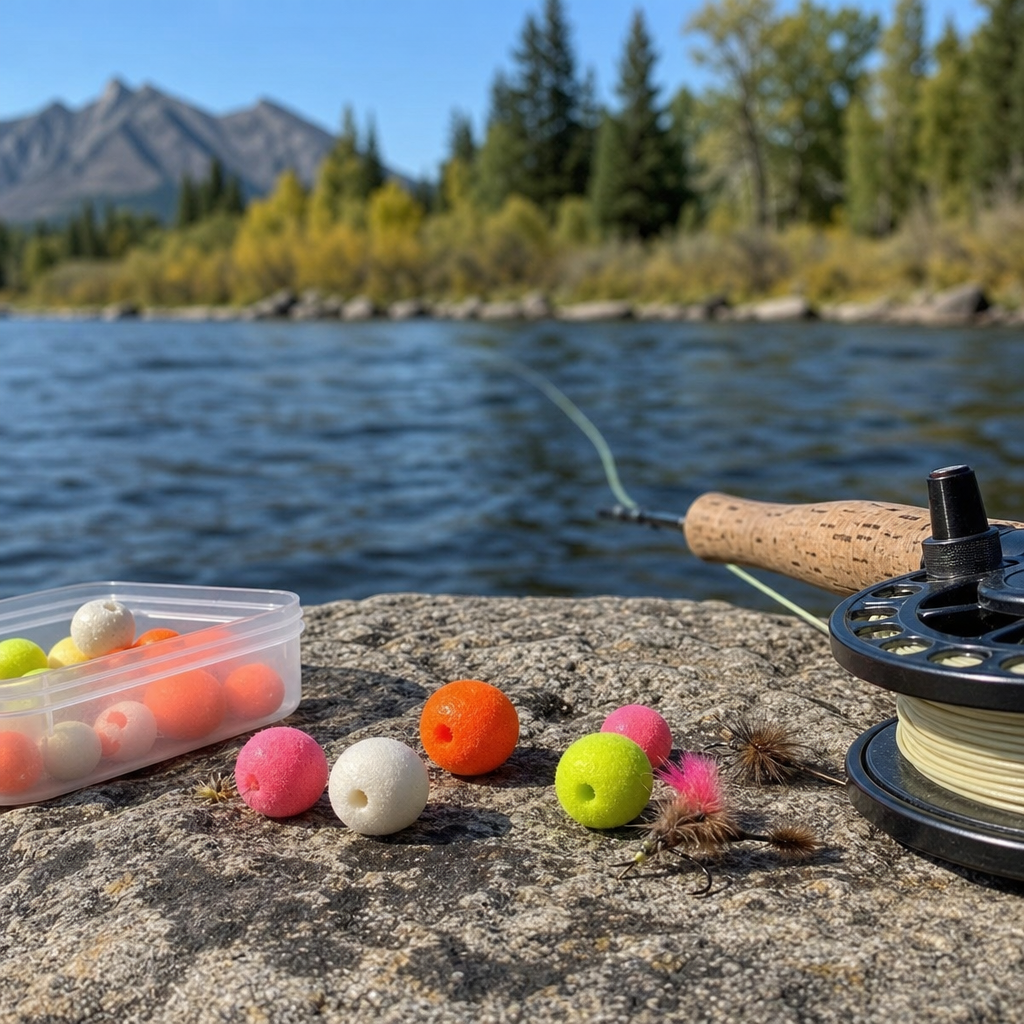
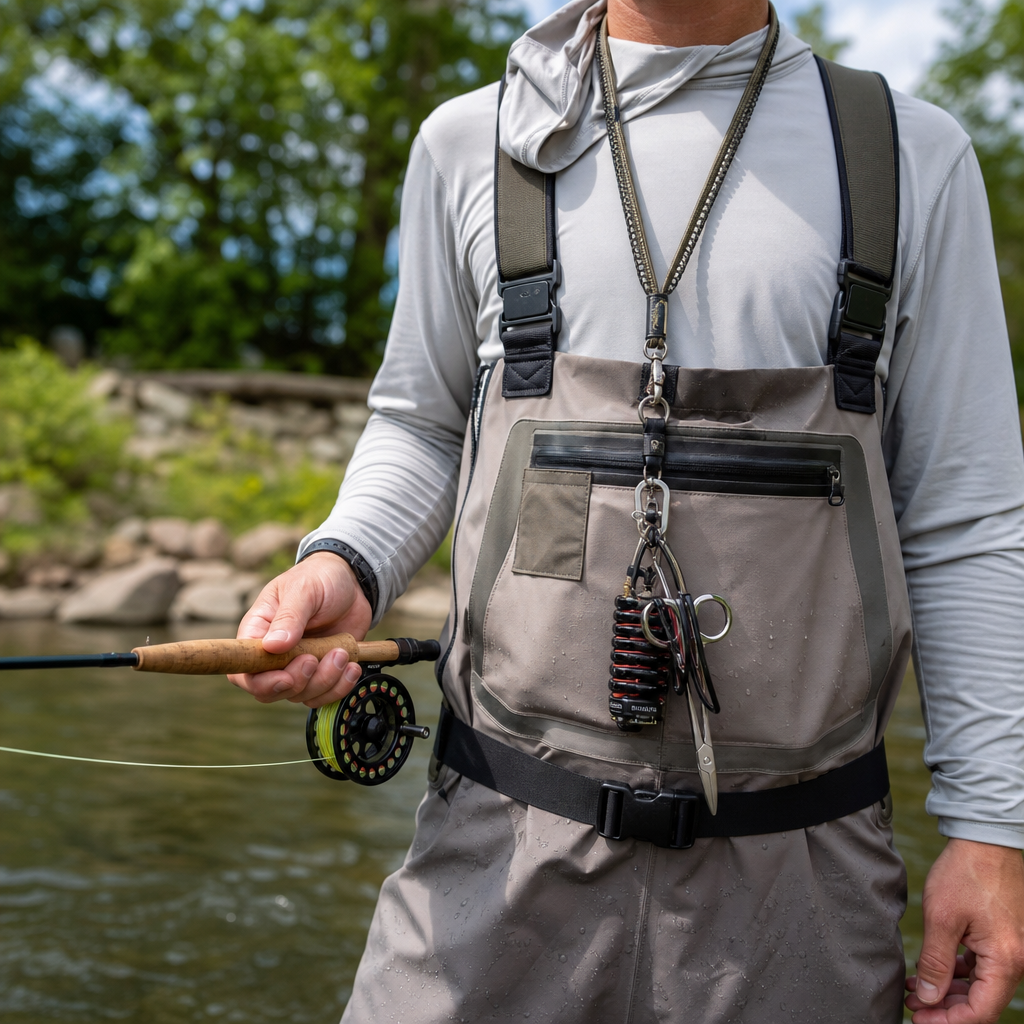
Choosing the best fly fishing gear for canoes starts with understanding a simple reality: every piece of equipment must earn its place. In a canoe, space is limited, weight distribution matters, and loose gear can quickly become a safety problem when wind, current, or an unexpected fish changes the day. After years of rigging canoes for stillwater trout, smallmouth rivers, and backcountry lakes, I have learned that canoe fly fishing is not just standard fly fishing from a different seat. It is its own system, combining casting efficiency, boat control, storage discipline, and waterproof reliability.
Fly fishing gear for canoes includes the rod, reel, line, leader system, tackle storage, anchors, electronics, PFD, packs, and boat rigging accessories that make fishing from a paddle craft practical. The best setup balances three goals: it must cast well while seated or kneeling, stay organized in a narrow hull, and tolerate water exposure without constant fuss. That matters because canoes open water that shore anglers cannot reach, yet they also demand restraint. Overpacking ruins tracking, slows access, and creates tangles. The right equipment improves both catch rate and safety.
This hub article covers equipment reviews and recommendations for anglers who want a complete canoe fly fishing system, not a random shopping list. It explains what to prioritize, where premium gear is worth paying for, and where simpler options outperform expensive ones. If you are building your first canoe kit or upgrading an older setup, the sections below will help you choose gear that works together on lakes, ponds, and moving water.
How to Choose a Canoe Fly Fishing Setup
The best canoe fly fishing setup is compact, stable, and quick to deploy. Start with your fishing environment. On small lakes and sheltered ponds, a 9-foot 5-weight remains the most versatile rod because it handles dry flies, nymphs, and small streamers without overpowering the canoe. For bass bugs, larger streamers, or windy open water, a 6-weight or 7-weight gives better turnover. I generally recommend moderate-fast to fast action rods for canoe use because they load efficiently with shorter lengths of fly line outside the tip, which happens often when seated and making controlled casts around banks, reeds, or structure.
Reels matter less for pure drag performance in trout situations than for durability and corrosion resistance, but they still need a smooth startup and a rigid frame. Lamson Liquid, Redington Behemoth, and Orvis Hydros are common choices because they offer dependable disc drag and spool changes without boutique pricing. Match the reel to a weight-forward floating line from brands with proven coatings such as Scientific Anglers, Rio, or Airflo. In canoes, highly visible lines help line management because you can see where coils are landing before they tangle around packs, paddles, or seat hardware.
Keep your leader system simple. For trout, a standard 9-foot 4X or 5X leader with tippet spools covers most situations. For bass and pike, step up to stronger monofilament or fluorocarbon and add bite protection when needed. I avoid carrying too many specialized leaders in a canoe because small accessories disappear fast. A tight gear matrix beats a large one. The rule is straightforward: bring fewer items, but choose items that solve multiple problems well.
Best Rods, Reels, and Lines for Canoe Fly Fishing
The best fly rod for canoe fishing is usually a 9-foot 5-weight for trout-focused general use or a 9-foot 6-weight for mixed trout and bass. Models like the Orvis Clearwater, Echo Trout X, TFO LK Legacy, and Redington Vice consistently perform well in this category. They are not just popular; they fit canoe fishing because they offer strong recovery, practical warranties, and enough power to pick up line quickly without the angler needing a full standing backcast. If you mainly fish brushy shorelines from a seated position, avoid overly stiff rods that demand perfect timing at longer carry distances.
For reels, prioritize reliability over prestige. A sealed drag is useful if your canoe trips include sand, rain, or frequent beach landings. The Ross Animas, Lamson Remix, and Nautilus X-Series are excellent upgrades if you fish hard and expect reels to be splashed repeatedly. On the line side, a half-size-heavy weight-forward taper can be an advantage in canoes because it loads modern fast rods at shorter distance. Scientific Anglers MPX, Rio Gold XP, and Airflo Superflo Universal Taper all fit that need. For streamer fishing in deeper lakes, carry one spare spool with an intermediate line rather than a second rod whenever space is tight.
One mistake I see often in equipment reviews is treating premium rods as automatic upgrades. In a canoe, a mid-priced rod with durable components may be a better choice than a lighter, faster flagship model that feels twitchy while seated. Sensitivity and swing weight matter, but not as much as line control, durability, and casting forgiveness in real boat conditions.
Canoe Storage, Organization, and Waterproof Protection
Storage is where good canoe fly fishing gear becomes great. The best storage system protects flies, tools, layers, and electronics while keeping the hull uncluttered. For most anglers, that means one waterproof duffel or backpack, one small working tackle bag, and a fixed place for net, paddle, and spare rod. Yeti Panga, Simms Dry Creek, NRS Bill’s Bag, and Watershed bags are all proven options because they can handle spray, rain, and a wet floor without soaking spare clothing or fly boxes.
Use clear categories. Flies and terminal items should live in a chest pack, sling, or hip pack that stays on your body. Safety items should be accessible without digging. Bulk gear such as rainwear, lunch, and extra layers belongs in a larger dry bag lashed low and centered to preserve trim. I strongly recommend gear tracks, bungee retainers, or simple cam straps for securing bags. In one abrupt wave hit, unsecured equipment can slide, destabilize the canoe, or vanish overboard.
| Gear Category | Best Choice for Most Canoes | Why It Works |
|---|---|---|
| Primary rod | 9-foot 5-weight or 6-weight, 4-piece | Versatile, easy to stow, strong all-around casting performance |
| Reel | Large arbor disc drag | Fast retrieve, dependable startup, better line management |
| Main line | Weight-forward floating line | Handles most trout and bass situations from a canoe |
| Secondary line | Intermediate spare spool | Covers deeper water without carrying another rigged rod |
| Storage | Waterproof duffel plus body-worn pack | Keeps essentials accessible and spare gear dry |
| Net | Rubber basket, short handle | Easier fish handling, less hook tangling in confined space |
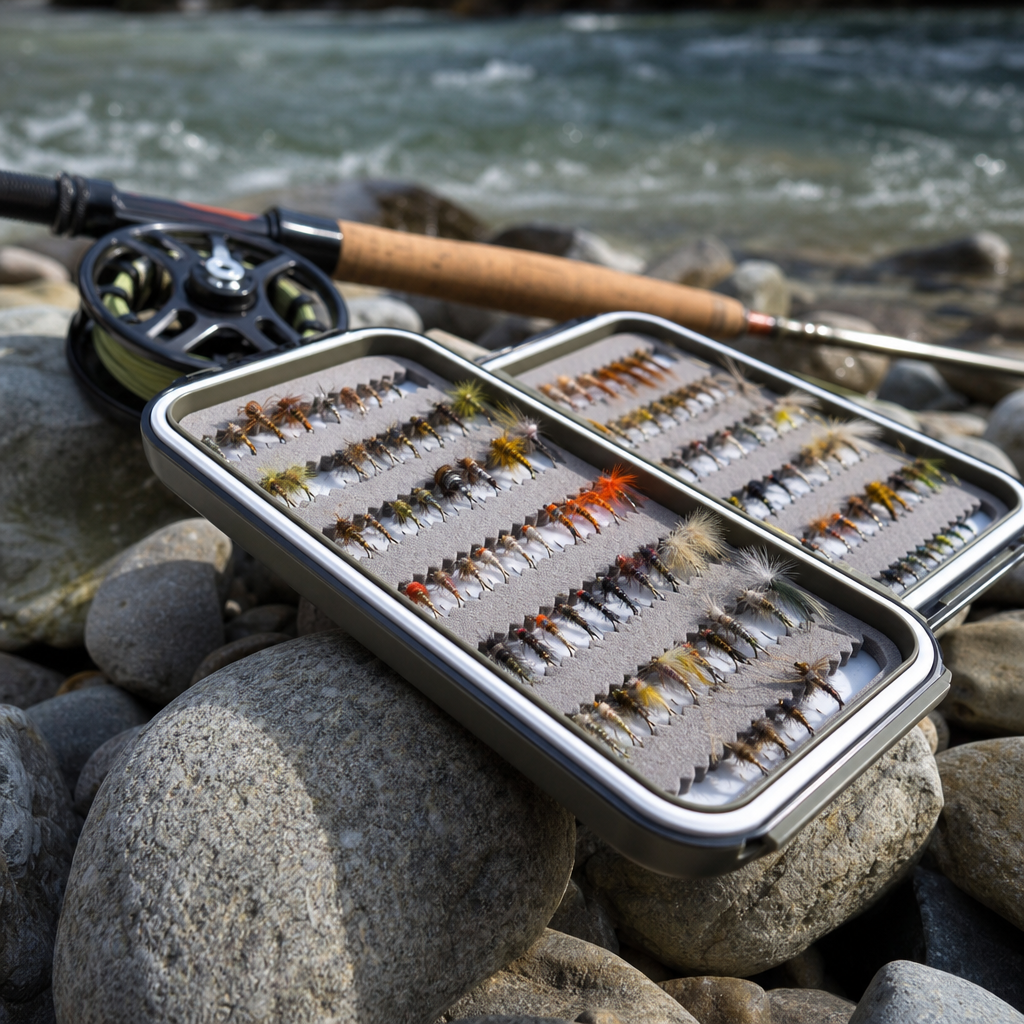
For fly boxes, slim waterproof models from Fishpond, Tacky, and Umpqua reduce clutter. Avoid oversized guide boxes unless you truly need them. In canoes, extra box volume usually creates extra indecision and more time spent rummaging instead of fishing.
Anchoring, Position Control, and Boat Rigging Essentials
Position control is central to successful canoe fly fishing. The best cast means little if the canoe drifts out of lane before the fly finishes its swing or sink. A lightweight anchor system can help on stillwater, but it must be used carefully. I prefer a 3-pound to 5-pound anchor with a clean trolley setup on calm lakes, never in moving current where anchoring can swamp a canoe. On rivers, boat control should come from paddling, ferry angles, and smart drifts, not from dropping metal into current.
Useful rigging upgrades include paddle clips, rod holders for transport only, gear tracks, and non-slip floor pads. YakAttack and Railblaza make modular accessories that adapt well to fishing canoes. A stripping basket can be helpful in some solo setups, but often a simple line mat or clear floor space works better. The key is reducing snag points. Exposed seat bolts, cooler handles, and loose carabiners catch fly line constantly. When I rig a canoe for clients or friends, I spend as much time removing snag hazards as adding accessories.
A quality canoe seat pad or kneeling support is another overlooked gear category. Better posture improves casting mechanics, reduces fatigue, and makes long days noticeably more productive. If you can kneel comfortably for short periods, you gain stability and a cleaner casting platform in wind or during fish fights.
Safety Gear That Also Improves Fishing Performance
The best personal flotation device for fly fishing from a canoe is one you will wear all day, not one you stash behind the seat. High-back fishing PFDs from NRS, Astral, Stohlquist, and Mustang Survival are designed to clear seat backs and provide front pocket access for tools, tippet, and indicators. That is not only safer; it is more efficient. Essential items are literally on your chest instead of buried in a bag.
Polarized sunglasses are mandatory equipment, not an optional accessory. They protect eyes from hooks and reveal weed lines, drop-offs, cruising fish, and submerged timber. Glass lenses from Costa or Smith offer excellent optics, while polycarbonate options reduce cost and weight. Pair them with a brimmed hat and a retention strap. A compact first-aid kit, whistle, knife, headlamp, and phone in a waterproof case should also ride in every canoe, every trip.
Weather protection deserves equal attention. Breathable rainwear from Simms, Patagonia, or Grundens keeps anglers fishing through changing conditions and helps prevent hypothermia when wind rises over cold water. In canoe fishing, getting wet is normal; staying cold is not acceptable. A dry base layer in a sealed bag is one of the smartest pieces of insurance you can carry.
Tools, Nets, Electronics, and the Best Supporting Gear
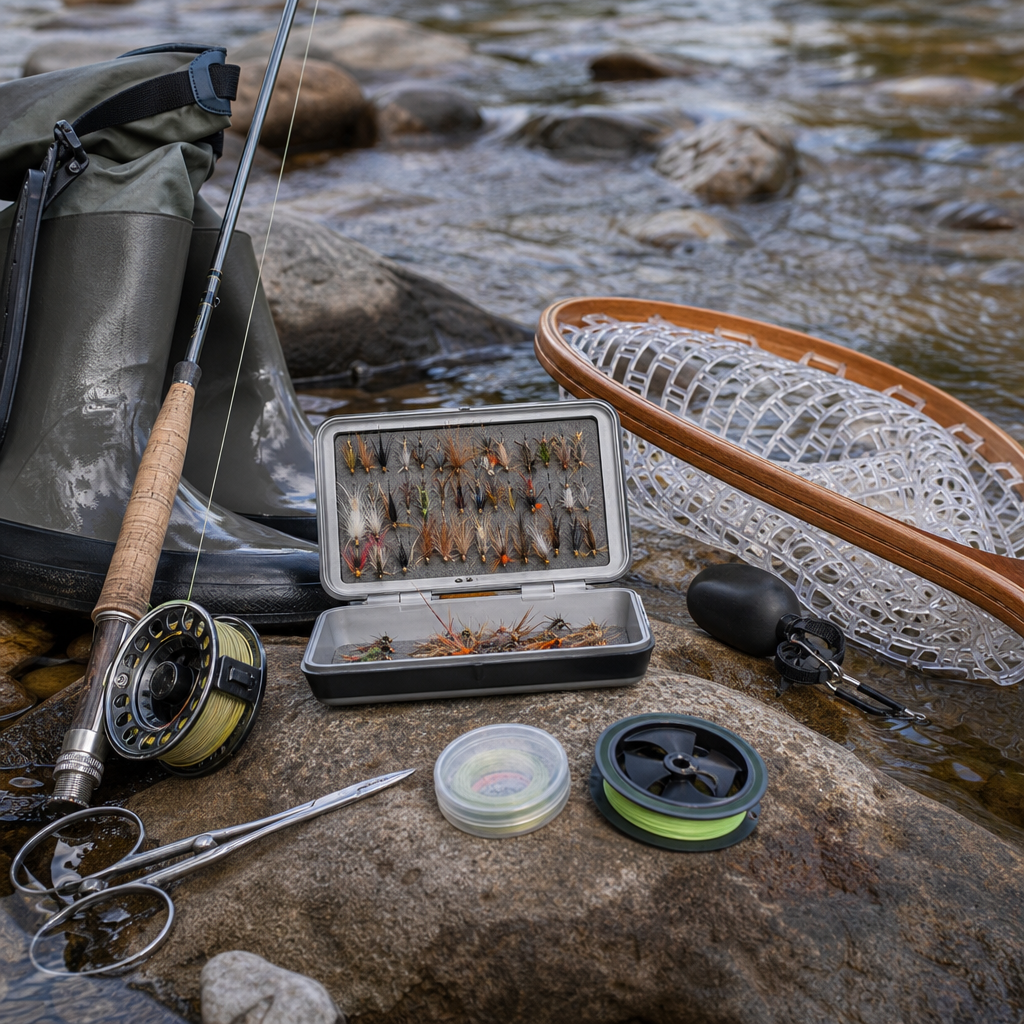
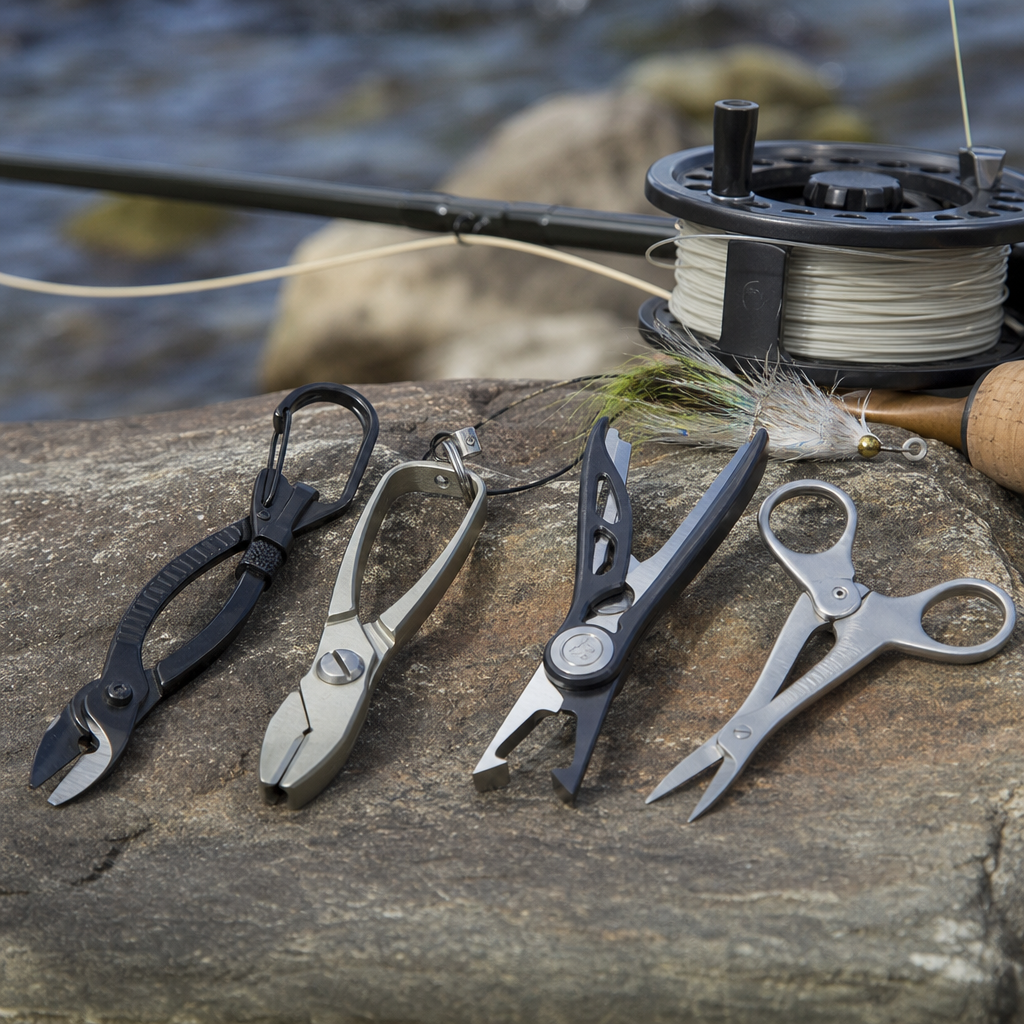
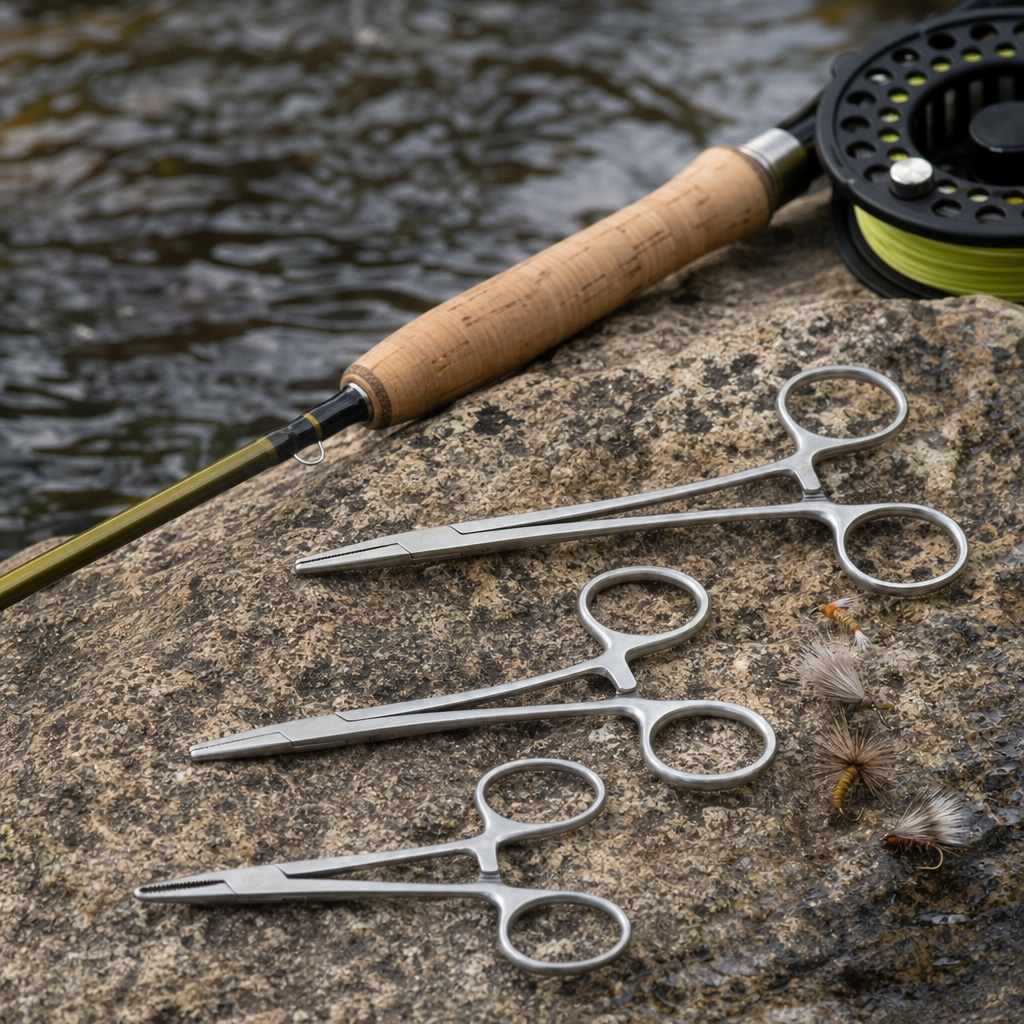
Supporting gear often determines whether a canoe setup feels polished or frustrating. Start with tools: forceps, nippers, floatant, hook hone, tippet spools, and a measuring tape should each have a fixed home. Retractors are useful, but use them selectively. Too many dangling tools create line traps. A rubber-mesh landing net from Fishpond, Rising, or Frabill protects fish better than nylon and prevents hooks from burying deep in mesh. Shorter handles work best in canoes because long handles hit gunwales and seat frames during quick scoops.
Electronics can be helpful if used with restraint. A compact fish finder such as a Garmin Striker 4 or Humminbird PiranhaMAX can identify drop-offs, weed edges, and water depth on larger lakes, especially when stalking suspended trout or summer bass. Mount the transducer and display so they do not interfere with paddling or line flow. A smartphone with offline maps, wind forecast apps, and satellite messaging capability may deliver more value than a complicated electronics suite on a small craft.
Finally, think in systems. The best fly fishing gear for canoes is gear that transitions smoothly from launch to landing. If a rod cannot be stowed quickly during a portage, if a bag requires both hands to open while drifting, or if your net snags on every backcast, that item is not truly working. Good canoe equipment disappears into the routine and lets you focus on reading water, placing flies, and landing fish.
Building the Right Gear Kit for Your Water and Budget
A practical canoe fly fishing kit does not require buying the most expensive option in every category. Spend first on the rod, line, PFD, and waterproof storage because those affect performance and safety every trip. Mid-tier reels, compact tools, and modular rigging often provide the best value. For a trout-focused setup, pair a quality 5-weight with a floating line, one spare spool, a chest pack, one waterproof duffel, a rubber net, and a comfortable fishing PFD. For bass and warmwater, shift to a 6-weight or 7-weight, stronger leaders, larger boxes, and more emphasis on anchor and boat-position control.
This hub should guide your next step in equipment reviews and recommendations. From here, drill deeper into specific rod reviews, reel comparisons, line selection guides, waterproof bag roundups, and canoe rigging articles that match your target species and water type. The main takeaway is clear: the best fly fishing gear for canoes is not the most gear. It is the most functional, organized, and reliable set of tools for your specific fishing. Choose fewer, better items, rig them thoughtfully, and your canoe will become one of the most effective fly fishing platforms you can own.
Frequently Asked Questions
What fly fishing gear is most important to bring in a canoe?
The most important fly fishing gear for a canoe is the gear that helps you fish effectively without creating clutter, imbalance, or safety issues. Start with a versatile rod and reel setup that matches the species and water you fish most often. For many canoe anglers, a 5-weight or 6-weight outfit covers a wide range of trout, panfish, and smallmouth situations. If you regularly fish larger rivers, bass-heavy water, or windy lakes, stepping up to a 6-weight can make casting from a seated position easier and give you better control over bigger fish.
Beyond the rod and reel, prioritize a compact fly box system, a well-organized leader and tippet setup, a pair of forceps or pliers, nippers, a landing net, polarized sunglasses, and a properly fitted personal flotation device. These are the core items that support both fishing performance and on-the-water safety. In a canoe, every loose item can slide, snag, or disappear overboard, so gear should be stored in a way that is secure but still quickly accessible. A small chest pack, sling pack, or canoe tackle bag with dedicated compartments usually works better than carrying too many individual items scattered around the hull.
Dry storage also deserves to be on the essentials list. Phones, keys, maps, licenses, extra layers, and emergency supplies should be protected in waterproof bags or boxes. If you wade-fish after beaching the canoe, add wading boots or wet-wading footwear with strong grip. The key principle is not bringing more gear, but bringing smarter gear. The best canoe fly fishing setup is efficient, stable, and easy to manage when conditions change fast.
How should I organize fly fishing gear in a canoe to keep it safe and easy to reach?
Good canoe organization is about access, balance, and retention. In practical terms, that means the gear you use constantly should be within arm’s reach, while backup and emergency items should be secured and protected. The biggest mistake many anglers make is treating the canoe like a floating garage. Too much gear, especially loose gear, leads to tangles, missed opportunities, and dangerous distractions when you should be focused on boat position, casting, or changing weather.
A strong setup begins with placing frequently used items close to your seat. Keep flies, tippet, tools, floatant, and a small net where you can grab them without twisting around or standing up abruptly. Many canoe anglers use a crate, dry bag, or low-profile gear bag positioned in front of or just behind the seating area. Heavier items should be centered and packed low to help maintain stability and proper trim. If one paddler is significantly heavier than the other, adjust gear placement so the canoe rides level rather than bow- or stern-heavy.
Use leashes or attachment points for expensive or critical items such as nets, pliers, and waterproof electronics. Rods not in use should be laid down securely or stored in a protected holder system so they do not roll, snap, or snag during paddling. Keep the floor as clear as possible. Fly line loves to wrap around loose straps, tackle, sandals, and anything with edges. A clean casting space matters even more in a canoe because your movement is already limited. Think of organization as part of your fishing system, not an afterthought. The easier it is to find and control your gear, the better you will fish and the safer you will be.
What is the best fly rod and line setup for fishing from a canoe?
The best fly rod and line setup for canoe fishing depends on the type of water, target species, and how much room you have to cast, but versatility usually wins. A medium-fast 5-weight or 6-weight rod around 9 feet long is the most practical all-around choice for canoe anglers. That setup handles dry flies, nymphs, streamers, and bass bugs well enough for most lake and river situations while still being manageable from a seated or semi-seated casting position. If you fish mostly trout on calm lakes and gentle water, a 5-weight is often ideal. If you frequently deal with wind, larger flies, or stronger fish, a 6-weight gives you more control.
Line selection matters just as much as rod selection. A weight-forward floating line is the best starting point because it covers the broadest range of presentations and is easiest to manage in a canoe. It allows you to fish dries, indicator rigs, shallow nymphs, and many streamer patterns effectively. For deeper stillwater or lake structure, some canoe anglers carry a spare spool with an intermediate or sink-tip line, but only if they truly use it. In canoe fishing, carrying multiple specialized setups can become more hassle than help unless your fishing style really demands them.
Rod length and action should also match your casting environment. A rod that is too stiff can feel unforgiving when making compact casts around partners, brush, or shifting boat angles. A rod with a little feel and load at shorter distances is often more pleasant in a canoe than one designed mainly for long-distance casting. If you often paddle into small creeks or tight shoreline cover, a slightly shorter rod may be worth considering. In the end, the best setup is one that lets you cast efficiently, manage fish cleanly beside the canoe, and adapt without needing a mountain of extra equipment.
Do I need special safety gear when fly fishing from a canoe?
Yes, and this is one area where there should be no compromise. Fly fishing from a canoe adds a layer of complexity that standard bank or drift fishing does not. You are managing hooks, line, rods, paddles, weather, current, and fish while sitting in a narrow craft that can become unstable if weight shifts suddenly. The first and most essential piece of safety gear is a comfortable, properly fitted personal flotation device that you will actually wear all day. Not store nearby. Wear. Cold water, sudden wind, and unexpected movement can turn an easy outing into an emergency in seconds.
Beyond a PFD, carry a whistle, a basic first aid kit, a knife or line cutter, a waterproof light if there is any chance of low-light travel, and a reliable communication plan. That may include a fully charged phone in a dry case or, in remote areas, a satellite communicator. Spare clothing in a dry bag is smart even in mild weather, because getting wet while miles from the launch can become serious quickly. For sun exposure, include sunscreen, a buff, and good sunglasses. For changing conditions, pack rain gear and an insulating layer. Safety is not just about rescue gear; it is about staying functional, warm, visible, and able to make good decisions.
You should also think about fishing-specific hazards. Hooks and fly line inside a canoe can create chaos if not managed carefully. Barbless or de-barbed hooks can make releases easier and accidents less severe. Keep the deck area free of clutter so you do not step or kneel on hidden gear. If you fish moving water, understand how current affects a canoe differently than a drift boat or raft. In short, special safety gear is not optional in a canoe setup. It is part of what makes the trip responsible, enjoyable, and repeatable.
How do I choose canoe fly fishing gear for lakes, rivers, and backcountry trips?
The right gear choice depends on where and how you fish, because canoe fly fishing changes dramatically between stillwater, moving water, and remote travel. On lakes, the focus is usually on wind management, line control, and carrying enough layering and weather protection for long open-water exposure. A versatile rod, floating line, a compact anchor or positioning system if legal and appropriate, and fly boxes geared toward chironomids, leeches, baitfish, or topwater patterns can make sense depending on the fishery. Because lake canoe fishing often involves more open casting space, you may be able to fish slightly longer leaders and more specialized presentations.
On rivers, maneuverability and restraint matter more. You generally want less loose gear, fewer rods rigged at once, and a setup that allows quick adjustments around current seams, strainers, and changing depth. A 6-weight is often a strong river choice if smallmouth, larger trout, or weighted flies are common. Your storage system should keep the floor clear and your essential tools close. River anglers also need to put more thought into boat handling gear, such as a spare paddle, throw rope where appropriate, and a plan for lining, portaging, or dragging the canoe through difficult sections.
For backcountry trips, every ounce and every item matters even more. This is where multipurpose gear shines. Choose a rod and reel setup that can handle the broadest range of conditions, simplify your fly selection to proven patterns, and use compact waterproof storage. Repair items become more important on remote trips, so carrying a small kit with tape, cord, spare leader material, and basic tool backups can save a trip. Food, shelter, navigation, and survival needs also take up space, which means fishing gear has to be ruthlessly efficient. The best backcountry canoe fly fishing gear is durable, lightweight, and streamlined enough that it supports the trip instead of taking it over.