Winter fly fishing gear determines whether a cold-weather day ends with steady drifts and memorable fish or with numb hands, unsafe footing, and an early drive home. Winter fly fishing means pursuing trout and other cold-water species during the year’s coldest period, when air temperatures, water temperatures, daylight, and river conditions all change how anglers dress, move, and fish. The core challenge is balancing warmth, mobility, and safety without becoming so bulky that casting, wading, knot tying, and fish handling suffer. I have learned over many winter seasons that successful days come less from toughness than from systems: layering clothing correctly, choosing dependable waders and boots, protecting extremities, carrying compact safety gear, and adapting tackle to low temperatures and icy banks.
Why this matters is simple. Cold stress reduces coordination, immersion risk rises sharply in winter currents, and small gear failures become major problems when the nearest parking area is a mile away. Fish behavior changes too. Trout often hold in slower seams, tailouts, and wintering pools, feeding in shorter windows, so anglers spend more time standing still and less time generating body heat by moving. That makes clothing performance especially important. A wet glove, leaking bootie, or poor baselayer can turn a productive hatch into a dangerous situation. Good winter fly fishing gear is not about buying the most expensive items; it is about using proven materials, carrying redundancy where failure is common, and understanding how each piece of equipment supports comfort, dexterity, and judgment on cold water.
As the hub for winter fly fishing, this guide covers the essential gear categories every angler should understand before drilling deeper into specialized topics such as nymphing in icy flows, winter trout locations, cold-weather fly selection, and safe wading techniques. You will see what to wear, what to pack, what to avoid, and how to build a kit that matches short roadside sessions, guided float trips, or all-day walk-and-wade outings. The goal is practical: stay warm enough to fish effectively, stay dry enough to stay safe, and stay organized enough that winter conditions do not dictate every decision on the river.
Layering Systems That Actually Work in Winter
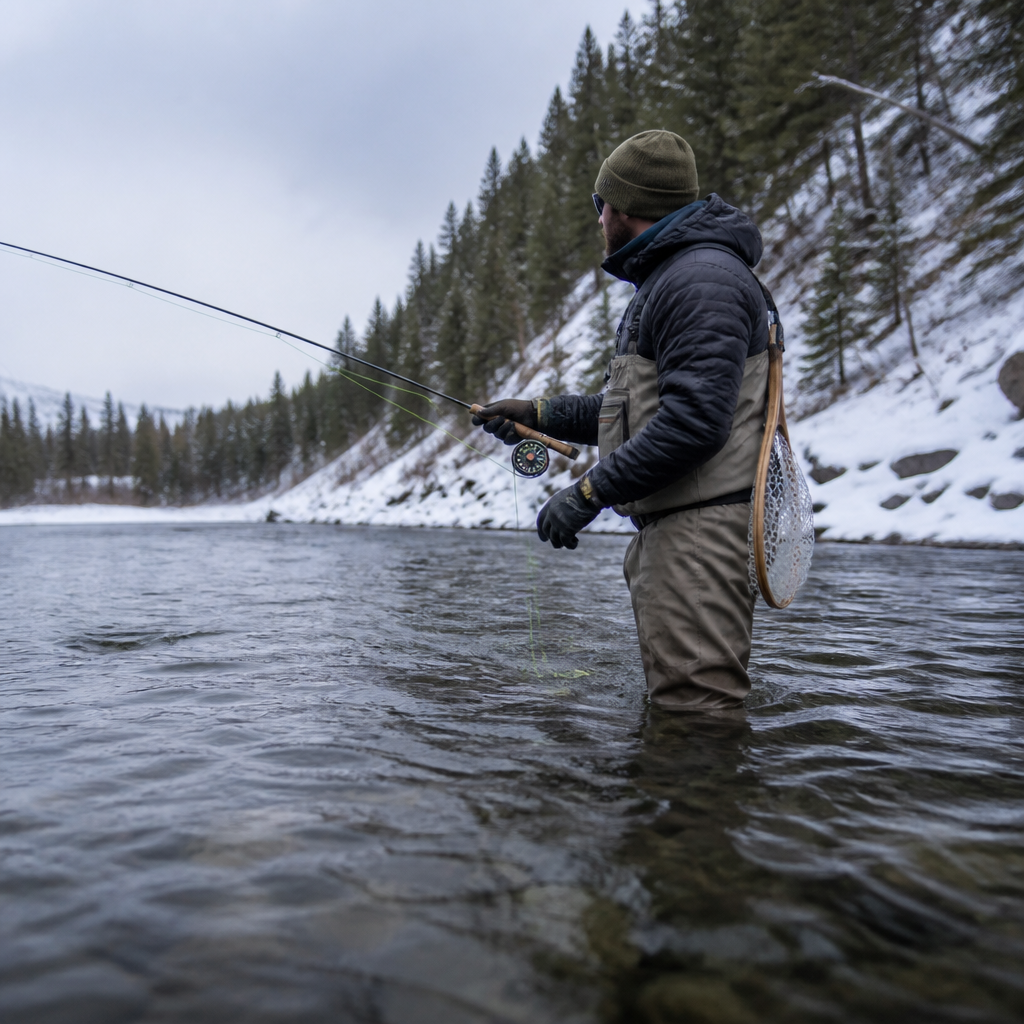
The best winter fly fishing clothing starts with a disciplined layering system. Cotton has no place here because it holds moisture and loses insulation when wet. Start with a moisture-managing baselayer made from merino wool or high-quality synthetic polyester. Merino regulates temperature well, resists odor, and remains comfortable during long days, while synthetics often dry faster and cost less. Over that, use a midlayer that traps heat without restricting movement. Grid fleece, fleece bibs, or lightweight insulated pants work well under breathable chest waders. In very cold conditions, I rely on fleece-lined pants plus a breathable synthetic puffy jacket under a shell, because this combination warms the torso without bunching in the casting arm and shoulders.
Your outer layer above the waders should block wind and shed snow or freezing rain. A wading jacket with sealed seams, articulated sleeves, and neoprene cuffs protects better than a generic rain shell because it is built around repetitive casting and frequent immersion of the hands. Well-known options from Simms, Patagonia, Orvis, and Grundens all work when fit properly. Fit matters more than logo. If layers compress tightly under waders or under a shell, insulation efficiency drops. Leave enough room for trapped air. The common mistake is overdressing for the hike in and underdressing for hours spent motionless in the river. Vent during the walk, then close zippers before fishing. Managing perspiration is one of the most important winter skills because sweat that cools later becomes the reason many anglers get chilled.
Waders, Boots, and Traction for Cold Water Safety
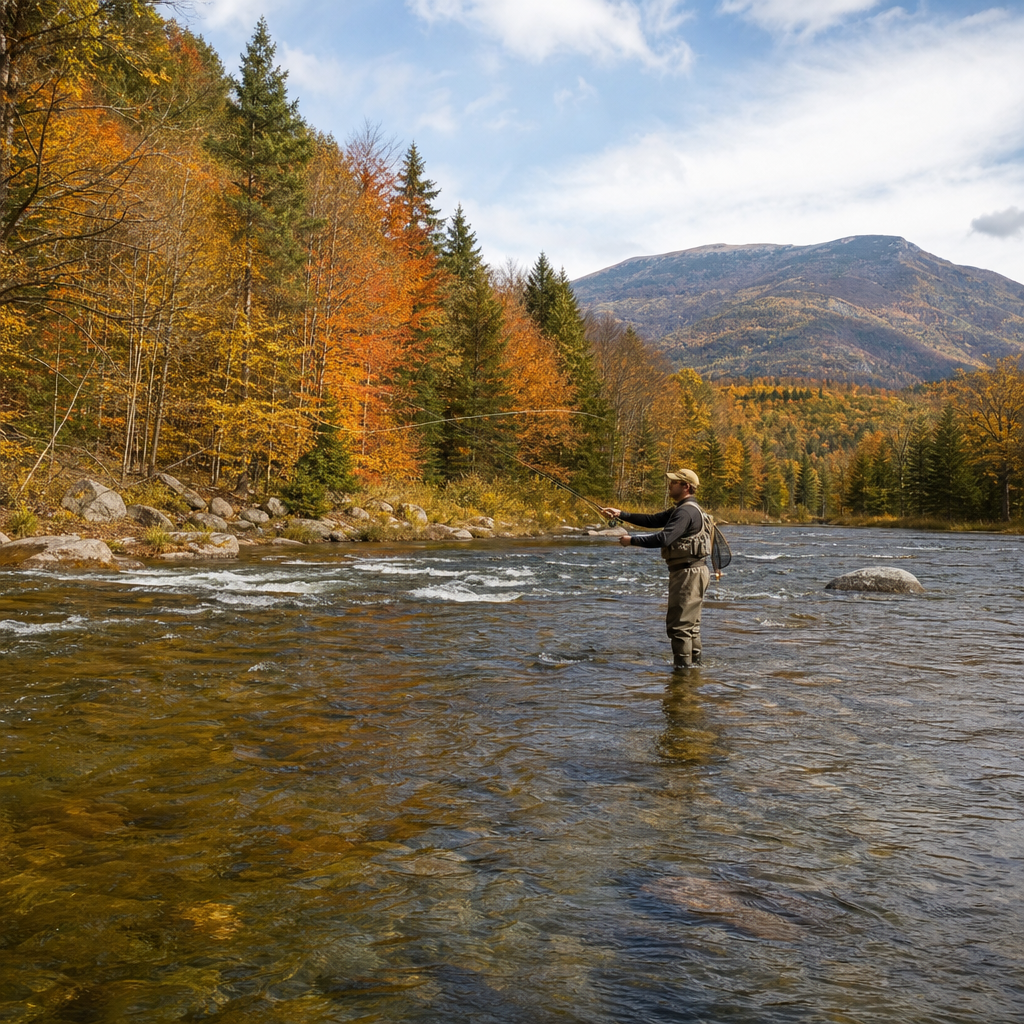
Breathable chest waders are the standard for winter fly fishing because they let you customize insulation underneath. Neoprene waders still have niche value in extreme cold and for stationary anglers, but most experienced fly fishers prefer breathable laminates for comfort during hiking and changing weather. Focus on seam quality, gravel guards, suspender design, and stockingfoot construction. A tiny leak at 35 degrees is far more serious than the same leak in June. Before the season, turn waders inside out or use a leak-finding solution to inspect pinholes. Carrying repair tape or Aquaseal UV in the truck can save a trip, though field fixes are temporary.
Boots deserve equal attention. Winter soles need room for thicker socks without cramping the foot, because restricted circulation makes feet colder. Felt soles still grip many slick rocks well, but some states restrict felt due to invasive species concerns, and felt can collect ice and snow. Modern rubber soles paired with carbide studs often provide more versatile winter traction on mixed terrain, especially frozen mud, boat ramps, and snowy banks. Korkers, Simms, and Patagonia all offer stud-compatible designs. Add external cleats cautiously; they improve grip but can increase the chance of tripping on roots or line snags. A wading staff is not optional on unfamiliar winter rivers. In my experience, one staff prevents more falls than any boot upgrade because it gives immediate feedback on depth, current speed, and unstable substrate before your full weight commits.
Gloves, Hats, and Extremity Protection
Hands fail first on many winter days because they cycle between cold water, wet fish, and freezing air. No single glove solves every task, so use a system. Thin liner gloves made from merino or synthetic fabric preserve dexterity for knot tying and line control. Over them, add fold-back mitts or insulated half-finger gloves for active fishing. Keep one waterproof insulated pair in reserve for severe weather or for warming up during a break. Stripping streamers or tight-line nymphing all day can soak gloves quickly, so carrying a backup pair in a dry bag is one of the smartest winter habits. Chemical hand warmers help, but place them on the back of the hand or near the wrist where blood vessels are closer to the surface; stuffing too many into the palm often reduces grip and line feel.
Headwear is equally important because significant heat loss and overall comfort depend on keeping the head, ears, and neck protected from wind. A close-fitting beanie under a cap works well, preserving brim shade while adding insulation. In brutal conditions, a fleece neck gaiter or balaclava shields exposed skin without interfering with casting. Polarized glasses remain essential in winter, not optional. They cut glare, help read soft seams and shelf ice edges, and protect eyes from weighted flies in gusty winds. For socks, choose merino wool in medium or heavy cushioning depending on boot fit. Doubling thick socks often backfires by constricting circulation. One quality pair plus adequate boot volume is warmer than two tight pairs. If your feet routinely run cold, insulated insoles or vapor barrier socks can help, but test them close to home first because comfort varies widely.
Rods, Reels, Lines, and Cold-Weather Tackle Choices
Winter fly fishing tackle should match the season’s slower water, smaller feeding windows, and frequent use of subsurface flies. For many trout rivers, a 9-foot 4- or 5-weight remains the most versatile winter rod. It handles indicator nymphing, small streamers, and occasional midge or blue-winged olive dry flies without feeling overbuilt. Euro-nymph anglers often prefer 10- to 11-foot 2- to 4-weight rods for reach and line control in soft seams. Reels matter less for drag than for reliability. A large-arbor reel with a smooth retrieve reduces line memory and makes cold-hand line pickup easier. Keep the reel free of excessive grease; some lubricants stiffen in low temperatures.
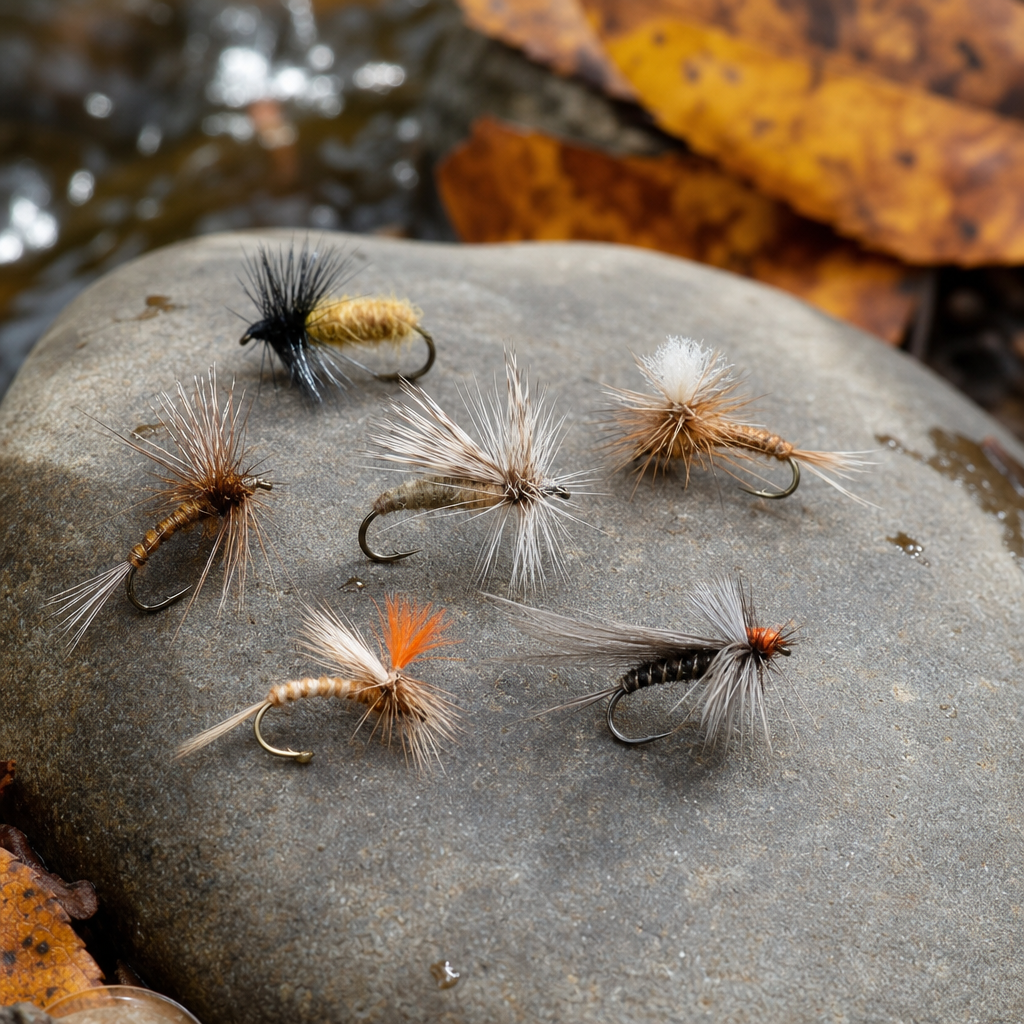
Fly lines become noticeably stiffer in the cold, so select a line designed for cool to moderate temperatures if winter is a major part of your season. Stretch the line before fishing to reduce coiling. Nymph rigs often dominate because fish conserve energy and hold near the bottom, making split shot, tungsten beads, and sensitive indicators central pieces of winter tackle. Tippet selection matters too. Fluorocarbon sinks faster and resists abrasion well around rocks and shelf ice, making it useful for nymphing and streamers, while nylon still performs well for dry flies and costs less. Keep fly boxes focused rather than bulky: midges, zebra midges, perdigons, pheasant tails, hare’s ears, eggs where legal and appropriate, and compact streamers cover most winter situations. Forceps with a cutter, a thermometer, floatant for the occasional hatch, and a line treatment for guides round out a practical cold-weather kit.
Essential Safety Gear and Smart Packing Strategy
Winter safety gear should be packed with the assumption that a minor problem can escalate quickly. The core items are simple, light, and proven.
| Gear item | Why it matters in winter | Practical example |
|---|---|---|
| Wading staff | Improves balance and depth assessment | Testing a ledge hidden by glare before stepping down |
| Dry bag with spare gloves and hat | Restores warmth after immersion or soaked gear | Changing after landing fish with ice-covered hands |
| Waterproof phone or GPS communicator | Enables emergency contact in remote canyons | Calling for help after a fall on a snowed-in access road |
| Headlamp | Critical during short winter daylight | Walking out safely after a delayed evening midge hatch |
| First-aid kit and fire starter | Supports rewarming and basic injury response | Treating a hook puncture and building heat if stranded |
| Thermos and high-calorie food | Helps maintain core temperature and energy | Drinking hot tea during a long stationary nymphing session |
Packing strategy matters as much as the gear itself. Keep critical warmth items on your body or in a chest pack, not buried in the truck. Organize by failure point: hand protection, communication, light, nutrition, and repair. Tell someone your access point and return time, especially on tailwaters or freestone rivers where winter flows can shift. If you fish from a drift boat or raft, bring a full change of clothes in a waterproof bag. On rivers with shelf ice, avoid the temptation to step onto ice edges near soft current seams; undercut ice breaks unpredictably. Winter also shortens rescue margins. If you take a cold plunge, your first job is not finishing the run; it is getting dry, warm, and off the water immediately.
Building a Winter Kit for Different Trips and Conditions
The best winter fly fishing gear list changes with trip style. A two-hour roadside session on a tailwater may require less food, fewer spare layers, and a smaller pack than an all-day hike into a canyon stream. Start with the environment. Tailwaters often offer stable temperatures and predictable access, but they can still produce icy trails and long periods of standing in one run. Freestone rivers add snowmelt swings, anchor ice, and more variable water clarity. Lakes and stillwaters increase exposure to wind, making outerwear and hand management even more important. Match your setup accordingly rather than carrying the same kit everywhere.
For hub-level planning, think in modules. Clothing is one module, wading safety another, tackle another, and emergency backup another. This approach makes it easier to create spin-off checklists for specific winter fly fishing topics, from trout-focused nymphing days to streamer trips during overcast warmups. It also helps anglers budget purchases over time. If money is limited, upgrade in this order: dry reliable waders, boots with traction, quality baselayers, glove system, and then premium outerwear. Expensive rods rarely improve winter outcomes as much as warm feet and secure footing. Review your kit after every trip. Note what stayed dry, what iced up, what you never used, and what you wished you had. That habit turns winter fishing from a test of endurance into a controlled, repeatable system.
Winter fly fishing rewards anglers who prepare with intention. The right gear keeps core temperature stable, preserves dexterity, and reduces the risks that come with cold water, short days, and slick access points. Start with principles, not gadgets: stay dry, protect extremities, maintain traction, and carry the tools needed to solve common failures fast. A merino or synthetic layering system, dependable breathable waders, properly fitted boots with studs or other traction, a glove rotation, and compact emergency essentials form the foundation of any serious winter setup. Add season-appropriate tackle, streamline your pack, and inspect everything before each trip.
The biggest benefit of a thoughtful winter fly fishing kit is not just comfort. It is better decision-making on the water. Warm anglers fish longer, notice subtle takes, move more confidently, and leave before small problems become serious incidents. That translates into more effective presentations and safer days in conditions that punish carelessness. As this sub-pillar hub grows, use it as your starting point for deeper guidance on winter trout behavior, flies, techniques, and river-specific tactics. Before your next cold-weather outing, audit your gear, replace weak links, and build a winter system you trust. Your hands, feet, and fishing will all perform better for it.
Frequently Asked Questions
What clothing layers work best for winter fly fishing without restricting movement?
The best winter fly fishing clothing system is built around layers that trap heat, manage moisture, and still let you cast, mend line, and wade comfortably. Start with a moisture-wicking base layer made from merino wool or a quality synthetic fabric. This layer should sit close to the skin and move sweat away from your body, because damp clothing can make you cold very quickly once temperatures drop or wind picks up. Avoid cotton entirely, since it holds moisture and loses insulating value when wet.
Over that, add a mid-layer for insulation. Fleece jackets, grid fleece hoodies, insulated bibs, or lightweight puffy layers work well because they provide warmth without too much bulk. Many anglers do better with two lighter mid-layers rather than one heavy one, since this gives more control as conditions change through the day. On especially cold days, insulation around the core matters most, but mobility in the shoulders and elbows is just as important for comfortable casting.
Your outer layer should protect you from wind, precipitation, and splashes. Breathable chest waders paired with a wading jacket are often the most versatile setup, because they block water while allowing some vapor to escape. The key is to stay warm without over-layering to the point that movement becomes stiff or tiring. If you feel bulky before you even step into the river, your setup may be too heavy. A smart layering system should let you adapt to hiking in, standing still in current, and changing weather while keeping your body temperature stable and your range of motion intact.
How can I keep my hands and feet warm while winter fly fishing?
Hands and feet are usually the first places anglers notice the cold, and they can quickly turn a productive day into a miserable one if they are not managed carefully. For your hands, think in terms of flexibility and recovery. Many anglers wear thin liner gloves for knot tying and basic line handling, then add insulated fingerless gloves, fold-over mitts, or waterproof shell mittens when they are not actively casting. This combination protects dexterity while still allowing you to warm up quickly between drifts. Carrying an extra dry pair is one of the smartest things you can do, because wet gloves lose warmth fast.
For your feet, the foundation is a high-quality wool or synthetic sock system that insulates without cutting off circulation. Thick socks only help if your boots still fit properly. If your wading boots or stockingfoot waders are too tight, blood flow drops and your feet may feel colder, not warmer. Many winter anglers get better results by using medium-weight thermal socks with enough room in the boot for natural insulation and circulation. Neoprene wader booties, gravel guards, and insulated insoles can add useful warmth depending on conditions.
Simple habits also matter. Use hand warmers and toe warmers when needed, but place them carefully so they do not create pressure points. Take short breaks to move your fingers and toes, walk the bank to restore circulation, and avoid standing motionless in icy water for long periods. If your feet become painfully cold or your hands lose function, that is a safety issue, not just discomfort. Warmth in the extremities depends on your whole layering system, good circulation, and staying as dry as possible throughout the day.
What safety gear is most important for winter fly fishing?
Winter fly fishing safety starts with the understanding that cold water is far more dangerous than many anglers realize. A minor slip that would be inconvenient in summer can become serious very quickly in winter because of cold shock, reduced muscle control, and the risk of hypothermia. The most important safety gear begins with reliable waders and wading boots matched to the conditions, but it should also include a wading belt, a wading staff, and traction aids such as studs or cleats when legal and appropriate. These items directly reduce the chance of falling on slick rocks, shelf ice, or unstable banks.
A personal flotation device can also be a smart choice, especially on larger rivers, tailwaters with strong current, or when fishing alone. In winter, there is less margin for error. A waterproof pack or chest pack should carry essentials such as a fully charged phone in a dry case, a whistle, basic first-aid supplies, fire-starting materials, and extra gloves or socks. If conditions are remote or severe, a compact emergency blanket and a headlamp are worthwhile additions, particularly because winter daylight disappears quickly.
Just as important is what you know before stepping in. Check river flows, weather forecasts, access conditions, and the potential for shelf ice, anchor ice, or sudden water releases below dams. Tell someone where you are fishing and when you expect to return. Good winter safety gear is not just about surviving bad conditions; it is about preventing a small mistake from becoming an emergency. When temperatures are low, preparation and caution are every bit as important as rods, flies, and casting skill.
Are breathable waders or insulated waders better for winter fly fishing?
For most anglers, breathable waders are the better all-around choice for winter fly fishing because they allow a more flexible and effective layering system. Rather than relying on the wader itself to provide all the warmth, breathable waders let you adjust your insulation underneath based on temperature, wind, how far you walk, and how active you plan to be. That adaptability is a major advantage in winter, when conditions can swing from a freezing morning to a milder afternoon or from calm weather to biting wind.
Insulated waders can be useful in very cold, stable conditions, especially for anglers who spend long stretches standing still, but they are generally less versatile. If you become too warm while hiking to the river or moving between runs, excess perspiration can build up and eventually make you colder. Breathable waders, combined with the right base and mid-layers, usually offer better moisture control and more season-to-season usability. They also tend to be more practical for anglers who fish multiple climates or want one dependable setup for much of the year.
No matter which style you choose, fit matters. Winter waders need enough room for proper layering without compressing insulation or restricting movement. A wading belt is essential with either type for safety and comfort. In most cases, a quality pair of breathable waders, paired with thoughtful layering and properly fitted boots, gives the best balance of warmth, mobility, and protection. The goal is not just staying warm at the truck; it is staying warm, dry, and functional for the entire day on the water.
How do I stay safe when wading icy rivers and fishing in freezing weather?
Safe winter wading begins with accepting that conditions are often far more hazardous than they look from the bank. Cold water, submerged ice, slippery rocks, and reduced physical responsiveness all increase the chance of a fall. The best approach is to wade more conservatively than you would in other seasons. Enter the water slowly, test each step, and avoid crossing currents that would be routine in summer. A wading staff adds a critical third point of contact, and boots with strong traction help on algae-slick rocks, frozen mud, and uneven river bottoms.
Pay close attention to river edges, where shelf ice can hide gaps or collapse under weight. Banks that seem solid may be undercut, and shallow water can have ice-coated rocks that are extremely slick. Fishing with a partner is one of the smartest winter precautions, especially on remote water. If you are alone, be even more cautious about how deep you wade, how far you travel, and how long you stay in exposed conditions. Plan exit routes before you step in, and keep extra dry clothing in your vehicle in case you need to change immediately after an unexpected soaking.
Weather awareness is equally important. Wind can accelerate heat loss dramatically, and short winter days leave less time to recover from delays or mistakes. Know the signs of hypothermia, including intense shivering, clumsiness, confusion, and unusual fatigue. If you start losing coordination or feeling dangerously cold, end the trip. The most successful winter fly anglers are not the ones who simply endure the cold the longest; they are the ones who prepare well, fish within the limits of the conditions, and make conservative decisions that let them come back safely for the next outing.