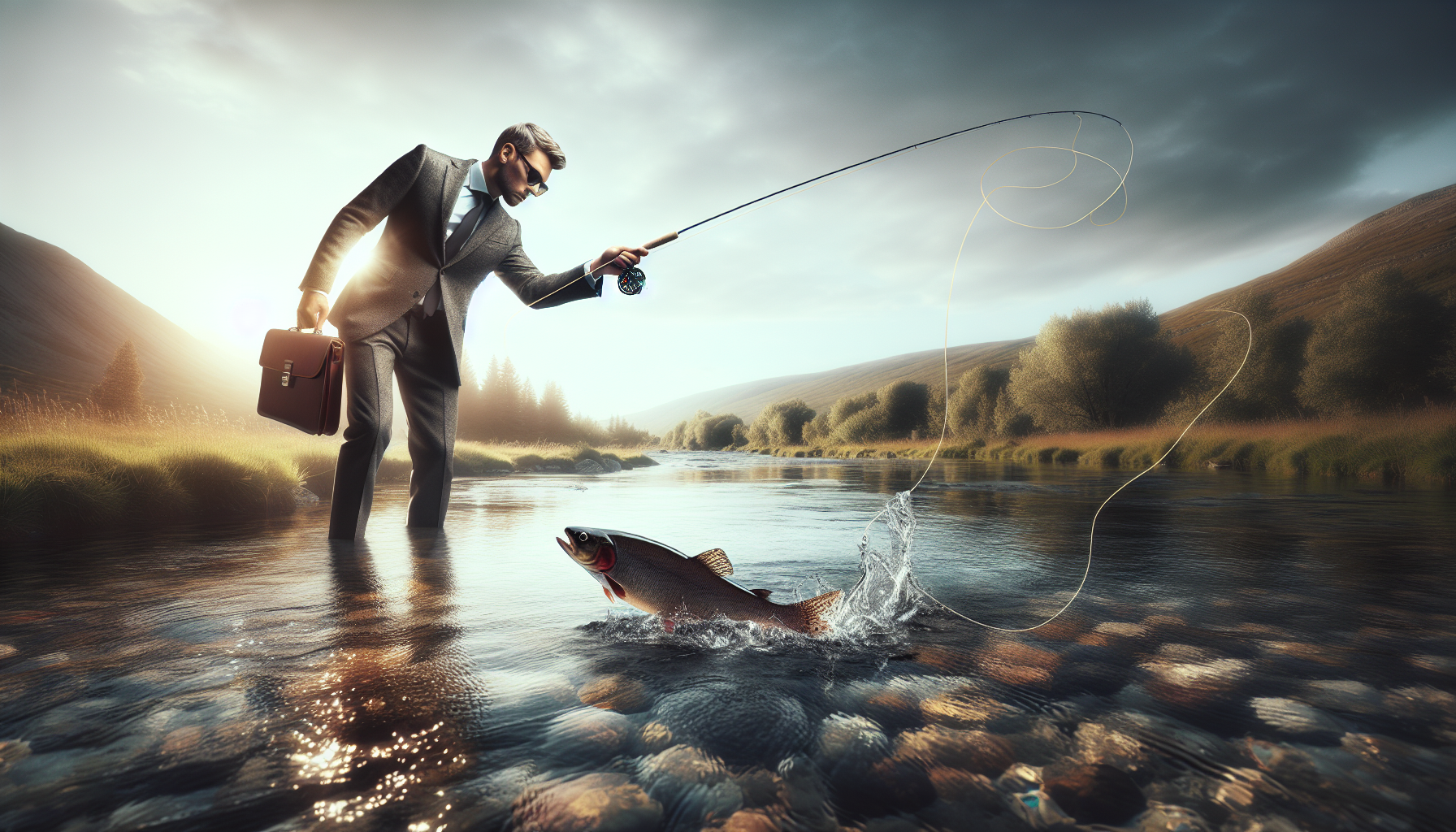
Balancing fly fishing with wildlife conservation starts with a simple truth: every cast enters a living ecosystem, not just a stream. Ethical fishing practices are the habits, decisions, and standards that let anglers pursue fish while reducing harm to trout, salmon, char, bass, aquatic insects, birds, mammals, and habitat. In practical terms, that means choosing seasons carefully, handling fish properly, respecting regulations, protecting spawning areas, and understanding how water temperature, flow, and crowding affect survival after release. I have seen productive rivers decline when anglers treated conservation as someone else’s job, and I have also watched pressured fisheries rebound when local clubs, guides, and individual fly fishers changed behavior. This topic matters because fly fishing depends on healthy watersheds. Without intact habitat, stable flows, cold clean water, and resilient wild fish populations, there is no quality angling to preserve. A strong conservation ethic is therefore not separate from success on the water; it is the condition that makes future success possible for anglers and wildlife alike.
Ethical fishing practices also matter because modern pressure on rivers and lakes is rising. Social media can turn a quiet reach into a crowded destination overnight. Warmer summers push water temperatures above safe thresholds, making catch-and-release more stressful. Shoreline trampling damages vegetation that stabilizes banks and shades water. Poor fish handling can kill fish hours after release, even when they appear to swim away strongly. For a hub article under conservation and ethics, the goal is to connect these issues into one practical framework. Ethical fly fishing is not just about following the law, though regulations are the baseline. It is about making informed choices when rules leave room for judgment. The best anglers I know ask three questions constantly: Is this legal, is it responsible under current conditions, and what impact will my actions have beyond today? When those questions guide tackle choice, access decisions, fish handling, and community behavior, fly fishing becomes a force for wildlife conservation rather than a pressure that ecosystems must absorb.
Why ethical fly fishing begins before the first cast
Most conservation outcomes are decided before an angler steps into the water. Pre-trip planning determines whether you fish during a heat wave, whether your boots carry invasive organisms between waters, and whether you approach a stream reach that contains active redds. Start with local regulations from the managing agency, then go further by checking stream temperatures, flow gauges, stocking notices, wildfire closures, and voluntary hoot-owl restrictions. On tailwaters and spring creeks, a few degrees can separate safe conditions from dangerous ones for trout. Research from multiple state agencies consistently uses 68 degrees Fahrenheit as a caution threshold for coldwater species, with many anglers stopping earlier at 65 to 66 degrees to build a safety margin. In my own fishing, a stream thermometer is as important as a fly box in midsummer.
Preparation also includes gear choices that reduce injury. Barbless hooks, or hooks with pinched barbs, shorten handling time and reduce tissue damage. Rubber or knotless landing nets protect the fish’s slime layer better than coarse nylon mesh. Heavier tippet is another ethical tool because it shortens fights, lowering lactic acid buildup and post-release mortality. Many anglers resist this point because lighter tippet can feel more sporting, but prolonged fights are hard on fish, especially in warm water. Clothing and wading practices matter too. Felt sole restrictions in some regions were adopted because porous materials can spread didymo, whirling disease spores, and other invasive threats. Ethical fishing practices begin with acknowledging that every item you bring, every river you choose, and every forecast you ignore has biological consequences.
Fish handling, catch-and-release, and survival after release
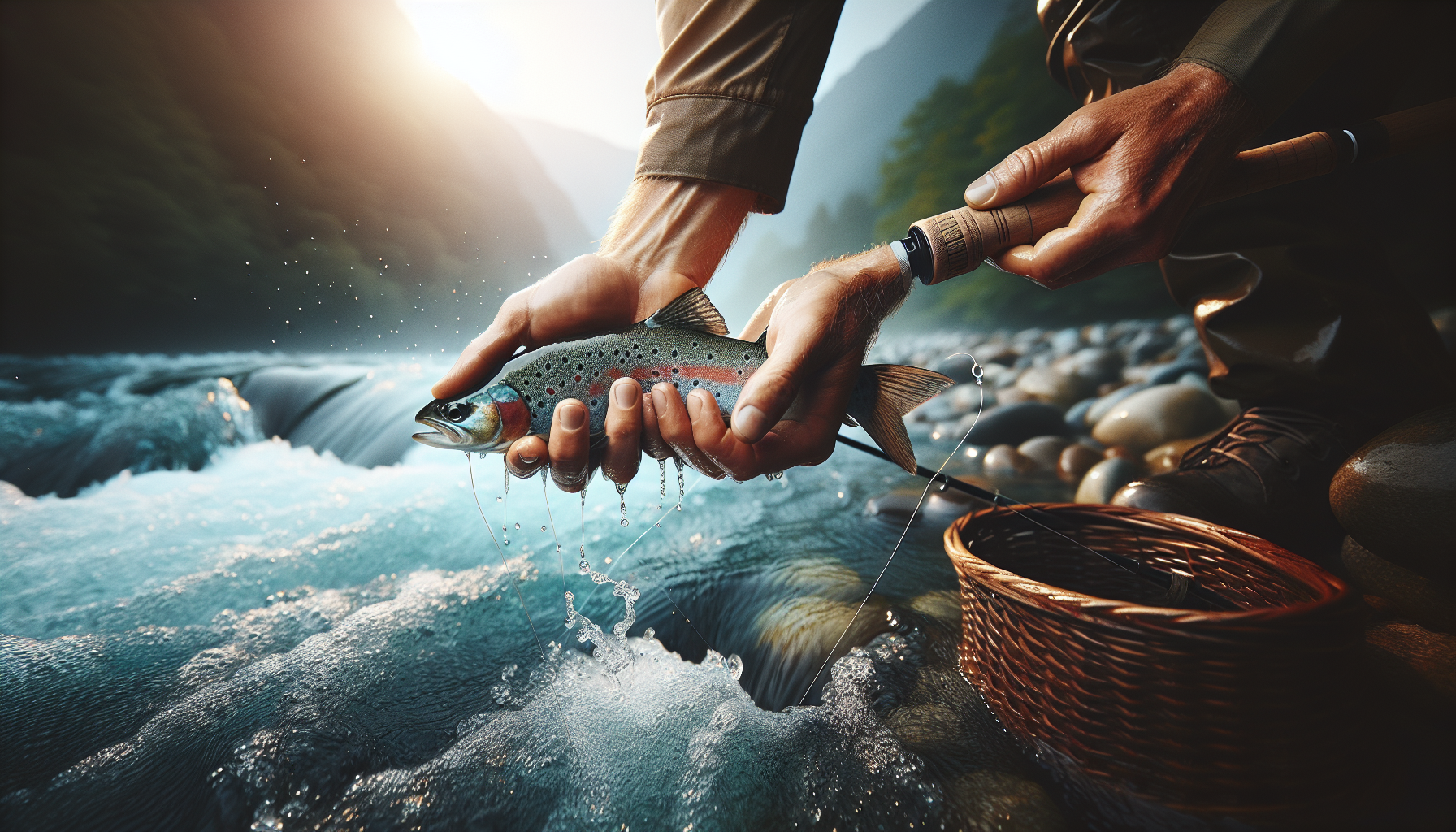
Catch-and-release only benefits conservation when fish actually survive and retain the ability to feed, spawn, and avoid predators. The core principles are straightforward: land fish quickly, keep them in the water as much as possible, wet your hands before touching them, avoid squeezing the abdomen or gills, and release them only when they can hold position and swim under their own power. Those basics sound familiar, but details matter. Lifting a trout onto dry rocks removes protective mucus and can damage fins and skin. Holding a fish vertically by the jaw may injure connective tissue, especially in larger fish. In warm water, even a short photo session can be the difference between recovery and delayed mortality.
Hook placement is another key variable. Fish deeply hooked in the throat or gills have lower odds of survival, which is one reason many conservation-minded anglers favor single-hook patterns over complex multi-hook setups where regulations allow a choice. Circle hooks are more common in bait fishing than fly fishing, but the principle still applies: tackle and presentation should reduce deep hooking. If a fish is bleeding heavily or the hook is embedded, the least harmful option may be to cut the leader close and release the fish quickly rather than trying an aggressive extraction. Agencies such as Trout Unlimited, Keep Fish Wet, and many state fish and wildlife departments have helped standardize these recommendations because the evidence is strong: handling time, air exposure, temperature, and fight duration are the main drivers anglers can control directly.
| Practice | Conservation benefit | Best use case |
|---|---|---|
| Pinched-barb hooks | Faster release, less tissue damage | All catch-and-release fisheries |
| Rubber landing net | Protects slime coat and fins | Trout, salmon, char, bass |
| Heavier tippet | Shorter fight time, lower stress | Warm water or large fish |
| Stream thermometer | Avoids fishing during unsafe temperatures | Summer trout and salmon water |
| Fish kept submerged for photos | Reduces air exposure and delayed mortality | Any release scenario |
Protecting habitat, spawning fish, and the food web
Wildlife conservation in fly fishing extends beyond the fish in hand. Rivers function through connected habitat: riffles oxygenate water, undercut banks shelter juveniles, gravel beds support spawning, riparian plants shade channels, and aquatic insects transfer energy through the food web. Ethical anglers learn to recognize these features and avoid damaging them. Spawning redds, for example, appear as clean, bright patches of gravel where fish have cleared fine sediment. Wading through them can crush eggs or dislodge developing embryos. The ethical standard is simple and nonnegotiable: never target fish actively spawning, and never step on likely redd habitat during spawning and incubation periods.
Bank protection is another overlooked area. Repeatedly entering at fragile points erodes shorelines and destroys vegetation that holds soil in place. I often see the biggest impact where anglers shortcut around fences, break willow branches for casting room, or create multiple informal trails to one pool. Over a season, that behavior widens banks, warms water by removing shade, and adds sediment that smothers insect habitat. Ethical fishing practices include using established access points, rotating locations, packing out mono and tippet clippings, and avoiding unnecessary disturbance to nesting birds, amphibians, and mammals. On stillwaters, that may mean steering clear of reed beds used by waterfowl. On rivers, it may mean giving beaver ponds, side channels, and woody debris complexes the respect they deserve as nurseries for young fish and habitat for other species.
Regulations, ethics, and the choices that go beyond compliance
Fishing regulations are designed to balance opportunity with biological limits, but they cannot account for every condition on every day. Closed seasons protect spawning periods. Slot limits preserve breeding-size fish. Gear restrictions reduce hooking mortality or poaching risk. Yet legal fishing is not always ethical fishing. A river may be open during a drought while temperatures are high enough to make catch-and-release irresponsible by late morning. A lake may allow harvest, but a local population may be struggling after winterkill or low recruitment. Ethical anglers treat regulations as the floor, not the ceiling.
This distinction becomes especially important in destination fisheries. Famous trout rivers, steelhead systems, and salmon runs attract anglers willing to travel, spend money, and fish hard even when conditions are marginal. Local guides and conservation groups often lead by setting voluntary standards: ending trips at a temperature threshold, resting heavily pressured pools, avoiding photo-heavy hero shots, or steering clients away from congregated spawners. Those choices matter because fish populations are influenced by cumulative stress. One careless interaction may seem small, but hundreds of them during low water or migration bottlenecks can change outcomes. Ethical fishing practices therefore require independent judgment, informed by science, observation, and respect for the local community that depends on the resource long after visitors leave.
Stewardship, community norms, and how anglers shape conservation outcomes
Conservation is reinforced by culture. When experienced anglers model good behavior, newcomers learn faster and rivers benefit immediately. That includes teaching fish handling, explaining why a run should be rested after several hookups, and correcting common mistakes without arrogance. In my experience, the most effective conservation messages are practical rather than moralizing. Show someone how to unhook a fish in current with the net still submerged, and they usually adopt the method on the spot. Explain that walking on redds can kill an entire year class in a small tributary, and most anglers change course quickly. Ethical fishing practices spread best when they are visible, specific, and tied to outcomes.
Stewardship also means participating off the water. Volunteer days for riparian planting, invertebrate monitoring, culvert replacement advocacy, and stream cleanup directly improve habitat. Organizations such as Trout Unlimited, Backcountry Hunters & Anglers, local watershed councils, and state-level conservation groups often provide the structure for this work. Citizen science has become especially valuable. Anglers routinely collect observations on water temperature, invasive species presence, fish passage barriers, and pollution events that agencies cannot monitor alone. Responsible reporting can trigger enforcement or restoration before damage becomes permanent. For a hub page on ethical fishing practices, this is the central point: the ethical angler is not just a low-impact recreationist but an active steward who supports habitat, science, and public access policies that keep fisheries and wildlife healthy.
Building an ethical fishing practice that lasts
The most durable conservation ethic is built from routine, not occasional gestures. Carry a thermometer and use it. Pinch barbs before the first cast. Keep fish wet. Skip the redds. Clean boots, nets, and boats between waters with approved disinfection methods when invasives are a risk. Learn the seasonal biology of the species you pursue, including spawn timing, thermal tolerance, and migration patterns. Support regulations that protect wild fish even when they limit convenience. Share locations carefully so fragile waters are not overwhelmed. If you guide, mentor, or fish with friends, make these actions standard procedure rather than optional extras.
Balancing fly fishing with wildlife conservation is ultimately about restraint, knowledge, and responsibility. Ethical fishing practices protect more than individual fish; they safeguard habitat quality, spawning success, biodiversity, and the long-term future of the sport. Anglers who fish with this mindset catch fewer problems as well as fish: fewer avoidable mortalities, fewer damaged access sites, fewer conflicts with landowners, and fewer declines blamed on everything except human behavior. The reward is substantial. Healthy rivers hold more wild fish, more insect life, more birds and mammals, and more of the complexity that makes fly fishing worth pursuing in the first place. Use this hub as your foundation, apply these standards every trip, and make conservation visible in every decision you make on the water.
Frequently Asked Questions
Why is wildlife conservation such an important part of fly fishing?
Fly fishing does not happen in isolation. Every river, creek, spring-fed stream, lake edge, and estuary is part of a larger living system that supports fish, aquatic insects, amphibians, birds, mammals, riparian plants, and the water quality those species depend on. When anglers think only about catching fish, they can unintentionally damage the very conditions that make healthy fisheries possible. Wildlife conservation matters because trout, salmon, char, bass, and other game fish rely on intact habitat, cold clean water, stable streambanks, functioning insect populations, and protected spawning areas. If any of those pieces decline, fish populations usually decline with them.
Conservation-minded fly fishing recognizes that ethical success is not measured only by numbers landed, but by how little harm is done in the process. That includes minimizing stress during catch and release, avoiding trampling redds and shoreline vegetation, respecting seasonal closures, and understanding how warm water or low flows can make fish especially vulnerable. It also means recognizing that the stream corridor is shared space. Nesting birds, beavers, otters, deer, aquatic macroinvertebrates, and even streamside plants are affected by how people move through and use the landscape.
In practical terms, conservation protects both the present and the future of the sport. Healthy ecosystems produce stronger fish populations, more resilient habitat, better insect hatches, and more consistent angling opportunities over time. Anglers who support wildlife conservation are not giving something up; they are helping preserve the ecological balance that makes fly fishing meaningful in the first place.
What are the most important ethical practices anglers should follow to reduce harm to fish?
The most important ethical practices begin before the first cast. Anglers should know local regulations, seasonal closures, species protections, and water conditions before stepping into the water. Fishing during legal and biologically appropriate periods is one of the biggest ways to reduce harm. For example, avoiding actively spawning fish and staying away from visible redds helps protect reproduction. Likewise, choosing not to fish during extreme heat or very low water can prevent unnecessary mortality, because fish that seem to swim away may still die later from physiological stress.
Once fishing begins, responsible tackle choices and fish handling make a major difference. Using appropriately strong tippet helps land fish more quickly, which reduces exhaustion. Barbless hooks or de-barbed hooks make release faster and less traumatic. Anglers should keep fish in the water as much as possible, wet their hands before touching them, avoid squeezing the body or gills, and never drag fish onto dry rocks, sand, or grass. Nets with rubberized mesh are generally better than abrasive materials because they help protect the fish’s slime coat and fins.
Fight time and release time matter just as much as landing technique. Playing fish to complete exhaustion can be fatal, especially in warm water. A good rule is to release the fish quickly, upright, and facing into gentle current only if support is needed. Fish should not be pumped back and forth aggressively. In addition, anglers should be selective about photography. A brief, controlled photo can be acceptable, but repeated lifting, posing, or long air exposure significantly increases risk. Ethical anglers are willing to skip the photo altogether when conditions are poor or the fish is especially stressed.
Finally, reducing harm extends beyond the fish on the line. Good ethics include packing out monofilament and trash, avoiding bank erosion, not disturbing wildlife, and giving other anglers and habitat equal respect. The best anglers combine skill with restraint. They understand that fish survival after release is not guaranteed, so every decision should be made to improve those odds.
How do water temperature and seasonal timing affect responsible fly fishing?
Water temperature and season are two of the most important factors in conservation-oriented angling because they directly influence fish stress, survival, feeding behavior, migration, and spawning. Coldwater species such as trout, salmon, and char are especially sensitive to rising temperatures. As water warms, it holds less dissolved oxygen while fish metabolism increases, creating a dangerous combination. A trout that can recover quickly after release in cool water may struggle badly in warmer conditions. This is why many experienced anglers carry a stream thermometer and set personal stop-fishing thresholds, even when regulations do not require it.
Seasonal timing matters for reproduction as well. During spawning periods, fish are biologically vulnerable and focused on reproduction rather than feeding. Targeting fish on redds or repeatedly walking through spawning gravel can reduce egg survival and disrupt future year classes. Responsible anglers learn to identify spawning habitat and avoid it entirely. In some waters, post-spawn fish may also be depleted and especially susceptible to stress, so legal access does not always mean wise access. Ethical judgment often means giving fish extra space when biology suggests they need it.
Runoff, drought, low summer flows, winter icing, and migration windows all shape what responsible fishing looks like. During drought, fish may be concentrated in small cold-water refuges, making them easy to catch but vulnerable to overpressure. During migration periods, fish need unobstructed movement and energy reserves. In these moments, restraint can be more conservation-minded than persistence. Anglers who pay attention to water conditions, weather trends, and fish life cycles make better decisions and contribute less cumulative pressure to the ecosystem.
In short, responsible fly fishing is not only about how you fish, but when you fish. Matching your effort to conditions that allow fish to survive and habitats to function is one of the clearest ways to balance recreation with wildlife conservation.
How can fly anglers protect habitat and other wildlife while they are on the water?
Protecting habitat starts with simple movement and awareness. Streambanks, side channels, undercut edges, wetlands, and riparian vegetation are easily damaged by repeated foot traffic. When anglers cut trails, slide down banks, or enter and exit water carelessly, they can accelerate erosion, crush plants, and increase sediment in the stream. Sediment can smother insect habitat and spawning gravels, affecting far more than the fish being targeted. Staying on established paths, entering the water at durable access points, and avoiding sensitive shorelines are practical ways to reduce impact.
Wading also deserves special attention. A river bottom is not just rocks; it is habitat for aquatic insects, juvenile fish, eggs, and spawning nests. Careless wading can crush invertebrates and disturb redds that may be difficult to see. Anglers should shuffle carefully, avoid unnecessary crossing, and give shallow gravel areas extra caution during spawning seasons. In small streams especially, fewer footsteps often mean less ecological damage.
Wildlife protection goes beyond the water itself. Birds may be nesting in streamside brush, mammals may be using travel corridors along the bank, and amphibians may depend on damp shoreline margins. Ethical anglers keep noise low, control pets, avoid crowding wildlife, and never feed or chase animals for photos. If an area is posted or seasonally closed for nesting birds, migration, or habitat restoration, those restrictions should be treated as conservation tools, not inconveniences.
Gear and waste management matter too. Lost tippet, fly line, and other debris can entangle birds and mammals. Lead, where still used, can pose toxic risks to wildlife. Packing out all trash, recovering clipped line, and choosing less harmful materials where possible are small habits with real benefits. Many anglers also contribute by joining river cleanups, supporting habitat restoration, and reporting pollution, poaching, or invasive species. Conservation is not limited to the moment of release; it includes protecting the broader habitat network that keeps wildlife populations healthy.
Can catch-and-release still be harmful, and how can anglers do it more responsibly?
Yes, catch-and-release can still be harmful if it is done poorly or under stressful conditions. The fact that a fish swims away does not always mean it survives. Fish can experience exhaustion, loss of protective slime, tissue damage, eye injury, fungal vulnerability, and delayed mortality after release. Those risks increase with warm water, long fights, rough handling, deep hooking, and excessive air exposure. Catch-and-release is best understood as a conservation tool that reduces harvest pressure, not as a guarantee of zero impact.
To do it more responsibly, anglers should start by deciding whether conditions support safe release at all. If water temperatures are too high, flows are too low, or fish are concentrated in thermal refuges or spawning areas, the most ethical choice may be not to fish. When conditions are suitable, using barbless hooks, landing fish quickly with tackle strong enough for the species, and preparing tools in advance all help shorten handling time. Forceps or hemostats should be readily available, and if a hook is deeply embedded, cutting the line may be safer than causing more injury by forcing removal.
During the release itself, fish should remain submerged whenever possible. Wet hands before contact, support the fish gently, avoid touching gills, and skip hero shots that require prolonged lifting. If a fish appears lethargic, hold it calmly in gentle current so it can recover on its own terms. Do not push it back and forth aggressively, as that can do more harm than good. If the fish cannot maintain balance or swim away strongly, that is a sign it has been heavily stressed.
Responsible catch-and-release also includes personal honesty. If an angler notices fish are being hooked deeply,