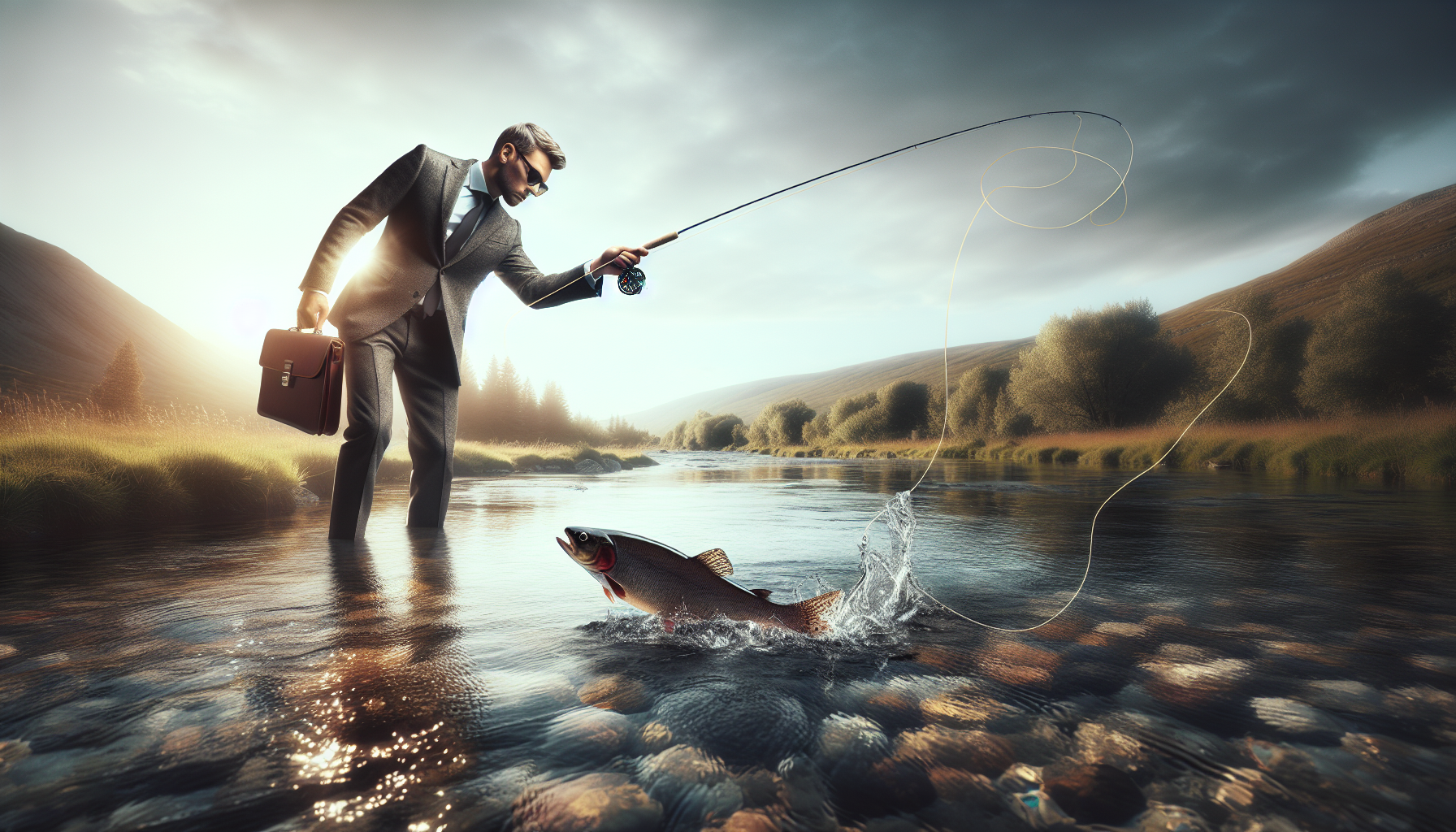
Fly fishing ethically means pursuing fish in ways that protect wild populations, respect habitats, follow regulations, and honor other people who share the water. In practical terms, ethical fishing practices combine conservation biology, legal compliance, field craft, and personal restraint. I have spent enough dawns on trout streams and warmwater rivers to know that the most important decisions often happen before the first cast: whether water temperatures are safe, whether spawning fish should be left alone, whether a crowded run can handle another angler, and whether a heroic photo is worth extra stress on a released fish.
As a hub within conservation and ethics, this guide explains the standards that should shape every outing. Ethical fly fishing is not limited to catch and release. It includes proper fish handling, selective harvest where regulations and biology support it, invasive species prevention, low impact wading, honest reporting, and courtesy toward landowners and fellow anglers. These choices matter because many fisheries face cumulative pressure from habitat loss, warming water, drought, overuse, and the spread of aquatic hitchhikers such as didymo, whirling disease, and zebra mussels. One careless day may seem minor, but repeated across thousands of visits, poor habits degrade fisheries.
Good ethics also improve fishing. Anglers who understand seasonal stress, insect cycles, and fish behavior make better decisions and usually catch more fish while causing less harm. This article lays out what responsible practice looks like on trout streams, bass rivers, stillwaters, and salt flats. It also points naturally toward related topics such as catch and release technique, stream etiquette, fish habitat protection, and invasive species cleaning protocols. If you want a clear standard for ethical fishing practices, start here: obey the rules, minimize harm, protect the resource, and leave every place better than you found it.
Know the Law, Then Go Beyond the Minimum
Regulations are the floor, not the ceiling. Every ethical fly angler starts by reading current state or provincial rules for seasons, tackle restrictions, size limits, bag limits, bait bans, and area closures. Special regulation water often has different standards from general water, and emergency closures can appear during heat waves, low flows, or spawning periods. Agencies such as state fish and wildlife departments publish updates online, and many now issue temperature related hoot owl restrictions that prohibit fishing after midday when dissolved oxygen falls and fish recover slowly.
Following the law protects fisheries, but ethics require judgment when legal conditions are still biologically risky. A river can remain open while afternoon temperatures climb above safe release thresholds for trout. Many experienced anglers use 68 degrees Fahrenheit as a caution point and 70 degrees as a clear stop signal, though species, elevation, and local guidance matter. The same principle applies during spawning. Fishing to actively spawning trout on redds may be legal in some waters, yet it is still poor practice because repeated disturbance reduces reproductive success and crushes eggs in gravel. Ethical anglers target nonspawning fish in other holding water and avoid walking through clean, light colored redds.
Harvest deserves the same nuance. Keeping a stocked pan sized trout from a put and take fishery can be fully compatible with conservation goals, while harvesting a wild native fish from a fragile stream may be irresponsible even where technically allowed. The right decision depends on population status, recruitment, management objectives, and local culture. Ethical fishing practices are strongest when anglers learn why rules exist rather than treating them as obstacles.
Reduce Harm Through Tackle and Fish Fighting Decisions
Tackle choices directly affect mortality. In my experience guiding newer anglers, the simplest upgrades produce the biggest gains: use a strong enough rod and tippet to land fish quickly, pinch barbs when regulations allow, carry hemostats, and avoid overly prolonged fights for sport. Research on released salmonids shows mortality rises when fish are exhausted, deeply hooked, or exposed to warm water. Using gear matched to the fishery shortens recovery time and reduces lactic acid buildup. For trout in moderate current, that often means fishing heavier tippet than beginners expect, because a faster landing is usually safer than a delicate but extended fight.
Hooks matter. Barbless hooks penetrate efficiently, come out faster, and reduce tissue damage to fish and anglers. Circle hooks are more relevant to natural bait than fly fishing, but hook shape and gape still influence where fish are hooked. For streamers and saltwater patterns, sharp chemically honed hooks improve immediate penetration, reducing the need for repeated hard strips or rod yanks. Ethical anglers also think about fly design. Oversized articulated patterns with multiple hook points can increase damage if used carelessly on small fish. In sensitive fisheries, simple single hook flies are often the better option.
Landing tools should support release quality. A rubber or silicone net is superior to knotted nylon because it protects slime, fins, and eyes. Nets also allow fish to remain partially submerged during hook removal. Gloves are not automatically fish friendly; rough or dry surfaces can strip mucus. Wet hands are best. Finally, photographing should never dictate tackle choices or fight duration. If your setup cannot land fish efficiently in current, downsize the target species, move to gentler water, or change equipment.
Handle, Release, or Harvest Fish Responsibly
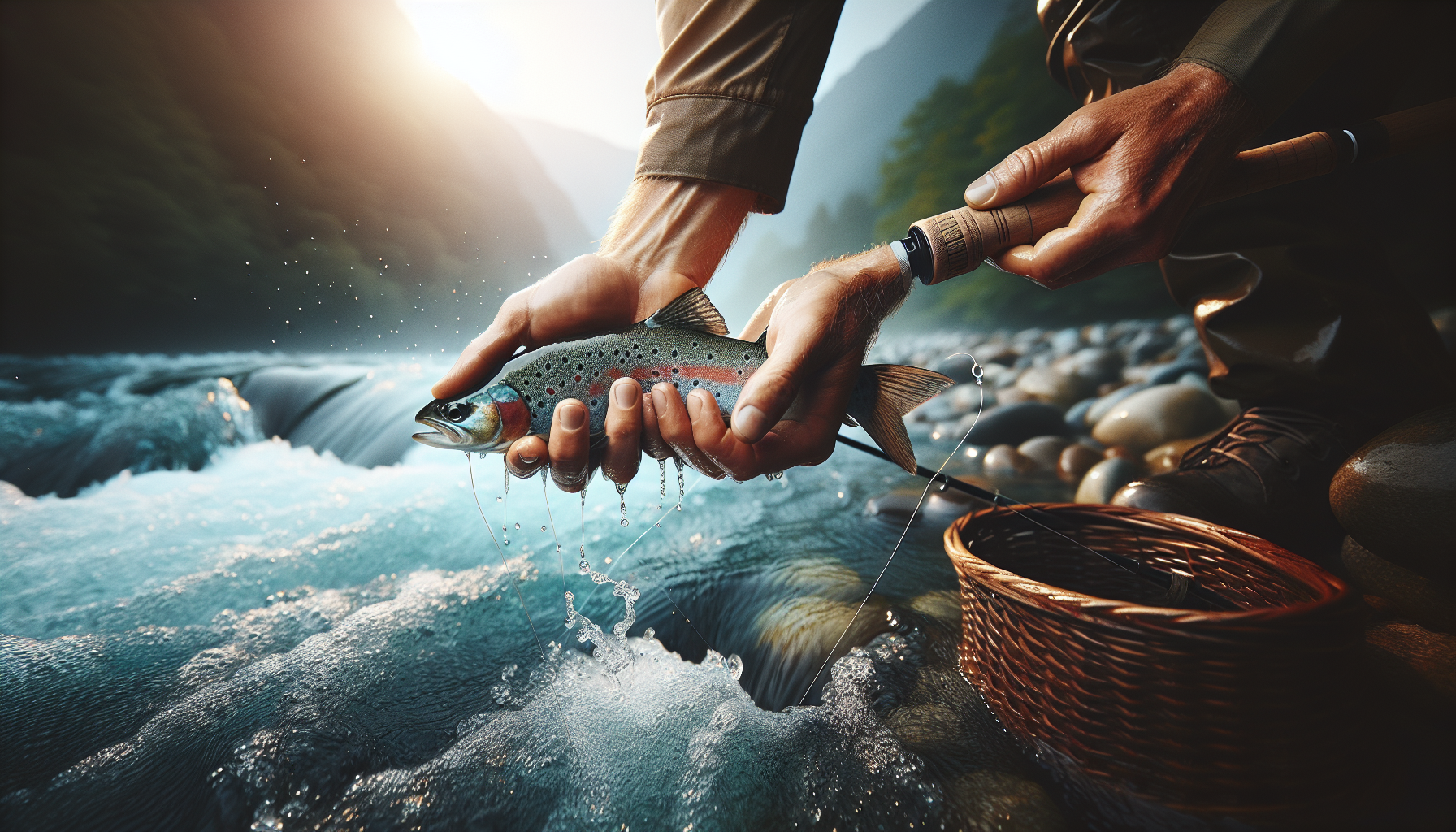
Ethical fish handling is a sequence, not a slogan. Keep the fish in the water as much as possible. Prepare tools before lifting. Wet your hands. Support the fish gently under the belly and tail wrist rather than squeezing the gill plate area. Never insert fingers into the gills unless regulations and harvest intentions make it irrelevant. Remove the hook quickly with forceps. If a fish is deeply hooked and bleeding, cutting the tippet may be better than tearing tissue with forceful extraction, although outcomes vary by species and hook location.
Air exposure is one of the clearest controllable stressors. A practical field rule is simple: if you want a photo, have the camera ready, lift the fish briefly for a few seconds, then return it to the water. The often repeated “keep em wet” phrase is not a trend; it is good physiology. Fish exchange oxygen across delicate gill filaments that collapse and dry in air. On hot days or after long fights, even one extra hero shot can turn a successful release into delayed mortality.
Revival should be gentle and species appropriate. Hold the fish upright in moderate current facing into the flow, but do not pump it back and forth aggressively. Let it regain balance and swim off under its own power. If it cannot maintain orientation after reasonable time, conditions may already be too stressful, another sign that fishing should stop. When harvesting fish, dispatch them quickly and legally, keep them cool, and avoid waste. Responsible harvest means taking only what you will use and choosing fish that regulations and science indicate can be removed sustainably.
| Situation | Best ethical choice | Why it matters |
|---|---|---|
| Water temperature reaches 68 to 70°F for trout | Stop fishing or switch to warmwater species | Warm water lowers oxygen and increases release mortality |
| Fish is hooked deeply | Cut the tippet close to the fly if removal will tear tissue | Less handling can improve survival compared with forced extraction |
| Fish is landed for a photo | Keep netted in water, lift briefly only when ready | Minimizes air exposure and stress |
| Active spawning fish visible on redds | Do not target them and avoid wading through the area | Protects reproduction and eggs in gravel |
| Stocked put and take fishery with legal harvest | Keep only what you will eat and dispatch quickly | Aligns harvest with management goals and avoids waste |
Protect Habitat While Wading, Boating, and Moving Between Waters
Fish need intact habitat more than they need careful anglers, so ethical fly fishing includes low impact movement through the environment. Wading can crush incubating eggs, aquatic insects, and juvenile fish sheltering in shallow margins. The damage is highest in spring creeks, tailouts, side channels, and spawning gravel. Skilled anglers read water not only to find fish but to avoid vulnerable structure. Enter and exit at durable banks, minimize repeated crossings, and stay off vegetated edges that stabilize soil. In small streams, one careless approach can collapse undercut banks and send sediment into feeding lanes.
Boaters carry a different set of responsibilities. Anchoring on redds, dragging boats over shallow grass beds, or powering through no wake areas harms habitat and other users. On lakes and reservoirs, prop scars can persist in shallow vegetation that supports spawning baitfish and juvenile game fish. On rivers, ethical rowing means yielding space, avoiding low percentage “run and gun” passes through occupied water, and not dropping clients directly on top of wading anglers. Respect for access points matters too. Pack out tippet clippings, leader packages, beverage containers, and cigar tips. Monofilament and fluorocarbon left on banks can entangle birds, mammals, and turtles for years.
Moving between waters is a major conservation issue because anglers can spread invasive organisms and pathogens unintentionally. Felt sole restrictions in many regions emerged for a reason: absorbent materials can harbor cells and spores even after a day of drying. Follow the Clean, Drain, Dry standard rigorously. Remove mud and plant matter, drain boats and waders, disinfect where required, and allow complete drying before entering another watershed. This is especially important where agencies monitor for New Zealand mudsnails, didymo, zebra mussels, and whirling disease.
Respect Fish During Seasonal Stress and Sensitive Life Stages
Ethics change with the calendar. In winter, fish may hold in slow, energy conserving lies and become vulnerable to repeated disturbance. In spring, many species spawn or recover from spawning. During summer, heat and low water magnify every handling error. In autumn, pre spawn aggression can make fish easier to catch, but that is not a license to pressure them irresponsibly. The core question is always the same: can this fish be pursued, landed, and released with a high likelihood of survival and without harming future recruitment?
Trout provide a useful example. Wild trout on redds are not fair targets because they are focused on reproduction, not feeding normally, and their eggs remain exposed in gravel after the adults leave. Ethical anglers identify redds as bright, cleaned patches and route around them. Migratory fish such as steelhead and salmon require similar restraint. Repeatedly flossing, lining, or intentionally snagging fish under the excuse of fly fishing is unethical and often illegal. A legitimate take should result from a fish voluntarily eating or attacking the fly.
Warmwater and saltwater species have their own stress points. Largemouth bass guarding nests can often be caught easily, but removing a parent from a bed exposes eggs or fry to predation. Tarpon, bonefish, permit, and redfish demand fast fights, minimal handling, and species specific release methods. For tarpon over roughly forty inches in many jurisdictions, keeping the fish in the water is not just good practice but law. Ethical fishing practices therefore require local species knowledge, not one generic rulebook.
Practice Courtesy, Fair Chase, and Honest Stewardship
Ethical fly fishing is also social. Stream etiquette reduces conflict and protects the experience that draws people outdoors in the first place. Give anglers space, ask before stepping into a run, and communicate clearly about direction of travel. On crowded trout rivers, low holing someone by entering too close downstream is the fastest way to ruin a morning. On stillwaters, do not cut inside a drift line or anchor within casting range of another boat. If someone arrived first, they control that water until they move on.
Fair chase matters as much as courtesy. Spotlighting fish at night where prohibited, using prohibited scent or bait on fly only water, intentionally snagging, or harvesting beyond the limit are obvious violations. Less obvious is social media behavior. Publicly geotagging fragile fisheries can overwhelm small access sites and accelerate bank erosion, litter, and fish stress. I have seen little wild trout creeks change dramatically after one viral post. Share knowledge carefully, emphasize stewardship, and consider celebrating the experience without naming the exact location.
Stewardship extends beyond personal conduct. Buy licenses, support habitat groups such as Trout Unlimited, Backcountry Hunters and Anglers, Bonefish and Tarpon Trust, or local watershed councils, and volunteer for cleanups or monitoring projects. Report poaching, fish kills, invasive species sightings, and barrier problems to the proper agency. Ethical anglers are not just users of public resources; they are active caretakers. That mindset creates better fisheries, stronger access, and a culture where conservation and recreation reinforce each other.
Ethical fly fishing comes down to disciplined choices repeated every trip. Learn the regulations, then add your own margin of safety when heat, spawning activity, crowding, or habitat sensitivity make legal fishing a bad idea. Use tackle that lands fish quickly, handle them with wet hands and minimal air exposure, and harvest only when it fits the water, the rules, and the biology. Protect habitat by wading lightly, cleaning gear between waters, packing out waste, and respecting access. Treat other anglers, guides, landowners, and boaters with patience and space.
The main benefit of ethical fishing practices is simple: healthier fisheries that remain fishable for the next season, the next generation, and the communities that depend on them. Better ethics also produce better angling because they force you to observe conditions closely and match your decisions to the real needs of fish and habitat. As you explore related articles in this conservation and ethics hub, build a personal checklist for every outing: check regulations, check water temperatures, check spawning status, prepare release tools, and clean your gear afterward. Then fish in a way that leaves the resource stronger than you found it.
Frequently Asked Questions
What does it really mean to fly fish ethically?
Fly fishing ethically means making choices that protect fish, preserve habitat, follow the law, and respect everyone else who uses the water. It goes well beyond simply catching and releasing fish. Ethical anglers think about the full impact of their actions before, during, and after a day on the river. That includes checking local regulations, understanding seasonal closures, recognizing spawning behavior, and deciding whether conditions are safe enough for fish to be pursued at all. In many cases, the most ethical decision is to not fish.
At its core, ethical fly fishing combines conservation science with personal restraint. Wild fish face stress from warm water, low flows, habitat degradation, and angling pressure. An ethical angler responds to those realities by reducing harm wherever possible: handling fish gently, shortening fight times, using appropriate tackle, avoiding redds and spawning fish, and stopping when conditions become risky. Ethical fishing also includes practical courtesy, such as giving other anglers space, respecting private property, leaving no trash behind, and avoiding behavior that damages streambanks or riparian vegetation.
In short, ethical fly fishing is about stewardship. The goal is not just to enjoy a day on the water, but to ensure that fish populations, habitats, and fishing opportunities remain healthy for the future. A good ethical standard is simple: if a choice benefits you in the moment but places unnecessary stress on fish, habitat, or other people, it is probably the wrong choice.
How can I tell if water conditions are too stressful for fish to fish responsibly?
Water conditions are one of the most important ethical considerations in fly fishing, because fish survival depends heavily on temperature, oxygen levels, and overall environmental stress. Warm water generally holds less dissolved oxygen, which means fish tire more easily and recover more slowly after being hooked. Trout and salmon are especially vulnerable in hot summer conditions or during drought-related low flows. If you are targeting coldwater species, it is wise to carry a thermometer and check temperatures before fishing, not just rely on how the air feels. In many trout fisheries, anglers become increasingly cautious once water temperatures rise into the upper 60s Fahrenheit, and many choose to stop entirely when temperatures hit around 68 to 70 degrees or higher, depending on the fishery and local guidance.
Low, clear water can also create ethical concerns even when temperatures seem manageable. Fish may be concentrated into fewer holding areas, exposing them to repeated pressure. They often have less access to cover and may be more vulnerable to exhaustion during a fight. Similarly, after floods or runoff, wading through soft banks or spawning gravels can cause habitat damage, and fish may already be stressed from unstable conditions. Ethical anglers read these cues and adjust accordingly rather than forcing a day’s fishing to happen.
The best approach is to combine direct observation with local knowledge. Check streamflow data, water temperatures, emergency closures, and advisories from state wildlife agencies, guides, or local fly shops. If fish are lethargic, gasping in slack water, or concentrated unnaturally, that is a warning sign. If temperatures are climbing quickly, fish early and quit early, or skip the outing entirely. Responsible fly fishers understand that preserving fish health matters more than salvaging a few hours on the calendar.
Is catch and release always the most ethical choice?
Catch and release is often an important conservation tool, but it is not automatically ethical in every situation. Its value depends on how it is practiced and on the condition of the fishery. Releasing a fish only helps if that fish survives and recovers with minimal long-term harm. Poor handling, prolonged fights, warm water, deep hooking, or repeated captures in heavily pressured waters can all increase mortality and stress. In those circumstances, simply releasing fish does not erase the impact of catching them.
There are times when catch and release is clearly the right ethical standard, especially on fragile wild fisheries, during low-abundance periods, or where regulations require it. But there are also fisheries managed for harvest, including some stocked waters or populations where keeping a legal fish within limits may be consistent with sound management. Ethics and regulations are related, but not identical. A fishery can legally allow harvest while still calling for personal restraint, and a catch-and-release fishery can still be harmed by careless angling behavior.
What matters most is minimizing unnecessary harm. Use barbless hooks when appropriate, land fish quickly with properly matched tackle, keep them in the water as much as possible, wet your hands before touching them, and avoid squeezing or dragging them onto rocks or dry surfaces. If a fish is clearly exhausted, revival should happen gently in moderate current, allowing it to recover on its own terms. Ethical anglers also know when not to target certain fish at all, such as actively spawning fish or fish under severe environmental stress. So while catch and release is often a good practice, true ethical fishing depends on context, fish condition, and the quality of the handling.
Why should anglers avoid targeting spawning fish and disturbing redds?
Spawning fish are critical to the future of a fish population, and disturbing them can have consequences that last far beyond a single encounter. When fish are actively spawning, they are investing energy in reproduction rather than normal feeding and recovery. Hooking them during this period can interrupt spawning behavior, increase physical stress, and reduce reproductive success. Even if the fish swims away strongly, the disruption may still affect whether eggs are successfully deposited or fertilized.
Redds, which are the nests certain fish create in gravel, are especially vulnerable. They can be surprisingly easy to damage by wading through shallow riffles or tailouts where spawning occurs. A single careless step can crush eggs or compact gravel, reducing oxygen flow that developing embryos need to survive. Because redds may look like clean, lighter patches of gravel, anglers who do not know what to watch for can accidentally harm future generations of fish even without hooking a single one.
Ethical fly fishers learn to identify spawning areas and avoid them completely. That means not casting to paired-up fish on redds, not wading through likely spawning habitat, and giving these areas a wide buffer. It also means understanding seasonal timing for local species, since trout, salmon, and warmwater fish can spawn at different times depending on geography. Respecting spawning fish is one of the clearest examples of putting stewardship ahead of immediate success. Passing up a visible fish on a redd is not a missed opportunity; it is a deliberate act of conservation.
What are the most important ethical habits to practice on the water every time I fish?
The most important ethical habits begin before you string up your rod. Check regulations, closures, and access rules every trip, because seasons, gear restrictions, and emergency protections can change. Match your tackle to the species and conditions so fish can be landed efficiently without excessive exhaustion. Carry tools that reduce harm, including forceps, a rubber or knotless landing net, and a thermometer if you fish for temperature-sensitive species. Plan your day with fish welfare in mind, not just convenience, and be ready to leave if conditions are poor.
Once on the water, fish with care and awareness. Avoid trampling streambanks, side channels, and spawning gravels. Keep a respectful distance from other anglers, boaters, and landowners. Do not crowd rising fish another person is already working, and do not assume public water means unrestricted access across private land. Pack out every bit of trash, including tippet clippings, cigarette butts, and snack wrappers. Small habits matter because ethical fishing is built from repeated decisions, not grand gestures.
When you hook a fish, make fish welfare the priority. Fight it firmly and efficiently, keep it in the water whenever possible, and minimize air exposure if you take a photo. A good rule is that if a photo cannot be taken quickly and without fumbling, skip it. Release fish facing into calm, suitable current and let them regain strength naturally. Finally, practice restraint. Do not fish simply because you can. If the water is too warm, the fish are spawning, the banks are fragile, or pressure is already intense, choose a different place, a different species, or a different day. That kind of restraint is often the clearest sign of an ethical angler.