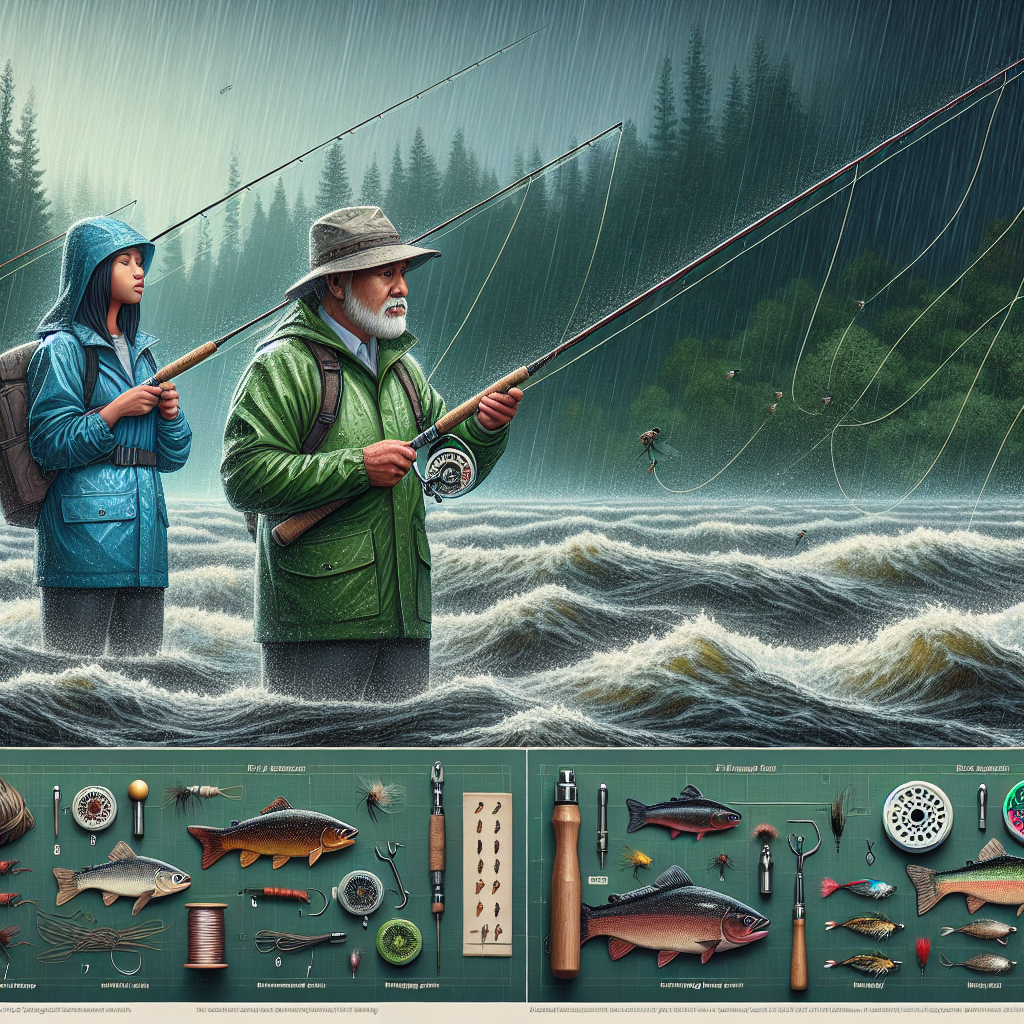
Fly fishing is a captivating and rewarding hobby that allows individuals to connect with nature in its purest form. This time-honored technique involves the use of artificial flies to imitate natural prey and attract fish, providing anglers with both a mental and physical challenge. While seasoned anglers often enjoy the tranquility and joy of sunny fishing trips, fly fishing in the rain offers its own unique set of advantages and hurdles.
Rain can influence fish behavior, potentially increasing the chances of a successful catch. Yet, it also presents challenges like staying dry and comfortable. For those willing to brave the wet conditions, rain promises an enriched and rewarding fly fishing experience, albeit with the proper knowledge and preparation. In this article, we will explore tips and techniques for staying dry and successful while fly fishing in the rain, covering all the essentials from proper gear to casting strategies.
Gear Essentials for Rainy Weather
One of the most critical aspects of fly fishing in wet conditions is proper gear. Quality equipment not only keeps you dry but also ensures you remain comfortable, allowing you to focus on fishing rather than the weather. Here are some essential gear components to consider:
- Waterproof Jacket and Pants: Invest in a high-quality, breathable waterproof jacket and pants. Modern materials like GORE-TEX provide excellent waterproofing while allowing sweat to escape, keeping you dry from both rain and perspiration.
- Waders: Chest-high waders are ideal for rainy conditions. They keep your legs and torso dry, and the additional height helps when navigating deeper waters.
- Hats and Gloves: A wide-brimmed waterproof hat will keep rain off your face and neck, while waterproof gloves will keep your hands dry and comfortable, allowing for better rod handling.
- Footwear: Waterproof boots with good traction are crucial for slippery riverbanks. Felt soles or cleats can provide additional grip on wet rocks and mud.
Ensuring you have the right gear can significantly enhance your comfort and safety, ultimately contributing to a more enjoyable fly fishing experience in the rain.
Choosing the Right Fly Patterns
Understanding how rain affects insect activity and fish behavior is key to selecting the right fly patterns. Rain can wash terrestrial insects into the water, providing a feast for fish. Therefore, consider the following fly patterns:
- Terrestrial Flies: Patterns such as ants, beetles, and grasshoppers can be highly effective after a rainstorm when these insects are more likely to fall into the water.
- Streamers: Rain often muddies the water, decreasing visibility. Brightly colored or larger streamers can attract fish in these conditions. Patterns like Woolly Buggers or Clouser Minnows are good choices.
- Nymphs: Aquatic insects might be more active during rainfall. Nymph patterns like Pheasant Tails or Hare’s Ears can be productive.
Adjust your fly box to include a variety of these patterns, enhancing your adaptability to changing weather and water conditions.
Adjusting Your Casting Techniques
Casting in the rain can be challenging due to reduced visibility, both underwater and above. To improve your chances of a successful catch, adjust your casting techniques as follows:
- Shorten Your Cast: Confined visibility means fish are likely to be closer than usual. Shorter casts result in better control and more precise placement of the fly.
- Use Heavier Lines: The extra weight can help break through the wind and rain more effectively, ensuring better presentation.
- Mend Frequently: Constant adjustments to your line can keep your fly at the proper depth and behavior, making it more appealing to fish navigating in turbulent waters.
Adapting your casting techniques to rainy conditions can minimize the challenges posed by the weather and increase your likelihood of a successful fly fishing outing.
Reading Water in Rainy Conditions
Rain alters how water behaves in rivers and streams, affecting where fish are likely to be found. Understanding these changes can help you target the most productive areas:
- Focus on Eddies and Backwaters: Rain increases water flow, causing fish to seek out calm areas like eddies and backwaters where they can rest and easily intercept food.
- Target Inflows: Where tributaries or stormwater drains enter the main body of water are hot spots. These areas can bring a surplus of food and attract fish.
- Avoid Fast Currents: During heavy rain, fast currents can be exhausting for fish. Look for areas with slower currents, where fish are more likely to be waiting.
Reading the water accurately during rainy conditions helps in identifying promising fishing spots, thereby optimizing your efforts and increasing your chances of success.
Maintaining Safety in Rainy Weather
Fly fishing in the rain requires not just strategy and skill but also an emphasis on safety. Rain can create hazardous conditions, so it’s crucial to take necessary precautions:
- Check Weather Reports: Always review updated weather forecasts before heading out. Be mindful of potential dangers like lightning storms or rising water levels.
- Wear a Life Jacket: In case of accidental falls or unexpected high currents, a life jacket can be a lifesaver.
- Be Wary of Slippery Surfaces: Wet rocks and mud can be slippery. Take measured steps and consider using wading staffs for additional stability.
- Fish with a Buddy: Having a partner can enhance safety, ensuring that there’s someone to assist in case of emergencies.
Prioritizing safety in rainy conditions will ensure that your fly fishing outings are enjoyable and accident-free. Being well-prepared equips you to handle the unexpected challenges posed by wet weather.
Conclusion
Fly fishing in the rain can be both a challenging and rewarding experience. With the right gear, smart fly selection, and adaptable techniques, rainy conditions can actually enhance your chances of a successful catch. By understanding the effects of rain on fish behavior and water conditions, you stand to enjoy fruitful and memorable fly fishing outings. The key lies in preparation and adaptability, ensuring that you remain comfortable, dry, and safe while navigating the myriad of opportunities presented by rainy weather.
For those willing to brave the elements, fly fishing in the rain can open up a whole new world of angling possibilities. While gear and safety are paramount, the ability to read water and select appropriate fly patterns will ultimately determine your success. Remember, rain can be a great friend to the savvy angler, presenting opportunities that clear skies might not offer.