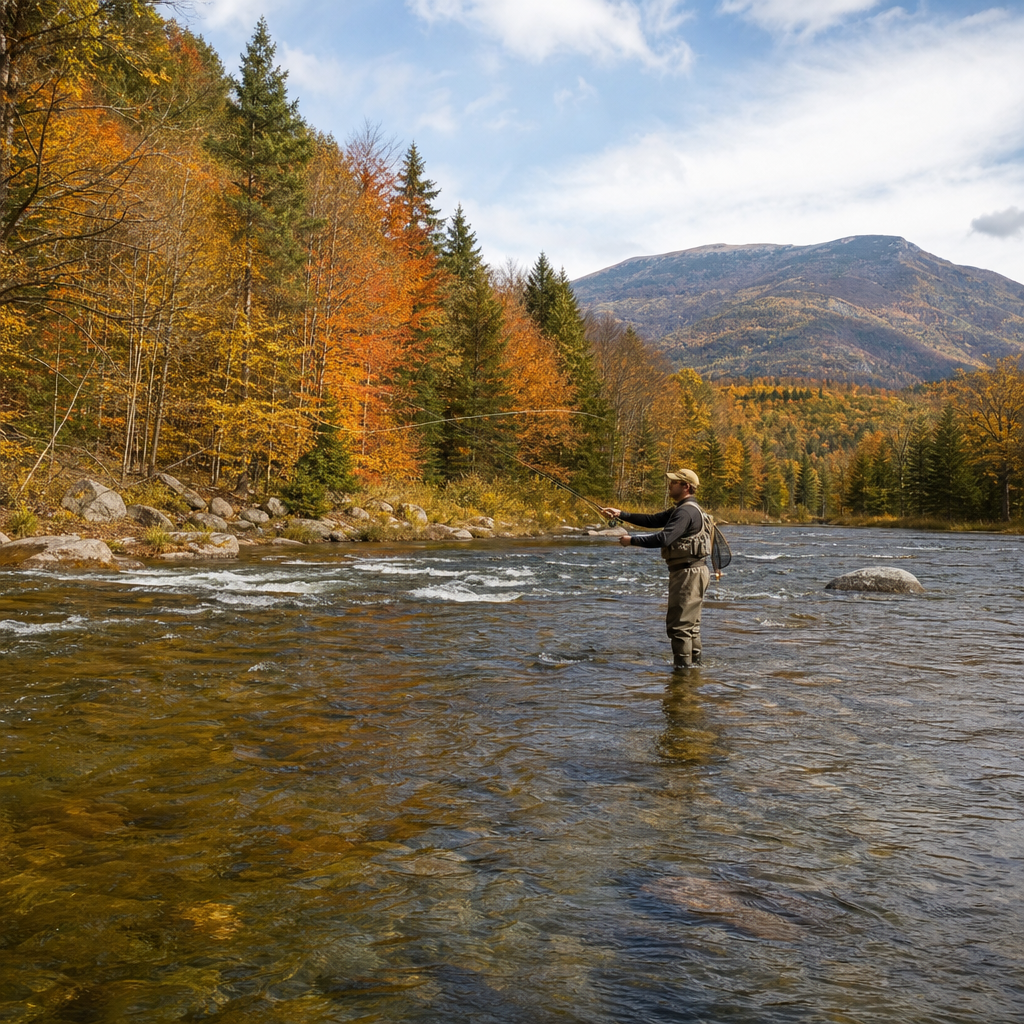
Winter midge hatches keep trout feeding when most anglers assume the river is dormant, and learning to fish them well can turn the coldest months into some of the most consistent dry-fly and nymphing opportunities of the year. In fly fishing, a hatch is the emergence of aquatic insects from one life stage to another, usually when larvae or pupae rise through the water column and become vulnerable enough for fish to key on them. Midges, members of the Chironomidae family, dominate many winter food webs because they thrive in cold water, hatch in large numbers, and remain available even when mayflies, caddis, and stoneflies are sparse. As a result, winter midge hatches sit at the center of any serious discussion of seasonal hatches. They teach observation, precision, and restraint better than almost any other cold-weather scenario.
I have spent enough January and February days on tailwaters, spring creeks, and slow freestones to know that success rarely comes from fishing harder; it comes from reading tiny clues better. A few suspended shucks in an eddy, dimples instead of splashy rises, or a subtle color shift in drifting adults can explain why trout ignore one fly and eat another instantly. That is why this topic matters beyond winter alone. Anglers who understand winter midges also build stronger instincts for all seasonal hatches: matching size before color, recognizing the stage trout prefer, and adjusting presentation to current speed, light, and water temperature. This article serves as a hub for seasonal hatches by using winter midges as the clearest model for how hatch timing, entomology, technique, and gear come together on the water.
Why Winter Midge Hatches Matter Within Seasonal Hatches
Winter midge hatches matter because they are often the primary dependable insect event during the coldest months, especially on tailwaters moderated by dam releases and on spring creeks with stable temperatures. In many trout rivers, water in the upper 30s to mid 40s Fahrenheit slows trout metabolism, but it does not stop feeding. Midges remain active in exactly those conditions. Their life cycle is efficient, their populations are dense, and trout can eat them with minimal effort. That combination explains why anglers regularly find pods of selective fish feeding in slow seams at noon in February while seemingly better looking pocket water remains quiet.
As a hub topic for seasonal hatches, winter midges also illustrate the broader principle that hatch calendars are guides, not guarantees. Local conditions determine everything. On a tailwater such as Colorado’s South Platte or Arkansas below Pueblo, midge activity can occur year-round, yet winter brings longer, more concentrated feeding windows because alternative food is limited. On spring creeks like Armstrong’s or Paradise Valley systems, fish may inspect every fly because they see midges daily in clear, even flows. On freestones, a sunny afternoon after a hard freeze can trigger a short but useful emergence in softer edges. Understanding those differences prepares anglers for blue-winged olives in shoulder seasons, caddis in spring, and terrestrials in summer, because the same observational framework applies.
Understanding the Midge Life Cycle and Trout Feeding Behavior
To fish winter midge hatches effectively, you need to know what trout are eating at each stage. Midges begin as eggs, develop into larvae, transition into pupae, and finally emerge as adults. Larvae are slender, wormlike, and often called bloodworms when they contain hemoglobin-like pigments that make them red. Pupae are the critical stage during many winter hatches. They ascend slowly, trap gases that create a silvery sheen, and pause in or just under the surface film before adults fully emerge. Adults then cluster on the surface, drift helplessly, or return later in mating swarms and egg-laying flights.
Trout behavior changes with each stage. When fish hold near the bottom and feed steadily without showing themselves, they are often taking larvae or ascending pupae. When rises look like neat dimples with barely a head showing, trout are usually intercepting emergers in the film. When you see noses, dorsal fins, and occasional tails in soft slicks, adults may be collecting in the surface layer. In very cold water, trout prefer the easiest calories. That means they often set up in slow, soft lanes where tiny insects drift directly to them rather than chasing food across heavy current. A common mistake is assuming winter fish are inactive; in reality, they are highly efficient. If your drift crosses their lane correctly and the fly matches the vulnerable stage, they will eat.
Where and When Winter Midge Hatches Occur
The best winter midge hatches usually occur from late morning through midafternoon, when sunlight raises air temperature and stabilizes the surface layer enough to improve emergence. Water temperature changes are often subtle, sometimes only a degree or two, but that can be enough. Tailwaters are especially reliable because releases keep flows and temperatures relatively even. Spring creeks can be equally productive, though fish there are typically more selective because visibility is high and current complexity is low. Freestone rivers can offer windows during mild spells, especially in slower pools, eddies, and inside seams protected from the main flow.
Look for hatch-friendly structure instead of only obvious trout lies. Foam lines, back eddies, tailouts, and broad flats with gentle walking-speed current are classic winter midge water because tiny insects accumulate there. Bridges and canyon walls that block wind can also improve adult concentration. Cloud cover matters less than many anglers think; I have seen strong midge activity under bright winter sun as long as flows were stable. Wind, however, can ruin a technical surface feed by scattering adults and making drag-free drifts difficult. If you arrive with no visible rises, start subsurface in moderate-depth seams and watch carefully. Midge days often begin with pupa feeding below and shift upward as the hatch develops.
Proven Winter Midge Techniques
Presentation is everything during a winter midge hatch. Because the insects are small, trout inspect them closely and reject flies that drift unnaturally. The most reliable starting method is a two-fly nymph rig with a tiny pupa pattern below a slightly heavier anchor fly or micro split shot. A 9- to 12-foot leader ending in 5X to 7X tippet is standard, depending on fly size, clarity, and fish pressure. Strike indicators should be small and balanced to the rig; oversized indicators create splash and reduce sensitivity. On flatter water, tight-line contact with a short sighter can outperform indicators because it tracks subtle takes without dragging the flies.
When trout move into the film, switch quickly. A dry-dropper with an adult midge or sparse cluster and an unweighted pupa 12 to 24 inches below can cover both surface and emerger takes. If fish are visibly sipping adults, fish a single dry first. Most refusals at this stage come from micro-drag, not wrong color. Lengthen the leader, drop to finer tippet, and cast from below or across so the fly reaches the fish before the line does. Grease only the butt and midsections of the leader if needed; leaving the final tippet section ungreased helps reduce film disturbance. Hook sets should be controlled and short. Winter trout often eat softly, and a hard strike snaps light tippet instantly.
| Situation | Best Technique | Fly Stage to Imitate | Typical Adjustment |
|---|---|---|---|
| No visible rises, steady deep feeding | Two-fly nymph rig | Larva and pupa | Add depth before changing color |
| Dimples in soft slicks | Dry-dropper or single emerger | Pupa in film | Lengthen leader and reduce drag |
| Consistent nose-up surface takes | Single dry adult or cluster | Adult | Downsize fly before changing pattern style |
| Refusals after close inspection | Long leader technical dry setup | Adult or cripple | Drop to finer tippet and improve angle |
Fly Selection: Patterns, Sizes, and Color Logic
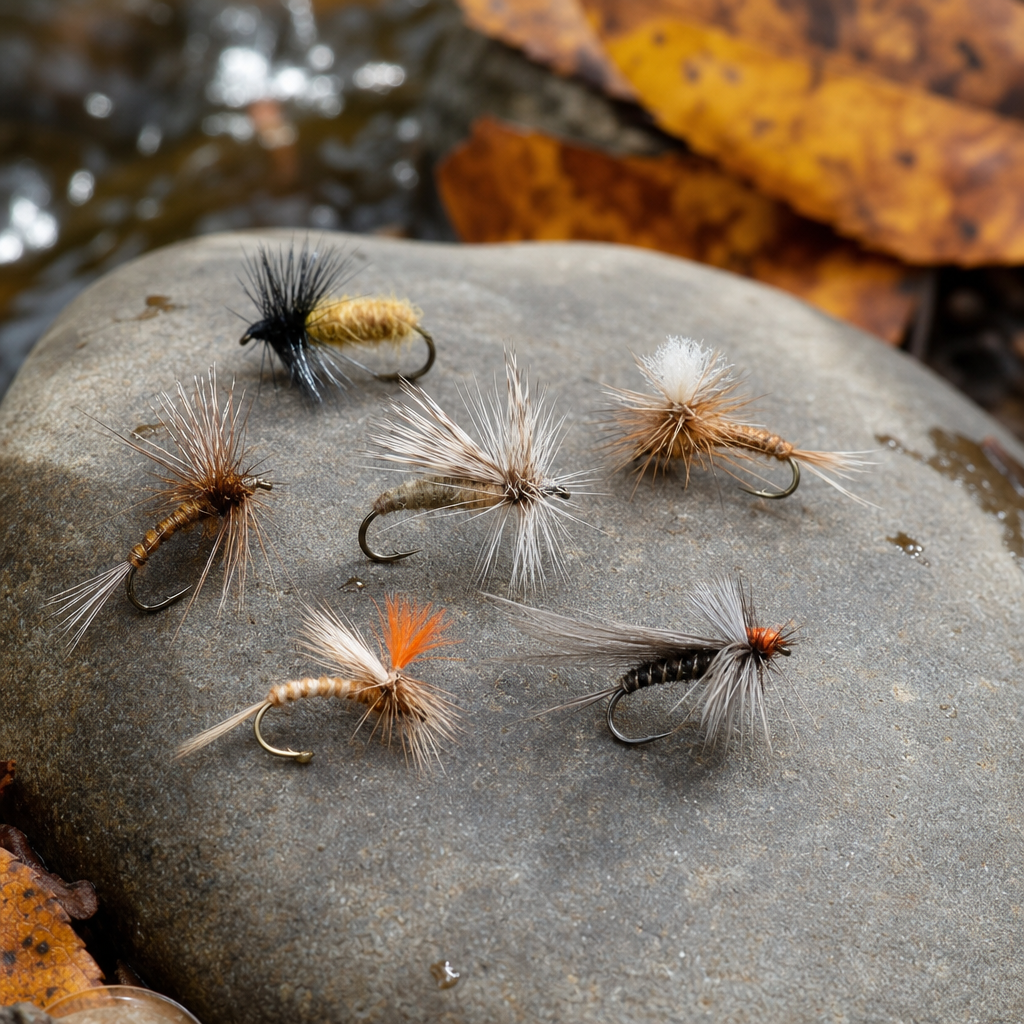
Effective winter midge boxes are small, but they should be organized by life stage rather than by pattern name alone. For larvae, carry red, maroon, black, olive, and cream patterns in sizes 18 to 24. Zebra Midges remain standards because wire ribbing suggests segmentation and adds durability. For pupae, black, gray, olive, chocolate, and claret cover most situations, with slim patterns like Black Beauty, Mercury Midge, RS2 variants, and glass-bead or flash-topped emergers handling the ascent phase. Adults are usually black, gray, or dark brown, often in sizes 20 to 26, and sparse clusters can outperform single adults when naturals gather in mats.
Size matters more than color on most winter days. If trout are refusing size 20 flies consistently, a 22 or 24 often solves the problem even when the pattern silhouette changes only slightly. Color still matters in clear water. Red larvae can be excellent early, especially in tailwaters with rich substrate, while black and gray pupae dominate many midday hatches. Cream adults become important on some rivers, particularly when sunlight reveals pale-winged insects over dark water. Carrying a few curved-shank emergers and trailing-shuck patterns is wise because trout often key on insects stuck in transition. If you want one practical rule, match depth first, size second, profile third, and color fourth. That hierarchy has saved more winter afternoons for me than any brand-new pattern ever has.
Gear for Cold Conditions and Technical Presentations
The best gear for winter midge hatches balances finesse with cold-weather practicality. A 9-foot 4-weight is the most versatile rod for many trout rivers because it protects light tippet, casts long leaders, and still handles moderate wind. On larger tailwaters, a 10-foot 3-weight or 4-weight can improve line control during tight-line nymphing and reach casts over conflicting currents. Reels matter less for drag and more for reliability; a smooth startup protects 6X and 7X, and a large arbor reduces line memory in cold weather. Floating lines should have a supple cold-water coating. Stiff lines coil, land poorly, and transmit drag to tiny flies.
Leaders and terminal tackle deserve extra attention. I carry 12-foot leaders tapered to 5X, then build out with fluorocarbon or nylon tippet depending on technique. Fluorocarbon sinks faster and excels for larvae and pupae; nylon remains better for dries and film work because it floats more naturally when treated properly. Forceps, fine-point nippers, a tippet bar down to 7X, desiccant, floatant suitable for small dries, and a stream thermometer are not accessories in winter; they are core tools. Clothing matters too. Fingerless gloves under waterproof shell mitts, studded boots for shelf ice, layered synthetic or wool insulation, and polarized lenses with high-contrast copper or amber tints make a measurable difference in both safety and performance. If your hands are numb, your knot quality and fly changes will suffer.
Common Mistakes and How to Troubleshoot a Tough Hatch
The most common winter midge mistakes are fishing too big, too fast, and too impatiently. Anglers often assume trout will not move far in cold water, then place flies outside the exact feeding lane and conclude fish are inactive. They also rush fly changes before fixing depth or drift. If your indicator passes through productive water with no response, ask three questions in order: am I at the right depth, is the drift drag-free, and am I matching the right stage? Only after those answers are yes should you start rotating colors aggressively.
Refusals on the surface usually come from leader flash, poor angle, or hidden drag. Back off, lengthen the leader, and target one fish rather than the whole pod. If fish feed rhythmically, time the cast so the fly enters the lane early and settles before the rise form returns. In subsurface situations, missed takes often signal an overweight rig that is ticking bottom unnaturally or an underweight rig drifting above the fish. Use a thermometer and watch the clock. Some winter rivers turn on at 11:30 and fade by 2:30. Logging those windows over a season builds a reliable hatch playbook. That habit connects winter midge hatches to the wider discipline of seasonal hatches: success belongs to anglers who notice patterns, record them, and return with a plan.
Winter midge hatches prove that trout fishing does not shut down when temperatures drop; it simply becomes more technical, more observational, and often more rewarding. Midges are the foundation of winter insect activity on many trout waters, and understanding their life cycle explains where trout hold, when they feed, and which fly stage matters most. The core lessons are consistent across all seasonal hatches: identify the food source, read the water that concentrates it, match the vulnerable stage, and present the fly with minimal drag. Whether you start with larvae near the bottom, pupae rising through the column, or adults trapped in the film, each decision should follow visible evidence on the water.
As the hub for seasonal hatches under seasons and conditions, this topic points outward to every hatch-specific article an angler should study next: spring blue-winged olives, caddis emergences, summer terrestrials, fall baetis, and regional hatch calendars. Winter midges are the best training ground because they punish sloppy technique and reward disciplined adjustments. Build a small but precise fly box, carry gear that supports long leaders and light tippet, and keep notes on timing, temperature, and trout behavior. If you want more productive cold-weather days and sharper hatch-matching skills all year, start by mastering winter midge hatches on your home water this season.
Frequently Asked Questions
What makes winter midge hatches so important for trout fishing?
Winter midge hatches matter because they provide one of the most reliable food sources available to trout when water temperatures are low and larger insects are scarce. While many anglers think of winter as a slow season, trout still need to feed, and in many rivers, tailwaters, spring creeks, and fertile freestones, midges make up a large share of that diet. Members of the Chironomidae family are present in huge numbers, and because they are small, abundant, and active even in cold conditions, trout often key on them with impressive consistency.
A hatch, in fly-fishing terms, is the transition from one life stage to another, usually when larvae or pupae rise through the water column and become especially vulnerable. During winter, this movement creates predictable feeding windows. Trout may sip adults delicately from the surface, suspend just below the film to intercept emerging pupae, or hold near the bottom and feed on larvae drifting in slower seams. That means anglers can find fish in feeding mode even when the river looks lifeless at first glance.
The real advantage for anglers is consistency. Winter midge activity may not produce explosive surface action every day, but it often creates dependable opportunities for both nymphing and technical dry-fly fishing. If you understand where fish are positioned, what life stage they are targeting, and how subtle the takes can be, winter fishing becomes far more productive. Instead of treating the season as an off-period, skilled anglers use midge hatches to locate feeding trout and fish methodically with confidence.
How can you tell when trout are feeding on midges in winter?
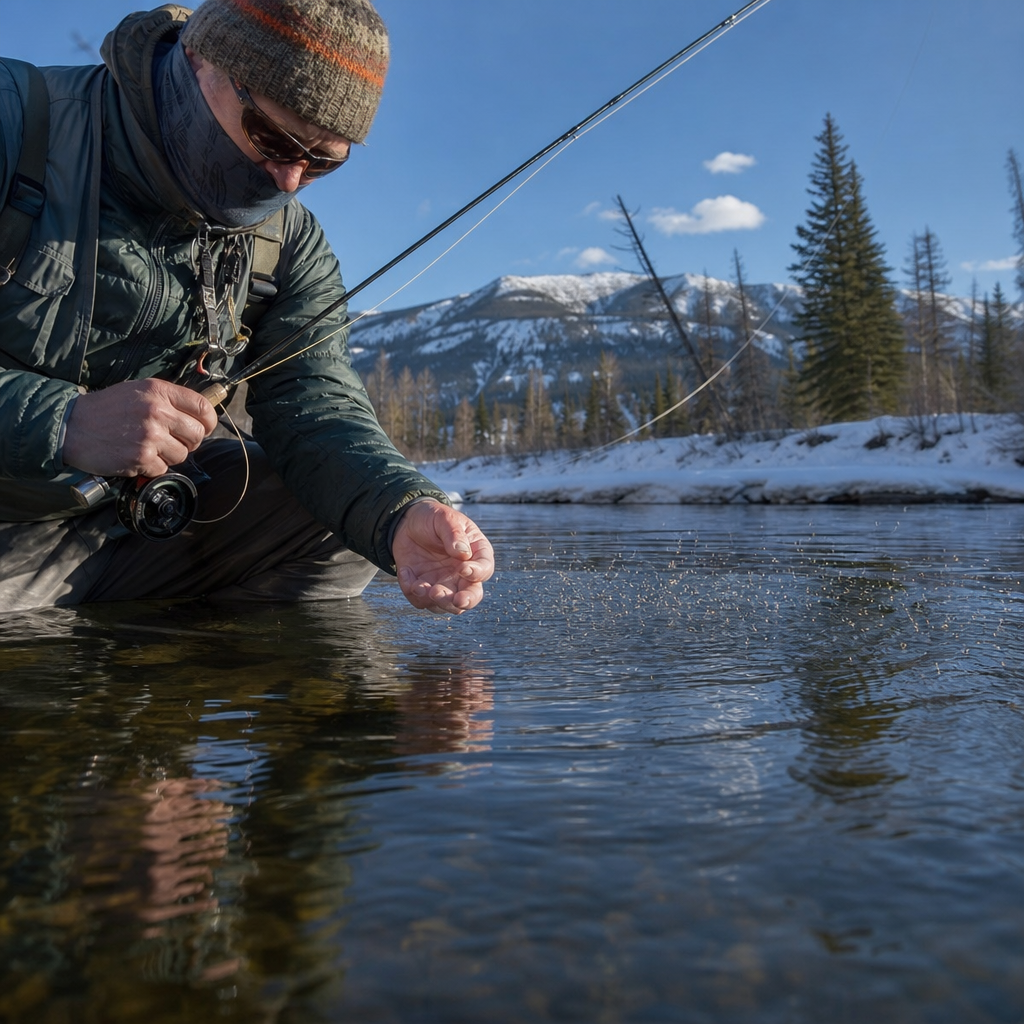
Identifying a winter midge hatch starts with close observation. On calm days, you may see tiny clouds of insects hovering above the water, especially in slower pools, eddies, and tailouts during the warmest part of the afternoon. Adult midges are often very small, typically in sizes 18 through 26, so they can be hard to spot unless you kneel down, watch the surface carefully, or inspect your jacket sleeve, net, or windshield. If insects are present but rises are subtle, that is often a strong clue that trout are feeding on emergers or adults.
Trout feeding on midges rarely announce themselves with splashy rises. More often, you will see gentle dimples, soft nose-ups, barely visible head-and-tail breaks, or tiny rings that seem too delicate to be made by a good fish. In some cases, fish appear to bulge just under the surface rather than actually break through it. That usually suggests they are taking pupae in or just below the film. If no surface feeding is visible, look for trout holding in soft current transitions where drifting larvae and pupae collect. A small indicator twitch or hesitation can signal that fish are eating subsurface midges steadily.
Another useful habit is to sample the water and the fish’s feeding lane. Turn over rocks in shallow areas to look for larvae, watch the drift for ascending pupae, and use a small aquarium net or your regular net to capture insects in back eddies. Matching the stage matters as much as matching the size. If trout refuse dries but continue showing interest near the top, an emerger or pupa is probably the answer. If they are hugging the bottom in slower winter lies, a slender larva pattern may be the better choice. The anglers who diagnose these clues accurately are usually the ones who do best during cold-weather midge fishing.
What are the best fly patterns and presentations for winter midge hatches?
The best winter midge approach usually begins by matching the life stage trout are targeting: larva, pupa, emerger, or adult. For subsurface fishing, reliable patterns include zebra midges, thread midges, simple chironomid larvae, glass bead midges, and sparse pupa imitations in black, red, olive, cream, and gray. These flies work because they reflect the slim, segmented profile of the real insects. In many winter fisheries, smaller patterns in sizes 18 to 24 are standard, and going down a size often matters more than adding flash or complexity.
For dry-fly situations, Griffith’s Gnats, CDC midge adults, parachute midge patterns, cluster imitations, and low-riding emerger designs are all dependable choices. Trout often feed selectively on adults trapped in the film or pupae half-emerged at the surface, so patterns that sit flush or slightly submerged can outperform high-floating dries. If fish are rising steadily but refusing a standard dry, switching to an emerger trailer or fishing a dry-dropper with a tiny pupa 8 to 18 inches below the adult can make an immediate difference.
Presentation is usually more important than pattern detail. In winter, trout often feed in softer, slower water and inspect flies carefully. Dead drift is essential. For nymphing, use light tippet, enough weight to reach the feeding level, and a highly sensitive indicator or tight-line setup that lets you detect faint takes. For dry flies and emergers, make controlled casts with slack that allow the fly to drift naturally without drag. Short, accurate presentations to specific feeding fish are often better than repeated long casts. If trout are rising rhythmically, time the cast so the fly arrives just before the next expected feeding motion. Patience, precision, and subtle adjustments usually outperform constant fly changes.
What gear works best for fishing winter midge hatches effectively?
A good winter midge setup emphasizes finesse, control, and strike detection. A 3- to 5-weight rod in the 9-foot range is a strong all-around choice because it protects light tippet, casts small flies cleanly, and gives you enough reach for mending and line control. Anglers focused on delicate dry-fly fishing may prefer a softer 3- or 4-weight, while those fishing tandem nymph rigs in larger rivers often like a 4- or 5-weight for better turnover and fish control in current.
Leader and tippet selection are especially important because midge patterns are tiny and trout can be extremely selective in clear winter water. Long leaders in the 9- to 12-foot range are common, with 5X to 7X tippet depending on fly size, water clarity, and fish pressure. For dries and emergers, a fine tippet helps the fly drift naturally and land softly. For nymphing, fluorocarbon is often preferred because it sinks well and offers abrasion resistance, while nylon remains an excellent option for dry flies due to its buoyancy and flexibility.
Beyond the rod and terminal tackle, several accessories make a real difference. A pair of quality polarized glasses helps you spot subtle rises and holding fish in low winter light. Indicators should be small and sensitive, not oversized, since midge eats can be nearly imperceptible. Split shot or tungsten flies should be adjusted carefully so your rig reaches the right depth without hanging bottom constantly. Floatant, desiccant, and amadou or drying patches are useful for keeping tiny dry flies fishable. Finally, cold-weather comfort is part of effective gear selection: breathable waders, layered insulation, finger-friendly gloves, and a warm hat help you stay focused long enough to capitalize on the best hatch window, which often arrives later in the day.
What techniques help most when trout get selective during a winter midge hatch?
When trout become selective during a winter midge hatch, the first adjustment should be to simplify and refine rather than overhaul everything at once. Start by confirming the exact feeding lane, the life stage being eaten, and the size of the naturals. Many refusals happen because anglers are close, but not close enough. A fly that is one size too large, riding too high, or drifting a few inches outside the trout’s narrow window can be ignored repeatedly. In winter, fish often conserve energy and feed with precision, so those small details matter more than they might during a heavier spring hatch.
Next, improve the drift. Drag is one of the main reasons trout reject midge patterns, especially on smooth water where every unnatural movement is obvious. Lengthen your leader, drop tippet diameter if conditions allow, reposition for a better angle, and add just enough slack to achieve a clean dead drift. If fish are taking just under the surface, fish an emerger in the film instead of a fully dressed dry. If they refuse the emerger, try a tiny pupa below a sparse adult. Often the most effective change is only a few inches in depth rather than a completely different fly.
It also helps to fish with a deliberate pace. Instead of casting constantly, watch individual trout, learn their rhythm, and make high-quality presentations. On the nymphing side, adjust depth in small increments and use the lightest practical rig that still gets down. On the dry-fly side, trim hackle, switch to CDC, or choose a lower-profile pattern if fish are inspecting but not eating. In pressured water, downsizing from a 20 to a 22 or 24 can be the key. Ultimately, selective winter trout reward anglers who pay attention, stay patient, and make measured changes based on what the fish are actually telling them.