Winter hatches are the aquatic insect emergences that occur during the coldest months, and they can create some of the most reliable dry-fly and light-nymph fishing of the year when most anglers assume the surface is dead. In practical terms, a hatch happens when immature aquatic insects become available to trout in large enough numbers to change feeding behavior. In winter, those events are usually smaller, more concentrated, and more temperature dependent than spring or summer hatches, but that is exactly why they matter. A short emergence on a mild afternoon can turn a quiet river into a precise feeding window with selective fish, clear clues, and surprisingly consistent opportunity.
For anglers studying seasonal hatches, winter deserves its own playbook. Water temperatures are lower, insect metabolism slows, trout conserve energy, and daylight is limited. Those factors compress activity into narrow bands of time and space. In my own cold-season fishing, the difference between a lifeless day and steady action is usually not fly choice alone; it is understanding which insects can hatch at thirty-eight to forty-four degrees, where the softer feeding lanes form, and how sunlight, snowmelt, and tailwater stability change timing. Winter hatches reward observation more than constant movement.
This hub article covers the full landscape of seasonal hatches in winter: the core insects, the conditions that trigger them, how trout respond, where to look on freestones, spring creeks, and tailwaters, and how to build an approach that connects this season to the rest of the hatch calendar. If you want a simple definition, winter hatches are dominated by midges, blue-winged olives, winter stoneflies, and in some regions small black caddis. If you want the practical reason to care, it is this: trout still eat actively in winter, but they do it on a schedule and menu that punishes guesswork. Learning winter hatches gives you a structured way to predict feeding windows, choose productive water, and fish confidently when pressure is low and the river is quiet.
What winter hatches include and why they are different
Winter hatches are not a single event but a seasonal pattern of insect activity shaped by cold water, stable flows, and short feeding opportunities. The most important groups are chironomids and other midges, baetis mayflies commonly called blue-winged olives, capniid and taeniopterygid winter stoneflies, and localized caddis activity in milder systems. Compared with spring drakes or summer caddis blizzards, winter insects are generally smaller, often size 18 through 26, and emerge in lower densities. That lower density matters because trout can become highly selective, especially in clear, slow water where every bug is visible and easy to inspect.
The biological reason winter hatches still occur is straightforward. Aquatic insects develop according to species-specific life cycles, and many are adapted to cold conditions. Midges can emerge year-round because different broods overlap and larvae remain abundant in fine sediment and weed beds. Baetis often prefer cool, overcast weather and can hatch well in late fall, winter thaws, and early spring. Winter stoneflies are famous for crawling out onto snow-covered rocks and streamside structure, then skittering across the surface after adults return to the water. These patterns are not random. They are repeatable responses to temperature, dissolved oxygen, photoperiod, and flow stability.
For anglers, the key difference is concentration. Winter trout seldom roam far to feed because cold water slows digestion and movement costs energy. Fish set up in soft seams near deeper holding lies and slide a short distance into feeding lanes only when the return is worth it. That means winter hatches often produce smaller but more targetable rises. Instead of scanning a broad riffle for chaos, look for one sunny foam line, a tailout with gentle current, or a bank eddy where insects collect. When you understand that winter hatches are compact systems, your strategy becomes much more deliberate.
The main insects to expect during winter
Midges are the backbone of winter hatch fishing almost everywhere trout live. Their larvae, often called bloodworms when red from hemoglobin, inhabit silty margins, slow runs, and vegetation. Pupae ascend through the water column before adults emerge, and trout may feed on any stage. On many rivers, the most dependable winter pattern is a subsurface midge pupa in black, olive, cream, or red, sized 20 to 24, suspended under a small indicator or presented on a euro-style tight line. During the brief surface window, clusters and emergers outperform high-floating adults because cold water delays clean takeoff and keeps insects trapped in the film.
Blue-winged olives, usually from baetis species, are the classic winter mayflies. They are prized because they can trigger steady, elegant surface feeding even on raw days with low light. Nymphs are swimmers, so trout often intercept them as they drift upward before emergence. Duns are typically size 18 to 22 with olive to brown bodies and slate wings, but exact shades vary by river. I treat baetis hatches as weather events as much as entomology. On stable tailwaters, cloud cover and a slight air-temperature rise can be enough. On freestones, a warm spell after prolonged cold often opens the window.
Winter stoneflies are more visible than numerous, which makes them important even when trout are not rising often. Adults are usually dark brown to black and size 14 to 18. Because many species crawl to shore to emerge, nymphal shucks on rocks and adults on snow are strong signs that fish may be looking along edges, pocket water, and shallow transitions. Adult dry flies can work, but in many rivers the better play is a slim black stonefly nymph drifted close to the bottom. Some trout key on egg-laying adults late in the day, especially where overhanging brush funnels insects back to the surface.
Small black caddis and region-specific winter insects round out the picture. Not every watershed has a meaningful cold-season caddis event, but where it exists, it often appears in short bursts and can be easy to miss without streamside observation. The lesson is simple: know the dominant winter bugs on your specific river instead of relying on generic seasonal advice.
How weather, water temperature, and river type control the hatch
The strongest predictor of winter hatch timing is water temperature, not air temperature alone. Trout and aquatic insects live in the water, so a sunny forty-five-degree afternoon after an icy night may still produce little if the river remains thirty-six degrees. In contrast, a tailwater released from the bottom of a reservoir may hold near-constant temperatures around the low forties and hatch predictably for hours. Carrying a stream thermometer is not old-school fussiness; it is one of the fastest ways to match expectations to conditions. In many rivers, insect activity noticeably improves once water edges toward forty degrees.
River type shapes everything. Freestone streams react quickly to weather, snowmelt, and overnight lows, so winter hatches there are often short and highly localized. Spring creeks are more moderated by groundwater, which stabilizes temperatures and supports consistent midge and baetis activity. Tailwaters can be the most dependable of all when dam operations remain steady, though generation schedules may alter wading access and feeding lanes. Large tailwaters such as the Missouri, South Platte sections, or Delaware systems have built reputations on winter baetis and midge fishing because temperature stability preserves insect development and trout feeding rhythm.
Light also matters. Baetis often favor cloudy, damp, or lightly snowy days, while midges can pop best in bright sun that warms slow flats and back eddies. Wind can either help or hurt. A slight breeze corrals insects into foam lines, but too much creates drag problems and suppresses delicate surface feeding. Flow changes are another major variable. Sudden releases, heavy rain, or slush ice can interrupt an emergence even if temperatures are right. Stable winter conditions usually beat dramatic warming trends because both insects and trout respond best to consistency.
| Factor | Typical winter effect | Best angler response |
|---|---|---|
| Water temperature 38–44°F | Most likely hatch window | Fish late morning through midafternoon |
| Overcast skies | Stronger baetis activity | Start with nymphs, watch for risers |
| Bright sun on slow water | Improved midge emergence | Target flats, eddies, and foam lines |
| Stable tailwater flows | Predictable daily feeding rhythm | Repeat proven timing and locations |
| Rapid flow or temperature swings | Suppressed hatch intensity | Fish deeper, slower holding water |
How trout feed during winter hatches
Trout behavior in winter is governed by energy economics. Cold water contains ample dissolved oxygen, so oxygen stress is rarely the issue; calorie efficiency is. Fish hold where current is soft enough to reduce effort but close enough to food that they can feed with minimal movement. During a hatch, they often shift only a few feet from deep buckets into softer shelves, inside seams, tailouts, and gentle riffle edges. Understanding that micro-movement is more useful than thinking in broad categories like “fish slow water.” Productive winter water still needs food delivery.
Feeding posture tells you what stage matters. Subtle head nods without visible noses usually mean nymphs or pupae. Porpoising rises often indicate emergers just under the film. Splashy takes are uncommon in cold water except around skittering stoneflies or dense midge clusters. Because insects are small, trout may establish narrow feeding lanes and ignore drifts only inches off line. That is why winter dry-fly fishing can feel technical despite modest hatch numbers. Fine tippet, accurate reach mends, and drag-free drifts matter more than constant fly changes.
Another winter reality is that the largest fish do not always rise first. Bigger trout often stay deeper and intercept ascending insects before surface activity becomes obvious. If you see a few small fish sipping but suspect better trout nearby, fish an emerger or pupa below the film instead of assuming the hatch is too sparse. On many tough days, the most effective setup is a two-fly rig with a small attractor nymph above a midge pupa or baetis emerger. It covers depth and stage while keeping presentations compact and efficient.
Best tactics, fly patterns, and timing
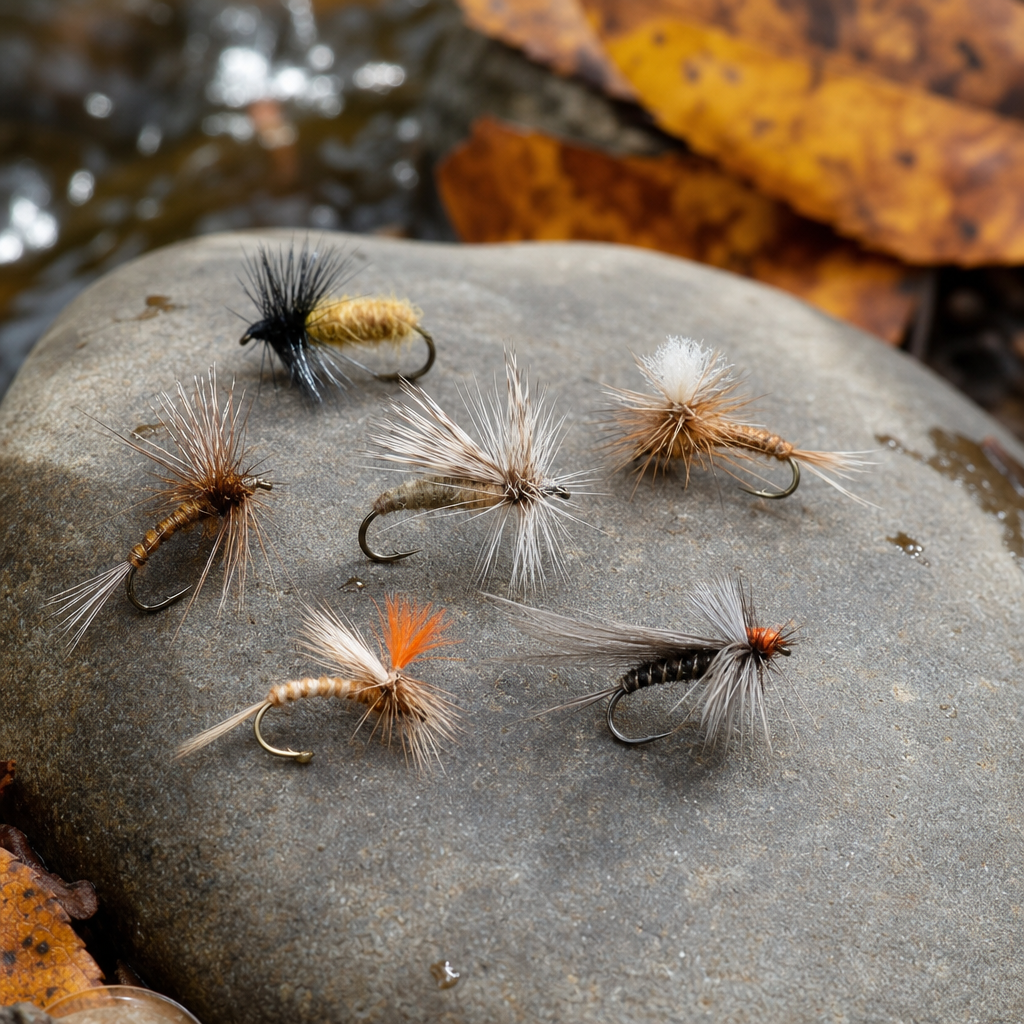
The default winter plan is simple: start subsurface, watch carefully, and move to dries only when trout prove they are taking adults or trapped emergers. For midges, I rely on zebra midges, thread midges, Griffith’s Gnat variants, and sparse pupa patterns with slim bodies and a hint of flash. For baetis, the essentials are a slim olive nymph, a soft-hackle emerger, and a low-riding comparadun or parachute. For winter stoneflies, carry dark adults and narrow black nymphs. Sizes matter more than perfect color, and profile matters more than decoration.
Leader design should match the quiet nature of winter water. For dry flies, a longer leader tapered to 5X or 6X is standard, with 6.5X or 7X useful on spring creeks. For nymphing tiny flies, thin tippet helps sink rate and drift quality, but balance that against ice, abrasion, and landing time. Strike indicators should be small and buoyant enough to register delicate takes without disturbing flat water. If you tight-line, use tungsten sparingly with micro flies; too much weight can create unnatural movement in shallow winter lanes.
Timing is usually late morning through midafternoon, with the prime window often narrower than anglers expect. Arriving at dawn is less important than arriving observant. Check exposed rocks for shucks, watch slack water for adults, and note whether surface activity starts after sun hits a particular bank. Keep records. On several tailwaters I fish, winter hatches repeat with near-clocklike precision when flows remain unchanged. A notebook or app that logs river level, cloud cover, water temperature, and first rise time becomes more valuable than carrying twenty nearly identical patterns.
How this winter hatch hub fits the wider seasonal hatch calendar
Winter is the foundation of a complete seasonal hatch strategy because it teaches disciplined observation and connects directly to early spring fishing. Midges bridge every month of the year. Baetis often begin in late fall, strengthen through winter thaws, and carry into spring. Winter stoneflies lead naturally into larger stonefly activity in some watersheds. If you learn where trout feed during sparse cold-season emergences, those same travel lanes often remain important when March and April bring more abundant insects.
As a hub within the broader seasons-and-conditions topic, this page should guide your next questions. Which rivers in your region have the most dependable winter baetis? How do midge tactics differ on spring creeks versus tailwaters? When do localized black caddis appear? What leader formulas protect tiny dries from drag in flat water? Those deeper articles belong under this subtopic, but the framework starts here: identify the likely insects, match them to river type and weather, locate efficient winter holding water, and fish the life stage trout are actually eating.
The main benefit of understanding winter hatches is confidence rooted in pattern recognition. You stop treating cold months as a waiting period and start seeing them as a technical, often rewarding season with clear signals. Learn the insects, carry a thermometer, watch feeding posture, and build your days around stable conditions. Then follow the related seasonal hatch guides for river-specific calendars, pattern lists, and tactical breakdowns that turn this winter hatch overview into success on the water.
Frequently Asked Questions
What exactly is a winter hatch, and why does it matter to trout anglers?
A winter hatch is an aquatic insect emergence that takes place during the coldest part of the year, when many anglers assume there is little or no surface activity. In simple terms, a hatch occurs when immature insects such as midges, tiny mayflies, or winter stoneflies become available to trout in enough numbers to noticeably change how fish feed. That shift is important because trout that may have been hugging the bottom and feeding selectively on subsurface food can suddenly begin rising, drifting into softer seams, or keying on a very specific insect stage.
What makes winter hatches especially valuable is their consistency relative to the season. They are usually not explosive, river-wide events like major spring emergences. Instead, they tend to be smaller, more localized, and heavily influenced by water temperature, sunlight, and time of day. That concentration can work in an angler’s favor. If you find the right stretch at the right time, you may discover dependable dry-fly opportunities and productive light-nymph fishing in a season when many people expect only slow, deep presentations to work.
From a practical standpoint, winter hatches matter because they narrow the trout’s attention. Fish often become more willing to feed in softer currents, tailouts, eddies, and slow seams where emerging insects collect. That gives anglers a clearer target and a more deliberate game plan. Rather than covering water blindly, you can watch for subtle rises, inspect the air and surface for bugs, and match the stage of the hatch with much more precision.
Which insects are most commonly involved in winter hatches?
The most common winter hatch insects are usually midges, small blue-winged olive mayflies, and winter stoneflies, though the exact mix depends on your region, river type, and water temperatures. Midges are often the backbone of winter feeding behavior because they are present in many trout waters year-round and can hatch even when conditions are quite cold. They are small, abundant, and frequently overlooked, but trout key on them constantly. If you see subtle dimples on the surface rather than splashy rises, midges are often a strong possibility.
Blue-winged olives, especially smaller winter and early-season varieties, are another major player. These mayflies tend to emerge during overcast, damp, or moderately warming periods and can trigger some of the best winter dry-fly fishing of the year. They are especially important because trout often feed on multiple stages: nymphs drifting before emergence, emergers trapped in the film, duns floating briefly on the surface, and sometimes spinners if conditions line up. When fish appear to be rising steadily but refusing high-floating flies, they may be focused on the emerger stage rather than adults.
Winter stoneflies are also significant, although they behave differently from many mayflies and midges. They are often found crawling onto rocks, snowbanks, logs, or streamside structure before emerging, rather than popping directly through the surface in large numbers. Even so, their presence tells you something important about seasonal food availability, and trout may respond to both nymphs and adults. On some rivers, tiny black or dark brown stoneflies become a dependable signal that winter life is very much active.
The key lesson is not to think of winter as insect-free. Think of it as insect-subtle. The bugs are often smaller, the windows are tighter, and the fish can be highly selective, but those patterns repeat enough that informed anglers can plan around them with confidence.
When do winter hatches usually happen, and what conditions trigger them?
Winter hatches usually happen during the warmest and most stable part of the day, often from late morning into early afternoon, though exact timing varies by river and weather pattern. Water temperature is one of the biggest triggers. Even a slight increase of a degree or two can make a meaningful difference in insect activity and trout response. That is why sunny winter afternoons, periods following a cold night but with daytime warming, and stretches of stable weather often produce the best hatch windows.
Light conditions matter as well. Midges may hatch under a wide range of conditions, but blue-winged olives often become more active under cloud cover, light rain, or that soft, muted winter light that keeps fish comfortable feeding near the surface. Tailwaters and spring creeks can be especially reliable because their temperatures are more stable than freestone streams, which may fluctuate sharply after freezing nights, snowmelt, or cold fronts.
Another important factor is location within the river. Slower runs, gentle seams, inside bends, tailouts, and water that gets a little more sun can all concentrate both insects and feeding fish. Winter hatches are often less about broad timing and more about micro-timing. A hatch may be quiet at noon, then become obvious from 1:00 to 2:00 p.m., then disappear just as quickly once light changes or temperatures drop.
The most reliable approach is to arrive prepared before the expected window, take water and air temperatures if you like to track patterns, and spend a few minutes observing before fishing hard. In winter, patience pays. If you give a promising stretch time to wake up, you can often see the first clues: a few bugs in the air, a shuck on the surface, or one quiet rise that turns into several.
How should anglers fish winter hatches effectively?
Fishing winter hatches effectively starts with recognizing that trout are usually feeding more deliberately than aggressively. Presentations need to be clean, drag-free, and appropriately sized. Long leaders, fine tippet, and accurate drifts matter because winter water is often low, clear, and slow enough that fish get an extended look at the fly. If trout are rising, begin by identifying whether they are taking adults on top, emergers in the film, or something just below the surface. That single observation can save a lot of unproductive casting.
For dry-fly fishing, small midge patterns, parachute-style blue-winged olive imitations, CDC emergers, and low-riding adults are all common tools. In winter, it is often wise to think smaller and subtler rather than bigger and bushier. If fish refuse a visible dry, dropping to a more delicate emerger or a flush-floating pattern can make the difference. Rise forms help here: splashy takes may suggest more confident feeding on adults, while soft dimples usually point to fish sipping emergers or midges trapped in the film.
Light nymphing is equally important and often more consistent than surface fishing. Before and during the hatch, trout may feed on ascending nymphs or pupae just off the bottom or mid-column. Small perdigons, midge larvae and pupae, RS2-style flies, pheasant tails, or tiny olive nymphs can be very effective. The key is not to fish too heavy if the water does not require it. Winter hatch fish commonly hold in softer water where a natural drift with modest weight outperforms a deep, overly aggressive setup.
Above all, adjust to what the fish are telling you. If there are bugs but no rises, fish subsurface. If rises start but fish ignore your high-floating dry, switch to an emerger. If activity fades, move slightly deeper or slower. Winter hatches reward observation more than force. The anglers who do best are usually the ones who watch carefully, make small refinements, and treat each feeding clue as useful information rather than random luck.
What are the biggest mistakes anglers make during winter hatches?
The most common mistake is assuming nothing is happening because the river looks quiet. Winter feeding can be subtle. Trout may rise softly, insects may be tiny, and hatch windows may be short. Anglers who rush through good water, fish only deep out of habit, or leave before the warmest part of the day often miss the best action entirely. A second major mistake is fishing patterns that are too large, too visible, or too generic for the conditions. Winter trout frequently lock onto small insects and become selective about profile, stage, and drift.
Another mistake is failing to match the insect stage. Many anglers see a few adults and immediately tie on a dry, when the fish are actually feeding on emergers or pupae just under the surface. In winter, that distinction matters a great deal because trout conserve energy and often choose the easiest meal. Emergers trapped in the film are vulnerable, concentrated, and slow, making them prime targets. If rises are consistent but your dry goes untouched, there is a strong chance the fish are not truly eating on top.
Poor presentation is also a frequent problem. Drag that might be tolerated in rough summer water often gets exposed in calm winter seams. Heavy tippet, sloppy line control, and overly fast drifts can quickly put fish down. Likewise, anglers sometimes stand too close in clear water and alert trout before the hatch gets going. A more careful approach, longer casts when necessary, and disciplined line management usually produce better results.
Finally, many anglers underestimate how much weather and timing shape winter hatches. They may fish early because that suits their schedule, even though the best window does not begin until midday. Or they may ignore a cloudy, slightly warmer day that would actually be ideal for blue-winged olive activity. The anglers who consistently succeed in winter are