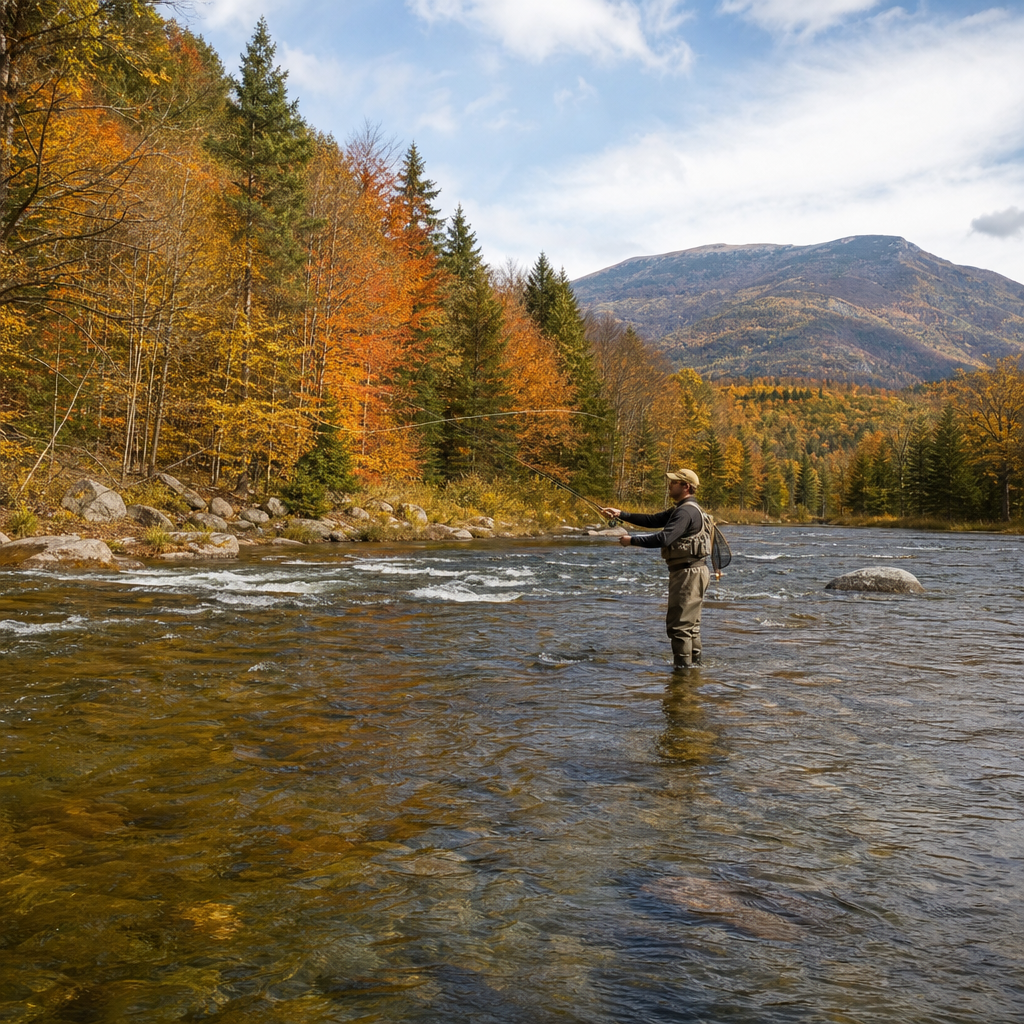
Fly fishing in high water conditions demands a different mindset, different presentations, and a sharper reading of the river than most anglers use during normal flows. High water usually means rivers running above their seasonal average because of snowmelt, heavy rain, dam releases, or a combination of those factors. It can also mean off-color water, stronger current seams, flooded banks, submerged structure, and fish shifting away from their usual lies. For anglers exploring weather conditions, this is one of the most important subjects to understand because changing water levels influence trout behavior more dramatically than almost any hatch chart.
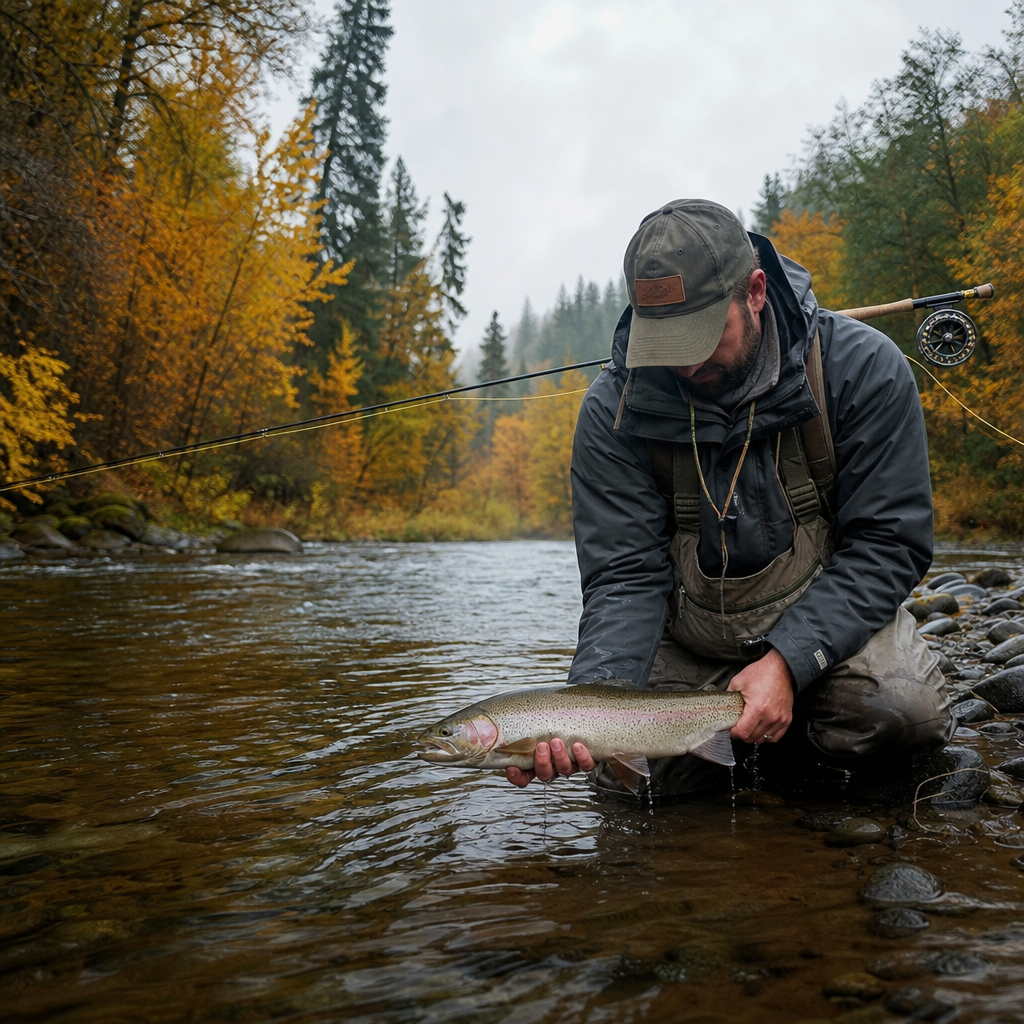
I have fished high water during spring runoff in freestone rivers, after summer thunderstorms on tailwaters, and during fall rain events on small streams, and the lesson is always the same: fish are still catchable, but they are rarely where beginners expect them to be. The productive water narrows. Trout conserve energy, avoid the heaviest current, and move toward softer edges, slower buckets, side channels, and current breaks created by rocks, logs, and flooded banks. If you keep casting to the middle of the main torrent, you often cast over fish or into water they have temporarily abandoned.
As a hub for weather conditions, this article explains how high water fits into the broader picture of river changes. Weather affects temperature, clarity, oxygen levels, insect activity, angler safety, and access. Rain can stain a stream and create ideal streamer conditions. Sudden dam releases can raise flows without changing color much at all. Snowmelt can keep water cold and fast for weeks. Wind can worsen wading risks when banks are soft and currents are pushy. Understanding those interactions helps you make better on-the-water decisions and choose whether to fish nymphs, streamers, dry-dropper rigs, or simply wait for conditions to improve.
High water matters because it reshapes both risk and opportunity. It can make famous runs nearly unfishable while turning overlooked inside bends and bank pockets into prime holding water. It often reduces surface feeding, but it can also trigger aggressive takes on larger meals. It can lower visibility for the fish, allowing heavier tippet and closer presentations. It may open short feeding windows when drifting worms, stoneflies, baitfish patterns, or eggs are easier for trout to notice than tiny mayfly nymphs. The anglers who do best are usually not the strongest casters; they are the best observers.
What high water does to trout and food sources
In high water, trout respond first to hydraulics and second to food. Their primary need is to hold in a place where they can spend little energy while still intercepting drifting meals. That usually pushes them out of the main chute and into softer water near banks, behind large rocks, at the tail of eddies, inside seams, and along transition lanes where fast water meets slow water. On many rivers, trout that normally hold in waist-deep riffles slide into water only one to three feet deep, provided they have cover and a nearby conveyor of food.
Food availability changes as well. Rising water dislodges worms, cranefly larvae, cased caddis, stonefly nymphs, scuds, sowbugs, and baitfish. In fertile systems, flooded edges can wash terrestrials into the river. In tailwaters, a release may sweep midges and small nymphs into softer margins where trout can feed efficiently. During muddy runoff, visibility drops, so fish rely more on silhouette, vibration, and proximity. That is why larger flies, darker profiles, and patterns with movement often outperform delicate imitations. The rule is simple: if fish have less time and less visibility, your fly must be easier to find.
Water temperature still matters. Cold runoff can suppress metabolism and reduce feeding intensity even when flows are high. Warm rain events in shoulder seasons can do the opposite, waking fish up and increasing streamer aggression. On spring creeks, even modest rises may leave temperatures relatively stable while making fish more comfortable along grassy banks. The best anglers separate flow, clarity, and temperature instead of treating high water as one condition. A river at 1,500 cubic feet per second with two feet of visibility fishes very differently from the same river at 1,500 with eight inches of visibility and snowmelt-cold water.
How weather conditions create high water
Heavy rain is the most obvious cause, but not all rain events fish alike. A short, violent thunderstorm on a small watershed can create a sharp spike, chocolate water, and dangerous debris flows within hours. A steady all-day rain on a large river basin may raise levels gradually and maintain greenish visibility that actually improves streamer fishing. Snowmelt produces a more predictable high-water period, especially in western freestones, where warm days and freezing nights create a daily rise-and-fall pattern. Dam-managed rivers add another layer: releases may increase flow quickly with little warning, often based on reservoir operations rather than local weather.
Barometric pressure matters less than most anglers think compared with current speed, clarity, and temperature, but it can coincide with fronts that influence insect activity and fish mood. Wind compounds the challenge by limiting casting angles and making precise drifts harder along critical bank seams. Cloud cover may help trout feel secure in skinny edge water during bright runoff periods. Sunlight, however, can improve water color interpretation by helping you spot soft shelves, submerged grass, and clarity changes where feeder creeks enter. The practical takeaway is that weather is not one variable. It is a stack of variables that change where fish hold and how safely you can fish.
Where to fish when rivers are high
The best water in high flows is usually the slowest water next to fast water. Start with inside bends, bank cushions, side channels, eddy lines, flooded grass edges, seams below large boulders, tailouts protected from the main surge, and short pockets behind structure. On broad rivers, look for soft shelves along the bank that drop into a travel lane. On smaller streams, target any place where current speed clearly decreases over a short distance. If you can imagine a trout holding with minimal effort and drifting six inches into food, you are looking at the right kind of water.
Many anglers overlook shallow water during floods. Trout will often pin against the bank in twelve to eighteen inches if that water is soft and offers overhead cover from foam, undercut banks, root wads, or stained depth. I have watched fish eat within a rod length of my boots while the center river looked dramatic and fishy but held almost nothing. Approach slowly, keep a low profile, and fish the near water first. Your first cast to a protected seam is often your best chance before your line or shadow pushes fish tighter to cover.
| High-water feature | Why trout use it | Best presentation |
|---|---|---|
| Inside bend | Reduced current speed and concentrated drift | Dead-drift nymphs under an indicator |
| Flooded bank grass | Cover, worms, and terrestrials washing in | Short drifts with heavy nymphs or streamers |
| Eddy seam | Energy-saving lie beside moving food | Controlled swing or tuck cast |
| Boulder cushion | Soft pocket behind hard structure | High-stick nymphing at close range |
| Side channel | Manageable flow and concentrated fish | Indicator rig or small streamer |
Confluences deserve special attention. A clear tributary entering a dirty main river can create a visible mixing line that concentrates fish. The reverse also happens: a muddy tributary can ruin an otherwise fishable stretch downstream. Use USGS gauges, local reservoir data, and streamflow apps before you leave home, then confirm conditions visually when you arrive. High water is less about the number on the gauge than how that level reshapes specific access points and holding water on the reach you intend to fish.
Tackle, flies, and rigging adjustments
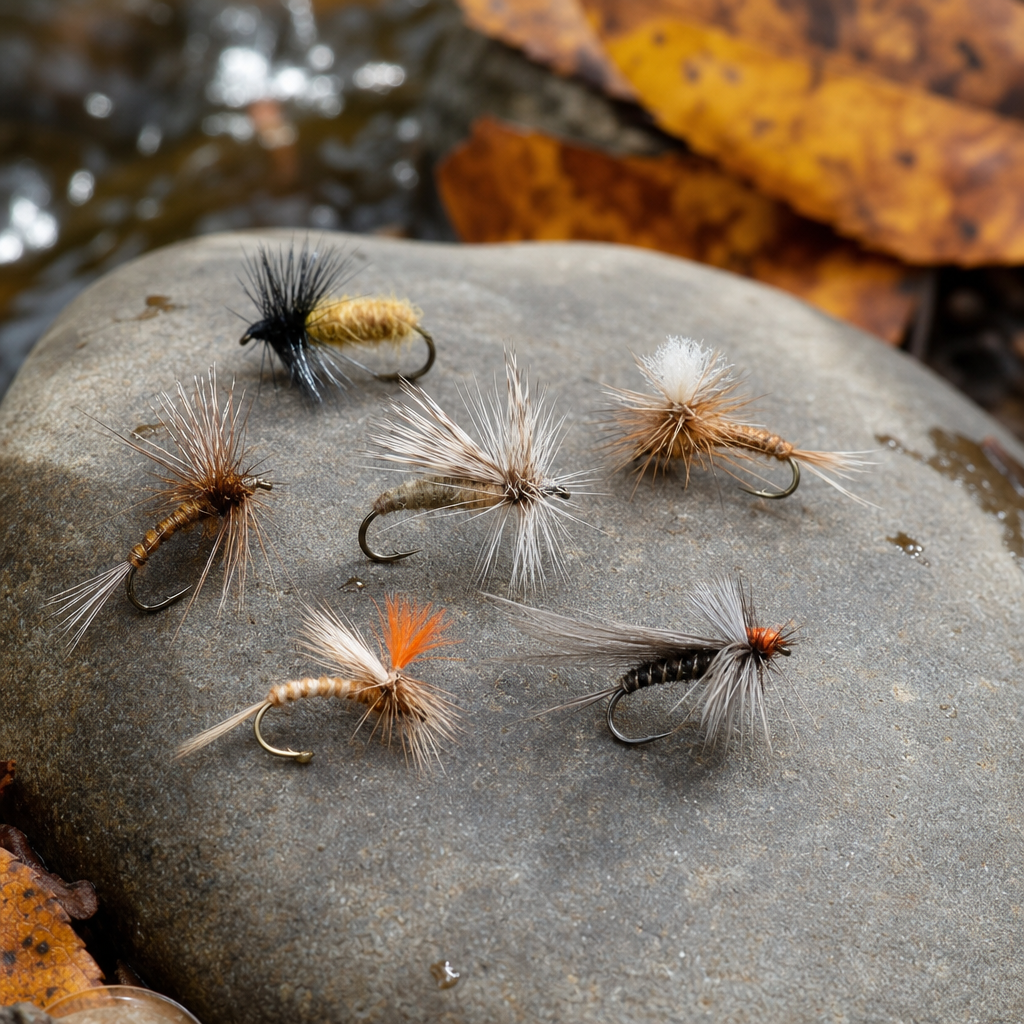
Your normal setup may work, but high water rewards practical adjustments. For nymphing, I prefer a stronger leader butt section, more split shot than usual, and an indicator large enough to suspend weight without dragging unnaturally. Getting flies down quickly matters because productive lies are often narrow and close to the bottom. Patterns that consistently produce include stonefly nymphs, San Juan Worms where legal and appropriate, large caddis larvae, egg patterns during spawning windows, and jigged perdigons or tungsten-tag nymphs as point flies. In stained water, black, brown, purple, and hot-spot accents often outfish pale natural tones.
Streamer fishing can be exceptional. Sculpin patterns, woolly buggers, leeches, and articulated baitfish flies create a larger target and move enough water for trout to detect. Fish them across and slightly downstream along seams, strip them beside flooded structure, or swing them through eddy tails. In truly dirty water, add contrast rather than random flash. Black with olive, brown with copper, or white with a dark back gives fish a cleaner silhouette. A sink-tip line helps in moderate current, but in soft edge water a floating line with a weighted fly often gives better control.
Tippet choice changes in your favor. Because visibility is reduced and fish are often taking decisively, 3X or even 2X can be appropriate for larger nymphs and streamers, especially around wood and rock. Rod selection depends on the method. A nine-foot five-weight covers most indicator work, but a six-weight handles split shot, sink tips, and larger flies with less strain. Tight-line anglers can still succeed, yet long leaders become harder to manage in conflicting currents. In many high-water situations, short, controlled drifts with an indicator are simply more efficient.
Presentation and wading strategy
The best presentation in high water is usually shorter than anglers expect. Long casts create drag, reduce strike detection, and pull flies out of the soft lane before they sink. Position yourself close enough to control the drift but far enough away to avoid spooking bank fish. Cast upstream or up-and-across into the seam, mend immediately, and track the indicator or leader with the rod tip. Recast often. A five-foot perfect drift through a holding slot is worth more than a thirty-foot drift through mixed currents.
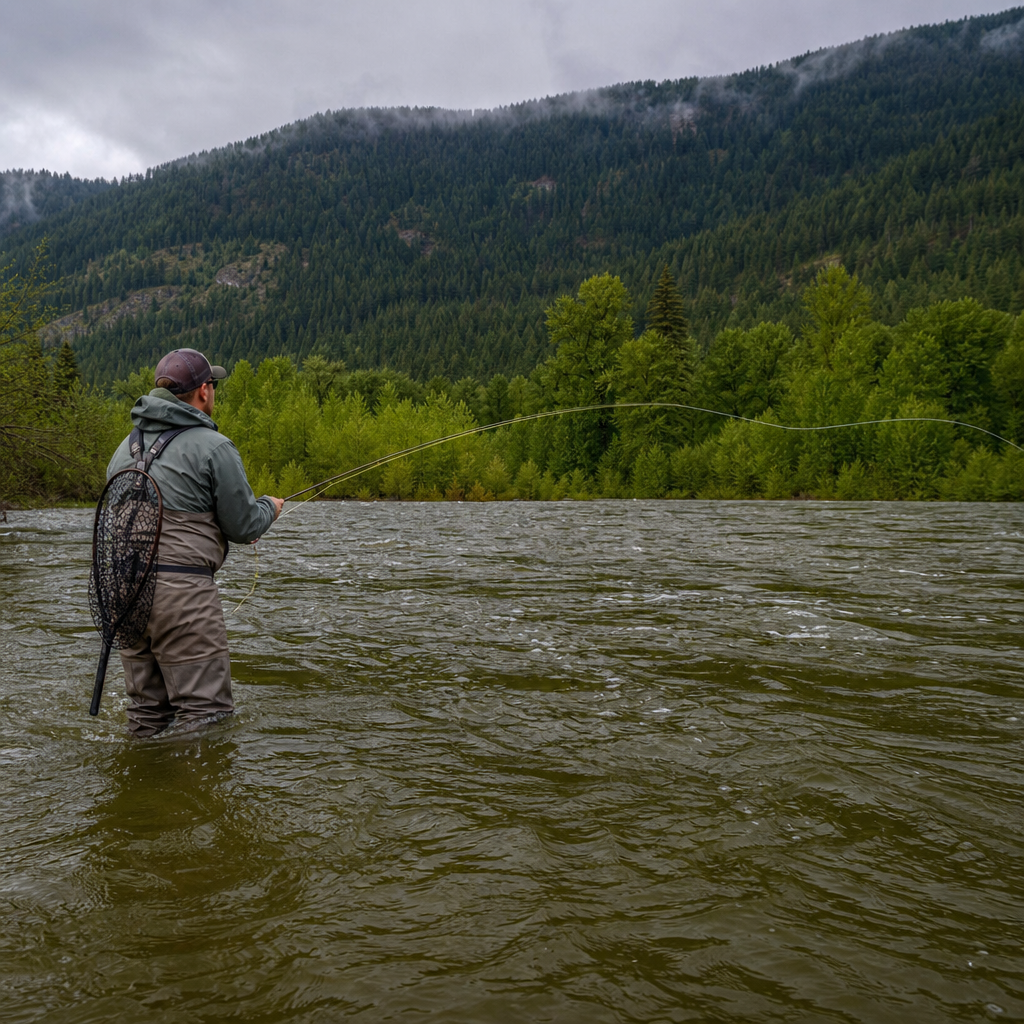
Wading is where mistakes become dangerous. Fast water exerts far more force than it appears to from the bank, especially when color hides depth changes. If you do not need to wade, do not wade. Fish from the bank, kneel on gravel bars, and work near-shore slots before stepping in. Use a wading staff, tighten your belt, and avoid crossing above knee depth in strong flow. Felt or modern sticky rubber soles with studs improve traction, but no boot compensates for poor judgment. Many experienced anglers I know cancel trips during extreme flows not because fish cannot be caught, but because the margin for error is too small.
Boat anglers face their own hazards. High water can float logs, fence wire, root balls, and bridge debris into channels that are harmless at normal flow and dangerous during runoff. Anchor systems become riskier in heavy current, and boat positioning for bank shots requires constant awareness. Whether wading or floating, the standard is the same: if the river forces you to think more about staying upright than about presentation, the conditions are too pushy for productive fly fishing.
When high water is worth fishing and when to wait
Not all high water is bad. Stable high water with one to three feet of visibility is often excellent, particularly when levels have plateaued after a rise. Fish have time to relocate, settle into edge lies, and feed consistently. A dropping river can also fish very well as clarity improves and food remains dislodged. By contrast, a river that is still surging upward, carrying heavy debris, and showing less than six inches of visibility is usually a poor and unsafe bet. Tailwaters may remain fishable during elevated releases if side channels and banks offer refuge and access remains legal.
Timing matters through the day. Snowmelt freestones often fish better early before afternoon warmth lifts flows. Rain-fed systems may improve a day after the event once sediment begins to settle. Urban streams can spike and drop quickly, sometimes becoming fishable within hours, while large watersheds need days. Keep notes on gauge height, clarity, water temperature, and results. Over time, you will learn that a local river at one “high” level can be excellent, while another becomes nearly unfishable at the same relative rise because of gradient, substrate, and tributary input.
Using this page as your weather conditions hub
High water is one part of a complete weather conditions strategy. The same observation skills that help you fish runoff also apply to low clear water, cold fronts, heat waves, wind, falling barometers tied to storms, and sudden temperature swings. Use this page as your starting point, then build your approach around the specific driver: rain, snowmelt, dam release, or seasonal runoff. Check gauges before every trip, compare flow with water clarity and temperature, and adjust location, flies, and risk tolerance accordingly. When you learn to read weather through the lens of current speed, visibility, and trout positioning, high water stops being a mystery and becomes a manageable condition. Study your local rivers, fish the edges first, and let the river tell you when it is ready.
Frequently Asked Questions
What changes when a river is in high water, and how does it affect fly fishing?
High water changes almost everything about how a river fishes. When flows rise above normal seasonal levels because of snowmelt, heavy rain, dam releases, or runoff, the river usually gets faster, deeper, and more forceful. Current lanes that were easy to wade during average conditions can become dangerous, soft edges may disappear, and water clarity often drops. From a fishing standpoint, the biggest shift is that trout and other river fish rarely hold in the same places they use at normal flows. Instead of sitting in classic mid-river lies, they often slide toward slower water where they can conserve energy while still feeding.
That usually means the best holding water is found along banks, inside bends, behind large rocks, in flooded side channels, near submerged wood, and along any seam where fast and slow current meet. Fish do not want to fight heavy current all day, so they look for shelter close to food. High water also compresses productive water. In normal flows, fish may spread across riffles, runs, and pockets, but during elevated conditions they often concentrate in calmer zones that offer both protection and a feeding lane. For fly anglers, this means less blind casting and more targeted presentations to very specific water types.
Presentation changes as well. Fish in high, pushy water generally have less time to inspect a fly, but they also have a smaller feeding window because visibility can be reduced and current speed is higher. As a result, successful anglers typically fish larger, more visible flies, add weight to get down quickly, and focus on short, controlled drifts rather than long casts. The mindset shifts from covering a lot of water to dissecting likely holding lies thoroughly. In short, high water does not automatically mean poor fishing, but it does demand better river reading, safer decision-making, and more precise presentations.
Where should I look for fish during high water conditions?
In high water, the most productive places are usually the areas where fish can avoid the heaviest current without giving up access to food. Start by looking near the banks. As flows rise, many fish move out of the main channel and tuck into softer edge water, especially where the bank creates a cushion of slower current. Undercut banks, flooded grass lines, root wads, and shallow shelf water can all hold fish that would normally sit much farther out in the river. These areas are especially important when the main flow is too strong to hold in comfortably.
Current seams are another major key. A seam is any transition between faster and slower water, and in high water those transitions become feeding lanes. Fish often position just inside the softer side of a seam so they can rest while watching food drift by from the heavier current. Inside bends are commonly productive because they usually collect slower water than the outside bend, which tends to carry more force. Eddies, backwaters, side channels, and soft pockets behind boulders or fallen timber are also high-percentage zones because they break current and create shelter.
Submerged structure becomes even more important when flows are up. Rocks, ledges, logs, bridge pilings, and drop-offs can all create small current breaks that fish use aggressively. In off-color water, fish may sit surprisingly shallow and close to the bank, sometimes within a rod length of where you are standing. That is why experienced anglers approach high water carefully and fish the near water first before blasting casts into the middle of the river. If you immediately step into the edge or slap a long cast over the bank zone, you can put down fish that were holding in exactly the kind of protected water high flows create. The best rule is simple: think shelter first, then food access second.
What fly patterns and rigs work best when rivers are high and off-color?
When rivers are high and stained, visibility and depth become the two main problems your rig needs to solve. In many cases, that means using larger flies, adding weight, and choosing patterns that push water, create contrast, or offer a strong profile. Streamers are often excellent in high water because they imitate larger food items and are easier for fish to notice in reduced clarity. Patterns in black, olive, white, and combinations with flash tend to stand out well. Dark flies often silhouette better in dirty water, while brighter flies can help trigger reaction strikes when visibility is limited.
Nymph rigs are also extremely effective, especially when fish are pinned close to the bottom in softer holding water. Stonefly nymphs, pats rubber legs, large attractor nymphs, San Juan worms, eggs, and other high-water staples are popular because they represent the kinds of food that get dislodged during strong flows. Worm and egg patterns can be especially productive after rain, runoff, or sudden rises because those events wash natural food into the drift. If you are nymphing, use enough split shot or a weighted fly setup to get down quickly. High water often creates only a short drift window, so your flies need to be near the fish almost immediately.
Indicator rigs, tight-line setups, and short-line drifts all have a place depending on the water type, but simplicity helps. A common high-water approach is a two-fly nymph rig with a larger anchor fly and a smaller trailer, adjusted with enough weight to maintain bottom contact without constant snagging. If fish are holding very close to the bank, a short lob cast and a quick, controlled drift can outperform a more elegant presentation. For streamer anglers, focus on short strips, swings through soft seams, and presentations tight to structure rather than covering broad open water. In high water, the best fly is usually the one fish can actually see and the one that gets into their lane fast enough to matter.
How should I adjust my casting, drift, and presentation in high water conditions?
High water rewards control more than distance. Instead of making long casts across several current speeds, focus on shorter, more deliberate presentations that let you maintain direct contact with the fly and manage drag quickly. In heavy flows, long casts often create too much slack or put the fly through conflicting currents that ruin the drift before it reaches the fish. A short cast into a soft seam, bank cushion, or protected pocket is often far more effective than a long cast into the middle of the river. This is especially true when fish are holding in narrow lanes close to shore.
Your first adjustment should be angle and entry. Present the fly from a position that allows it to sink immediately into the softer holding water rather than dragging across fast current to get there. Up-and-across casts, tuck casts, and short upstream flips can all help weighted flies penetrate quickly. Mending still matters, but in high water it needs to be efficient and timely. One well-placed mend at the start of the drift is often better than several big corrections after the current has already taken over. The goal is to give the fly a natural path through the small window where the fish is holding.
Depth control is critical. Many unsuccessful high-water anglers are fishing the right places with the wrong depth. If your indicator never hesitates, if your nymph rig swings too quickly, or if your streamer is riding above the fish, you probably are not getting down enough. Add weight, shorten the drift, or adjust your casting angle until the fly is traveling where fish can intercept it. With streamers, fish them slower than you might in clear, normal flows. In cold runoff or powerful water, fish are often less willing to chase far. Put the fly close, keep it in the zone longer, and assume the take may be subtle. High water is rarely about pretty presentations; it is about efficient, repeatable drifts through protected holding water.
What safety precautions should I take when fly fishing in high water?
Safety should be the first consideration any time rivers are running high. Elevated flows make currents stronger, crossings more dangerous, banks less stable, and simple mistakes harder to recover from. One of the most important adjustments is accepting that some water is not meant to be waded, even if it was easy a week earlier. Fast water exerts far more force than many anglers realize, and murky conditions can hide drop-offs, rolling rocks, and flooded obstacles. If you have any doubt about a crossing, do not make it. There is almost always fishable water from a safer position.
Focus on fishing from the bank, gravel bars, or very shallow edges whenever possible. Wear a wading belt, use a wading staff, and move slowly if you do enter the water. Shuffle your feet, keep your stance wide and stable, and avoid stepping into water with speed above your comfort level just because it looks fishy. High water often brings excellent opportunities right along the margins, so there is usually no need to force a dangerous approach. It is also smart to fish with a partner, let someone know where you are going, and check streamflow data before leaving home so you understand whether the river is rising, dropping, or fluctuating because of dam releases.
Pay close attention to changing conditions throughout the day. Rivers can rise quickly after rain, warm afternoon snowmelt, or upstream release schedules, and a spot that was safe at sunrise may not be safe by afternoon. Watch for floating debris, collapsing banks, and increasing turbidity, all of which can signal deteriorating conditions. Polarized glasses help